Literary Elements of a Short Story   Notes to Help You!
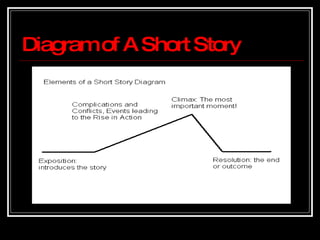
Plot, Exposition, Complications Plot:   A series of related events that make up a story Exposition:   The part of the story that introduces the characters, the setting, and the basic situation.  Complications :  Mini-conflicts that contribute to the rise in action
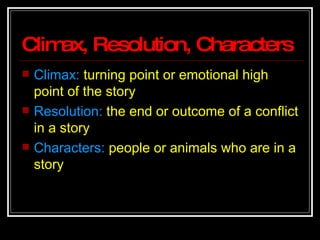
Climax, Resolution, Characters Climax:  turning point or emotional high point of the story Resolution:  the end or outcome of a conflict in a story Characters:  people or animals who are in a story
Setting, Theme, Point of View Setting:  The time and place of a story. Pay attention to sensory details! Theme:  The author tries to make a statement or observation about life Point of view:  Whose perspective the story comes from
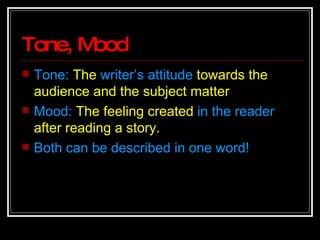
Tone, Mood Tone:  The  writer’s attitude  towards the audience and the subject matter Mood:  The feeling created  in the reader  after reading a story.  Both can be described in one word!
Diagram of A Short Story
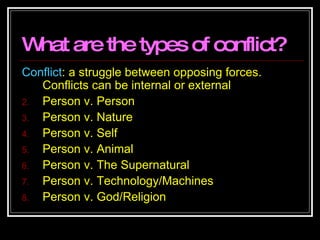
What are the types of conflict? Conflict : a struggle between opposing forces. Conflicts can be internal or external Person v. Person Person v. Nature Person v. Self Person v. Animal Person v. The Supernatural Person v. Technology/Machines Person v. God/Religion
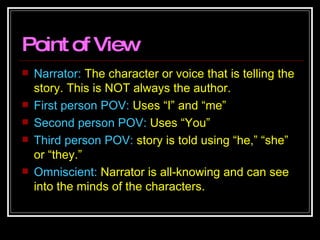
Point of View Narrator:  The character or voice that is telling the story. This is NOT always the author. First person POV:  Uses “I” and “me” Second person POV:  Uses “You” Third person POV:  story is told using “he,” “she” or “they.” Omniscient:  Narrator is all-knowing and can see into the minds of the characters.
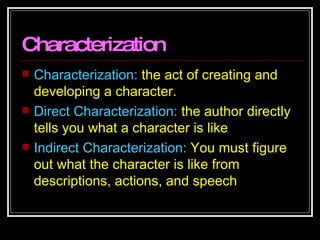
Characterization Characterization:  the act of creating and developing a character.  Direct Characterization:  the author directly tells you what a character is like Indirect Characterization:  You must figure out what the character is like from descriptions, actions, and speech
What are some types of Characters? Protagonist:  the Main Character.  Antagonist:  The character or force in conflict with the protagonist.  Major:  A character who plays a large role in the outcome of a story. Minor:  A character who plays a small role in the outcome of a story.
Four Ways to Classify Characters 1.  Round:  character shows many different traits, like faults and virtues.  2.  Flat:  we only know the character as one type of person—we only meet one side.  3.  Dynamic:  grows and changes in some significant manner by the end of the story 4.  Static:  changes little or none throughout the story
How to Write about a Character Well, there’s like this dude, and he like, said some stuff, and like, there was another dude, and they got into a fight, and like, then one dude died, and I think hunting was involved.
The Survey Says:
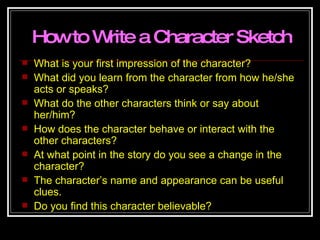
How to Write a Character Sketch What is your first impression of the character? What did you learn from the character from how he/she acts or speaks? What do the other characters think or say about her/him? How does the character behave or interact with the other characters? At what point in the story do you see a change in the character? The character’s name and appearance can be useful clues. Do you find this character believable?

Short Story By Oguz

  • 1.
    Literary Elements ofa Short Story Notes to Help You!
  • 2.
    Plot, Exposition, ComplicationsPlot: A series of related events that make up a story Exposition: The part of the story that introduces the characters, the setting, and the basic situation. Complications : Mini-conflicts that contribute to the rise in action
  • 3.
    Climax, Resolution, CharactersClimax: turning point or emotional high point of the story Resolution: the end or outcome of a conflict in a story Characters: people or animals who are in a story
  • 4.
    Setting, Theme, Pointof View Setting: The time and place of a story. Pay attention to sensory details! Theme: The author tries to make a statement or observation about life Point of view: Whose perspective the story comes from
  • 5.
    Tone, Mood Tone: The writer’s attitude towards the audience and the subject matter Mood: The feeling created in the reader after reading a story. Both can be described in one word!
  • 6.
    Diagram of AShort Story
  • 7.
    What are thetypes of conflict? Conflict : a struggle between opposing forces. Conflicts can be internal or external Person v. Person Person v. Nature Person v. Self Person v. Animal Person v. The Supernatural Person v. Technology/Machines Person v. God/Religion
  • 8.
    Point of ViewNarrator: The character or voice that is telling the story. This is NOT always the author. First person POV: Uses “I” and “me” Second person POV: Uses “You” Third person POV: story is told using “he,” “she” or “they.” Omniscient: Narrator is all-knowing and can see into the minds of the characters.
  • 9.
    Characterization Characterization: the act of creating and developing a character. Direct Characterization: the author directly tells you what a character is like Indirect Characterization: You must figure out what the character is like from descriptions, actions, and speech
  • 10.
    What are sometypes of Characters? Protagonist: the Main Character. Antagonist: The character or force in conflict with the protagonist. Major: A character who plays a large role in the outcome of a story. Minor: A character who plays a small role in the outcome of a story.
  • 11.
    Four Ways toClassify Characters 1. Round: character shows many different traits, like faults and virtues. 2. Flat: we only know the character as one type of person—we only meet one side. 3. Dynamic: grows and changes in some significant manner by the end of the story 4. Static: changes little or none throughout the story
  • 12.
    How to Writeabout a Character Well, there’s like this dude, and he like, said some stuff, and like, there was another dude, and they got into a fight, and like, then one dude died, and I think hunting was involved.
  • 13.
  • 14.
    How to Writea Character Sketch What is your first impression of the character? What did you learn from the character from how he/she acts or speaks? What do the other characters think or say about her/him? How does the character behave or interact with the other characters? At what point in the story do you see a change in the character? The character’s name and appearance can be useful clues. Do you find this character believable?