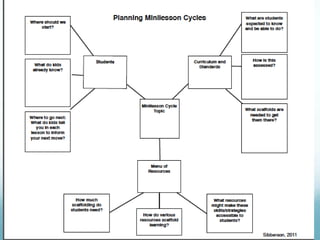
Planning Minilessons
A Lifelong Conversation
Around Books and Reading
What aremy
beliefs about Minilessons?
#1 Designed with a vision of helping students gain the necessary
skills, strategies, and behaviors to become independent readers.


#2 Scaffolded across time to deepen and enrich understanding of concepts.
They are not activities delivered in isolation.


#3 Part of larger conversations that we as a community have about our reading
lives and that these conversations build over time.


#4 Interactive. Students should be the ones doing the thinking, not the teacher.


#5 Planned with the needs of current students in mind. They can't be
canned, scripted or duplicated year after year.
#6 The right length to match your teaching point. There is no magic number of
minutes for an effective minilesson.


#7 Organized in a way that makes the most sense to the teacher, school, or
district. There is no one right way to organize lessons.


#8 Based on what we know about teaching and learning. No matter the
mandates and pressures of state testing, there is no reason to compromise best
teaching practice.


#9 Designed to teach the reader not the book.


#10 Designed by the teachers who is doing the teaching, not corporations.
Big Questions for Minilesson
          Planning
 Why do we teach this? How does it fit into the bigger
  picture?

 What are the big goals I have?
 Which books might I use?
 How will I provide for students to enter at own level?
 What will I be assessing? Does assessment match the
  big picture goals?
Minilesson Cycles Can Be
               Lots of Ways to Plan

 Strategies—comprehension, word work
 Behaviors and Habits—book choice, stamina
 Literary Elements—character, theme
 Genre—nonfiction, mystery, historical fiction
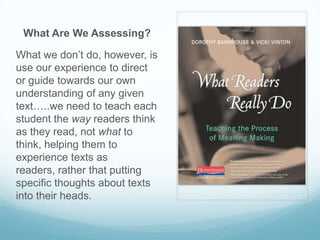
What Are We Assessing?

What we don’t do, however, is
use our experience to direct
or guide towards our own
understanding of any given
text…..we need to teach each
student the way readers think
as they read, not what to
think, helping them to
experience texts as
readers, rather that putting
specific thoughts about texts
into their heads.
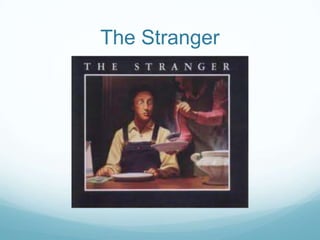
The Stranger
Unpacking Standards: Plot
 K-Retell or re-enact a story that has been heard.
 1-Retell the beginning, middle and ending of a story
  including its important events.

 2-Retell the plot of a story.
 3-Retell the plot sequence.
 4-Identify the main incidents of a plot
  sequence, identifying the major conflict and its
  resolution.

 5-Identify the main incidents of a plot sequence and
  how they influence future action.
6th+
 Distinguish between main and minor plot incidents.
 Pace, subplots, parallel episodes, and climax
 Compare and contrast stories/characters with similar
  conflicts

 How do voice and narrator affect plot
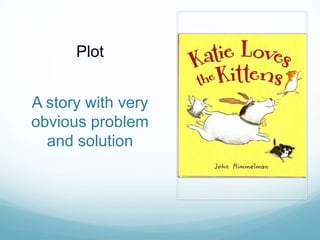
Plot


A story with very
obvious problem
  and solution
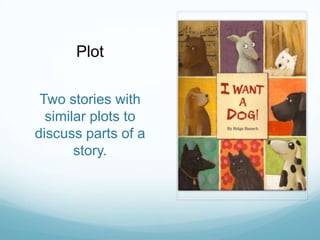
Plot

 Two stories with
  similar plots to
discuss parts of a
       story.
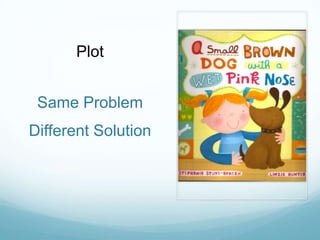
Plot


 Same Problem
Different Solution
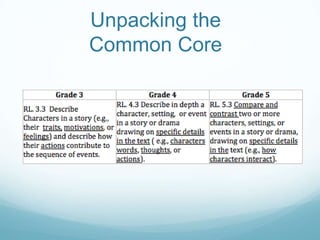
Unpacking the
Common Core
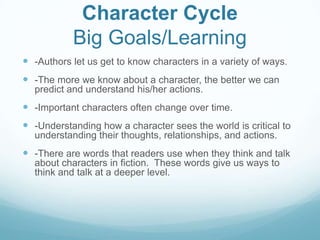
Character Cycle
           Big Goals/Learning
 -Authors let us get to know characters in a variety of ways.
 -The more we know about a character, the better we can
  predict and understand his/her actions.
 -Important characters often change over time.
 -Understanding how a character sees the world is critical to
  understanding their thoughts, relationships, and actions.
 -There are words that readers use when they think and talk
  about characters in fiction. These words give us ways to
  think and talk at a deeper level.
Scaffolding with a
              Menu of Books
  A book that is more character-based than plot based and
  might be a good one for this cycle.
 Several books that focus on the same character/characters
 Books with 2 characters who are great friends or who are
  siblings. These often make for the best conversations about
  relationships.
 Books that include several short stories about the same
  character(s)
 Characters that the students love and talk about on their
  own.
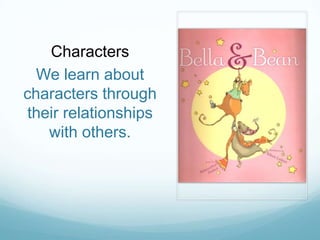
Characters
  We learn about
characters through
their relationships
   with others.
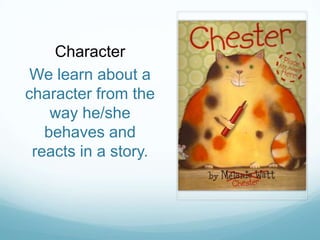
Character
 We learn about a
character from the
    way he/she
   behaves and
 reacts in a story.
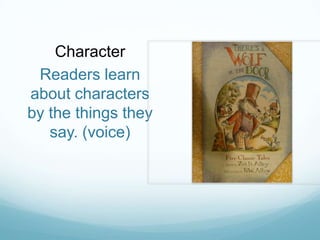
Character
 Readers learn
about characters
by the things they
   say. (voice)
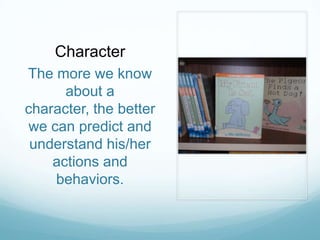
Character
The more we know
      about a
character, the better
we can predict and
 understand his/her
    actions and
    behaviors.
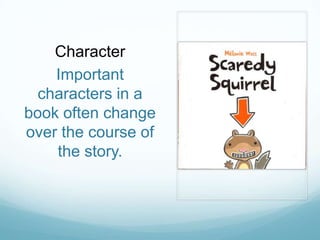
Character
    Important
  characters in a
book often change
over the course of
    the story.
Big Picture of Theme Cycle: What
            Am I Setting Up?
Understandings I Want My Students to Come Away With
  in this Cycle
 *Readers have the power to determine the theme in a text.
 Authors often write a story with a bigger message about life
    to the reader.
 There is often more than one theme in a book.
 There are universal themes that appear often in books.
 A theme works across an entire piece.

How do they get there from
       where they are now?
Plot vs. Theme
Stated vs. Implied Theme
When Two Storylines Come Together
Repeated Language
Symbolism/Metaphors
General vs. Specific Theme
Universal Themes
YouTube Video Clips
http://www.youtube.com/watch?v=dv015LtqA0A
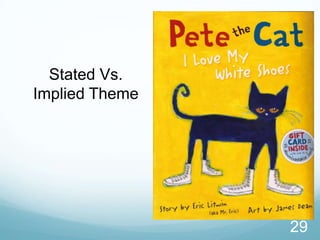
Stated Vs.
Implied Theme


                29
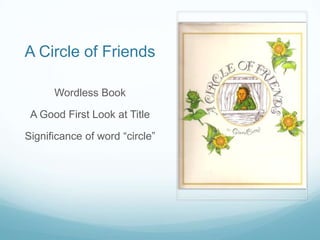
A Circle of Friends

      Wordless Book

 A Good First Look at Title

Significance of word “circle”
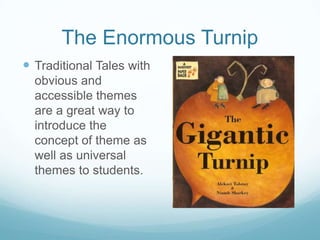
The Enormous Turnip
 Traditional Tales with
  obvious and
  accessible themes
  are a great way to
  introduce the
  concept of theme as
  well as universal
  themes to students.
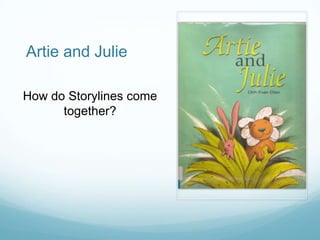
Artie and Julie

How do Storylines come
      together?
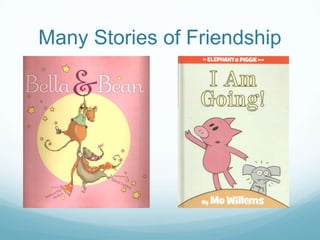
Many Stories of Friendship
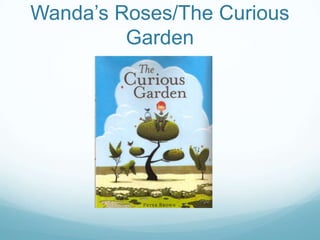
Wanda’s Roses/The Curious
         Garden
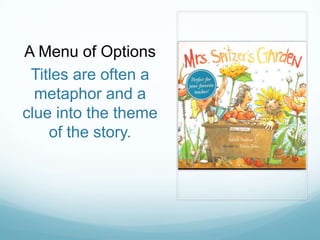
A Menu of Options
 Titles are often a
  metaphor and a
clue into the theme
    of the story.
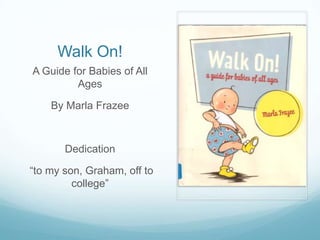
Walk On!
A Guide for Babies of All
         Ages

    By Marla Frazee


       Dedication

“to my son, Graham, off to
         college”
“Any of these details….are, in
  effect, entryways into deeper meanings
  of the text. None is inherently more
  important than the other and no one
  inference about them is necessarily
  “right”…What’s important is not which
  detail readers notice but what they do
  with them…..what they can make of
  what they notice.”
              What Readers Really Do
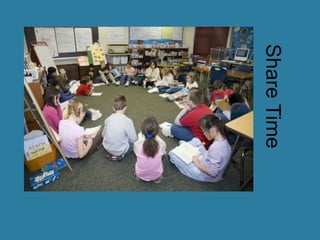
Share Timeme
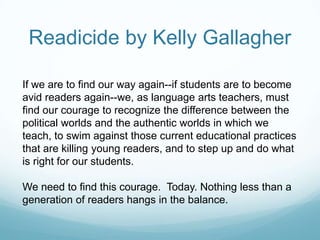
Readicide by Kelly Gallagher

If we are to find our way again--if students are to become
avid readers again--we, as language arts teachers, must
find our courage to recognize the difference between the
political worlds and the authentic worlds in which we
teach, to swim against those current educational practices
that are killing young readers, and to step up and do what
is right for our students.

We need to find this courage. Today. Nothing less than a
generation of readers hangs in the balance.

Dublin Leadership 2012 Minilessons

  • 1.
  • 3.
  • 4.
  • 5.
    #1 Designed witha vision of helping students gain the necessary skills, strategies, and behaviors to become independent readers. #2 Scaffolded across time to deepen and enrich understanding of concepts. They are not activities delivered in isolation. #3 Part of larger conversations that we as a community have about our reading lives and that these conversations build over time. #4 Interactive. Students should be the ones doing the thinking, not the teacher. #5 Planned with the needs of current students in mind. They can't be canned, scripted or duplicated year after year.
  • 6.
    #6 The rightlength to match your teaching point. There is no magic number of minutes for an effective minilesson. #7 Organized in a way that makes the most sense to the teacher, school, or district. There is no one right way to organize lessons. #8 Based on what we know about teaching and learning. No matter the mandates and pressures of state testing, there is no reason to compromise best teaching practice. #9 Designed to teach the reader not the book. #10 Designed by the teachers who is doing the teaching, not corporations.
  • 7.
    Big Questions forMinilesson Planning  Why do we teach this? How does it fit into the bigger picture?  What are the big goals I have?  Which books might I use?  How will I provide for students to enter at own level?  What will I be assessing? Does assessment match the big picture goals?
  • 9.
    Minilesson Cycles CanBe Lots of Ways to Plan  Strategies—comprehension, word work  Behaviors and Habits—book choice, stamina  Literary Elements—character, theme  Genre—nonfiction, mystery, historical fiction
  • 10.
    What Are WeAssessing? What we don’t do, however, is use our experience to direct or guide towards our own understanding of any given text…..we need to teach each student the way readers think as they read, not what to think, helping them to experience texts as readers, rather that putting specific thoughts about texts into their heads.
  • 11.
  • 12.
    Unpacking Standards: Plot K-Retell or re-enact a story that has been heard.  1-Retell the beginning, middle and ending of a story including its important events.  2-Retell the plot of a story.  3-Retell the plot sequence.  4-Identify the main incidents of a plot sequence, identifying the major conflict and its resolution.  5-Identify the main incidents of a plot sequence and how they influence future action.
  • 13.
    6th+  Distinguish betweenmain and minor plot incidents.  Pace, subplots, parallel episodes, and climax  Compare and contrast stories/characters with similar conflicts  How do voice and narrator affect plot
  • 14.
    Plot A story withvery obvious problem and solution
  • 15.
    Plot Two storieswith similar plots to discuss parts of a story.
  • 16.
  • 17.
  • 18.
    Character Cycle Big Goals/Learning  -Authors let us get to know characters in a variety of ways.  -The more we know about a character, the better we can predict and understand his/her actions.  -Important characters often change over time.  -Understanding how a character sees the world is critical to understanding their thoughts, relationships, and actions.  -There are words that readers use when they think and talk about characters in fiction. These words give us ways to think and talk at a deeper level.
  • 19.
    Scaffolding with a Menu of Books A book that is more character-based than plot based and might be a good one for this cycle.  Several books that focus on the same character/characters  Books with 2 characters who are great friends or who are siblings. These often make for the best conversations about relationships.  Books that include several short stories about the same character(s)  Characters that the students love and talk about on their own.
  • 20.
    Characters Welearn about characters through their relationships with others.
  • 21.
    Character We learnabout a character from the way he/she behaves and reacts in a story.
  • 23.
    Character Readers learn aboutcharacters by the things they say. (voice)
  • 24.
    Character The more weknow about a character, the better we can predict and understand his/her actions and behaviors.
  • 25.
    Character Important characters in a book often change over the course of the story.
  • 26.
    Big Picture ofTheme Cycle: What Am I Setting Up? Understandings I Want My Students to Come Away With in this Cycle  *Readers have the power to determine the theme in a text.  Authors often write a story with a bigger message about life to the reader.  There is often more than one theme in a book.  There are universal themes that appear often in books.  A theme works across an entire piece. 
  • 27.
    How do theyget there from where they are now? Plot vs. Theme Stated vs. Implied Theme When Two Storylines Come Together Repeated Language Symbolism/Metaphors General vs. Specific Theme Universal Themes
  • 28.
  • 29.
  • 30.
    A Circle ofFriends Wordless Book A Good First Look at Title Significance of word “circle”
  • 31.
    The Enormous Turnip Traditional Tales with obvious and accessible themes are a great way to introduce the concept of theme as well as universal themes to students.
  • 32.
    Artie and Julie Howdo Storylines come together?
  • 33.
    Many Stories ofFriendship
  • 34.
  • 35.
    A Menu ofOptions Titles are often a metaphor and a clue into the theme of the story.
  • 36.
    Walk On! A Guidefor Babies of All Ages By Marla Frazee Dedication “to my son, Graham, off to college”
  • 39.
    “Any of thesedetails….are, in effect, entryways into deeper meanings of the text. None is inherently more important than the other and no one inference about them is necessarily “right”…What’s important is not which detail readers notice but what they do with them…..what they can make of what they notice.” What Readers Really Do
  • 40.
  • 46.
    Readicide by KellyGallagher If we are to find our way again--if students are to become avid readers again--we, as language arts teachers, must find our courage to recognize the difference between the political worlds and the authentic worlds in which we teach, to swim against those current educational practices that are killing young readers, and to step up and do what is right for our students. We need to find this courage. Today. Nothing less than a generation of readers hangs in the balance.