
Assurance of Learning (AoL)
ANUP K SINGH, PH.D.
Defining Quality
 Excellence in operations
 Compliance with purpose
 Conformance to design
 Customer satisfaction
 Stakeholder satisfaction
 Achievement of learning outcomes and long-term impact
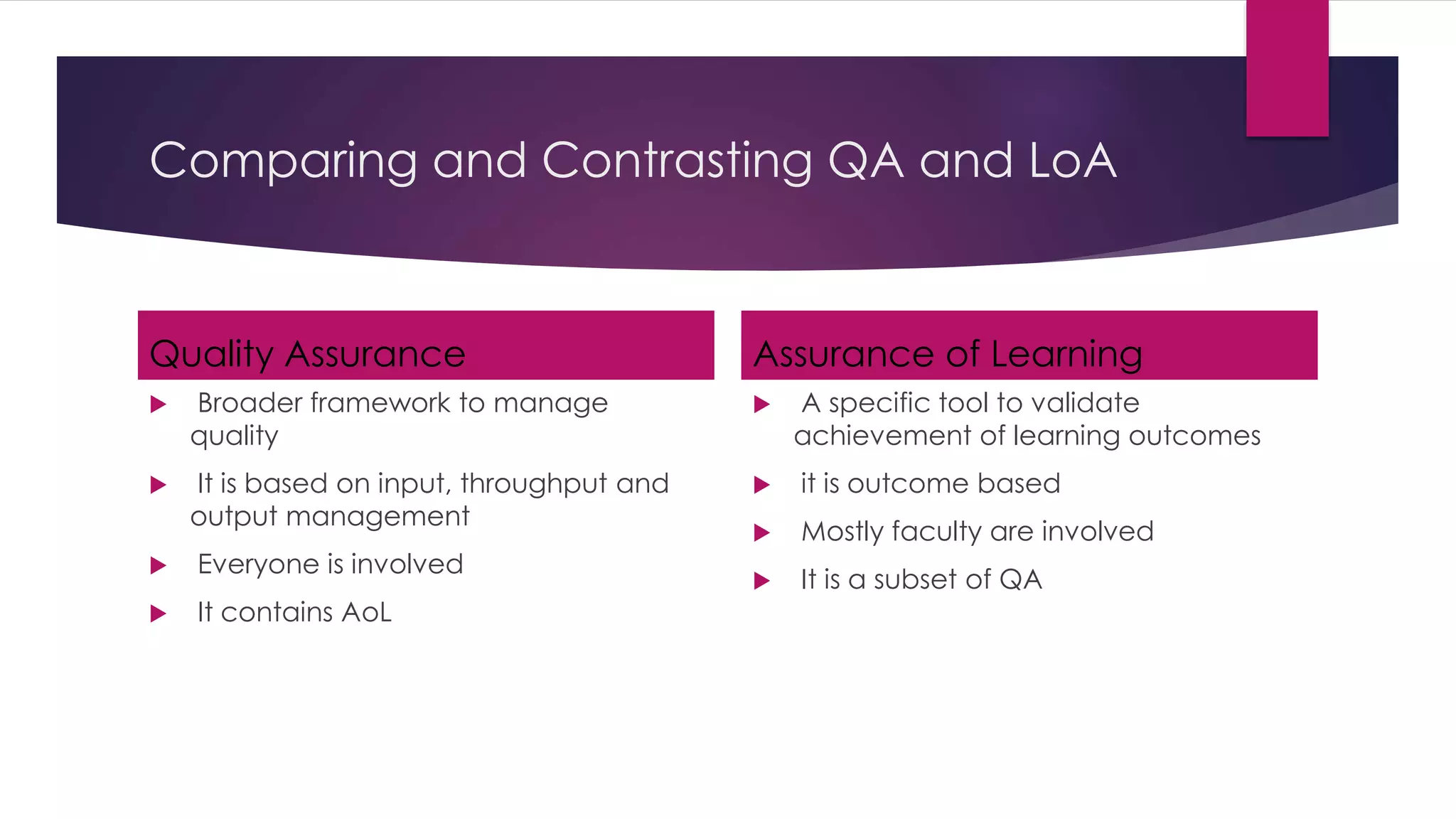
Comparing and Contrasting QA and LoA
Quality Assurance
 Broader framework to manage
quality
 It is based on input, throughput and
output management
 Everyone is involved
 It contains AoL
Assurance of Learning
 A specific tool to validate
achievement of learning outcomes
 it is outcome based
 Mostly faculty are involved
 It is a subset of QA
Quality Assurance
 Development of quality policy
 Management of drivers of quality in a consistent way
 Design of various processes and systems to assure quality at different levels
 Focus on process management
 Audit of different processes
 Benchmarking of processes
 Improvement in processes
 It involves management of admission, teaching-learning process, assessment,
co-curriculuar, extension, infrastructure and maintenance, research and
governance processes
Assurance of Learning (AoL)
 As part of quality assurance, it aims at improving the learning experience
of students
 It intends to validate the achievement of learning with a view to be
accountable to the different stakeholders
 Thus, AoL has both formative and summative purposes
 It can be done at course, programme and institute levels
 It has two approaches: Direct and indirect.
 The direct approach is essential, while the indirect approach is desirable
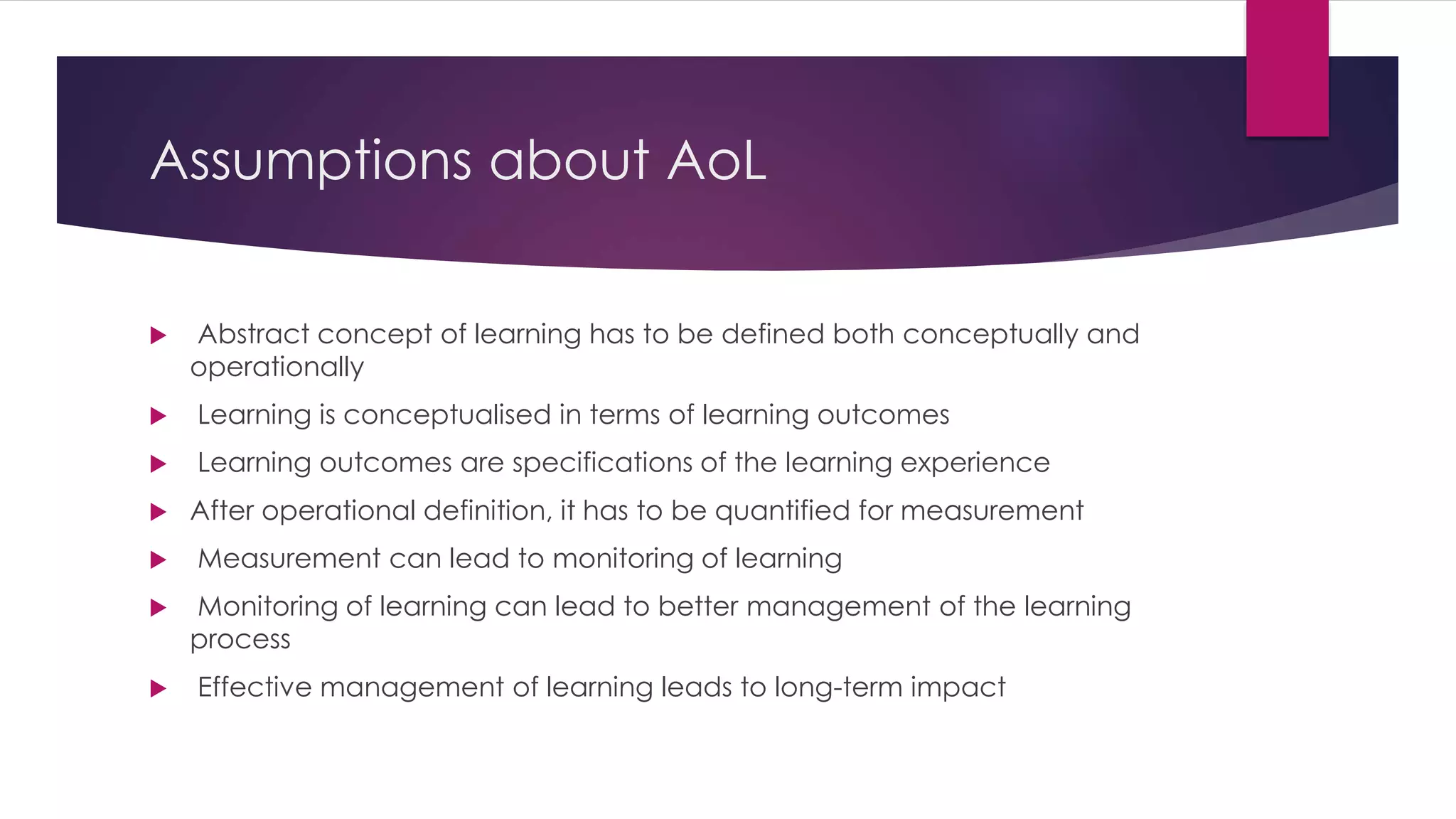
Assumptions about AoL
 Abstract concept of learning has to be defined both conceptually and
operationally
 Learning is conceptualised in terms of learning outcomes
 Learning outcomes are specifications of the learning experience
 After operational definition, it has to be quantified for measurement
 Measurement can lead to monitoring of learning
 Monitoring of learning can lead to better management of the learning
process
 Effective management of learning leads to long-term impact
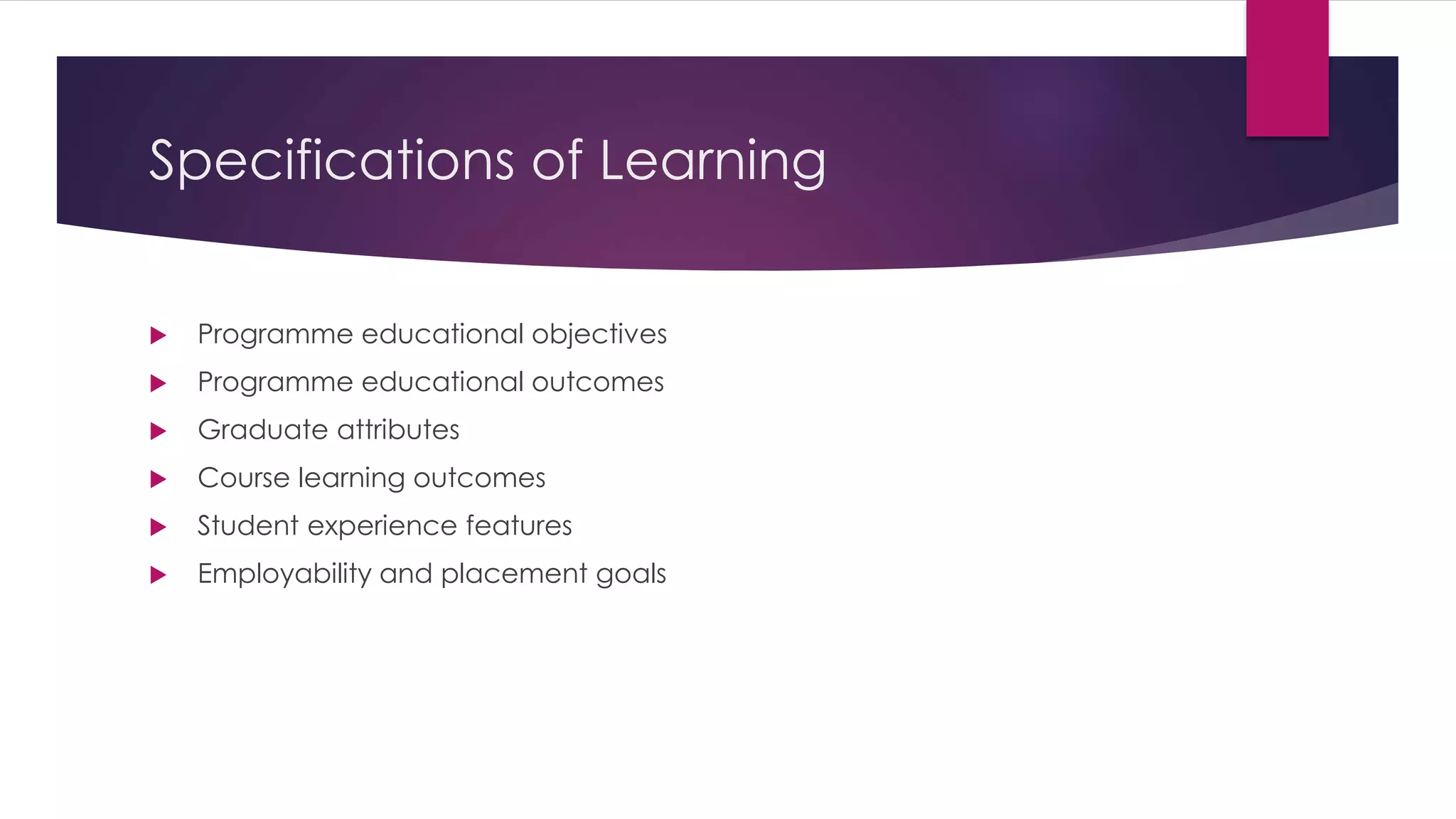
Specifications of Learning
 Programme educational objectives
 Programme educational outcomes
 Graduate attributes
 Course learning outcomes
 Student experience features
 Employability and placement goals
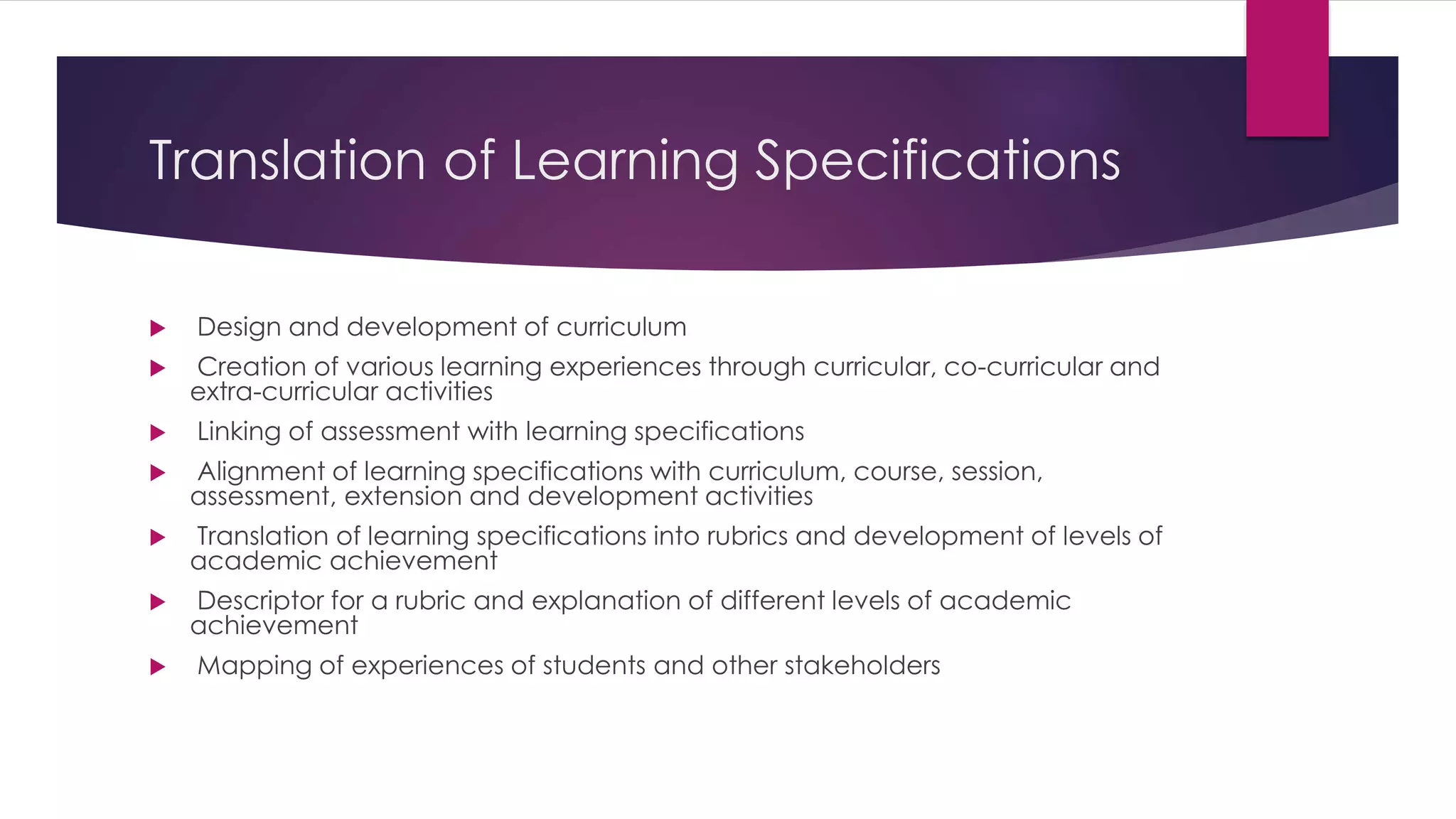
Translation of Learning Specifications
 Design and development of curriculum
 Creation of various learning experiences through curricular, co-curricular and
extra-curricular activities
 Linking of assessment with learning specifications
 Alignment of learning specifications with curriculum, course, session,
assessment, extension and development activities
 Translation of learning specifications into rubrics and development of levels of
academic achievement
 Descriptor for a rubric and explanation of different levels of academic
achievement
 Mapping of experiences of students and other stakeholders
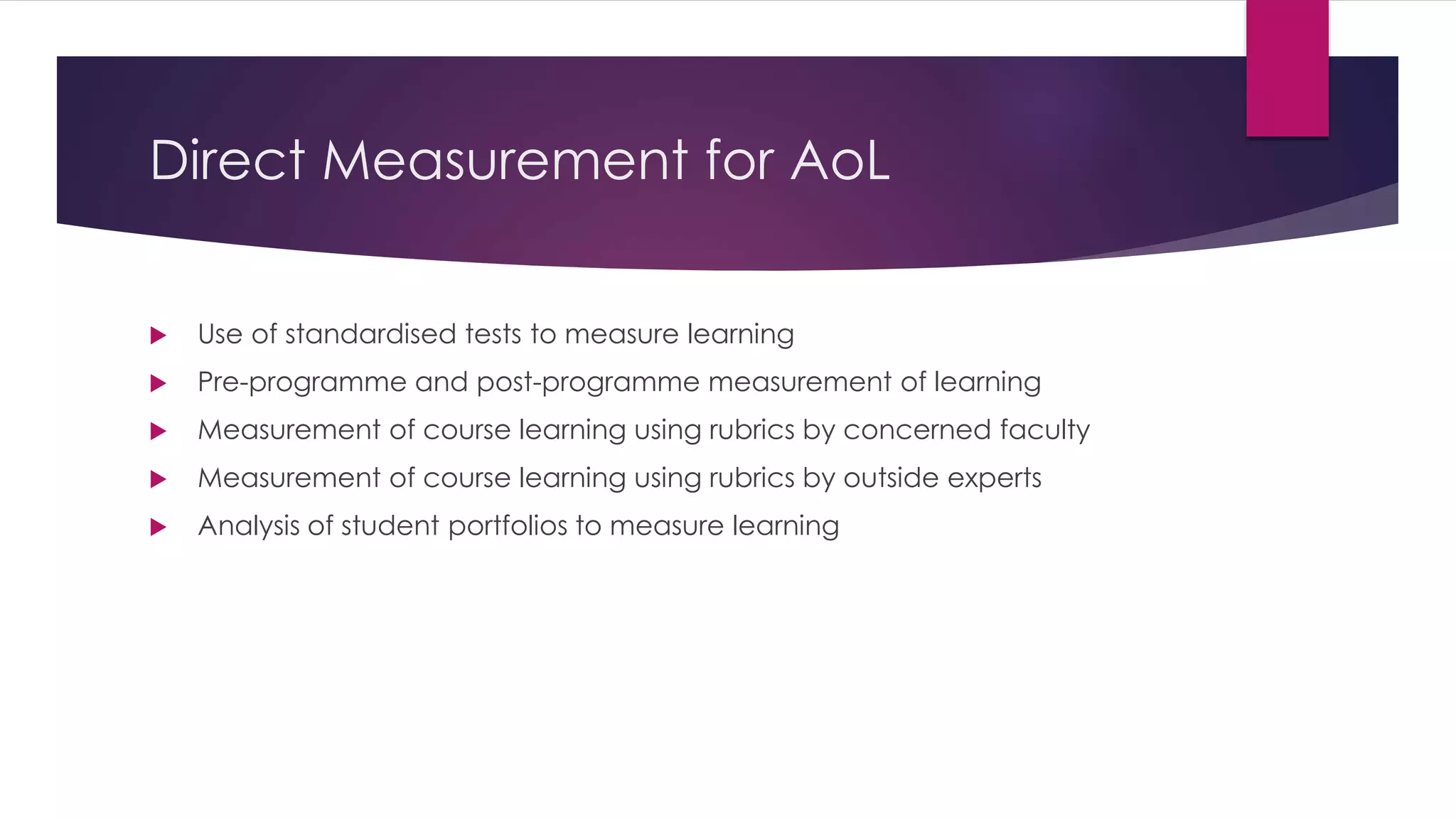
Direct Measurement for AoL
 Use of standardised tests to measure learning
 Pre-programme and post-programme measurement of learning
 Measurement of course learning using rubrics by concerned faculty
 Measurement of course learning using rubrics by outside experts
 Analysis of student portfolios to measure learning
Indirect Measurement for AoL
 Measuring perceptions of students about learning and development
through survey, focus group interview,
 Measuring views of alumni and recruiters about the learning of students
 Focus group surveys

Assurance of learning

  • 1.
    Assurance of Learning(AoL) ANUP K SINGH, PH.D.
  • 2.
    Defining Quality  Excellencein operations  Compliance with purpose  Conformance to design  Customer satisfaction  Stakeholder satisfaction  Achievement of learning outcomes and long-term impact
  • 3.
    Comparing and ContrastingQA and LoA Quality Assurance  Broader framework to manage quality  It is based on input, throughput and output management  Everyone is involved  It contains AoL Assurance of Learning  A specific tool to validate achievement of learning outcomes  it is outcome based  Mostly faculty are involved  It is a subset of QA
  • 4.
    Quality Assurance  Developmentof quality policy  Management of drivers of quality in a consistent way  Design of various processes and systems to assure quality at different levels  Focus on process management  Audit of different processes  Benchmarking of processes  Improvement in processes  It involves management of admission, teaching-learning process, assessment, co-curriculuar, extension, infrastructure and maintenance, research and governance processes
  • 5.
    Assurance of Learning(AoL)  As part of quality assurance, it aims at improving the learning experience of students  It intends to validate the achievement of learning with a view to be accountable to the different stakeholders  Thus, AoL has both formative and summative purposes  It can be done at course, programme and institute levels  It has two approaches: Direct and indirect.  The direct approach is essential, while the indirect approach is desirable
  • 6.
    Assumptions about AoL Abstract concept of learning has to be defined both conceptually and operationally  Learning is conceptualised in terms of learning outcomes  Learning outcomes are specifications of the learning experience  After operational definition, it has to be quantified for measurement  Measurement can lead to monitoring of learning  Monitoring of learning can lead to better management of the learning process  Effective management of learning leads to long-term impact
  • 7.
    Specifications of Learning Programme educational objectives  Programme educational outcomes  Graduate attributes  Course learning outcomes  Student experience features  Employability and placement goals
  • 8.
    Translation of LearningSpecifications  Design and development of curriculum  Creation of various learning experiences through curricular, co-curricular and extra-curricular activities  Linking of assessment with learning specifications  Alignment of learning specifications with curriculum, course, session, assessment, extension and development activities  Translation of learning specifications into rubrics and development of levels of academic achievement  Descriptor for a rubric and explanation of different levels of academic achievement  Mapping of experiences of students and other stakeholders
  • 9.
    Direct Measurement forAoL  Use of standardised tests to measure learning  Pre-programme and post-programme measurement of learning  Measurement of course learning using rubrics by concerned faculty  Measurement of course learning using rubrics by outside experts  Analysis of student portfolios to measure learning
  • 10.
    Indirect Measurement forAoL  Measuring perceptions of students about learning and development through survey, focus group interview,  Measuring views of alumni and recruiters about the learning of students  Focus group surveys