Assessing Writing
    Sandra Monserrat Velazquez
     Grisel Gonzalez Legorreta
     Luis Enrique G. Baldomero
      Luis Santiago de la Cruz
     José Luis Juárez Alcántara
The ability to write has become an
indispensable skill in our global
literate community.

The assessment of writing is no
simple task. As you consider
assessing students’ writing ability,
as usual you need o be clear about
your objective or criterion.
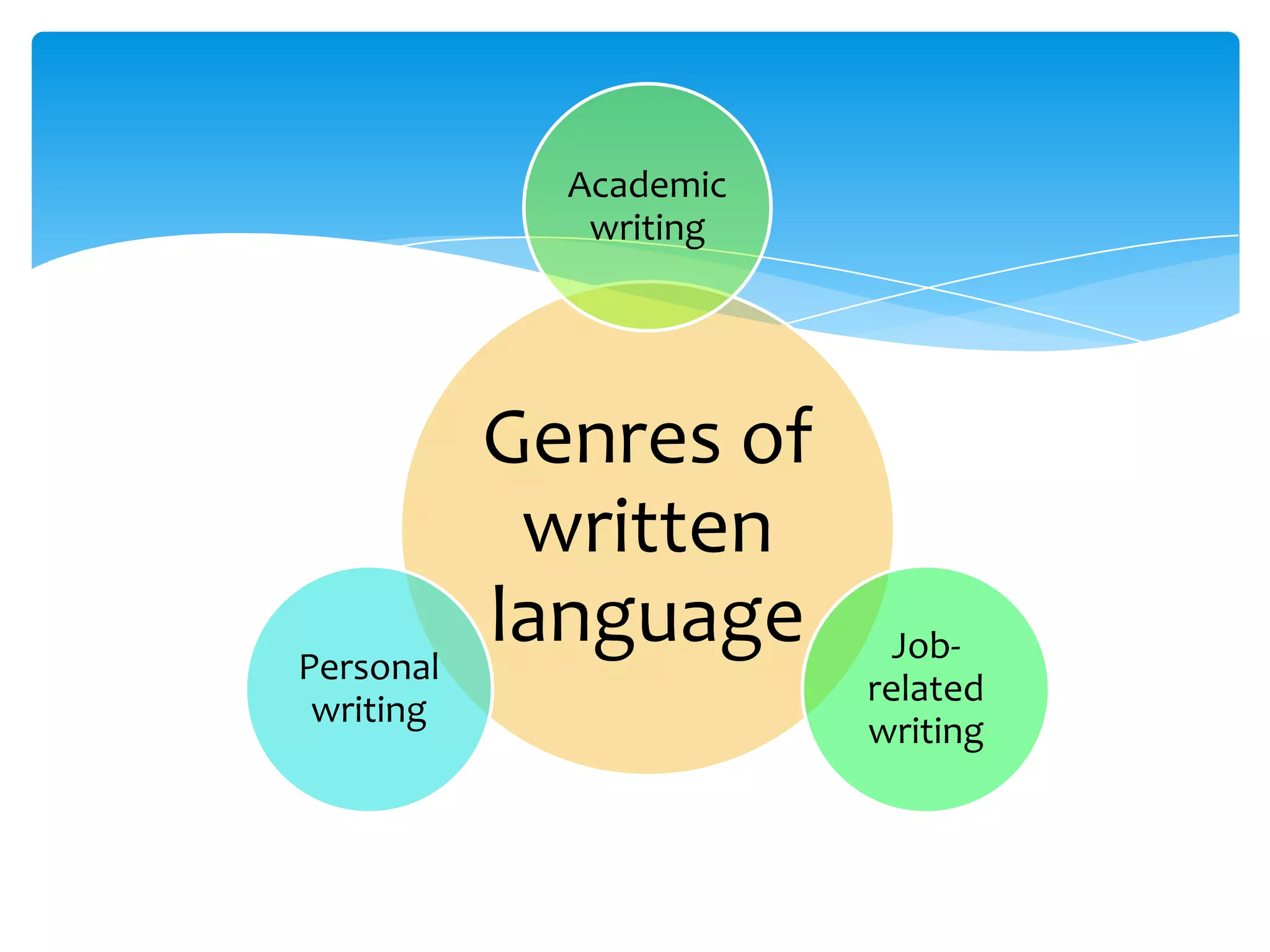
Academic
              writing


           Genres of
            written
Personal
           language       Job-
                        related
 writing
                        writing
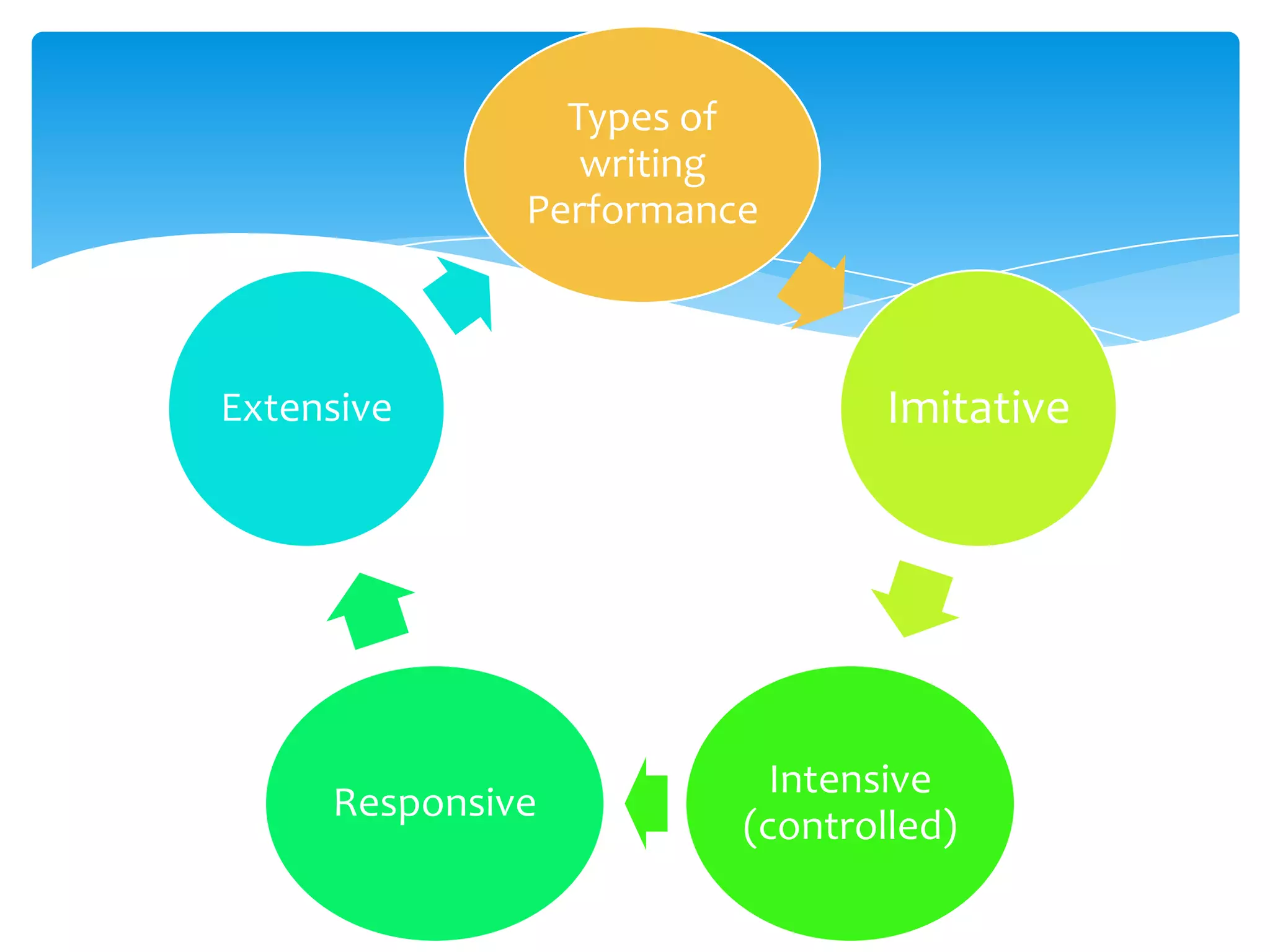
Types of
                 writing
              Performance


Extensive                       Imitative


                          Intensive
     Responsive
                        (controlled)
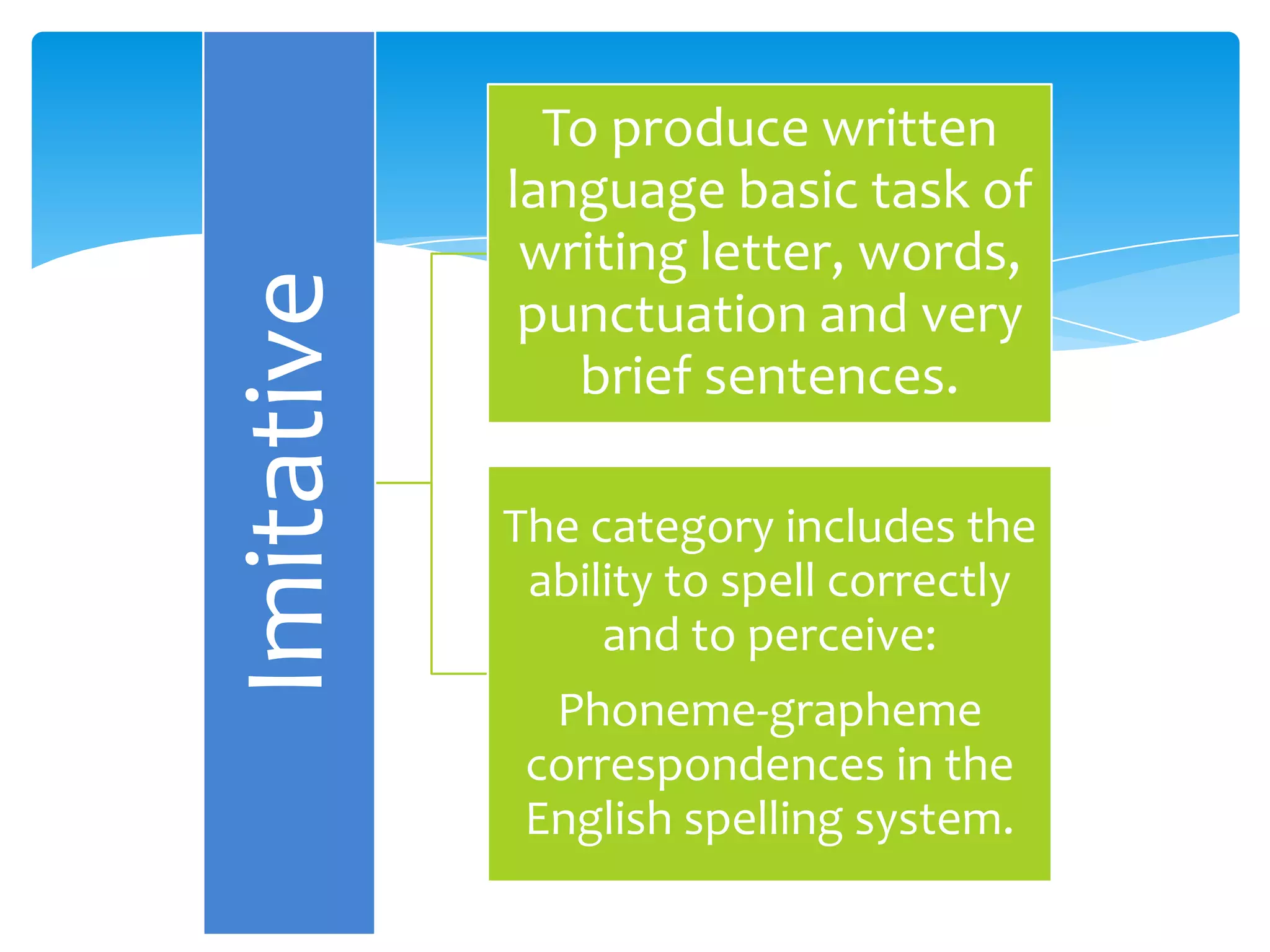
To produce written
            language basic task of
             writing letter, words,
Imitative    punctuation and very
               brief sentences.

            The category includes the
             ability to spell correctly
                 and to perceive:
              Phoneme-grapheme
             correspondences in the
             English spelling system.
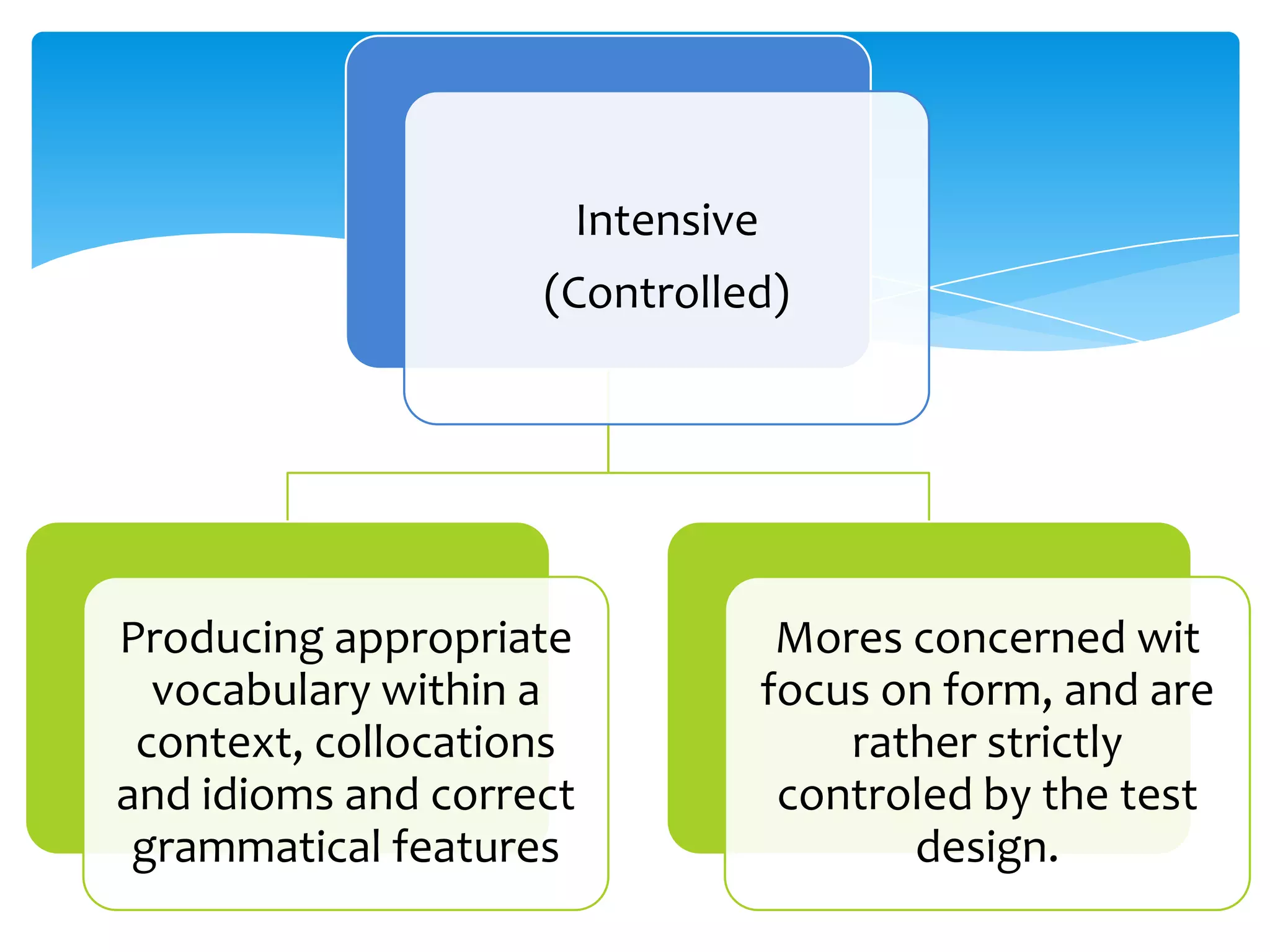
Intensive
                    (Controlled)


Producing appropriate             Mores concerned wit
  vocabulary within a            focus on form, and are
 context, collocations               rather strictly
and idioms and correct            controled by the test
 grammatical features                   design.
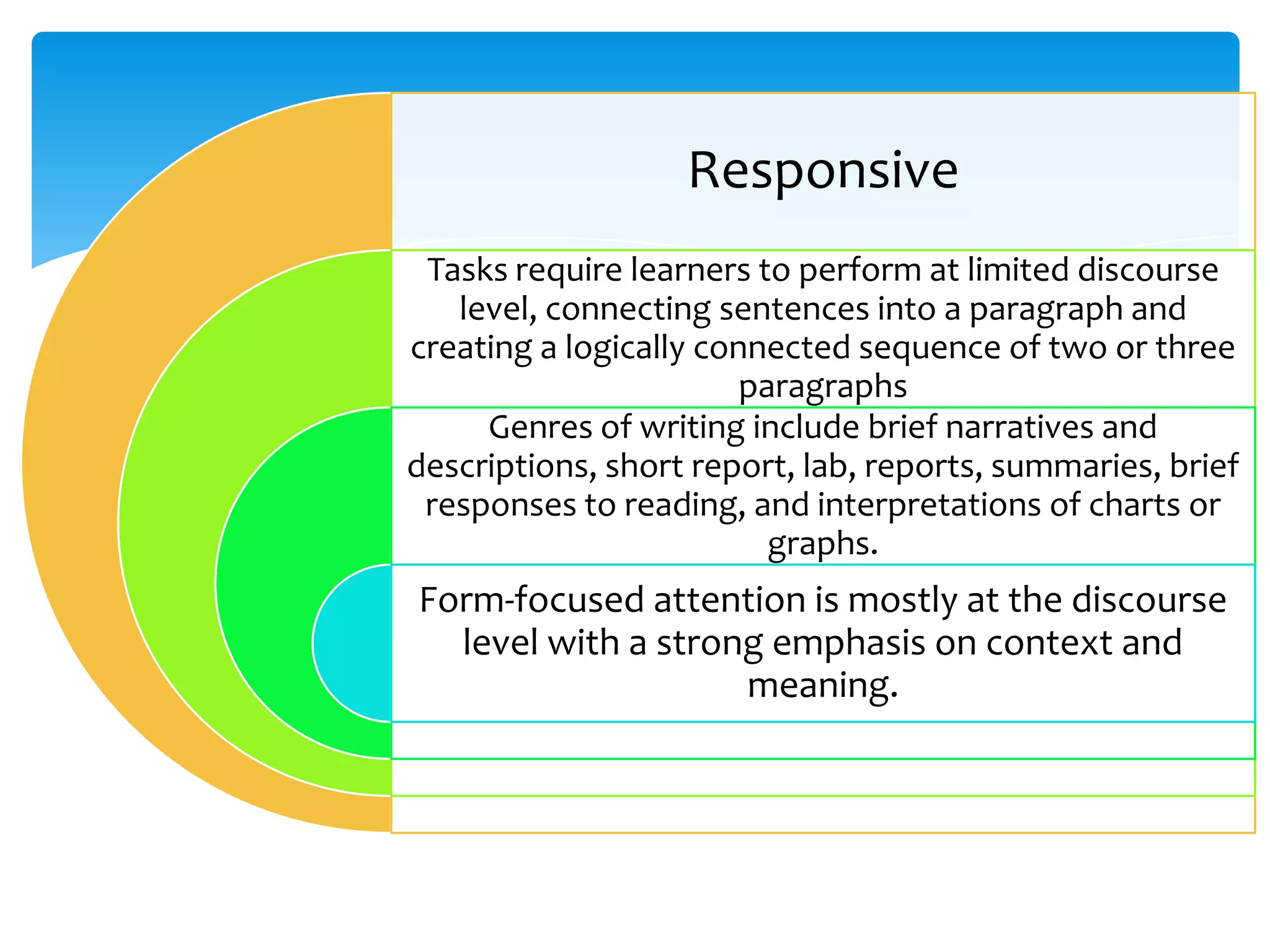
Responsive
 Tasks require learners to perform at limited discourse
   level, connecting sentences into a paragraph and
creating a logically connected sequence of two or three
                        paragraphs
     Genres of writing include brief narratives and
descriptions, short report, lab, reports, summaries, brief
 responses to reading, and interpretations of charts or
                          graphs.
Form-focused attention is mostly at the discourse
  level with a strong emphasis on context and
                    meaning.
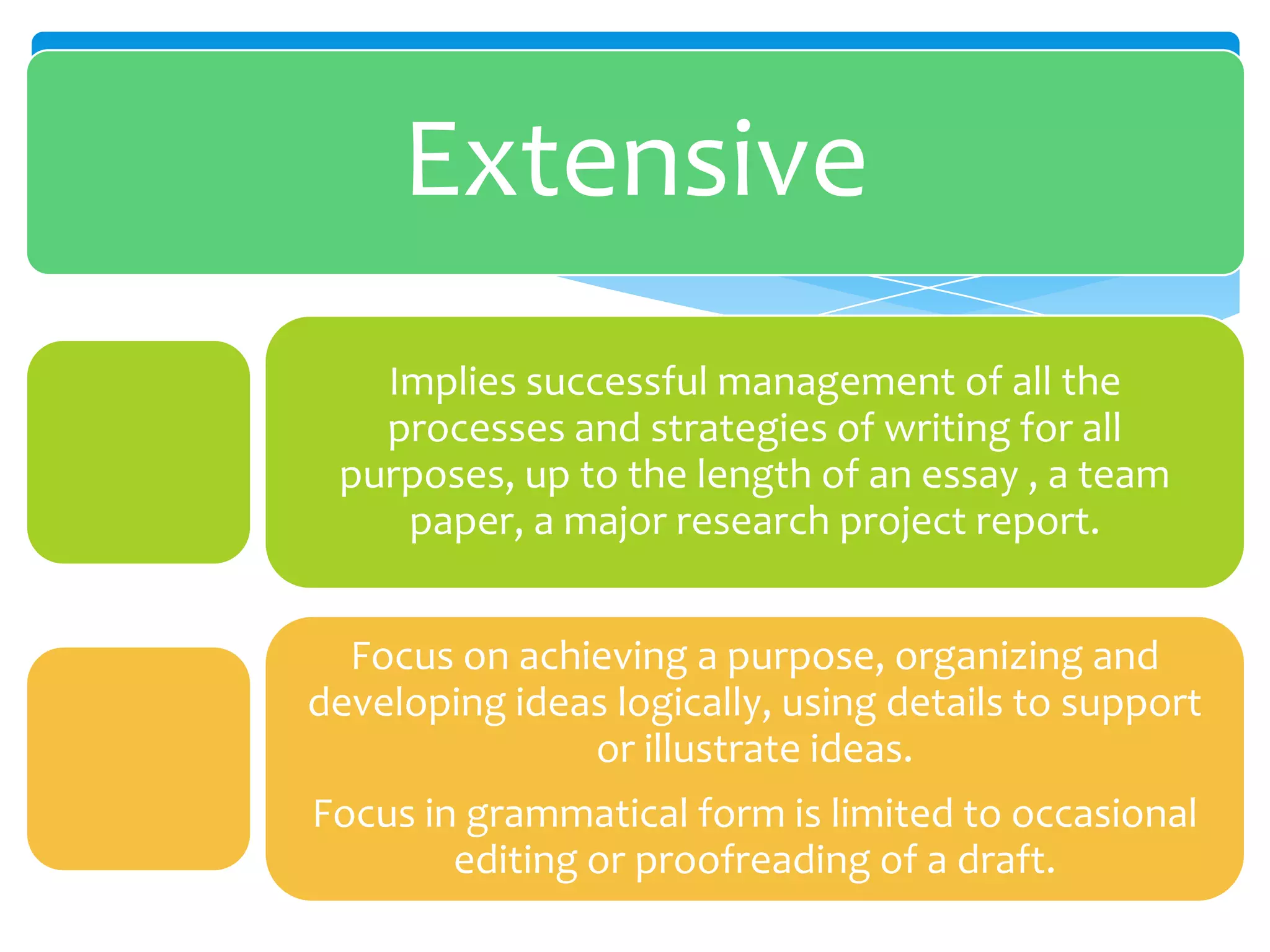
Extensive
   Implies successful management of all the
   processes and strategies of writing for all
 purposes, up to the length of an essay , a team
    paper, a major research project report.


  Focus on achieving a purpose, organizing and
developing ideas logically, using details to support
               or illustrate ideas.
Focus in grammatical form is limited to occasional
        editing or proofreading of a draft.
Micro- and Macro-skills of writing


  Micro-skills : The earlier micro-skills
  apply more appropriately to imitative
  and intensive types of writing task.

  Macro-skills: Are essential for he
  successful mastery of responsive and
  extensive writing.
Micro-skills:
   +Produce graphemes and orthographic of English
   +Produce writing at an efficient rate of speed to
   suit the purpose.
   +Produce acceptable core of words and use
   appropriate word order patterns
   +Use acceptable grammatical systems(tense,
   agreement, pluralisation), patterns, and rules.
   +Express a particular meaning I different
   grammatical forms.
   +Use cohesive devices in written discourse.
Macro-skills:

  +Use the rhetorical forms and conventions of written discourse.
    +Appropriately accomplish the communicative functions of
    written texts according to form and purpose.
    +Convey link links and connections between events and
    communicate such relations as main idea, supporting idea, new
    information, given information, generalization, and
    exemplification.
    +Distinguish between literal and implied meaning when writing.
    +Correctly convey culturally specific references in the context of
    the written text.
    +Develop and use a battery of writing strategies using
    prewriting devices, writing with fluency in the first drafts using
    paraphrases and synonyms, soliciting peer and instructor
    feedback, and using feedback for revising and editing.
Designing assessment tasks:
     Imitative writing
    Tasks in [hand] writing
      letters, words, and
          Punctuation

                              • 2.- Listening cloze
          1.- Copying           selection tasks
                              • 3.-Picture-cued tasks.

                              • 5.- Converting
      4.-Form completion        numbers and
             task               abbreviations to
                                words.
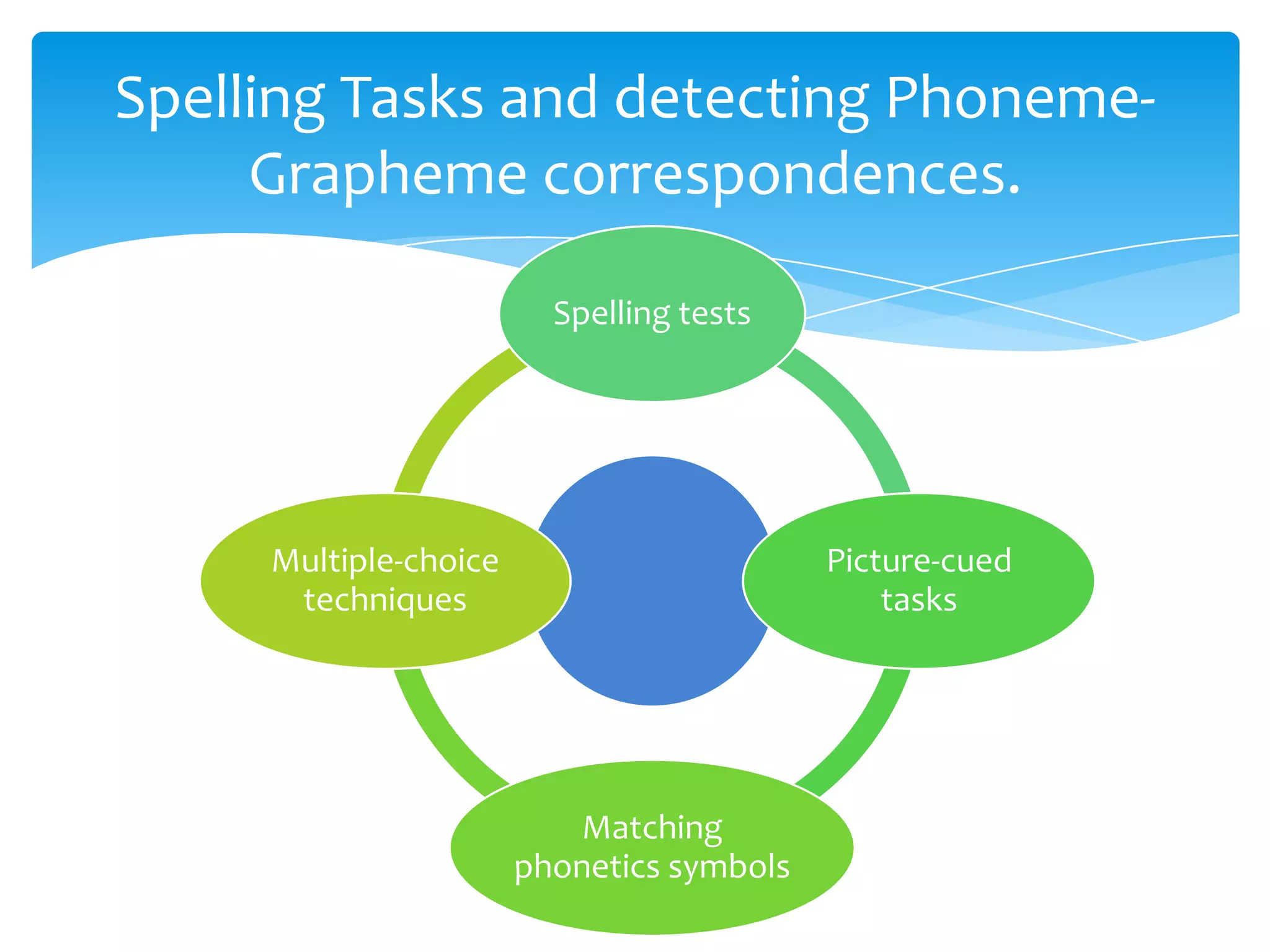
Spelling Tasks and detecting Phoneme-
     Grapheme correspondences.

                         Spelling tests


     Multiple-choice                       Picture-cued
      techniques                               tasks


                          Matching
                       phonetics symbols

Assessing writing

  • 1.
    Assessing Writing Sandra Monserrat Velazquez Grisel Gonzalez Legorreta Luis Enrique G. Baldomero Luis Santiago de la Cruz José Luis Juárez Alcántara
  • 2.
    The ability towrite has become an indispensable skill in our global literate community. The assessment of writing is no simple task. As you consider assessing students’ writing ability, as usual you need o be clear about your objective or criterion.
  • 3.
    Academic writing Genres of written Personal language Job- related writing writing
  • 4.
    Types of writing Performance Extensive Imitative Intensive Responsive (controlled)
  • 5.
    To produce written language basic task of writing letter, words, Imitative punctuation and very brief sentences. The category includes the ability to spell correctly and to perceive: Phoneme-grapheme correspondences in the English spelling system.
  • 6.
    Intensive (Controlled) Producing appropriate Mores concerned wit vocabulary within a focus on form, and are context, collocations rather strictly and idioms and correct controled by the test grammatical features design.
  • 7.
    Responsive Tasks requirelearners to perform at limited discourse level, connecting sentences into a paragraph and creating a logically connected sequence of two or three paragraphs Genres of writing include brief narratives and descriptions, short report, lab, reports, summaries, brief responses to reading, and interpretations of charts or graphs. Form-focused attention is mostly at the discourse level with a strong emphasis on context and meaning.
  • 8.
    Extensive Implies successful management of all the processes and strategies of writing for all purposes, up to the length of an essay , a team paper, a major research project report. Focus on achieving a purpose, organizing and developing ideas logically, using details to support or illustrate ideas. Focus in grammatical form is limited to occasional editing or proofreading of a draft.
  • 9.
    Micro- and Macro-skillsof writing Micro-skills : The earlier micro-skills apply more appropriately to imitative and intensive types of writing task. Macro-skills: Are essential for he successful mastery of responsive and extensive writing.
  • 10.
    Micro-skills: +Produce graphemes and orthographic of English +Produce writing at an efficient rate of speed to suit the purpose. +Produce acceptable core of words and use appropriate word order patterns +Use acceptable grammatical systems(tense, agreement, pluralisation), patterns, and rules. +Express a particular meaning I different grammatical forms. +Use cohesive devices in written discourse.
  • 11.
    Macro-skills: +Usethe rhetorical forms and conventions of written discourse. +Appropriately accomplish the communicative functions of written texts according to form and purpose. +Convey link links and connections between events and communicate such relations as main idea, supporting idea, new information, given information, generalization, and exemplification. +Distinguish between literal and implied meaning when writing. +Correctly convey culturally specific references in the context of the written text. +Develop and use a battery of writing strategies using prewriting devices, writing with fluency in the first drafts using paraphrases and synonyms, soliciting peer and instructor feedback, and using feedback for revising and editing.
  • 12.
    Designing assessment tasks: Imitative writing Tasks in [hand] writing letters, words, and Punctuation • 2.- Listening cloze 1.- Copying selection tasks • 3.-Picture-cued tasks. • 5.- Converting 4.-Form completion numbers and task abbreviations to words.
  • 13.
    Spelling Tasks anddetecting Phoneme- Grapheme correspondences. Spelling tests Multiple-choice Picture-cued techniques tasks Matching phonetics symbols