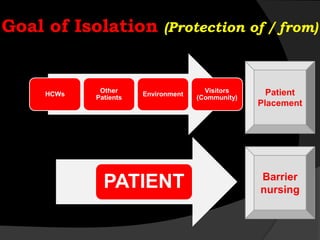
Goal of Isolation (Protection of / from)
HCWs
Other
Patients
Environment
Visitors
(Community)
Patient
Placement
PATIENT Barrier
nursing
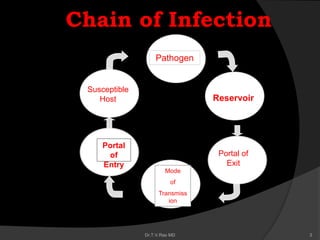
Chain of Infection
Pathogen
Reservoir
Portal of
Exit
Mode
of
Transmiss
ion
Portal
of
Entry
Susceptible
Host
Dr.T.V.Rao MD 3
Why Isolation?.. because transmission is
easier to control than the source / host!
Our Hands are Threat to LIFE
Just Washing can Save Many
LIVES
Dr.T.V.Rao MD 6
Handwashing
 Most important
 Soap and water OR
 alcohol based products – when no visible
soiliing
 Length of fingernails ???
 When to wash??
Hand washing
8
Gloves
 Gloving
 Protective barrier
○ To caregivers
○ To patients
○ Between patients / within the same patient
 When?
○ Anticipated direct contact with non intact skin/body fluids
○ Care of patients colonized with MDRO
○ Handling potentially contaminated patient care
equipments/env
 Failure to change gloves between patient contacts –
INFECTION CONTROL HAZARD
Other Barrier Protection
 Masks
 Eye protection
 Goggles/Face Shields
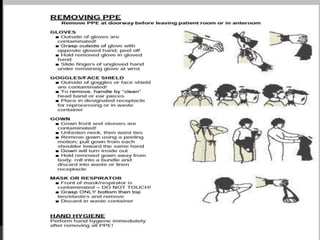
 Gowns and protective apparel
 Why gowns???
 When to remove??
Respiratory protection
Face Masks N95 Respirators
 Loose fitting, not
designed to filter out
small aerosols
 Place on coughing
patient (source control)
 HCW should wear mask
to
 protect patient during
certain procedures (e.g.,
surgery)
 protect HCW
○ droplet precautions
○ Mask + goggles for
anticipated
spray/splash
 Tight fitting respirator,
designed to filter the
air
 Protects the wearer
 HCW should wear
when concerned about
transmission by
airborne route
 Patient Care Equipment and Articles
 Disposal
○ Bags
 Sharps
 Reusable devices
○ Critical - Sterilised / Disinfected
○ Non critical – cleaned amd disinfected after
use
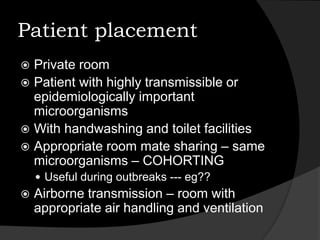
Patient placement
 Private room
 Patient with highly transmissible or
epidemiologically important
microorganisms
 With handwashing and toilet facilities
 Appropriate room mate sharing – same
microorganisms – COHORTING
 Useful during outbreaks --- eg??
 Airborne transmission – room with
appropriate air handling and ventilation
Transport
 Only for essential purposes
 With appropriate barriers
 Precautions in the new area to be
transported
 Informing patients
Others
 Linen and Laundary
 Common sense storage and processing of
soiled linen
 Dishes, Glasses, Cups, and Eating
Utensils
 Hot water and detergents
 Routine and Terminal cleaning
Standard Precautions
 Universal Precautions + Body
Substance isolation
 Principle : All blood, body fluids,
secretions, excretions except sweat, non
intact skin, and mucous membranes
may contain transmissble infectious
agents
 FOR THE CARE OF ALL PATIENTS
Standard Precautions .
 Hand washing
 PPE – gloves,mask,goggles ,
gown.
 Proper - handling of soiled
patient care equipments,
environmental cleaning,disposal
of sharps.
 Respiratory hygiene/cough
etiquette
 Minimal handling of soiled linen.19
Transmission Based Precautions
21
Airborne
PRECAUTIONS
Tuberculosis
Measles
Chickenpox
Small pox
22
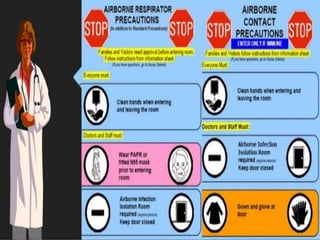
Airborne precautions
 Patient placement :
 monitored negative air pressure
 6-12 air changes per hour
 Appropriate discharge of air outdoors
 Keep the room door closed
 Respiratory protection
 N 95 mask while entering the room / discard
in trash while leaving the room
 Patient transport
 Mask on the patient
Droplet
precautions
Neisseria meningitidis
Influenza, H1N1
Adenovirus, rhinovirus
Pertussis, Mumps
Grp A Streptococcus
Mycoplasma pneumoniae
25
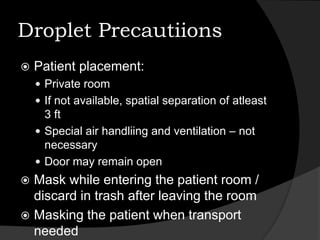
Droplet Precautiions
 Patient placement:
 Private room
 If not available, spatial separation of atleast
3 ft
 Special air handliing and ventilation – not
necessary
 Door may remain open
 Mask while entering the patient room /
discard in trash after leaving the room
 Masking the patient when transport
needed
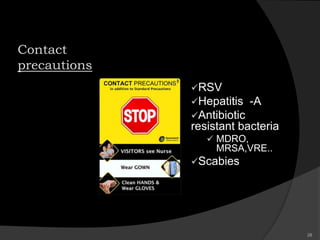
Contact
precautions
RSV
Hepatitis -A
Antibiotic
resistant bacteria
 MDRO,
MRSA,VRE..
Scabies
28
Contact Precautions
 Private room
 Gloves and Handwashing
 Gown – remove when leaving the room
 Precautions while transport
 Dedicate the use of non critical patient
care equipment to a single patient (or)
clean and disinfect before use for
another patient
 This is opposite of the
other isolations!!
 It is to protect the
patient from the
organisms in the
environment.
 Immunocompromised
patients
 Burn patients
 Patients receiving
chemotherapy or
radiation
REVERSED ISOLATION
 Sterile gloves, gowns, masks are used
by HCW and visitors.
 Frequent disinfecting of the room
 All equipment and supplies are sterile
and at best disinfected before entering
room
 Positive pressure in the room. Filtered,
clean air is brought into the room and
allowed to vent out of the room to the
surrounding corridors.
Protect the patient
QUESTIONS ???
 When do you practice standard precautions?
 Among the mask, gown, gloves which do you
need the most in contact precautions?
 What would you do after using USG machine for a
patient with MRSA?
 When a patient is isolated with contact
precautions, doctor adjusts the ventilator settings
without gloves.. What is your take? What would
you do?
 When a patient with tuberculosis is admitted, what
kind of isolation would you do?
 When there is no private room available for a
patient with swine flu what are your options for
admission?
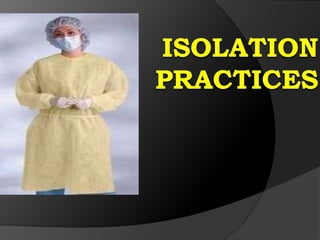
Isolation practices

Isolation practices

  • 2.
    Goal of Isolation(Protection of / from) HCWs Other Patients Environment Visitors (Community) Patient Placement PATIENT Barrier nursing
  • 3.
    Chain of Infection Pathogen Reservoir Portalof Exit Mode of Transmiss ion Portal of Entry Susceptible Host Dr.T.V.Rao MD 3
  • 4.
    Why Isolation?.. becausetransmission is easier to control than the source / host!
  • 6.
    Our Hands areThreat to LIFE Just Washing can Save Many LIVES Dr.T.V.Rao MD 6
  • 7.
    Handwashing  Most important Soap and water OR  alcohol based products – when no visible soiliing  Length of fingernails ???  When to wash??
  • 8.
  • 9.
    Gloves  Gloving  Protectivebarrier ○ To caregivers ○ To patients ○ Between patients / within the same patient  When? ○ Anticipated direct contact with non intact skin/body fluids ○ Care of patients colonized with MDRO ○ Handling potentially contaminated patient care equipments/env  Failure to change gloves between patient contacts – INFECTION CONTROL HAZARD
  • 10.
    Other Barrier Protection Masks  Eye protection  Goggles/Face Shields  Gowns and protective apparel  Why gowns???  When to remove??
  • 11.
    Respiratory protection Face MasksN95 Respirators  Loose fitting, not designed to filter out small aerosols  Place on coughing patient (source control)  HCW should wear mask to  protect patient during certain procedures (e.g., surgery)  protect HCW ○ droplet precautions ○ Mask + goggles for anticipated spray/splash  Tight fitting respirator, designed to filter the air  Protects the wearer  HCW should wear when concerned about transmission by airborne route
  • 14.
     Patient CareEquipment and Articles  Disposal ○ Bags  Sharps  Reusable devices ○ Critical - Sterilised / Disinfected ○ Non critical – cleaned amd disinfected after use
  • 15.
    Patient placement  Privateroom  Patient with highly transmissible or epidemiologically important microorganisms  With handwashing and toilet facilities  Appropriate room mate sharing – same microorganisms – COHORTING  Useful during outbreaks --- eg??  Airborne transmission – room with appropriate air handling and ventilation
  • 16.
    Transport  Only foressential purposes  With appropriate barriers  Precautions in the new area to be transported  Informing patients
  • 17.
    Others  Linen andLaundary  Common sense storage and processing of soiled linen  Dishes, Glasses, Cups, and Eating Utensils  Hot water and detergents  Routine and Terminal cleaning
  • 18.
    Standard Precautions  UniversalPrecautions + Body Substance isolation  Principle : All blood, body fluids, secretions, excretions except sweat, non intact skin, and mucous membranes may contain transmissble infectious agents  FOR THE CARE OF ALL PATIENTS
  • 19.
    Standard Precautions . Hand washing  PPE – gloves,mask,goggles , gown.  Proper - handling of soiled patient care equipments, environmental cleaning,disposal of sharps.  Respiratory hygiene/cough etiquette  Minimal handling of soiled linen.19
  • 21.
  • 22.
  • 23.
    Airborne precautions  Patientplacement :  monitored negative air pressure  6-12 air changes per hour  Appropriate discharge of air outdoors  Keep the room door closed  Respiratory protection  N 95 mask while entering the room / discard in trash while leaving the room  Patient transport  Mask on the patient
  • 25.
    Droplet precautions Neisseria meningitidis Influenza, H1N1 Adenovirus,rhinovirus Pertussis, Mumps Grp A Streptococcus Mycoplasma pneumoniae 25
  • 26.
    Droplet Precautiions  Patientplacement:  Private room  If not available, spatial separation of atleast 3 ft  Special air handliing and ventilation – not necessary  Door may remain open  Mask while entering the patient room / discard in trash after leaving the room  Masking the patient when transport needed
  • 28.
  • 29.
    Contact Precautions  Privateroom  Gloves and Handwashing  Gown – remove when leaving the room  Precautions while transport  Dedicate the use of non critical patient care equipment to a single patient (or) clean and disinfect before use for another patient
  • 31.
     This isopposite of the other isolations!!  It is to protect the patient from the organisms in the environment.  Immunocompromised patients  Burn patients  Patients receiving chemotherapy or radiation REVERSED ISOLATION
  • 32.
     Sterile gloves,gowns, masks are used by HCW and visitors.  Frequent disinfecting of the room  All equipment and supplies are sterile and at best disinfected before entering room  Positive pressure in the room. Filtered, clean air is brought into the room and allowed to vent out of the room to the surrounding corridors. Protect the patient
  • 33.
    QUESTIONS ???  Whendo you practice standard precautions?  Among the mask, gown, gloves which do you need the most in contact precautions?  What would you do after using USG machine for a patient with MRSA?  When a patient is isolated with contact precautions, doctor adjusts the ventilator settings without gloves.. What is your take? What would you do?  When a patient with tuberculosis is admitted, what kind of isolation would you do?  When there is no private room available for a patient with swine flu what are your options for admission?