Is Peer Review Peerless?


          Tony Eklof
     James Joyce Library
   University College Dublin
   LIR Annual Seminar 2009
Peer Review
• What it is
• The peer review process
• Why peer review
• Criticisms
• Peer review in the sciences
• Peer review in the
  humanities
• Conclusions
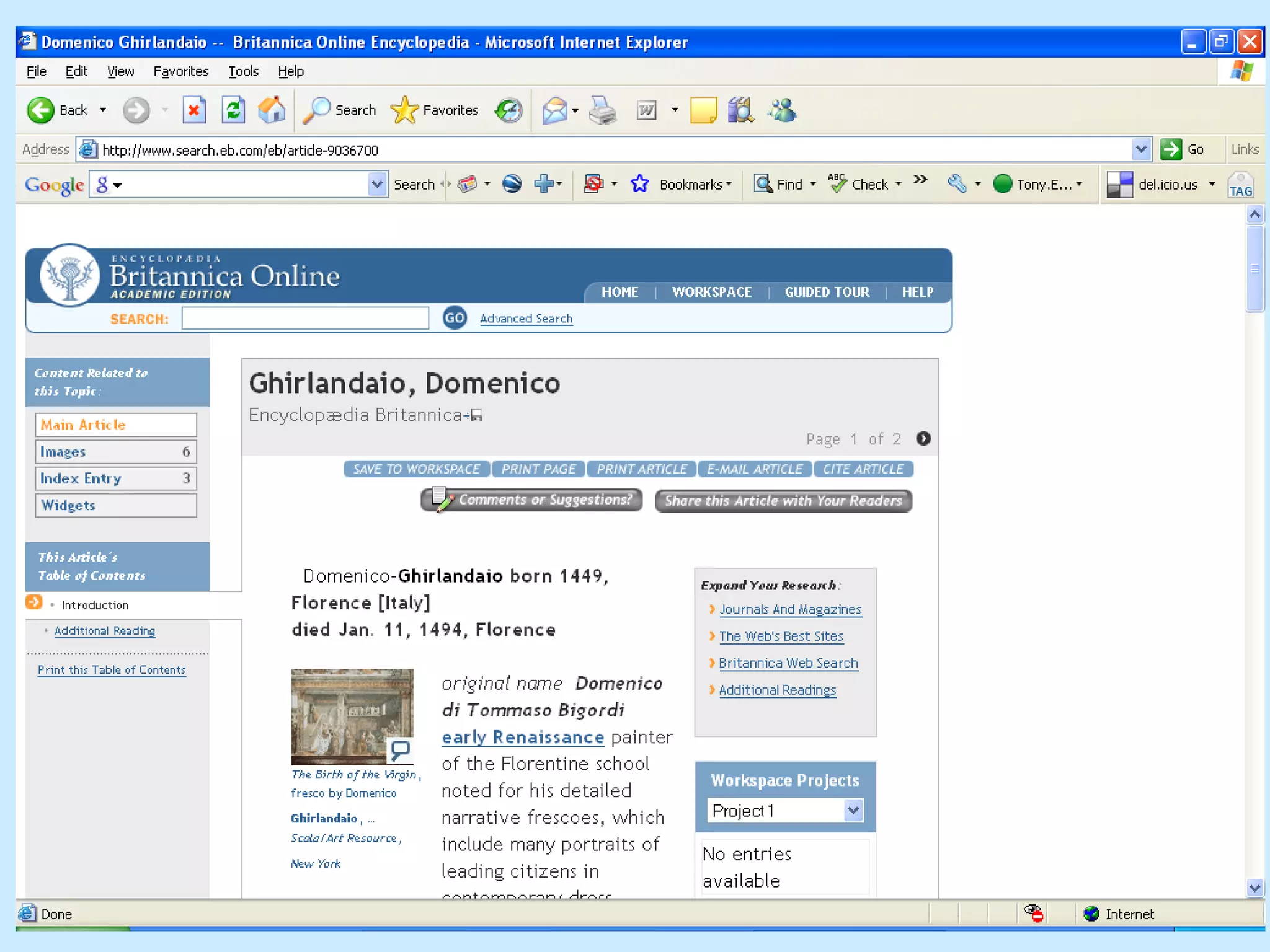
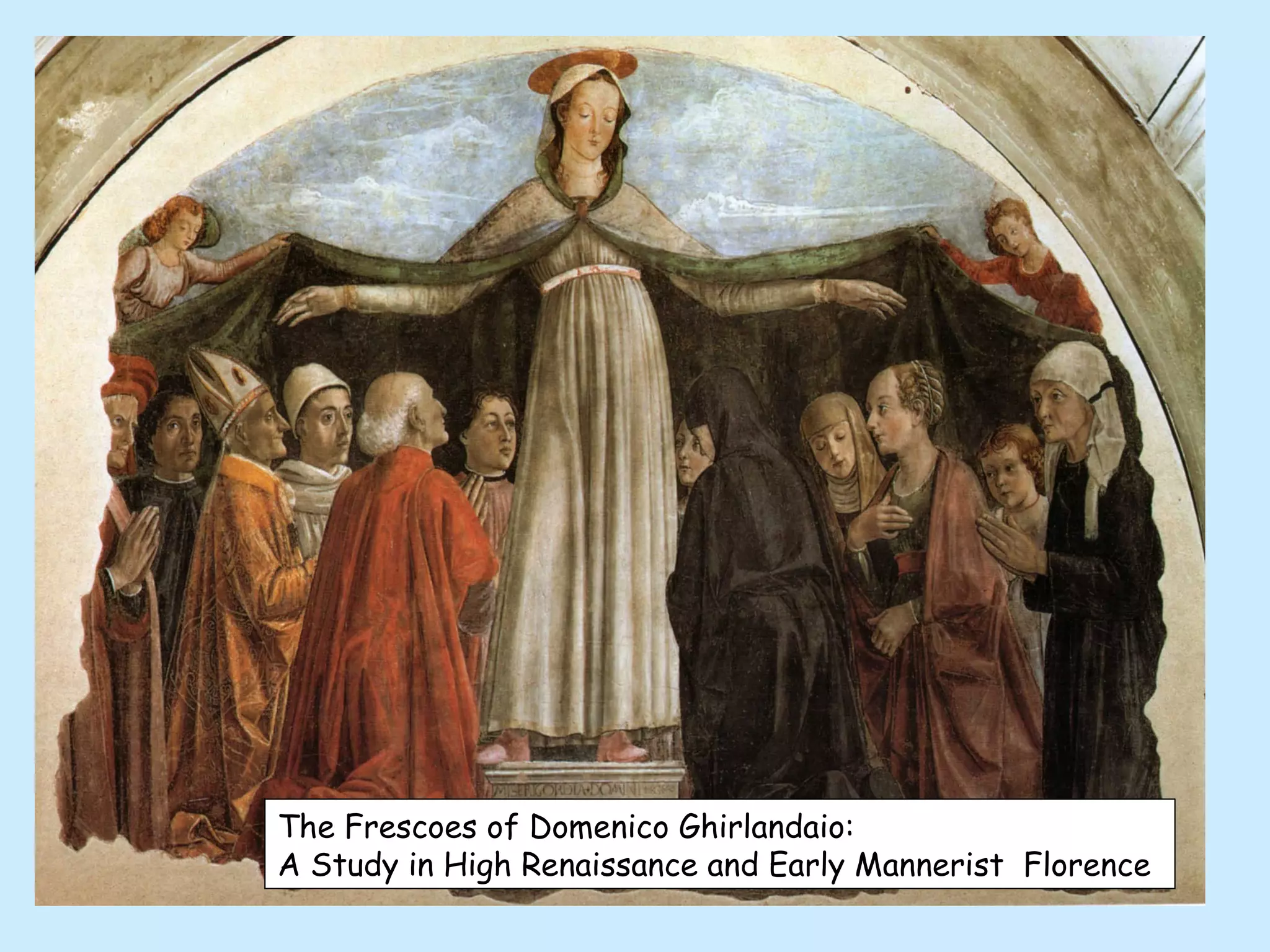
The Frescoes of Domenico Ghirlandaio:
A Study in High Renaissance and Early Mannerist Florence
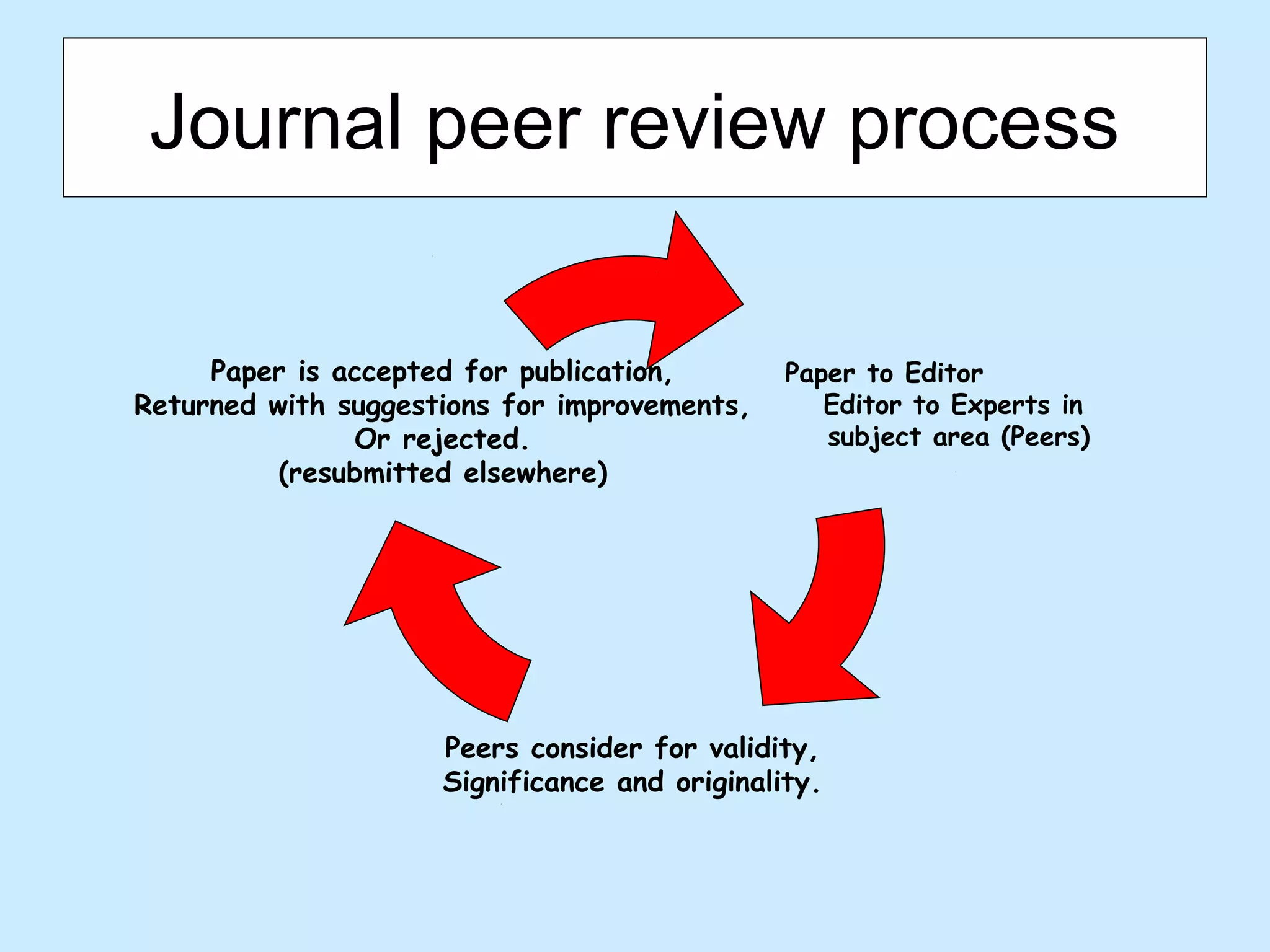
Journal peer review process

     Paper is accepted for publication,        Paper to Editor
Returned with suggestions for improvements,       Editor to Experts in
               Or rejected.                       subject area (Peers)
          (resubmitted elsewhere)


                     Peers consider for validity,
                     Significance and originality.
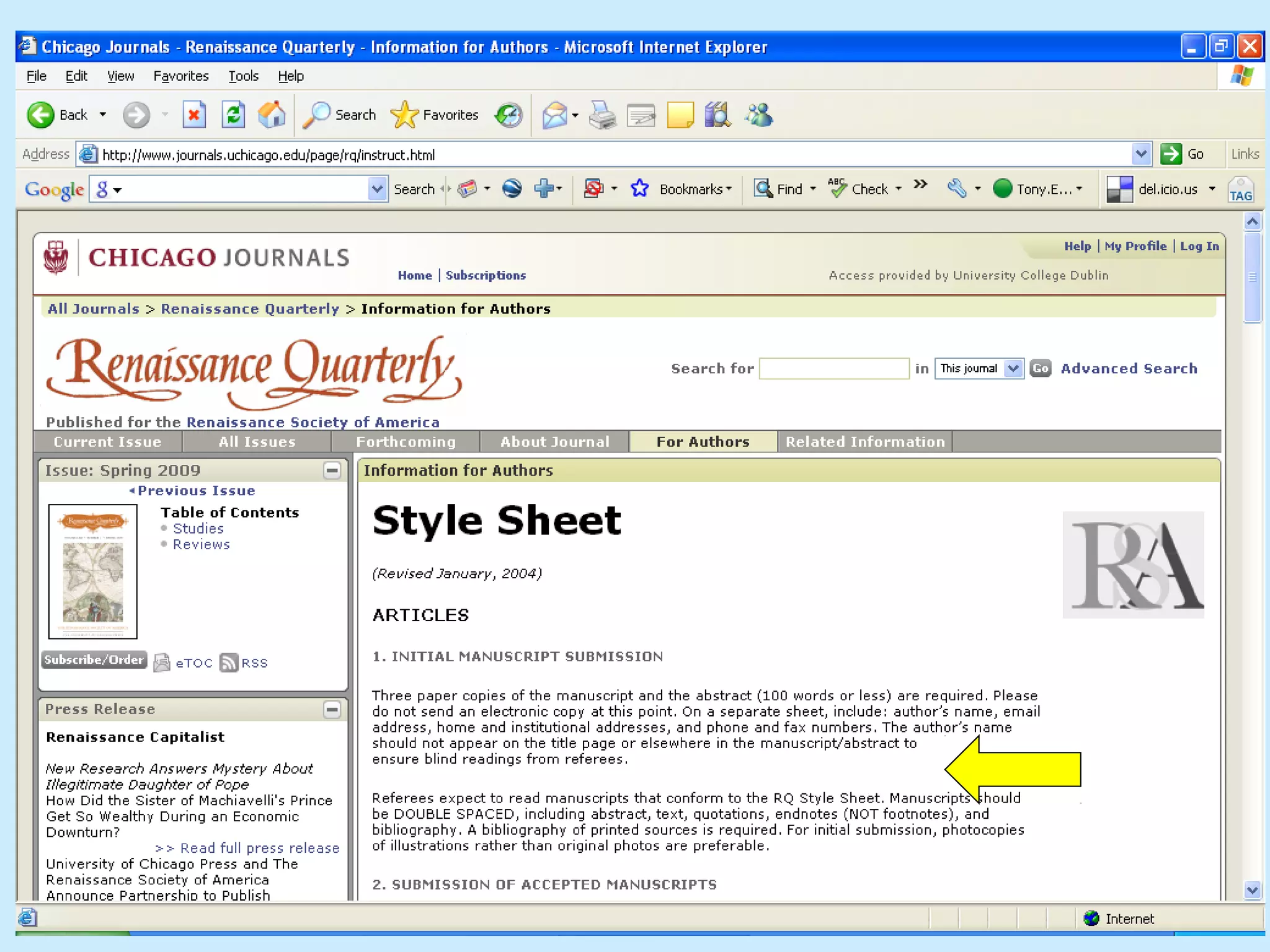
Double Blind Review
• Both authors & referees anonymous
• Survey shows it is preferred
• Support highest in humanities and
  amongst female authors (reduces bias)
• Causes some problems with reviewers ie
  comparing with earlier works
• At odds with the open sharing of
  information and transparency?
Open Review
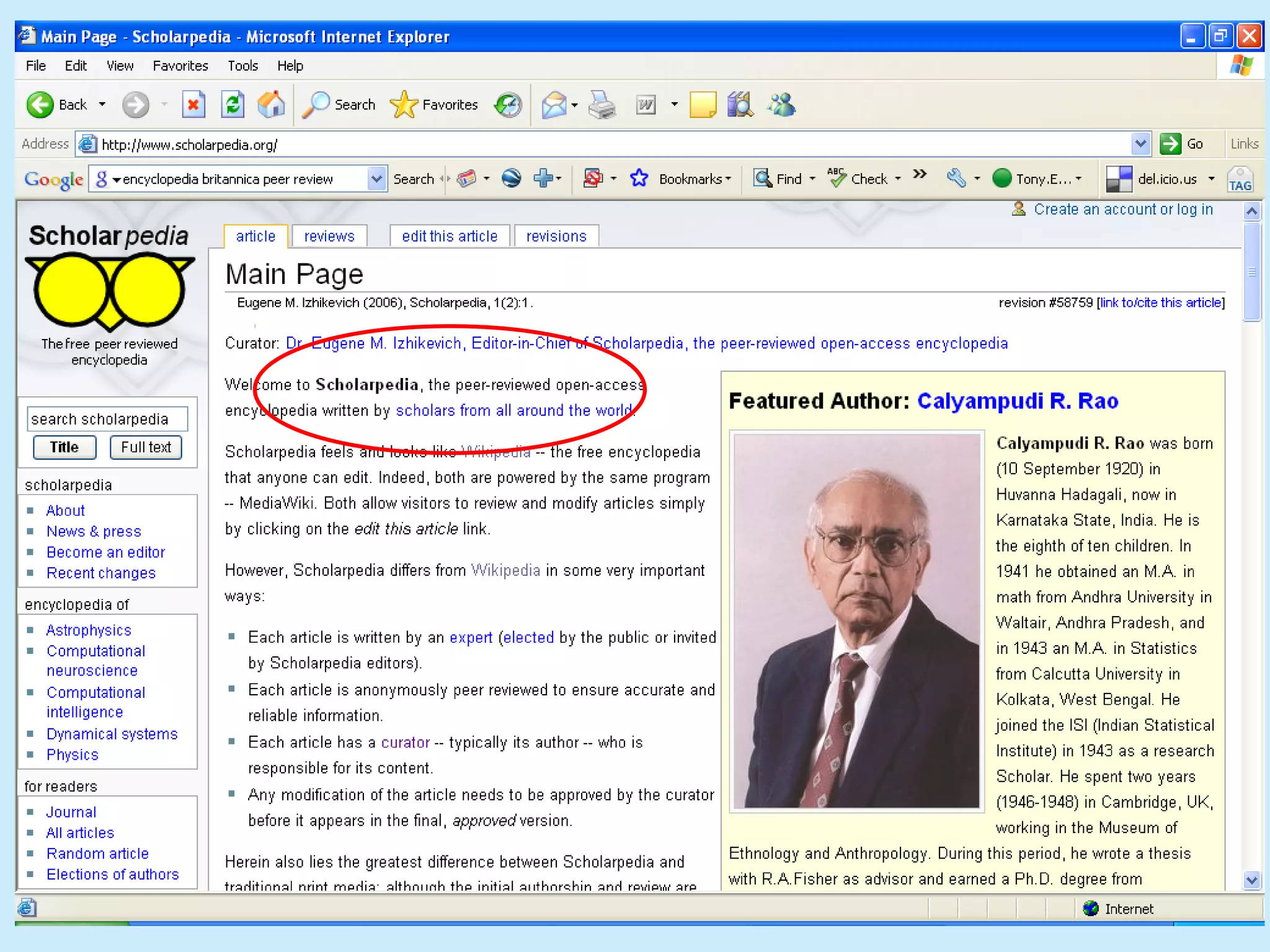
• Some researchers now post pre-
  publication versions on web to invite
  feedback before formal submission


• Increasingly reader’s comments and
  criticisms, particularly for open access
  journals, add a positive element to the
  process
Why Peer Review?

•   Quality control for scholarly information
•   Weeds out fraud
•   Lessens workload of Editor
•   Promotes originality and academic rigour
    – Mechanism for improvement of manuscripts
• Adds a ‘human judgement’ element to the
  academic process
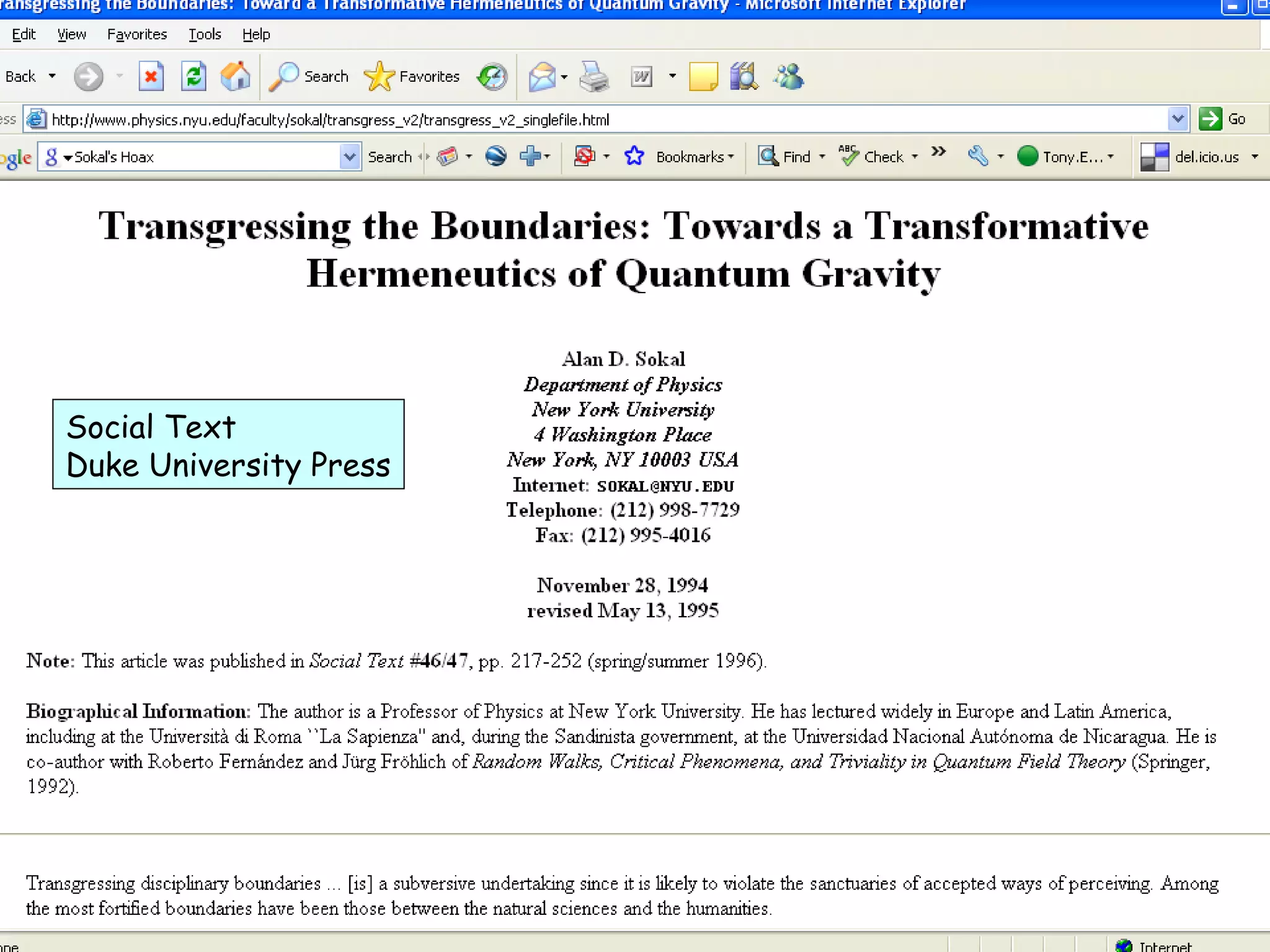
Social Text
Duke University Press
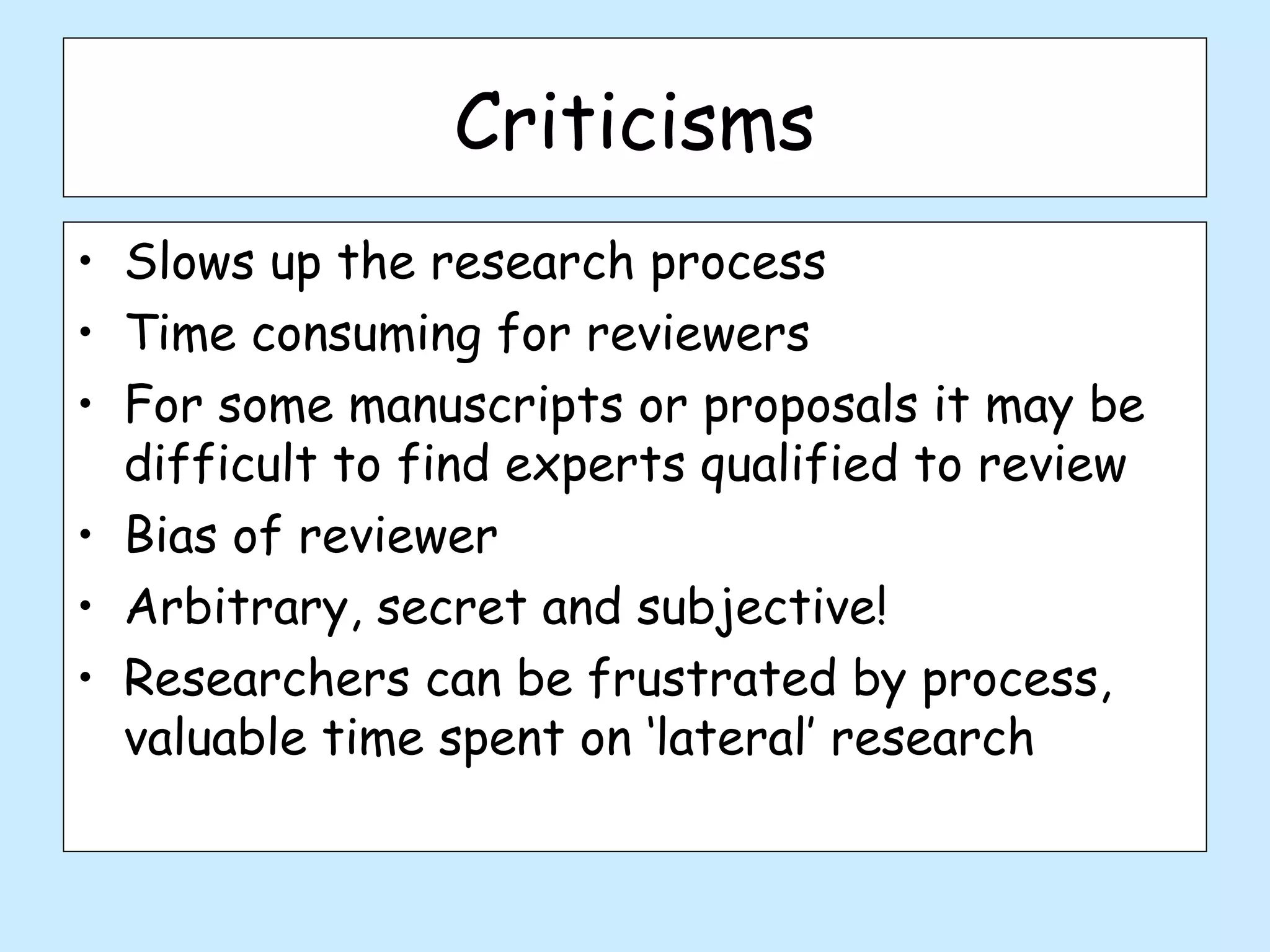
Criticisms
• Slows up the research process
• Time consuming for reviewers
• For some manuscripts or proposals it may be
  difficult to find experts qualified to review
• Bias of reviewer
• Arbitrary, secret and subjective!
• Researchers can be frustrated by process,
  valuable time spent on ‘lateral’ research
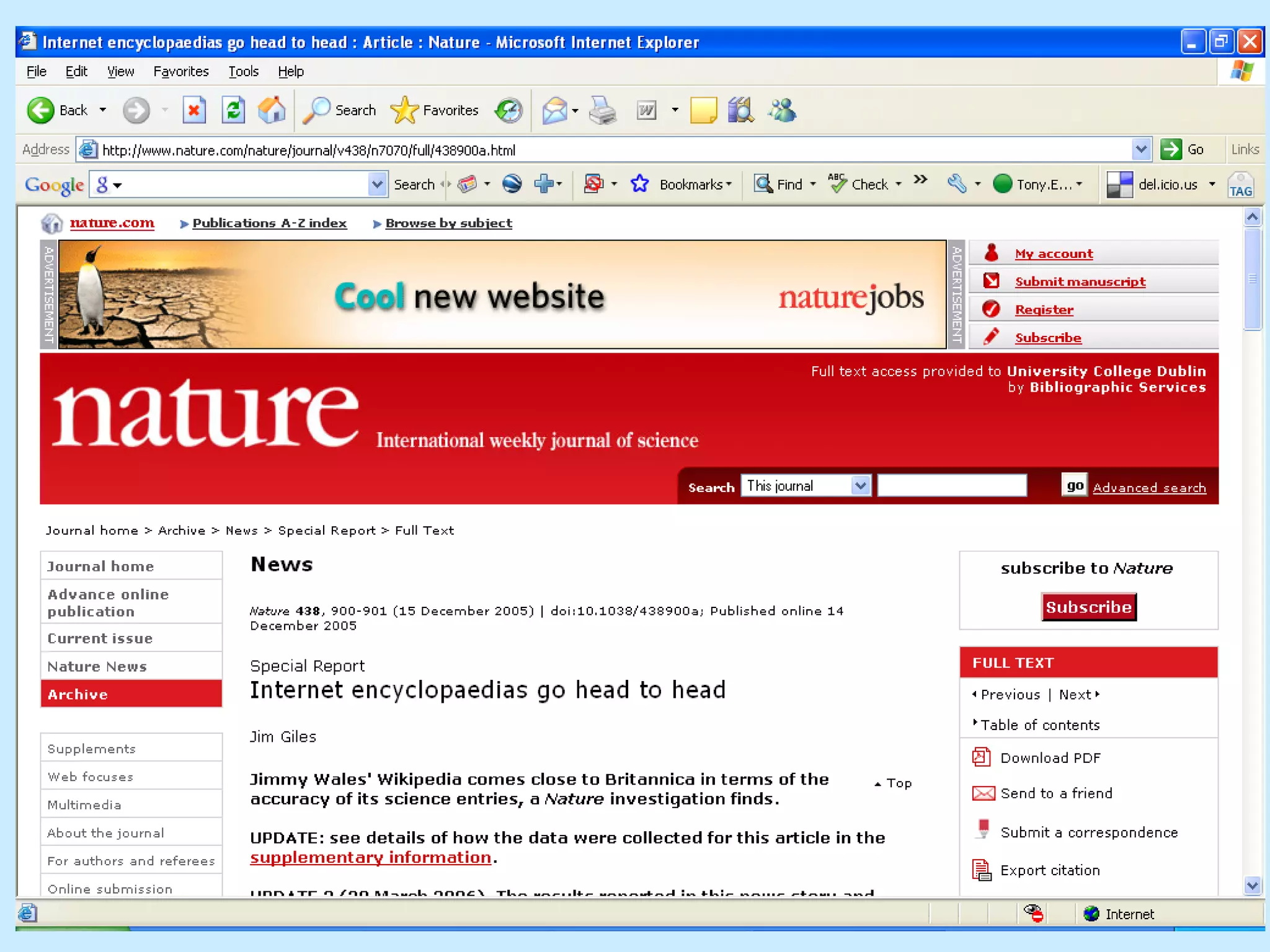
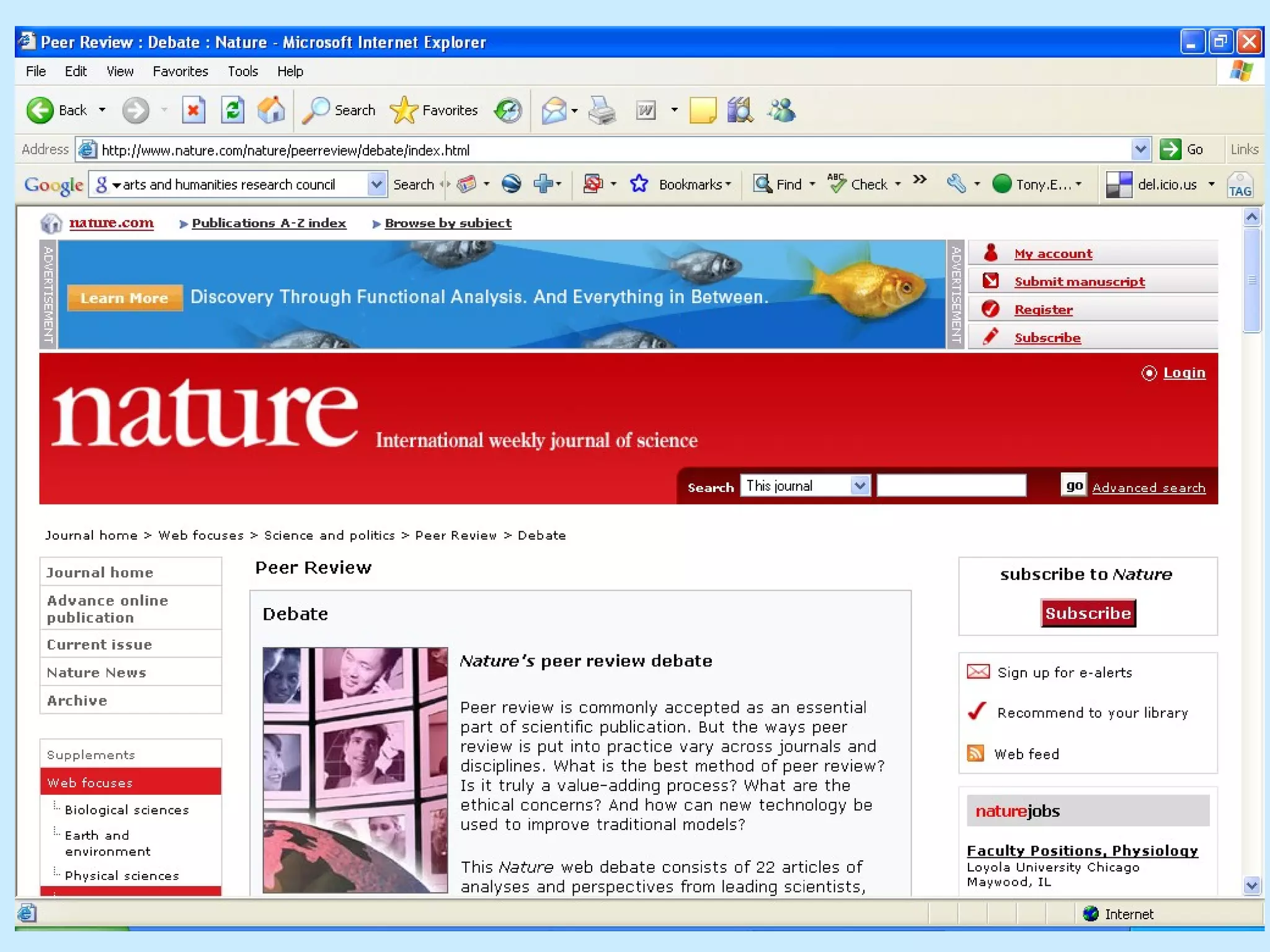
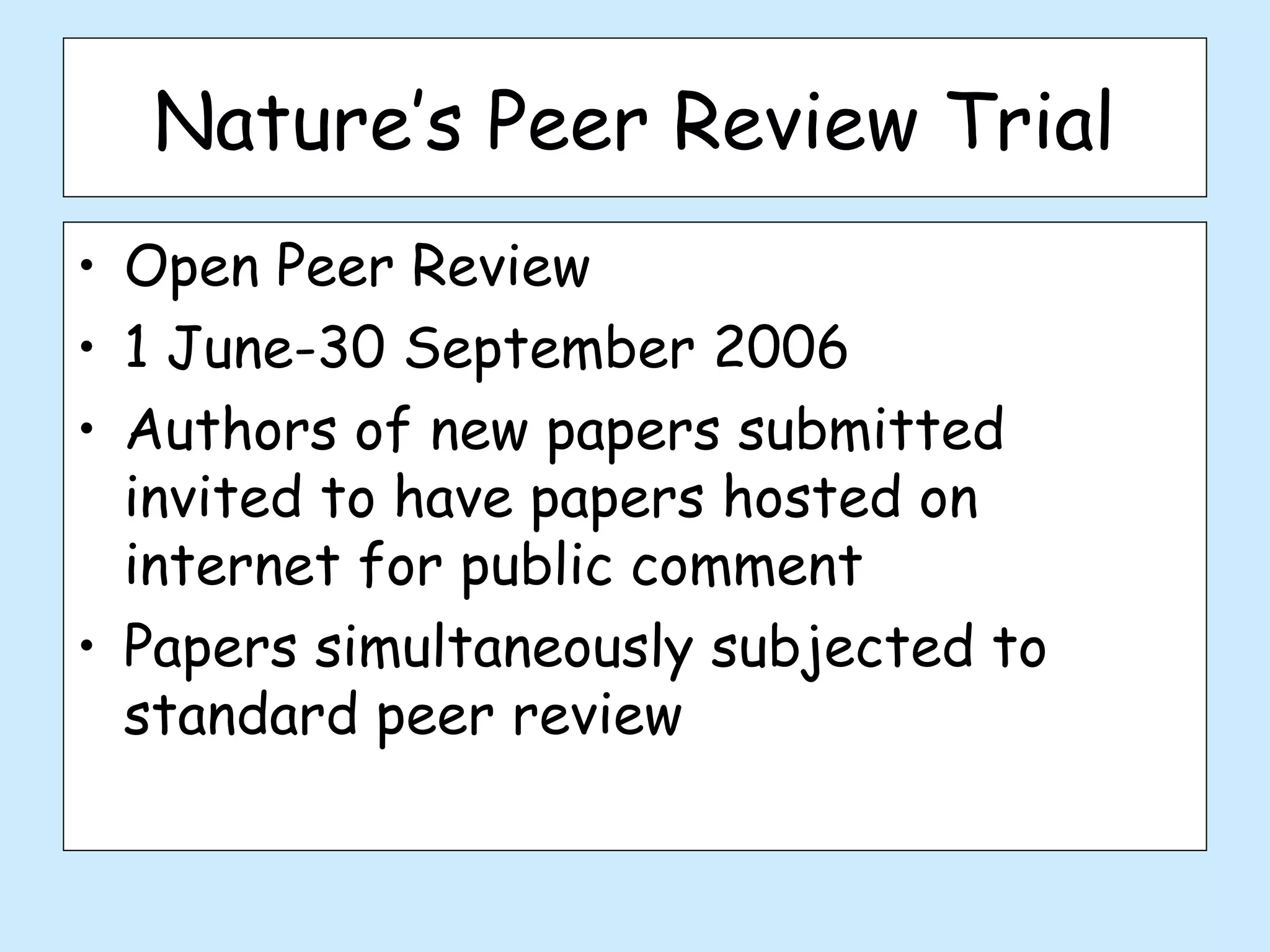
Nature’s Peer Review Trial
• Open Peer Review
• 1 June-30 September 2006
• Authors of new papers submitted
  invited to have papers hosted on
  internet for public comment
• Papers simultaneously subjected to
  standard peer review
Nature’s Open Review
• 71 out of 1,369 authors agreed to
  display papers for open comment (5%)
• Healthy online traffic, but did not
  convert into significant amount of
  useful comment
• Some authors reluctant for fear of
  ideas being ‘scooped’
• Nature to continue to explore open
  review but not to implement system
Peer Review in Humanities
• Applying bibliometric indicators in Arts
  can be problematical
• Very broad range of subjects
• Some esoteric and specialised
• Interdisciplinary nature
• Performing arts difficult to peer review
Conclusion
• Peer review is a flawed, much criticised
  system of insuring academic rigour in
  published journal articles
• There is no better alternative system
  on offer
• System improved by open and or double
  blind review, and by training for peer
  reviewers
Is peer review peerless? Author: Tony Eklof

Is peer review peerless? Author: Tony Eklof

  • 1.
    Is Peer ReviewPeerless? Tony Eklof James Joyce Library University College Dublin LIR Annual Seminar 2009
  • 2.
    Peer Review • Whatit is • The peer review process • Why peer review • Criticisms • Peer review in the sciences • Peer review in the humanities • Conclusions
  • 11.
    The Frescoes ofDomenico Ghirlandaio: A Study in High Renaissance and Early Mannerist Florence
  • 13.
    Journal peer reviewprocess Paper is accepted for publication, Paper to Editor Returned with suggestions for improvements, Editor to Experts in Or rejected. subject area (Peers) (resubmitted elsewhere) Peers consider for validity, Significance and originality.
  • 14.
    Double Blind Review •Both authors & referees anonymous • Survey shows it is preferred • Support highest in humanities and amongst female authors (reduces bias) • Causes some problems with reviewers ie comparing with earlier works • At odds with the open sharing of information and transparency?
  • 15.
    Open Review • Someresearchers now post pre- publication versions on web to invite feedback before formal submission • Increasingly reader’s comments and criticisms, particularly for open access journals, add a positive element to the process
  • 16.
    Why Peer Review? • Quality control for scholarly information • Weeds out fraud • Lessens workload of Editor • Promotes originality and academic rigour – Mechanism for improvement of manuscripts • Adds a ‘human judgement’ element to the academic process
  • 17.
  • 18.
    Criticisms • Slows upthe research process • Time consuming for reviewers • For some manuscripts or proposals it may be difficult to find experts qualified to review • Bias of reviewer • Arbitrary, secret and subjective! • Researchers can be frustrated by process, valuable time spent on ‘lateral’ research
  • 20.
    Nature’s Peer ReviewTrial • Open Peer Review • 1 June-30 September 2006 • Authors of new papers submitted invited to have papers hosted on internet for public comment • Papers simultaneously subjected to standard peer review
  • 21.
    Nature’s Open Review •71 out of 1,369 authors agreed to display papers for open comment (5%) • Healthy online traffic, but did not convert into significant amount of useful comment • Some authors reluctant for fear of ideas being ‘scooped’ • Nature to continue to explore open review but not to implement system
  • 23.
    Peer Review inHumanities • Applying bibliometric indicators in Arts can be problematical • Very broad range of subjects • Some esoteric and specialised • Interdisciplinary nature • Performing arts difficult to peer review
  • 24.
    Conclusion • Peer reviewis a flawed, much criticised system of insuring academic rigour in published journal articles • There is no better alternative system on offer • System improved by open and or double blind review, and by training for peer reviewers