International Research Journal of Engineering and Technology (IRJET) e-ISSN: 2395-0056
Volume: 07 Issue: 03 | Mar 2020 www.irjet.net p-ISSN: 2395-0072
© 2020, IRJET | Impact Factor value: 7.34 | ISO 9001:2008 Certified Journal | Page 267
Human Pose Detection using Deep Learning
Deepak Maurya1, Grandel Dsouza2, Anoop Patel3
1,2,3 Student, Dept. of Information Technology, Xavier Institute of Engineering, Mahim, Mumbai,
Maharashtra, India.
---------------------------------------------------------------------***----------------------------------------------------------------------
Abstract - Human pose detection is a crucial problem within
the field of Computer Vision. Imagine having the ability to
trace a person’s every small movement and do a
biomechanical analysis in real-time. This technology has a
huge implication both now and in the future. Applications
based on Human pose detection may including video
surveillance, assisted living, healthy lifestyle and sports
analysis. Formally speaking, Pose Estimation or detection is
predicting the part or joint positions of an individual from a
picture or a video. This technology is made possible by
combining two major computer technologies i.e. Artificial
Intelligence (A.I.) and Computer Graphics
Key Words: Human pose detection, Computer vision,
biomechanical analysis, video surveillance, assisted living,
sport analysis, Artificial intelligence, computer graphics.
1. INTRODUCTION
Human body pose estimation or detection in computer
vision/graphics is that the study of algorithms, systems,
and pre-trained models that recover the pose of an
articulated body, which consists of joints and rigid parts
using image-based observations. it's one of the longest-
lasting prevalent problems in computer vision the reason
being the complexity of the models that relate observation
with the pose, and since of the variability of situations
during which it'd beuseful.
Perception of the citizens in their neighbouring
environment is a crucial capability that robots must
possess. If an individual uses gestures to point to a specific
object, then the interacting machine should be ready to
understand things in the world context. Thus, pose
estimation is a crucial and challenging problem in computer
vision, and lots of algorithms are deployed in solving this
problem over the last 25 years. Many solutions involve
training complex models with large sample data sets and
hence improvising and progressing further.
Pose estimation may be a difficult problem and a lively
subject of research because the physical body has 244
degrees of freedom with 230 joints. Although not all
movements between joints are evident, the physical body
consists of 10 large parts with 20 degrees of freedom.
Algorithms must account for giant variability introduced by
differences in appearance thanks to clothing, body shape,
size, and hairstyles. Additionally, the results could also be
ambiguous thanks to partial occlusions from self-
articulation, like an individual's hand covering their face,
or occlusions from external objects. Finally, most
algorithms estimate pose from monocular (two-
dimensional) images, taken from a traditional camera.
Other issues include varying lighting and camera
configurations. The challenges are made even more complex
to match up to additional performance requirements. These
images lack the three-dimensional (3-D) information of an
actual body pose, resulting in further ambiguities. there's
recent add this area wherein images from RGBD cameras
provide information about colour and depth.
2. How exactly did we achieve human pose detection
using deep learning?
Firstly, to implement Human pose detection a computer
system must precisely distinguish between a human being
and the surrounding objects and the system must recognize
the different body parts and differ each one from the other
without any faults. This is where deep learning comes into
the picture. What exactly is done is that the computer system
is trained with different sample data in this context the
system will be trained with different images like head,
shoulders, arms etc. The training is performed using the
Neural network concept of machine learning like CNN
(Convolutional neural network) and Deep learning. Thus,
different images of the different body parts and at different
angles are fed on to the system and thus a trained model is
achieved. Here it must be noted that the more sample data set
the system is trained with the better performance the system
shall yield. Also every body part here in the trained model
will have a unique identity co-ordinate. This trained model is
termed as COCO (common objects in context) model and MPII
model. Functionalities of these models are: a) Image
classification b) Object localization c) Semantic segmentation
d) Segmenting individual object instances.
Upon achieving the above models, we now have an
intelligent system that can identify and distinguish a human
body from the surrounding. Now is where the computer
graphics comes into picture. For computer graphics we have
used OpenCV which we have used as a python library for
image processing as well as video processing. Also, we have
use Flask for designing a website (i.e. for Graphical User
Interface)
International Research Journal of Engineering and Technology (IRJET) e-ISSN: 2395-0056
Volume: 07 Issue: 03 | Mar 2020 www.irjet.net p-ISSN: 2395-0072
© 2020, IRJET | Impact Factor value: 7.34 | ISO 9001:2008 Certified Journal | Page 268
3. Implementation Methodology
We approached the project in seven phases which are
mentioned below:
1. Firstly, we downloaded the model weights
2. Then we loaded it into the network
3. Read video as a set of frames which we took as
an input to the network
4. Predictions were made and key points were
parsed
5. By using the key points, the skeletal
structure was drawn
6. The skeletal structure gave the various angles that
were being made
7. Finally using the angles, we got a result wherein
certain instructions were given and then we plotted
the graph
4. Details of Hardware and Software
Hardware:
a. CPU: 4 core processor
b. RAM: 4 GB
Software:
i. Python 3.6
ii. OpenCV
iii. Visual Studio Code
iv. Operating System: Windows 10
5. Results
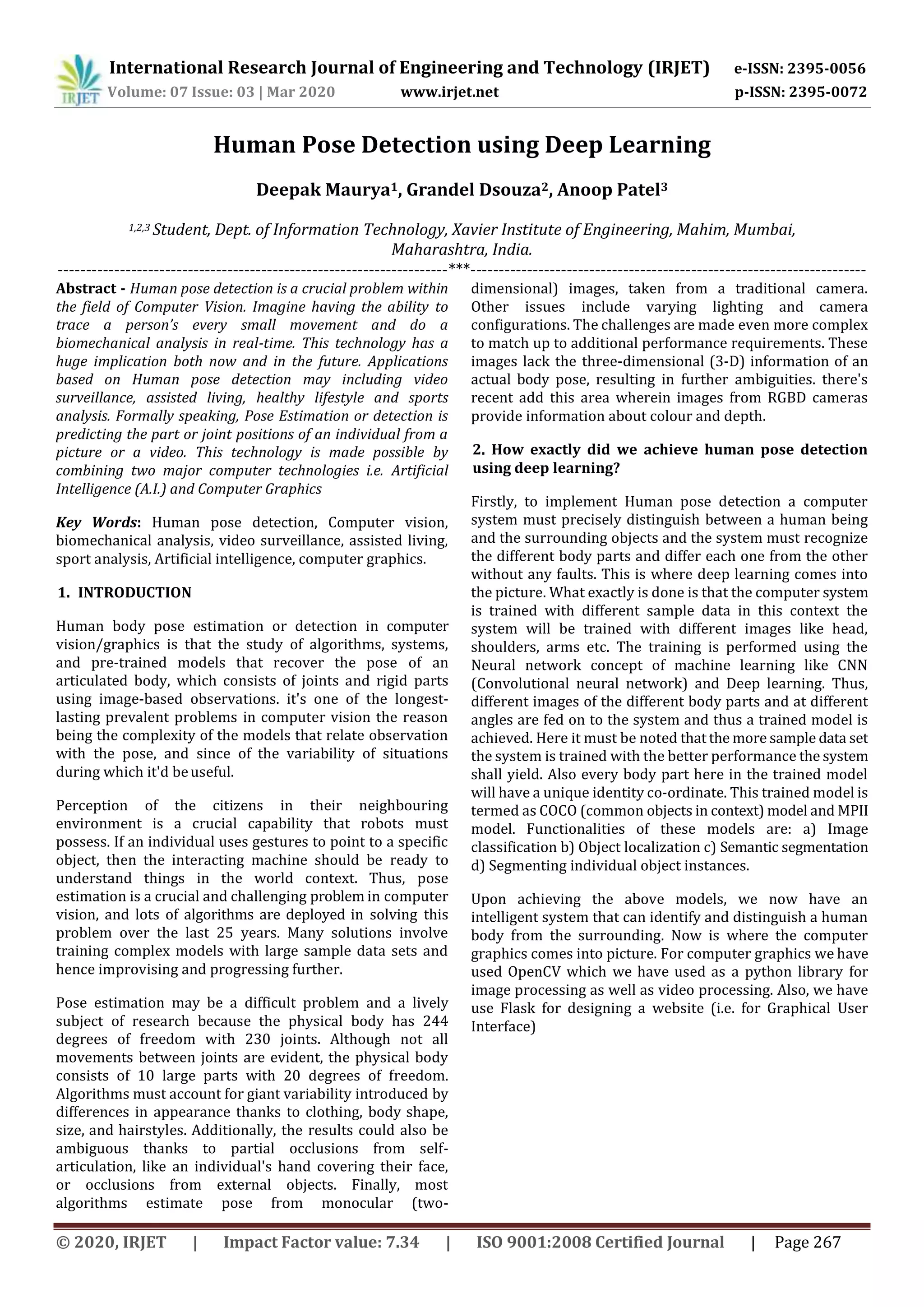
Figure-1: Skeletal structure of a human being and
instructions corresponding to it
Here we can see the skeletal structure of a human being.
Whenever a human being is doing certain exercises, there
are predefined angles at which the movements should take
place. Based on one’s action, one would get the
instructions. If one is not doing the movements properly,
then one would be cautioned about that so that he can
make the required improvements.
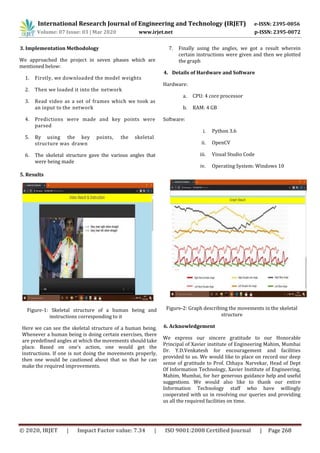
Figure-2: Graph describing the movements in the skeletal
structure
6. Acknowledgement
We express our sincere gratitude to our Honorable
Principal of Xavier institute of Engineering Mahim, Mumbai
Dr. Y.D.Venkatesh for encouragement and facilities
provided to us. We would like to place on record our deep
sense of gratitude to Prof. Chhaya Narvekar, Head of Dept
Of Information Technology, Xavier Institute of Engineering,
Mahim, Mumbai, for her generous guidance help and useful
suggestions. We would also like to thank our entire
Information Technology staff who have willingly
cooperated with us in resolving our queries and providing
us all the required facilities on time.
International Research Journal of Engineering and Technology (IRJET) e-ISSN: 2395-0056
Volume: 07 Issue: 03 | Mar 2020 www.irjet.net p-ISSN: 2395-0072
© 2020, IRJET | Impact Factor value: 7.34 | ISO 9001:2008 Certified Journal | Page 269
7. Conclusion
We designed this project with an aim in mind to develop a low-cost software model for identifying the objects and so that
we can carry out estimation of motion analysis of the objects and after trying various approaches we have successfully
accomplished it.
8. References
[1] A survey on Model based approaches for 2D and3D Visual Human Pose Recovery Xavier Perez-Sala 1, Sergio Escalera 2,
Cecilio Angulo 3 and Jordi Gonz`alez
[2] Integrated recognition, localization, and detection using convolutional networks. L. Pishchulin, M. Andriluka, P.
Gehler, and B. Schiele
[3] 2017 IEEE 12th International Conference on Automatic Face & Gesture Recognition Realtime Multiperson 2D Pose
Estimation using Part Affinity Fields Zhe Cao Tomas Simon Shih-En Wei Yaser Sheikh, The Robotics Institute, Carnegie
Mellon University
[4] Articulated bodyposeestimation- Wikipedia.html
[5]https://www.learnopencv.com/de ep-learning-based-human-pose- estimation- using -opencv -cpp- python/

IRJET - Human Pose Detection using Deep Learning

  • 1.
    International Research Journalof Engineering and Technology (IRJET) e-ISSN: 2395-0056 Volume: 07 Issue: 03 | Mar 2020 www.irjet.net p-ISSN: 2395-0072 © 2020, IRJET | Impact Factor value: 7.34 | ISO 9001:2008 Certified Journal | Page 267 Human Pose Detection using Deep Learning Deepak Maurya1, Grandel Dsouza2, Anoop Patel3 1,2,3 Student, Dept. of Information Technology, Xavier Institute of Engineering, Mahim, Mumbai, Maharashtra, India. ---------------------------------------------------------------------***---------------------------------------------------------------------- Abstract - Human pose detection is a crucial problem within the field of Computer Vision. Imagine having the ability to trace a person’s every small movement and do a biomechanical analysis in real-time. This technology has a huge implication both now and in the future. Applications based on Human pose detection may including video surveillance, assisted living, healthy lifestyle and sports analysis. Formally speaking, Pose Estimation or detection is predicting the part or joint positions of an individual from a picture or a video. This technology is made possible by combining two major computer technologies i.e. Artificial Intelligence (A.I.) and Computer Graphics Key Words: Human pose detection, Computer vision, biomechanical analysis, video surveillance, assisted living, sport analysis, Artificial intelligence, computer graphics. 1. INTRODUCTION Human body pose estimation or detection in computer vision/graphics is that the study of algorithms, systems, and pre-trained models that recover the pose of an articulated body, which consists of joints and rigid parts using image-based observations. it's one of the longest- lasting prevalent problems in computer vision the reason being the complexity of the models that relate observation with the pose, and since of the variability of situations during which it'd beuseful. Perception of the citizens in their neighbouring environment is a crucial capability that robots must possess. If an individual uses gestures to point to a specific object, then the interacting machine should be ready to understand things in the world context. Thus, pose estimation is a crucial and challenging problem in computer vision, and lots of algorithms are deployed in solving this problem over the last 25 years. Many solutions involve training complex models with large sample data sets and hence improvising and progressing further. Pose estimation may be a difficult problem and a lively subject of research because the physical body has 244 degrees of freedom with 230 joints. Although not all movements between joints are evident, the physical body consists of 10 large parts with 20 degrees of freedom. Algorithms must account for giant variability introduced by differences in appearance thanks to clothing, body shape, size, and hairstyles. Additionally, the results could also be ambiguous thanks to partial occlusions from self- articulation, like an individual's hand covering their face, or occlusions from external objects. Finally, most algorithms estimate pose from monocular (two- dimensional) images, taken from a traditional camera. Other issues include varying lighting and camera configurations. The challenges are made even more complex to match up to additional performance requirements. These images lack the three-dimensional (3-D) information of an actual body pose, resulting in further ambiguities. there's recent add this area wherein images from RGBD cameras provide information about colour and depth. 2. How exactly did we achieve human pose detection using deep learning? Firstly, to implement Human pose detection a computer system must precisely distinguish between a human being and the surrounding objects and the system must recognize the different body parts and differ each one from the other without any faults. This is where deep learning comes into the picture. What exactly is done is that the computer system is trained with different sample data in this context the system will be trained with different images like head, shoulders, arms etc. The training is performed using the Neural network concept of machine learning like CNN (Convolutional neural network) and Deep learning. Thus, different images of the different body parts and at different angles are fed on to the system and thus a trained model is achieved. Here it must be noted that the more sample data set the system is trained with the better performance the system shall yield. Also every body part here in the trained model will have a unique identity co-ordinate. This trained model is termed as COCO (common objects in context) model and MPII model. Functionalities of these models are: a) Image classification b) Object localization c) Semantic segmentation d) Segmenting individual object instances. Upon achieving the above models, we now have an intelligent system that can identify and distinguish a human body from the surrounding. Now is where the computer graphics comes into picture. For computer graphics we have used OpenCV which we have used as a python library for image processing as well as video processing. Also, we have use Flask for designing a website (i.e. for Graphical User Interface)
  • 2.
    International Research Journalof Engineering and Technology (IRJET) e-ISSN: 2395-0056 Volume: 07 Issue: 03 | Mar 2020 www.irjet.net p-ISSN: 2395-0072 © 2020, IRJET | Impact Factor value: 7.34 | ISO 9001:2008 Certified Journal | Page 268 3. Implementation Methodology We approached the project in seven phases which are mentioned below: 1. Firstly, we downloaded the model weights 2. Then we loaded it into the network 3. Read video as a set of frames which we took as an input to the network 4. Predictions were made and key points were parsed 5. By using the key points, the skeletal structure was drawn 6. The skeletal structure gave the various angles that were being made 7. Finally using the angles, we got a result wherein certain instructions were given and then we plotted the graph 4. Details of Hardware and Software Hardware: a. CPU: 4 core processor b. RAM: 4 GB Software: i. Python 3.6 ii. OpenCV iii. Visual Studio Code iv. Operating System: Windows 10 5. Results Figure-1: Skeletal structure of a human being and instructions corresponding to it Here we can see the skeletal structure of a human being. Whenever a human being is doing certain exercises, there are predefined angles at which the movements should take place. Based on one’s action, one would get the instructions. If one is not doing the movements properly, then one would be cautioned about that so that he can make the required improvements. Figure-2: Graph describing the movements in the skeletal structure 6. Acknowledgement We express our sincere gratitude to our Honorable Principal of Xavier institute of Engineering Mahim, Mumbai Dr. Y.D.Venkatesh for encouragement and facilities provided to us. We would like to place on record our deep sense of gratitude to Prof. Chhaya Narvekar, Head of Dept Of Information Technology, Xavier Institute of Engineering, Mahim, Mumbai, for her generous guidance help and useful suggestions. We would also like to thank our entire Information Technology staff who have willingly cooperated with us in resolving our queries and providing us all the required facilities on time.
  • 3.
    International Research Journalof Engineering and Technology (IRJET) e-ISSN: 2395-0056 Volume: 07 Issue: 03 | Mar 2020 www.irjet.net p-ISSN: 2395-0072 © 2020, IRJET | Impact Factor value: 7.34 | ISO 9001:2008 Certified Journal | Page 269 7. Conclusion We designed this project with an aim in mind to develop a low-cost software model for identifying the objects and so that we can carry out estimation of motion analysis of the objects and after trying various approaches we have successfully accomplished it. 8. References [1] A survey on Model based approaches for 2D and3D Visual Human Pose Recovery Xavier Perez-Sala 1, Sergio Escalera 2, Cecilio Angulo 3 and Jordi Gonz`alez [2] Integrated recognition, localization, and detection using convolutional networks. L. Pishchulin, M. Andriluka, P. Gehler, and B. Schiele [3] 2017 IEEE 12th International Conference on Automatic Face & Gesture Recognition Realtime Multiperson 2D Pose Estimation using Part Affinity Fields Zhe Cao Tomas Simon Shih-En Wei Yaser Sheikh, The Robotics Institute, Carnegie Mellon University [4] Articulated bodyposeestimation- Wikipedia.html [5]https://www.learnopencv.com/de ep-learning-based-human-pose- estimation- using -opencv -cpp- python/