IT AUDIT INTRUSION DETECTION SYSTEMS MUSTAFA SHAH
INTRODUCTION INTRUSION DETECTION Process of monitoring events occurring in a computer system or network and analyzing them for signs of  intrusions Intrusions are attempts to compromise the  Confidentiality ,  Integrity ,  Availability , and  Control  of a computer network
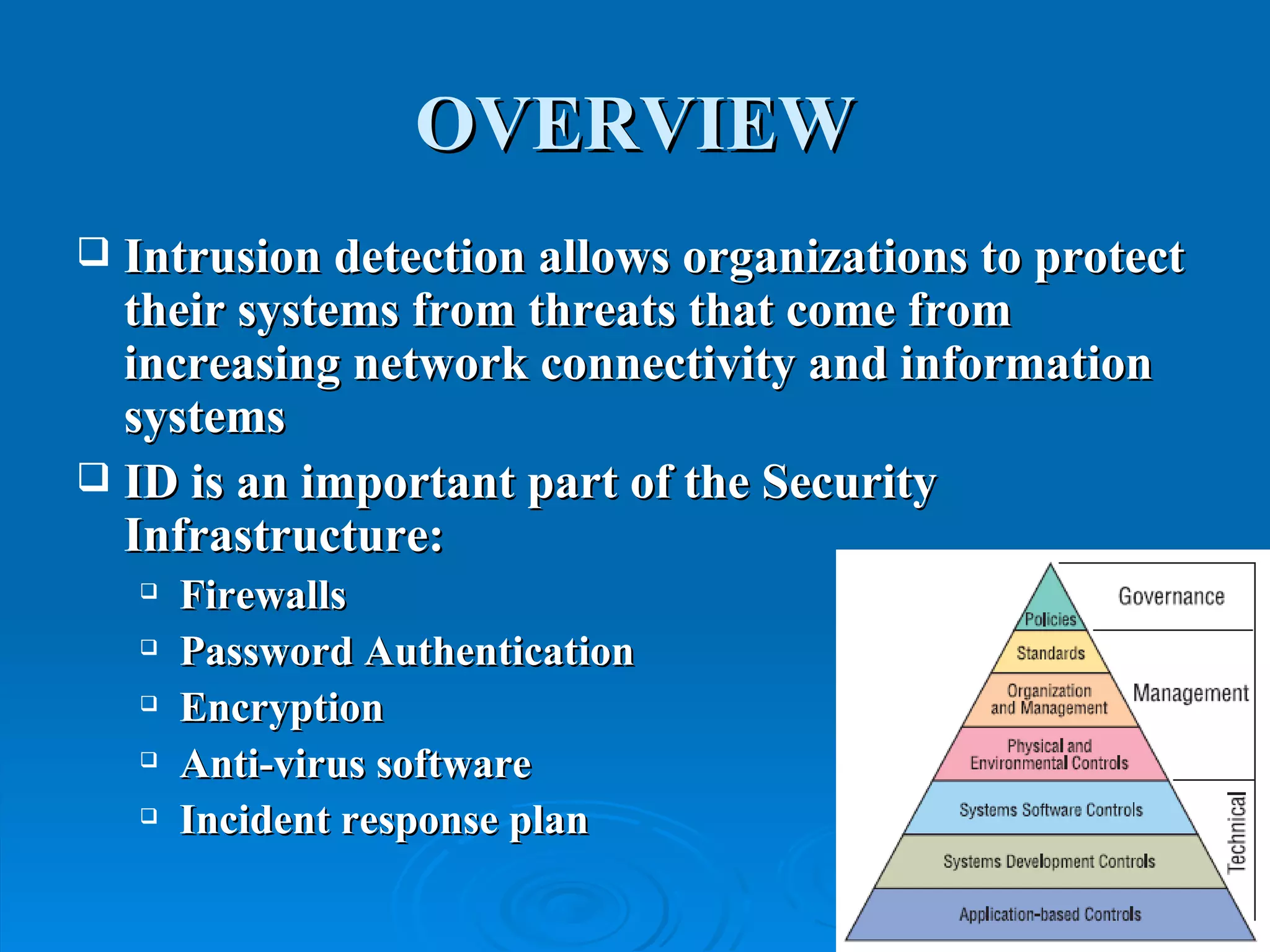
OVERVIEW Intrusion detection allows organizations to protect their systems from threats that come from increasing network connectivity and information systems ID is an important part of the Security Infrastructure:  Firewalls Password Authentication Encryption Anti-virus software Incident response plan
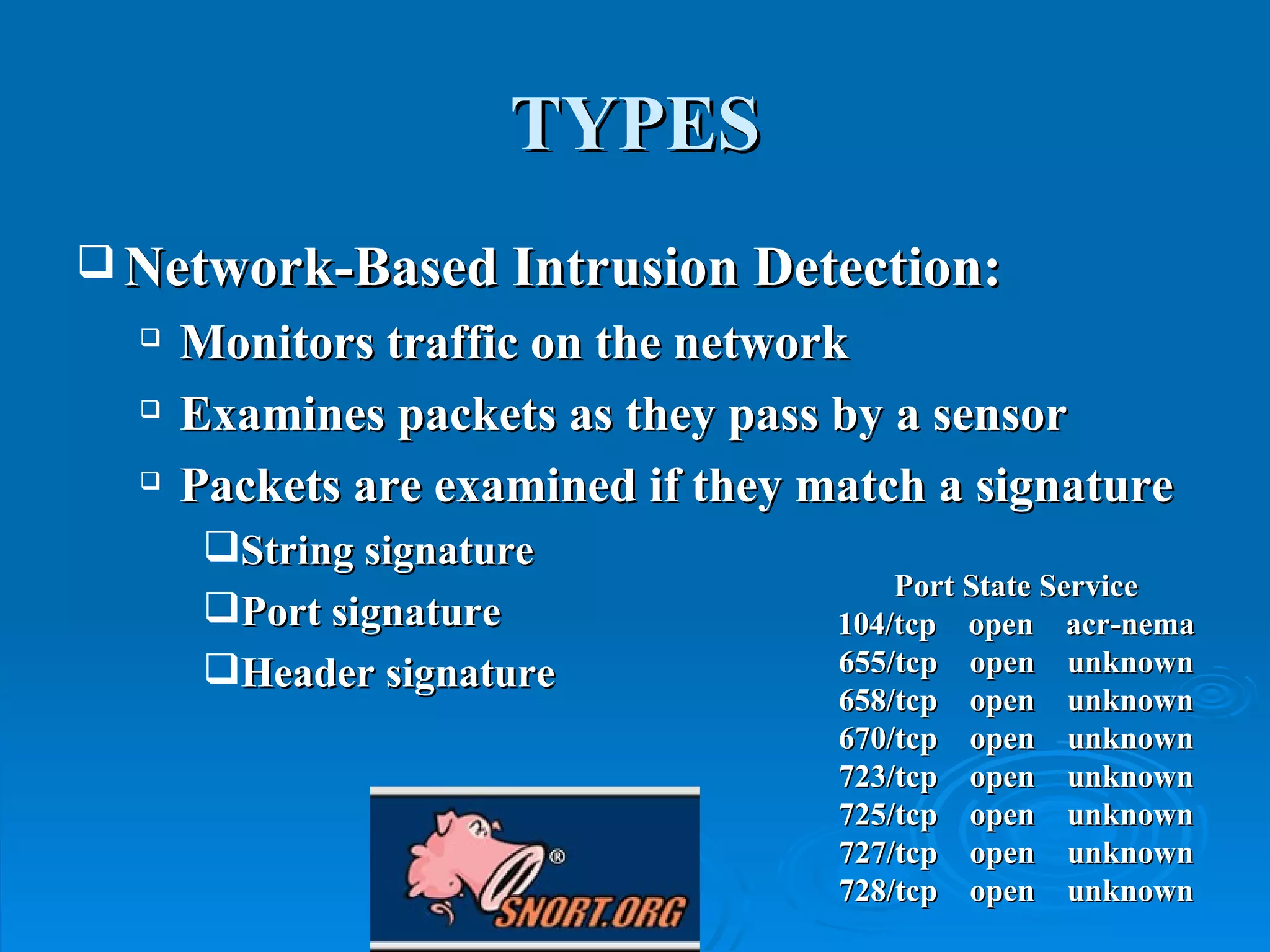
TYPES Network-Based Intrusion Detection: Monitors traffic on the network Examines packets as they pass by a sensor Packets are examined if they match a signature String signature Port signature Header signature Port State Service 104/tcp    open    acr-nema 655/tcp    open    unknown 658/tcp    open    unknown 670/tcp    open    unknown 723/tcp    open    unknown 725/tcp    open    unknown 727/tcp    open    unknown 728/tcp    open    unknown
TYPES Host-Based IDS: Works by intercepting operating system and application calls on an individual host Checks the integrity of system files Watches for suspicious processes
METHODS Knowledge-Based: Applies knowledge about specific attacks and system vulnerabilities Contains information about these vulnerabilities An alarm is triggered when an attempt is detected Completeness depends on regular update of knowledge about attack methods
METHODS Behavior-Based: Intrusion can be detected by observing a deviation from normal behavior Maintain a model of expected behavior and compare activities against this model An alarm is generated when a deviation is observed
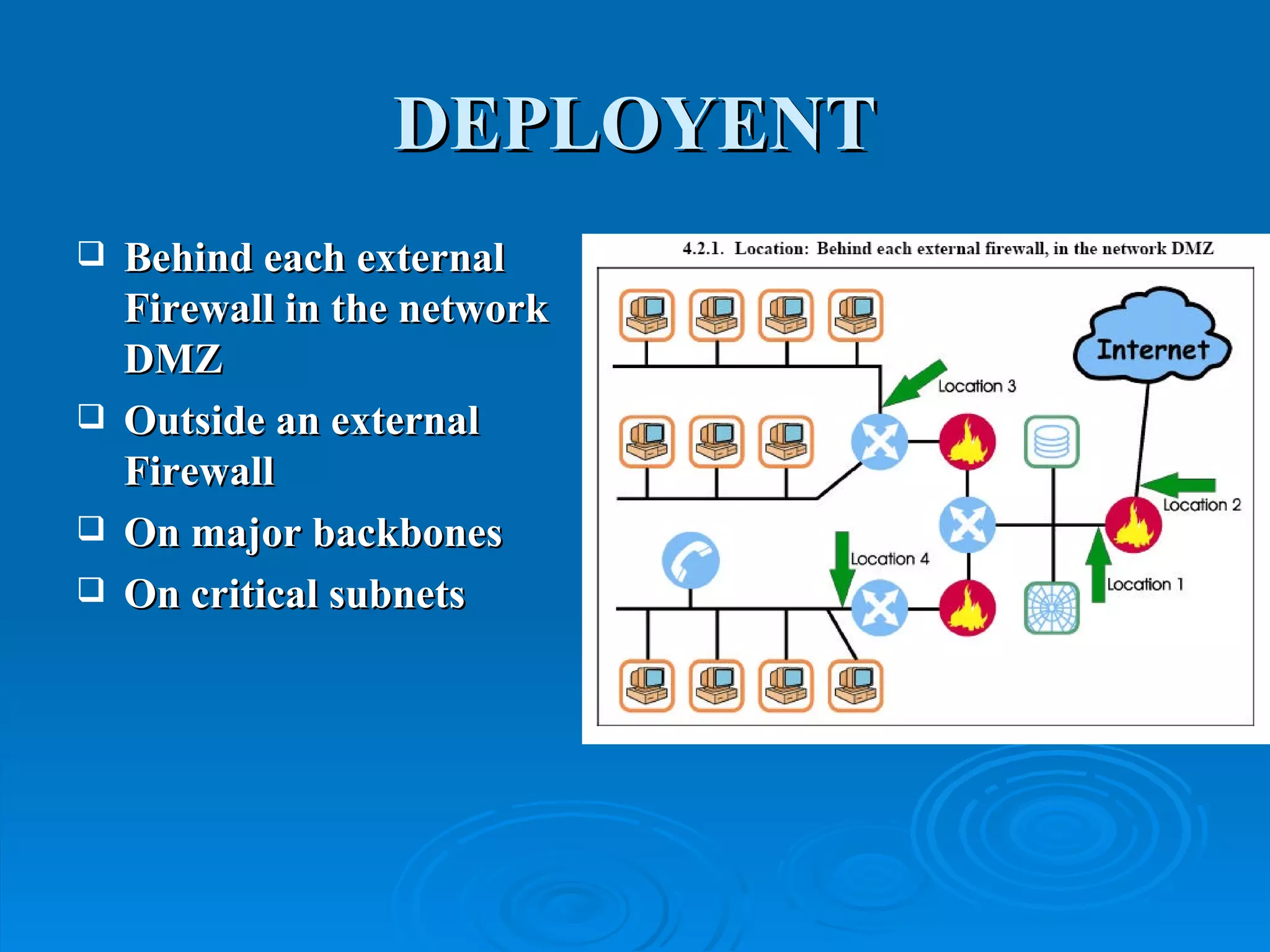
DEPLOYENT Behind each external Firewall in the network DMZ Outside an external Firewall On major backbones On critical subnets
RISK Network Security is a crucial component of every company Loss of business  Loss of intellectual property Loss of Reputation Stock price Loss of third-party confidence Legal implications HIPAA 1996 Gram-Leach Bliley Act 1999 Homeland Security Act 2002 State Laws
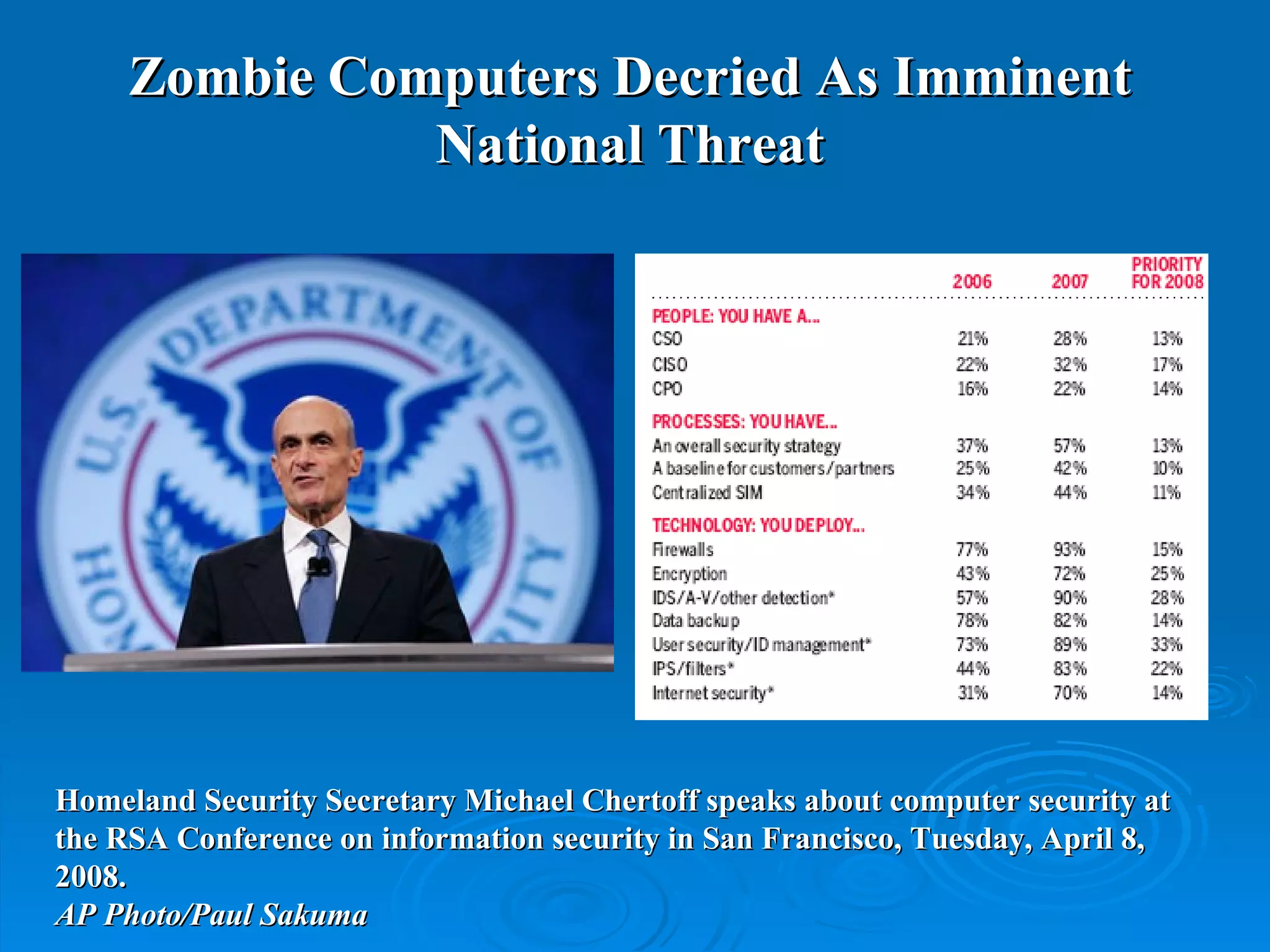
Homeland Security Secretary Michael Chertoff speaks about computer security at the RSA Conference on information security in San Francisco, Tuesday, April 8, 2008.  AP Photo/Paul Sakuma   Zombie Computers Decried As Imminent National Threat
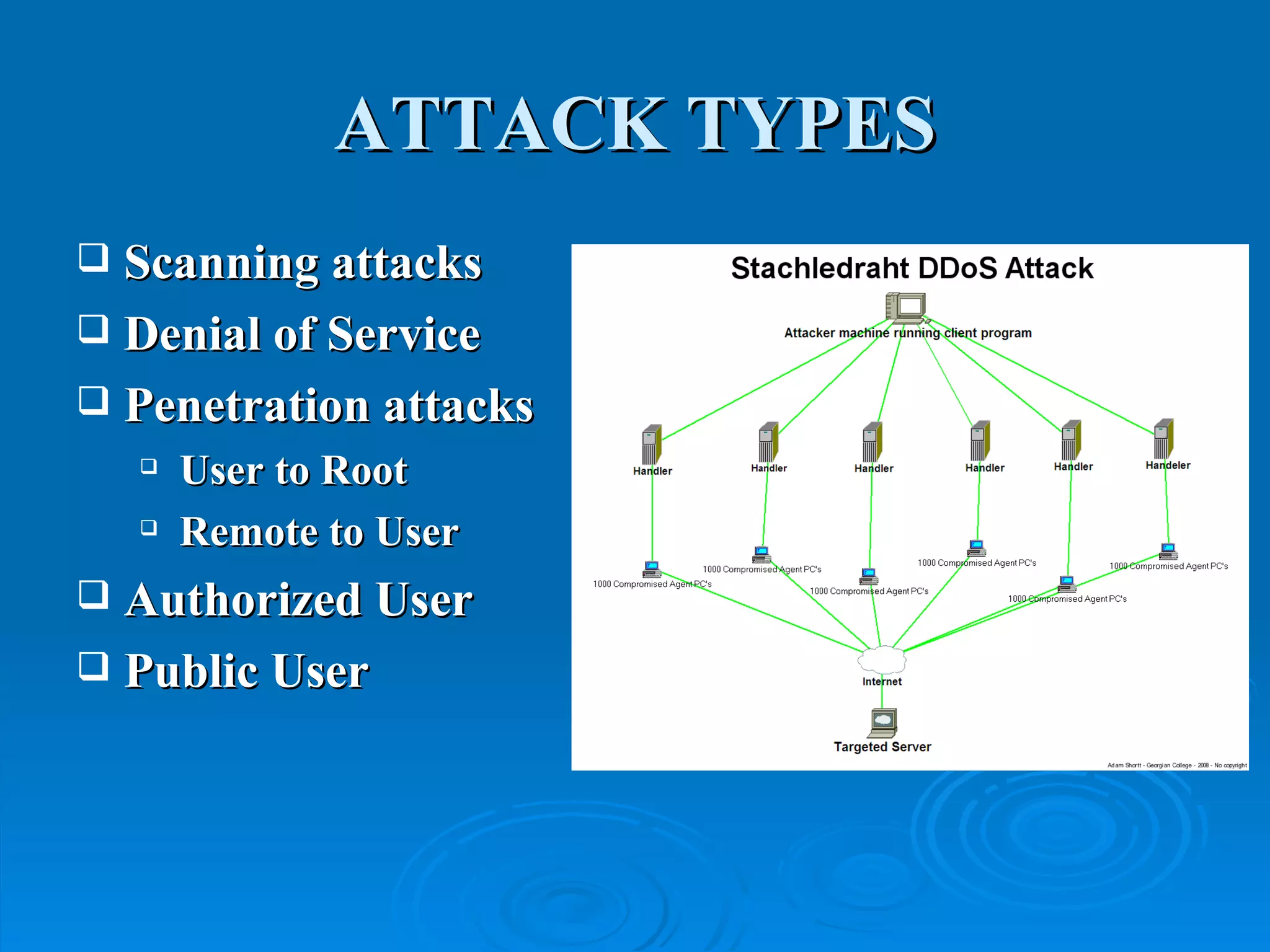
ATTACK TYPES Scanning attacks Denial of Service  Penetration attacks User to Root Remote to User Authorized User Public User
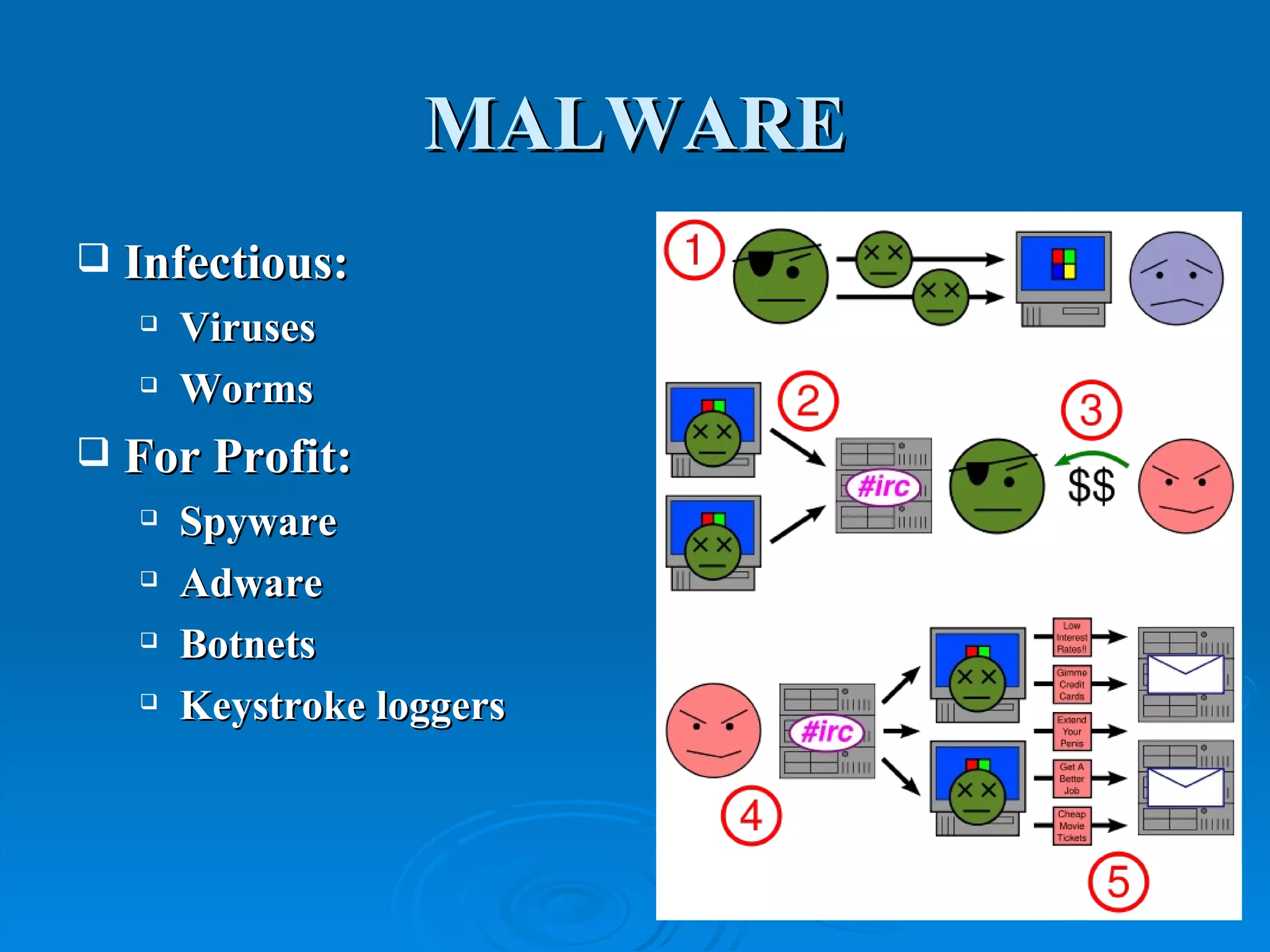
MALWARE Infectious: Viruses Worms For Profit: Spyware Adware Botnets Keystroke loggers
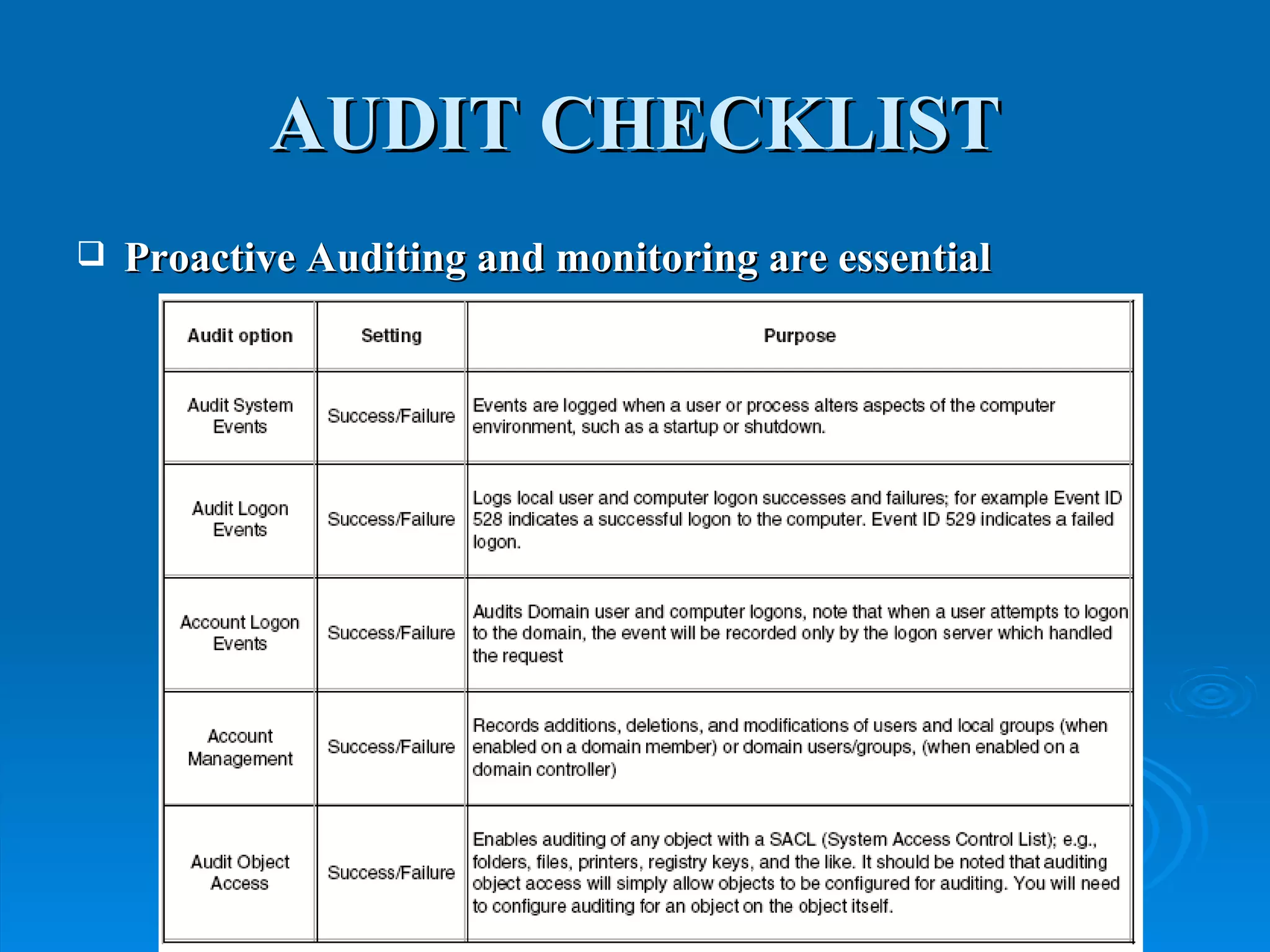
AUDIT CHECKLIST Proactive Auditing and monitoring are essential
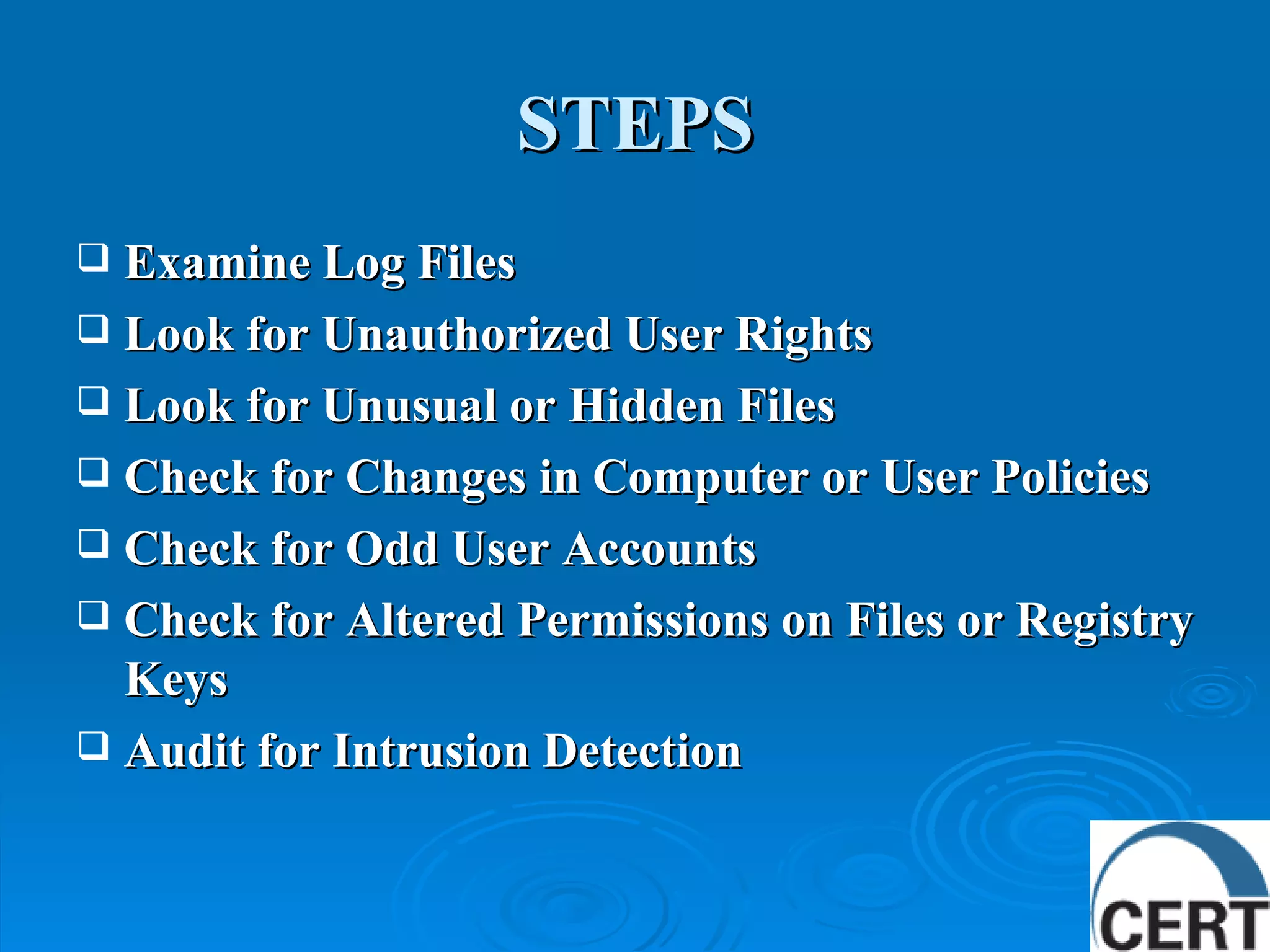
STEPS Examine Log Files Look for Unauthorized User Rights Look for Unusual or Hidden Files Check for Changes in Computer or User Policies Check for Odd User Accounts  Check for Altered Permissions on Files or Registry Keys Audit for Intrusion Detection
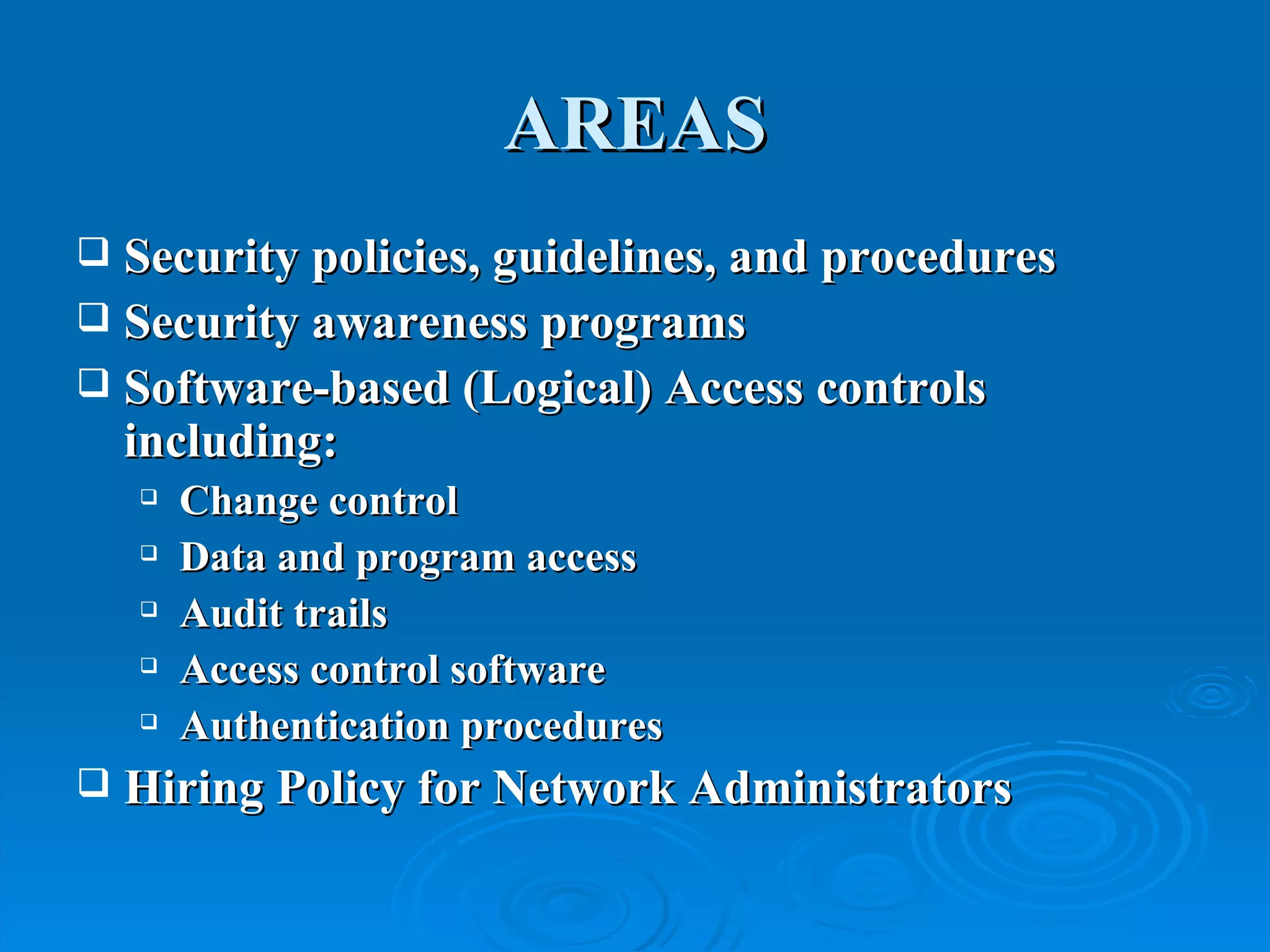
AREAS Security policies, guidelines, and procedures Security awareness programs Software-based (Logical) Access controls including: Change control Data and program access Audit trails Access control software Authentication procedures Hiring Policy for Network Administrators
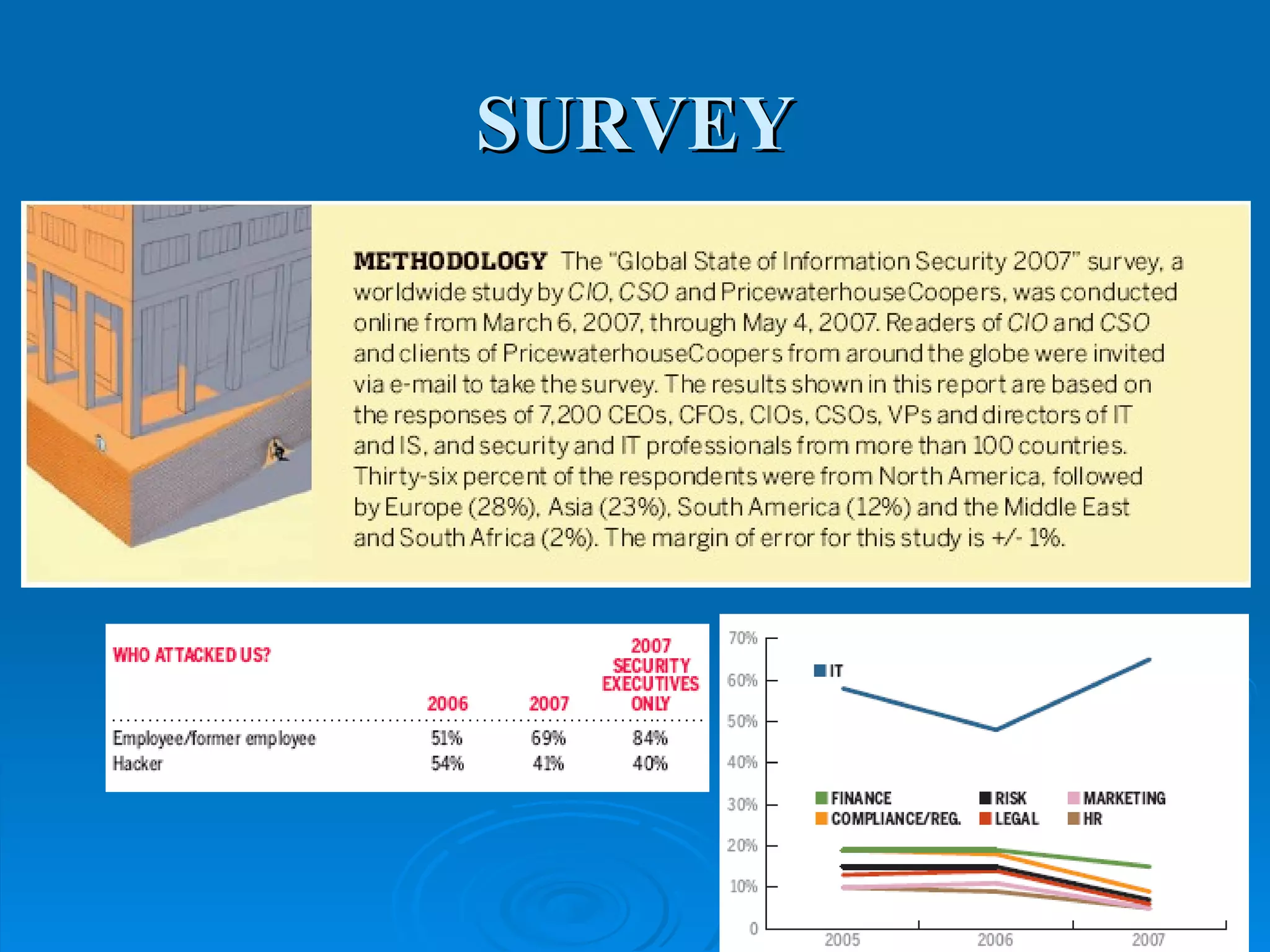
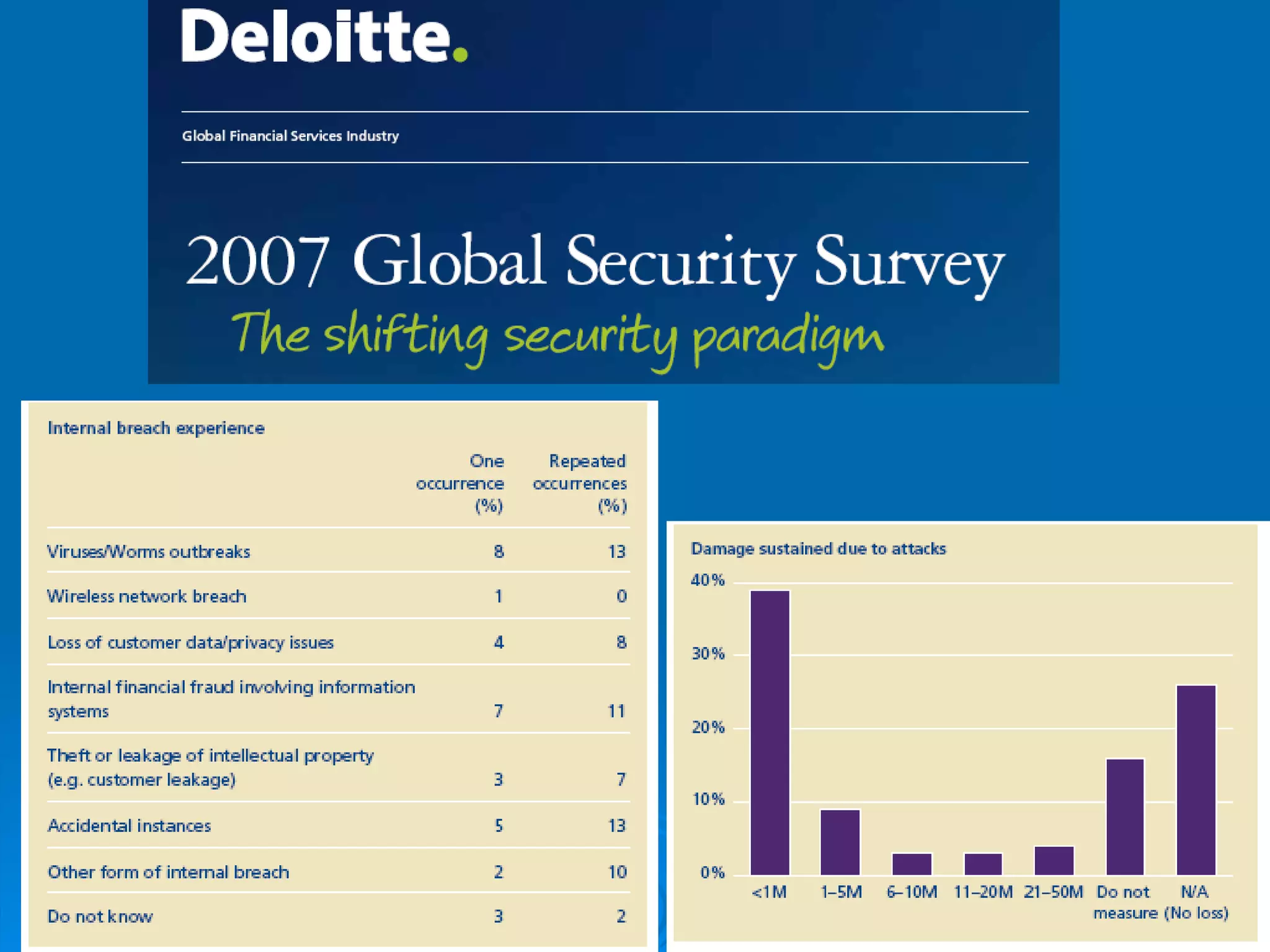
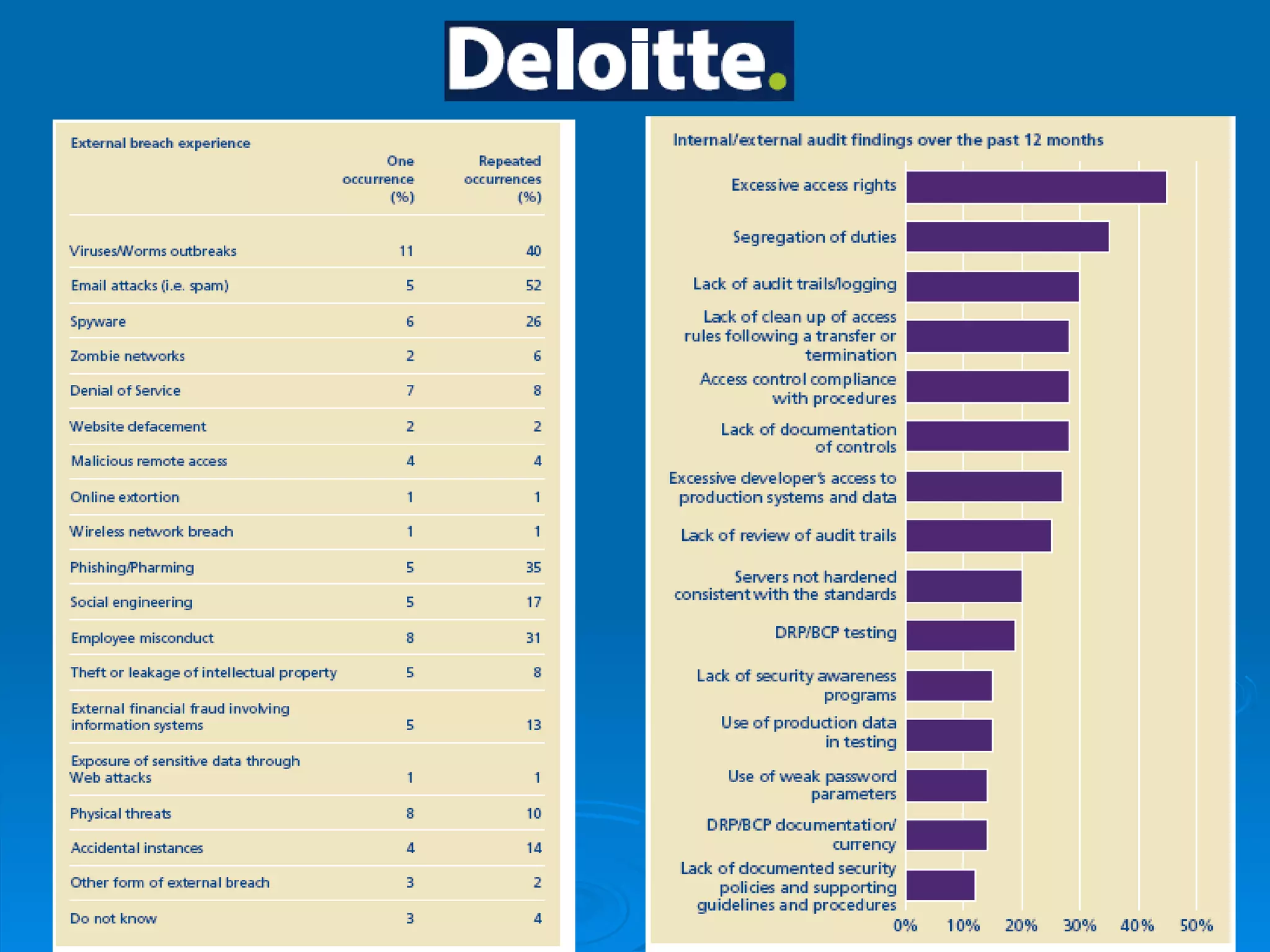
SURVEY


CONCLUSION IDS is an important tool in the Security Hierarchy It is mostly outsourced to third-parties IDS will be replaced with Intrusion Prevention Systems in the future IP systems prevent attacks in real-time Able to decode layer 7 protocols like HTTP, FTP, and SMTP An Incident Response Plan is a must
SOURCES http://en.wikipedia.org/wiki/Intrusion-prevention_system http://en.wikipedia.org/wiki/Zombie_computer http://en.wikipedia.org/wiki/Botnet http://en.wikipedia.org/wiki/Cyber-security_regulation http://blog.wired.com/27bstroke6/2008/04/zombie-computer.html?nup=1&mbid=yhp http://en.wikipedia.org/wiki/Intrusion_detection_system http://en.wikipedia.org/wiki/Malware
SOURCES http://www.cert.org/tech_tips/WIDC.html#C16 http://www.sans.org/top20/#z1 http://www.nist.org/news.php http://www.snort.org/ http://www.sans.org/resources/idfaq/ http://csrc.nist.gov/publications/nistpubs/800-31/sp800-31.pdf http://www.pwc.com/extweb/pwcpublications.nsf/docid/ 114E0DE67DE6965385257341005AED7B/$FILE/PwC_GISS2007.pdf

Intrusion Detection Presentation

  • 1.
    IT AUDIT INTRUSIONDETECTION SYSTEMS MUSTAFA SHAH
  • 2.
    INTRODUCTION INTRUSION DETECTIONProcess of monitoring events occurring in a computer system or network and analyzing them for signs of intrusions Intrusions are attempts to compromise the Confidentiality , Integrity , Availability , and Control of a computer network
  • 3.
    OVERVIEW Intrusion detectionallows organizations to protect their systems from threats that come from increasing network connectivity and information systems ID is an important part of the Security Infrastructure: Firewalls Password Authentication Encryption Anti-virus software Incident response plan
  • 4.
    TYPES Network-Based IntrusionDetection: Monitors traffic on the network Examines packets as they pass by a sensor Packets are examined if they match a signature String signature Port signature Header signature Port State Service 104/tcp    open    acr-nema 655/tcp    open    unknown 658/tcp    open    unknown 670/tcp    open    unknown 723/tcp    open    unknown 725/tcp    open    unknown 727/tcp    open    unknown 728/tcp    open    unknown
  • 5.
    TYPES Host-Based IDS:Works by intercepting operating system and application calls on an individual host Checks the integrity of system files Watches for suspicious processes
  • 6.
    METHODS Knowledge-Based: Appliesknowledge about specific attacks and system vulnerabilities Contains information about these vulnerabilities An alarm is triggered when an attempt is detected Completeness depends on regular update of knowledge about attack methods
  • 7.
    METHODS Behavior-Based: Intrusioncan be detected by observing a deviation from normal behavior Maintain a model of expected behavior and compare activities against this model An alarm is generated when a deviation is observed
  • 8.
    DEPLOYENT Behind eachexternal Firewall in the network DMZ Outside an external Firewall On major backbones On critical subnets
  • 9.
    RISK Network Securityis a crucial component of every company Loss of business Loss of intellectual property Loss of Reputation Stock price Loss of third-party confidence Legal implications HIPAA 1996 Gram-Leach Bliley Act 1999 Homeland Security Act 2002 State Laws
  • 10.
    Homeland Security SecretaryMichael Chertoff speaks about computer security at the RSA Conference on information security in San Francisco, Tuesday, April 8, 2008. AP Photo/Paul Sakuma Zombie Computers Decried As Imminent National Threat
  • 11.
    ATTACK TYPES Scanningattacks Denial of Service Penetration attacks User to Root Remote to User Authorized User Public User
  • 12.
    MALWARE Infectious: VirusesWorms For Profit: Spyware Adware Botnets Keystroke loggers
  • 13.
    AUDIT CHECKLIST ProactiveAuditing and monitoring are essential
  • 14.
    STEPS Examine LogFiles Look for Unauthorized User Rights Look for Unusual or Hidden Files Check for Changes in Computer or User Policies Check for Odd User Accounts Check for Altered Permissions on Files or Registry Keys Audit for Intrusion Detection
  • 15.
    AREAS Security policies,guidelines, and procedures Security awareness programs Software-based (Logical) Access controls including: Change control Data and program access Audit trails Access control software Authentication procedures Hiring Policy for Network Administrators
  • 16.
  • 17.
  • 18.
  • 19.
  • 20.
    CONCLUSION IDS isan important tool in the Security Hierarchy It is mostly outsourced to third-parties IDS will be replaced with Intrusion Prevention Systems in the future IP systems prevent attacks in real-time Able to decode layer 7 protocols like HTTP, FTP, and SMTP An Incident Response Plan is a must
  • 21.
    SOURCES http://en.wikipedia.org/wiki/Intrusion-prevention_system http://en.wikipedia.org/wiki/Zombie_computerhttp://en.wikipedia.org/wiki/Botnet http://en.wikipedia.org/wiki/Cyber-security_regulation http://blog.wired.com/27bstroke6/2008/04/zombie-computer.html?nup=1&mbid=yhp http://en.wikipedia.org/wiki/Intrusion_detection_system http://en.wikipedia.org/wiki/Malware
  • 22.
    SOURCES http://www.cert.org/tech_tips/WIDC.html#C16 http://www.sans.org/top20/#z1http://www.nist.org/news.php http://www.snort.org/ http://www.sans.org/resources/idfaq/ http://csrc.nist.gov/publications/nistpubs/800-31/sp800-31.pdf http://www.pwc.com/extweb/pwcpublications.nsf/docid/ 114E0DE67DE6965385257341005AED7B/$FILE/PwC_GISS2007.pdf