The PYP Exhibition: An Introduction
Introduction


    The PYP exhibition is a significant event in the
      life of each Grade 6 student at CDNIS,
      synthesizing the essential elements of the PYP
      and sharing them with the whole school
      community.
Purpose
   The PYP exhibition has a number of key
     purposes:

   • for students to engage in an in-depth,
     collaborative inquiry
   • to provide students with an opportunity to
     demonstrate independence and responsibility
     for their own learning
   • to provide students with an opportunity to
     explore multiple perspectives
Purpose


   • for students to synthesize and apply their
     learning of previous years and to reflect upon
     their journey through the PYP
   • to provide an authentic process for assessing
     student understanding
   • to demonstrate how students can take action
     as a result of their learning
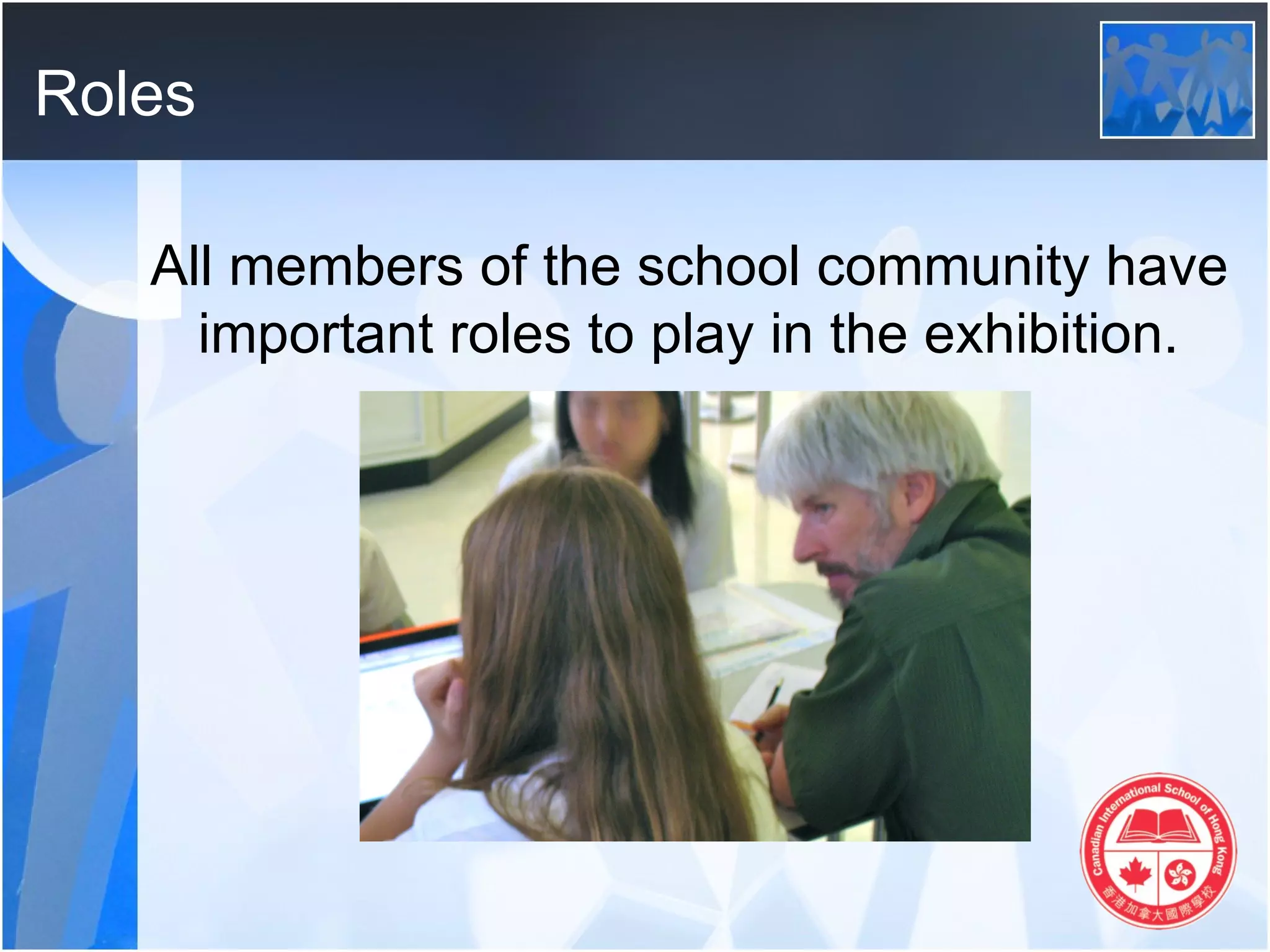
Roles

   All members of the school community have
     important roles to play in the exhibition.
Role of the student
    • Collaboratively plan and develop their group’s
      investigation, deciding on a central idea, lines of inquiry
      and research questions
    • Work through the inquiry cycle: formulate questions,
      collect, sort and analyse data, draw conclusions,
      determine actions, and share findings
    • Reflect on their own development and demonstration of
      the attributes of the Learner Profile
    • Demonstrate an understanding of the five essential
      elements—knowledge, concepts, skills, attitudes and
      action
Role of the student

    • Be academically honest when referring to their sources
      of information
    • Communicate effectively with teachers, peers and
      parents
    • Reflect on the components of and processes involved
      in the exhibition, keeping a journal to document their
      investigation
    • Carry out self and peer assessment
    • Celebrate their learning by presenting the exhibition to
      the school and wider community.
Role of the teachers

    • Facilitate and guide the Exhibition process

    • Provide support for student inquiries, enabling students
      to overcome any problems encountered in the process

    • Plan collaboratively with other teachers

    • Communicate regularly with students, parents and
      other participants

    • Assess the exhibition process ensuring all the essential
      elements are included

    • Act as mentors
Role of the parents / guardians

    • Support and encourage children throughout the
      process of inquiry

    • Be informed by reading class blogs and talking with
      children

    • Help children to access resources—people, places,
      media and information

    • Provide expert subject knowledge where applicable
Role of the parents / guardians


    • Encourage independent inquiry and respect the child’s
      ownership of the process

    • Have an opportunity to reflect on and give feedback
      regarding the Exhibition

    • Celebrate with the children by attending the Exhibition.
Timeline for the Exhibition

       Earlier in the year students explored the
       transdisciplinary theme,

               Where We Are in Place and Time.

       An inquiry into orientation in place and time;
       personal histories; homes and journeys; the
       discoveries, explorations and migrations of
       humankind; the relationship between and the
       interconnectedness of individuals and civilizations,
       from local and global perspectives.
Timeline for the Exhibition

       Students then created the following central idea
       for our PYP Exhibition.


        The past has shaped what
          our world is like today.
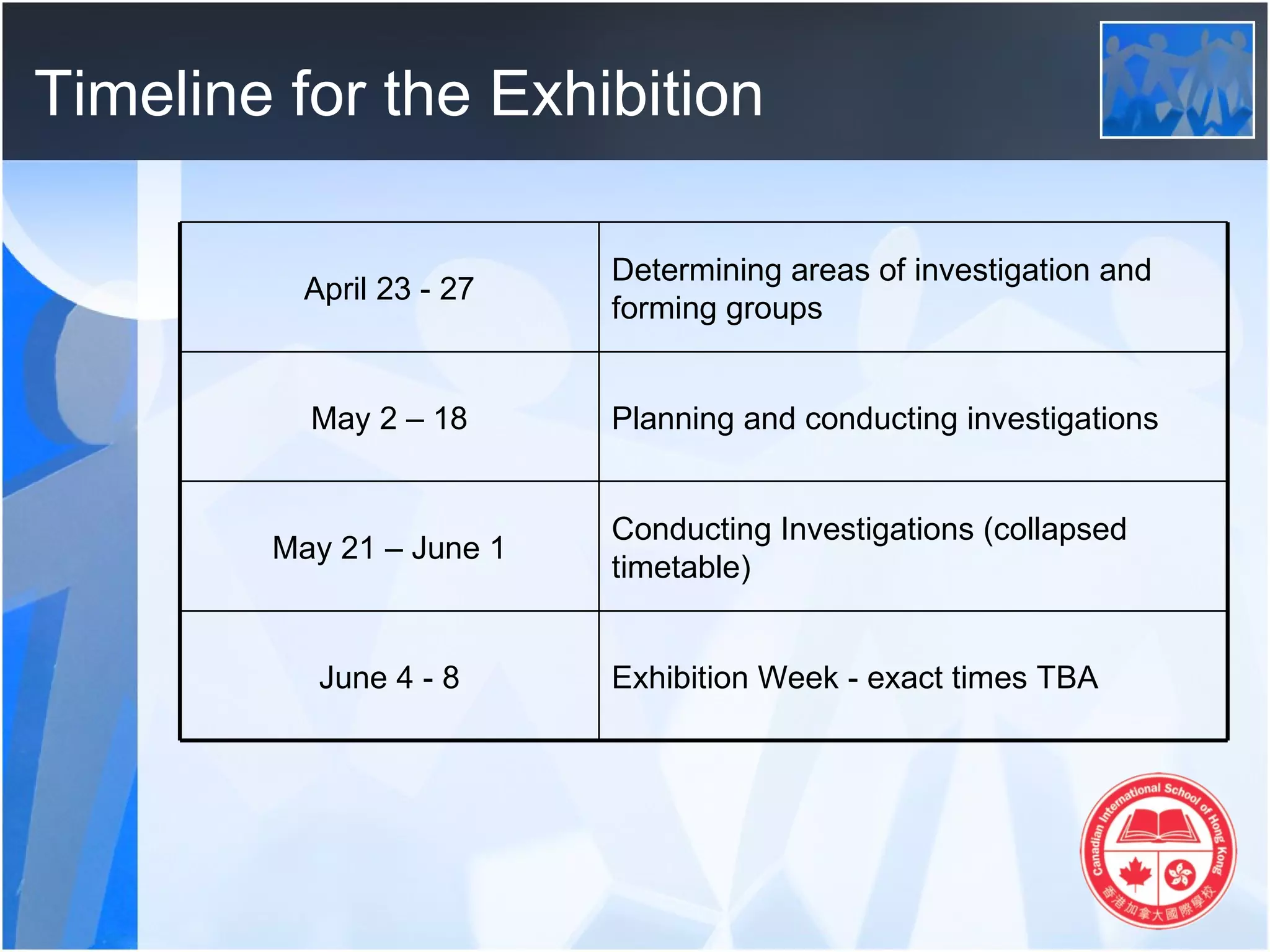
Timeline for the Exhibition

                          Determining areas of investigation and
          April 23 - 27
                          forming groups


          May 2 – 18      Planning and conducting investigations


                          Conducting Investigations (collapsed
        May 21 – June 1
                          timetable)


           June 4 - 8     Exhibition Week - exact times TBA
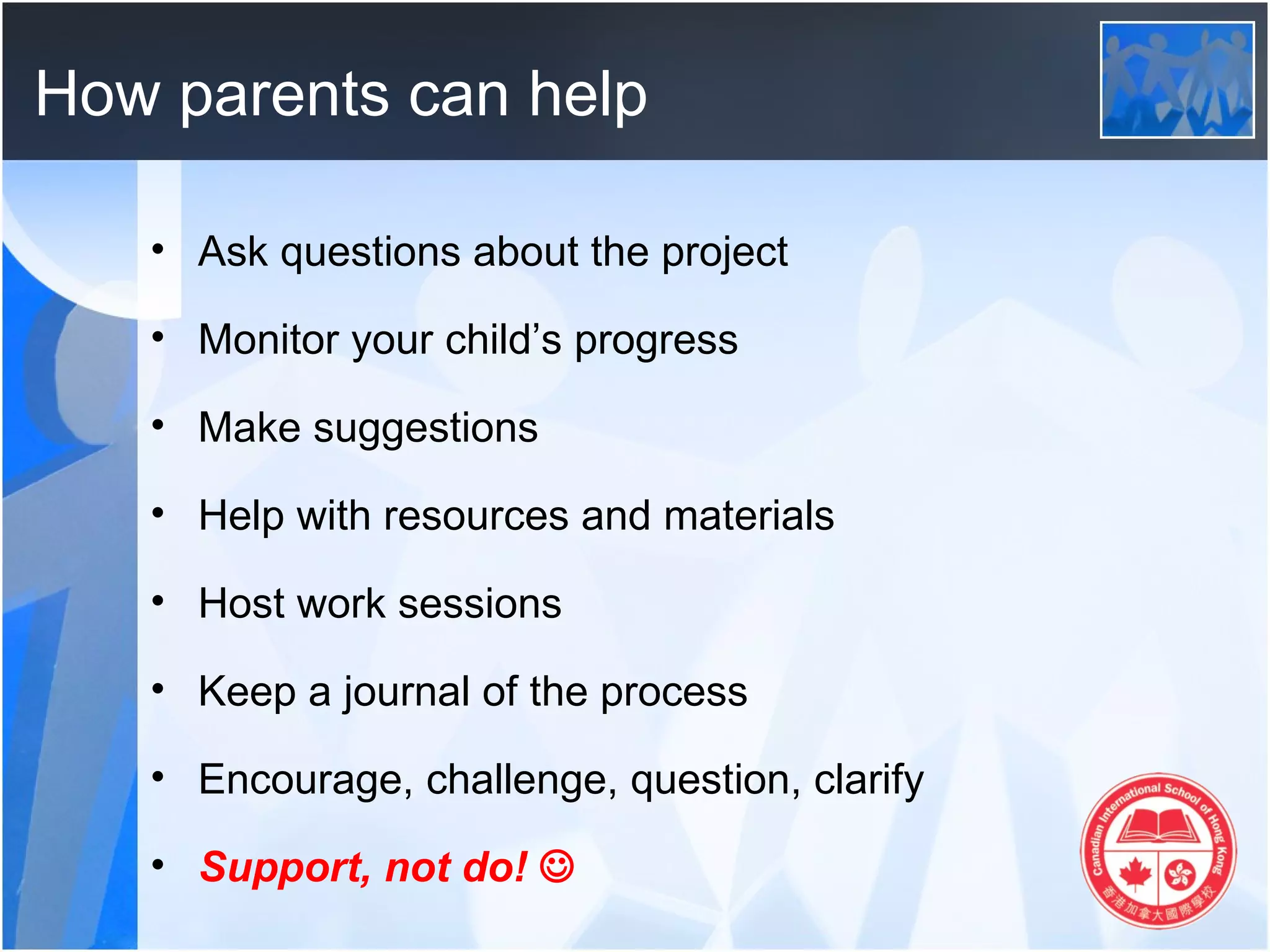
How parents can help

   • Ask questions about the project

   • Monitor your child’s progress

   • Make suggestions

   • Help with resources and materials

   • Host work sessions

   • Keep a journal of the process

   • Encourage, challenge, question, clarify

   • Support, not do! 
The journey begins

   Ultimately, this is your child’s project and
     they will be expected to be responsible
     for their own learning. Yet, we
     understand that the Exhibition is a
     learning process and our students, your
     children, need and deserve our support
     and guidance throughout this culminating
     experience. Together, we will make the
     journey successfully.
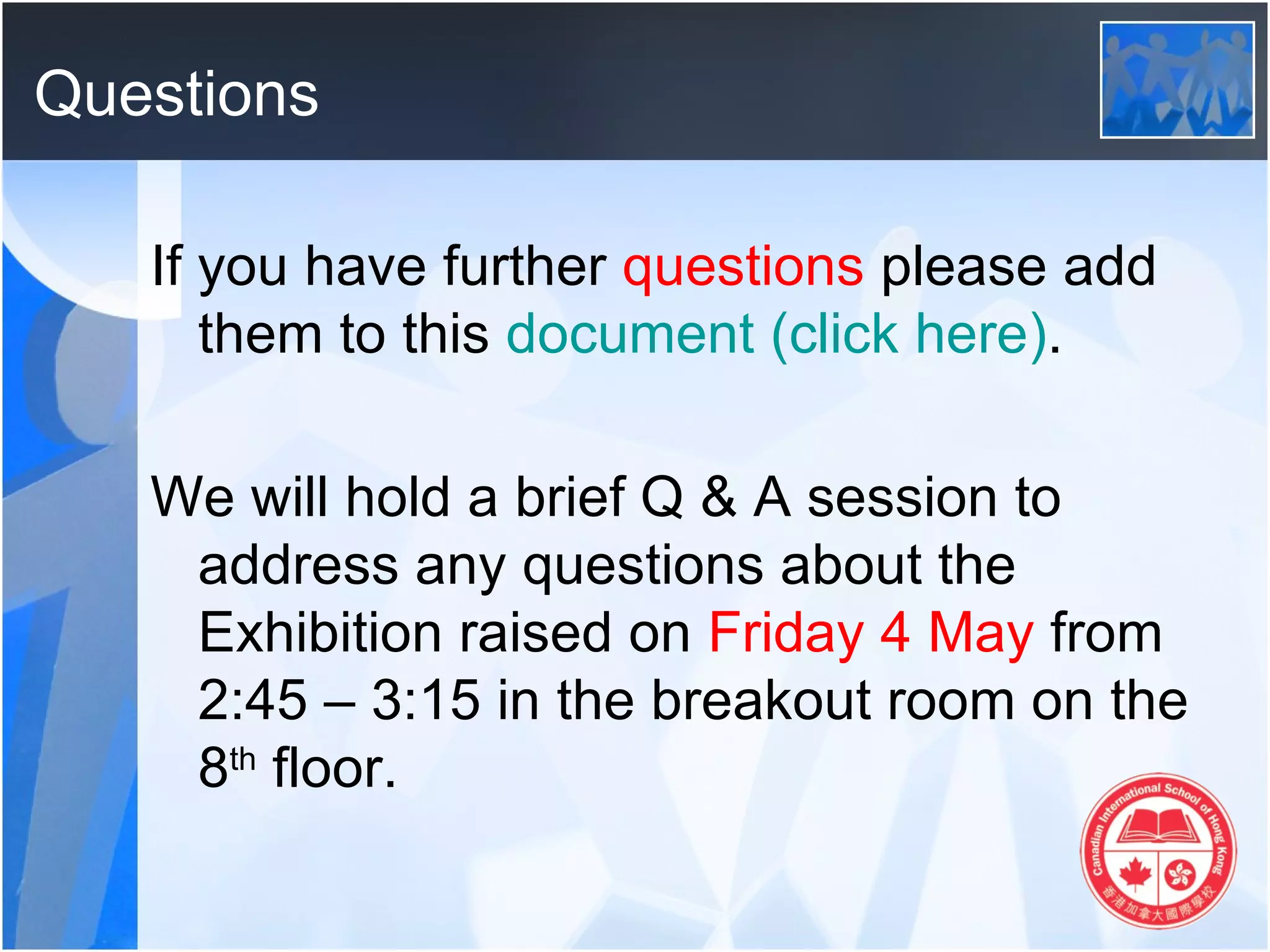
Questions

   If you have further questions please add
      them to this document (click here).

   We will hold a brief Q & A session to
    address any questions about the
    Exhibition raised on Friday 4 May from
    2:45 – 3:15 in the breakout room on the
    8th floor.

Introduction to the pyp exhibition

  • 1.
    The PYP Exhibition:An Introduction
  • 2.
    Introduction The PYP exhibition is a significant event in the life of each Grade 6 student at CDNIS, synthesizing the essential elements of the PYP and sharing them with the whole school community.
  • 3.
    Purpose The PYP exhibition has a number of key purposes: • for students to engage in an in-depth, collaborative inquiry • to provide students with an opportunity to demonstrate independence and responsibility for their own learning • to provide students with an opportunity to explore multiple perspectives
  • 4.
    Purpose • for students to synthesize and apply their learning of previous years and to reflect upon their journey through the PYP • to provide an authentic process for assessing student understanding • to demonstrate how students can take action as a result of their learning
  • 5.
    Roles All members of the school community have important roles to play in the exhibition.
  • 6.
    Role of thestudent • Collaboratively plan and develop their group’s investigation, deciding on a central idea, lines of inquiry and research questions • Work through the inquiry cycle: formulate questions, collect, sort and analyse data, draw conclusions, determine actions, and share findings • Reflect on their own development and demonstration of the attributes of the Learner Profile • Demonstrate an understanding of the five essential elements—knowledge, concepts, skills, attitudes and action
  • 7.
    Role of thestudent • Be academically honest when referring to their sources of information • Communicate effectively with teachers, peers and parents • Reflect on the components of and processes involved in the exhibition, keeping a journal to document their investigation • Carry out self and peer assessment • Celebrate their learning by presenting the exhibition to the school and wider community.
  • 8.
    Role of theteachers • Facilitate and guide the Exhibition process • Provide support for student inquiries, enabling students to overcome any problems encountered in the process • Plan collaboratively with other teachers • Communicate regularly with students, parents and other participants • Assess the exhibition process ensuring all the essential elements are included • Act as mentors
  • 9.
    Role of theparents / guardians • Support and encourage children throughout the process of inquiry • Be informed by reading class blogs and talking with children • Help children to access resources—people, places, media and information • Provide expert subject knowledge where applicable
  • 10.
    Role of theparents / guardians • Encourage independent inquiry and respect the child’s ownership of the process • Have an opportunity to reflect on and give feedback regarding the Exhibition • Celebrate with the children by attending the Exhibition.
  • 11.
    Timeline for theExhibition Earlier in the year students explored the transdisciplinary theme, Where We Are in Place and Time. An inquiry into orientation in place and time; personal histories; homes and journeys; the discoveries, explorations and migrations of humankind; the relationship between and the interconnectedness of individuals and civilizations, from local and global perspectives.
  • 12.
    Timeline for theExhibition Students then created the following central idea for our PYP Exhibition. The past has shaped what our world is like today.
  • 13.
    Timeline for theExhibition Determining areas of investigation and April 23 - 27 forming groups May 2 – 18 Planning and conducting investigations Conducting Investigations (collapsed May 21 – June 1 timetable) June 4 - 8 Exhibition Week - exact times TBA
  • 14.
    How parents canhelp • Ask questions about the project • Monitor your child’s progress • Make suggestions • Help with resources and materials • Host work sessions • Keep a journal of the process • Encourage, challenge, question, clarify • Support, not do! 
  • 15.
    The journey begins Ultimately, this is your child’s project and they will be expected to be responsible for their own learning. Yet, we understand that the Exhibition is a learning process and our students, your children, need and deserve our support and guidance throughout this culminating experience. Together, we will make the journey successfully.
  • 16.
    Questions If you have further questions please add them to this document (click here). We will hold a brief Q & A session to address any questions about the Exhibition raised on Friday 4 May from 2:45 – 3:15 in the breakout room on the 8th floor.