The Enneagram and NLP Just a taste. . . .
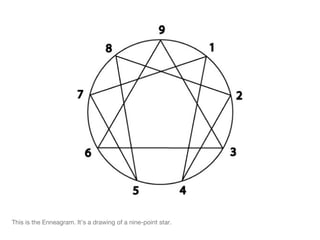
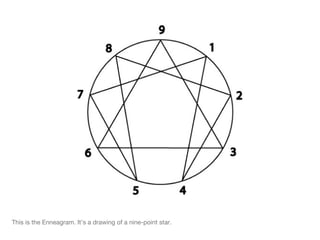
This is the Enneagram. It’s a drawing of a nine-point star.
has deep roots in history and philosophy is being rediscovered as a way of thinking about how personalities function and develop is a system of related patterns that indicates both where people get stuck and where they are likely to move or to grow teaches that our greatest strength is likely to become our most serious flaw The Enneagram
Just the facts There are 9 basic types Each type is related to some of the other types (the lines in the diagram represent relationships) Each person is said to have one core type that endures throughout his/her lifetime.  Each person is a unique blend of core type and related types. People with the same number can be very different in motivation, attitudes and behaviour.
Is it too simple? Is it too complicated?
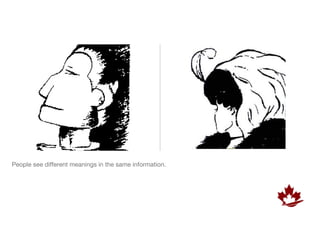
People see different meanings in the same information.
Uncover the benefits of particular behaviours for an individual; we do not change behaviours unless we know we can continue to get the same benefits in another way Maintain a picture of the whole individual while influencing particular attitudes or behaviorus Change motivation and behaviours simultaneously Three reasons to learn the Enneagram
Let’s start with the basics, one type at a time
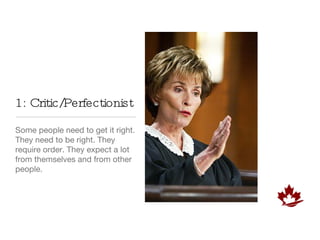
1: Critic/Perfectionist Some people need to get it right. They need to be right. They require order. They expect a lot from themselves and from other people.
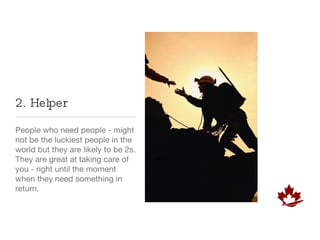
2. Helper People who need people - might not be the luckiest people in the world but they are likely to be 2s. They are great at taking care of you - right until the moment when they need something in return.
3. The Achiever Nothing succeeds like success. Just do it. Look good while you do it. Always look the part.
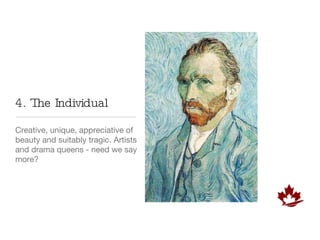
4. The Individual Creative, unique, appreciative of beauty and suitably tragic. Artists and drama queens - need we say more?
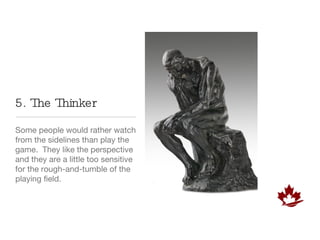
Some people would rather watch from the sidelines than play the game.  They like the perspective and they are a little too sensitive for the rough-and-tumble of the playing field. 5. The Thinker
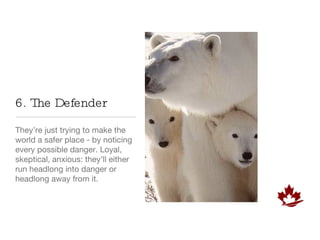
6. The Defender They’re just trying to make the world a safer place - by noticing every possible danger. Loyal, skeptical, anxious: they’ll either run headlong into danger or headlong away from it.
7. Enthusiast Where’s the party? Chances are, there are 7s in the thick of the action.  They like to go wide - not deep; they like to laugh; they like variety. Don’t trouble them with the whole truth - keep it light.
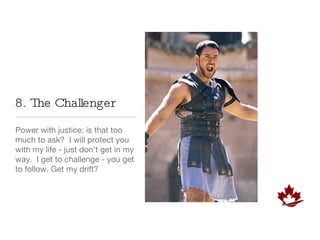
8. The Challenger Power with justice: is that too much to ask?  I will protect you with my life - just don’t get in my way.  I get to challenge - you get to follow. Get my drift?
9. The Peacemaker Peace - at almost any price. Gentle, empathetic people who will go the extra mile - as long as it doesn’t create any conflict.  Conflict puts them to sleep -watch out when they wake up!
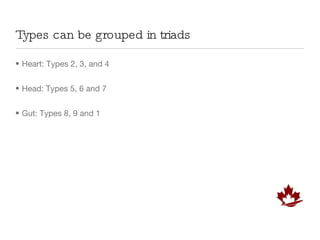
Types can be grouped in triads Heart: Types 2, 3, and 4 Head: Types 5, 6 and 7 Gut: Types 8, 9 and 1
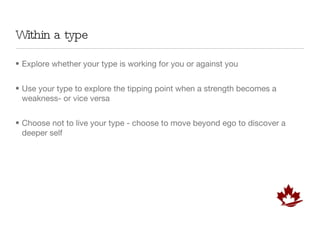
Within a type Explore whether your type is working for you or against you Use your type to explore the tipping point when a strength becomes a weakness- or vice versa Choose not to live your type - choose to move beyond ego to discover a deeper self
Moving between types Everyone has access to the qualities of more than one type. Most commonly, people are said to “visit” or “spend time” in their wings - the types on either side of their type in the diagram People change their patterns as their levels of stress or security change - they move from their own type to explore or endure qualities of the types to which they have connecting lines in the diagram
This is the Enneagram. It’s a drawing of a nine-point star.
www.squidoo.com/enneagramexplorations
The Enneagram and NLP with Dr. Barbara Luedecke May 23 & 24, 2009 9:00 AM to 5:30 PM 47 Queen’s Park Cres. E. 47 Queen’s Park Cres. E. 47 Queen’s Park Cres. E. 47 Queen’s Park Cres. E. 47 Queen’s Park Cres. E.

Introduction to the Enneagram

  • 1.
    The Enneagram andNLP Just a taste. . . .
  • 2.
    This is theEnneagram. It’s a drawing of a nine-point star.
  • 3.
    has deep rootsin history and philosophy is being rediscovered as a way of thinking about how personalities function and develop is a system of related patterns that indicates both where people get stuck and where they are likely to move or to grow teaches that our greatest strength is likely to become our most serious flaw The Enneagram
  • 4.
    Just the factsThere are 9 basic types Each type is related to some of the other types (the lines in the diagram represent relationships) Each person is said to have one core type that endures throughout his/her lifetime. Each person is a unique blend of core type and related types. People with the same number can be very different in motivation, attitudes and behaviour.
  • 5.
    Is it toosimple? Is it too complicated?
  • 6.
    People see differentmeanings in the same information.
  • 7.
    Uncover the benefitsof particular behaviours for an individual; we do not change behaviours unless we know we can continue to get the same benefits in another way Maintain a picture of the whole individual while influencing particular attitudes or behaviorus Change motivation and behaviours simultaneously Three reasons to learn the Enneagram
  • 8.
    Let’s start withthe basics, one type at a time
  • 9.
    1: Critic/Perfectionist Somepeople need to get it right. They need to be right. They require order. They expect a lot from themselves and from other people.
  • 10.
    2. Helper Peoplewho need people - might not be the luckiest people in the world but they are likely to be 2s. They are great at taking care of you - right until the moment when they need something in return.
  • 11.
    3. The AchieverNothing succeeds like success. Just do it. Look good while you do it. Always look the part.
  • 12.
    4. The IndividualCreative, unique, appreciative of beauty and suitably tragic. Artists and drama queens - need we say more?
  • 13.
    Some people wouldrather watch from the sidelines than play the game. They like the perspective and they are a little too sensitive for the rough-and-tumble of the playing field. 5. The Thinker
  • 14.
    6. The DefenderThey’re just trying to make the world a safer place - by noticing every possible danger. Loyal, skeptical, anxious: they’ll either run headlong into danger or headlong away from it.
  • 15.
    7. Enthusiast Where’sthe party? Chances are, there are 7s in the thick of the action. They like to go wide - not deep; they like to laugh; they like variety. Don’t trouble them with the whole truth - keep it light.
  • 16.
    8. The ChallengerPower with justice: is that too much to ask? I will protect you with my life - just don’t get in my way. I get to challenge - you get to follow. Get my drift?
  • 17.
    9. The PeacemakerPeace - at almost any price. Gentle, empathetic people who will go the extra mile - as long as it doesn’t create any conflict. Conflict puts them to sleep -watch out when they wake up!
  • 18.
    Types can begrouped in triads Heart: Types 2, 3, and 4 Head: Types 5, 6 and 7 Gut: Types 8, 9 and 1
  • 19.
    Within a typeExplore whether your type is working for you or against you Use your type to explore the tipping point when a strength becomes a weakness- or vice versa Choose not to live your type - choose to move beyond ego to discover a deeper self
  • 20.
    Moving between typesEveryone has access to the qualities of more than one type. Most commonly, people are said to “visit” or “spend time” in their wings - the types on either side of their type in the diagram People change their patterns as their levels of stress or security change - they move from their own type to explore or endure qualities of the types to which they have connecting lines in the diagram
  • 21.
    This is theEnneagram. It’s a drawing of a nine-point star.
  • 22.
  • 23.
    The Enneagram andNLP with Dr. Barbara Luedecke May 23 & 24, 2009 9:00 AM to 5:30 PM 47 Queen’s Park Cres. E. 47 Queen’s Park Cres. E. 47 Queen’s Park Cres. E. 47 Queen’s Park Cres. E. 47 Queen’s Park Cres. E.