Workplace 
Emotions and 
Attitudes
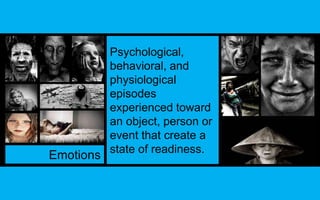
Emotions 
Psychological, 
behavioral, and 
physiological 
episodes 
experienced toward 
an object, person or 
event that create a 
state of readiness.
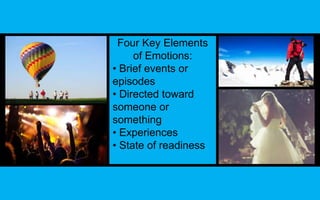
Four Key Elements 
of Emotions: 
• Brief events or 
episodes 
• Directed toward 
someone or 
something 
• Experiences 
• State of readiness
Circumplex 
Model of 
Emotions 
High 
Low 
Aroused, Astonished, 
Stimulated 
Distressed 
Fearful 
Jittery 
High-activation 
negative 
emotions 
Low-activation 
negative 
emotions 
Enthusiastic 
Elated 
Excited 
High-activation 
positive 
emotions 
Low-activation 
negative 
emotions 
Unhappy 
Sad 
Gloomy 
Bored 
Tired 
Drowsy 
Happy 
Cheerful 
Delighted 
Relaxed 
Content 
Calm 
Quiet, Tranquil, 
Still 
Negative Positive 
Activation 
Evaluation
Attitudes are the 
cluster of beliefs, 
assessed feelings, 
and behavioral 
intentions toward a 
person, object or 
event. 
Attitudes are 
judgments, whereas 
emotions are 
experiences. 
Attitudes
Three Components 
of Attitude: 
 Beliefs 
 Feelings 
 Behavioral 
intentions
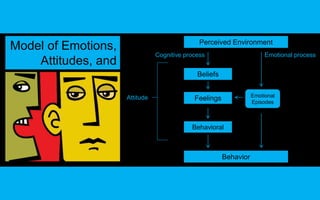
Model of Emotions, 
Attitudes, and 
Behavior 
Perceived Environment 
Cognitive process Emotional process 
Feelings Emotional 
Behavior 
Beliefs 
Behavioral 
Intentions 
Episodes 
Attitude
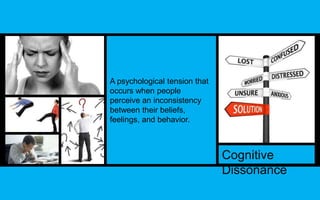
A psychological tension that 
occurs when people 
perceive an inconsistency 
between their beliefs, 
feelings, and behavior. 
Cognitive 
Dissonance
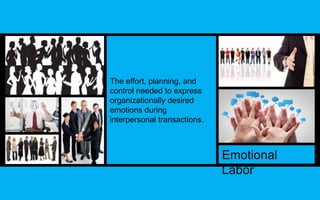
The effort, planning, and 
control needed to express 
organizationally desired 
emotions during 
interpersonal transactions. 
Emotional 
Labor
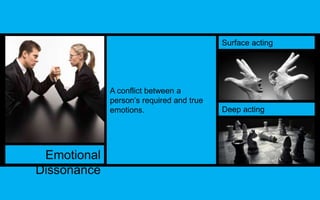
A conflict between a 
person’s required and true 
emotions. 
Emotional 
Dissonance 
Surface acting 
Deep acting
Emotional 
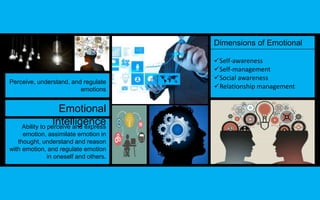
Intelligence 
Ability to perceive and express 
emotion, assimilate emotion in 
thought, understand and reason 
with emotion, and regulate emotion 
in oneself and others. 
Dimensions of Emotional 
Intelligence 
Perceive, understand, and regulate 
emotions 
Self-awareness 
Self-management 
Social awareness 
Relationship management
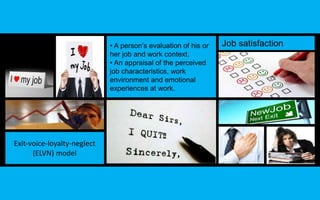
• A person’s evaluation of his or Job satisfaction 
her job and work context. 
• An appraisal of the perceived 
job characteristics, work 
environment and emotional 
experiences at work. 
Exit-voice-loyalty-neglect 
(ELVN) model
Continuance 
Commitment 
Organizational 
Commitment 
Employee’s emotional 
attachment to, identification 
in a particular organization. 
A calculative decision to 
remain with an organization 
because quitting would be 
costly.
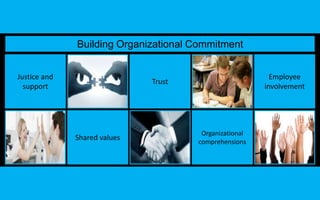
Building Organizational Commitment 
Justice and 
support 
Trust 
Shared values 
Organizational 
comprehensions 
Employee 
involvement
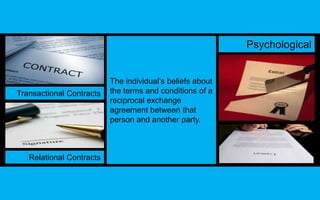
The individual’s beliefs about 
the terms and conditions of a 
reciprocal exchange 
agreement between that 
person and another party. 
Psychological 
Contract 
Transactional Contracts 
Relational Contracts
Workplace 
Emotions and 
Attitudes

Workplace Emotions and Attitudes

  • 1.
  • 2.
    Emotions Psychological, behavioral,and physiological episodes experienced toward an object, person or event that create a state of readiness.
  • 3.
    Four Key Elements of Emotions: • Brief events or episodes • Directed toward someone or something • Experiences • State of readiness
  • 4.
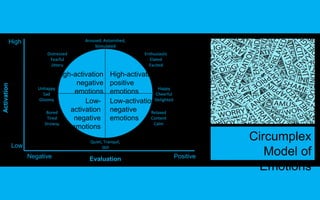
    Circumplex Model of Emotions High Low Aroused, Astonished, Stimulated Distressed Fearful Jittery High-activation negative emotions Low-activation negative emotions Enthusiastic Elated Excited High-activation positive emotions Low-activation negative emotions Unhappy Sad Gloomy Bored Tired Drowsy Happy Cheerful Delighted Relaxed Content Calm Quiet, Tranquil, Still Negative Positive Activation Evaluation
  • 5.
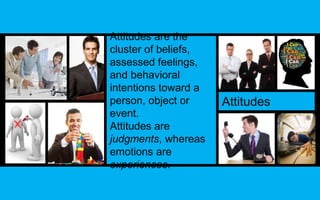
    Attitudes are the cluster of beliefs, assessed feelings, and behavioral intentions toward a person, object or event. Attitudes are judgments, whereas emotions are experiences. Attitudes
  • 6.
    Three Components ofAttitude:  Beliefs  Feelings  Behavioral intentions
  • 7.
    Model of Emotions, Attitudes, and Behavior Perceived Environment Cognitive process Emotional process Feelings Emotional Behavior Beliefs Behavioral Intentions Episodes Attitude
  • 8.
    A psychological tensionthat occurs when people perceive an inconsistency between their beliefs, feelings, and behavior. Cognitive Dissonance
  • 9.
    The effort, planning,and control needed to express organizationally desired emotions during interpersonal transactions. Emotional Labor
  • 10.
    A conflict betweena person’s required and true emotions. Emotional Dissonance Surface acting Deep acting
  • 11.
    Emotional Intelligence Abilityto perceive and express emotion, assimilate emotion in thought, understand and reason with emotion, and regulate emotion in oneself and others. Dimensions of Emotional Intelligence Perceive, understand, and regulate emotions Self-awareness Self-management Social awareness Relationship management
  • 12.
    • A person’sevaluation of his or Job satisfaction her job and work context. • An appraisal of the perceived job characteristics, work environment and emotional experiences at work. Exit-voice-loyalty-neglect (ELVN) model
  • 13.
    Continuance Commitment Organizational Commitment Employee’s emotional attachment to, identification in a particular organization. A calculative decision to remain with an organization because quitting would be costly.
  • 14.
    Building Organizational Commitment Justice and support Trust Shared values Organizational comprehensions Employee involvement
  • 15.
    The individual’s beliefsabout the terms and conditions of a reciprocal exchange agreement between that person and another party. Psychological Contract Transactional Contracts Relational Contracts
  • 16.