The Enneagram:
finding your type
Sarah Downey (@SarahADowney)
Adapted from Mia Patton (@MiaSierra)
The Enneagram is a personality typing system that
emerged near the 4th century.

Like any personality assessment, it's not science. Yet
it's a useful tool in understanding your and other
people's tendencies in order to anticipate conflicts and
harmonies in relationships.

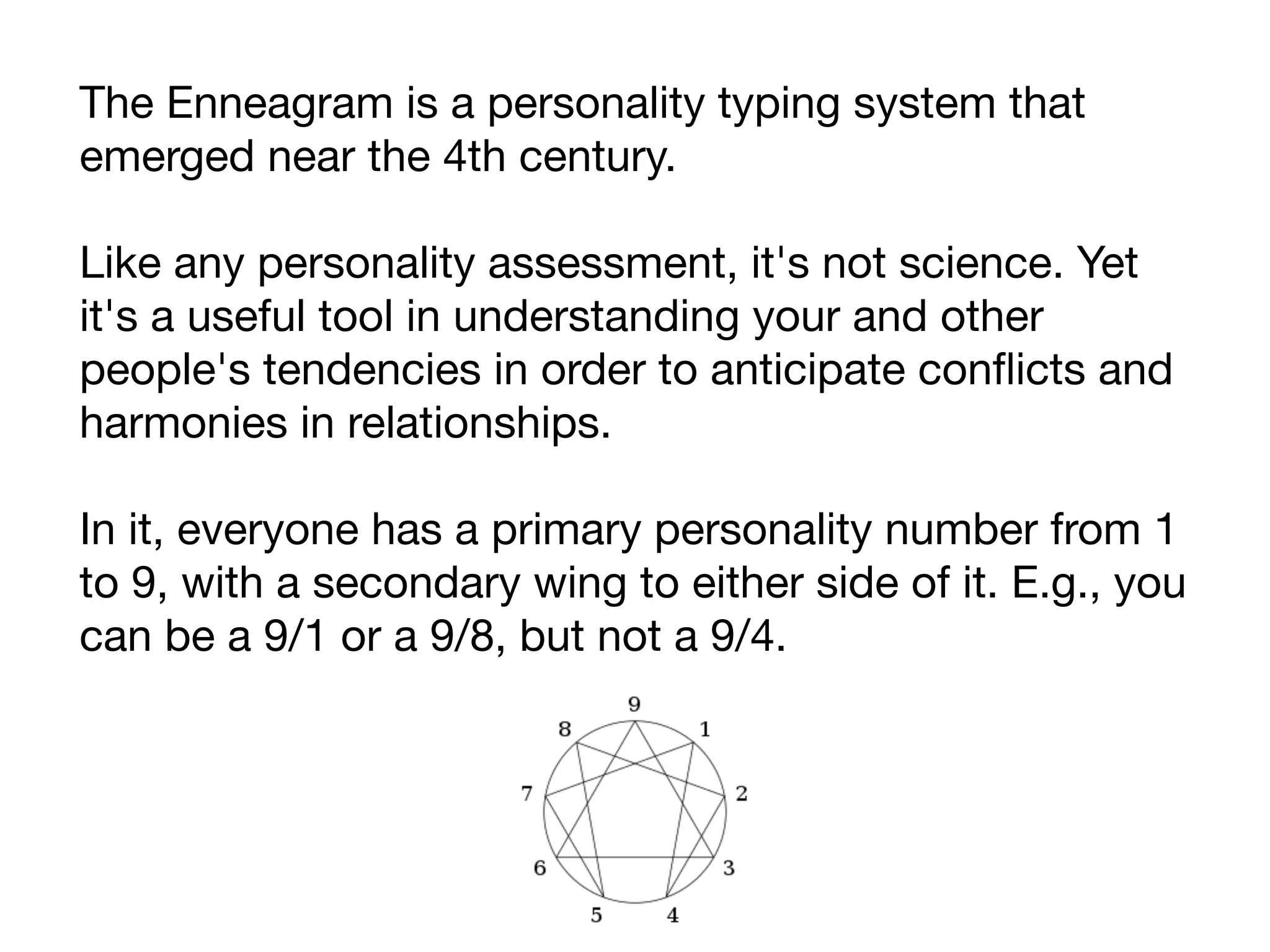
In it, everyone has a primary personality number from 1
to 9, with a secondary wing to either side of it. E.g., you
can be a 9/1 or a 9/8, but not a 9/4.
The Enneagram has seen popular adoption in two
primary places: workplaces and Christianity. There
is no inherent religious focus in the Enneagram.
My focus in this presentation is on work and
personal relationships.
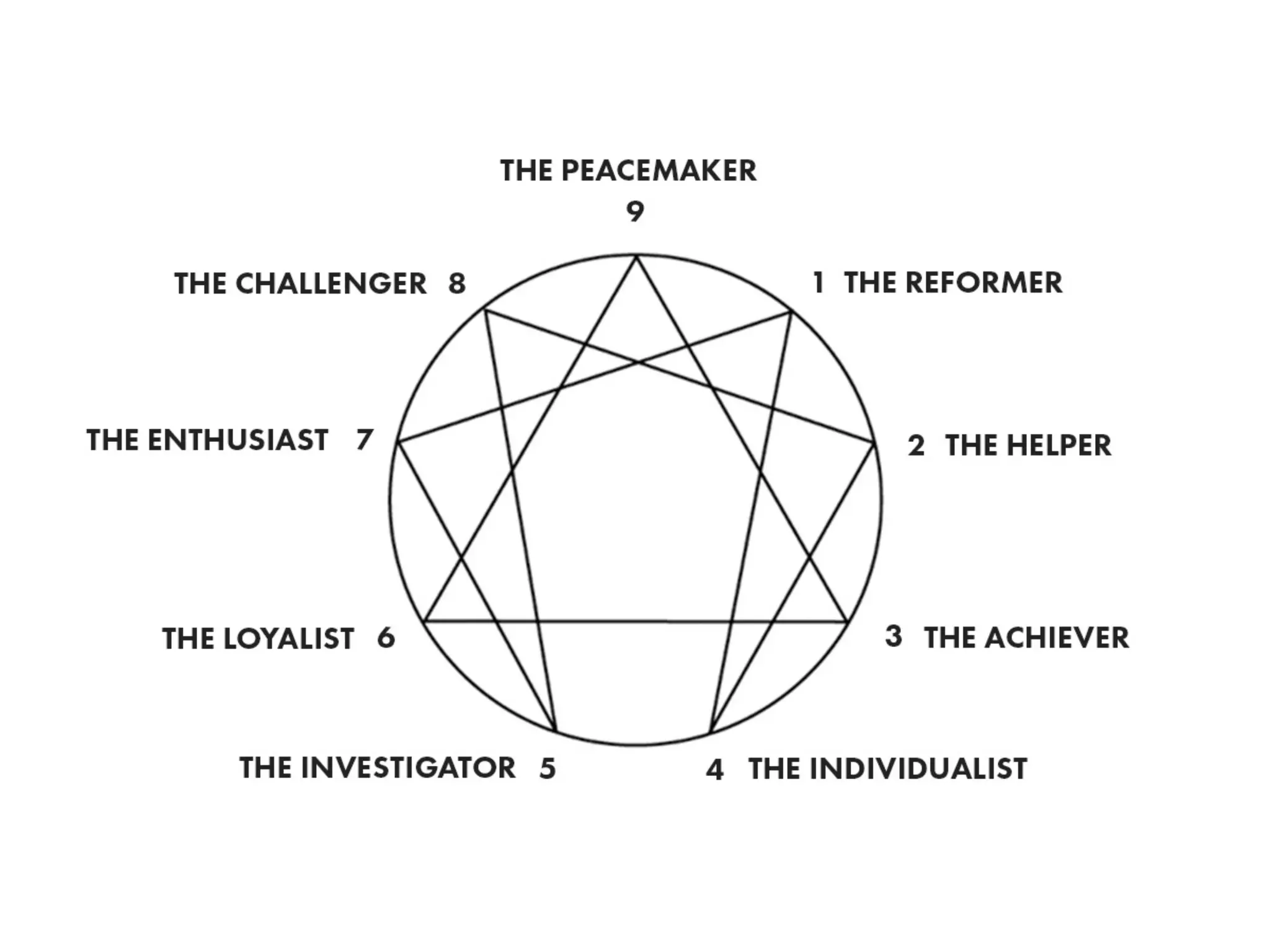
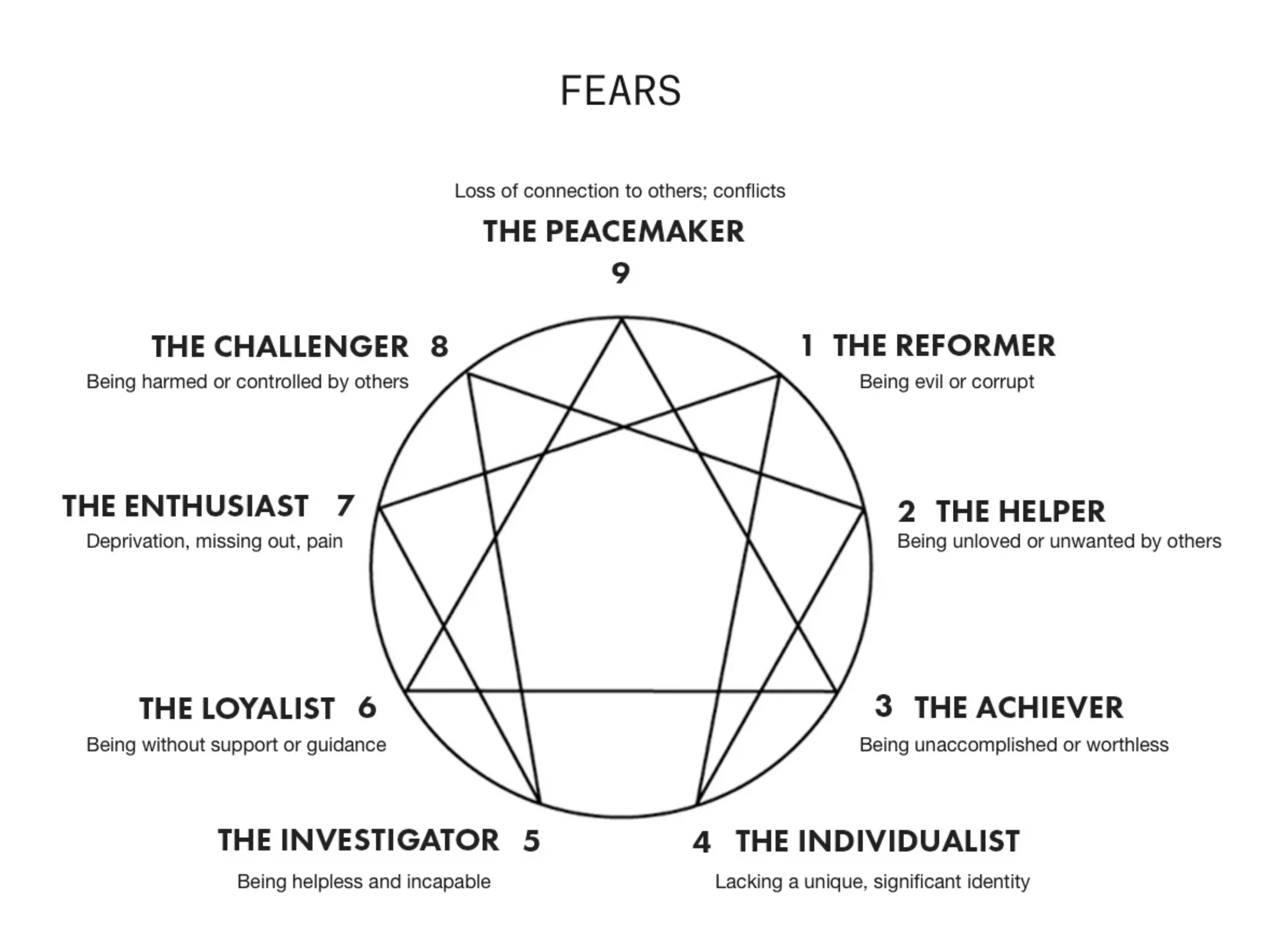
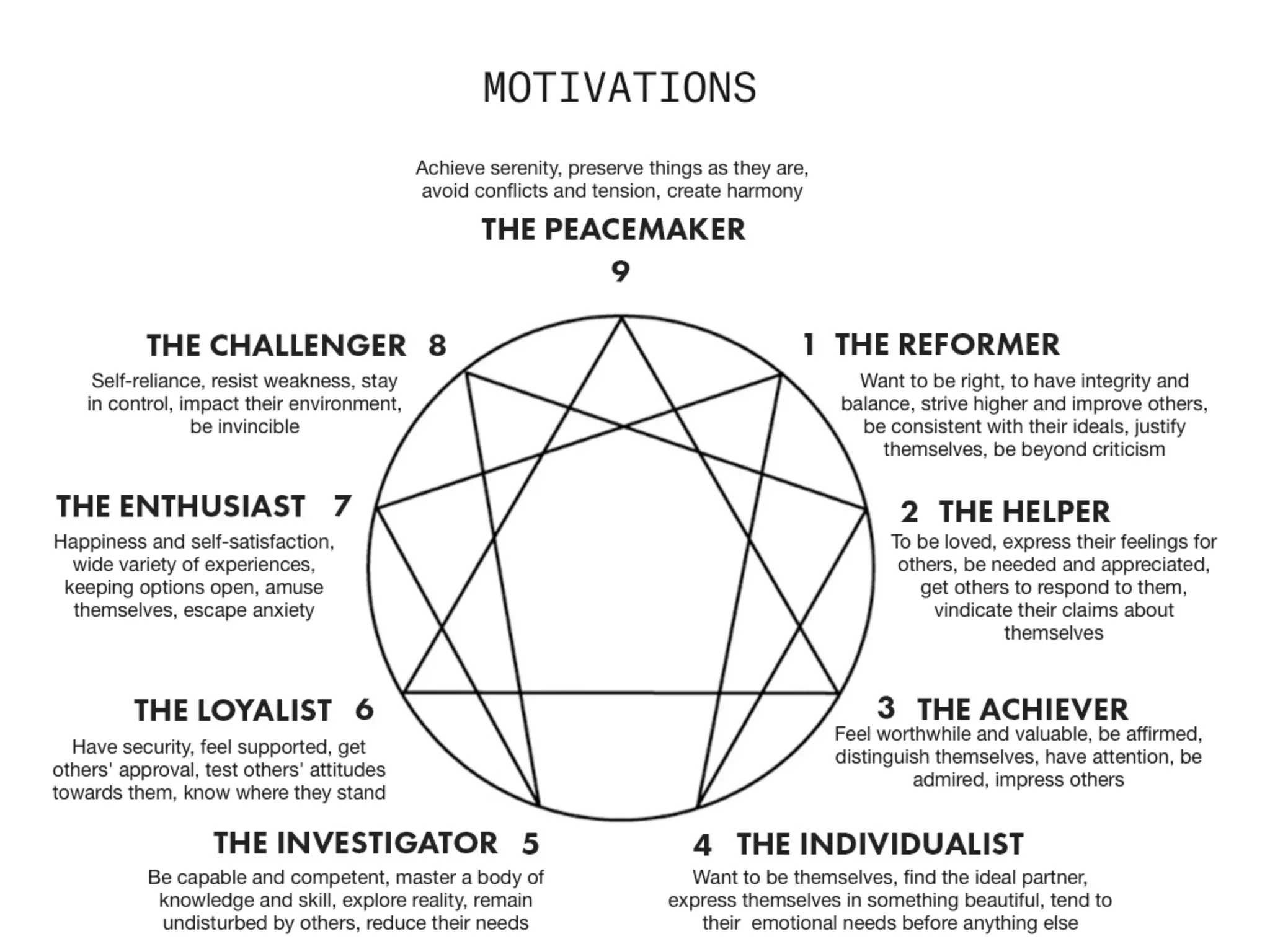
Each type has a characteristic role, giving a quick
high-level description of their tendencies:
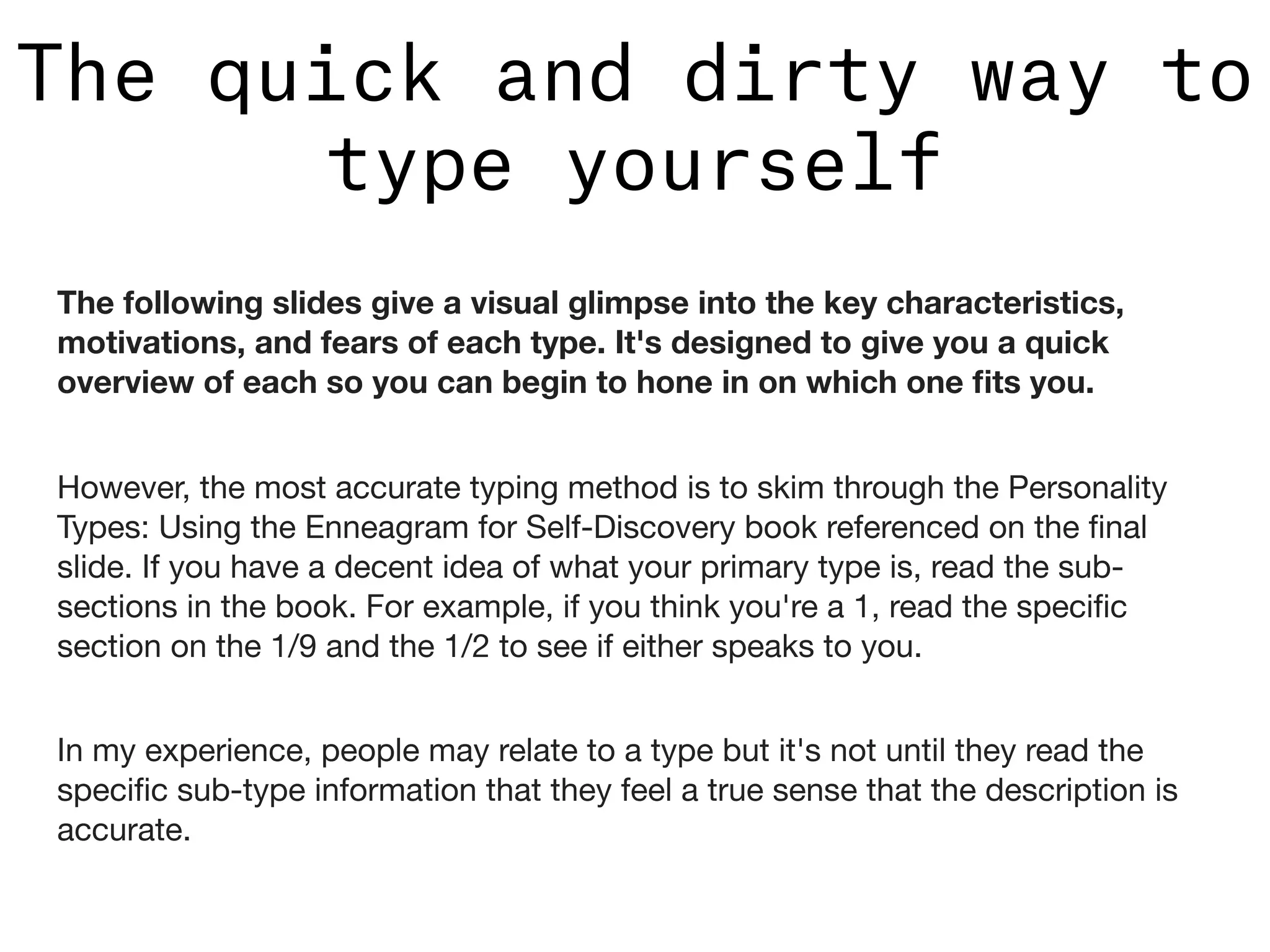
The quick and dirty way to
type yourself
The following slides give a visual glimpse into the key characteristics,
motivations, and fears of each type. It's designed to give you a quick
overview of each so you can begin to hone in on which one fits you.
However, the most accurate typing method is to skim through the Personality
Types: Using the Enneagram for Self-Discovery book referenced on the final
slide. If you have a decent idea of what your primary type is, read the sub-
sections in the book. For example, if you think you're a 1, read the specific
section on the 1/9 and the 1/2 to see if either speaks to you.

In my experience, people may relate to a type but it's not until they read the
specific sub-type information that they feel a true sense that the description is
accurate.
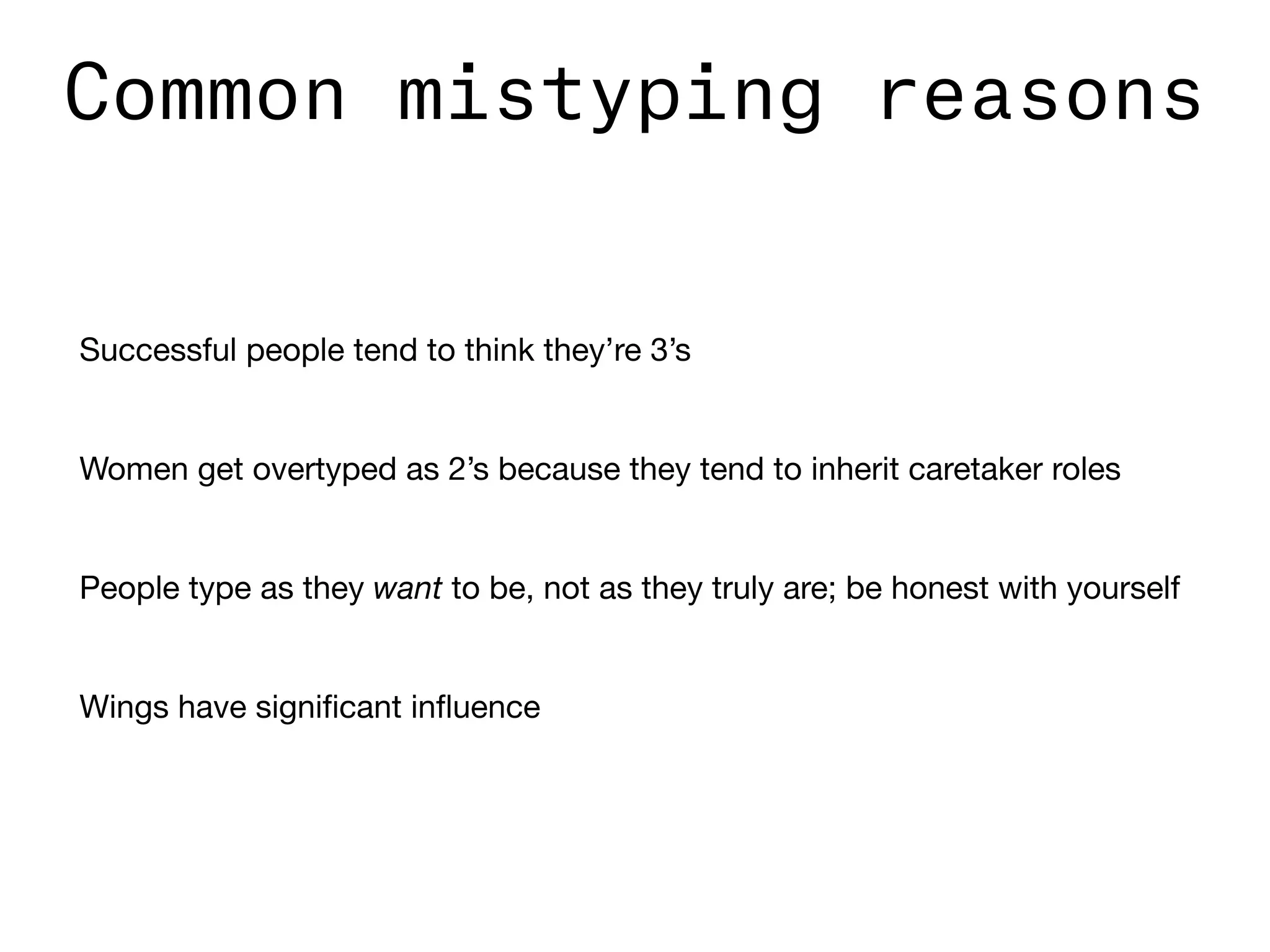
Successful people tend to think they’re 3’s

Women get overtyped as 2’s because they tend to inherit caretaker roles

People type as they want to be, not as they truly are; be honest with yourself

Wings have significant influence

Common mistyping reasons
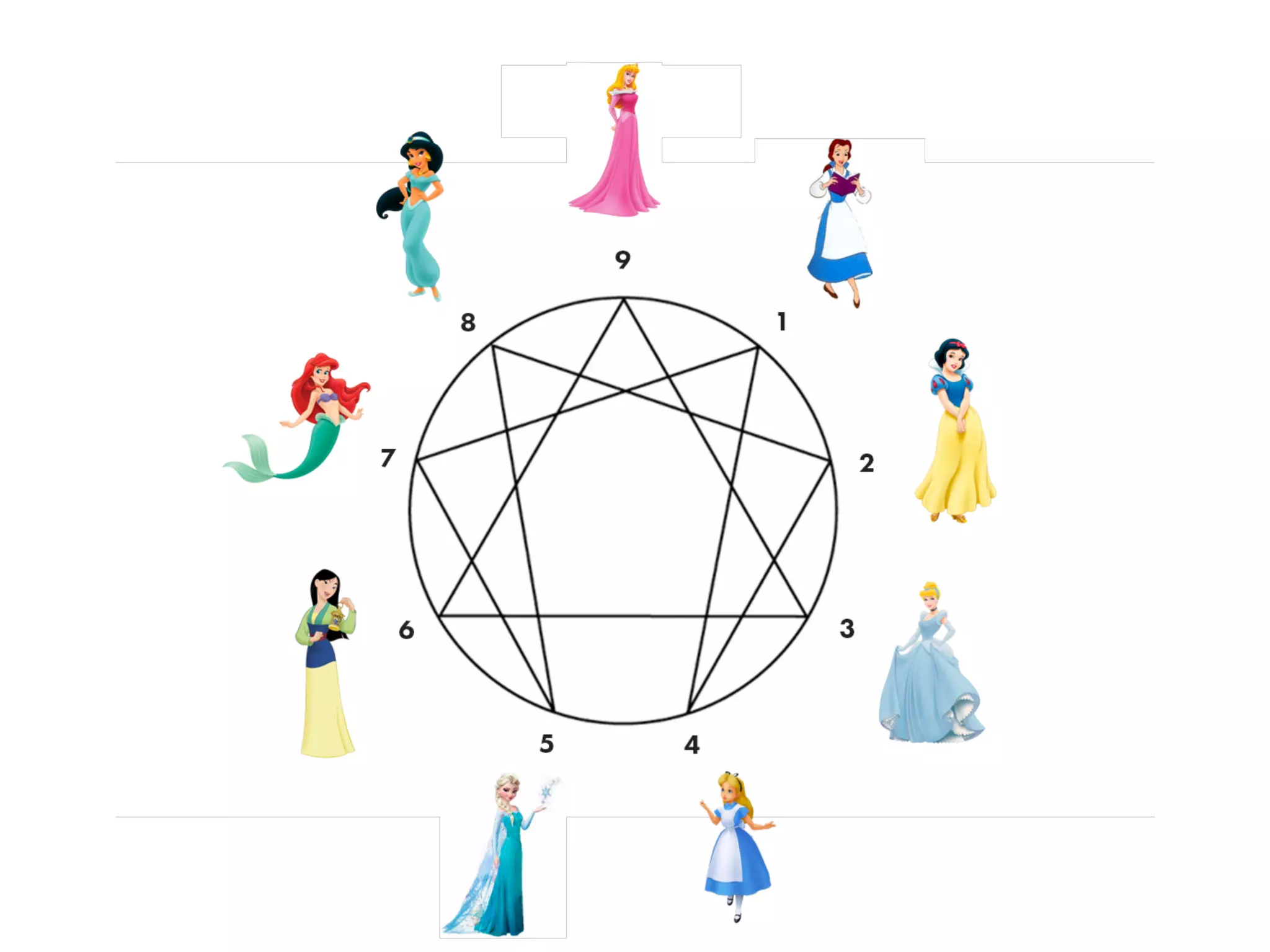
This is a little forced, but maybe it'll resonate:
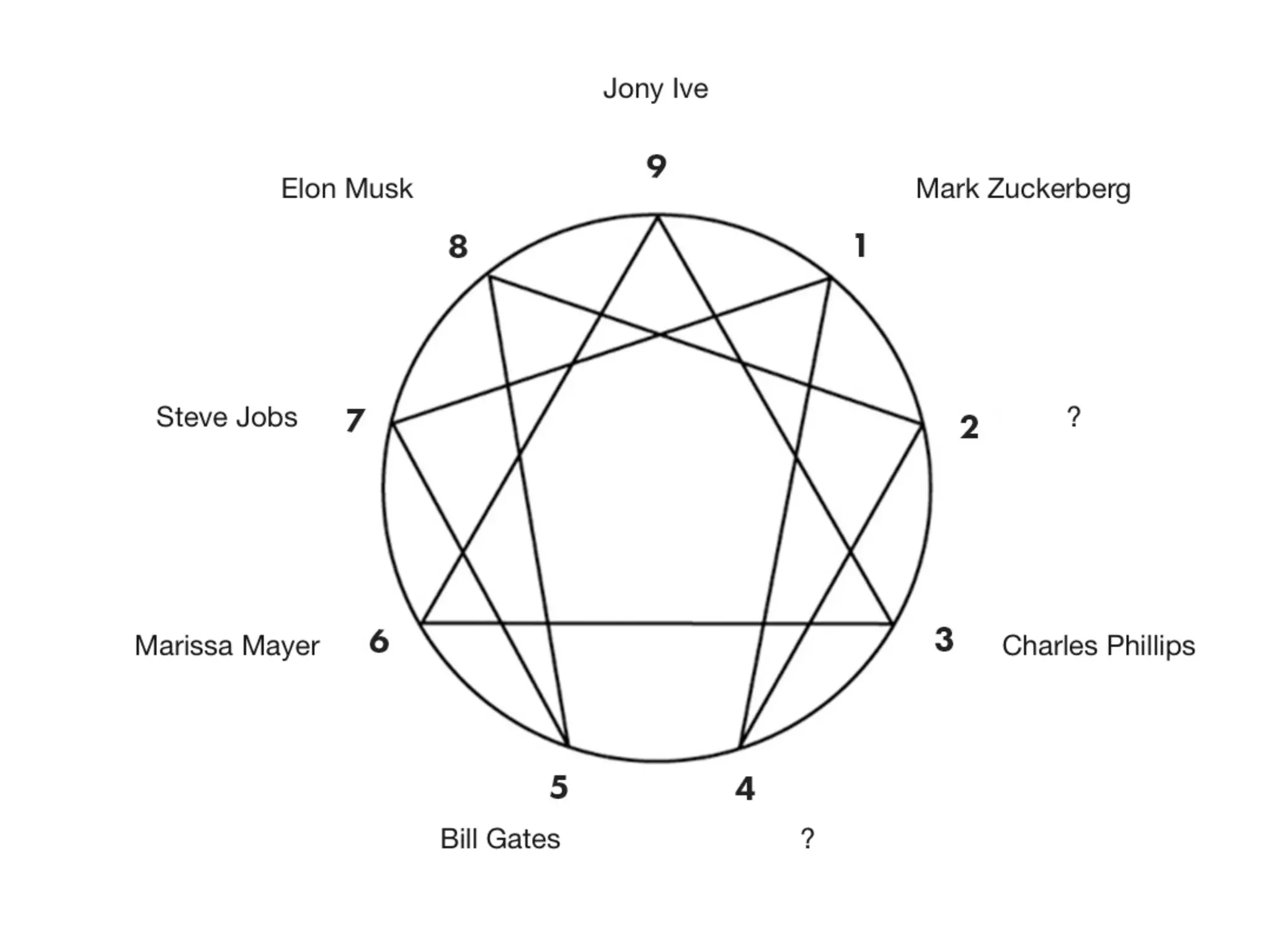
Or this, as applied to tech CEOS (note that I
couldn't find a 4 or 2, so let me know if you can
help with that):
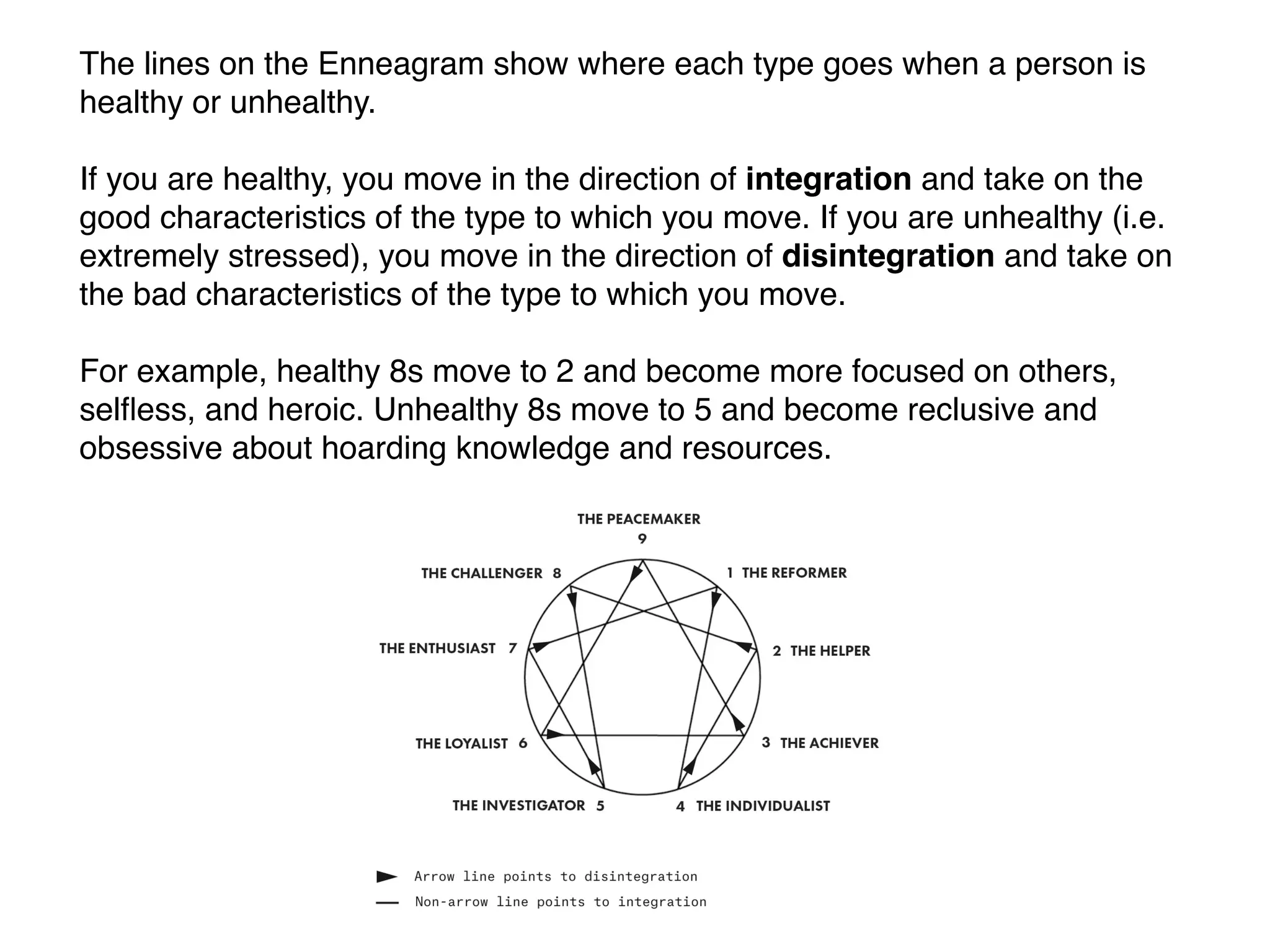
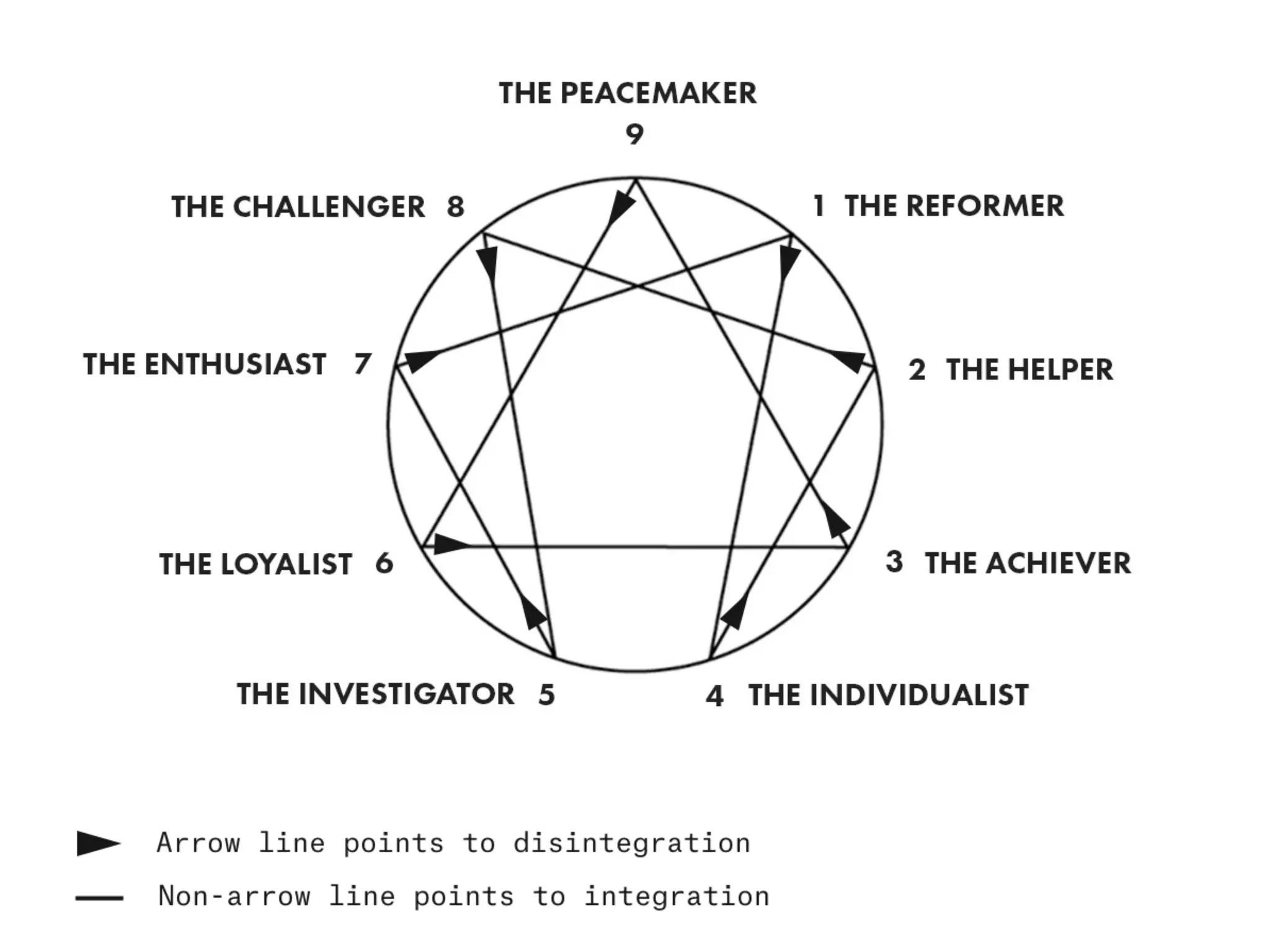
The lines on the Enneagram show where each type goes when a person is
healthy or unhealthy.
If you are healthy, you move in the direction of integration and take on the
good characteristics of the type to which you move. If you are unhealthy (i.e.
extremely stressed), you move in the direction of disintegration and take on
the bad characteristics of the type to which you move.
For example, healthy 8s move to 2 and become more focused on others,
selfless, and heroic. Unhealthy 8s move to 5 and become reclusive and
obsessive about hoarding knowledge and resources.
The triads are a bit much for a simple typing exercise, but for our purposes,
understand that certain groups of types act in similar ways.
Decisionmaking: 8s, 9s, and 1s act on instinct. 2s, 3s, and 4s act on
feelings. 5s, 6s, and 7s act on thinking.
Instinctual reactions: 8s, 9s, and 1s get angry. 2s, 3s, and 4s feel shame.
5s, 6s, and 7s feel fear and anxiety.
Triads
What is your type?
What is your subtype
(primary + wing)?
More Enneagram resources:
Enneagram of Personality Wikipedia 

Personality Types: Using the Enneagram for Self-
Discovery, by Don Richard Riso with Russ Hudson

InsideOut Enneagram: The Game-Changing Guide
for Leaders, by Wendy Appel 

Riso-Hudson Enneagram Type Indicator Test
(RHETI)

The Enneagram in startups: finding your type

  • 1.
    The Enneagram: finding yourtype Sarah Downey (@SarahADowney) Adapted from Mia Patton (@MiaSierra)
  • 2.
    The Enneagram isa personality typing system that emerged near the 4th century. Like any personality assessment, it's not science. Yet it's a useful tool in understanding your and other people's tendencies in order to anticipate conflicts and harmonies in relationships. In it, everyone has a primary personality number from 1 to 9, with a secondary wing to either side of it. E.g., you can be a 9/1 or a 9/8, but not a 9/4.
  • 3.
    The Enneagram hasseen popular adoption in two primary places: workplaces and Christianity. There is no inherent religious focus in the Enneagram. My focus in this presentation is on work and personal relationships.
  • 4.
    Each type hasa characteristic role, giving a quick high-level description of their tendencies:
  • 6.
    The quick anddirty way to type yourself The following slides give a visual glimpse into the key characteristics, motivations, and fears of each type. It's designed to give you a quick overview of each so you can begin to hone in on which one fits you. However, the most accurate typing method is to skim through the Personality Types: Using the Enneagram for Self-Discovery book referenced on the final slide. If you have a decent idea of what your primary type is, read the sub- sections in the book. For example, if you think you're a 1, read the specific section on the 1/9 and the 1/2 to see if either speaks to you. In my experience, people may relate to a type but it's not until they read the specific sub-type information that they feel a true sense that the description is accurate.
  • 7.
    Successful people tendto think they’re 3’s Women get overtyped as 2’s because they tend to inherit caretaker roles People type as they want to be, not as they truly are; be honest with yourself Wings have significant influence Common mistyping reasons
  • 11.
    This is alittle forced, but maybe it'll resonate:
  • 13.
    Or this, asapplied to tech CEOS (note that I couldn't find a 4 or 2, so let me know if you can help with that):
  • 15.
    The lines onthe Enneagram show where each type goes when a person is healthy or unhealthy. If you are healthy, you move in the direction of integration and take on the good characteristics of the type to which you move. If you are unhealthy (i.e. extremely stressed), you move in the direction of disintegration and take on the bad characteristics of the type to which you move. For example, healthy 8s move to 2 and become more focused on others, selfless, and heroic. Unhealthy 8s move to 5 and become reclusive and obsessive about hoarding knowledge and resources.
  • 17.
    The triads area bit much for a simple typing exercise, but for our purposes, understand that certain groups of types act in similar ways. Decisionmaking: 8s, 9s, and 1s act on instinct. 2s, 3s, and 4s act on feelings. 5s, 6s, and 7s act on thinking. Instinctual reactions: 8s, 9s, and 1s get angry. 2s, 3s, and 4s feel shame. 5s, 6s, and 7s feel fear and anxiety. Triads
  • 18.
    What is yourtype? What is your subtype (primary + wing)?
  • 19.
    More Enneagram resources: Enneagramof Personality Wikipedia Personality Types: Using the Enneagram for Self- Discovery, by Don Richard Riso with Russ Hudson InsideOut Enneagram: The Game-Changing Guide for Leaders, by Wendy Appel Riso-Hudson Enneagram Type Indicator Test (RHETI)