INTRODUCTION TO TEACHER
EDUCATION
Dr.P.MUTHUSAMY
ASST.PROFESSOR,
TCP-MADURAI
Education:
Education is a process of
receiving or giving systematic instruction,
particularly at a school or university.
Education is the process of
learning or the acquisition of
knowledge,skill,values,beliefs and habits.
Education is discipline that is
concerned with methods
of teaching and learning in schools
or school-like environments.
Education is the most powerful
weapon which you can use to
change the world- Nelson Mandela
Teacher:
A person who teaches,
especially in a school.
A teacher is a person who
helps others to acquire knowledge,
competence and values.
A Teacher is a person who
educates students in school, college
or university.
Teaching:
Teaching is a purposeful
activity to shaping the society.
Teaching is the process of
inculcating moral values, abilities,
skills by an experienced person to an
inexperienced person in order to
ensure positive change in behavior
Teaching is shaping
one's thought and action through
giving instructions and performing
practices that create a new behavior
and capacity.
Teaching is a very noble
profession that shapes the
character, caliber and future of an
individual-Dr.A.P.J.Abdul Kalam.
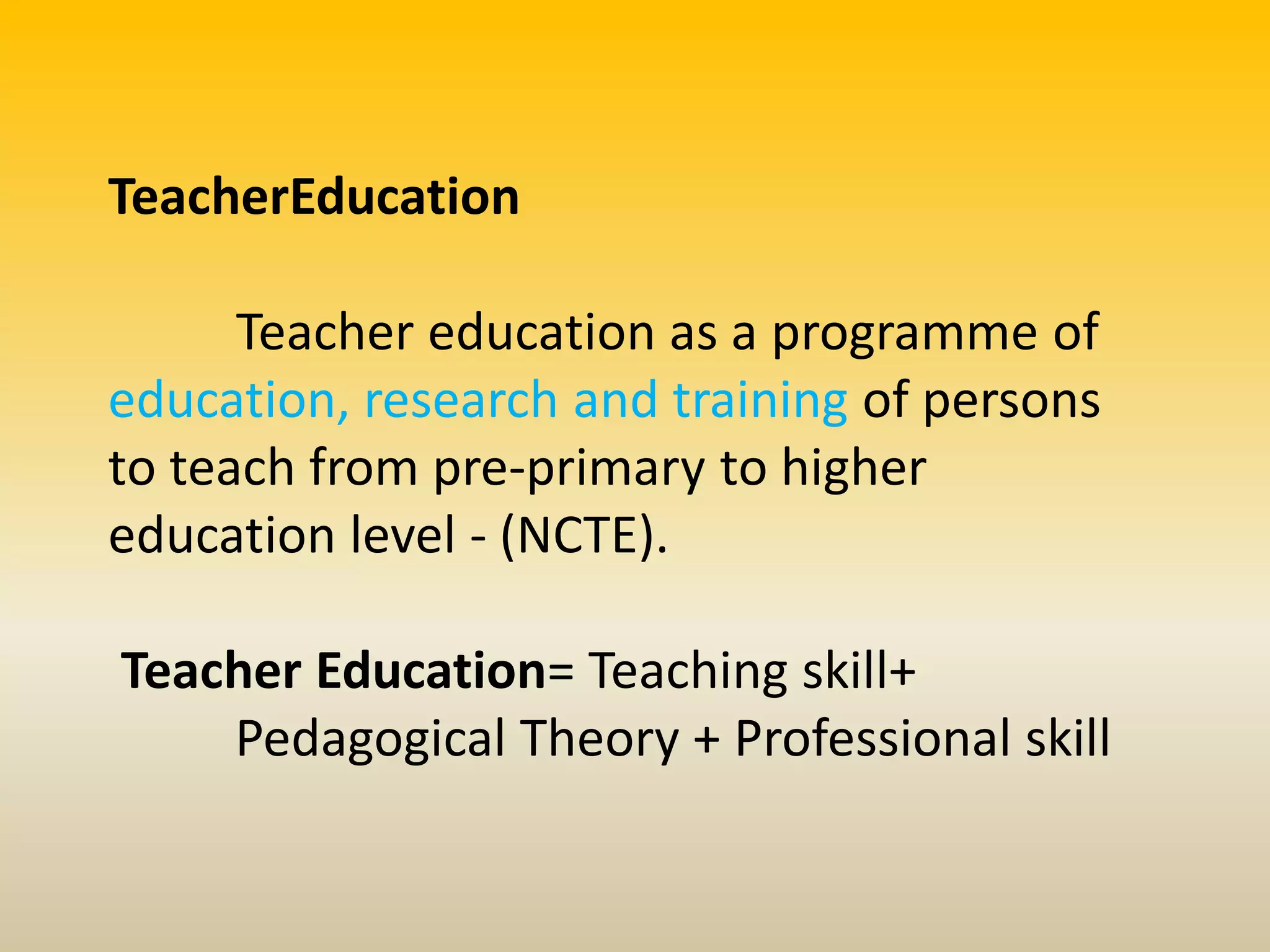
TeacherEducation
Teacher education as a programme of
education, research and training of persons
to teach from pre-primary to higher
education level - (NCTE).
Teacher Education= Teaching skill+
Pedagogical Theory + Professional skill
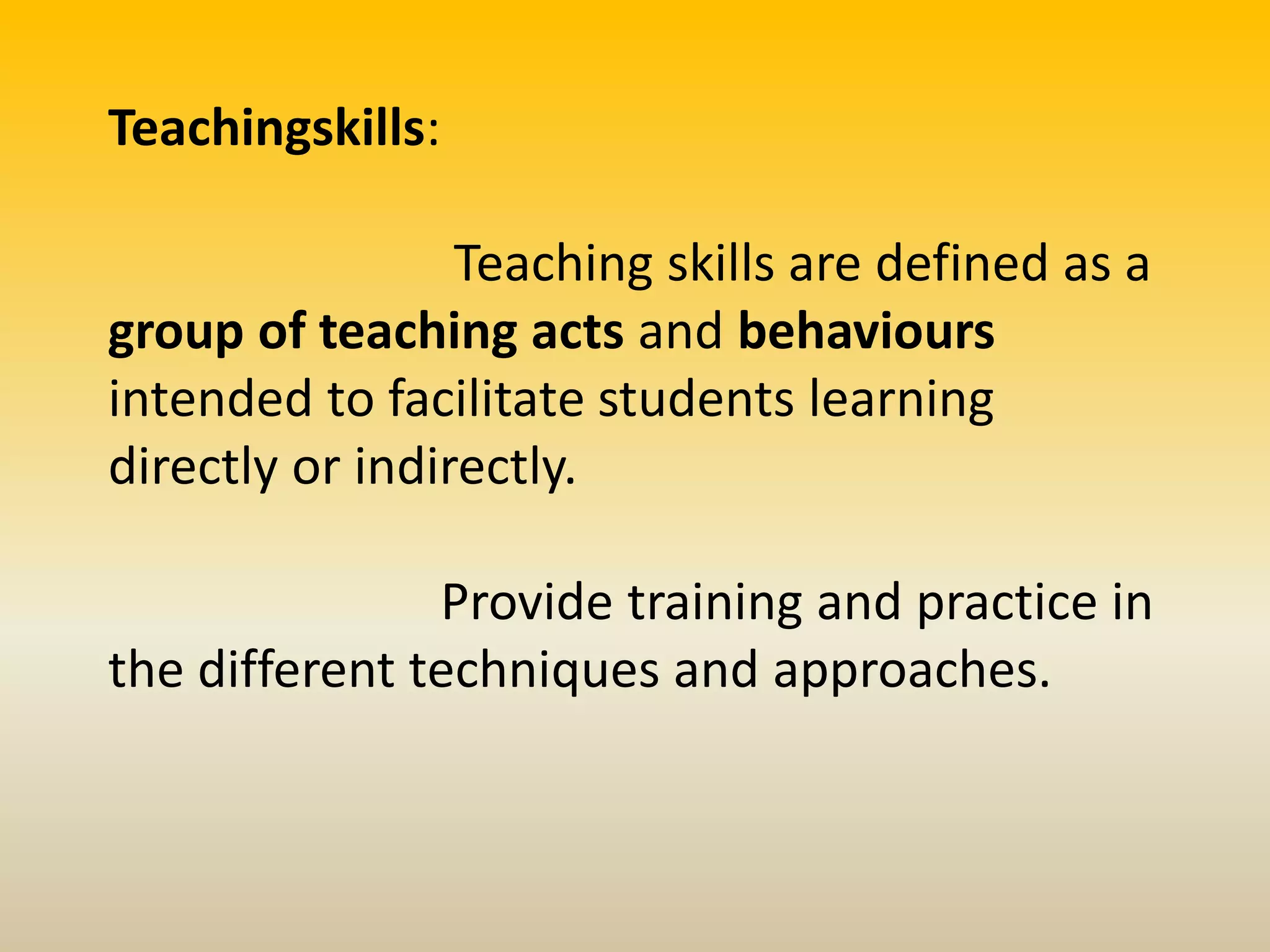
Teachingskills:
Teaching skills are defined as a
group of teaching acts and behaviours
intended to facilitate students learning
directly or indirectly.
Provide training and practice in
the different techniques and approaches.
This skills are helps the teacher to
plan and import instruction, provide
appropriate reinforcement and conduct
effective assessment.
Teaching skills includes effective class
room management skill, preparation and use
of instructional materials and communication
skill.
Pedagogical Theory:
-The methodology of teaching is
called pedagogy.
-Teachers required
Philosophical, Psychological and Sociological
knowledge to practicing the teaching skill in
the class room.
ProfessionalSkill:
-Profession means the
person who involves prolonged
training and a formal qualification.
-Professional skills are
counselling skill, interpersonal skill,
Computer skill, and information
retrieving and management skill.
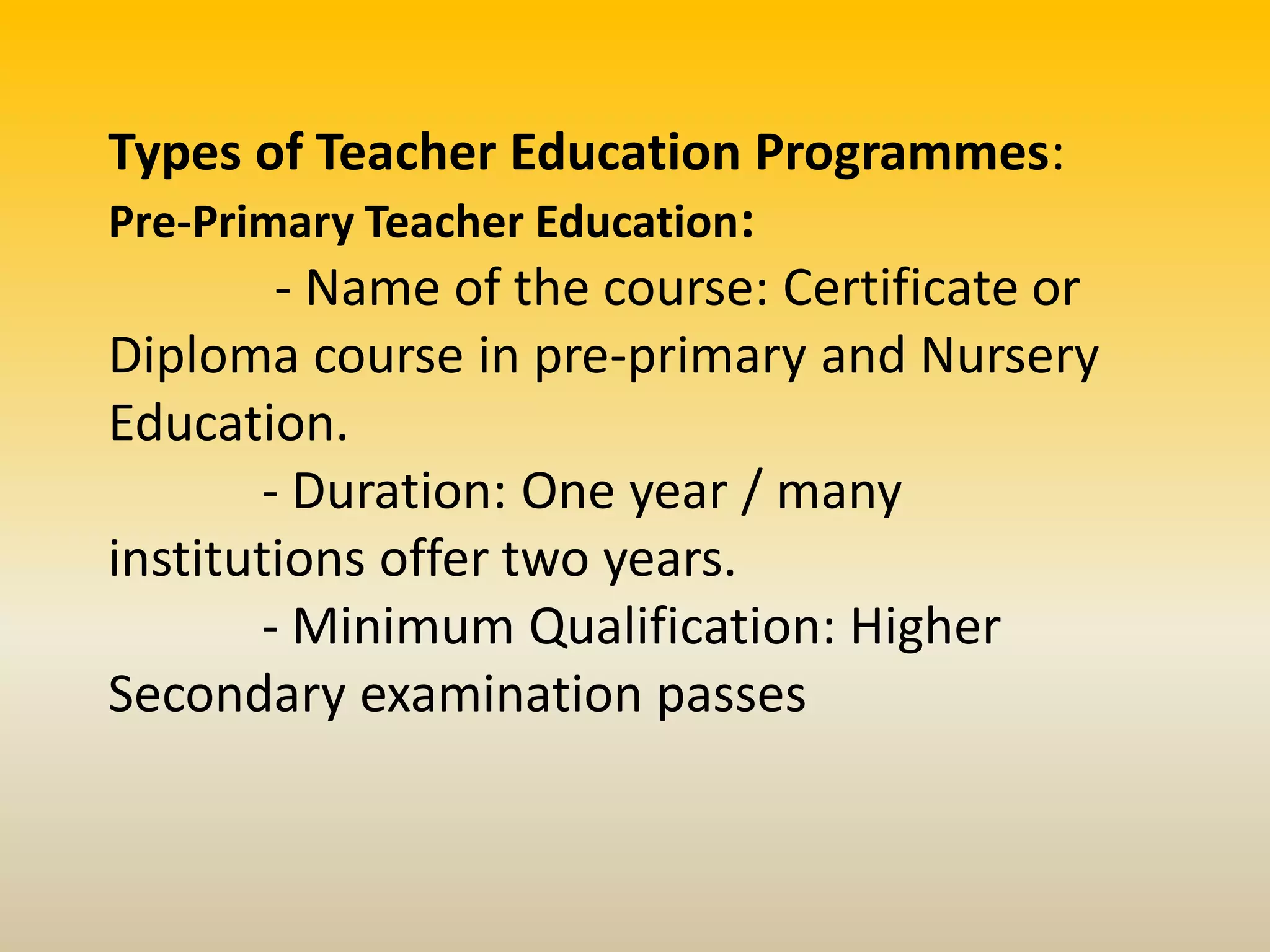
Types of Teacher Education Programmes:
Pre-Primary Teacher Education:
- Name of the course: Certificate or
Diploma course in pre-primary and Nursery
Education.
- Duration: One year / many
institutions offer two years.
- Minimum Qualification: Higher
Secondary examination passes
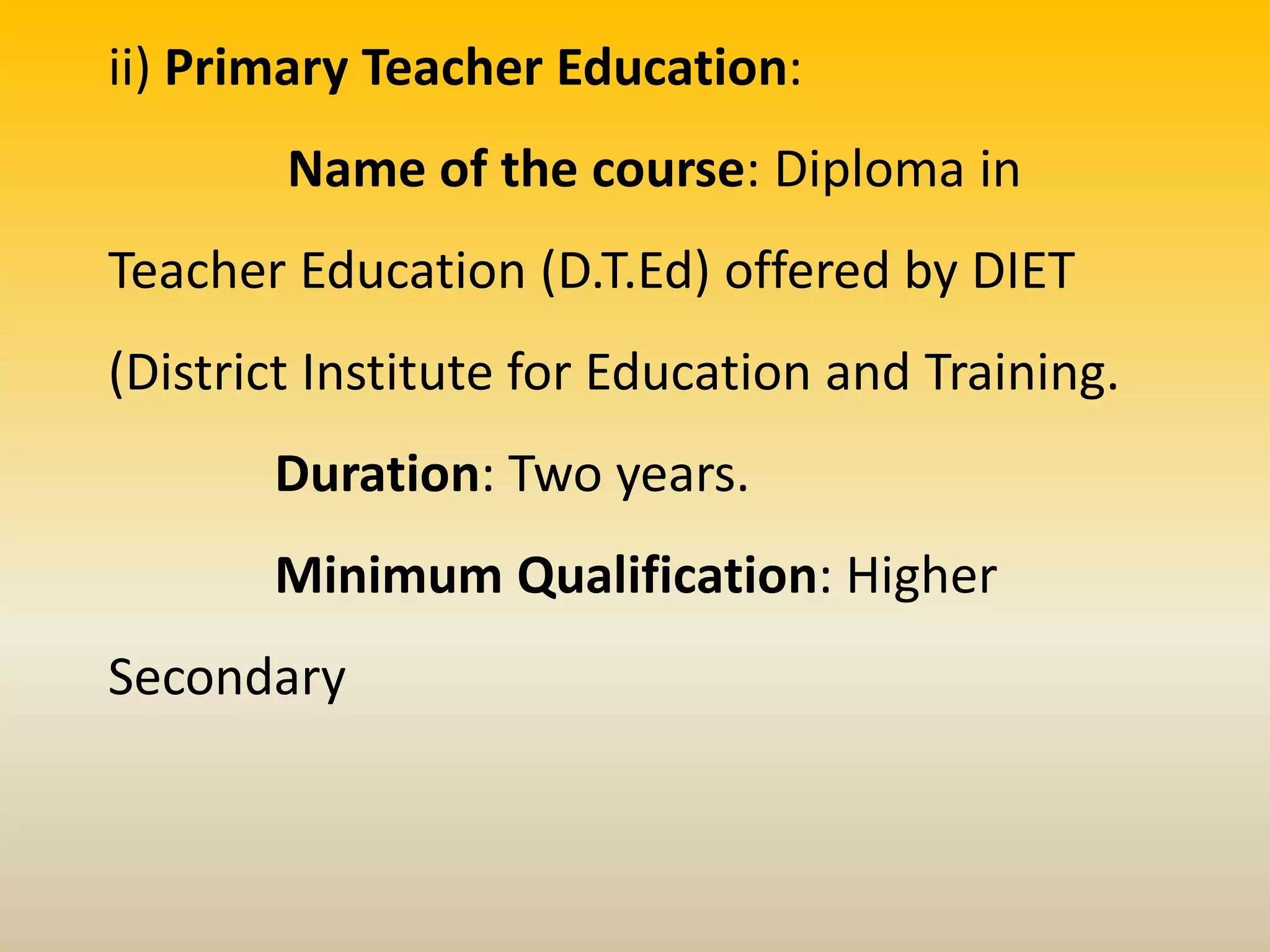
ii) Primary Teacher Education:
Name of the course: Diploma in
Teacher Education (D.T.Ed) offered by DIET
(District Institute for Education and Training.
Duration: Two years.
Minimum Qualification: Higher
Secondary
iii) Secondary Teacher Education:
- Name of the course: Bachelor of
Education offered by college of
Education
-Duration: Two years.
-Minimum Qualification: Any Degree
/ PG-Degree required for Commerce
and Economics students.
iv) Higher Education:
- Name of the course: Master of Education
offered by college of Education/ University
-Duration: Two years.
-Minimum Qualification: Bachelor of
Education
ii) - Name of the course: Ph.D., offered by
University
- Duration: Three years / Four years
-Minimum Qualification: Mater of
Education
iii) - Name of the course: M.Phil. Offered
by University
- Duration: One year
-Minimum Qualification: Mater of
Education
iv) -Name of the course: PG.Diploma in
Education. Offered by University
- Duration: One year
-Minimum Qualification: Bachelor of
Education.
Nature of teacher education
-Teacher education is a continuous
process
-It contains three phases that is pre-
service, induction and in service
-Teacher education is a comprehensive
nature
-The entire process of teacher education
should follow proper curriculum, design,
structure, organisation and transaction
modes.
-Teacher education is based on the
theory
-Teacher education should have
meaningful and useful in society.
-It has interdependence of its input,
process and output.
Objectives of Teacher Education:
To inculcate-
- Knowledge of child psychology
-Knowledge of the subject
-Knowledge of Aims of Education
-Knowledge of Adjustment
-Knowledge of principle of pedagogy
-To Assist in Guidance programme
-To develop the ability to use
instructional materials
-To develop the Knowledge of evaluation
method
-Planning of lesson
-Organisation of co-curricular activities.
Scope of teacher education:
-To provide Teacher Education at different
levels in quality aspects.
-To provide enormous knowledge in
philosophical, sociological and psychological
aspects to understanding the situation.
-To provide relevant knowledge and skill to the
teachers to performing in their profession in
effective way.
-To bring desirable behaviour changes among
student- teachers.
Recent areas in Teacher education:
The following areas of education
needed for present generation.
-Value education
-Human rights education
-Education related to adjustable,
emotional intelligence and cognitive
consonance.
-Environmental education
-Vocational education
-Disaster management
education.
-Technological oriented
education.
INTRODUCTION TO TEACHER EDUCATION

INTRODUCTION TO TEACHER EDUCATION

  • 1.
  • 2.
    Education: Education is aprocess of receiving or giving systematic instruction, particularly at a school or university. Education is the process of learning or the acquisition of knowledge,skill,values,beliefs and habits.
  • 3.
    Education is disciplinethat is concerned with methods of teaching and learning in schools or school-like environments. Education is the most powerful weapon which you can use to change the world- Nelson Mandela
  • 4.
    Teacher: A person whoteaches, especially in a school. A teacher is a person who helps others to acquire knowledge, competence and values. A Teacher is a person who educates students in school, college or university.
  • 5.
    Teaching: Teaching is apurposeful activity to shaping the society. Teaching is the process of inculcating moral values, abilities, skills by an experienced person to an inexperienced person in order to ensure positive change in behavior
  • 6.
    Teaching is shaping one'sthought and action through giving instructions and performing practices that create a new behavior and capacity. Teaching is a very noble profession that shapes the character, caliber and future of an individual-Dr.A.P.J.Abdul Kalam.
  • 7.
    TeacherEducation Teacher education asa programme of education, research and training of persons to teach from pre-primary to higher education level - (NCTE). Teacher Education= Teaching skill+ Pedagogical Theory + Professional skill
  • 8.
    Teachingskills: Teaching skills aredefined as a group of teaching acts and behaviours intended to facilitate students learning directly or indirectly. Provide training and practice in the different techniques and approaches.
  • 9.
    This skills arehelps the teacher to plan and import instruction, provide appropriate reinforcement and conduct effective assessment. Teaching skills includes effective class room management skill, preparation and use of instructional materials and communication skill.
  • 10.
    Pedagogical Theory: -The methodologyof teaching is called pedagogy. -Teachers required Philosophical, Psychological and Sociological knowledge to practicing the teaching skill in the class room.
  • 11.
    ProfessionalSkill: -Profession means the personwho involves prolonged training and a formal qualification. -Professional skills are counselling skill, interpersonal skill, Computer skill, and information retrieving and management skill.
  • 12.
    Types of TeacherEducation Programmes: Pre-Primary Teacher Education: - Name of the course: Certificate or Diploma course in pre-primary and Nursery Education. - Duration: One year / many institutions offer two years. - Minimum Qualification: Higher Secondary examination passes
  • 13.
    ii) Primary TeacherEducation: Name of the course: Diploma in Teacher Education (D.T.Ed) offered by DIET (District Institute for Education and Training. Duration: Two years. Minimum Qualification: Higher Secondary
  • 14.
    iii) Secondary TeacherEducation: - Name of the course: Bachelor of Education offered by college of Education -Duration: Two years. -Minimum Qualification: Any Degree / PG-Degree required for Commerce and Economics students.
  • 15.
    iv) Higher Education: -Name of the course: Master of Education offered by college of Education/ University -Duration: Two years. -Minimum Qualification: Bachelor of Education
  • 16.
    ii) - Nameof the course: Ph.D., offered by University - Duration: Three years / Four years -Minimum Qualification: Mater of Education
  • 17.
    iii) - Nameof the course: M.Phil. Offered by University - Duration: One year -Minimum Qualification: Mater of Education iv) -Name of the course: PG.Diploma in Education. Offered by University - Duration: One year -Minimum Qualification: Bachelor of Education.
  • 18.
    Nature of teachereducation -Teacher education is a continuous process -It contains three phases that is pre- service, induction and in service -Teacher education is a comprehensive nature
  • 19.
    -The entire processof teacher education should follow proper curriculum, design, structure, organisation and transaction modes. -Teacher education is based on the theory -Teacher education should have meaningful and useful in society. -It has interdependence of its input, process and output.
  • 20.
    Objectives of TeacherEducation: To inculcate- - Knowledge of child psychology -Knowledge of the subject -Knowledge of Aims of Education -Knowledge of Adjustment -Knowledge of principle of pedagogy
  • 21.
    -To Assist inGuidance programme -To develop the ability to use instructional materials -To develop the Knowledge of evaluation method -Planning of lesson -Organisation of co-curricular activities.
  • 22.
    Scope of teachereducation: -To provide Teacher Education at different levels in quality aspects. -To provide enormous knowledge in philosophical, sociological and psychological aspects to understanding the situation. -To provide relevant knowledge and skill to the teachers to performing in their profession in effective way. -To bring desirable behaviour changes among student- teachers.
  • 23.
    Recent areas inTeacher education: The following areas of education needed for present generation. -Value education -Human rights education -Education related to adjustable, emotional intelligence and cognitive consonance.
  • 24.
    -Environmental education -Vocational education -Disastermanagement education. -Technological oriented education.