


Presentation is About
Prepared By: Noor Ahmed 17CE71
Introduction to statics
Force and Equilibrium
Structural Analysis
Friction
Centroid
Moments of Inertia
Course Outline
By: BEEBAGR AZIM
• Mechanics :
- Rigid-body Mechanics
- Deformable-body Mechanics
- Fluid Mechanics
• Rigid-body Mechanics :
- Statics
- Dynamics
Engineering Mechanics
Statics :
Equilibrium Analysis of particles and bodies
Dynamics:
Accelerated motion of particles and bodies
Engineering Mechanics
what is statics ?
Statics is the branch of mechanics that is concerned
with the analysis of loads (force and torque, or
"moment") acting on physical systems that do not
experience an acceleration (a=0), but rather, are in
static equilibrium with their environment.
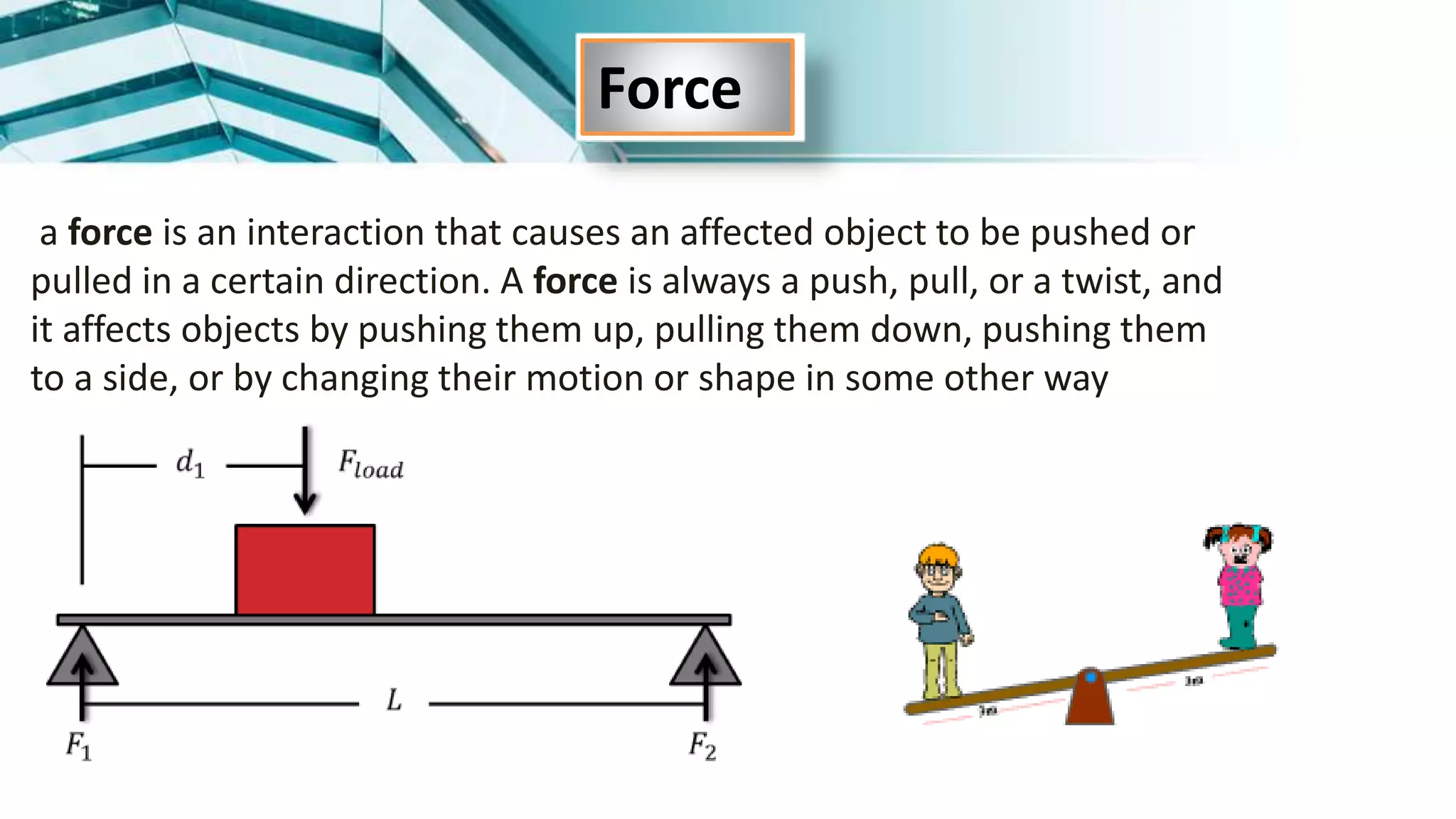
a force is an interaction that causes an affected object to be pushed or
pulled in a certain direction. A force is always a push, pull, or a twist, and
it affects objects by pushing them up, pulling them down, pushing them
to a side, or by changing their motion or shape in some other way
Force
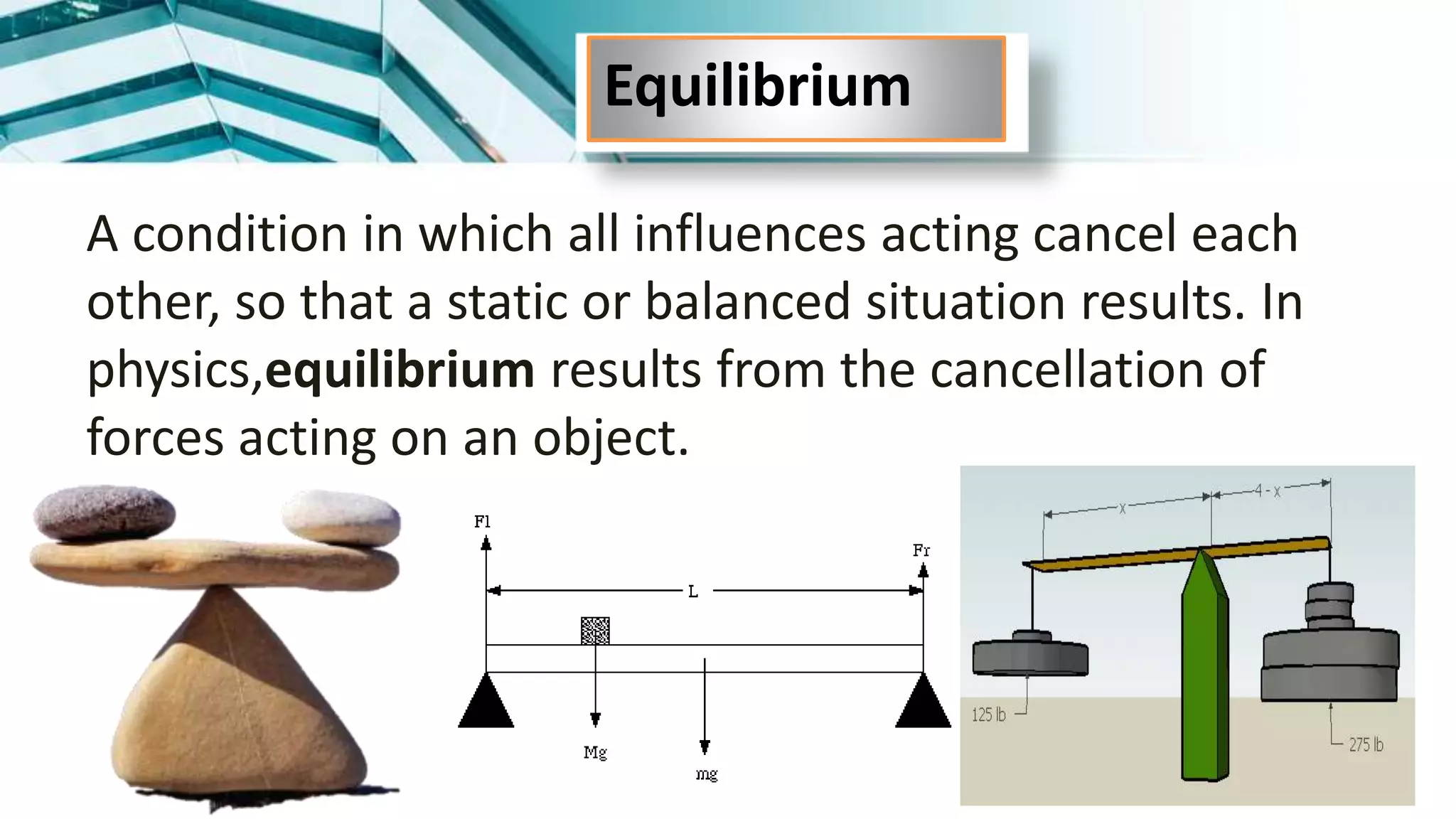
A condition in which all influences acting cancel each
other, so that a static or balanced situation results. In
physics,equilibrium results from the cancellation of
forces acting on an object.
Equilibrium
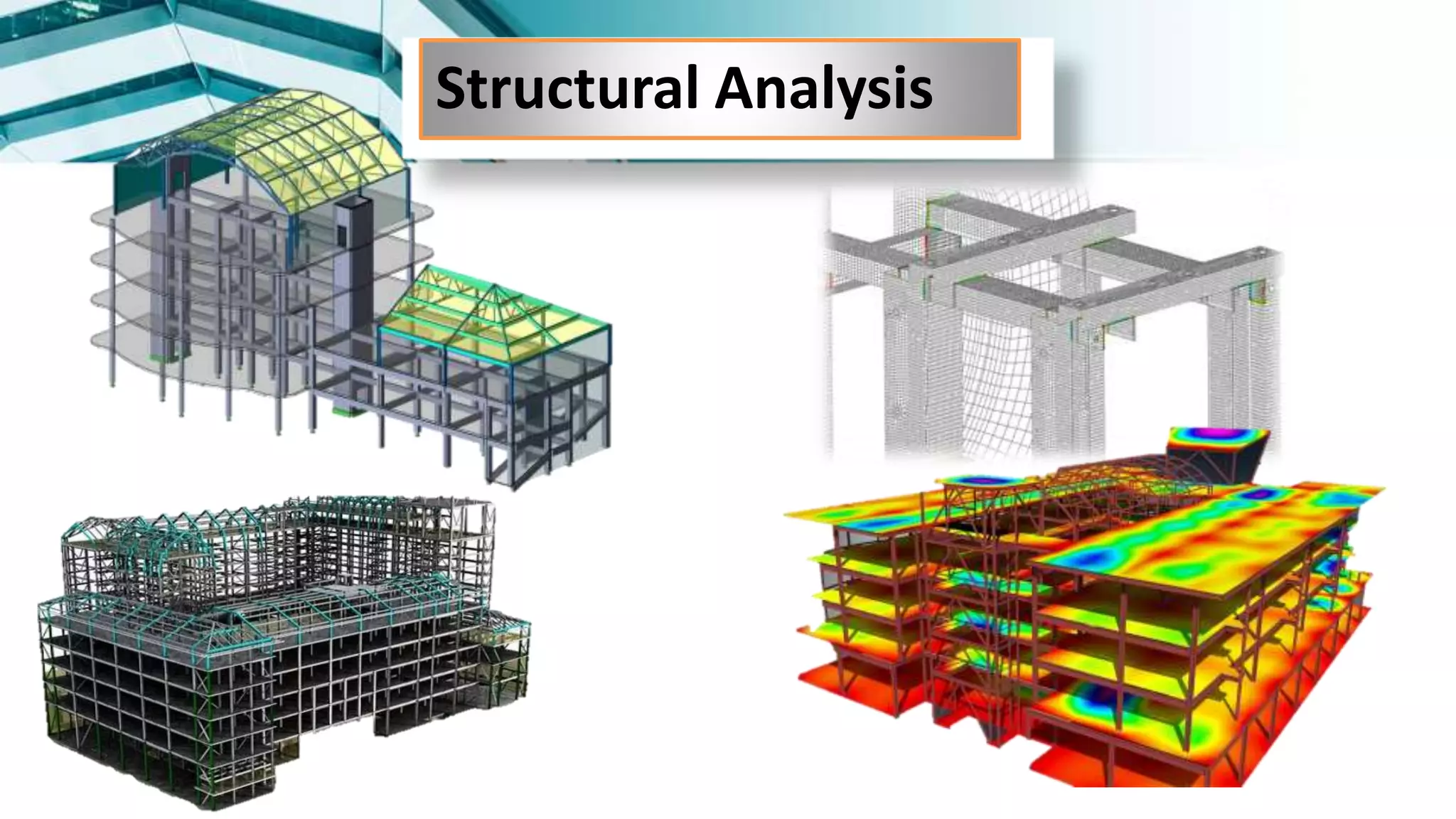
Structural analysis is the determination of
the effects of loads on
physical structures and their
components. Structuressubject to this type
of analysis include all that must withstand
loads, such as buildings, bridges, vehicles,
furniture, attire, soil strata, prostheses and
biological tissue.
Structural Analysis
Structural Analysis
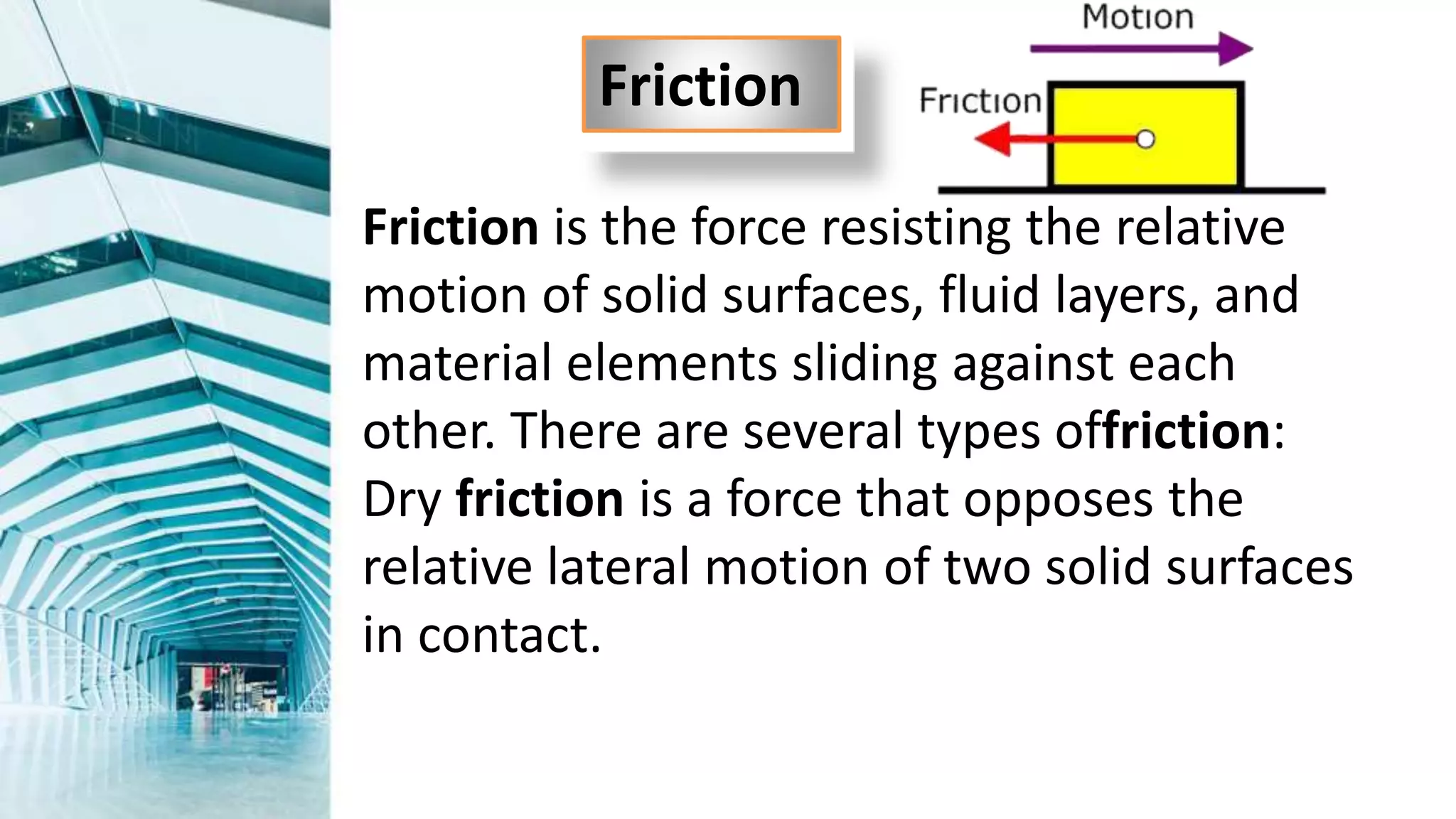
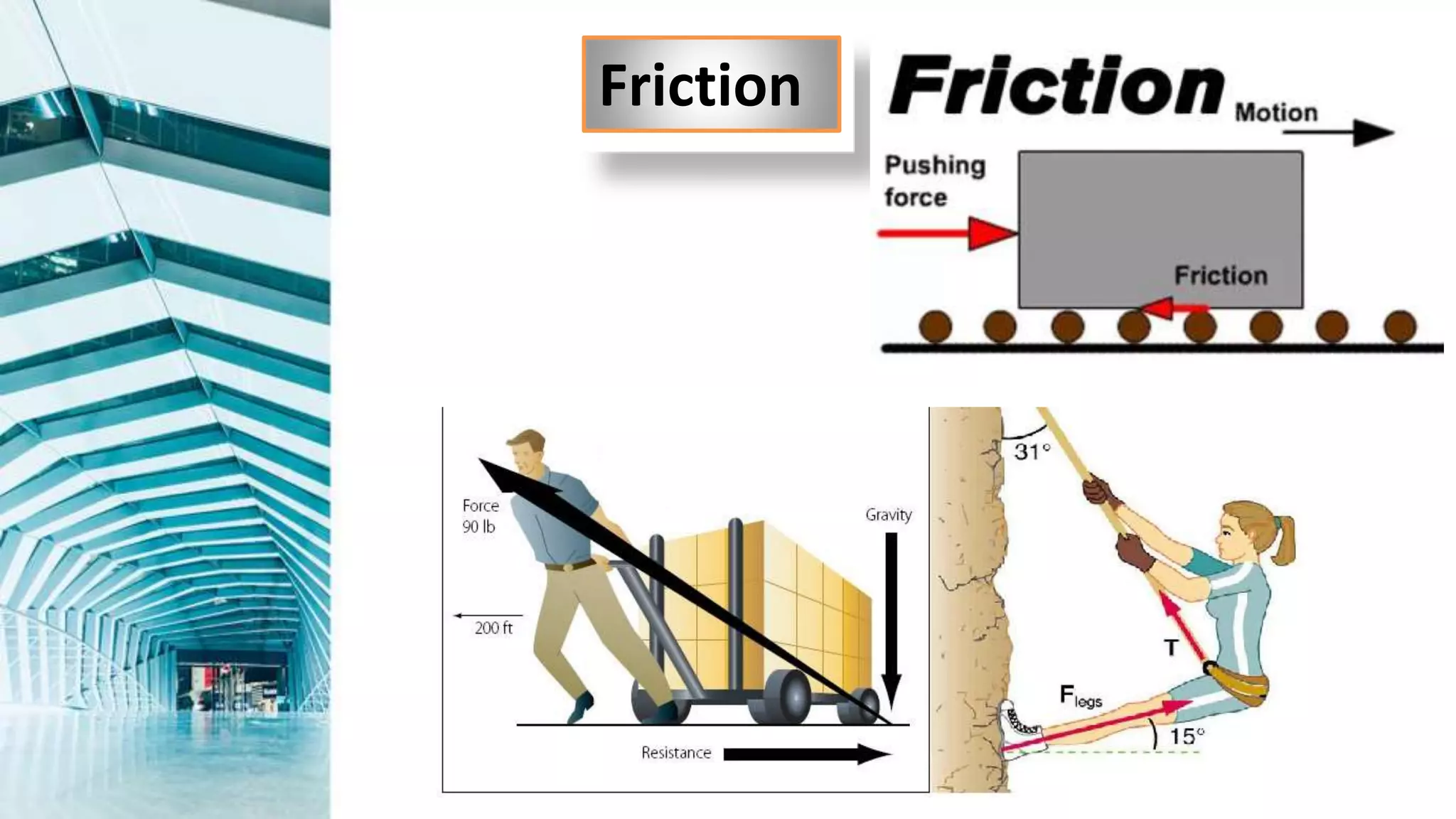
Friction is the force resisting the relative
motion of solid surfaces, fluid layers, and
material elements sliding against each
other. There are several types offriction:
Dry friction is a force that opposes the
relative lateral motion of two solid surfaces
in contact.
Friction
Friction
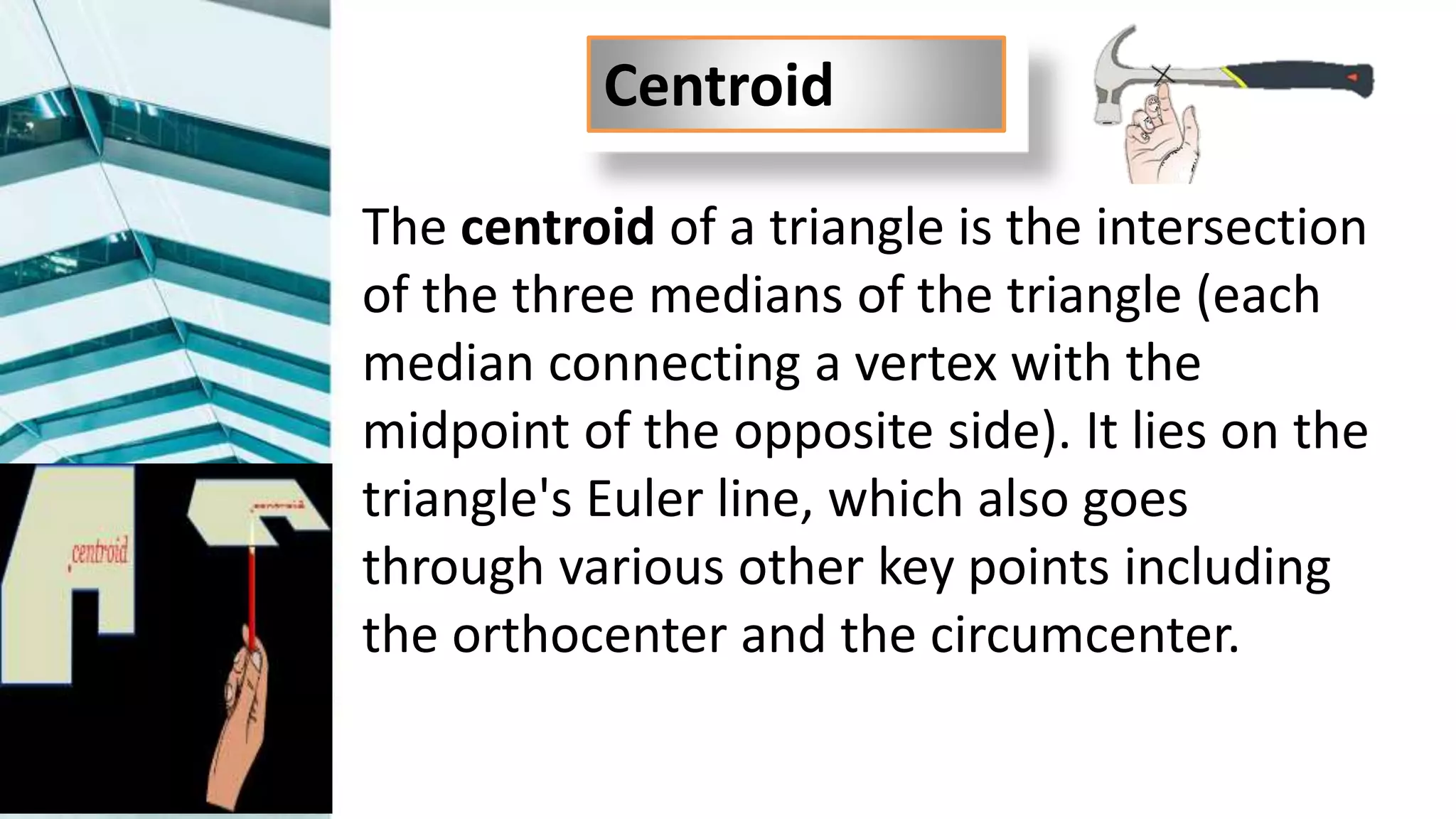
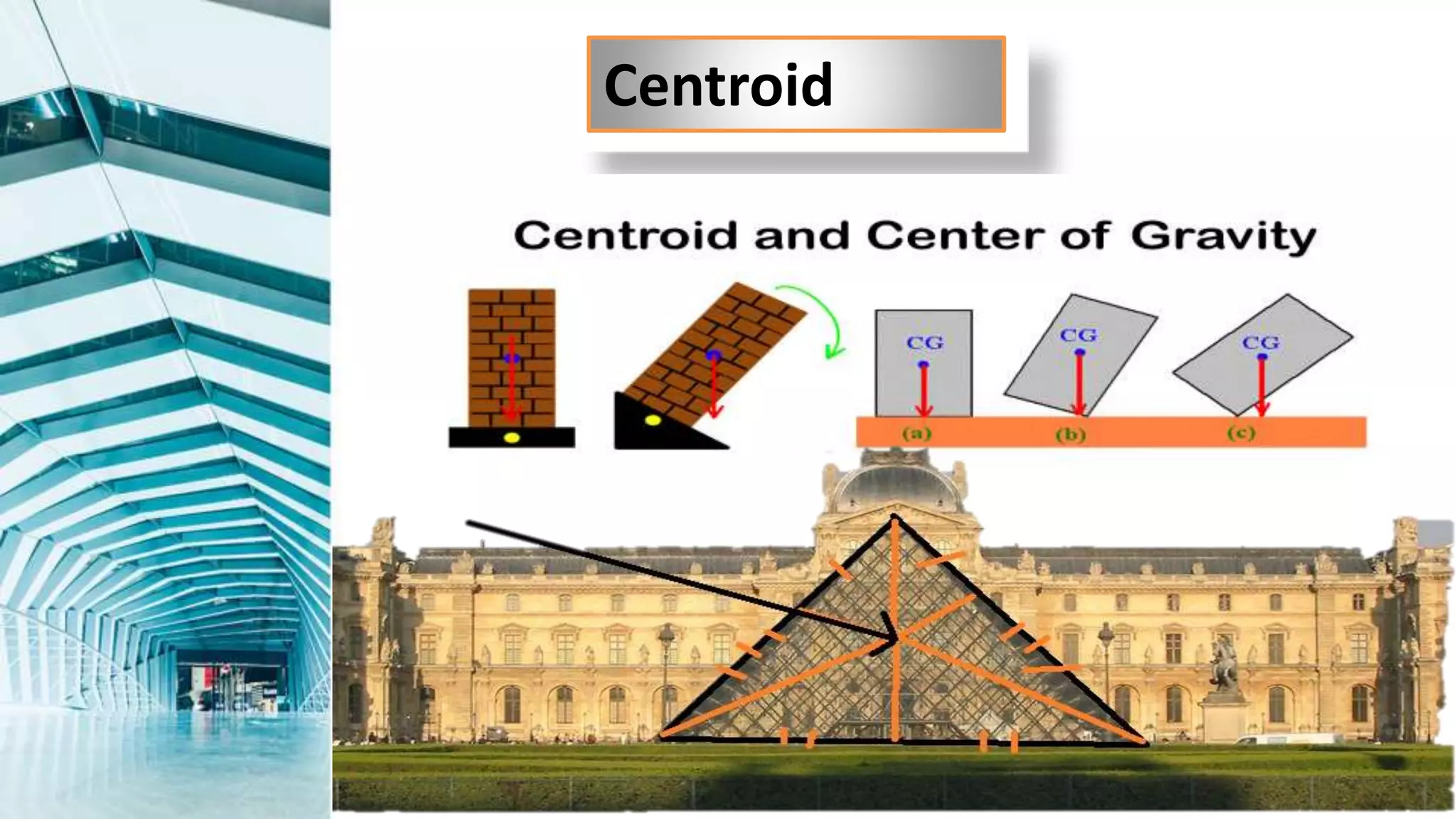
The centroid of a triangle is the intersection
of the three medians of the triangle (each
median connecting a vertex with the
midpoint of the opposite side). It lies on the
triangle's Euler line, which also goes
through various other key points including
the orthocenter and the circumcenter.
Centroid
Centroid
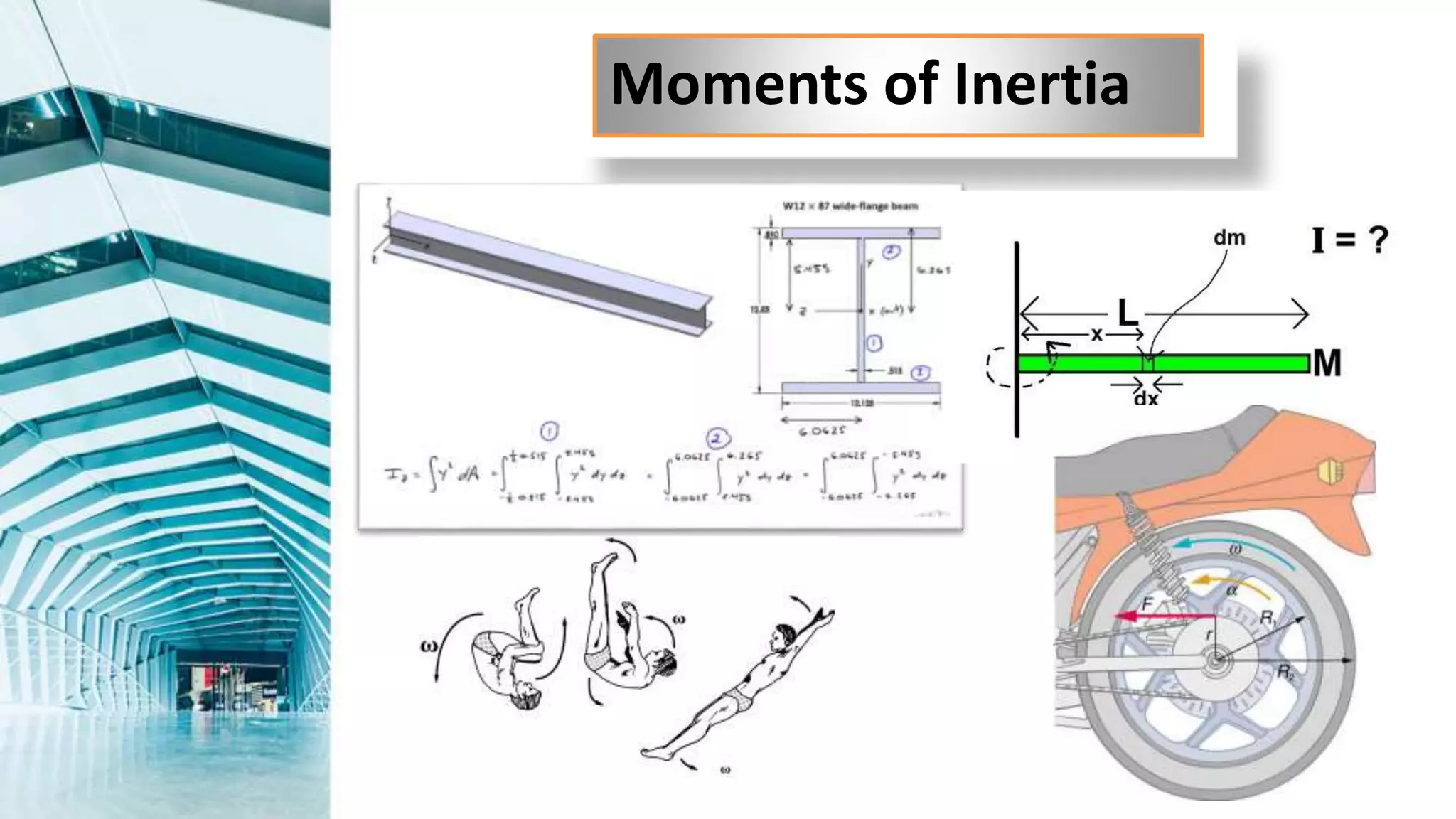
The amount of torque needed to cause any
given angular acceleration (the rate of
change in angular velocity) is proportional
to the moment of inertia of the body. ... For
a point-like mass, the moment of
inertia about some axis is given by , where
is the distance of the point from the axis,
and is the mass.
Moments of Inertia
Moments of Inertia
 Introduction to statics and its Applications in Real Life

Introduction to statics and its Applications in Real Life

  • 2.
    Presentation is About PreparedBy: Noor Ahmed 17CE71
  • 3.
    Introduction to statics Forceand Equilibrium Structural Analysis Friction Centroid Moments of Inertia Course Outline By: BEEBAGR AZIM
  • 4.
    • Mechanics : -Rigid-body Mechanics - Deformable-body Mechanics - Fluid Mechanics • Rigid-body Mechanics : - Statics - Dynamics Engineering Mechanics
  • 5.
    Statics : Equilibrium Analysisof particles and bodies Dynamics: Accelerated motion of particles and bodies Engineering Mechanics
  • 6.
    what is statics? Statics is the branch of mechanics that is concerned with the analysis of loads (force and torque, or "moment") acting on physical systems that do not experience an acceleration (a=0), but rather, are in static equilibrium with their environment.
  • 7.
    a force isan interaction that causes an affected object to be pushed or pulled in a certain direction. A force is always a push, pull, or a twist, and it affects objects by pushing them up, pulling them down, pushing them to a side, or by changing their motion or shape in some other way Force
  • 8.
    A condition inwhich all influences acting cancel each other, so that a static or balanced situation results. In physics,equilibrium results from the cancellation of forces acting on an object. Equilibrium
  • 9.
    Structural analysis isthe determination of the effects of loads on physical structures and their components. Structuressubject to this type of analysis include all that must withstand loads, such as buildings, bridges, vehicles, furniture, attire, soil strata, prostheses and biological tissue. Structural Analysis
  • 10.
  • 11.
    Friction is theforce resisting the relative motion of solid surfaces, fluid layers, and material elements sliding against each other. There are several types offriction: Dry friction is a force that opposes the relative lateral motion of two solid surfaces in contact. Friction
  • 12.
  • 13.
    The centroid ofa triangle is the intersection of the three medians of the triangle (each median connecting a vertex with the midpoint of the opposite side). It lies on the triangle's Euler line, which also goes through various other key points including the orthocenter and the circumcenter. Centroid
  • 14.
  • 15.
    The amount oftorque needed to cause any given angular acceleration (the rate of change in angular velocity) is proportional to the moment of inertia of the body. ... For a point-like mass, the moment of inertia about some axis is given by , where is the distance of the point from the axis, and is the mass. Moments of Inertia
  • 16.