Basic Structural Theory
Concepts and construction
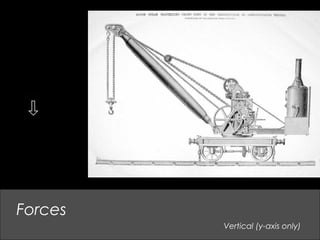
Vertical (y-axis only)
Forces
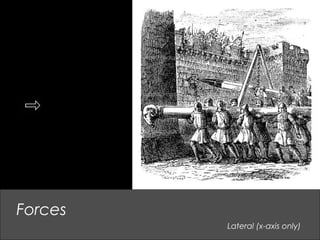
Lateral (x-axis only)
Forces
Rotational – Moments and Bending
Forces
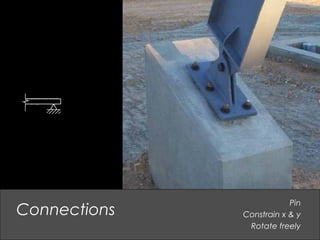
Pin
Constrain x & y
Rotate freely
Connections
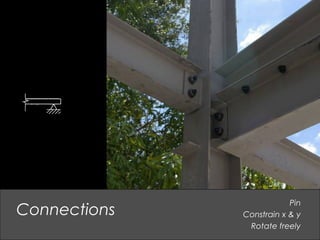
Pin
Constrain x & y
Rotate freely
Connections
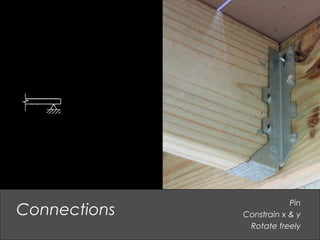
Pin
Constrain x & y
Rotate freely
Connections
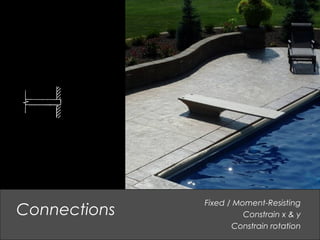
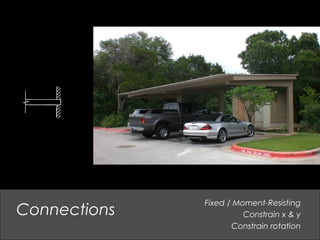
Fixed / Moment-Resisting
Constrain x & y
Constrain rotation
Connections
Fixed / Moment-Resisting
Constrain x & y
Constrain rotation
Connections
Fixed / Moment-Resisting
Constrain x & y
Constrain rotation
Connections
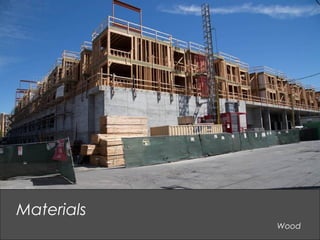
Wood
Materials
Wood
Materials
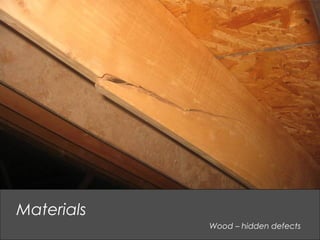
Wood – hidden defects
Materials
Wood – termite and rot
Materials
Wood - flammable
Materials
Wood - flammable
Materials
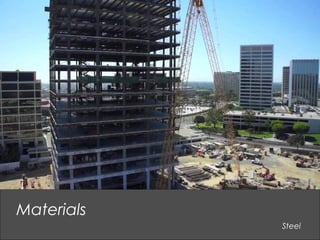
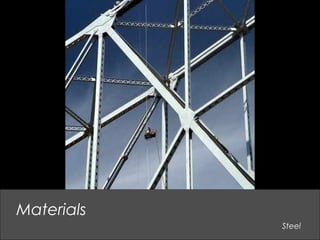
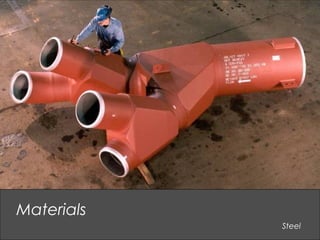
Steel
Materials
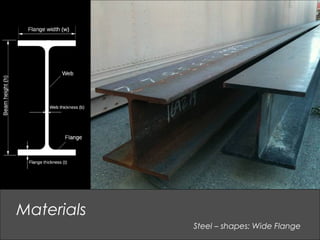
Steel – shapes: Wide Flange
Materials
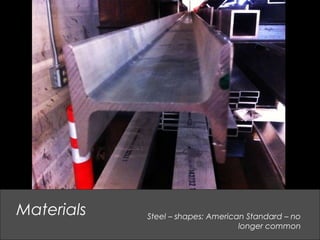
Steel – shapes: American Standard – no
longer common
Materials
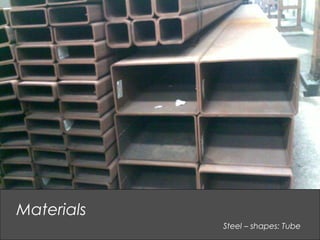
Steel – shapes: Tube
Materials
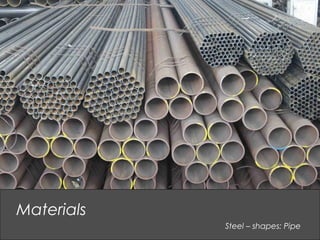
Steel – shapes: Pipe
Materials
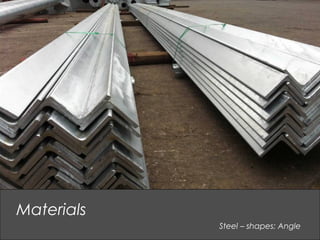
Steel – shapes: Angle
Materials
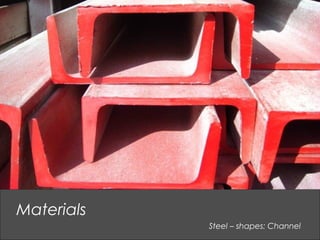
Steel – shapes: Channel
Materials
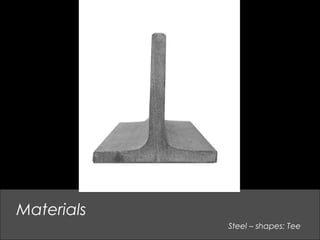
Steel – shapes: Tee
Materials
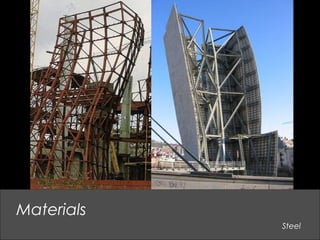
Steel
Materials
Steel
Materials
Steel
Materials
Steel
Materials
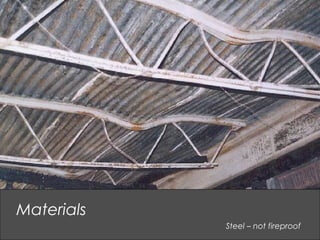
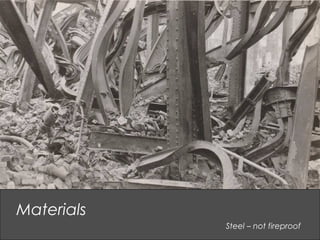
Steel – not fireproof
Materials
Steel – not fireproof
Materials
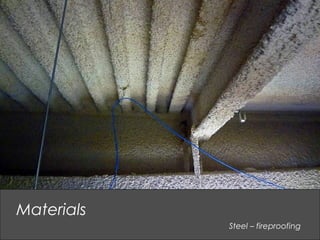
Steel – fireproofing
Materials
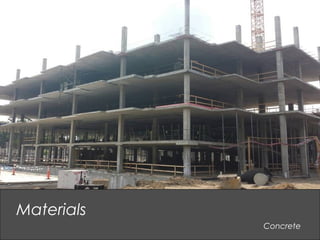
Concrete
Materials
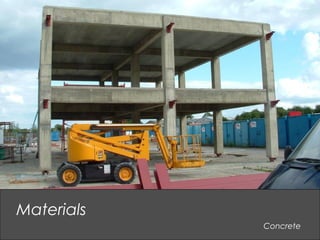
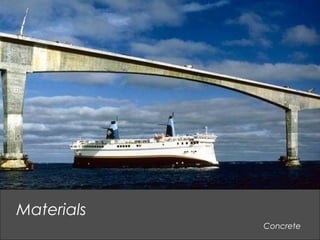
Concrete
Materials
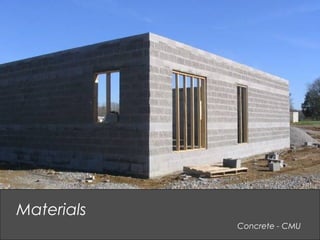
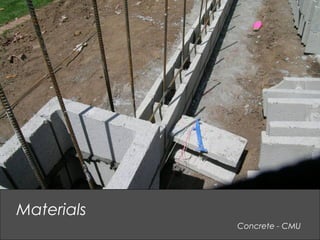
Concrete - CMU
Materials
Concrete - CMU
Materials
Concrete
Materials
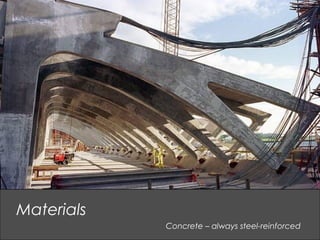
Concrete – always steel-reinforced
Materials
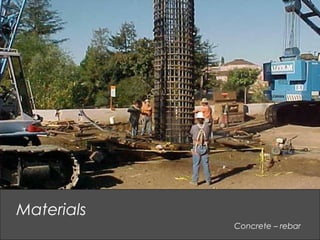
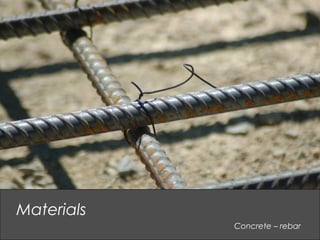
Concrete – rebar
Materials
Concrete – rebar
Materials
Columns
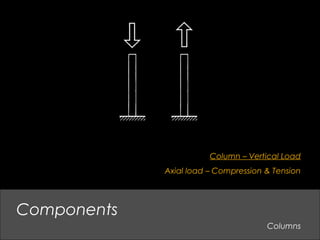
Components
Column – Vertical Load
Axial load – Compression & Tension
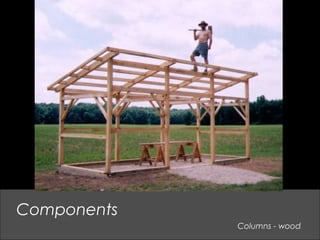
Columns - wood
Components
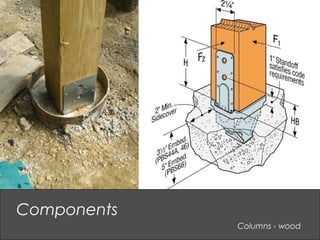
Columns - wood
Components
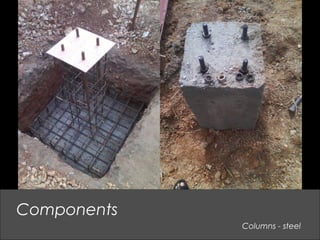
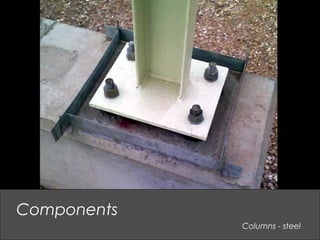
Columns - steel
Components
Columns - steel
Components
Columns - steel
Components
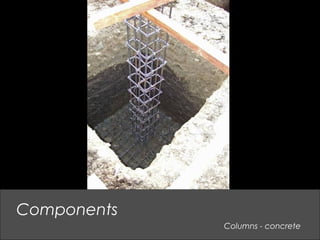
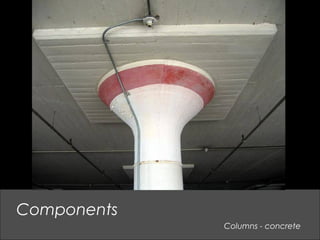
Columns - concrete
Components
Columns - concrete
Components
Columns - concrete
Components
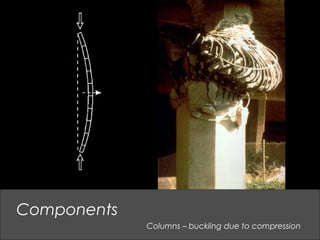
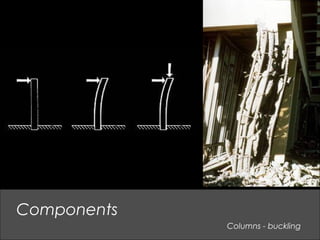
Columns – buckling due to compression
Components
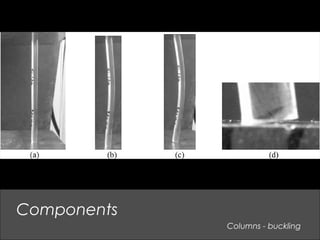
Columns - buckling
Components
Columns - buckling
Components
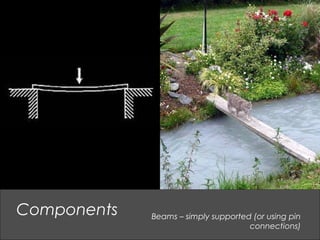
Beams – simply supported (or using pin
connections)
Components
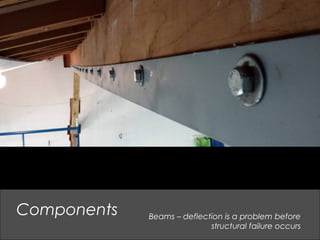
Beams – deflection is a problem before
structural failure occurs
Components
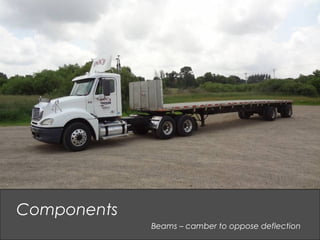
Beams – camber to oppose deflection
Components
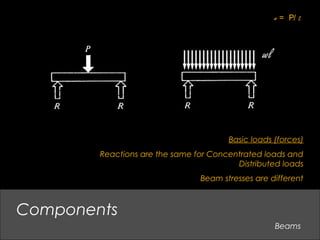
Beams
Components
Basic loads (forces)
Reactions are the same for Concentrated loads and
Distributed loads
Beam stresses are different
w = P/ l
Beams
Components
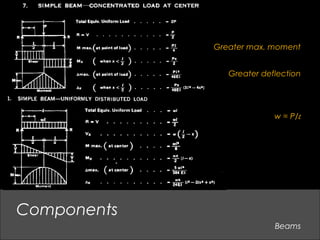
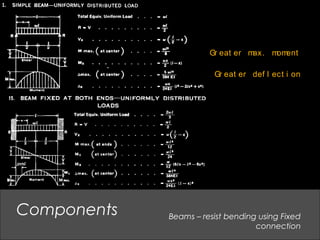
Greater deflection
Greater max. moment
w = P/l
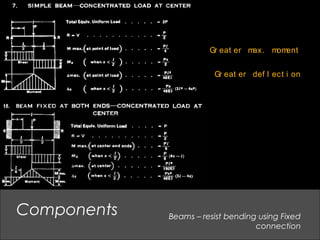
Beams – resist bending using Fixed
connection
Components
Gr eat er def l ect i on
Gr eat er max. moment
Beams – resist bending using Fixed
connection
Components
Gr eat er def l ect i on
Gr eat er max. moment
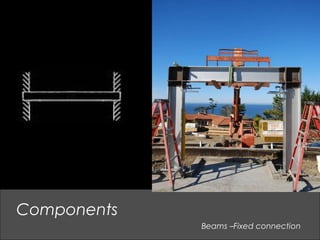
Beams –Fixed connection
Components
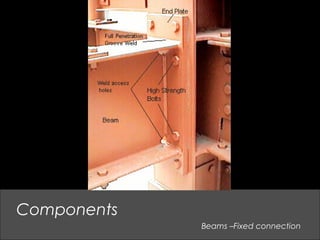
Beams –Fixed connection
Components
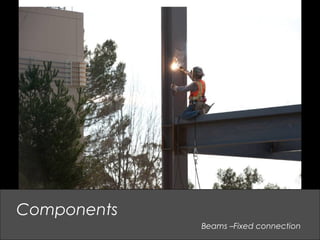
Beams –Fixed connection
Components
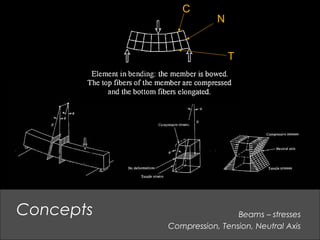
Beams – stresses
Compression, Tension, Neutral Axis
Concepts
C
N
T
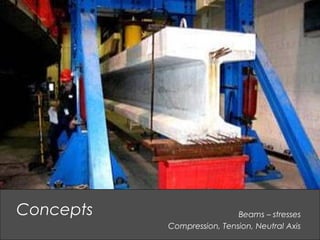
Beams – stresses
Compression, Tension, Neutral Axis
Concepts
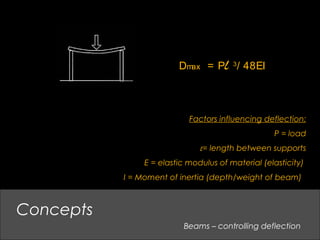
Beams – controlling deflection
Concepts
Factors influencing deflection:
P = load
l= length between supports
E = elastic modulus of material (elasticity)
I = Moment of inertia (depth/weight of beam)
Dmax = Pl 3
/ 48EI
Beams – controlling deflection
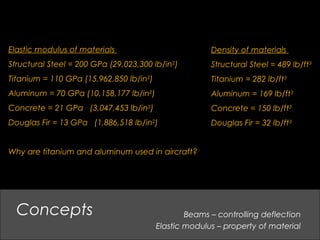
Elastic modulus – property of material
Concepts
Elastic modulus of materials
Structural Steel = 200 GPa (29,023,300 lb/in2
)
Titanium = 110 GPa (15,962,850 lb/in2
)
Aluminum = 70 GPa (10,158,177 lb/in2
)
Concrete = 21 GPa (3,047,453 lb/in2
)
Douglas Fir = 13 GPa (1,886,518 lb/in2
)
Why are titanium and aluminum used in aircraft?
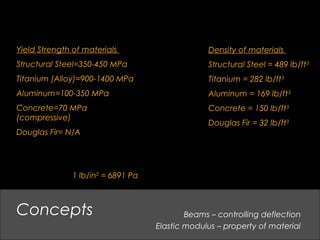
Density of materials
Structural Steel = 489 lb/ft3
Titanium = 282 lb/ft3
Aluminum = 169 lb/ft3
Concrete = 150 lb/ft3
Douglas Fir = 32 lb/ft3
Concepts
Density of materials
Structural Steel = 489 lb/ft3
Titanium = 282 lb/ft3
Aluminum = 169 lb/ft3
Concrete = 150 lb/ft3
Douglas Fir = 32 lb/ft3
Yield Strength of materials
Structural Steel=350-450 MPa
Titanium (Alloy)=900-1400 MPa
Aluminum=100-350 MPa
Concrete=70 MPa
(compressive)
Douglas Fir= N/A
1 lb/in2
= 6891 Pa
Beams – controlling deflection
Elastic modulus – property of material
Beams – controlling deflection
Moment of Inertia
Concepts
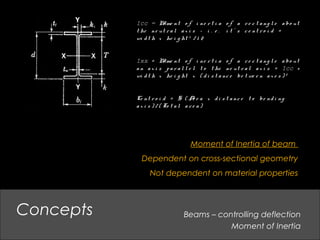
Moment of Inertia of beam
Dependent on cross-sectional geometry
Not dependent on material properties
Icc = Mo me nt o f i ne r t i a o f a r e c t a ng l e a bo ut
t he ne ut r a l a x i s – i . e . i t ’ s c e nt r o i d =
wi d t h x he i g ht 3
/ 1 2
Ixx = Mo me nt o f i ne r t i a o f a r e c t a ng l e a bo ut
a n a x i s p a r a l l e l t o t he ne ut r a l a x i s = Icc +
wi d t h x he i g ht x ( d i s t a nc e be t we e n a x e s ) 2
Ce nt r o i d = S ( Ar e a x d i s t a nc e t o be nd i ng
a x i s ) / ( To t a l a r e a )
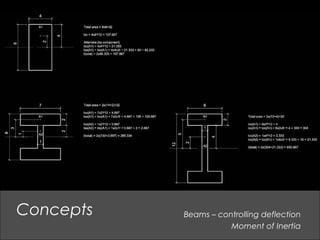
Beams – controlling deflection
Moment of Inertia
Concepts
Beams – controlling deflection
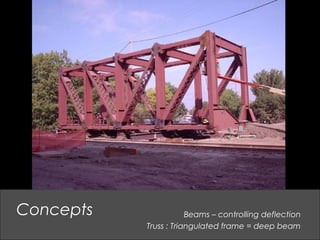
Truss : Triangulated frame = deep beam
Concepts
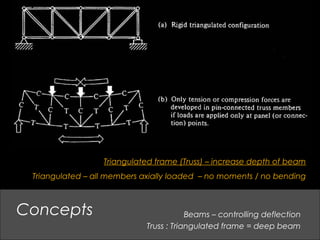
Triangulated frame (Truss) – increase depth of beam
Triangulated – all members axially loaded – no moments / no bending
Beams – controlling deflection
Truss : Triangulated frame = deep beam
Concepts
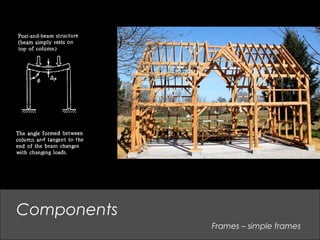
Frames – simple frames
Components
Components
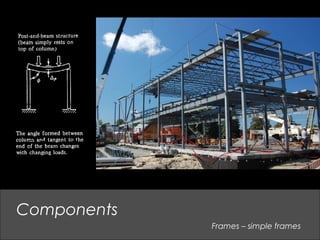
Frames – simple frames
Components
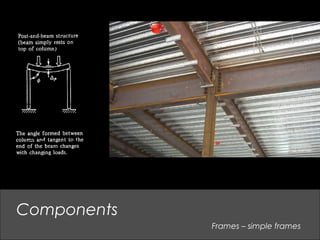
Frames – simple frames
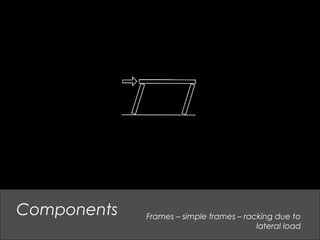
Components Frames – simple frames – racking due to
lateral load
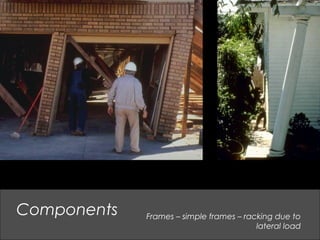
Components Frames – simple frames – racking due to
lateral load
Components
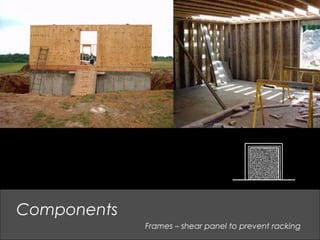
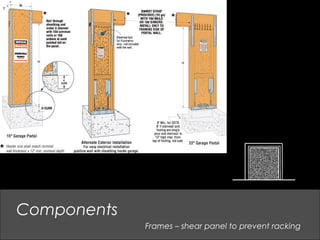
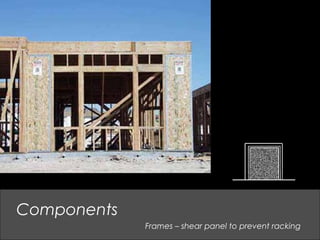
Frames – shear panel to prevent racking
Components
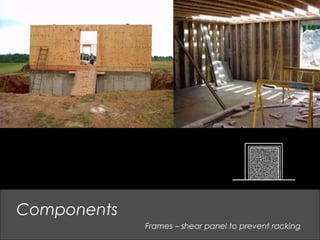
Frames – shear panel to prevent racking
Components
Frames – shear panel to prevent racking
Components
Frames – shear panel to prevent racking
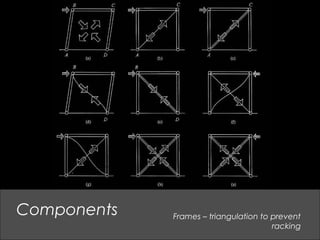
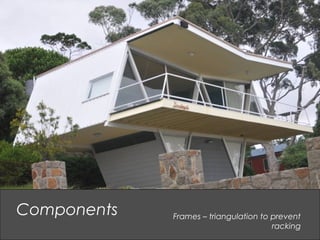
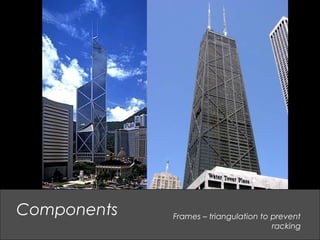
Components Frames – triangulation to prevent
racking
Components Frames – triangulation to prevent
racking
Components Frames – triangulation to prevent
racking
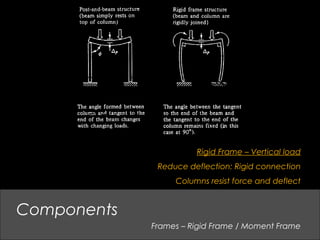
Frames – Rigid Frame / Moment Frame
Components
Rigid Frame – Vertical load
Reduce deflection: Rigid connection
Columns resist force and deflect
Frames – Rigid Frame / Moment Frame
Components
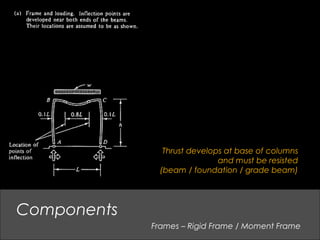
Thrust develops at base of columns
and must be resisted
(beam / foundation / grade beam)
Frames – Rigid Frame / Moment Frame
Components
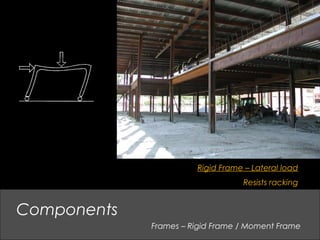
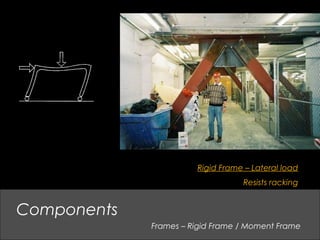
Rigid Frame – Lateral load
Resists racking
Frames – Rigid Frame / Moment Frame
Components
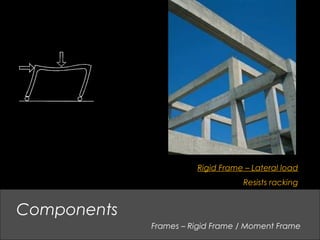
Rigid Frame – Lateral load
Resists racking
Frames – Rigid Frame / Moment Frame
Components
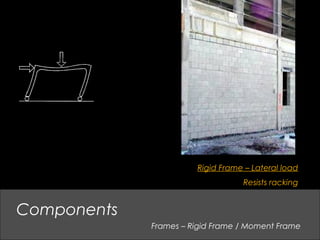
Rigid Frame – Lateral load
Resists racking
Frames – Rigid Frame / Moment Frame
Components
Rigid Frame – Lateral load
Resists racking
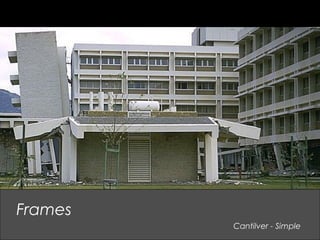
Cantilver - Simple
Frames
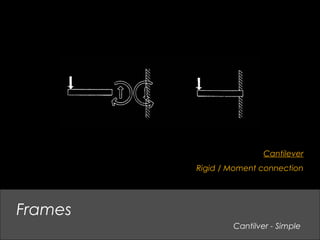
Cantilever
Rigid / Moment connection
Cantilver - Simple
Frames
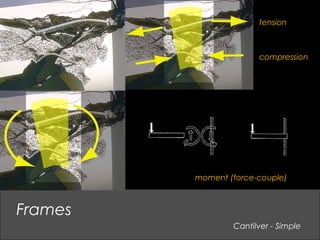
Cantilver - Simple
Frames
tension
compression
moment (force-couple)
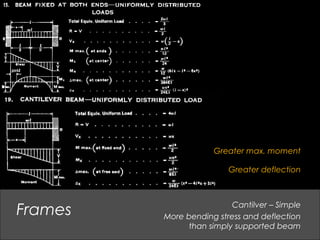
Cantilver – Simple
More bending stress and deflection
than simply supported beam
Frames
Greater deflection
Greater max. moment
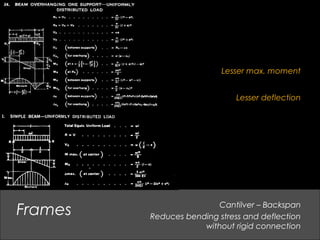
Cantilver – Backspan
Reduces bending stress and deflection
without rigid connection
Frames
Lesser deflection
Lesser max. moment
Cantilver – Backspan
Frames
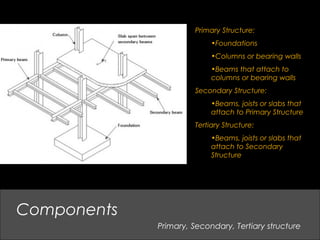
Primary, Secondary, Tertiary structure
Components
Primary Structure:
•Foundations
•Columns or bearing walls
•Beams that attach to
columns or bearing walls
Secondary Structure:
•Beams, joists or slabs that
attach to Primary Structure
Tertiary Structure:
•Beams, joists or slabs that
attach to Secondary
Structure
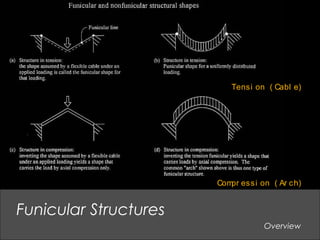
Overview
Funicular Structures
Tensi on ( Cabl e)
Compr essi on ( Ar ch)
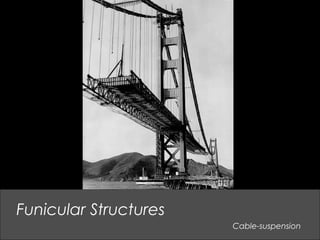
Cable-suspension
Funicular Structures
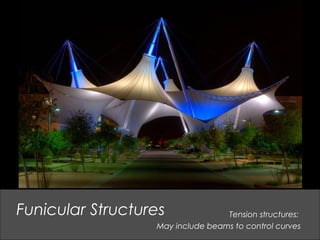
Tension structures:
May include beams to control curves
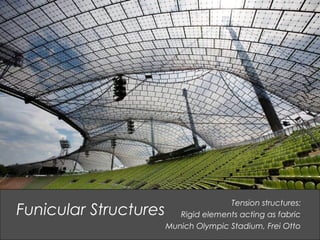
Funicular Structures
Tension structures:
Rigid elements acting as fabric
Munich Olympic Stadium, Frei Otto
Funicular Structures
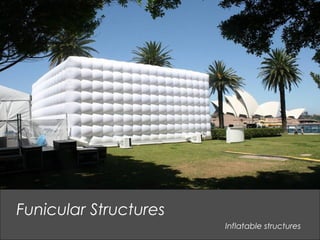
Inflatable structures
Funicular Structures
Inflatable structures
Funicular Structures
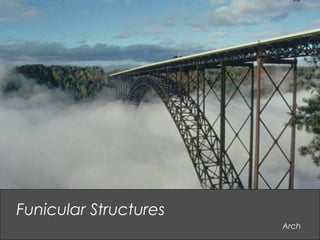
Arch
Funicular Structures
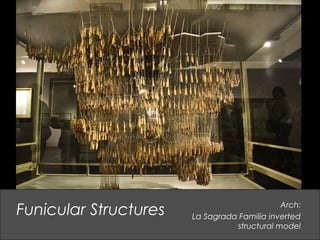
Arch:
La Sagrada Familia inverted
structural model
Funicular Structures
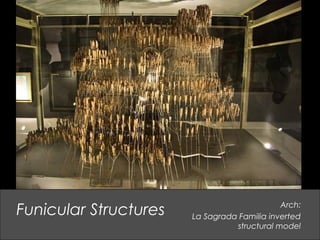
Funicular Structures Arch:
La Sagrada Familia inverted
structural model
Funicular Structures Arch:
La Sagrada Familia inverted
structural model
Thin-shell structures
El Oceonográfico, Valencia:
Felix Candela
Funicular Structures
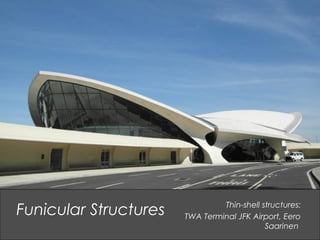
Thin-shell structures:
TWA Terminal JFK Airport, Eero
Saarinen
Funicular Structures
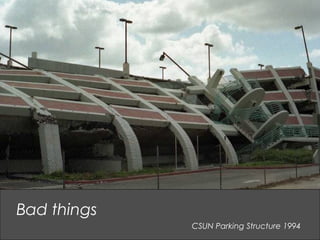
CSUN Parking Structure 1994
Bad things
World Trade Center 9/11/2001
Bad things
World Trade Center 9/11/2001
Bad things
Tacoma Narrows
Bad things

Basic structural theory 2.2 comp