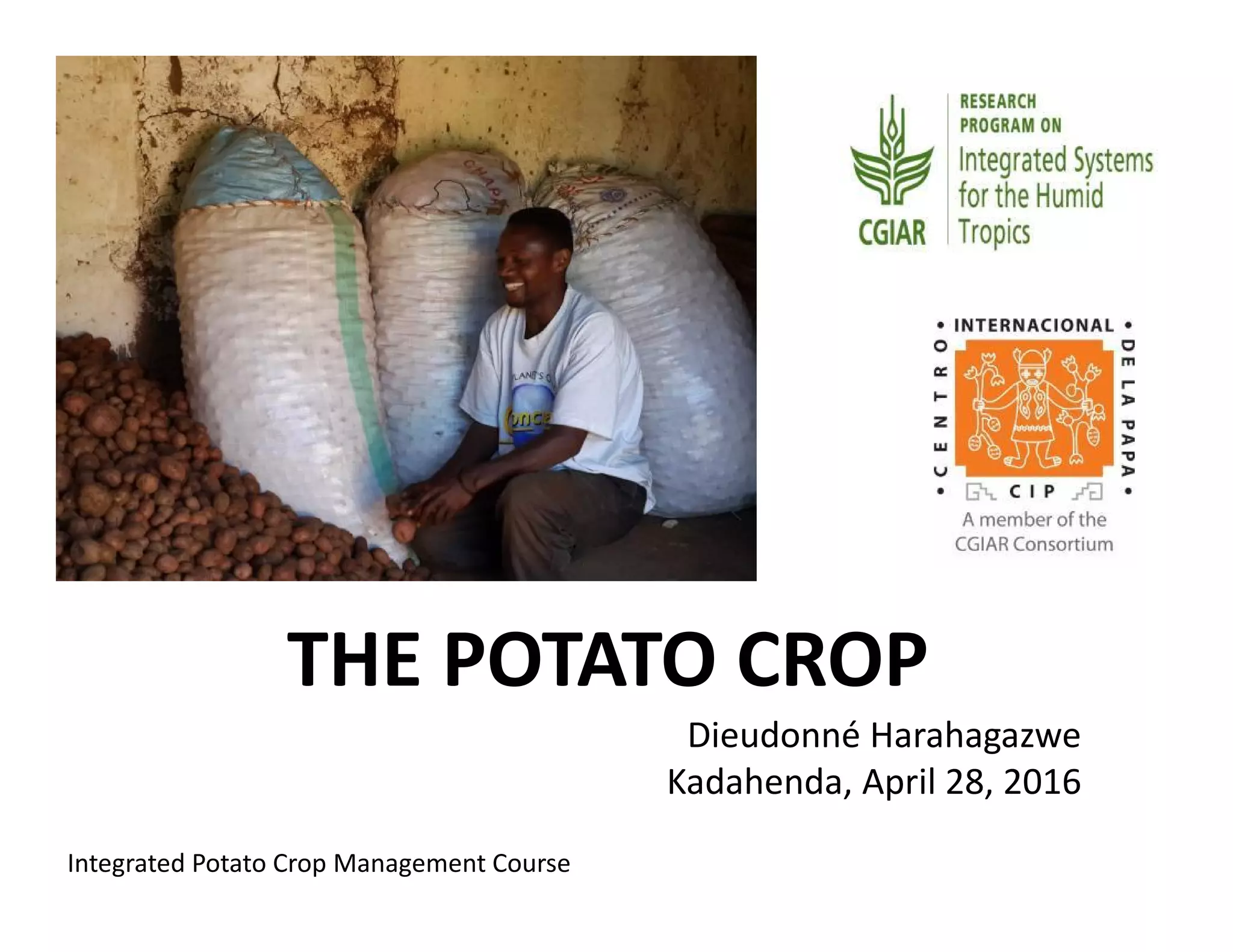
THE POTATO CROP
Dieudonné Harahagazwe
Kadahenda, April 28, 2016
Integrated Potato Crop Management Course
Outline
Potato history
Gene bank and diversity
Importance of potato crop
Crop growth and development
Potato production factors
Yield gap
Take-away message
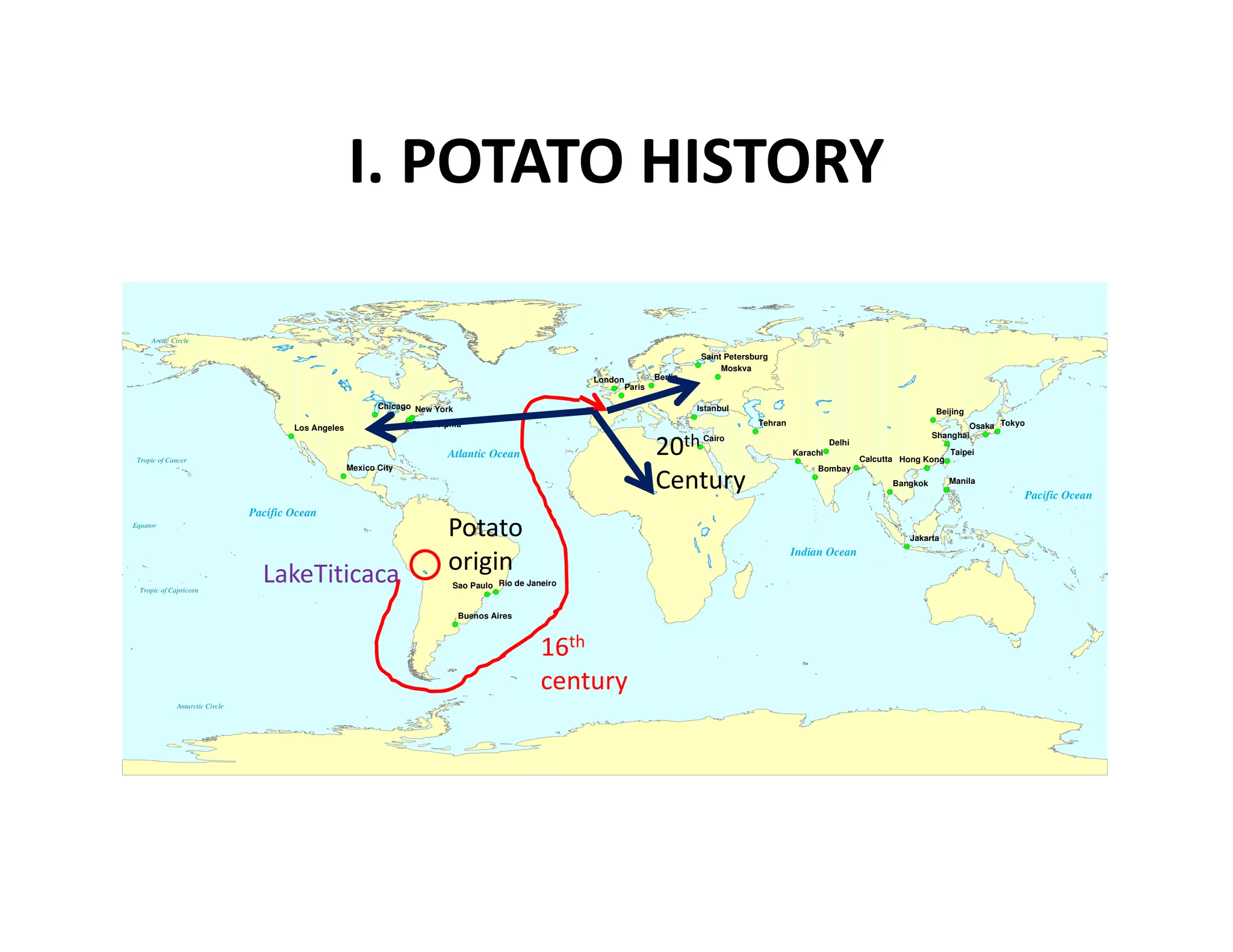
I. POTATO HISTORY
!(
!(!(
!(
!(!(
!(
!(
!(
!(
!(
!(
!( !(!(
!(
!(
!(
!(
!(
!(
!(
!(
!(
!(
!(
!(
!(
!(
Equator
Tropic of Cancer
Tropic of Capricorn
Indian Ocean
Atlantic Ocean
Pacific Ocean
Pacific Ocean
Antarctic Circle
Arctic Circle
Osaka Tokyo
Delhi
Paris
Cairo
London
Taipei
Moskva
Manila
Tehran
Bombay
Berlin
Chicago
Bangkok
Karachi
Jakarta
BeijingNew York Istanbul
Calcutta
Shanghai
Hong Kong
Sao Paulo
Los Angeles
Mexico City
Philadelphia
Buenos Aires
Rio de Janeiro
Saint Petersburg
16th
century
LakeTiticaca
Potato
origin
20th
Century
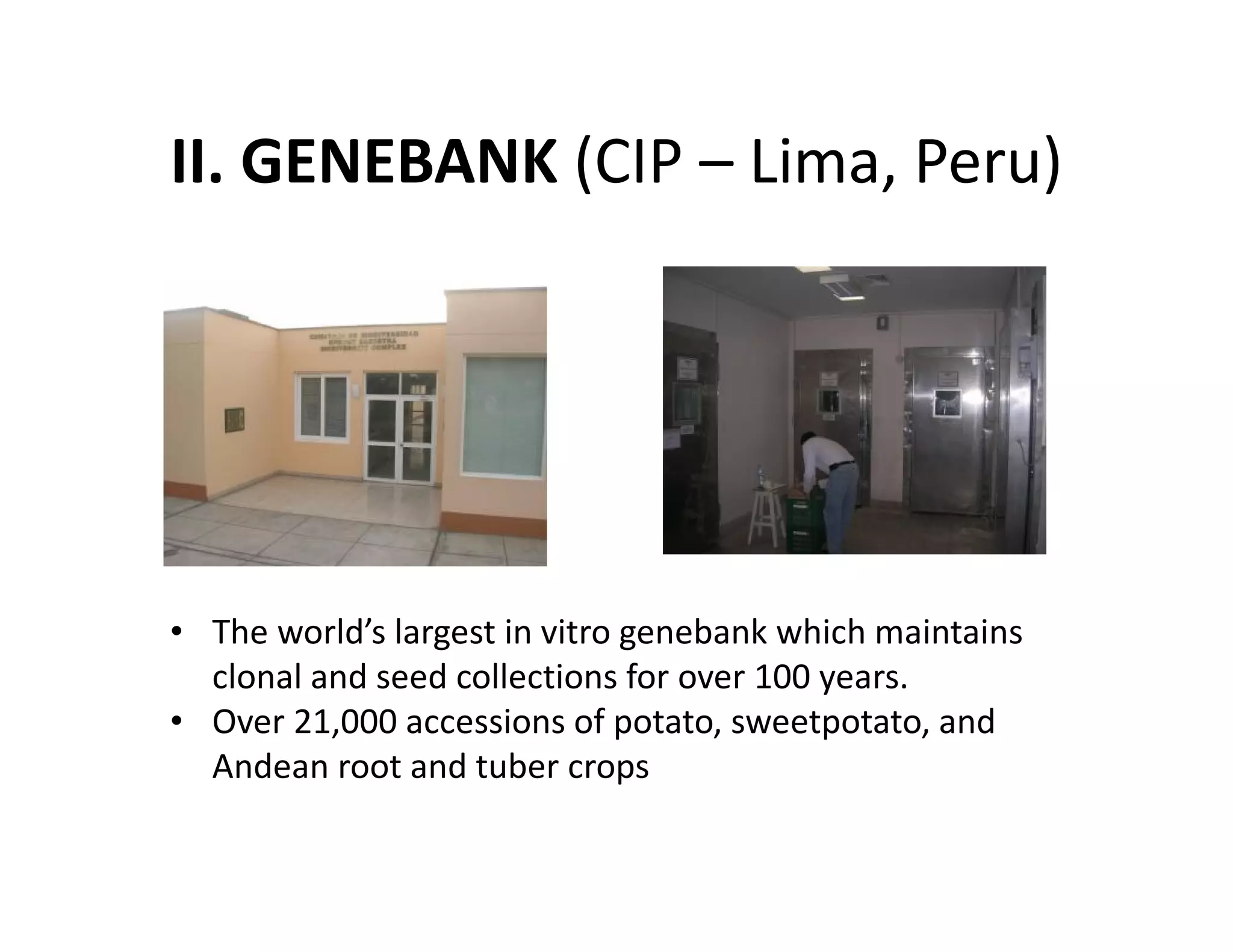
II. GENEBANK (CIP – Lima, Peru)
• The world’s largest in vitro genebank which maintains
clonal and seed collections for over 100 years.
• Over 21,000 accessions of potato, sweetpotato, and
Andean root and tuber crops
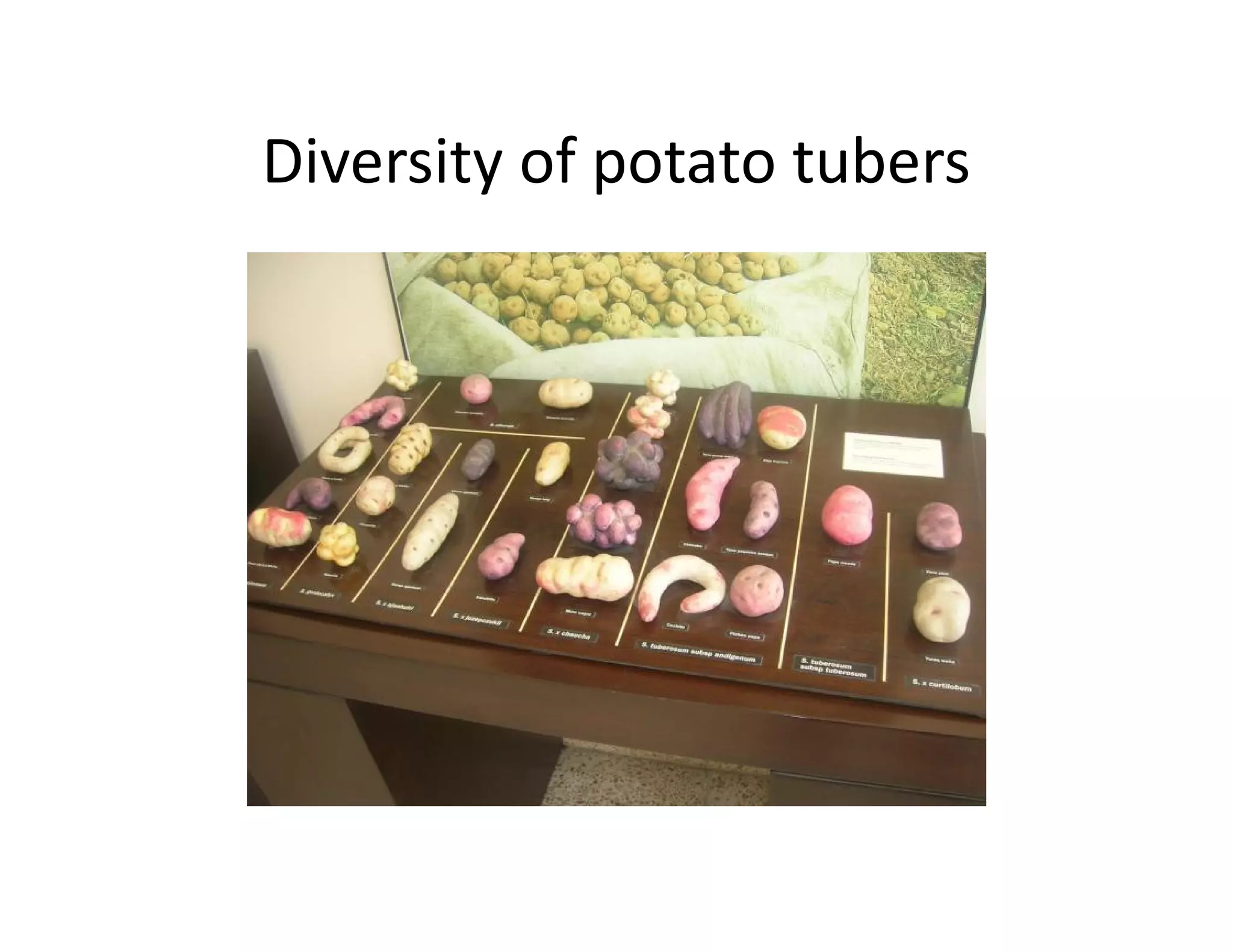
Diversity of potato tubers
III. IMPORTANCE OF POTATOES
• Third important food crop in the world
(380 million t/ 19 million ha in 2014 -
FAOSTAT)
• High yielding ability (100 t/ha)
• One of the major cash crops in SSA,
including Rwanda
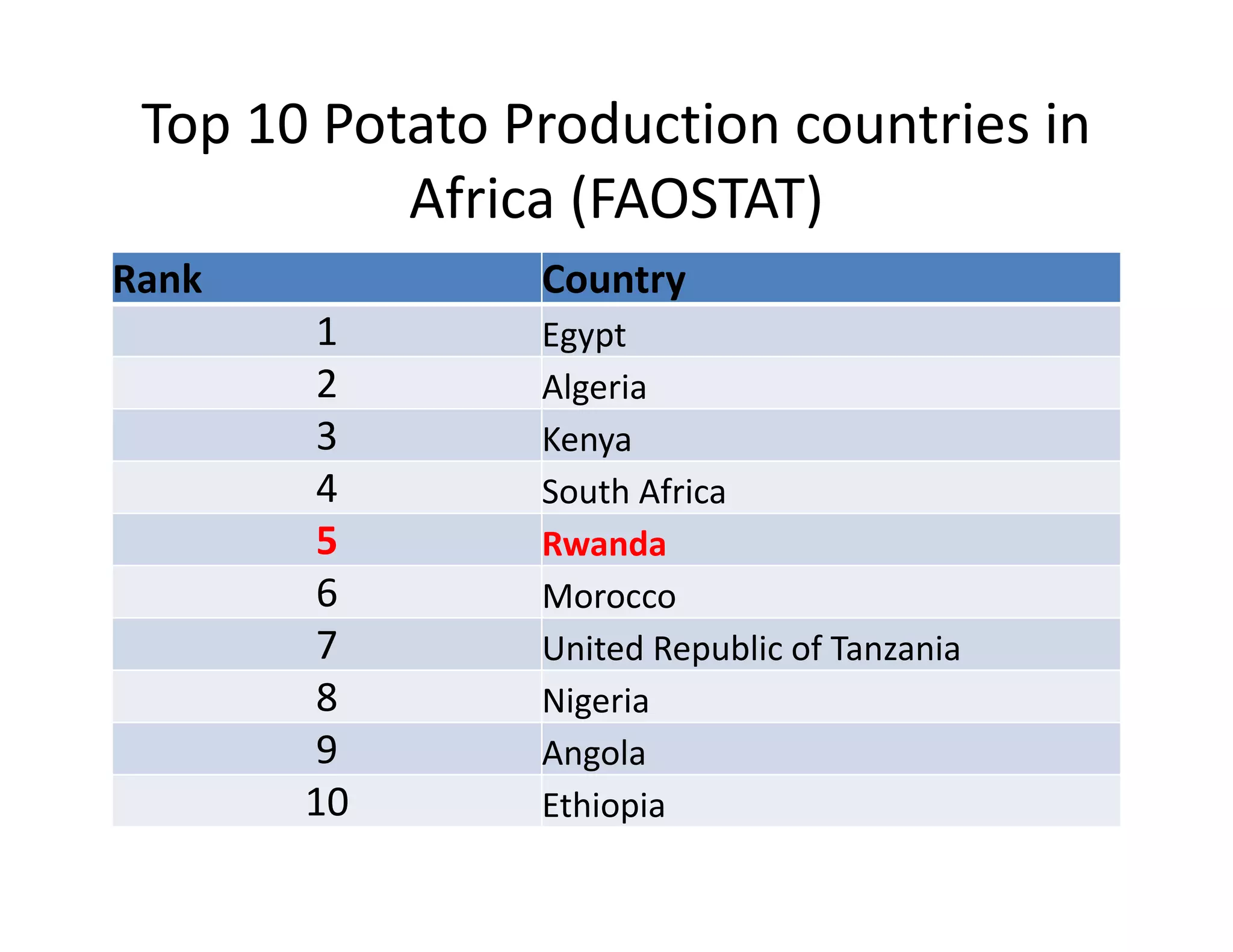
Top 10 Potato Production countries in
Africa (FAOSTAT)
Rank Country
1 Egypt
2 Algeria
3 Kenya
4 South Africa
5 Rwanda
6 Morocco
7 United Republic of Tanzania
8 Nigeria
9 Angola
10 Ethiopia
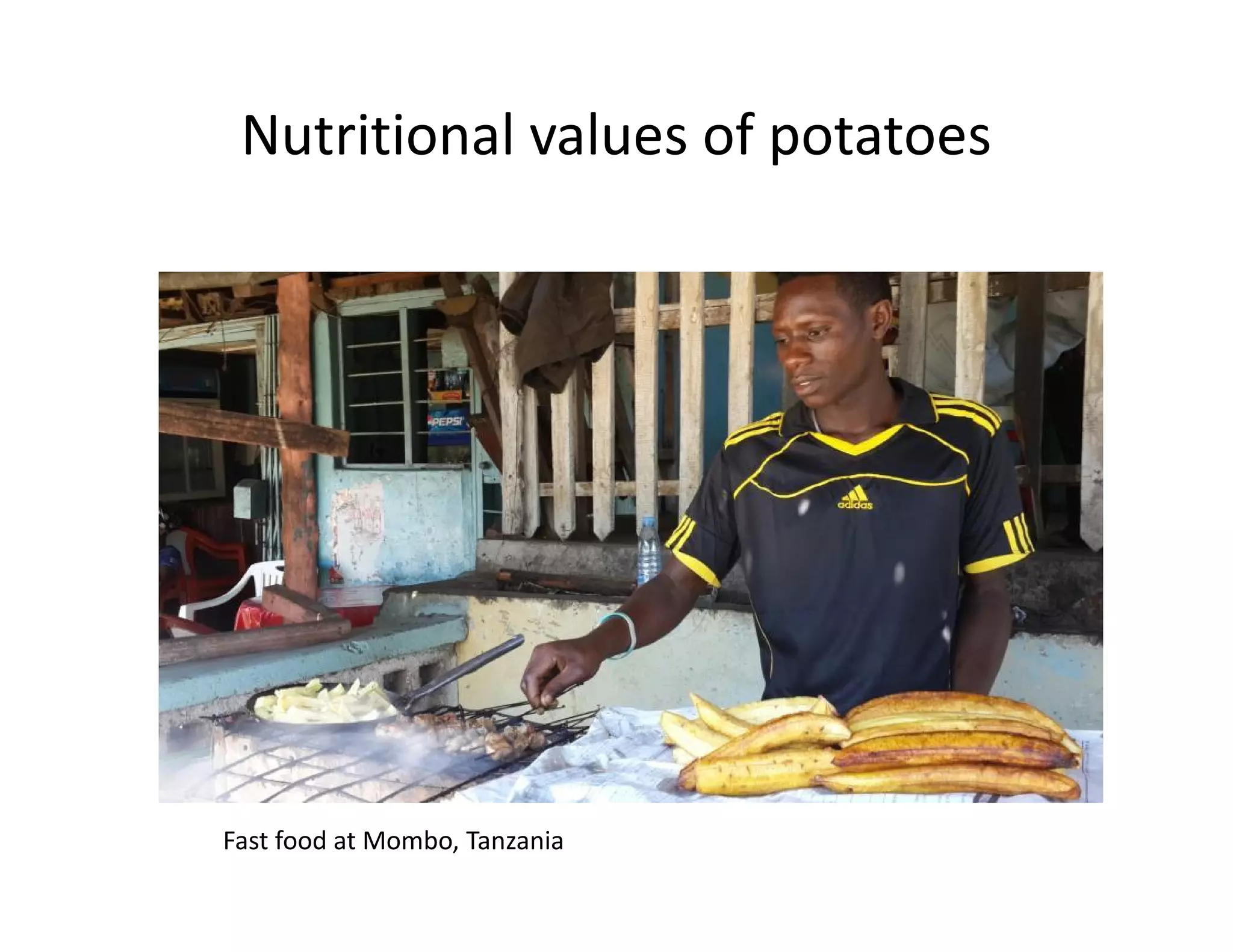
Nutritional values of potatoes
Fast food at Mombo, Tanzania
One medium size tuber (150 g) may
contain:
• Potassium : 620 mg – more than a
banana
• Vitamin C: 45% of daily requirement for a
man
• Dietary Fiber : 13% of daily requirement
for a man
• Healthy food: Lack of fat, sodium and
cholesterol (major heath problems)
10
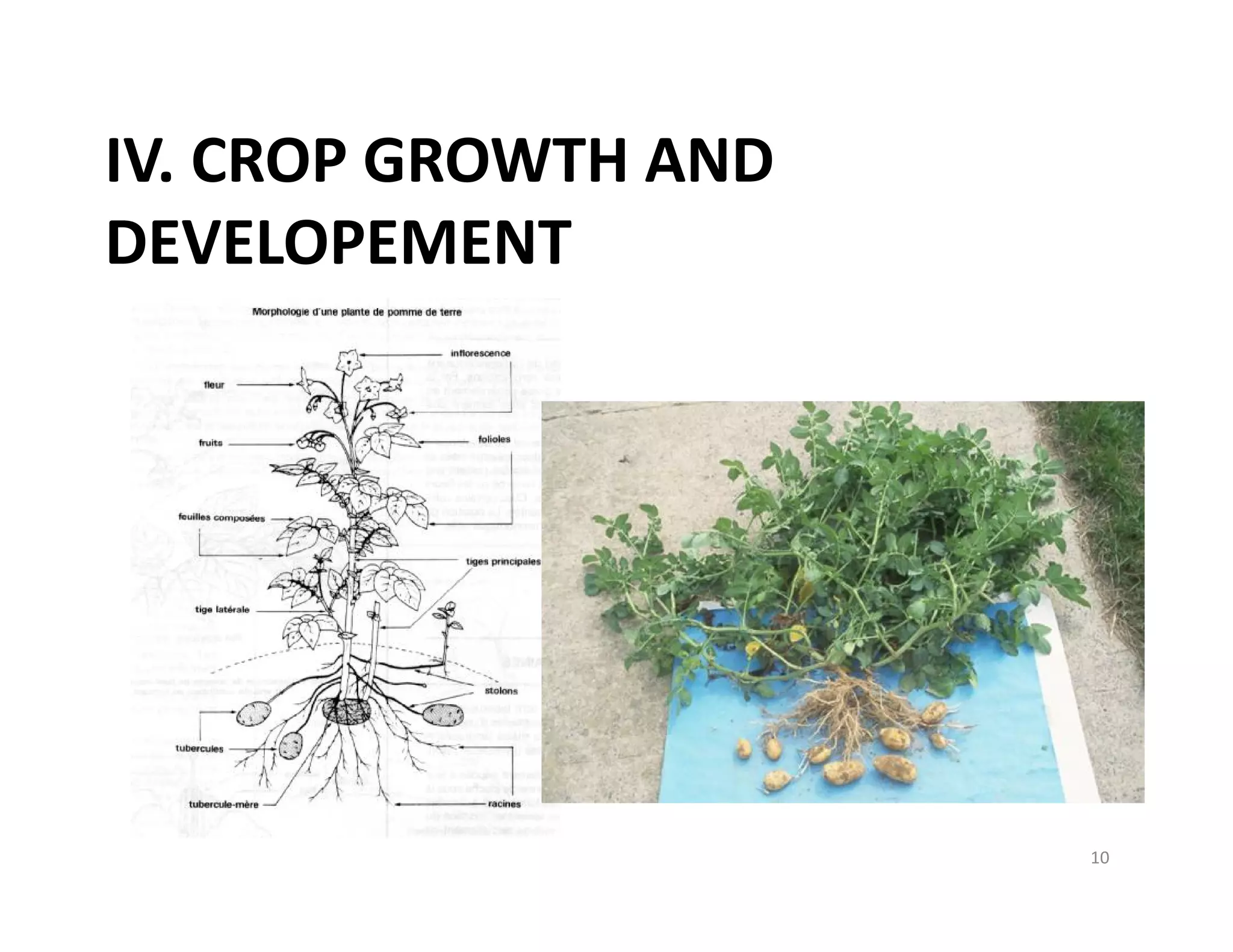
IV. CROP GROWTH AND
DEVELOPEMENT
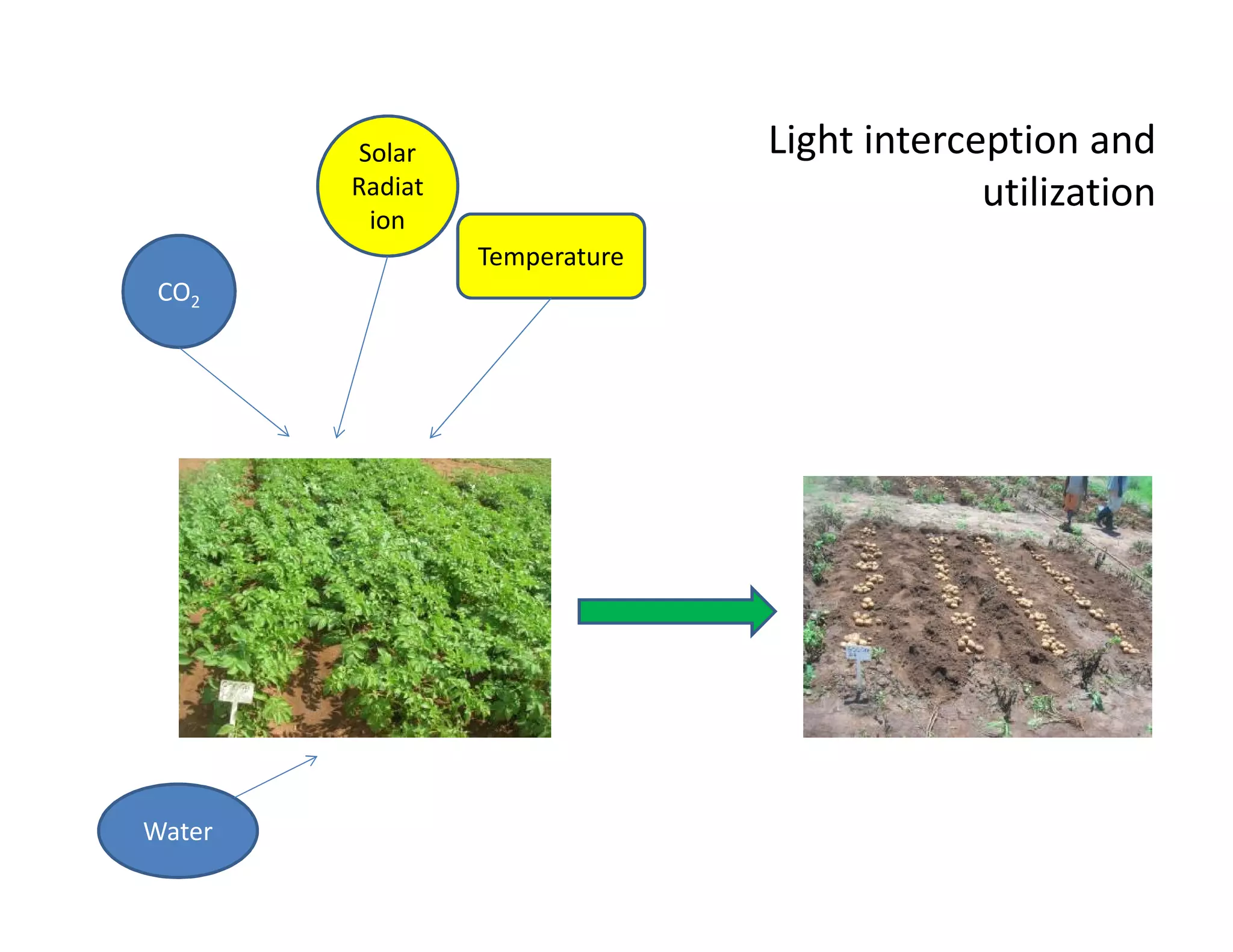
Solar
Radiat
ion
Temperature
Water
CO2
Light interception and
utilization
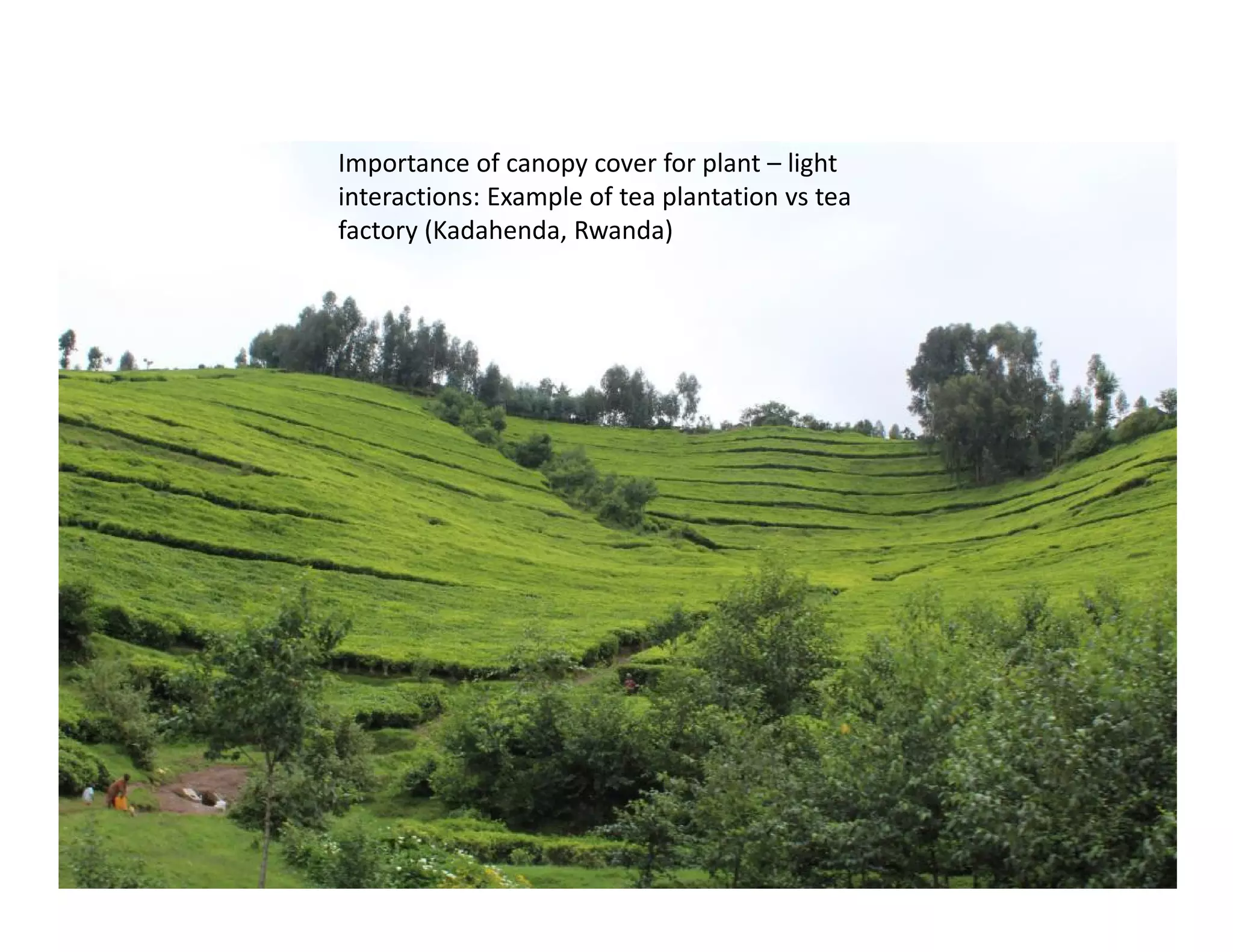
Importance of canopy cover for plant – light
interactions: Example of tea plantation vs tea
factory (Kadahenda, Rwanda)
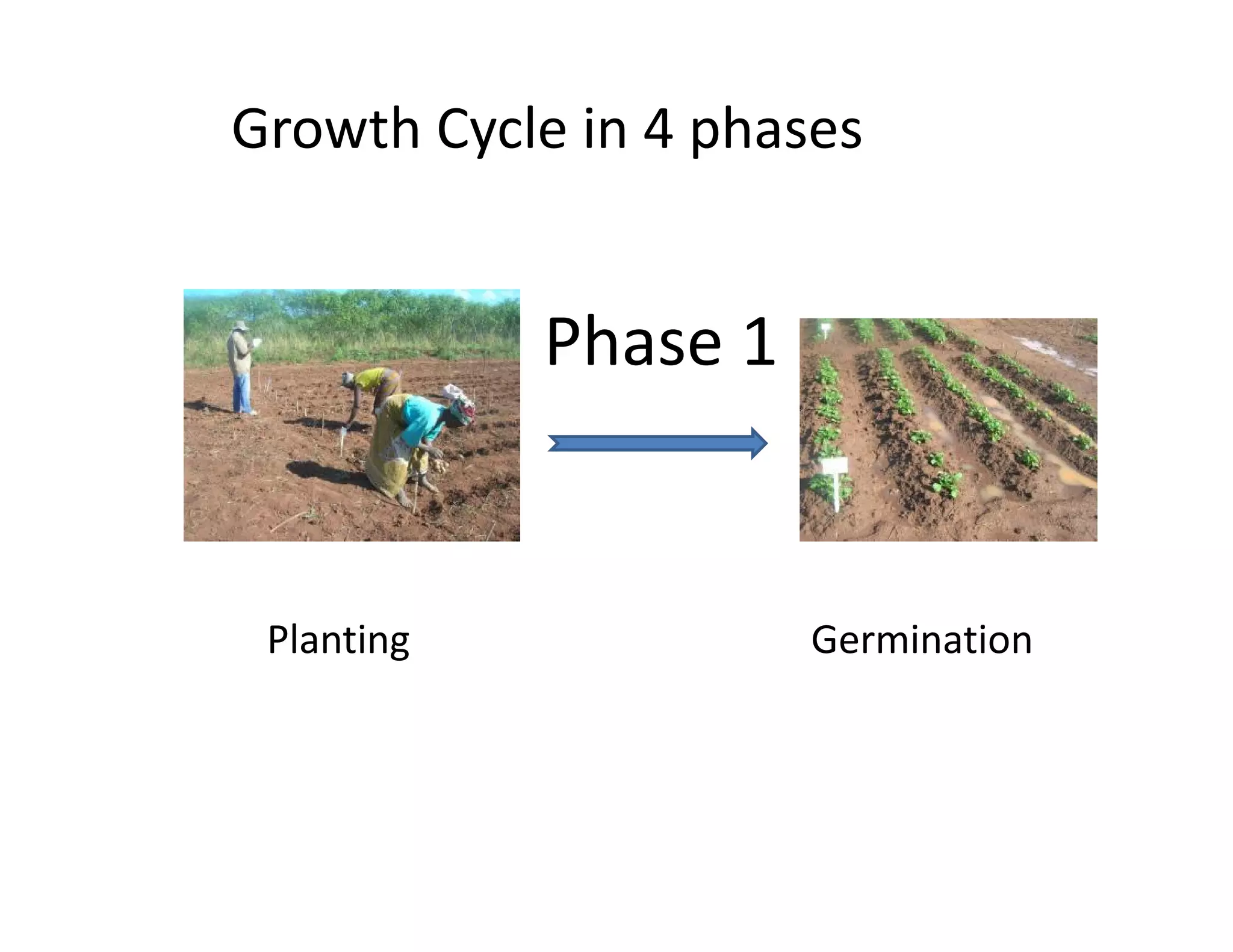
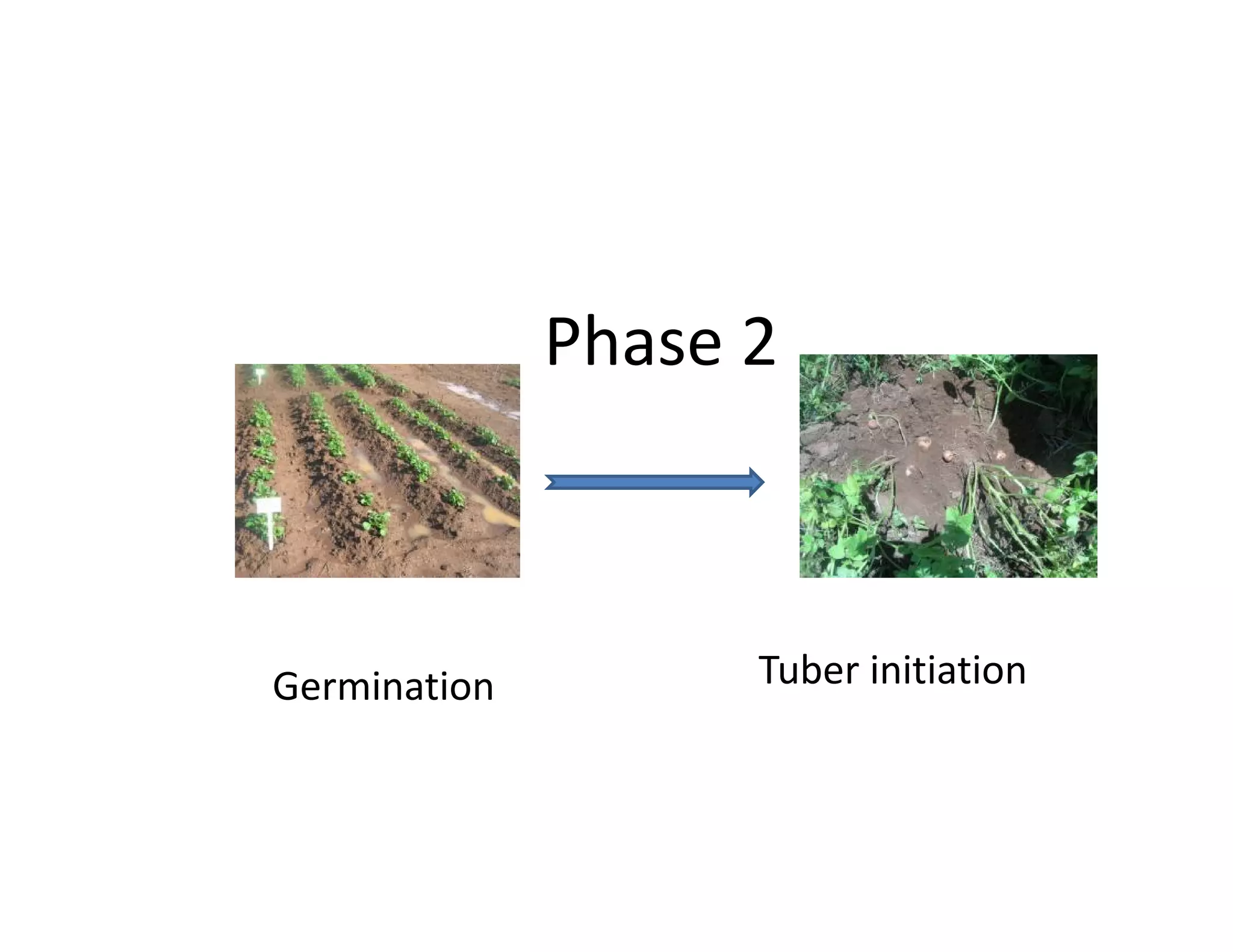
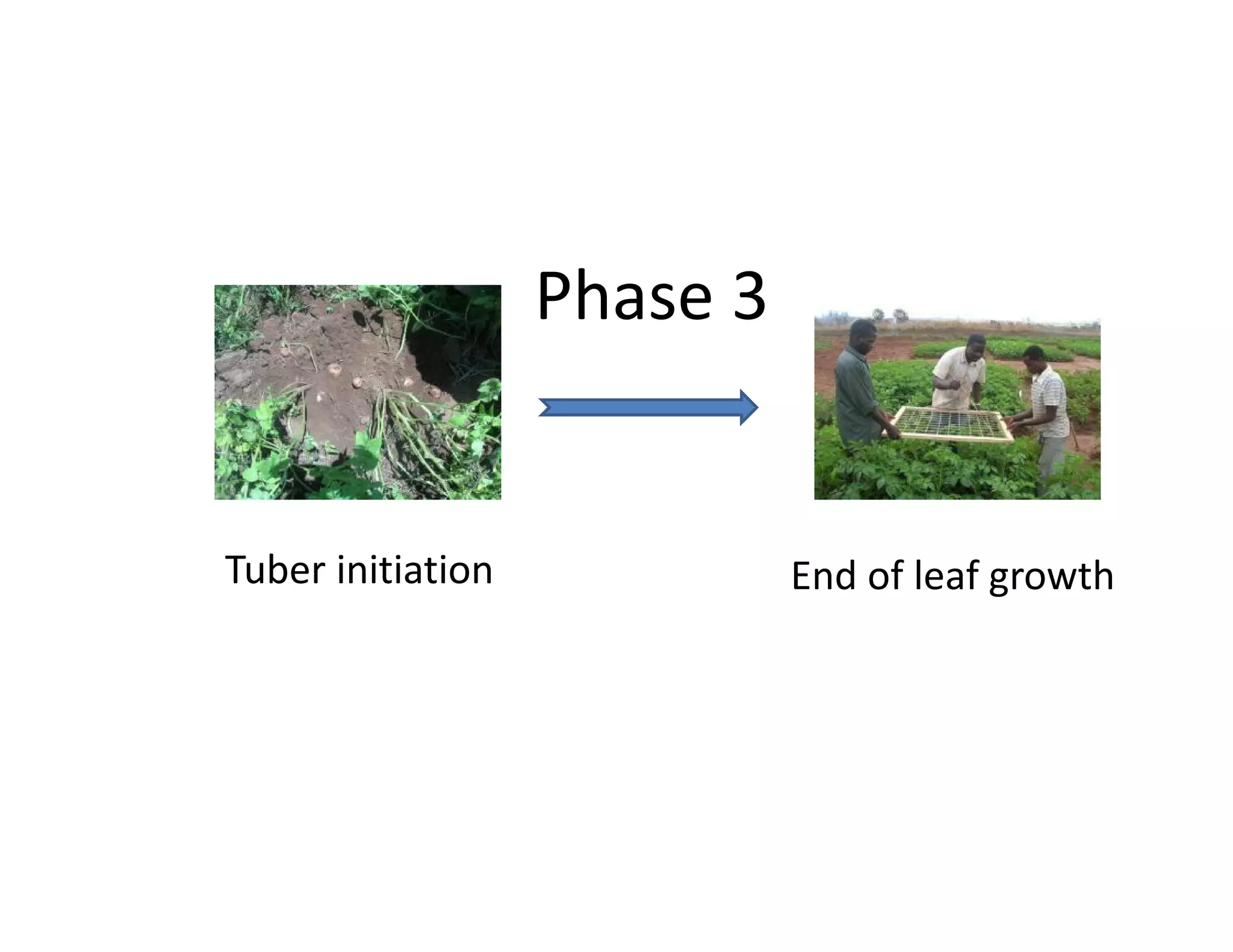
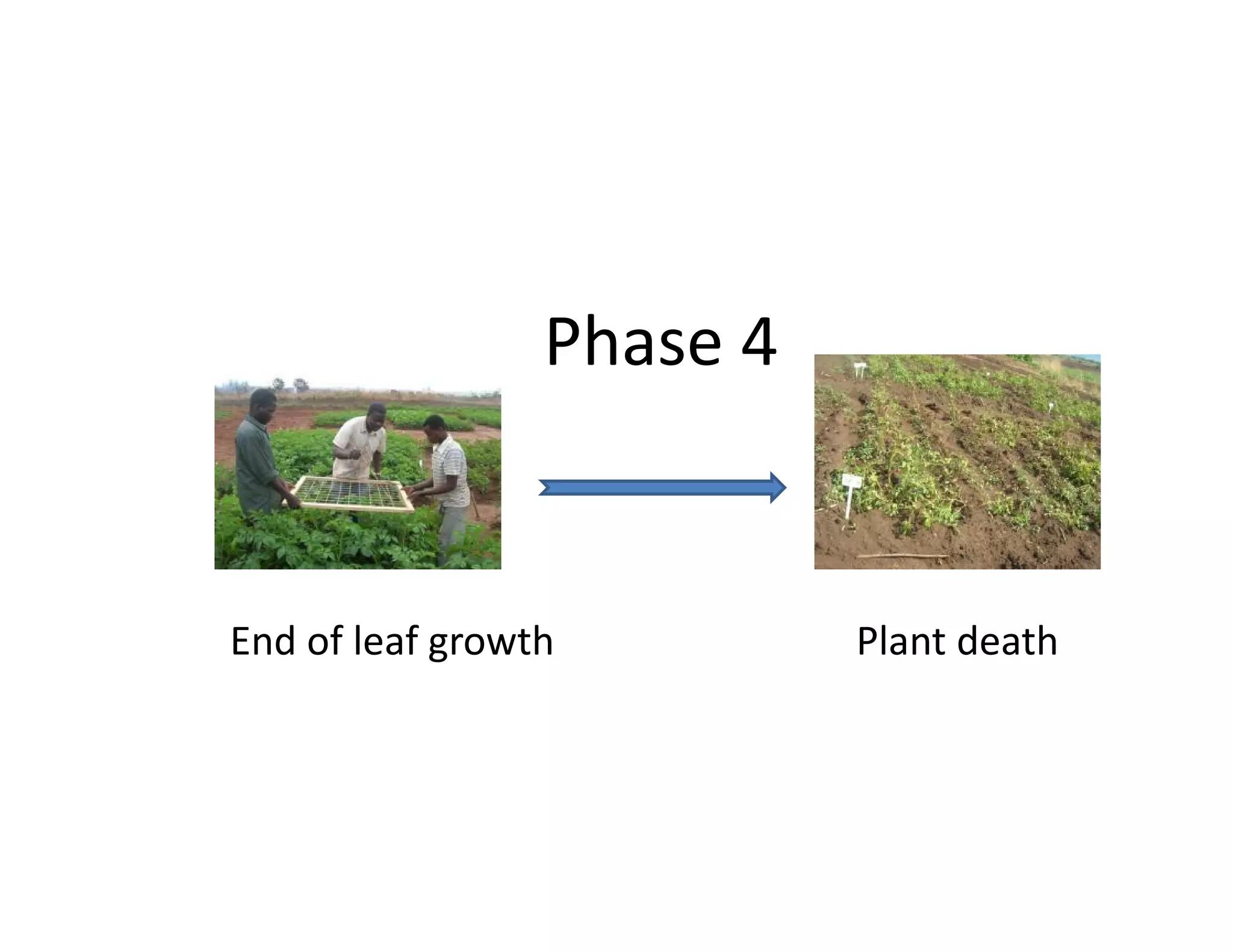
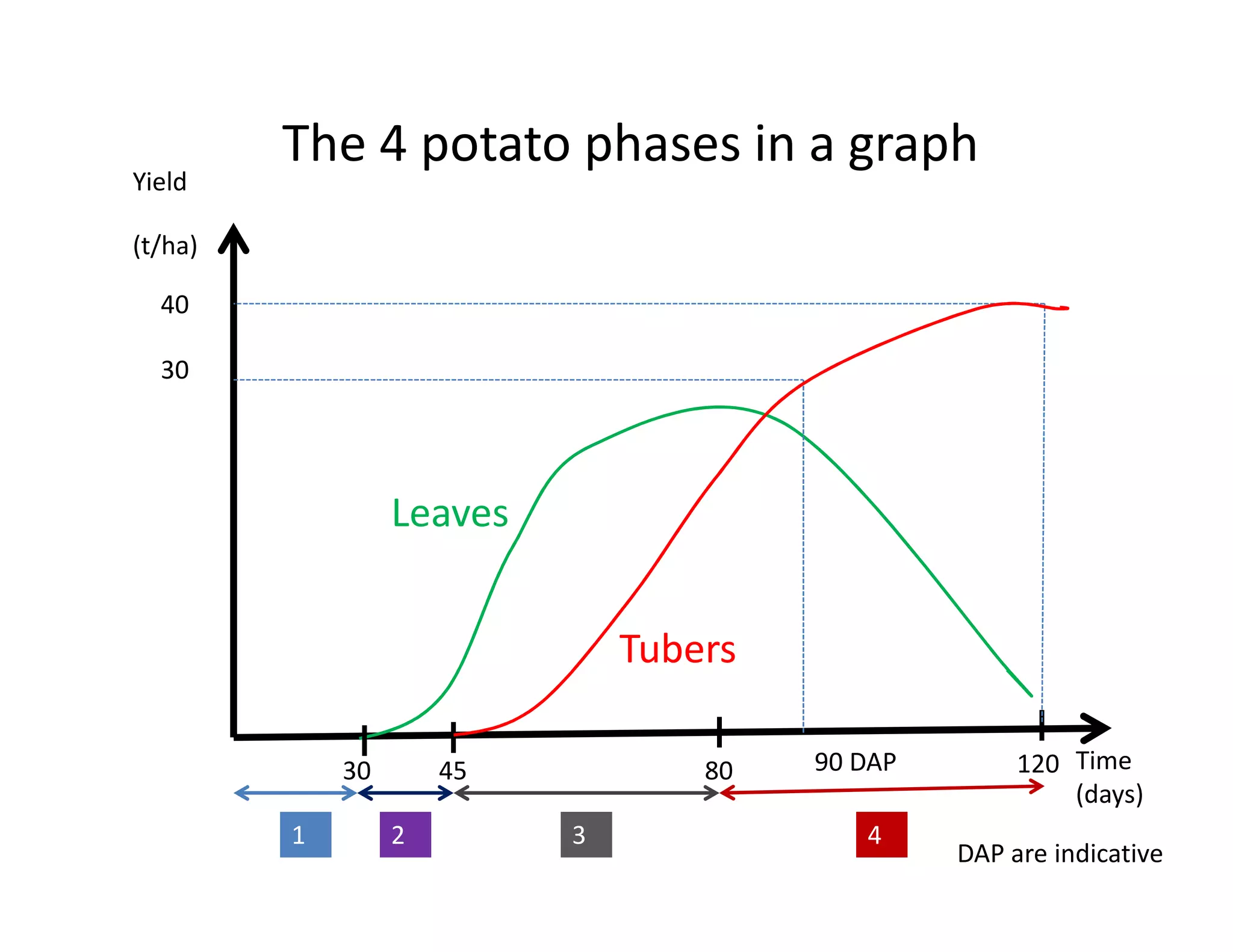
Growth Cycle in 4 phases
Phase 1
Planting Germination
Germination Tuber initiation
Phase 2
Tuber initiation End of leaf growth
Phase 3
End of leaf growth Plant death
Phase 4
(t/ha)
Time
(days)
30 45 80 120
1 2 3 4
90 DAP
40
30
Leaves
Tubers
The 4 potato phases in a graph
DAP are indicative
Yield
18
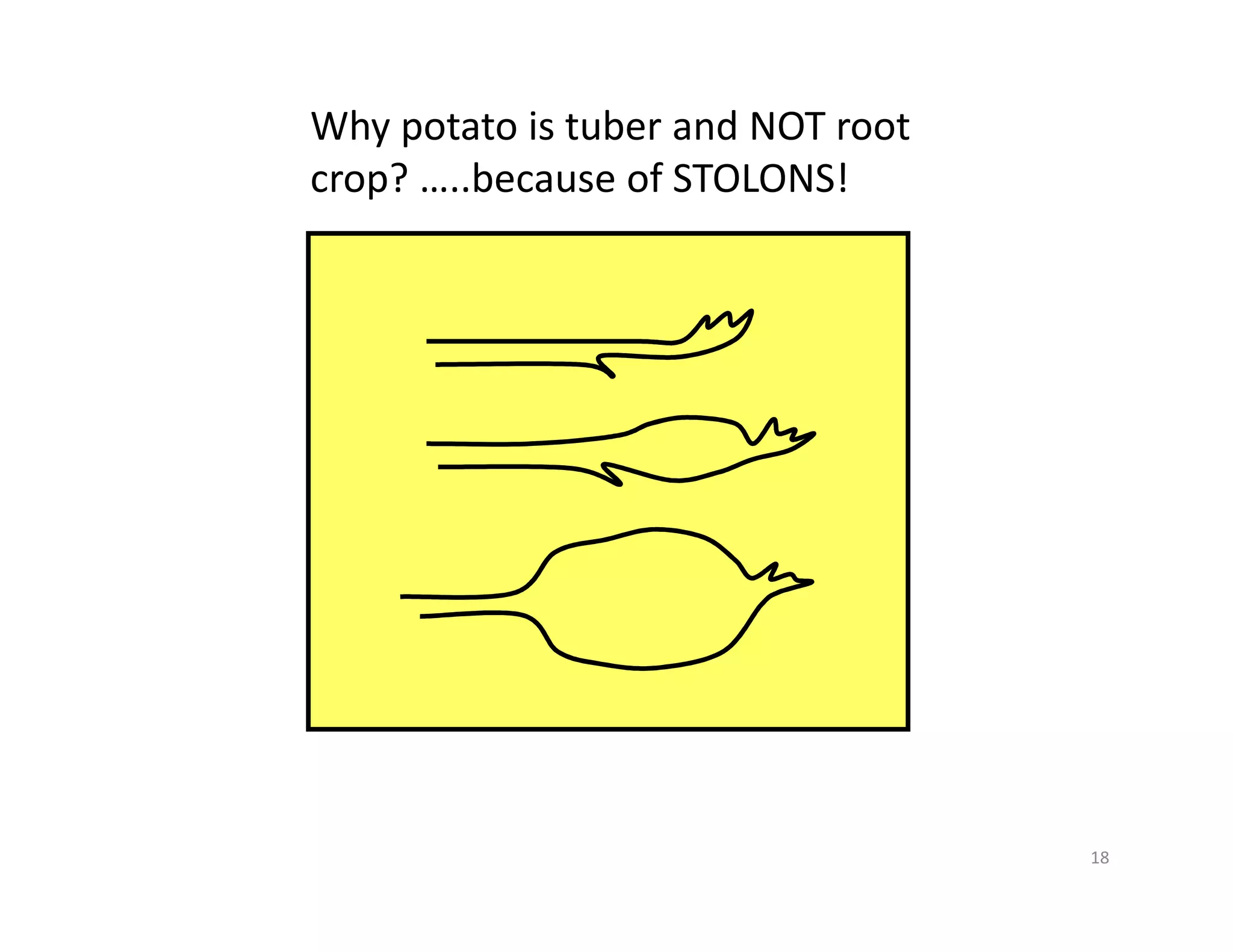
Why potato is tuber and NOT root
crop? …..because of STOLONS!
19
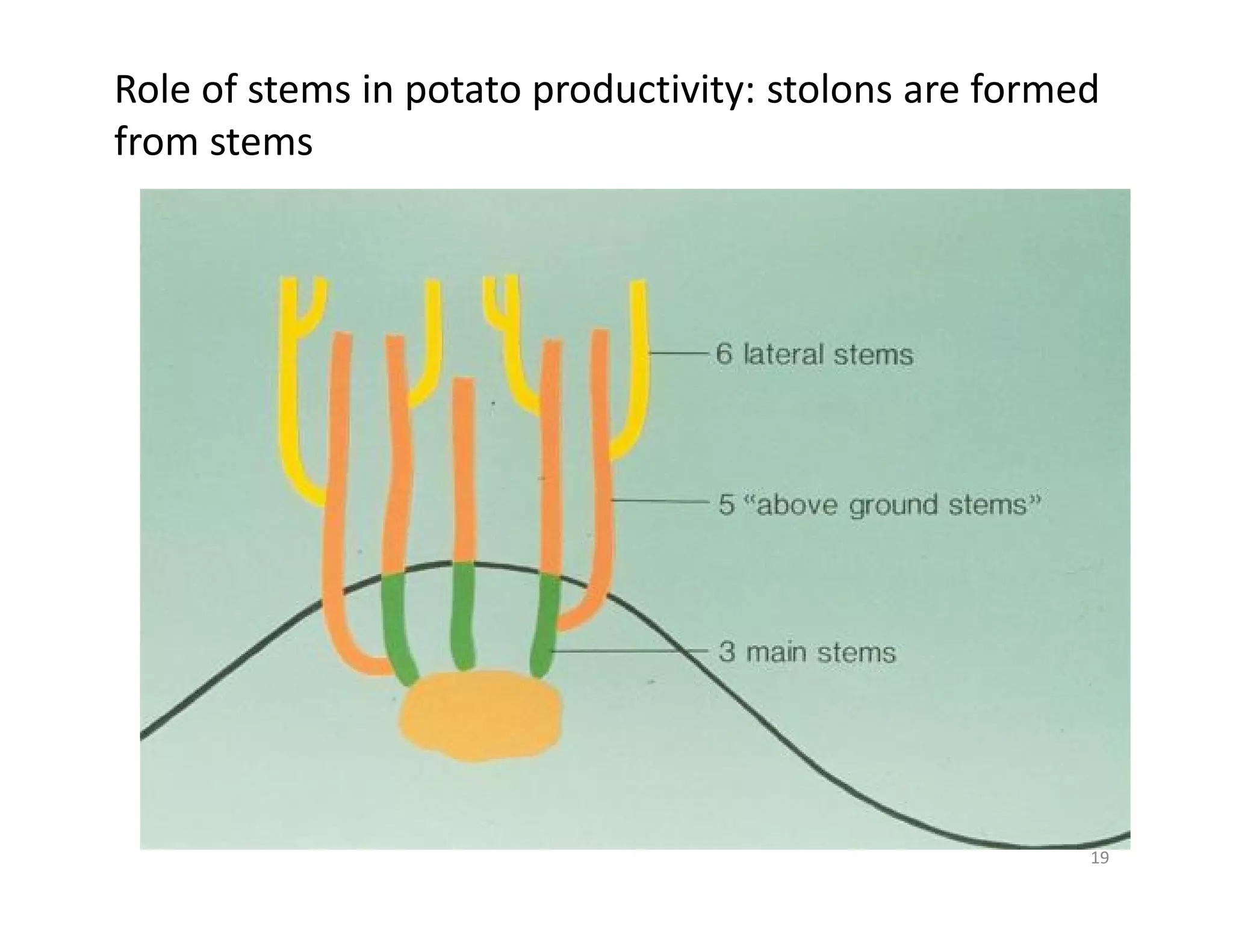
Role of stems in potato productivity: stolons are formed
from stems
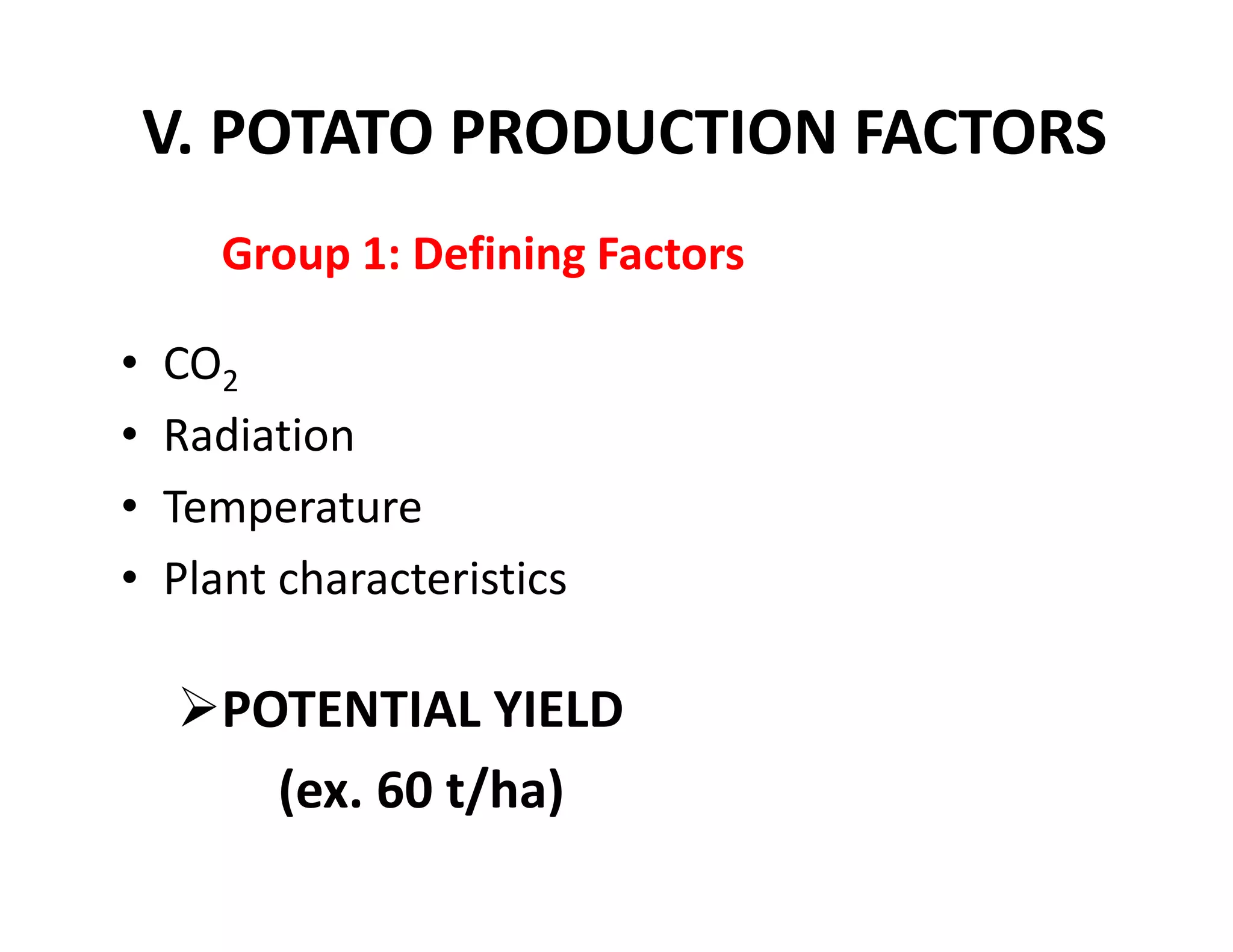
Group 1: Defining Factors
• CO2
• Radiation
• Temperature
• Plant characteristics
POTENTIAL YIELD
(ex. 60 t/ha)
V. POTATO PRODUCTION FACTORS
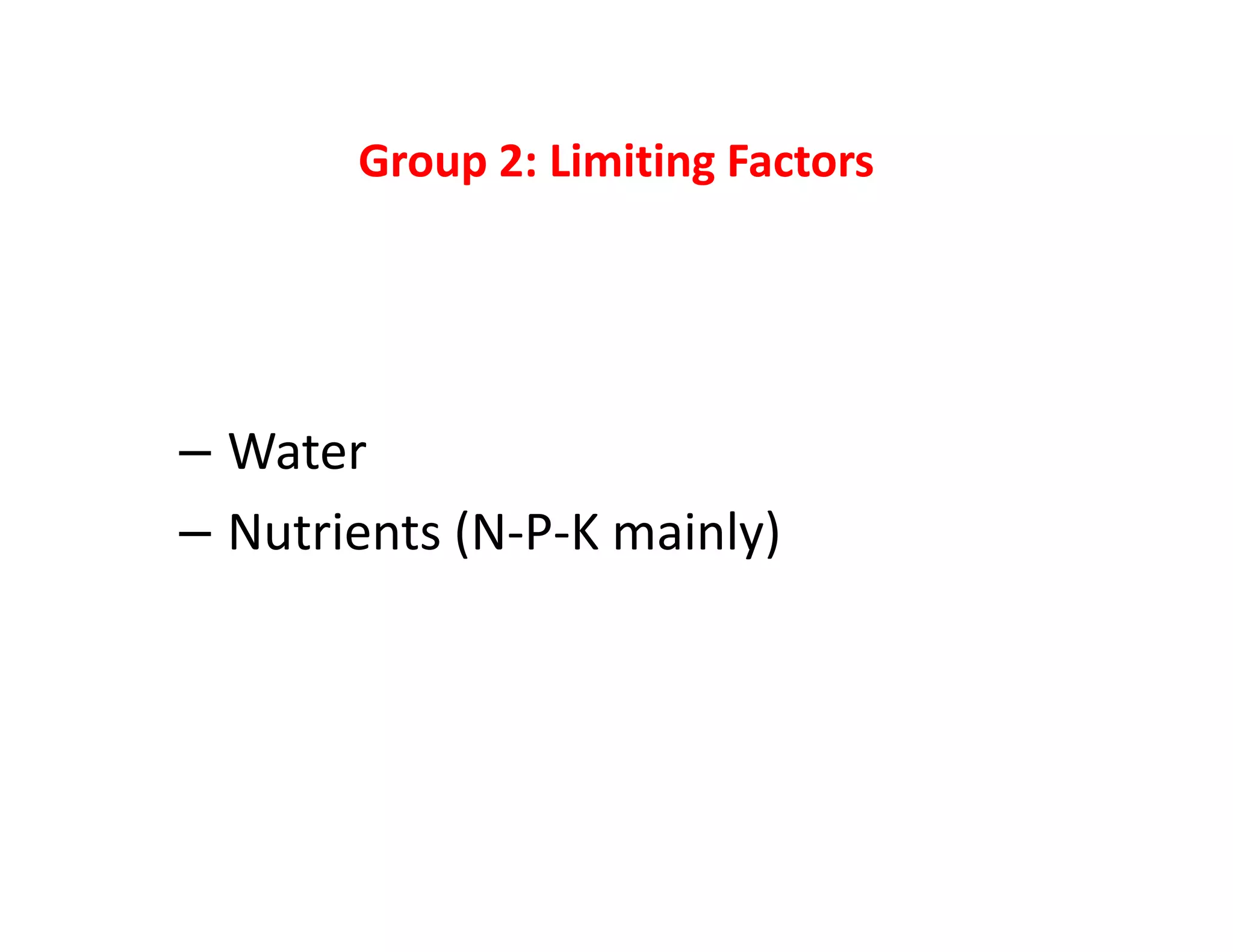
Group 2: Limiting Factors
– Water
– Nutrients (N-P-K mainly)
Defining Factors
+
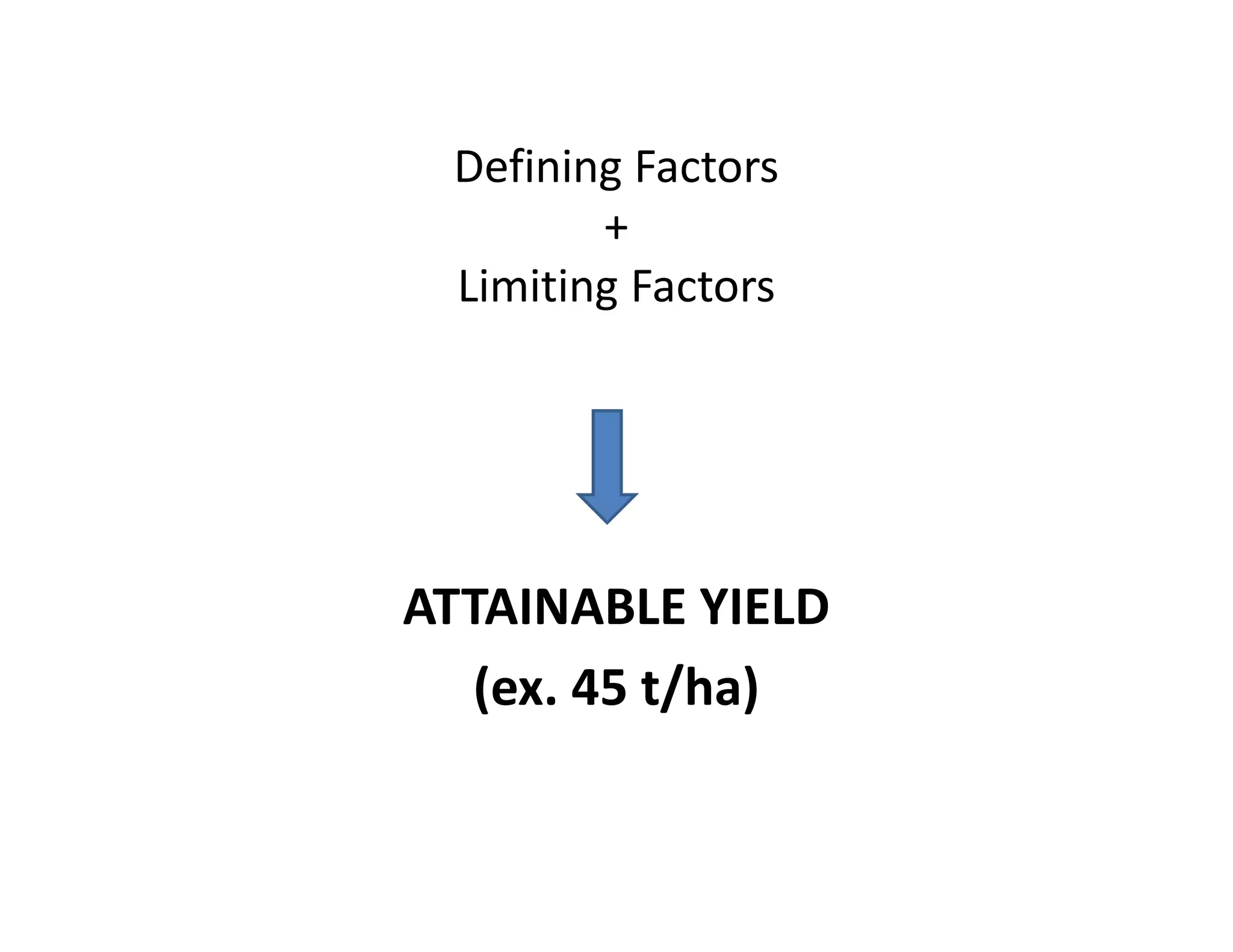
Limiting Factors
ATTAINABLE YIELD
(ex. 45 t/ha)
Group 3: Reducing Factors
– Weeds
– Pests
– Diseases
– Pollutants
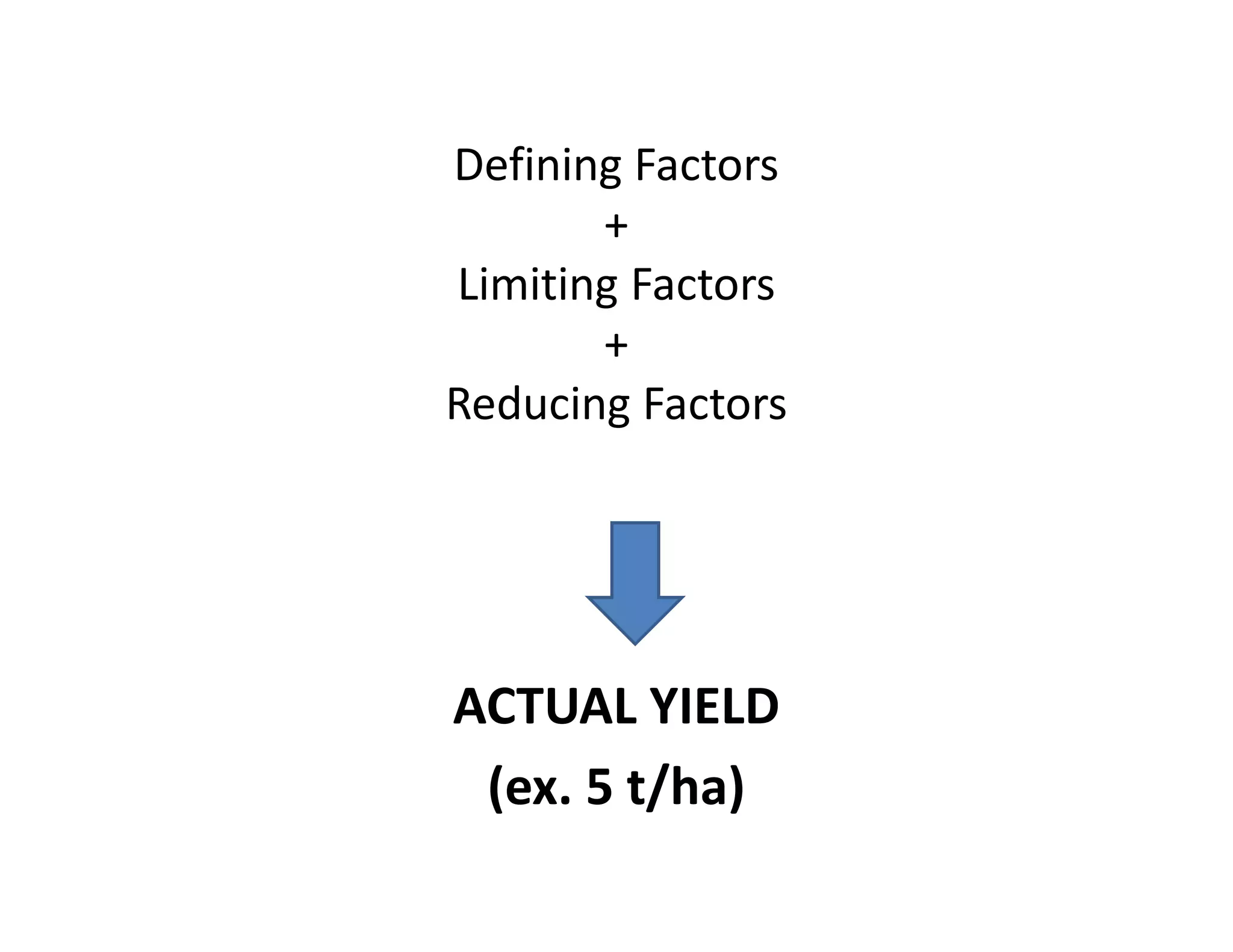
Defining Factors
+
Limiting Factors
+
Reducing Factors
ACTUAL YIELD
(ex. 5 t/ha)
VI. YIELD GAP
• Yield Gap (Yg) = Potential Yield (Yp) –
Actual Yield (Ya)
• Yg is extremely high in SSA compared to
developed countries
• Yg can be significantly reduced by
addressing identified gap drivers
VII. TAKE-AWAY MESSAGE
Clean seed
Fertilizers
Chemicals (pests and diseases control)
3 entry points for a successful
productivity:
Acknowledgements
We would like to acknowledge Humidtropics and the CGIAR Fund Donors
for their provision of core and project-specific funding without which this
research could not deliver results that eventually positively impact the lives
of millions of smallholder farmers in tropical Americas, Asia and Africa.
This presentation was made at a training workshop on Integrated Potato Crop
Management organized by the International Potato Center (CIP) for Innovation
Platform (IP) members of Kadahenda, Rwanda.
MURAKOZE
Contact: dharahagazwe@yahoo.fr

Introduction to potato crop

  • 1.
    THE POTATO CROP DieudonnéHarahagazwe Kadahenda, April 28, 2016 Integrated Potato Crop Management Course
  • 2.
    Outline Potato history Gene bankand diversity Importance of potato crop Crop growth and development Potato production factors Yield gap Take-away message
  • 3.
    I. POTATO HISTORY !( !(!( !( !(!( !( !( !( !( !( !( !(!(!( !( !( !( !( !( !( !( !( !( !( !( !( !( !( Equator Tropic of Cancer Tropic of Capricorn Indian Ocean Atlantic Ocean Pacific Ocean Pacific Ocean Antarctic Circle Arctic Circle Osaka Tokyo Delhi Paris Cairo London Taipei Moskva Manila Tehran Bombay Berlin Chicago Bangkok Karachi Jakarta BeijingNew York Istanbul Calcutta Shanghai Hong Kong Sao Paulo Los Angeles Mexico City Philadelphia Buenos Aires Rio de Janeiro Saint Petersburg 16th century LakeTiticaca Potato origin 20th Century
  • 4.
    II. GENEBANK (CIP– Lima, Peru) • The world’s largest in vitro genebank which maintains clonal and seed collections for over 100 years. • Over 21,000 accessions of potato, sweetpotato, and Andean root and tuber crops
  • 5.
  • 6.
    III. IMPORTANCE OFPOTATOES • Third important food crop in the world (380 million t/ 19 million ha in 2014 - FAOSTAT) • High yielding ability (100 t/ha) • One of the major cash crops in SSA, including Rwanda
  • 7.
    Top 10 PotatoProduction countries in Africa (FAOSTAT) Rank Country 1 Egypt 2 Algeria 3 Kenya 4 South Africa 5 Rwanda 6 Morocco 7 United Republic of Tanzania 8 Nigeria 9 Angola 10 Ethiopia
  • 8.
    Nutritional values ofpotatoes Fast food at Mombo, Tanzania
  • 9.
    One medium sizetuber (150 g) may contain: • Potassium : 620 mg – more than a banana • Vitamin C: 45% of daily requirement for a man • Dietary Fiber : 13% of daily requirement for a man • Healthy food: Lack of fat, sodium and cholesterol (major heath problems)
  • 10.
    10 IV. CROP GROWTHAND DEVELOPEMENT
  • 11.
  • 12.
    Importance of canopycover for plant – light interactions: Example of tea plantation vs tea factory (Kadahenda, Rwanda)
  • 13.
    Growth Cycle in4 phases Phase 1 Planting Germination
  • 14.
  • 15.
    Tuber initiation Endof leaf growth Phase 3
  • 16.
    End of leafgrowth Plant death Phase 4
  • 17.
    (t/ha) Time (days) 30 45 80120 1 2 3 4 90 DAP 40 30 Leaves Tubers The 4 potato phases in a graph DAP are indicative Yield
  • 18.
    18 Why potato istuber and NOT root crop? …..because of STOLONS!
  • 19.
    19 Role of stemsin potato productivity: stolons are formed from stems
  • 20.
    Group 1: DefiningFactors • CO2 • Radiation • Temperature • Plant characteristics POTENTIAL YIELD (ex. 60 t/ha) V. POTATO PRODUCTION FACTORS
  • 21.
    Group 2: LimitingFactors – Water – Nutrients (N-P-K mainly)
  • 22.
  • 23.
    Group 3: ReducingFactors – Weeds – Pests – Diseases – Pollutants
  • 24.
    Defining Factors + Limiting Factors + ReducingFactors ACTUAL YIELD (ex. 5 t/ha)
  • 25.
    VI. YIELD GAP •Yield Gap (Yg) = Potential Yield (Yp) – Actual Yield (Ya) • Yg is extremely high in SSA compared to developed countries • Yg can be significantly reduced by addressing identified gap drivers
  • 26.
    VII. TAKE-AWAY MESSAGE Cleanseed Fertilizers Chemicals (pests and diseases control) 3 entry points for a successful productivity:
  • 27.
    Acknowledgements We would liketo acknowledge Humidtropics and the CGIAR Fund Donors for their provision of core and project-specific funding without which this research could not deliver results that eventually positively impact the lives of millions of smallholder farmers in tropical Americas, Asia and Africa. This presentation was made at a training workshop on Integrated Potato Crop Management organized by the International Potato Center (CIP) for Innovation Platform (IP) members of Kadahenda, Rwanda.
  • 28.