PESTS AND DISEASES
MANAGEMENT IN
KADAHENDA, RWANDA
Kadahenda, 29 April 2016
Dieudonné Harahagazwe
1Integrated potato crop management course
Outline
Disease triangle
Potato fungal diseases
Major bacterial diseases
Major potato pests
2
I. DISEASE TRIANGLE
3
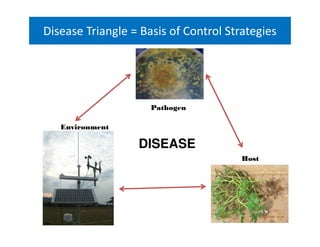
Disease Triangle = Basis of Control Strategies
Pathogen
Host
Environment
DISEASE
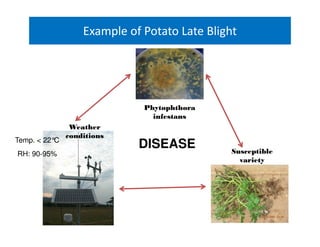
Example of Potato Late Blight
Phytophthora
infestans
Susceptible
variety
Weather
conditions
DISEASETemp. < 22°C
RH: 90-95%
II. POTATO FUNGAL
DISEASES
6
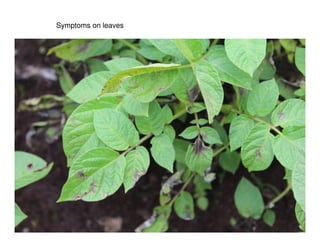
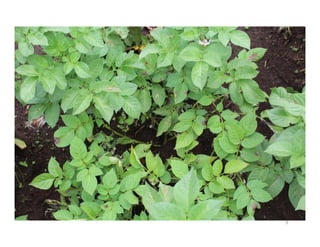
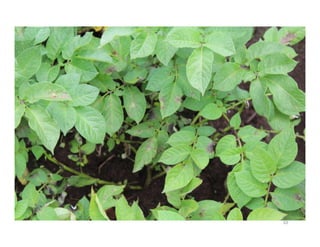
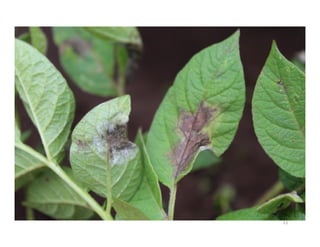
1. LATE BLIGHT
(Miridiyu)
7
8
Symptoms on leaves
9
10
11
Common Control practices
• Resistant/tolerant varieties
• Chemicals:
– Dithane (Mancozeb): at plant germination
(around 30DAP) and then after Ridomil at 2-
week interval
– Ridomil: 2 weeks after the first Dithane.
The second spray would occur upon onset
of LB symptoms.
12
2. ALTERNARIA
13
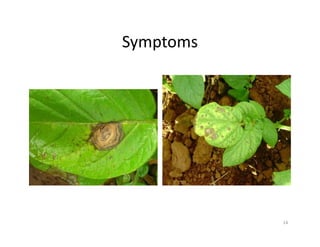
Symptoms
14
15
16
17
The disease can be very severe especially in
subtropical lowlands
Chimoio, Mozambique
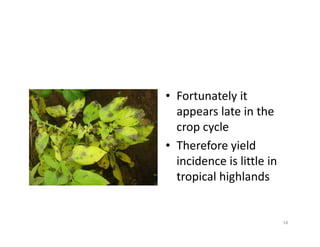
• Fortunately it
appears late in the
crop cycle
• Therefore yield
incidence is little in
tropical highlands
18
3. FUSARIUM
19
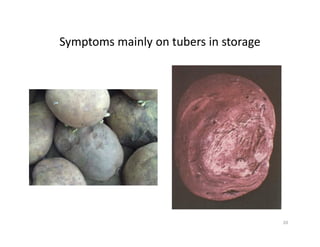
Symptoms mainly on tubers in storage
20
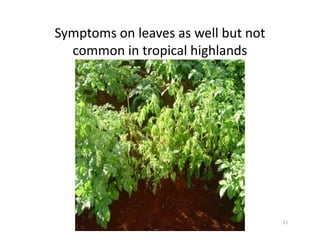
Symptoms on leaves as well but not
common in tropical highlands
21
III. POTATO BACTERIAL
DISEASES
MAJOR BACTERIAL DISEASES
Bacterial Wilt (BW)
Blackleg/Soft Rot
(KIRABIRANYA)
1. BACTERIAL WILT
Typical symptoms
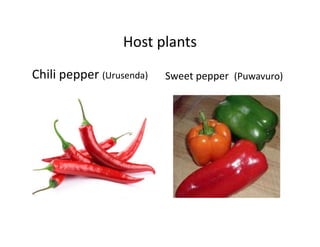
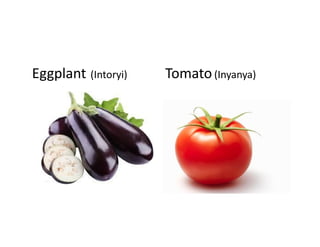
Host plants
Chili pepper (Urusenda) Sweet pepper (Puwavuro)
Eggplant (Intoryi) Tomato(Inyanya)
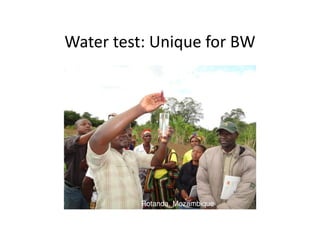
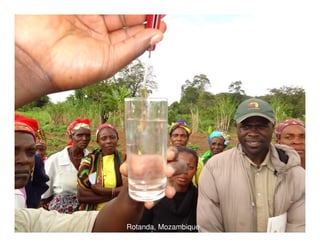
Water test: Unique for BW
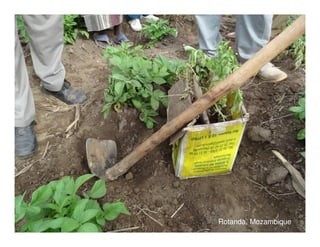
Rotanda, Mozambique
Rotanda, Mozambique
2. BLACKLEG/SOFT ROT
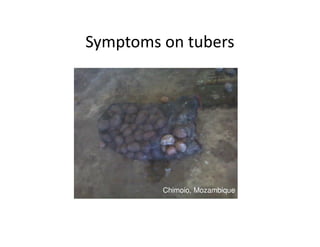
Symptoms on tubers
Chimoio, Mozambique
3. Integrated Control for bacterial
diseases
• Use of seed
• Plant in a healthy field
• Crop rotation with non-host plants
• Removal of diseased plants
• Removal of plant volunteers
• Application of other sanitation and cultivation
practices
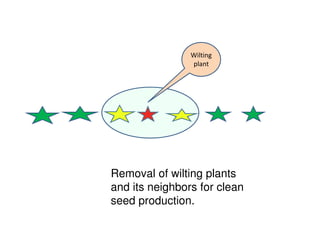
Wilting
plant
Removal of wilting plants
and its neighbors for clean
seed production.
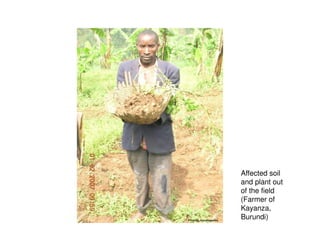
Affected soil
and plant out
of the field
(Farmer of
Kayanza,
Burundi)
Rotanda, Mozambique
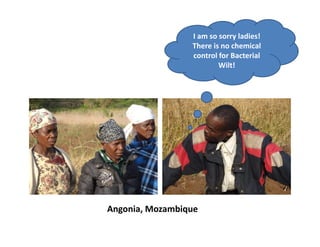
Angonia, Mozambique
I am so sorry ladies!
There is no chemical
control for Bacterial
Wilt!
4. Latent Infection
• No apparent symptoms
• Tubers carry diseases from one land to
the other
• Tolerant varieties are more prone to
latency than the sensitive ones
• Need to test seed tubers prior to planting
IV. MAJOR POTATO PESTS
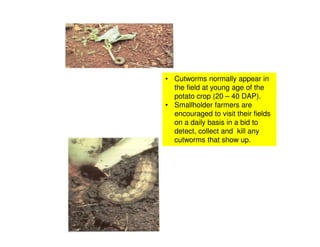
1. Agrotis (INANDA)
• Cutworms normally appear in
the field at young age of the
potato crop (20 – 40 DAP).
• Smallholder farmers are
encouraged to visit their fields
on a daily basis in a bid to
detect, collect and kill any
cutworms that show up.
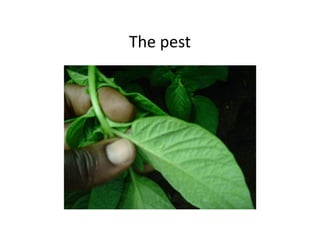
2. Aphids
The pest
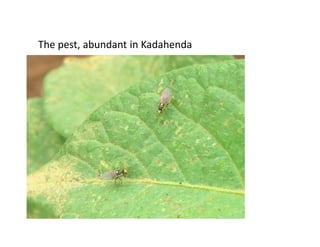
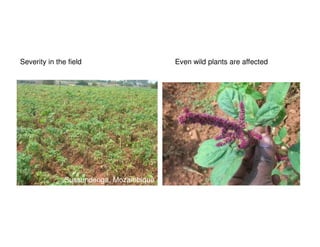
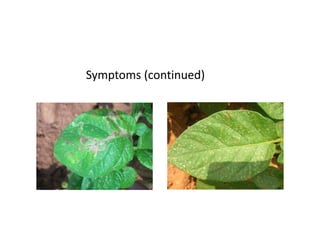
3. Leafminer
The pest, abundant in Kadahenda
Severity in the field
Sussundenga, Mozambique
Even wild plants are affected
Symptoms (continued)
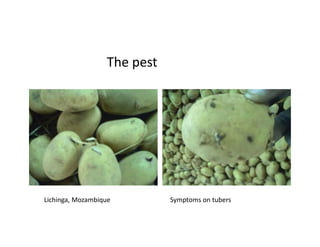
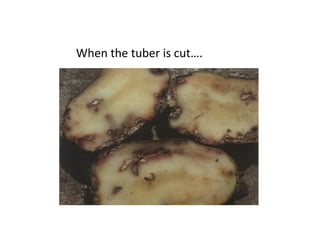
4. PTM
(Potato Tuber Moth)
The pest
Lichinga, Mozambique Symptoms on tubers
When the tuber is cut….
4. Insecticides for aphids and
leafminer control
As recommended by the National Potato Sub-
Program, RAB-Rwanda:
• Imidachloprid 200 SL: systemic insecticide for aphid control
• CYPRO 44 EC (Profenofos 40% + Cypermethrine 4% EC)
• Jackpot 50 EC (Lambda-Cyhalothrin 50g/l): broad spectrum
insecticide for the control of biting and sucking insect pests
• Romectin 18 EC (Abamectin 18% ): Insecticide/miticide for the
control of spider mites and leafminers
Acknowledgements
We would like to acknowledge Humidtropics and the CGIAR Fund Donors
for their provision of core and project-specific funding without which this
research could not deliver results that eventually positively impact the lives
of millions of smallholder farmers in tropical Americas, Asia and Africa.
This presentation was made at a training workshop on Integrated Potato Crop
Management organized by the International Potato Center (CIP) for Innovation
Platform (IP) members of Kadahenda, Rwanda.
MURAKOZE
Contact: dharahagazwe@yahoo.fr

Pests and diseases management