Dr. Animesh Gupta
MBBS,MD,FDM,FAGE
Associate Professor, Dept. of Community Medicine, NMCH, Sasaram (Bihar)
4/25/2020Epidemiology - Dr. Animesh Gupta
1
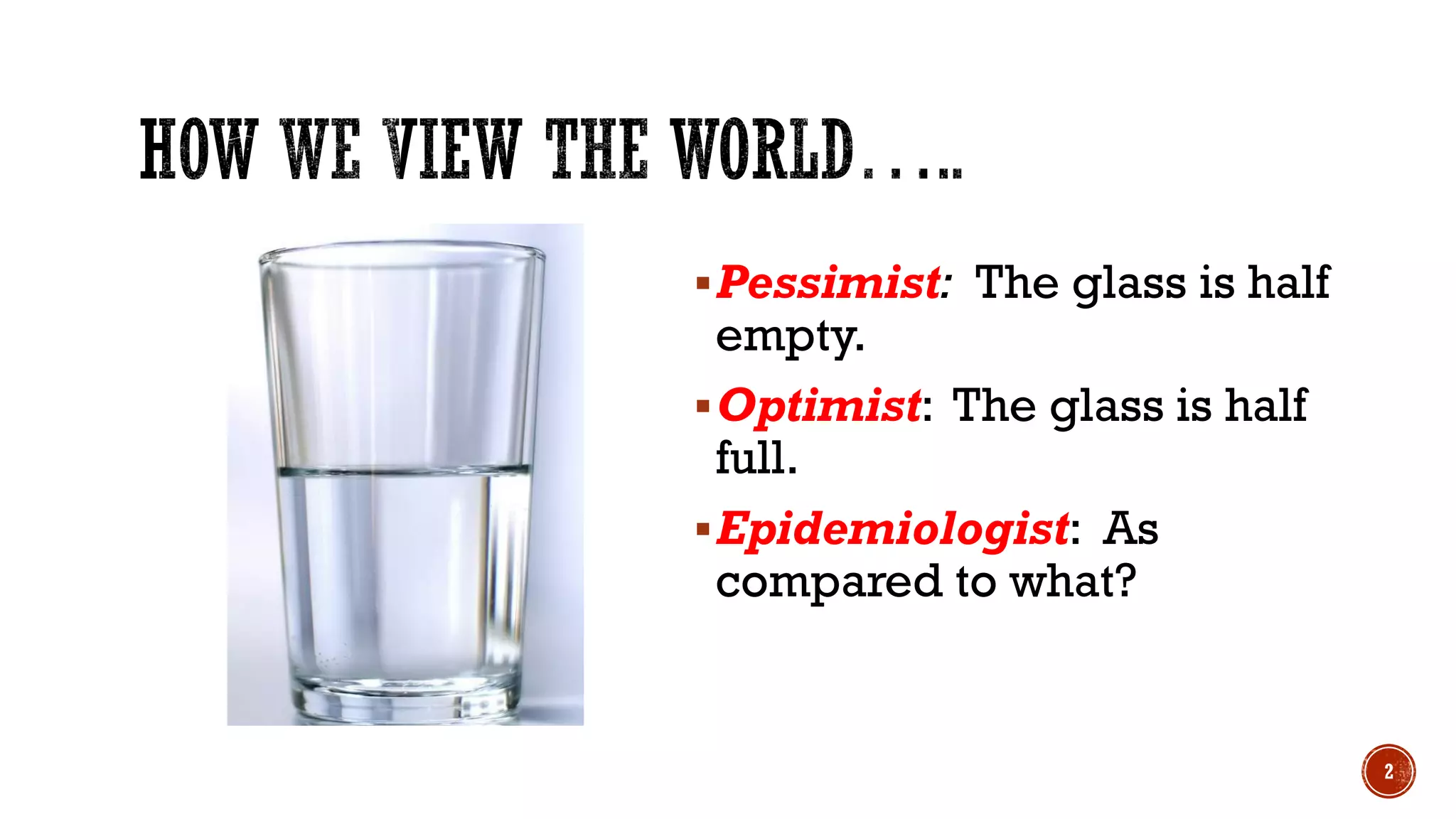
▪Pessimist: The glass is half
empty.
▪Optimist: The glass is half
full.
▪Epidemiologist: As
compared to what?
2
EPI DEMO LOGOS
Upon, on People, population, man the Study of
The study of anything that happens to people
“That which befalls man”
3
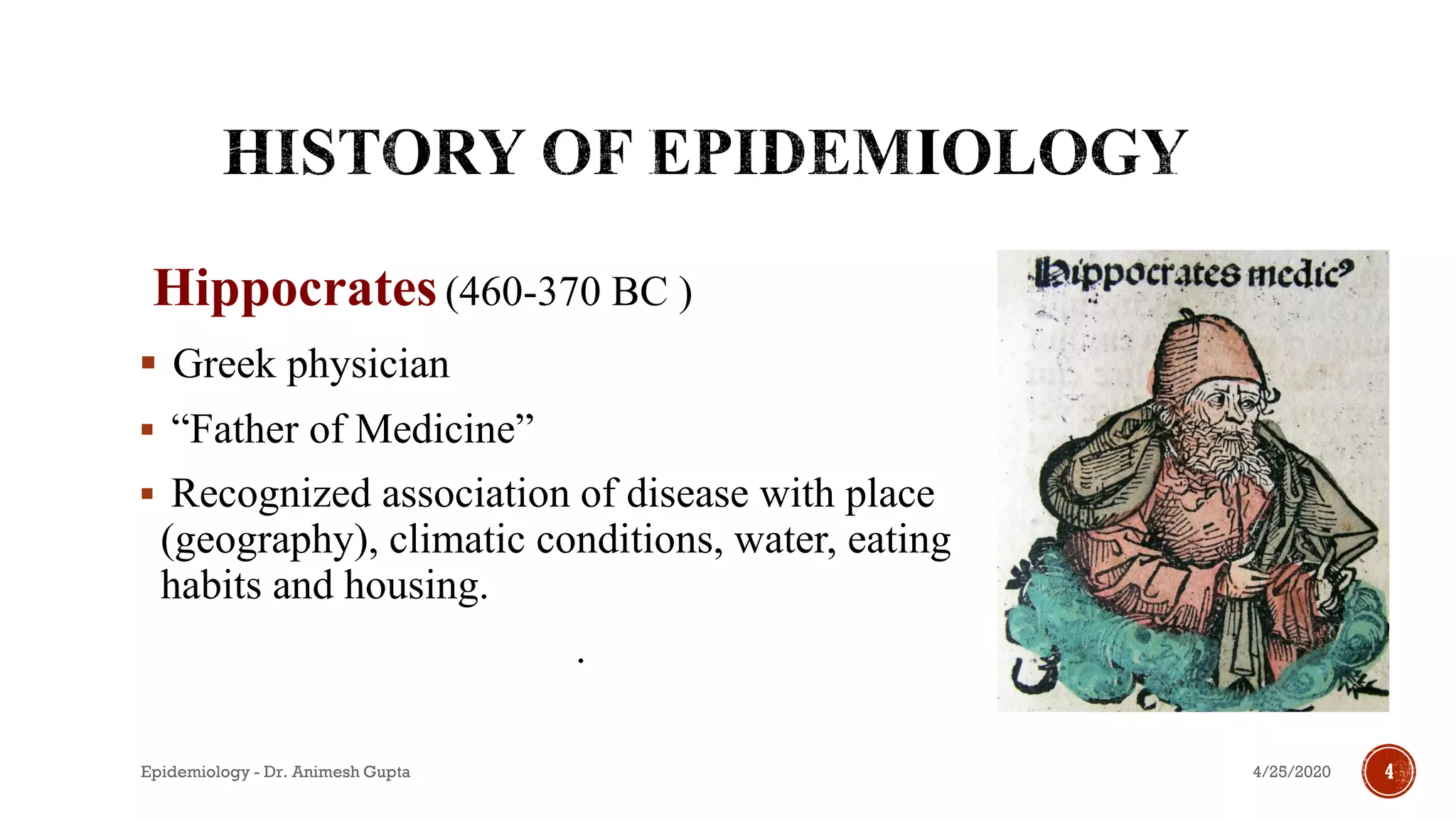
Hippocrates(460-370 BC )
▪ Greek physician
▪ “Father of Medicine”
▪ Recognized association of disease with place
(geography), climatic conditions, water, eating
habits and housing.
.
4/25/2020Epidemiology - Dr. Animesh Gupta 4
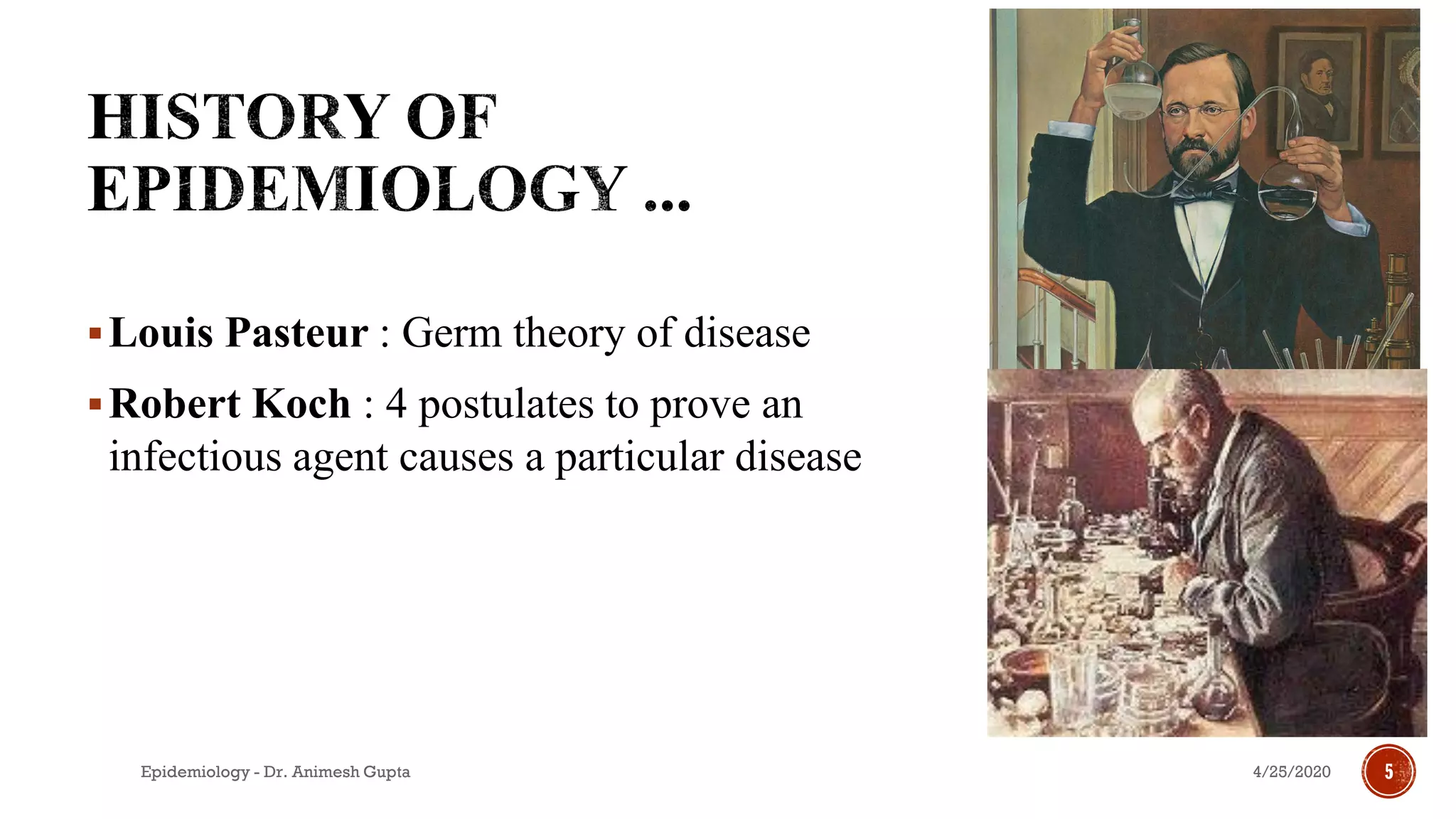
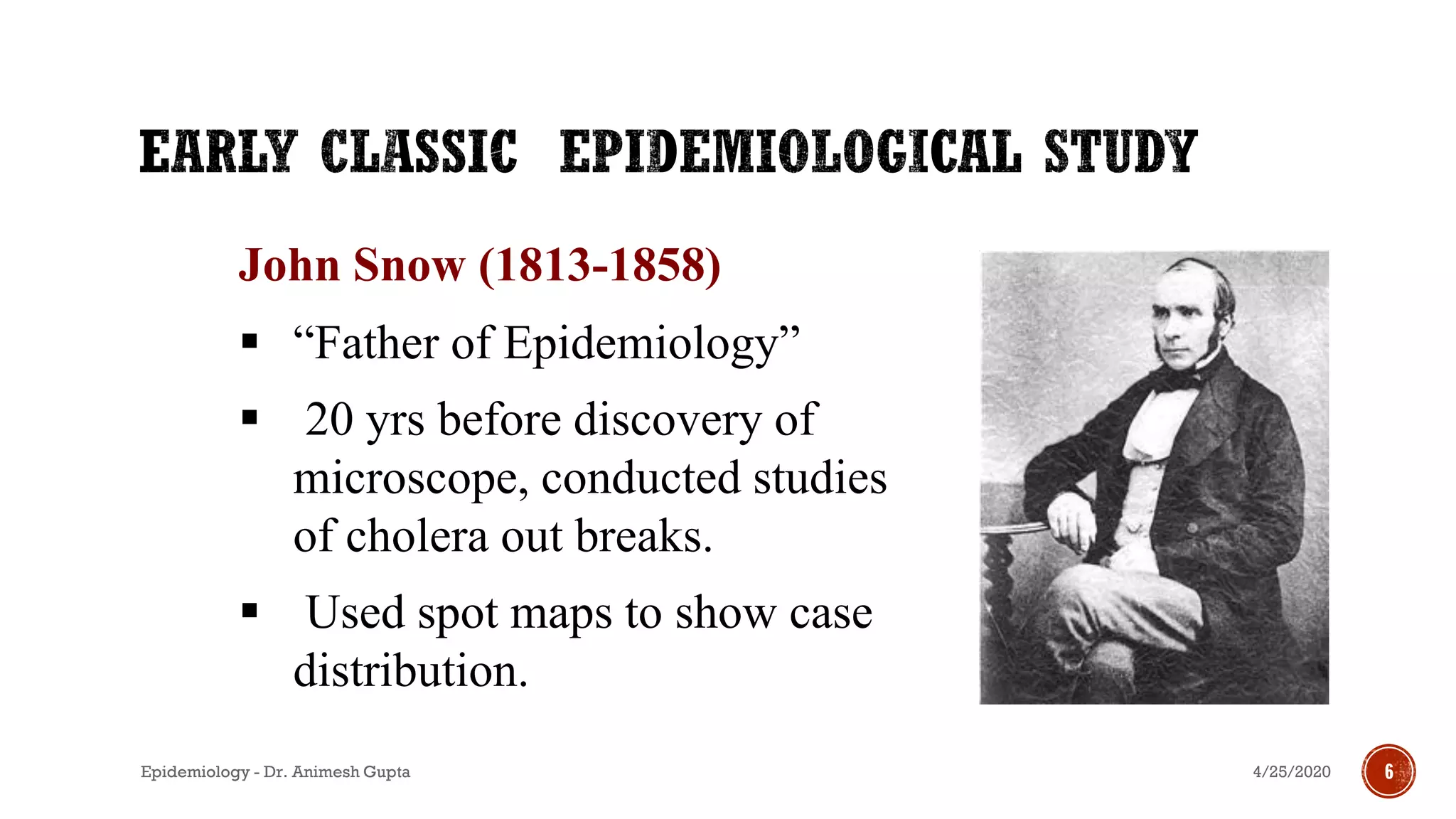
▪Louis Pasteur : Germ theory of disease
▪Robert Koch : 4 postulates to prove an
infectious agent causes a particular disease
4/25/2020Epidemiology - Dr. Animesh Gupta 5
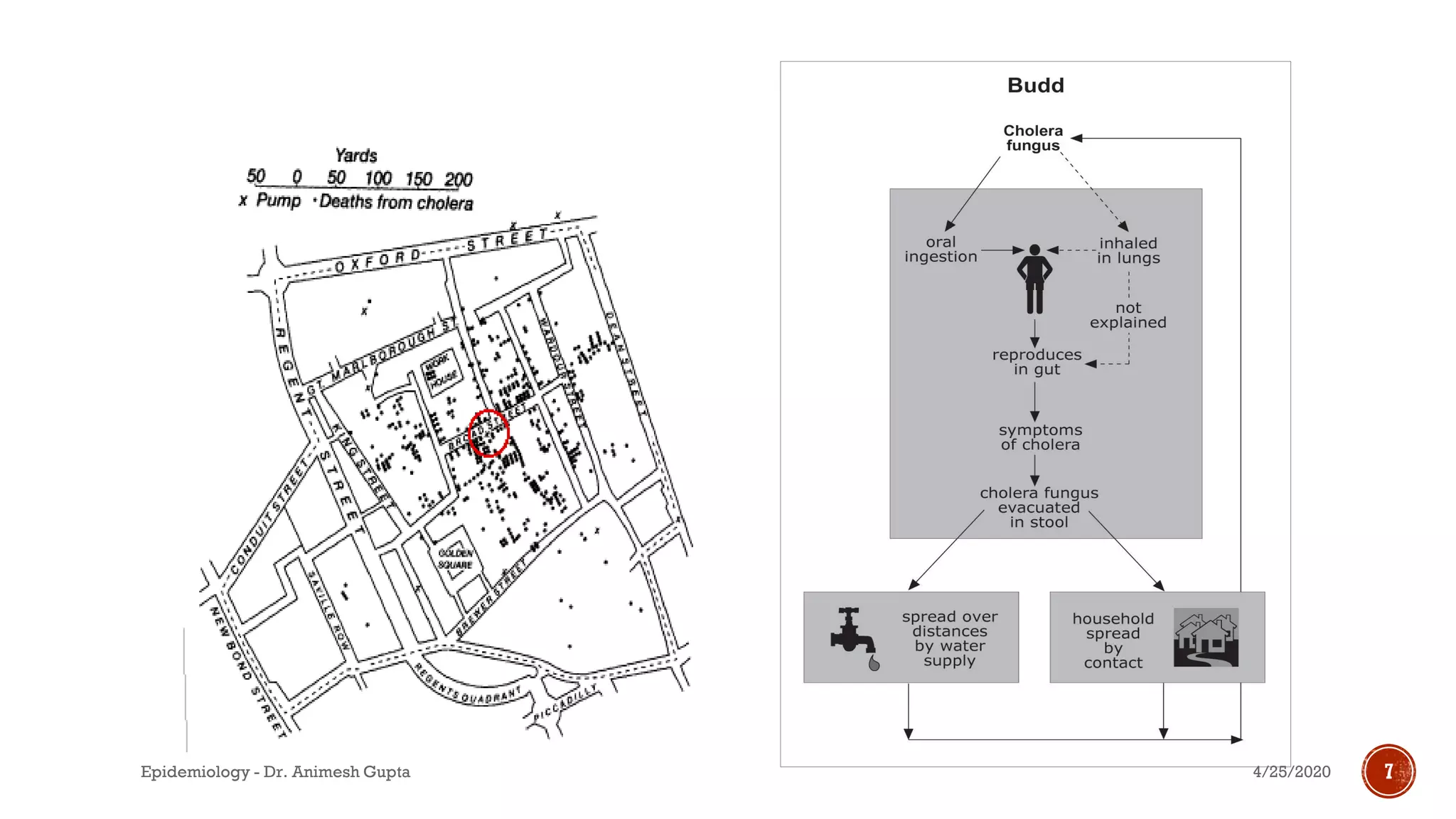
John Snow (1813-1858)
▪ “Father of Epidemiology”
▪ 20 yrs before discovery of
microscope, conducted studies
of cholera out breaks.
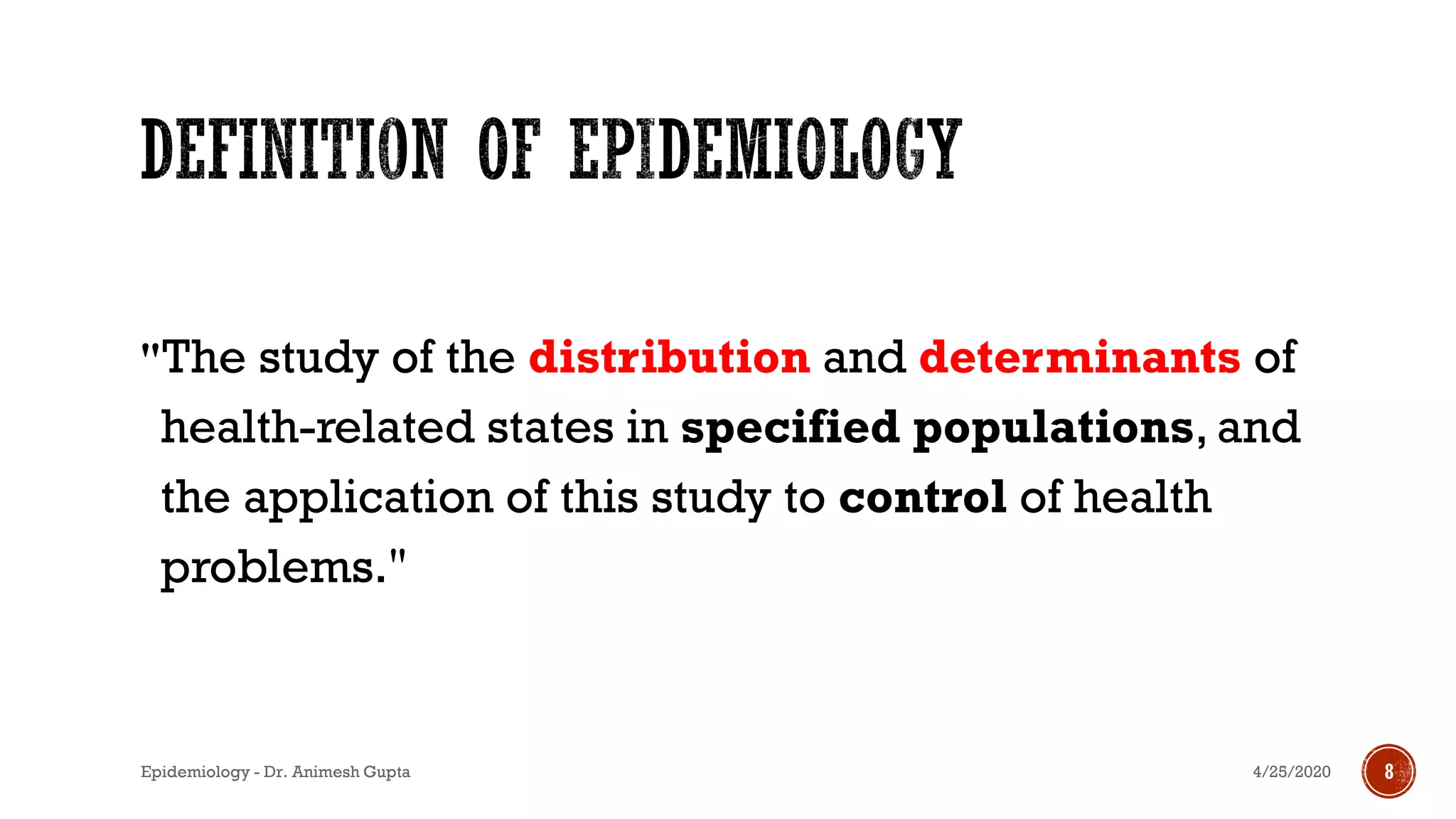
▪ Used spot maps to show case
distribution.
4/25/2020Epidemiology - Dr. Animesh Gupta 6
4/25/2020Epidemiology - Dr. Animesh Gupta 7
"The study of the distribution and determinants of
health-related states in specified populations, and
the application of this study to control of health
problems."
8
*Last, J.M. 1988. A Dictionary of Epidemiology, 2nd ed.
4/25/2020Epidemiology - Dr. Animesh Gupta
DYNAMIC STUDY OF THE
FREQUENCY
DISTRIBUTION
DETERMINANTS
CONTROL
9
OF HEALTH AND DISEASE
IN A POPULATION
4/25/2020Epidemiology - Dr. Animesh Gupta
▪Frequency of disease, disability, death..
▪Expressed as rates & ratios
- prevalence, incidence, death rate.
▪Used to make comparisons
- Gives clues to etiology.
▪Helps in development of strategies
for prevention &control programme.
▪Health related events- health need , demands…
4/25/2020Epidemiology - Dr. Animesh Gupta 10
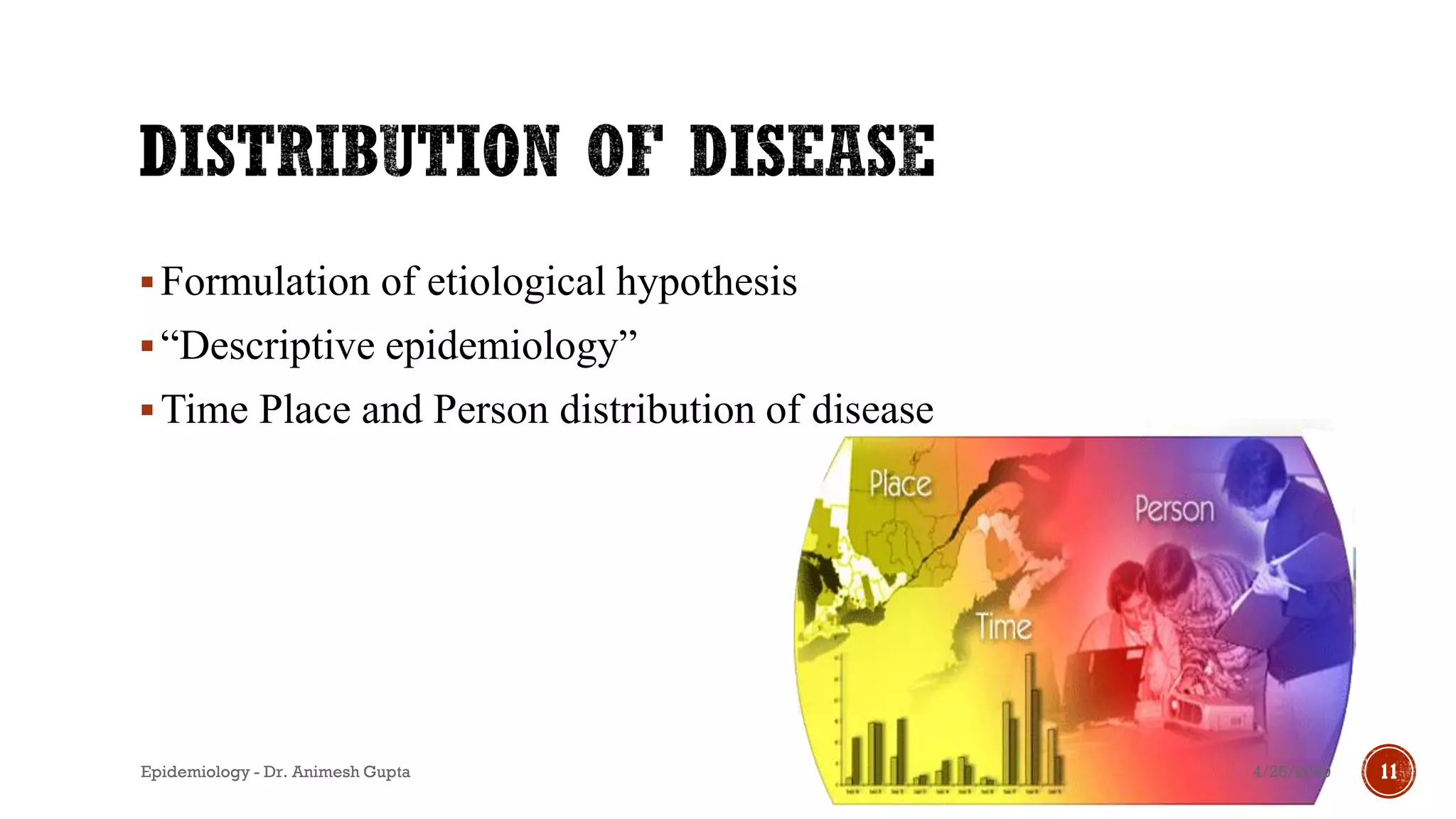
▪Formulation of etiological hypothesis
▪“Descriptive epidemiology”
▪Time Place and Person distribution of disease
4/25/2020Epidemiology - Dr. Animesh Gupta 11
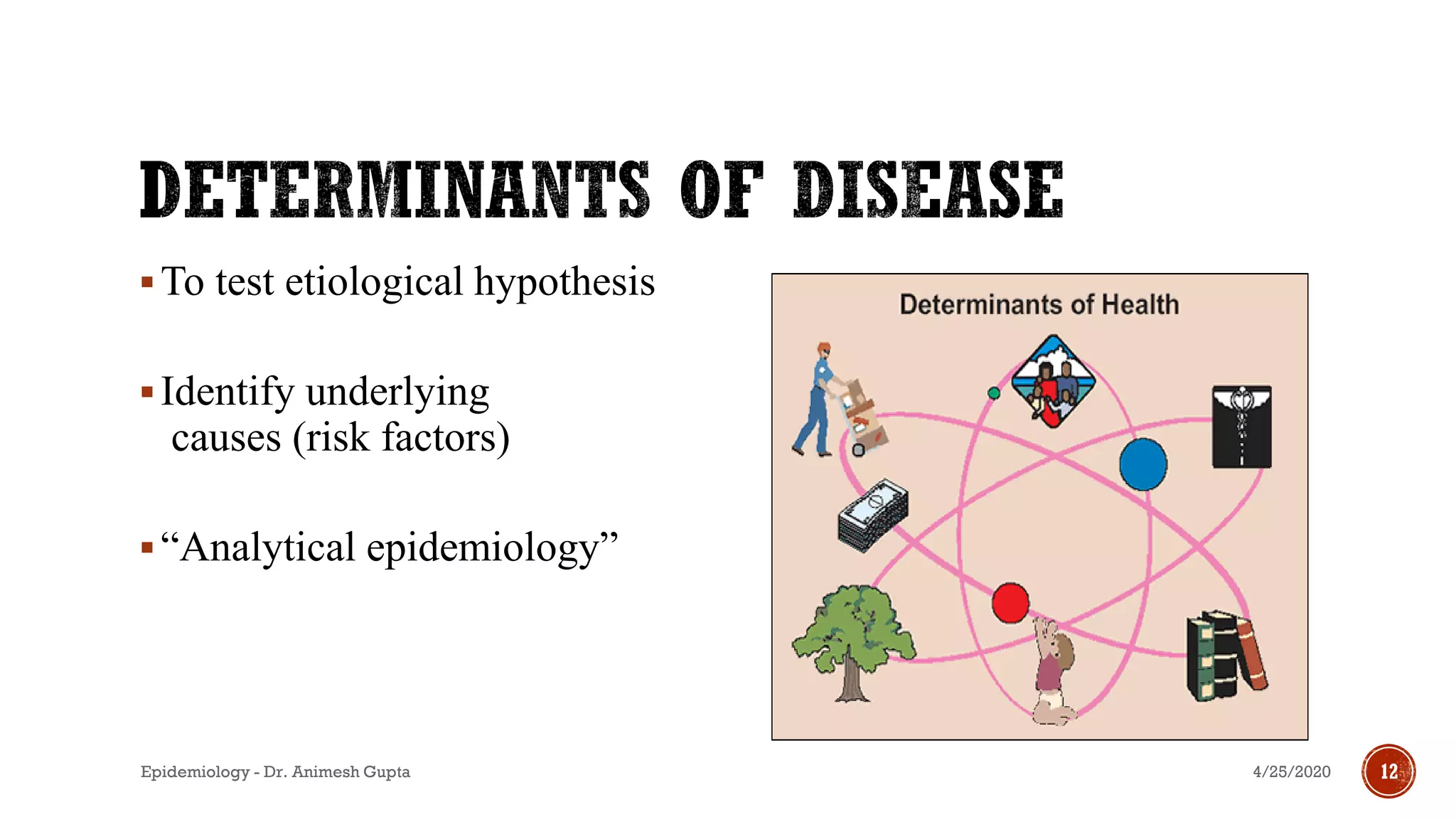
▪To test etiological hypothesis
▪Identify underlying
causes (risk factors)
▪“Analytical epidemiology”
4/25/2020Epidemiology - Dr. Animesh Gupta 12
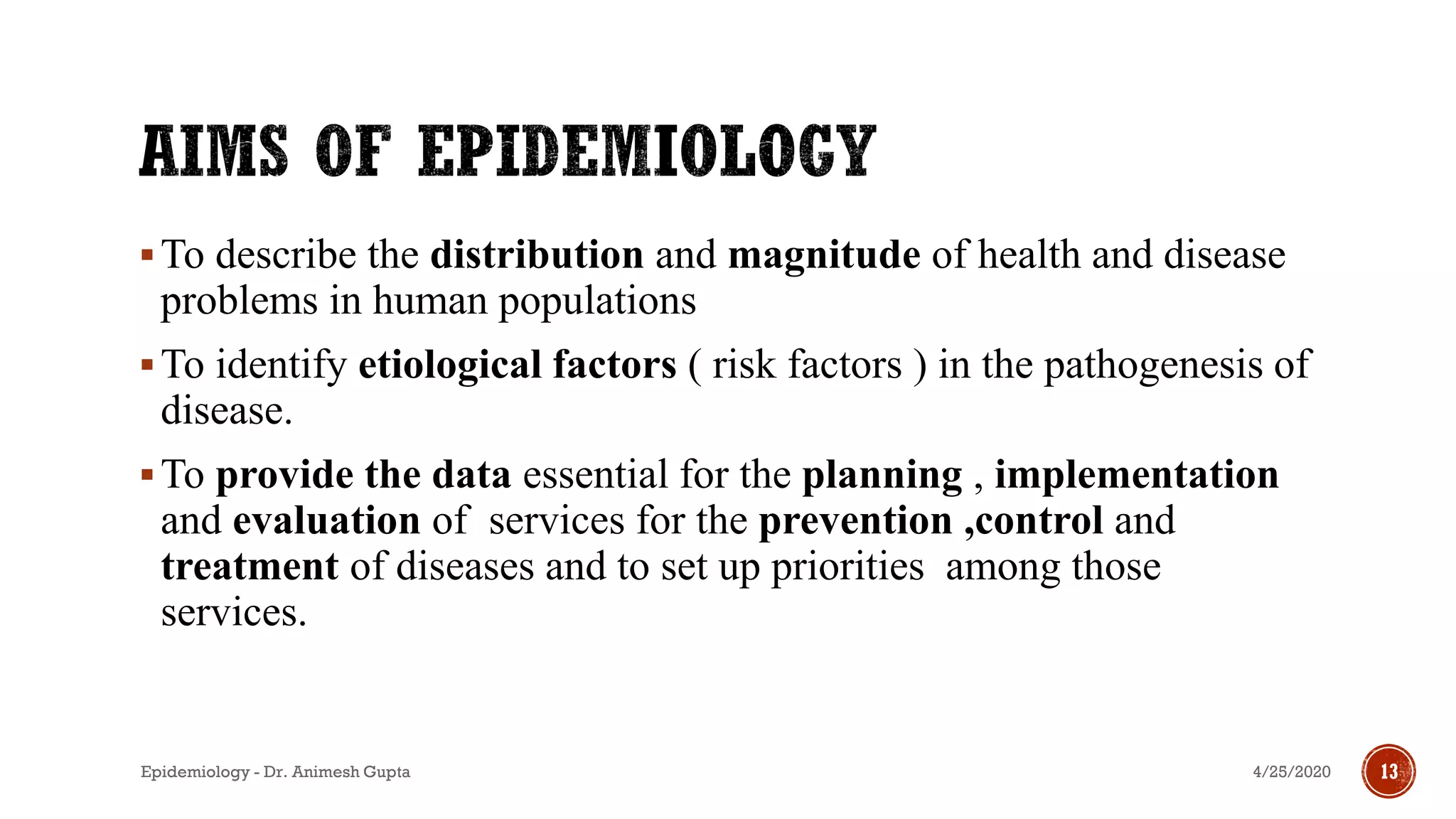
▪To describe the distribution and magnitude of health and disease
problems in human populations
▪To identify etiological factors ( risk factors ) in the pathogenesis of
disease.
▪To provide the data essential for the planning , implementation
and evaluation of services for the prevention ,control and
treatment of diseases and to set up priorities among those
services.
4/25/2020Epidemiology - Dr. Animesh Gupta 13
A. Asking questions
B. Making comparisons
4/25/2020Epidemiology - Dr. Animesh Gupta 14
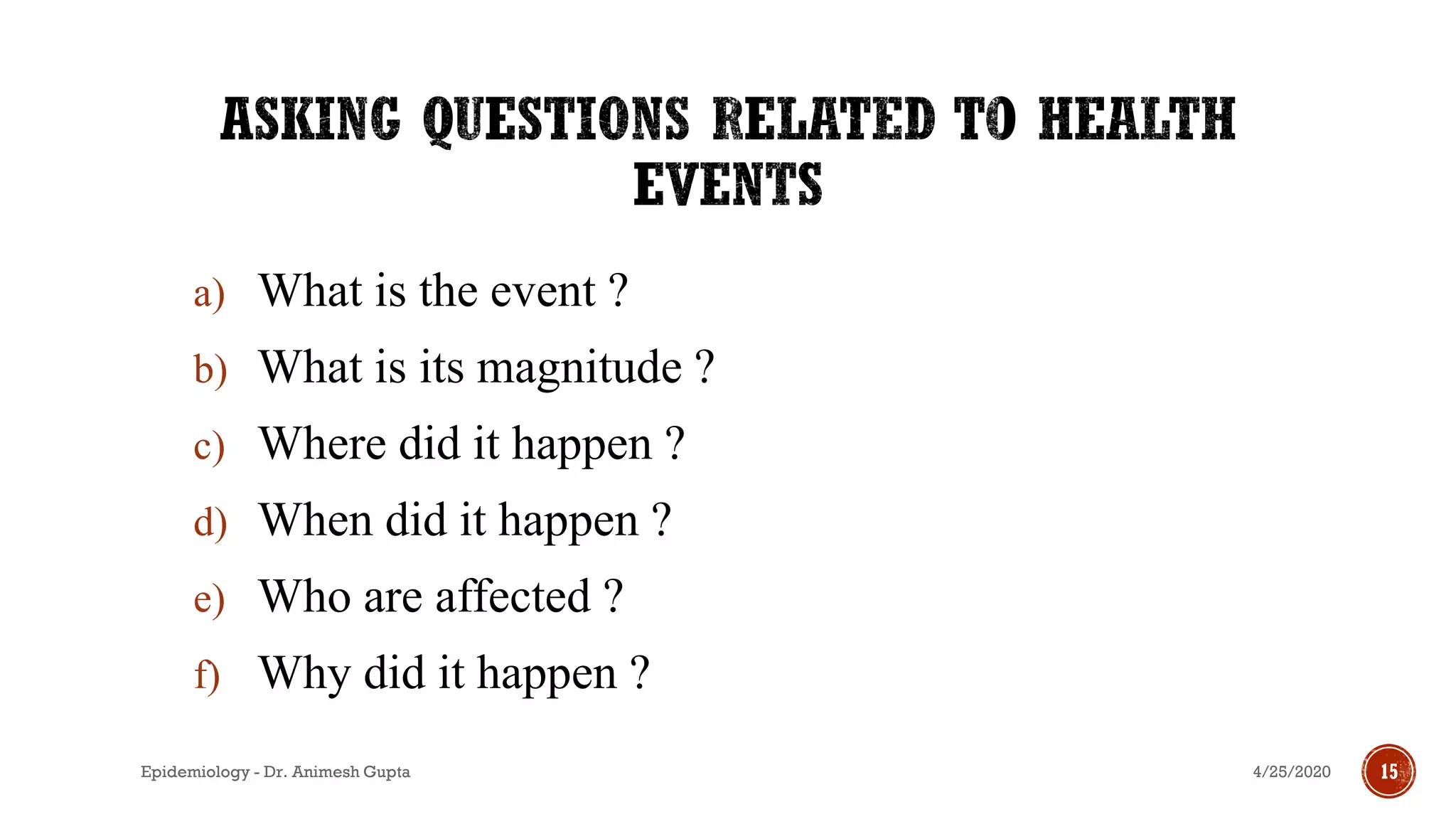
a) What is the event ?
b) What is its magnitude ?
c) Where did it happen ?
d) When did it happen ?
e) Who are affected ?
f) Why did it happen ?
4/25/2020Epidemiology - Dr. Animesh Gupta 15
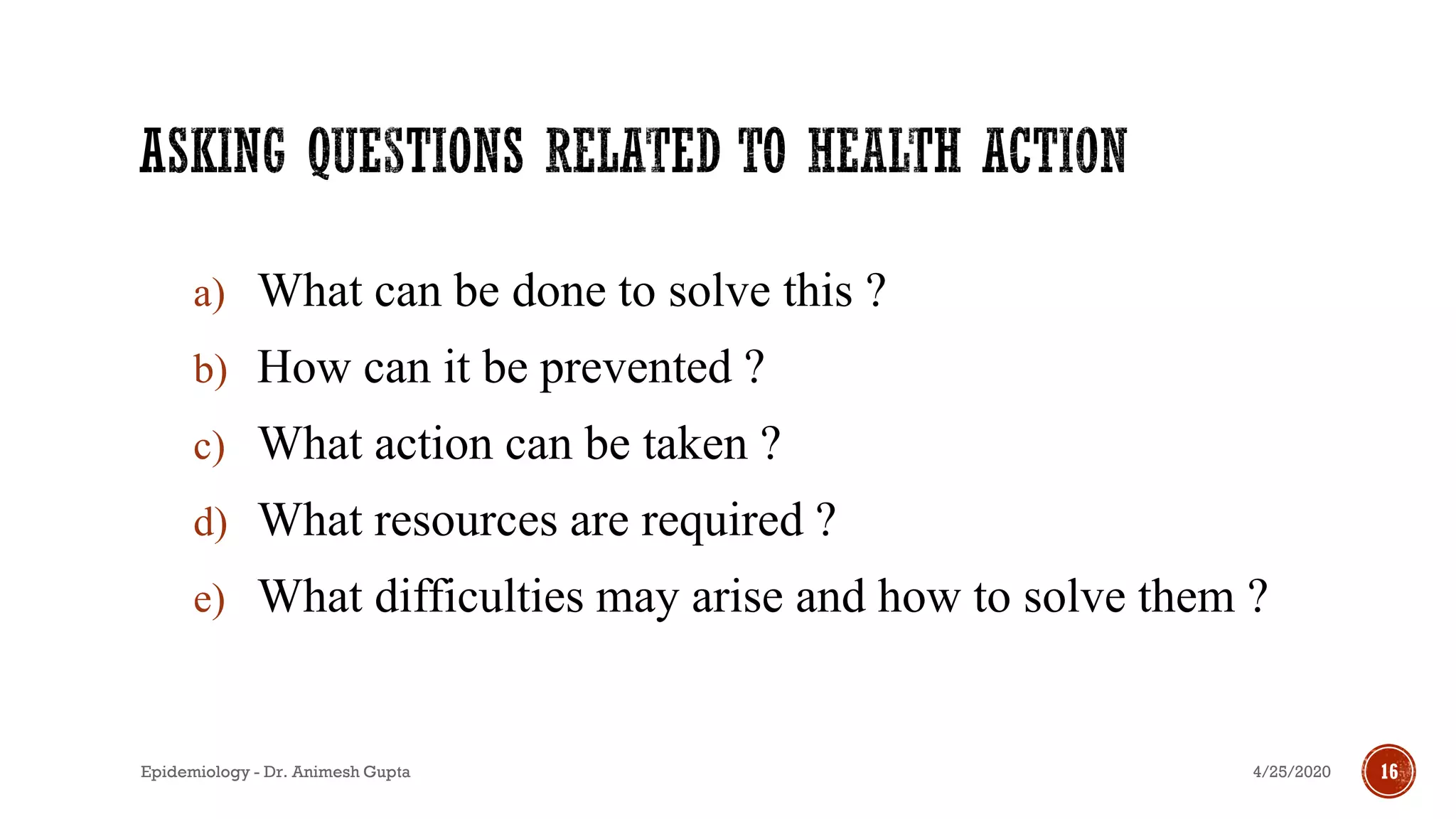
a) What can be done to solve this ?
b) How can it be prevented ?
c) What action can be taken ?
d) What resources are required ?
e) What difficulties may arise and how to solve them ?
4/25/2020Epidemiology - Dr. Animesh Gupta 16
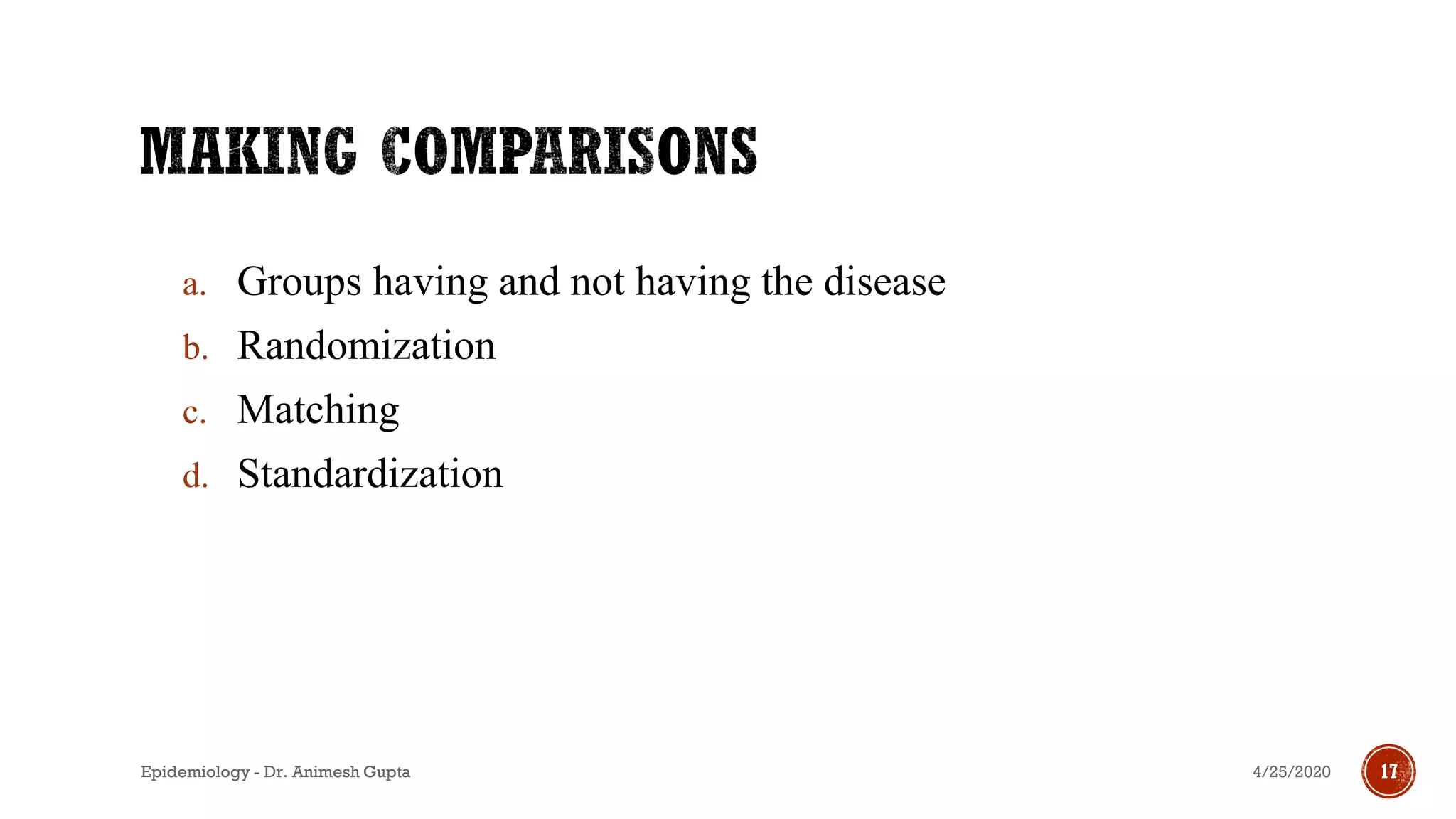
a. Groups having and not having the disease
b. Randomization
c. Matching
d. Standardization
4/25/2020Epidemiology - Dr. Animesh Gupta 17
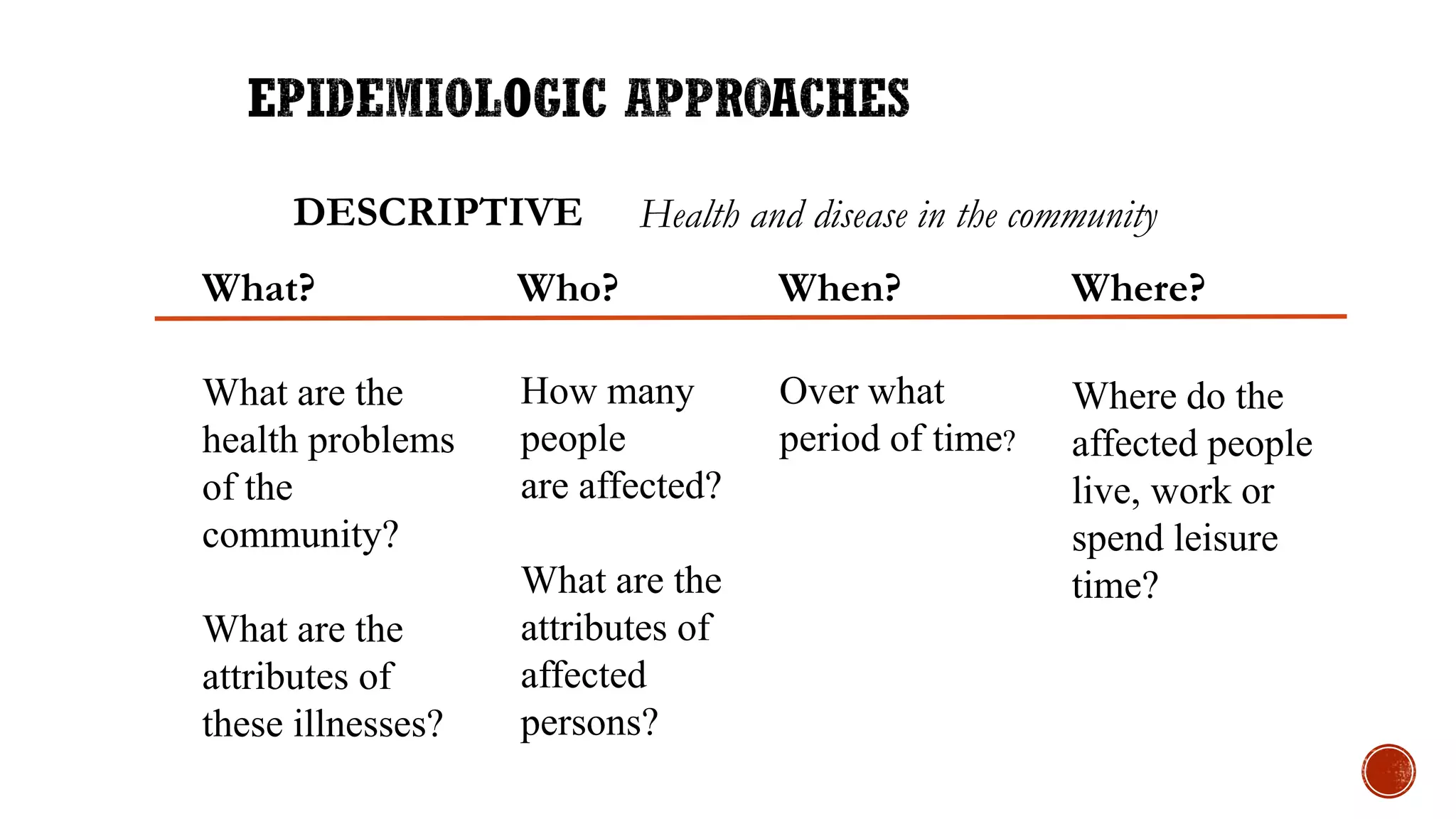
DESCRIPTIVE Health and disease in the community
What? Who? When? Where?
How many
people
are affected?
What are the
attributes of
affected
persons?
Over what
period of time?
Where do the
affected people
live, work or
spend leisure
time?
What are the
health problems
of the
community?
What are the
attributes of
these illnesses?
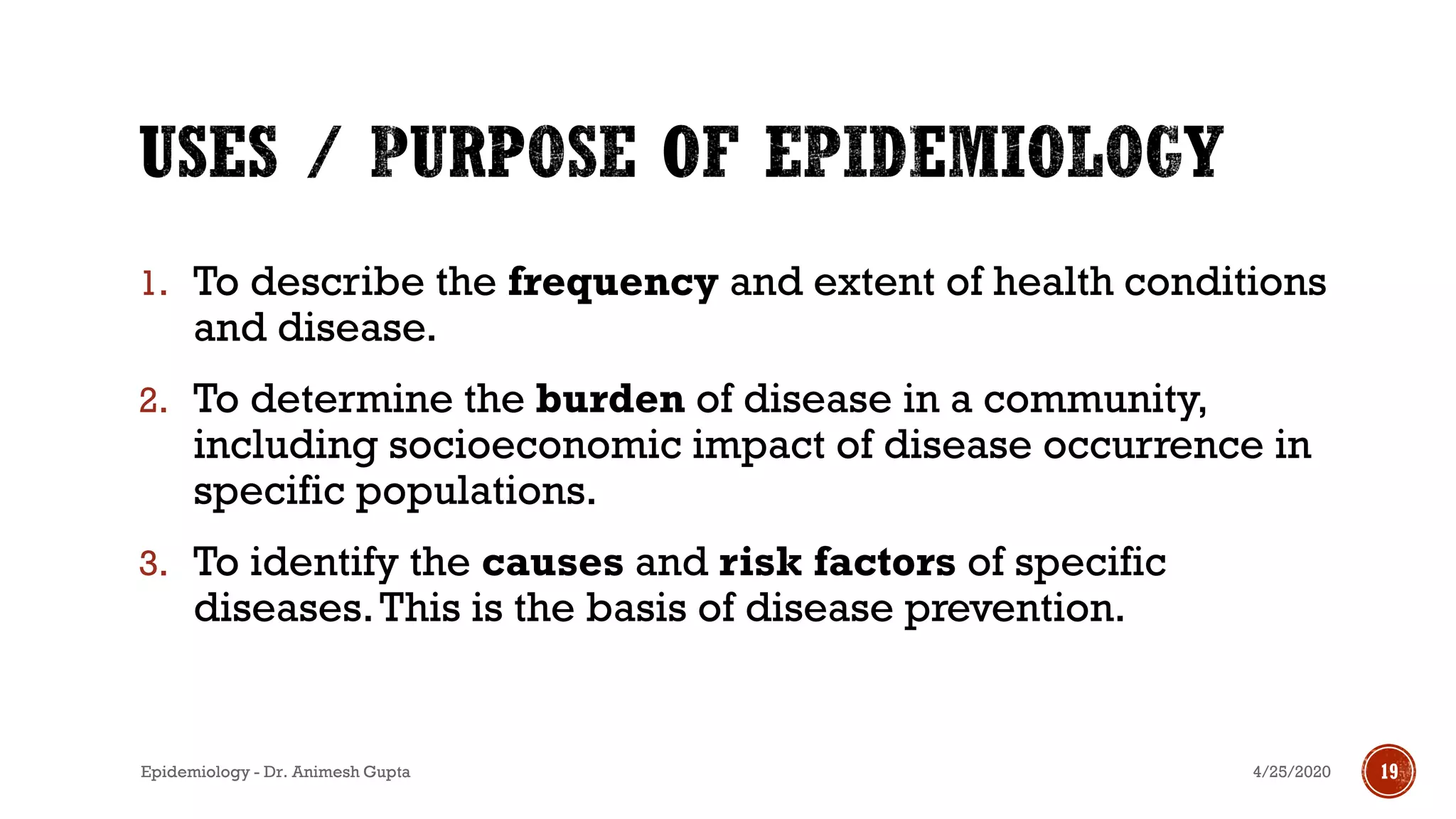
1. To describe the frequency and extent of health conditions
and disease.
2. To determine the burden of disease in a community,
including socioeconomic impact of disease occurrence in
specific populations.
3. To identify the causes and risk factors of specific
diseases.This is the basis of disease prevention.
4/25/2020 19Epidemiology - Dr. Animesh Gupta
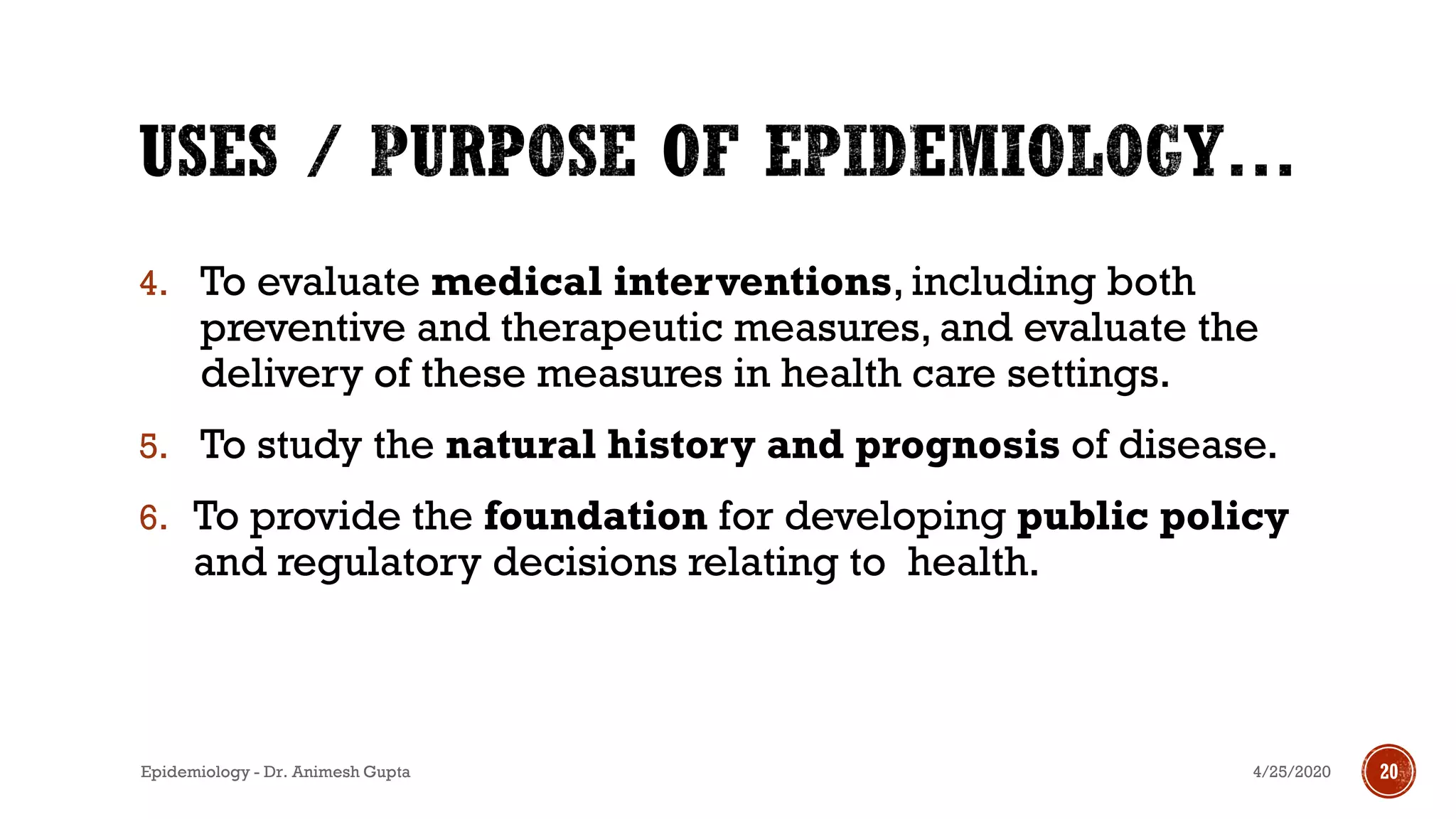
4. To evaluate medical interventions, including both
preventive and therapeutic measures, and evaluate the
delivery of these measures in health care settings.
5. To study the natural history and prognosis of disease.
6. To provide the foundation for developing public policy
and regulatory decisions relating to health.
4/25/2020 20Epidemiology - Dr. Animesh Gupta
THANK YOU

Introduction to Epidemiology

  • 1.
    Dr. Animesh Gupta MBBS,MD,FDM,FAGE AssociateProfessor, Dept. of Community Medicine, NMCH, Sasaram (Bihar) 4/25/2020Epidemiology - Dr. Animesh Gupta 1
  • 2.
    ▪Pessimist: The glassis half empty. ▪Optimist: The glass is half full. ▪Epidemiologist: As compared to what? 2
  • 3.
    EPI DEMO LOGOS Upon,on People, population, man the Study of The study of anything that happens to people “That which befalls man” 3
  • 4.
    Hippocrates(460-370 BC ) ▪Greek physician ▪ “Father of Medicine” ▪ Recognized association of disease with place (geography), climatic conditions, water, eating habits and housing. . 4/25/2020Epidemiology - Dr. Animesh Gupta 4
  • 5.
    ▪Louis Pasteur :Germ theory of disease ▪Robert Koch : 4 postulates to prove an infectious agent causes a particular disease 4/25/2020Epidemiology - Dr. Animesh Gupta 5
  • 6.
    John Snow (1813-1858) ▪“Father of Epidemiology” ▪ 20 yrs before discovery of microscope, conducted studies of cholera out breaks. ▪ Used spot maps to show case distribution. 4/25/2020Epidemiology - Dr. Animesh Gupta 6
  • 7.
  • 8.
    "The study ofthe distribution and determinants of health-related states in specified populations, and the application of this study to control of health problems." 8 *Last, J.M. 1988. A Dictionary of Epidemiology, 2nd ed. 4/25/2020Epidemiology - Dr. Animesh Gupta
  • 9.
    DYNAMIC STUDY OFTHE FREQUENCY DISTRIBUTION DETERMINANTS CONTROL 9 OF HEALTH AND DISEASE IN A POPULATION 4/25/2020Epidemiology - Dr. Animesh Gupta
  • 10.
    ▪Frequency of disease,disability, death.. ▪Expressed as rates & ratios - prevalence, incidence, death rate. ▪Used to make comparisons - Gives clues to etiology. ▪Helps in development of strategies for prevention &control programme. ▪Health related events- health need , demands… 4/25/2020Epidemiology - Dr. Animesh Gupta 10
  • 11.
    ▪Formulation of etiologicalhypothesis ▪“Descriptive epidemiology” ▪Time Place and Person distribution of disease 4/25/2020Epidemiology - Dr. Animesh Gupta 11
  • 12.
    ▪To test etiologicalhypothesis ▪Identify underlying causes (risk factors) ▪“Analytical epidemiology” 4/25/2020Epidemiology - Dr. Animesh Gupta 12
  • 13.
    ▪To describe thedistribution and magnitude of health and disease problems in human populations ▪To identify etiological factors ( risk factors ) in the pathogenesis of disease. ▪To provide the data essential for the planning , implementation and evaluation of services for the prevention ,control and treatment of diseases and to set up priorities among those services. 4/25/2020Epidemiology - Dr. Animesh Gupta 13
  • 14.
    A. Asking questions B.Making comparisons 4/25/2020Epidemiology - Dr. Animesh Gupta 14
  • 15.
    a) What isthe event ? b) What is its magnitude ? c) Where did it happen ? d) When did it happen ? e) Who are affected ? f) Why did it happen ? 4/25/2020Epidemiology - Dr. Animesh Gupta 15
  • 16.
    a) What canbe done to solve this ? b) How can it be prevented ? c) What action can be taken ? d) What resources are required ? e) What difficulties may arise and how to solve them ? 4/25/2020Epidemiology - Dr. Animesh Gupta 16
  • 17.
    a. Groups havingand not having the disease b. Randomization c. Matching d. Standardization 4/25/2020Epidemiology - Dr. Animesh Gupta 17
  • 18.
    DESCRIPTIVE Health anddisease in the community What? Who? When? Where? How many people are affected? What are the attributes of affected persons? Over what period of time? Where do the affected people live, work or spend leisure time? What are the health problems of the community? What are the attributes of these illnesses?
  • 19.
    1. To describethe frequency and extent of health conditions and disease. 2. To determine the burden of disease in a community, including socioeconomic impact of disease occurrence in specific populations. 3. To identify the causes and risk factors of specific diseases.This is the basis of disease prevention. 4/25/2020 19Epidemiology - Dr. Animesh Gupta
  • 20.
    4. To evaluatemedical interventions, including both preventive and therapeutic measures, and evaluate the delivery of these measures in health care settings. 5. To study the natural history and prognosis of disease. 6. To provide the foundation for developing public policy and regulatory decisions relating to health. 4/25/2020 20Epidemiology - Dr. Animesh Gupta
  • 21.