Download as PDF, PPTX

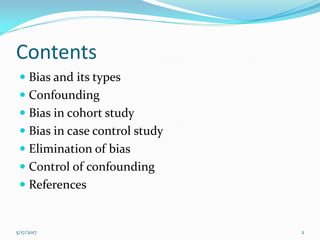
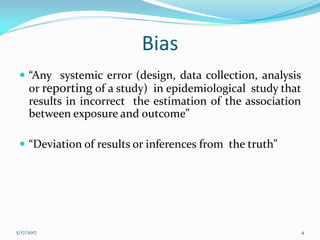
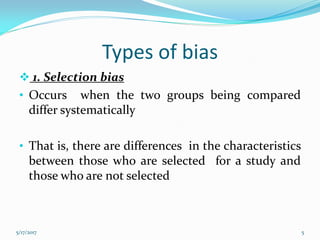
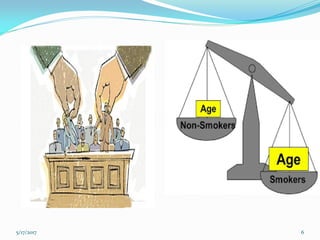
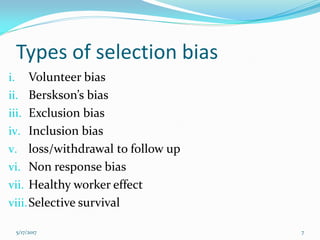

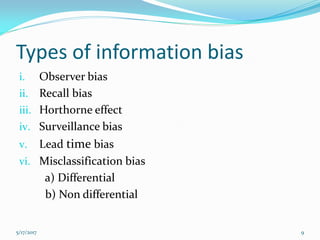
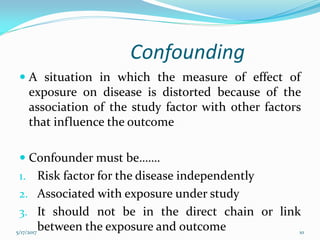
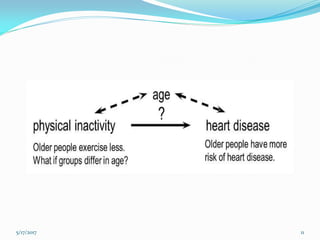
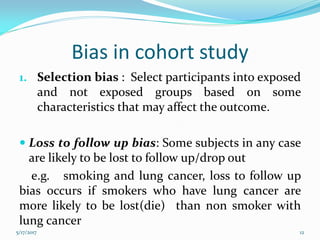
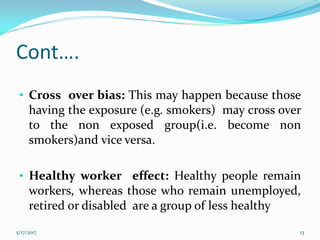
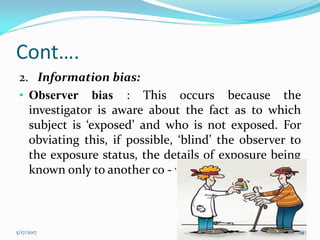
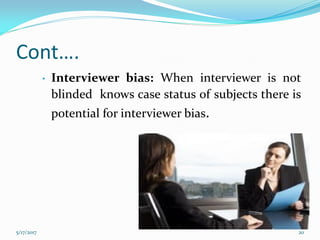
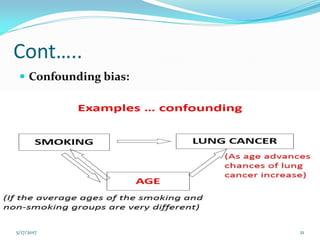
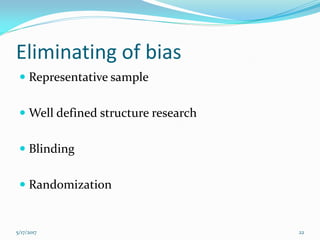
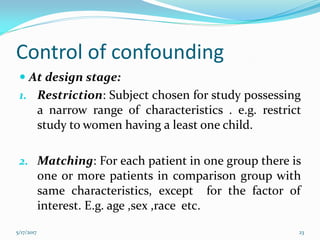
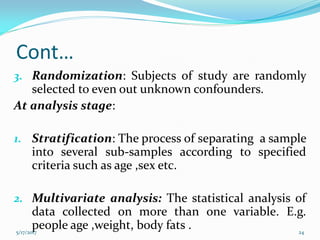


This document discusses bias and confounding in epidemiological studies. It defines bias as systematic errors that lead to incorrect estimations of exposure-outcome associations. Selection bias and information bias are two main types of bias. Confounding occurs when a third variable is associated with both the exposure and outcome. The document then describes biases that can occur in cohort and case-control studies specifically, such as selection bias, information bias, and confounding bias. It concludes with ways to eliminate bias, including using a representative sample, randomization, and blinding, as well as methods to control for confounding like restriction, matching, stratification, and multivariate analysis.


