Introduction to
Educational
Research
Chapter I
Prepared by:
Ms. Huma & Ms. Afia
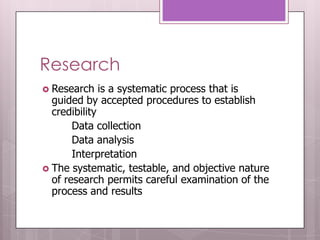
Research
 Research    is a systematic process that is
  guided by accepted procedures to establish
  credibility
       Data collection
       Data analysis
       Interpretation
 The systematic, testable, and objective nature
  of research permits careful examination of the
  process and results
Research
 Itis a process of steps used to collect and
  analyze information in order to increase our
  understanding of a topic or issue.
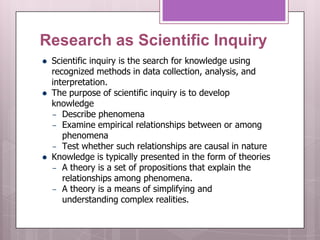
Research as Scientific Inquiry
   Scientific inquiry is the search for knowledge using
    recognized methods in data collection, analysis, and
    interpretation.
   The purpose of scientific inquiry is to develop
    knowledge
    – Describe phenomena
    – Examine empirical relationships between or among
       phenomena
    – Test whether such relationships are causal in nature
   Knowledge is typically presented in the form of theories
    – A theory is a set of propositions that explain the
       relationships among phenomena.
    – A theory is a means of simplifying and
       understanding complex realities.
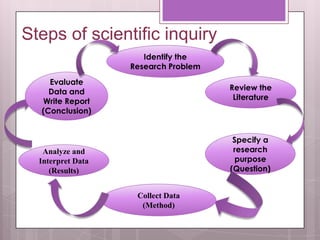
Steps of scientific inquiry
                      Identify the
                   Research Problem
    Evaluate
    Data and                          Review the
  Write Report                         Literature
  (Conclusion)


                                       Specify a
   Analyze and                         research
  Interpret Data                        purpose
     (Results)                        (Question)


                    Collect Data
                     (Method)
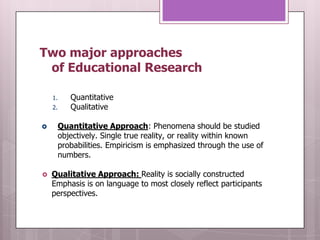
Two major approaches
 of Educational Research

    1.      Quantitative
    2.      Qualitative

        Quantitative Approach: Phenomena should be studied
         objectively. Single true reality, or reality within known
         probabilities. Empiricism is emphasized through the use of
         numbers.

   Qualitative Approach: Reality is socially constructed
    Emphasis is on language to most closely reflect participants
    perspectives.
Quantitative research
 Quantitative  research is an inquiry approach
  useful for describing trends and explaining the
  relationship among variables found in the
  literature. To conduct this inquiry, the
  investigator specifies narrow
  questions, locates or develops instruments
  using statistics. From the results of these
  analyzes, the researcher interprets the data
  using prior predictions and research studies.
  The final report, presented in standard
  format, display researcher objectivity and lack
  of bias.
Qualitative research
   Qualitative research is an inquiry approach useful for
    exploring and understanding a central phenomenon.
    To learn about this phenomenon, the inquirer asks
    participants broad, general questions, collects the
    detailed views of participants in the form of words
    or images, and analyzes the information for
    description and themes. From this data, the
    researcher interprets the meaning of the information
    drawing on personal reflections and past research.
    The structure of the final report is flexible, and it
    displays the researcher’s biases and thoughts.
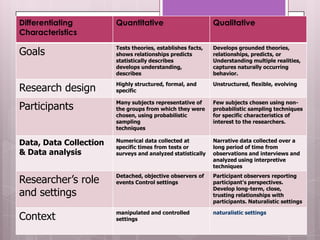
Differentiating         Quantitative                         Qualitative
Characteristics

Goals                   Tests theories, establishes facts,   Develops grounded theories,
                        shows relationships predicts         relationships, predicts, or
                        statistically describes              Understanding multiple realities,
                        develops understanding,              captures naturally occurring
                        describes                            behavior.

Research design         Highly structured, formal, and       Unstructured, flexible, evolving
                        specific


Participants            Many subjects representative of      Few subjects chosen using non-
                        the groups from which they were      probabilistic sampling techniques
                        chosen, using probabilistic          for specific characteristics of
                        sampling                             interest to the researchers.
                        techniques

Data, Data Collection   Numerical data collected at
                        specific times from tests or
                                                             Narrative data collected over a
                                                             long period of time from
& Data analysis         surveys and analyzed statistically   observations and interviews and
                                                             analyzed using interpretive
                                                             techniques

Researcher’s role       Detached, objective observers of     Participant observers reporting
                        events Control settings              participant’s perspectives.

and settings
                                                             Develop long-term, close,
                                                             trusting relationships with
                                                             participants. Naturalistic settings


Context                 manipulated and controlled           naturalistic settings
                        settings
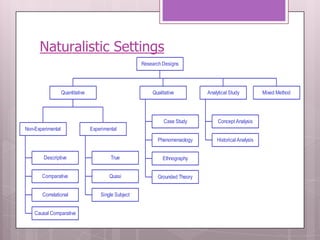
Naturalistic Settings
                                                       Research Designs


                   Quantitative                            Qualitative          Analytical Study          Mixed Method


                                                                Case Study           Concept Analysis
Non-Experimental                  Experimental

                                                              Phenomenaology        Historical Analysis


        Descriptive                        True                 Ethnography


       Comparative                        Quasi               Grounded Theory


       Correlational                  Single Subject


    Causal Comparative
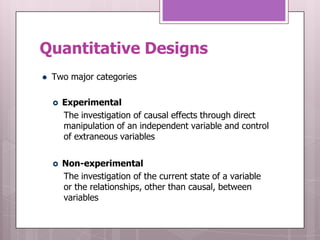
Quantitative Designs
   Two major categories

       Experimental
        The investigation of causal effects through direct
        manipulation of an independent variable and control
        of extraneous variables


       Non-experimental
        The investigation of the current state of a variable
        or the relationships, other than causal, between
        variables
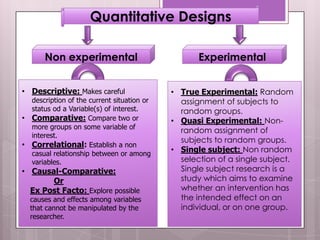
Quantitative Designs

        Non experimental                             Experimental


• Descriptive: Makes careful                  • True Experimental: Random
    description of the current situation or     assignment of subjects to
    status od a Variable(s) of interest.        random groups.
•   Comparative: Compare two or               • Quasi Experimental: Non-
    more groups on some variable of
                                                random assignment of
    interest.
                                                subjects to random groups.
•   Correlational: Establish a non
    casual relationship between or among
                                              • Single subject: Non random
    variables.                                  selection of a single subject.
• Causal-Comparative:                           Single subject research is a
       Or                                       study which aims to examine
  Ex Post Facto: Explore possible               whether an intervention has
    causes and effects among variables          the intended effect on an
    that cannot be manipulated by the           individual, or on one group.
    researcher.
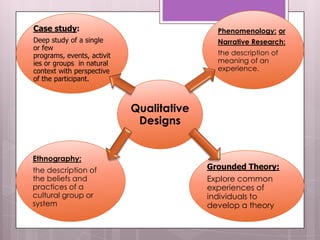
Case study:                                 Phenomenology: or
Deep study of a single                      Narrative Research:
or few
programs, events, activit                   the description of
ies or groups in natural                    meaning of an
context with perspective                    experience.
of the participant.


                            Qualitative
                             Designs


Ethnography:
the description of                        Grounded Theory:
the beliefs and                           Explore common
practices of a                            experiences of
cultural group or                         individuals to
system                                    develop a theory
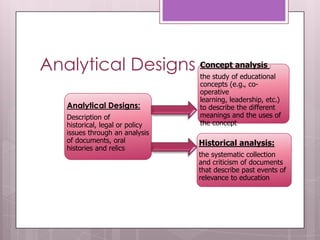
Analytical Designs Concept analysis                      :

                                  the study of educational
                                  concepts (e.g., co-
                                  operative
                                  learning, leadership, etc.)
    Analytical Designs:           to describe the different
    Description of                meanings and the uses of
    historical, legal or policy   the concept
    issues through an analysis
    of documents, oral            Historical analysis:
    histories and relics
                                  the systematic collection
                                  and criticism of documents
                                  that describe past events of
                                  relevance to education
Mixed Method Designs


    The use of quantitative and qualitative designs and methods
    within a single study


      Allows the researcher to better match the approach for
      gathering and analyzing data to answer the research
      questions


    Relative emphasis given to any particular method varies
    widely
Thank You…

Introduction to educational research

  • 1.
  • 2.
    Research  Research is a systematic process that is guided by accepted procedures to establish credibility Data collection Data analysis Interpretation  The systematic, testable, and objective nature of research permits careful examination of the process and results
  • 3.
    Research  Itis aprocess of steps used to collect and analyze information in order to increase our understanding of a topic or issue.
  • 4.
    Research as ScientificInquiry  Scientific inquiry is the search for knowledge using recognized methods in data collection, analysis, and interpretation.  The purpose of scientific inquiry is to develop knowledge – Describe phenomena – Examine empirical relationships between or among phenomena – Test whether such relationships are causal in nature  Knowledge is typically presented in the form of theories – A theory is a set of propositions that explain the relationships among phenomena. – A theory is a means of simplifying and understanding complex realities.
  • 5.
    Steps of scientificinquiry Identify the Research Problem Evaluate Data and Review the Write Report Literature (Conclusion) Specify a Analyze and research Interpret Data purpose (Results) (Question) Collect Data (Method)
  • 6.
    Two major approaches of Educational Research 1. Quantitative 2. Qualitative  Quantitative Approach: Phenomena should be studied objectively. Single true reality, or reality within known probabilities. Empiricism is emphasized through the use of numbers.  Qualitative Approach: Reality is socially constructed Emphasis is on language to most closely reflect participants perspectives.
  • 7.
    Quantitative research  Quantitative research is an inquiry approach useful for describing trends and explaining the relationship among variables found in the literature. To conduct this inquiry, the investigator specifies narrow questions, locates or develops instruments using statistics. From the results of these analyzes, the researcher interprets the data using prior predictions and research studies. The final report, presented in standard format, display researcher objectivity and lack of bias.
  • 8.
    Qualitative research  Qualitative research is an inquiry approach useful for exploring and understanding a central phenomenon. To learn about this phenomenon, the inquirer asks participants broad, general questions, collects the detailed views of participants in the form of words or images, and analyzes the information for description and themes. From this data, the researcher interprets the meaning of the information drawing on personal reflections and past research. The structure of the final report is flexible, and it displays the researcher’s biases and thoughts.
  • 9.
    Differentiating Quantitative Qualitative Characteristics Goals Tests theories, establishes facts, Develops grounded theories, shows relationships predicts relationships, predicts, or statistically describes Understanding multiple realities, develops understanding, captures naturally occurring describes behavior. Research design Highly structured, formal, and Unstructured, flexible, evolving specific Participants Many subjects representative of Few subjects chosen using non- the groups from which they were probabilistic sampling techniques chosen, using probabilistic for specific characteristics of sampling interest to the researchers. techniques Data, Data Collection Numerical data collected at specific times from tests or Narrative data collected over a long period of time from & Data analysis surveys and analyzed statistically observations and interviews and analyzed using interpretive techniques Researcher’s role Detached, objective observers of Participant observers reporting events Control settings participant’s perspectives. and settings Develop long-term, close, trusting relationships with participants. Naturalistic settings Context manipulated and controlled naturalistic settings settings
  • 10.
    Naturalistic Settings Research Designs Quantitative Qualitative Analytical Study Mixed Method Case Study Concept Analysis Non-Experimental Experimental Phenomenaology Historical Analysis Descriptive True Ethnography Comparative Quasi Grounded Theory Correlational Single Subject Causal Comparative
  • 11.
    Quantitative Designs  Two major categories  Experimental The investigation of causal effects through direct manipulation of an independent variable and control of extraneous variables  Non-experimental The investigation of the current state of a variable or the relationships, other than causal, between variables
  • 12.
    Quantitative Designs Non experimental Experimental • Descriptive: Makes careful • True Experimental: Random description of the current situation or assignment of subjects to status od a Variable(s) of interest. random groups. • Comparative: Compare two or • Quasi Experimental: Non- more groups on some variable of random assignment of interest. subjects to random groups. • Correlational: Establish a non casual relationship between or among • Single subject: Non random variables. selection of a single subject. • Causal-Comparative: Single subject research is a Or study which aims to examine Ex Post Facto: Explore possible whether an intervention has causes and effects among variables the intended effect on an that cannot be manipulated by the individual, or on one group. researcher.
  • 13.
    Case study: Phenomenology: or Deep study of a single Narrative Research: or few programs, events, activit the description of ies or groups in natural meaning of an context with perspective experience. of the participant. Qualitative Designs Ethnography: the description of Grounded Theory: the beliefs and Explore common practices of a experiences of cultural group or individuals to system develop a theory
  • 14.
    Analytical Designs Conceptanalysis : the study of educational concepts (e.g., co- operative learning, leadership, etc.) Analytical Designs: to describe the different Description of meanings and the uses of historical, legal or policy the concept issues through an analysis of documents, oral Historical analysis: histories and relics the systematic collection and criticism of documents that describe past events of relevance to education
  • 15.
    Mixed Method Designs The use of quantitative and qualitative designs and methods within a single study Allows the researcher to better match the approach for gathering and analyzing data to answer the research questions Relative emphasis given to any particular method varies widely
  • 16.