HANSABA COLLEGE OF
ENGINEERING & TECHNOLOGY, SIDHPUR (098)
Guided by:
Prof. Mehul Chaudhary
Head of Dept.:
Prof. Rahul Rathod
Presented by:
1) Patel Suhag B. (130980119075)
2) Patel Tarang (130980119076)
3) Patel Utsav J. (130980119077)
4) Prajapati Ashvin M. (130980119079)
Introduction
 The Angular Measurements are taken using an instrument
known as compass.
 Compass Surveying may be defined as the branch of surveying
in which the position of an object is determined by Angular
Measurements.
 Linear Measurements in a traverse are measured using a chain
or a tape.
Traverse
Traverse is a geometric figure consisting of series of
connected lines.
It has two types: (1) Open traverse
(2) Closed traverse
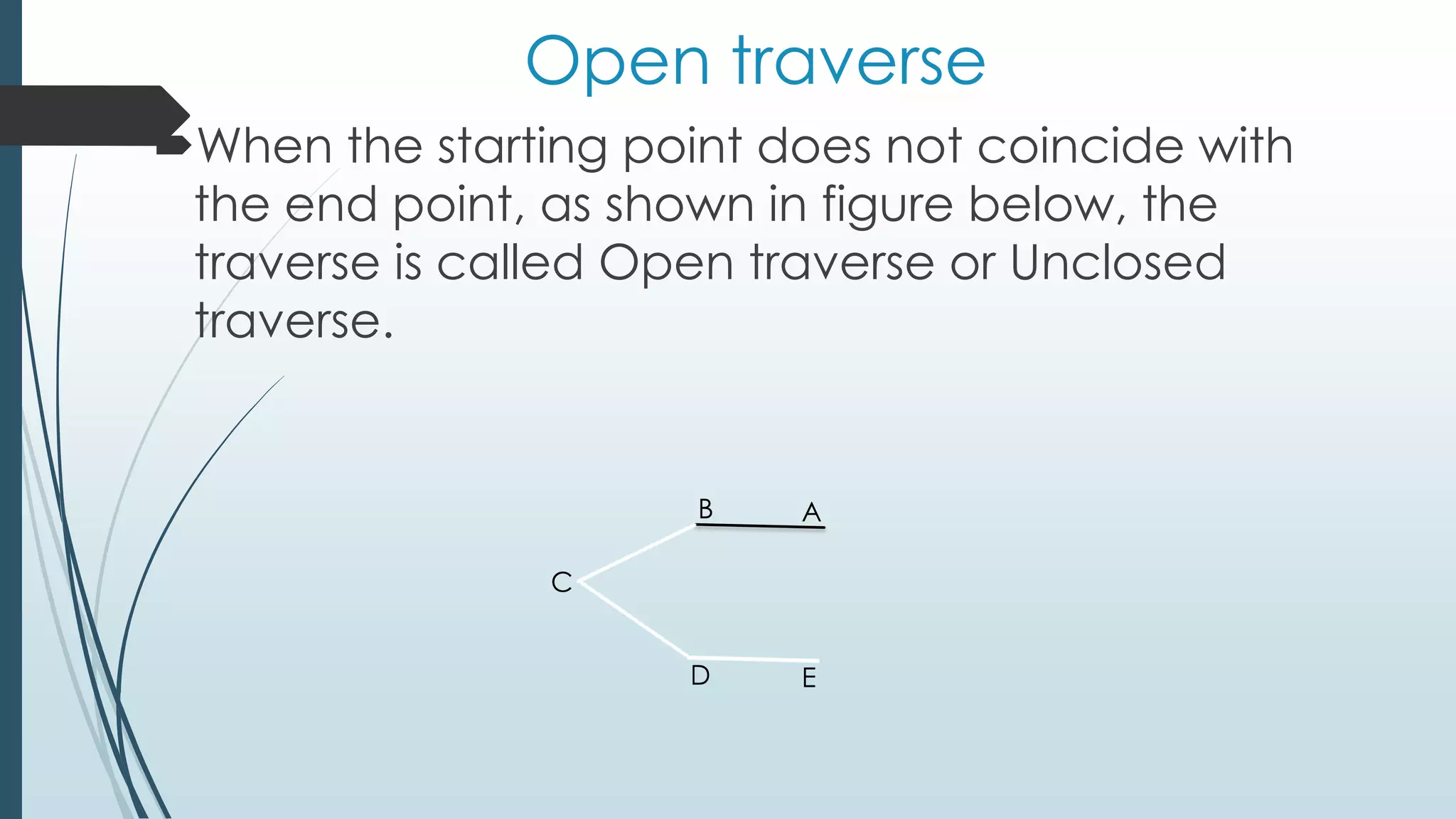
Open traverse
When the starting point does not coincide with
the end point, as shown in figure below, the
traverse is called Open traverse or Unclosed
traverse.
AB
C
D E
Closed Traverse
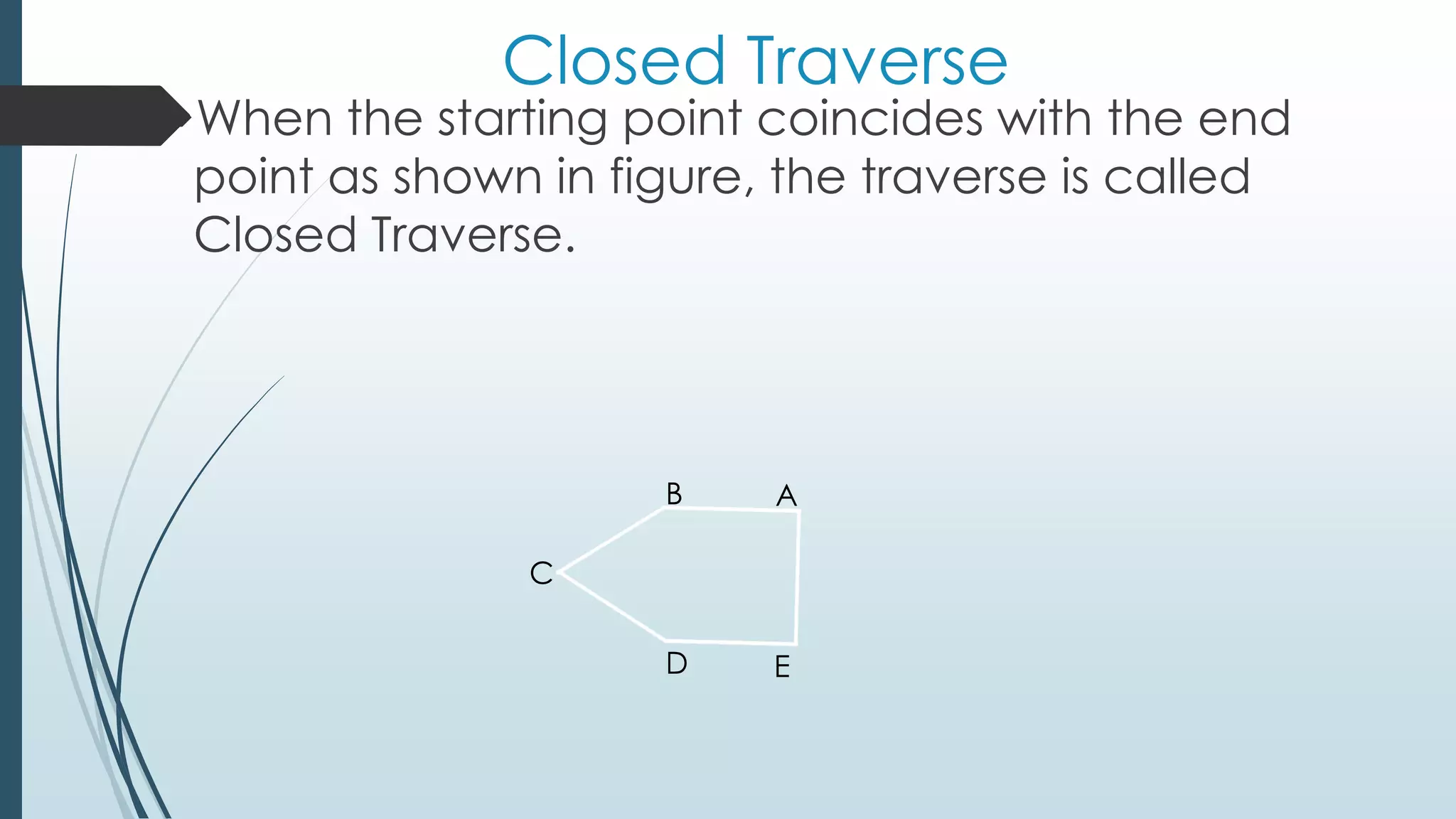
When the starting point coincides with the end
point as shown in figure, the traverse is called
Closed Traverse.
AB
C
D E
Methods of traversing
I. Chain traversing or Chain angle method:- In this method the
entire work is done by chain or tape. Angles are fixed by
measuring tie lines. Such angles are known as chain angles.
II. Loose or free needle method:- In this method, the angular
measurement is taken using a compass or a theodolite.
Bearing of each line of traverse is taken with reference to
magnetic meridian.
III. Fast needle method:- In this method a theodolite is used to
determine bearing of different lines of the traverse.
IV. Angular measurement method:- In this method, a theodolite is
used to measure either included or deflection angles
between successive lines of the traverse.
Instruments for measurements of angles
 Following instruments are commonly used for measurement of angle:
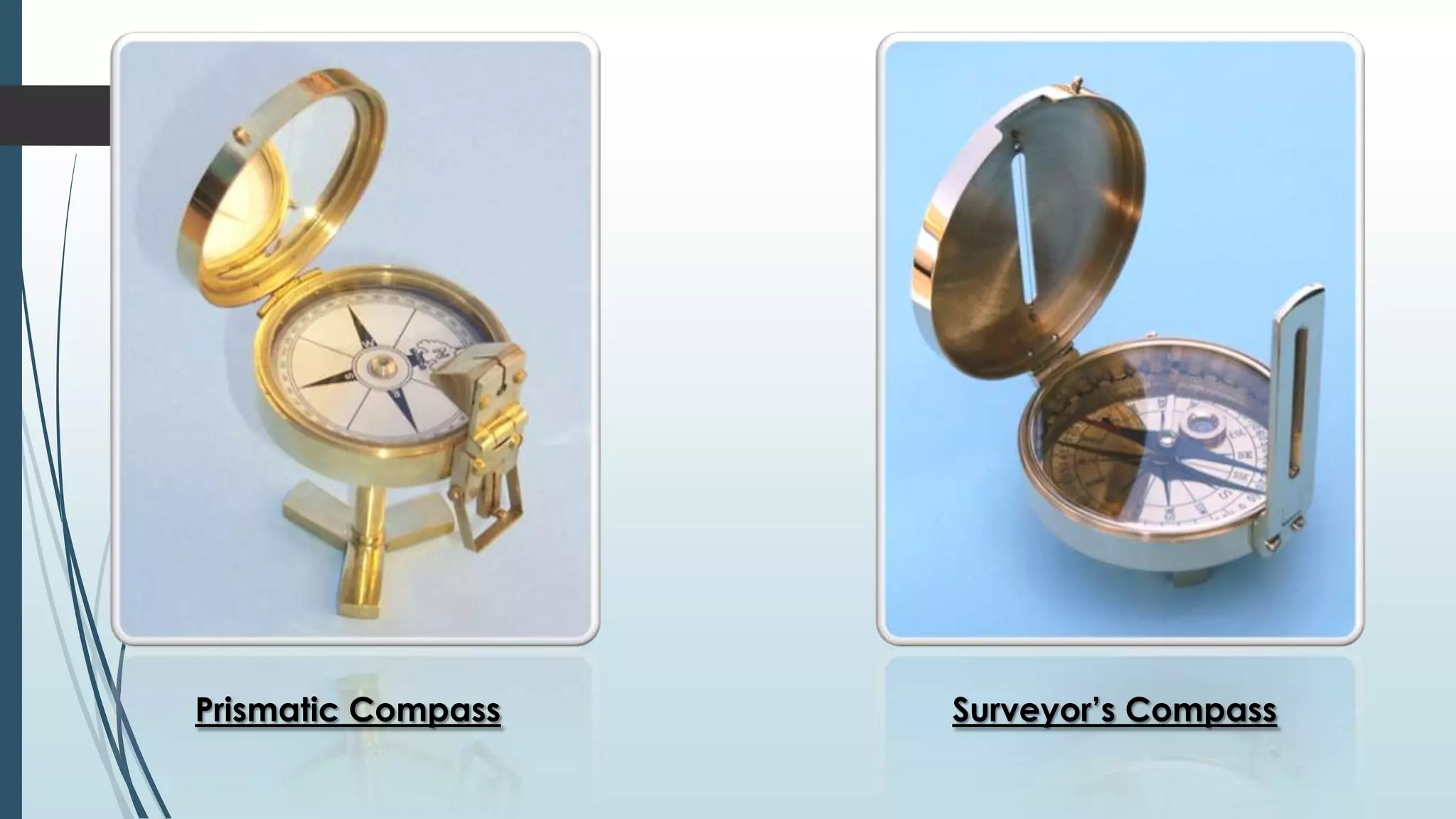
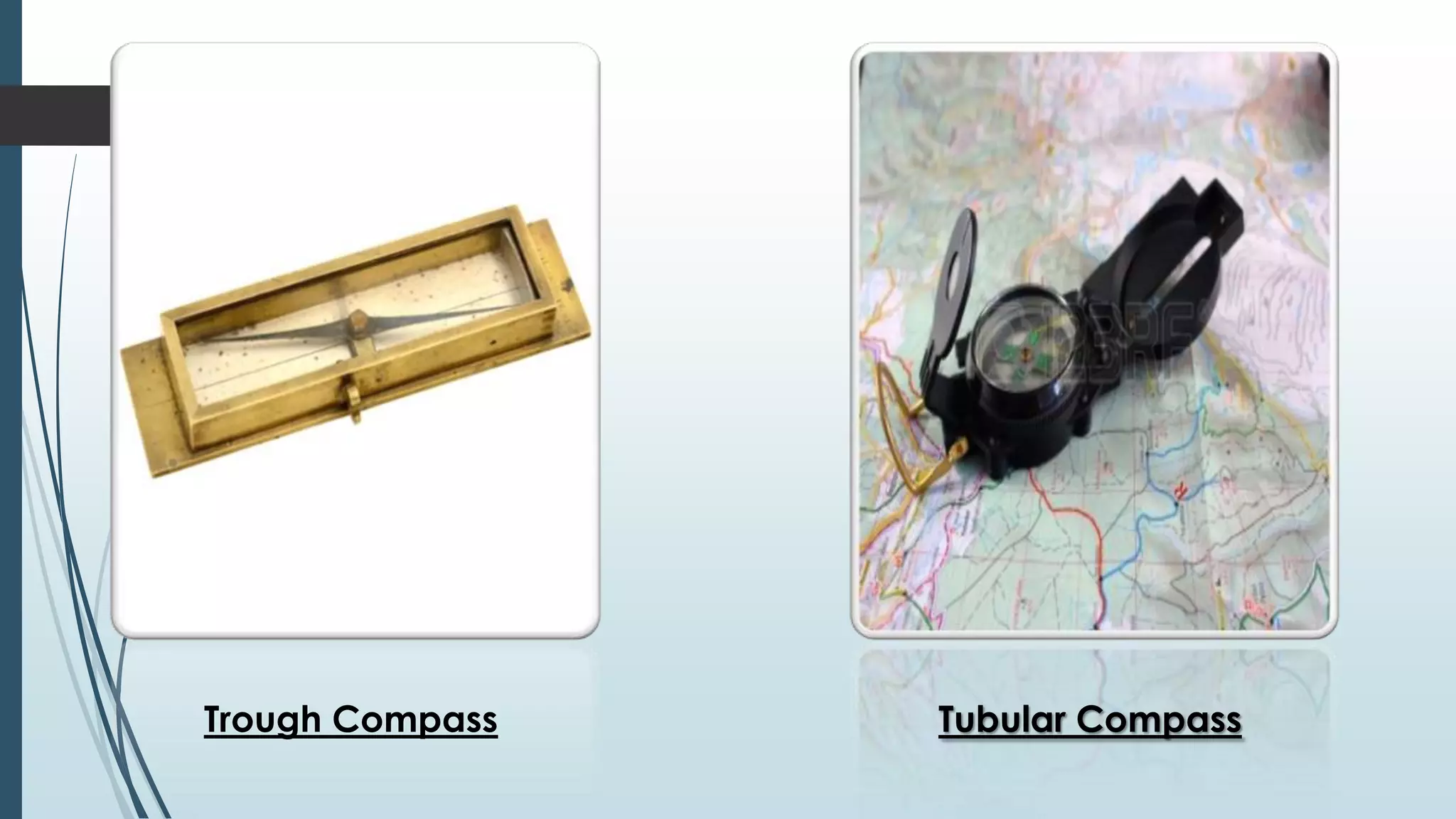
1) Compass:
a) Prismatic compass
b) Surveyor’s compass
c) Trough compass
d) Tubular compass
2) Theodolite
3) Sextant
 A compass essentially consists of:
1) A magnetic needle
2) A graduated circle
Prismatic Compass Surveyor’s Compass
Tubular CompassTrough Compass
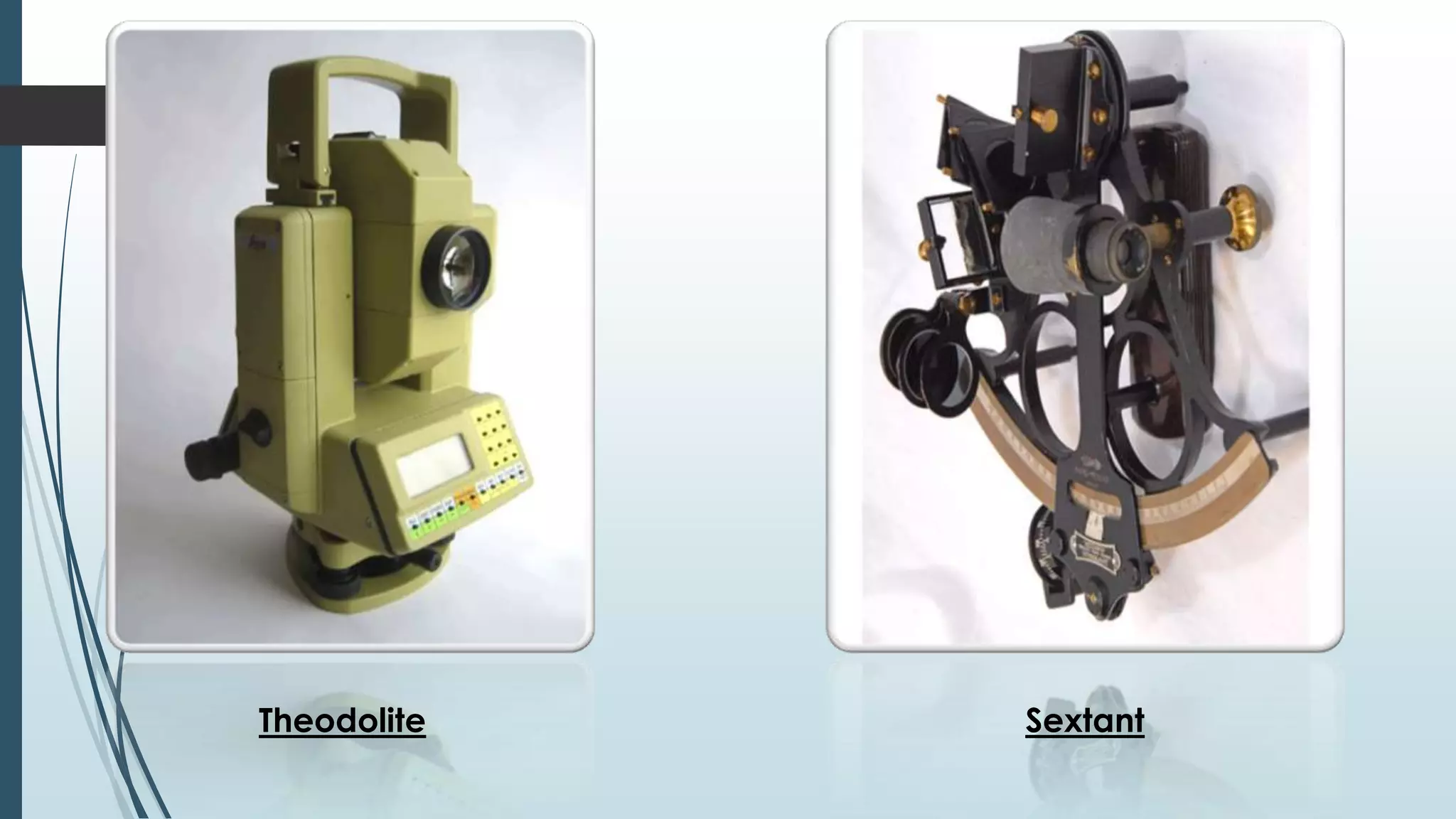
Theodolite Sextant
THANK YOU

Introduction to Angular Measurements

  • 1.
    HANSABA COLLEGE OF ENGINEERING& TECHNOLOGY, SIDHPUR (098) Guided by: Prof. Mehul Chaudhary Head of Dept.: Prof. Rahul Rathod Presented by: 1) Patel Suhag B. (130980119075) 2) Patel Tarang (130980119076) 3) Patel Utsav J. (130980119077) 4) Prajapati Ashvin M. (130980119079)
  • 2.
    Introduction  The AngularMeasurements are taken using an instrument known as compass.  Compass Surveying may be defined as the branch of surveying in which the position of an object is determined by Angular Measurements.  Linear Measurements in a traverse are measured using a chain or a tape.
  • 3.
    Traverse Traverse is ageometric figure consisting of series of connected lines. It has two types: (1) Open traverse (2) Closed traverse
  • 4.
    Open traverse When thestarting point does not coincide with the end point, as shown in figure below, the traverse is called Open traverse or Unclosed traverse. AB C D E
  • 5.
    Closed Traverse When thestarting point coincides with the end point as shown in figure, the traverse is called Closed Traverse. AB C D E
  • 6.
    Methods of traversing I.Chain traversing or Chain angle method:- In this method the entire work is done by chain or tape. Angles are fixed by measuring tie lines. Such angles are known as chain angles. II. Loose or free needle method:- In this method, the angular measurement is taken using a compass or a theodolite. Bearing of each line of traverse is taken with reference to magnetic meridian. III. Fast needle method:- In this method a theodolite is used to determine bearing of different lines of the traverse. IV. Angular measurement method:- In this method, a theodolite is used to measure either included or deflection angles between successive lines of the traverse.
  • 7.
    Instruments for measurementsof angles  Following instruments are commonly used for measurement of angle: 1) Compass: a) Prismatic compass b) Surveyor’s compass c) Trough compass d) Tubular compass 2) Theodolite 3) Sextant  A compass essentially consists of: 1) A magnetic needle 2) A graduated circle
  • 8.
  • 9.
  • 10.
  • 11.