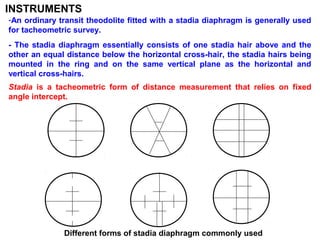
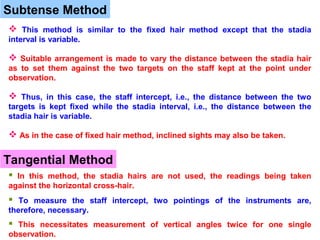
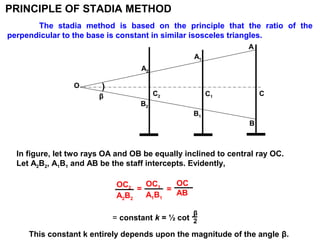
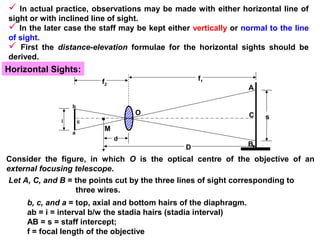
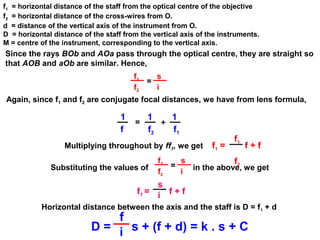
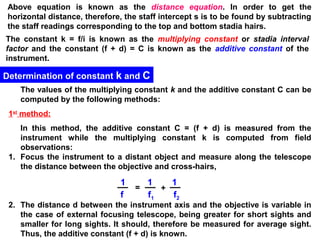
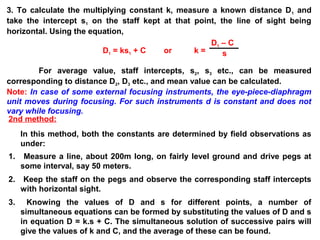
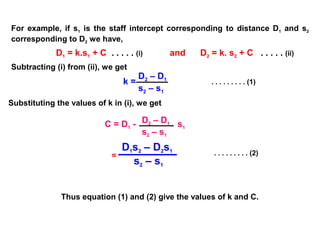
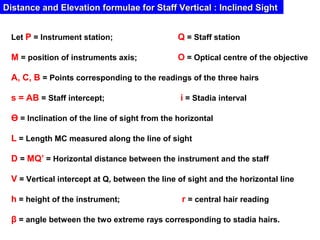
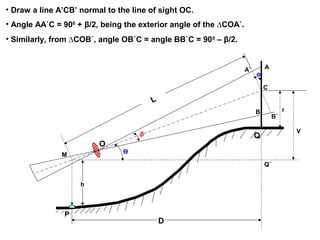
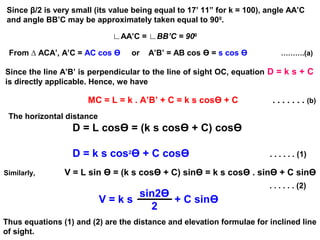
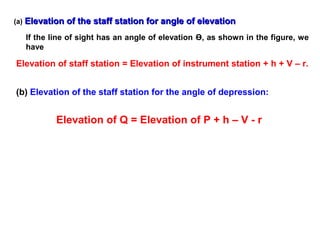
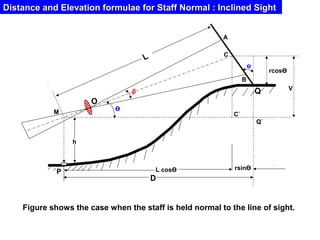
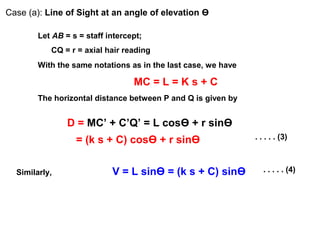
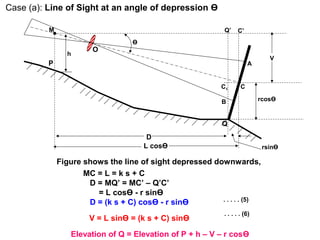
Tacheometric surveying is a method of rapidly determining horizontal and vertical positions of points using optical measurements rather than traditional tape or chain measurements. A tacheometer, which is a transit theodolite fitted with a stadia diaphragm, is used to measure the horizontal and vertical angles to a stadia rod or staff held at survey points. Formulas involving the stadia interval, staff intercept readings, and calculated constants are used to determine horizontal distances and elevations from the instrument to points. Measurements can be taken with horizontal lines of sight or inclined lines of sight when the staff is held vertically or normal to the line of sight.


![3314493 [Autosaved].ppts survey methods@](https://cdn.slidesharecdn.com/ss_thumbnails/3314493autosaved-250203063339-98d1f88d-thumbnail.jpg?width=640&height=640&fit=bounds)


