Organizational Change
Myths and Patterns for
Evangelists
Linda Rising
www.lindarising.org
linda@lindarising.org
@RisingLinda
Why patterns?
Giving a name to a recurring
problem with a known solution
means the names of related
patterns can be used to have a
conversation about the problems
and solutions.
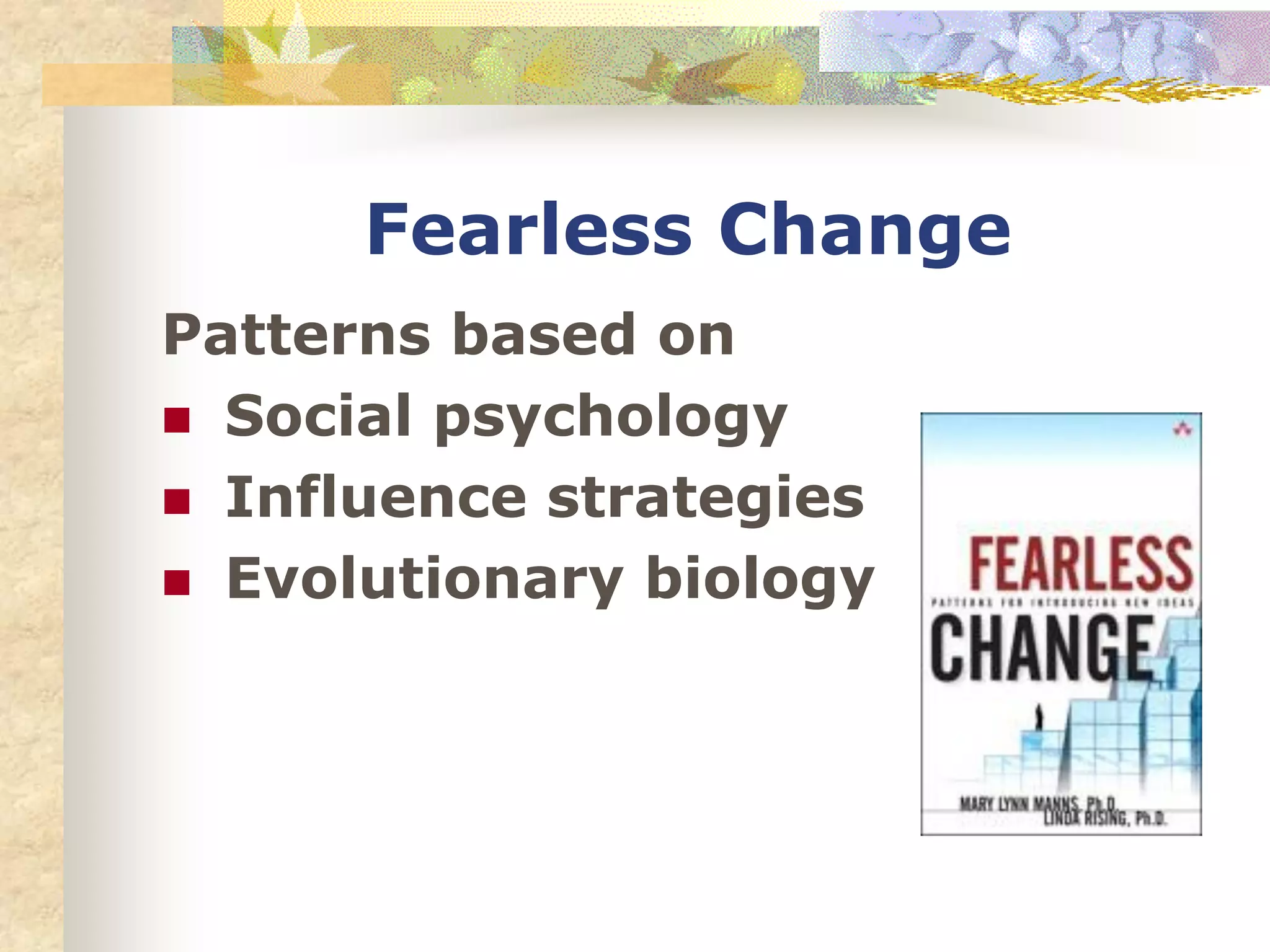
Fearless Change
Patterns based on
 Social psychology
 Influence strategies
 Evolutionary biology
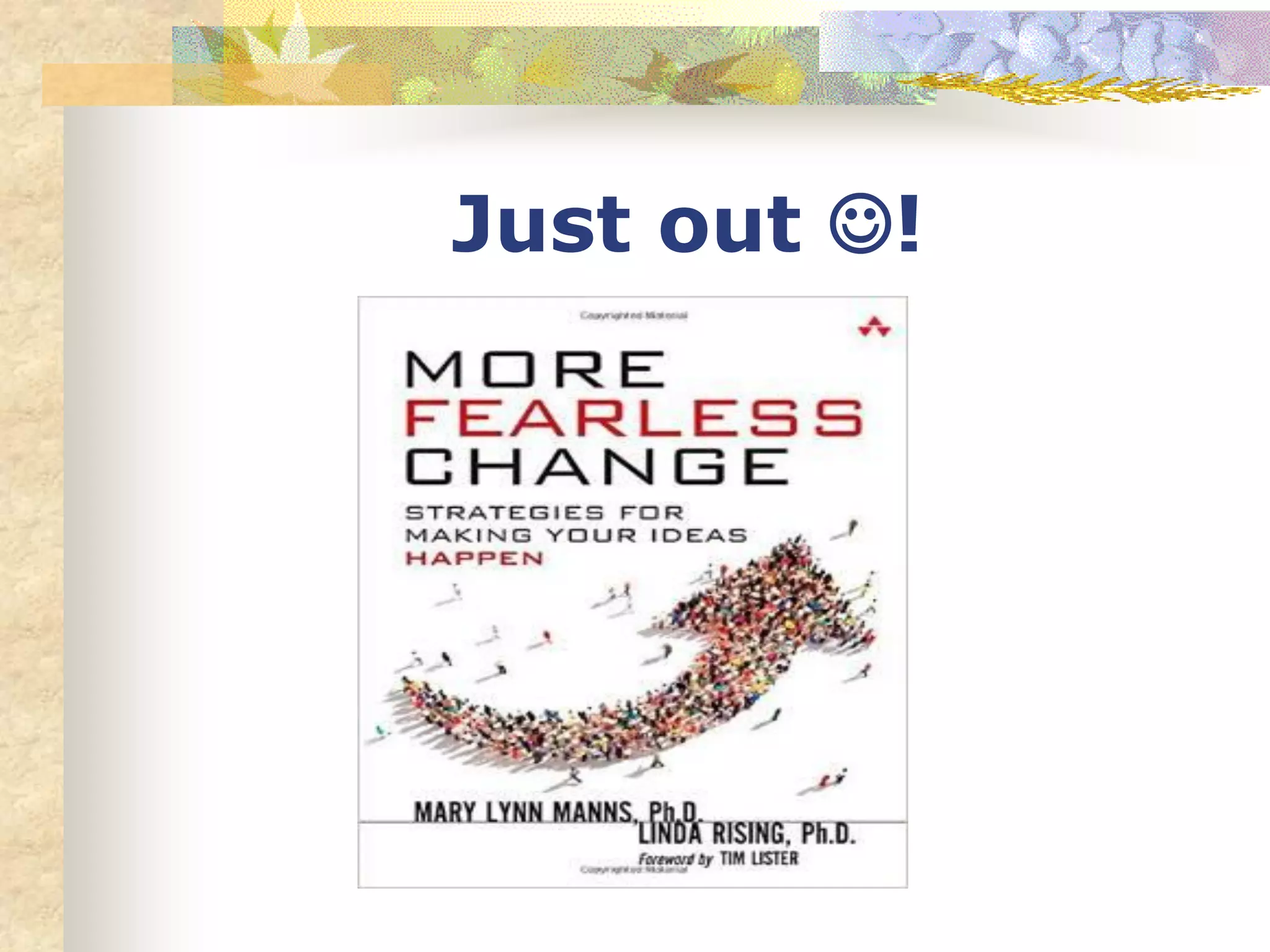
Just out !
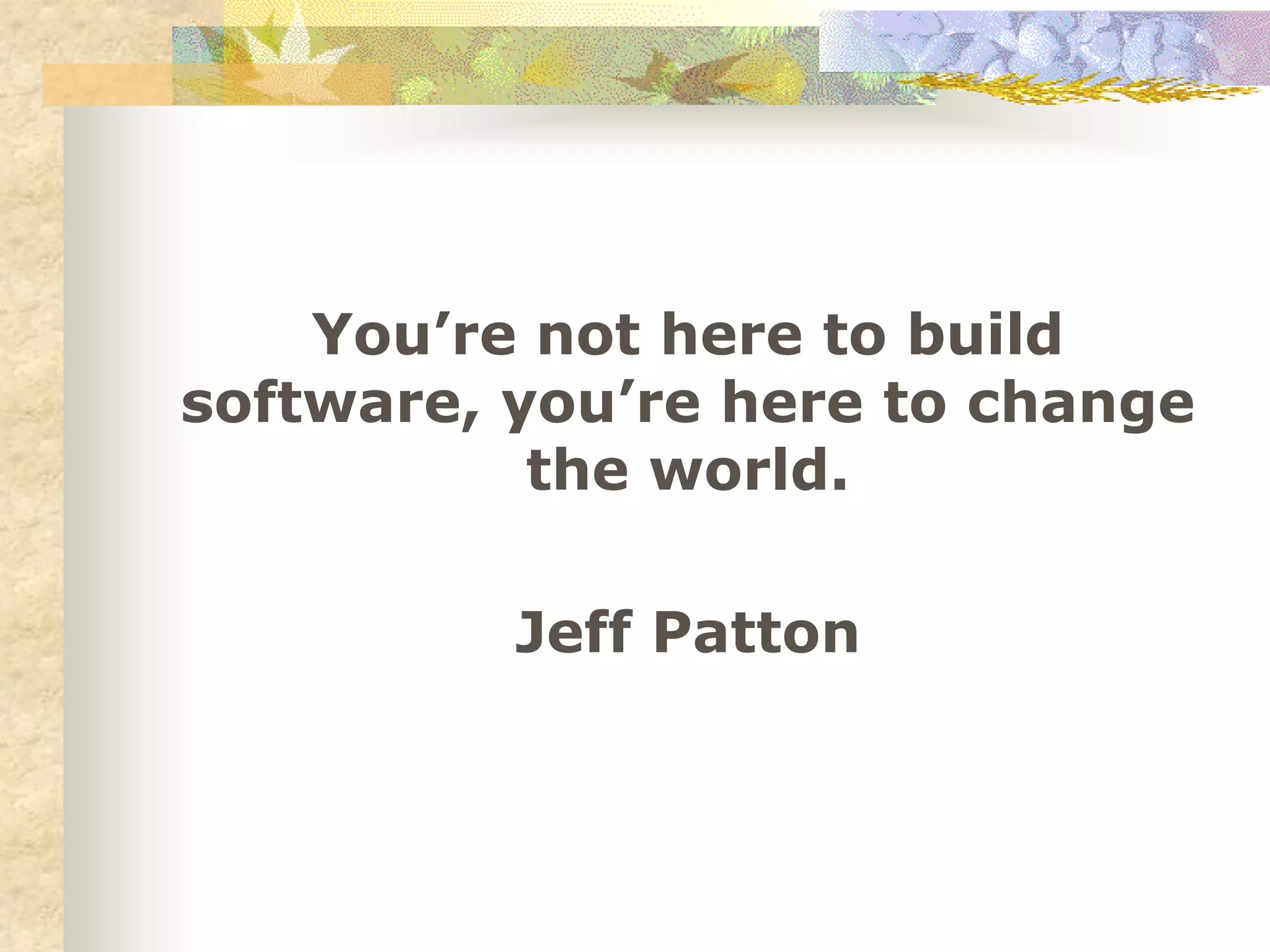
You’re not here to build
software, you’re here to change
the world.
Jeff Patton
Myth #1:
Smart people are
rational.
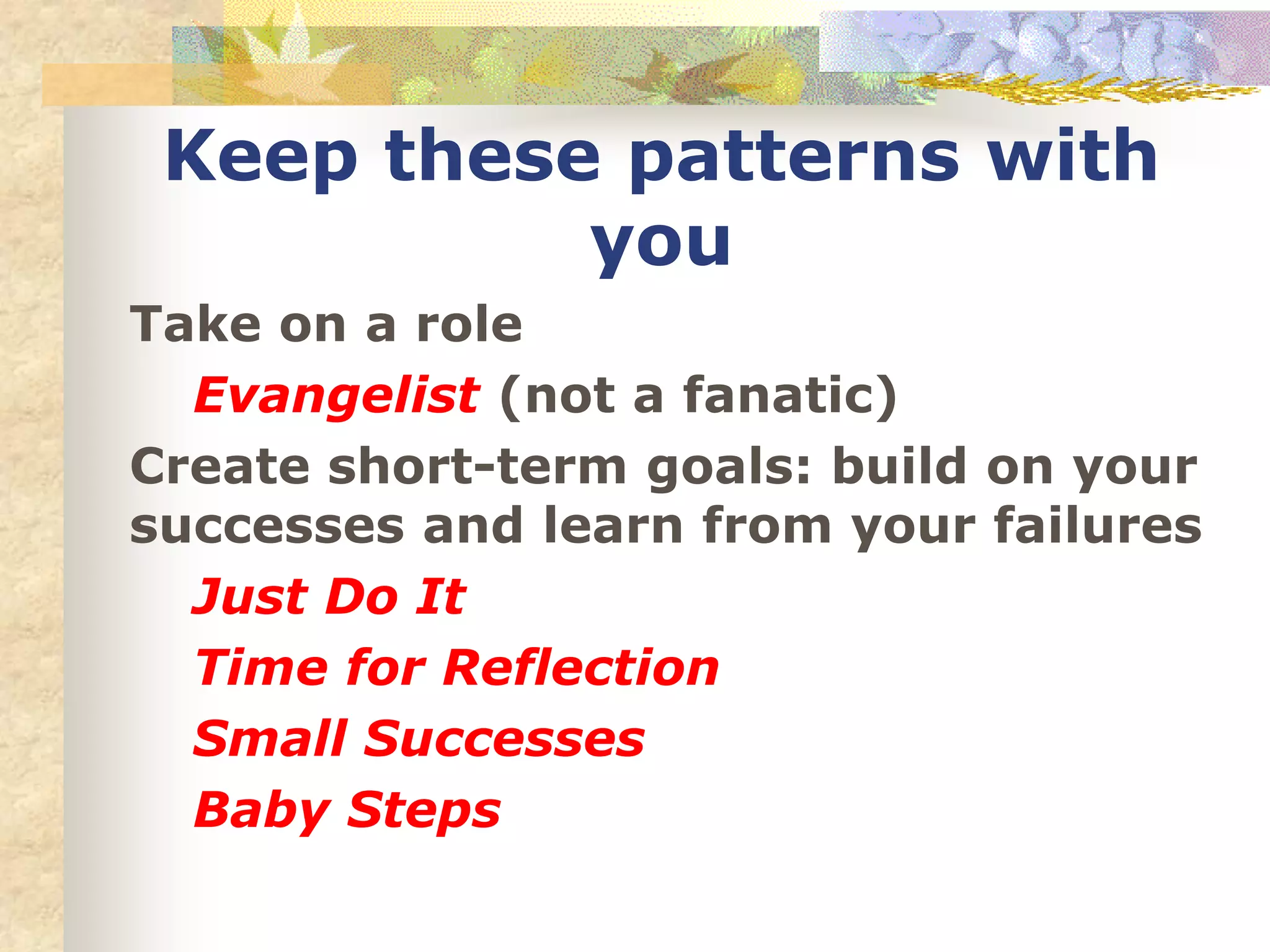
Keep these patterns with
you
Take on a role
Evangelist (not a fanatic)
Create short-term goals: build on your
successes and learn from your failures
Just Do It
Time for Reflection
Small Successes
Baby Steps
Myth #2:
Good always triumphs
over evil. (Just World
Fallacy, one of our
many cognitive biases.)
Do Food: A most under-
appreciated pattern but
one of my favorites !
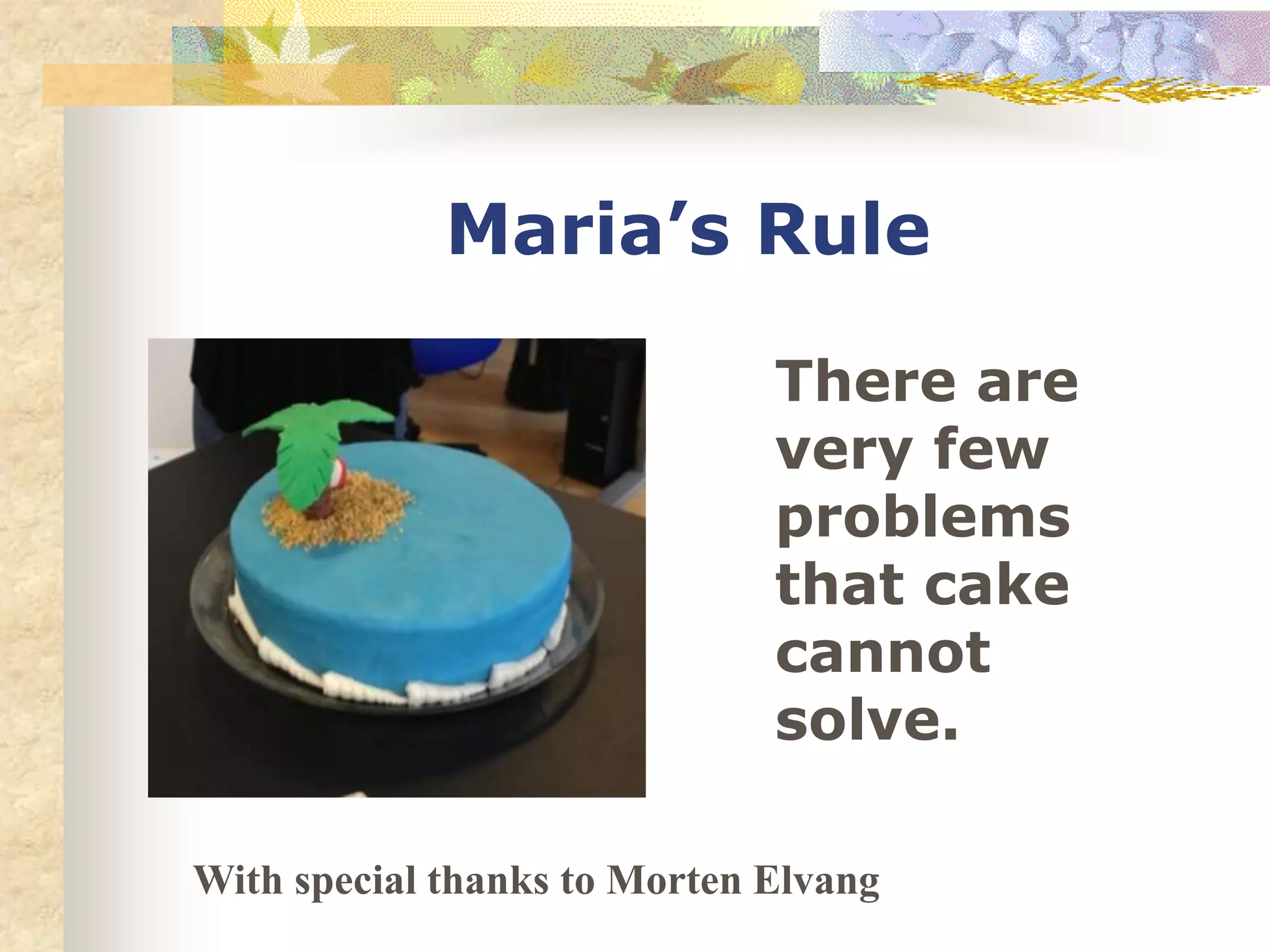
Maria’s Rule
There are
very few
problems
that cake
cannot
solve.
With special thanks to Morten Elvang
Myth #3: If I just had
enough power I could
make people change.
Threat, firing, killing
are very effective but
only get compliance.
You want commitment.
You can buy a person's hand, but
you can't buy his heart. His heart is
where his enthusiasm, his loyalty is.
You can buy his back, but you can't
buy his brain. That's where his
creativity is, his ingenuity, his
resourcefulness.
Stephen R. Covey
The 7 Habits of Highly Effective
People
Personal Touch: Each
person is asking, “What’s
in it for me?”
You must address a
genuine user need. Data
does not equal empathy.
Jeff Patton
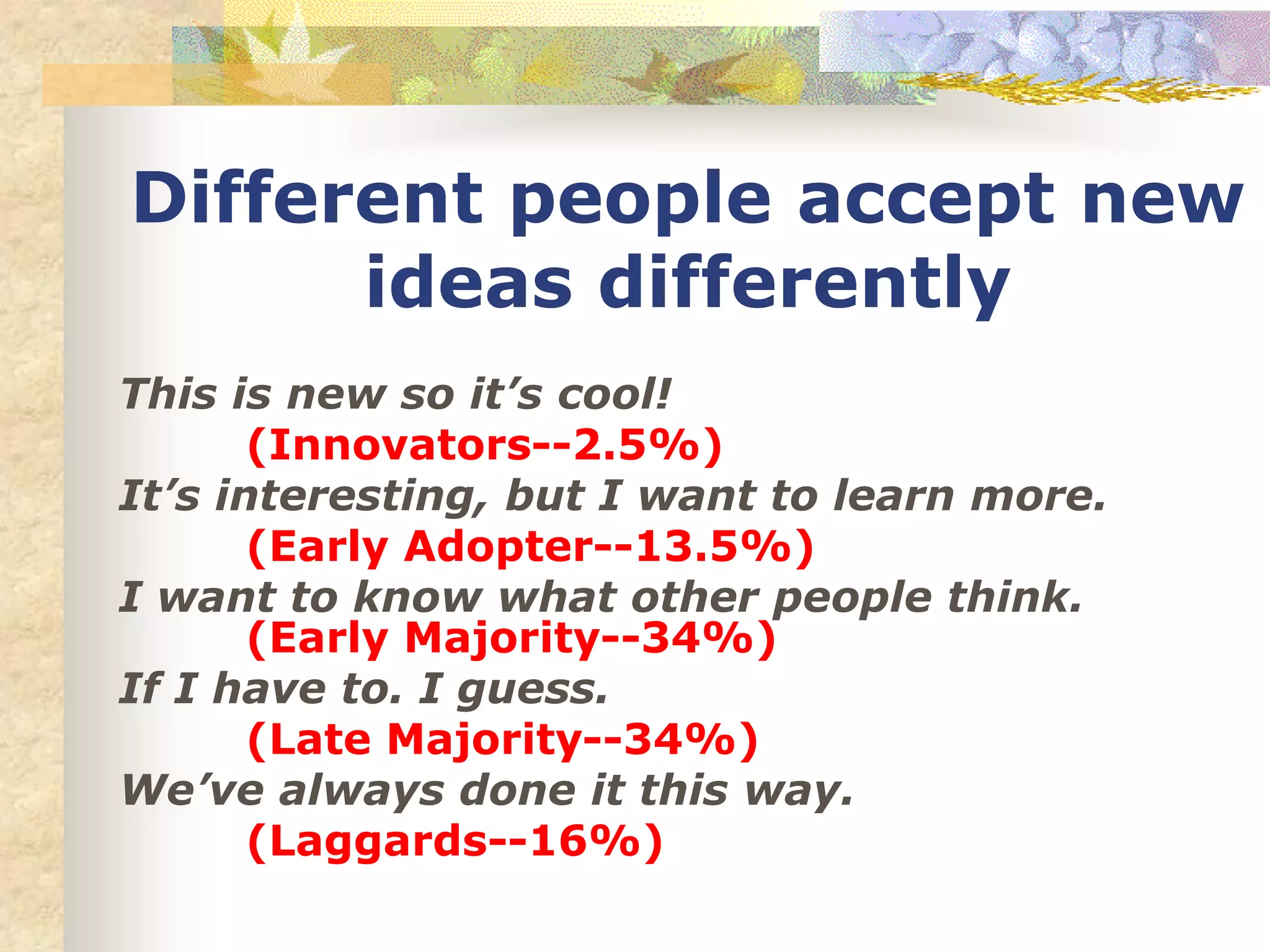
Different people accept new
ideas differently
This is new so it’s cool!
(Innovators--2.5%)
It’s interesting, but I want to learn more.
(Early Adopter--13.5%)
I want to know what other people think.
(Early Majority--34%)
If I have to. I guess.
(Late Majority--34%)
We’ve always done it this way.
(Laggards--16%)
Caveats about adoption curve
 These are roles not people
 There is a correlation with age, both for
individuals and organizations
 People can change. That is your job to
encourage movement “up” the curve.
 Imagine what it would be like if
everyone were an Innovator !
Myth #4: Skeptics,
cynics, resistors—THOSE
people, well, they must
be BAD or STUPID or
BOTH!! Ignore them!!
Fear Less: Listen, really
listen, and learn all you
can. Respect and build
on the resistance.
Seek first to understand,
then to be understood.
Stephen R. Covey
The 7 Habits of Highly
Effective People
Champion Skeptic:
Encourage a resistor to
play the important role of
“Devil’s Advocate.” Treat
this person as a valued
partner in the change
effort.
Myth #5:
You’re a smart person,
so you don’t need help
from others. After all,
it’s your idea!
Ask for Help: The idea is
yours and you believe in
it, but the change must
NOT be “all about you.”
Sincere Appreciation:
Recognize the
contributions of others. A
powerful influencer!
Power Thanks
 Sincere
 Timely
 Detailed
 Describe impact
Grateful people:
 Have more energy and optimism
 Are more resilient in the face of
stress
 Have better health
 Suffer less depression
 Are more compassionate, more
likely to help others, less
materialistic, and more satisfied
with life.
There are other patterns
in Fearless Change to help
you introduce new ideas.
This is just a start!
Thanks!

Fearless Change - Myths and Patterns of Organizational Change - Linda Rising

  • 1.
    Organizational Change Myths andPatterns for Evangelists Linda Rising www.lindarising.org linda@lindarising.org @RisingLinda
  • 2.
    Why patterns? Giving aname to a recurring problem with a known solution means the names of related patterns can be used to have a conversation about the problems and solutions.
  • 3.
    Fearless Change Patterns basedon  Social psychology  Influence strategies  Evolutionary biology
  • 4.
  • 5.
    You’re not hereto build software, you’re here to change the world. Jeff Patton
  • 6.
    Myth #1: Smart peopleare rational.
  • 7.
    Keep these patternswith you Take on a role Evangelist (not a fanatic) Create short-term goals: build on your successes and learn from your failures Just Do It Time for Reflection Small Successes Baby Steps
  • 8.
    Myth #2: Good alwaystriumphs over evil. (Just World Fallacy, one of our many cognitive biases.)
  • 9.
    Do Food: Amost under- appreciated pattern but one of my favorites !
  • 10.
    Maria’s Rule There are veryfew problems that cake cannot solve. With special thanks to Morten Elvang
  • 11.
    Myth #3: IfI just had enough power I could make people change.
  • 12.
    Threat, firing, killing arevery effective but only get compliance. You want commitment.
  • 13.
    You can buya person's hand, but you can't buy his heart. His heart is where his enthusiasm, his loyalty is. You can buy his back, but you can't buy his brain. That's where his creativity is, his ingenuity, his resourcefulness. Stephen R. Covey The 7 Habits of Highly Effective People
  • 14.
    Personal Touch: Each personis asking, “What’s in it for me?” You must address a genuine user need. Data does not equal empathy. Jeff Patton
  • 15.
    Different people acceptnew ideas differently This is new so it’s cool! (Innovators--2.5%) It’s interesting, but I want to learn more. (Early Adopter--13.5%) I want to know what other people think. (Early Majority--34%) If I have to. I guess. (Late Majority--34%) We’ve always done it this way. (Laggards--16%)
  • 16.
    Caveats about adoptioncurve  These are roles not people  There is a correlation with age, both for individuals and organizations  People can change. That is your job to encourage movement “up” the curve.  Imagine what it would be like if everyone were an Innovator !
  • 17.
    Myth #4: Skeptics, cynics,resistors—THOSE people, well, they must be BAD or STUPID or BOTH!! Ignore them!!
  • 18.
    Fear Less: Listen,really listen, and learn all you can. Respect and build on the resistance.
  • 19.
    Seek first tounderstand, then to be understood. Stephen R. Covey The 7 Habits of Highly Effective People
  • 20.
    Champion Skeptic: Encourage aresistor to play the important role of “Devil’s Advocate.” Treat this person as a valued partner in the change effort.
  • 21.
    Myth #5: You’re asmart person, so you don’t need help from others. After all, it’s your idea!
  • 22.
    Ask for Help:The idea is yours and you believe in it, but the change must NOT be “all about you.”
  • 23.
    Sincere Appreciation: Recognize the contributionsof others. A powerful influencer!
  • 24.
    Power Thanks  Sincere Timely  Detailed  Describe impact
  • 25.
    Grateful people:  Havemore energy and optimism  Are more resilient in the face of stress  Have better health  Suffer less depression  Are more compassionate, more likely to help others, less materialistic, and more satisfied with life.
  • 26.
    There are otherpatterns in Fearless Change to help you introduce new ideas. This is just a start! Thanks!