
1
Philips ICAP Group
SAFe Case Study
Amit Caspi, Alon Borenshtein
Imaging Clinical Applications (ICAP), Philips
June 2016
2
3
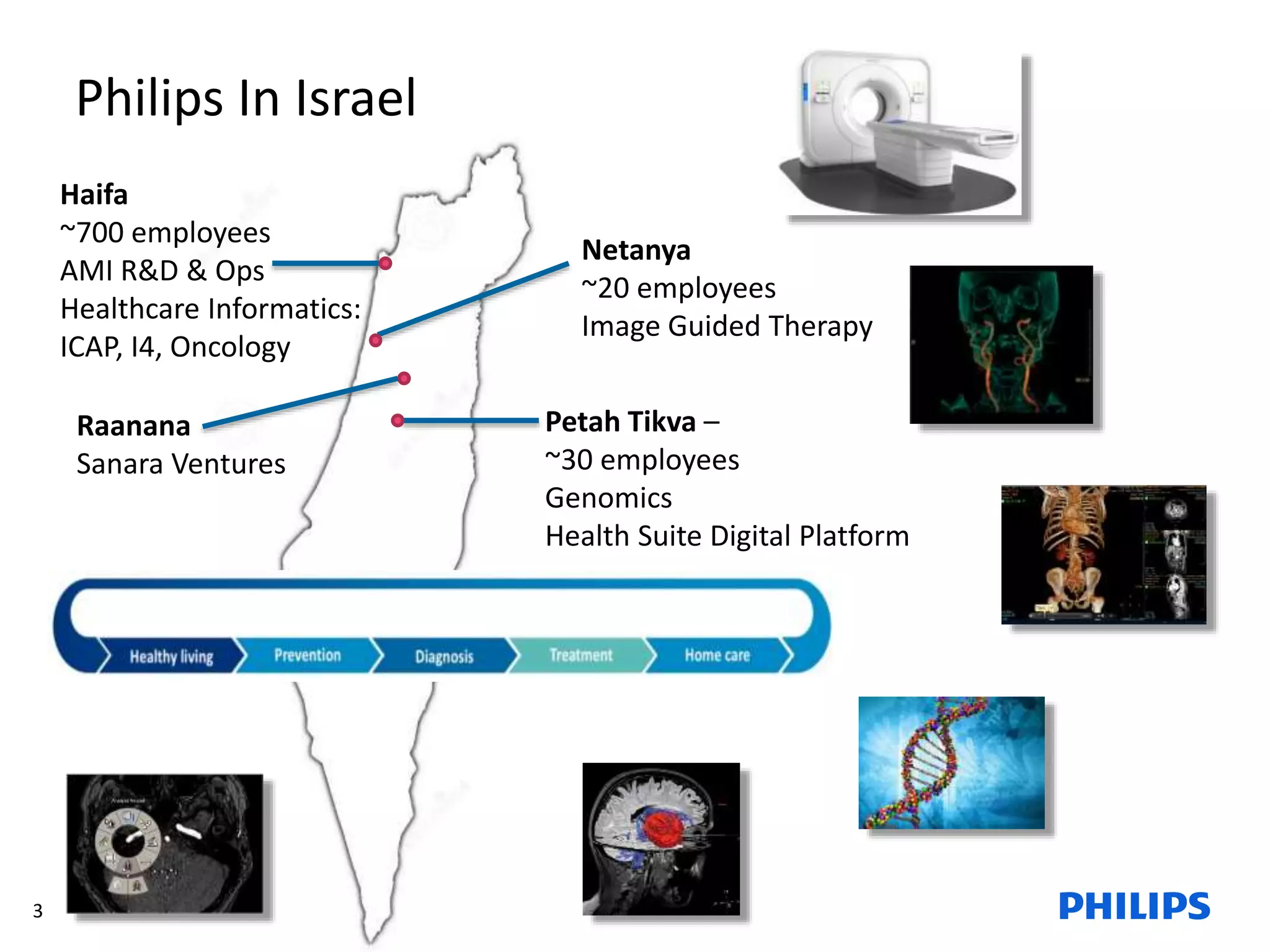
Haifa
~700 employees
AMI R&D & Ops
Healthcare Informatics:
ICAP, I4, Oncology
Netanya
~20 employees
Image Guided Therapy
Petah Tikva –
~30 employees
Genomics
Health Suite Digital Platform
Raanana
Sanara Ventures
Philips In Israel
4
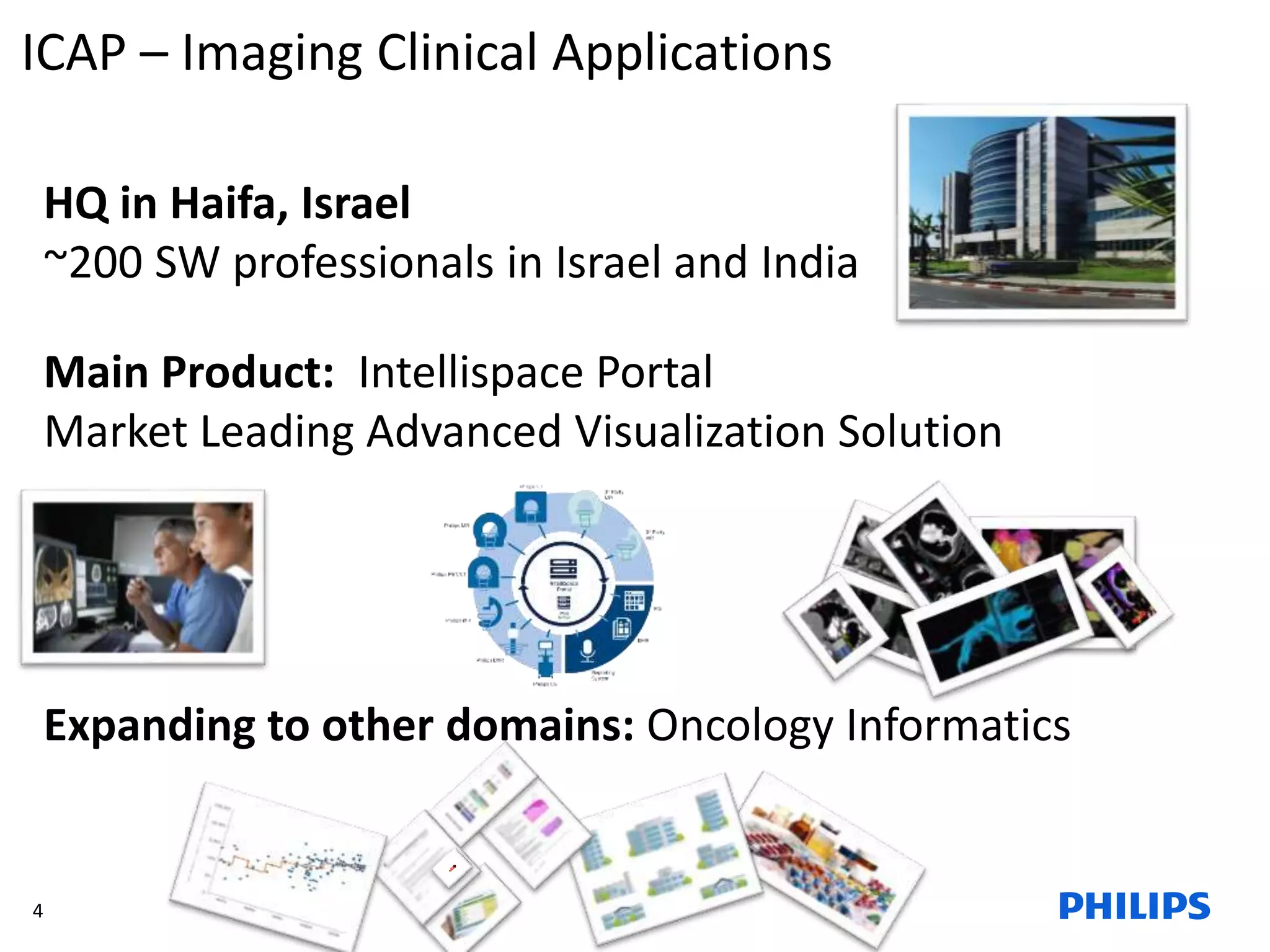
ICAP – Imaging Clinical Applications
Main Product: Intellispace Portal
Market Leading Advanced Visualization Solution
HQ in Haifa, Israel
~200 SW professionals in Israel and India
Expanding to other domains: Oncology Informatics
5
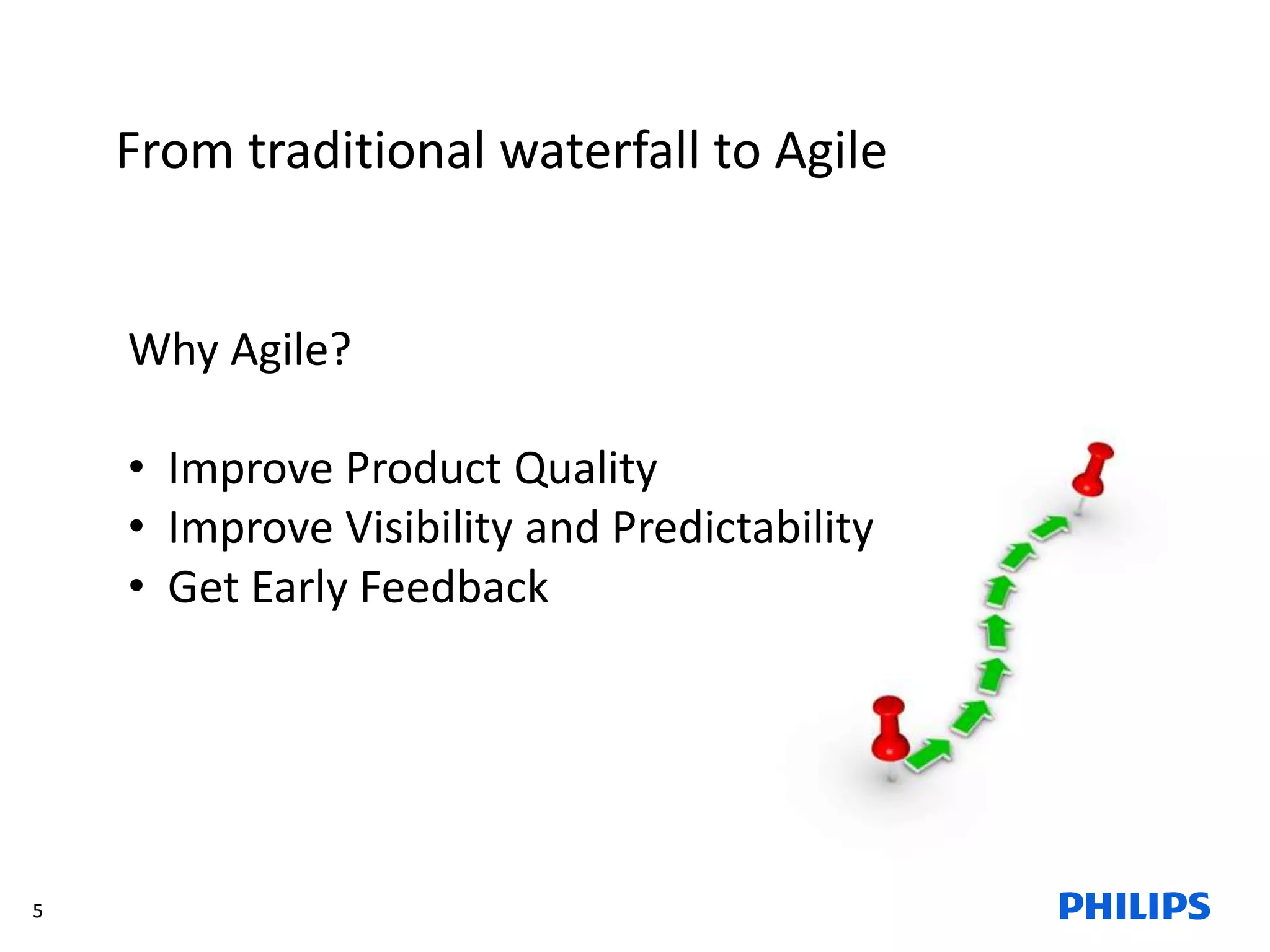
From traditional waterfall to Agile
Why Agile?
• Improve Product Quality
• Improve Visibility and Predictability
• Get Early Feedback
6
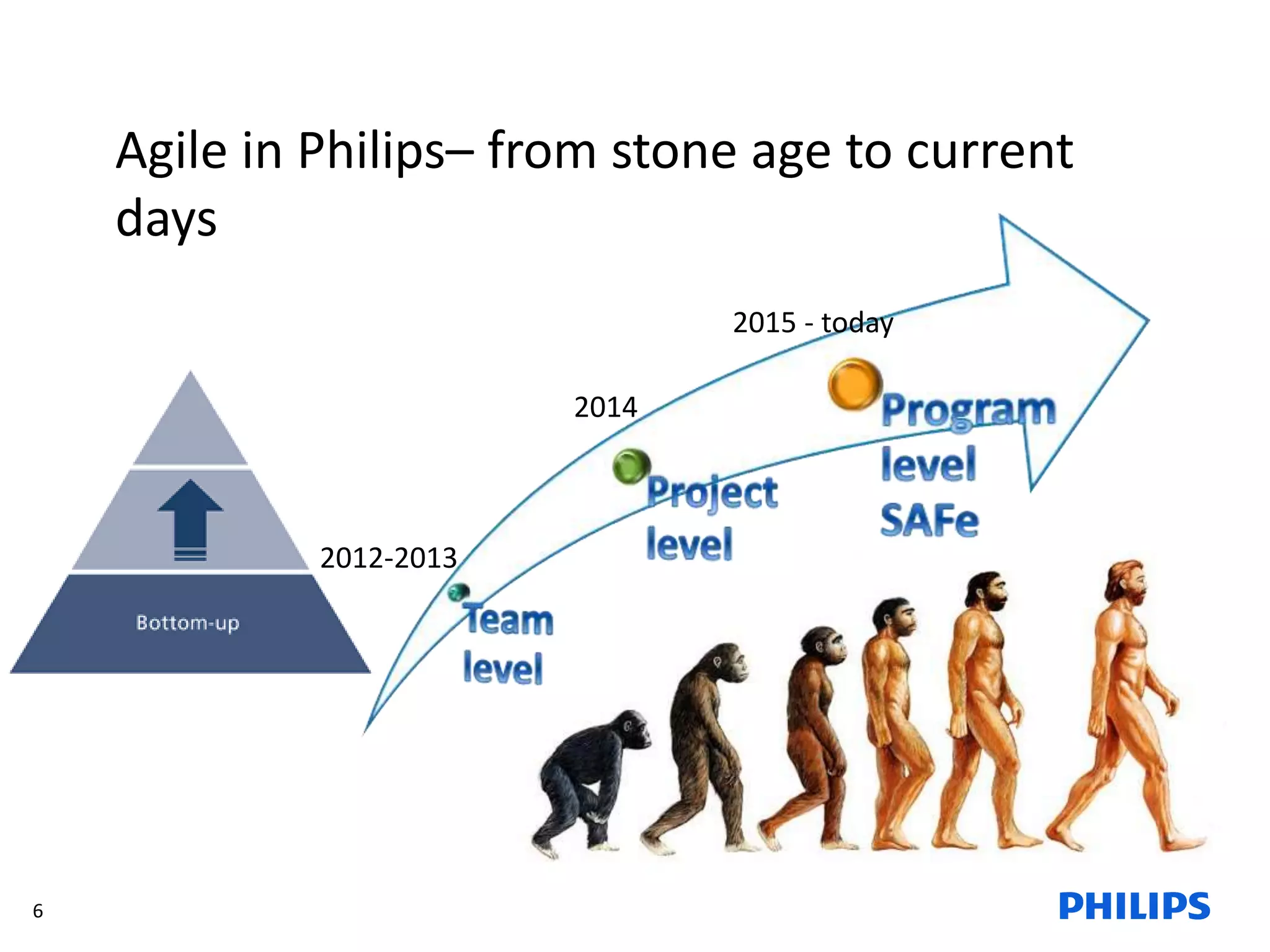
Agile in Philips– from stone age to current
days
2014
2015 - today
2012-2013
7
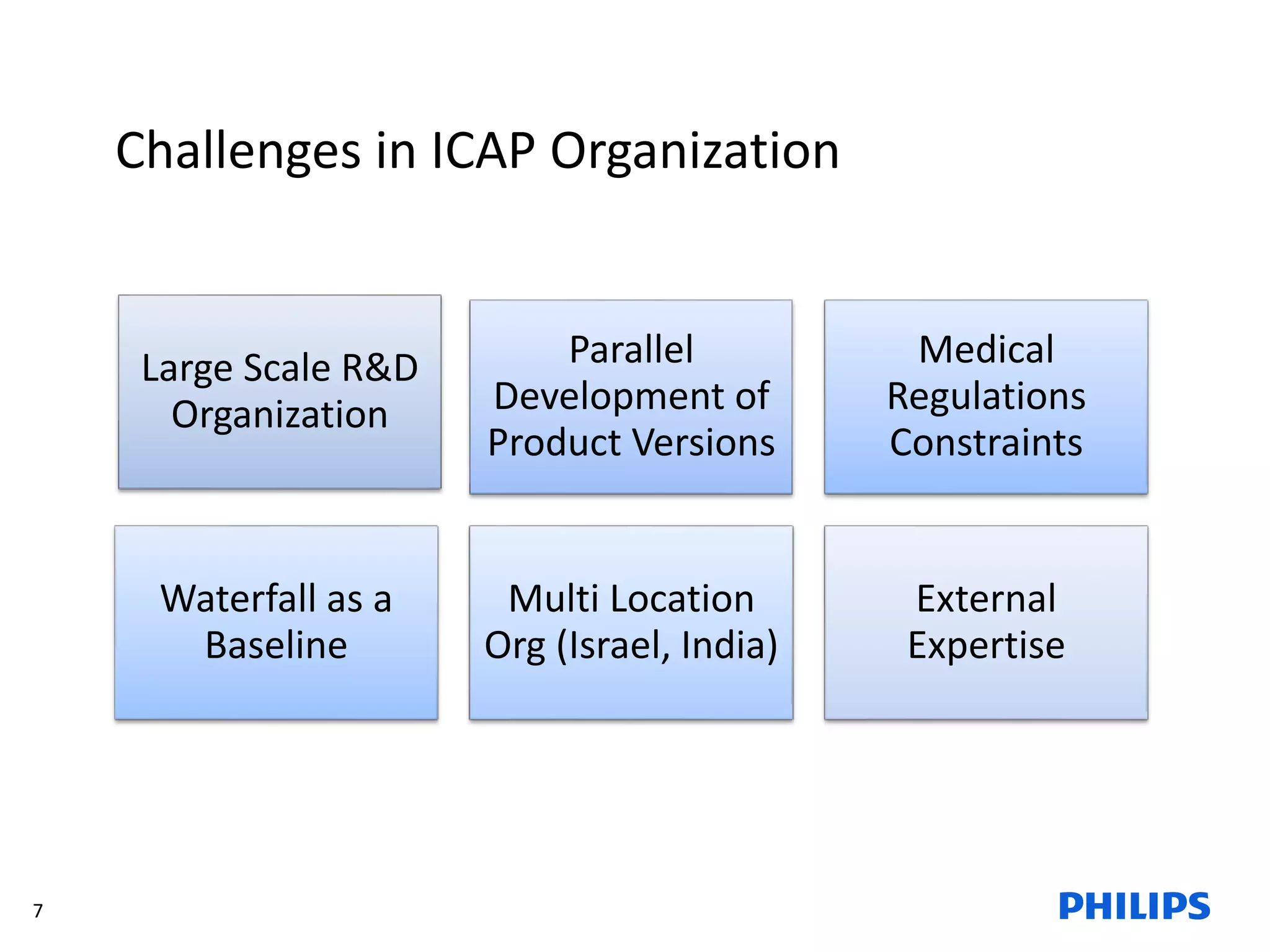
Challenges in ICAP Organization
Large Scale R&D
Organization
Parallel
Development of
Product Versions
Medical
Regulations
Constraints
Waterfall as a
Baseline
Multi Location
Org (Israel, India)
External
Expertise
8
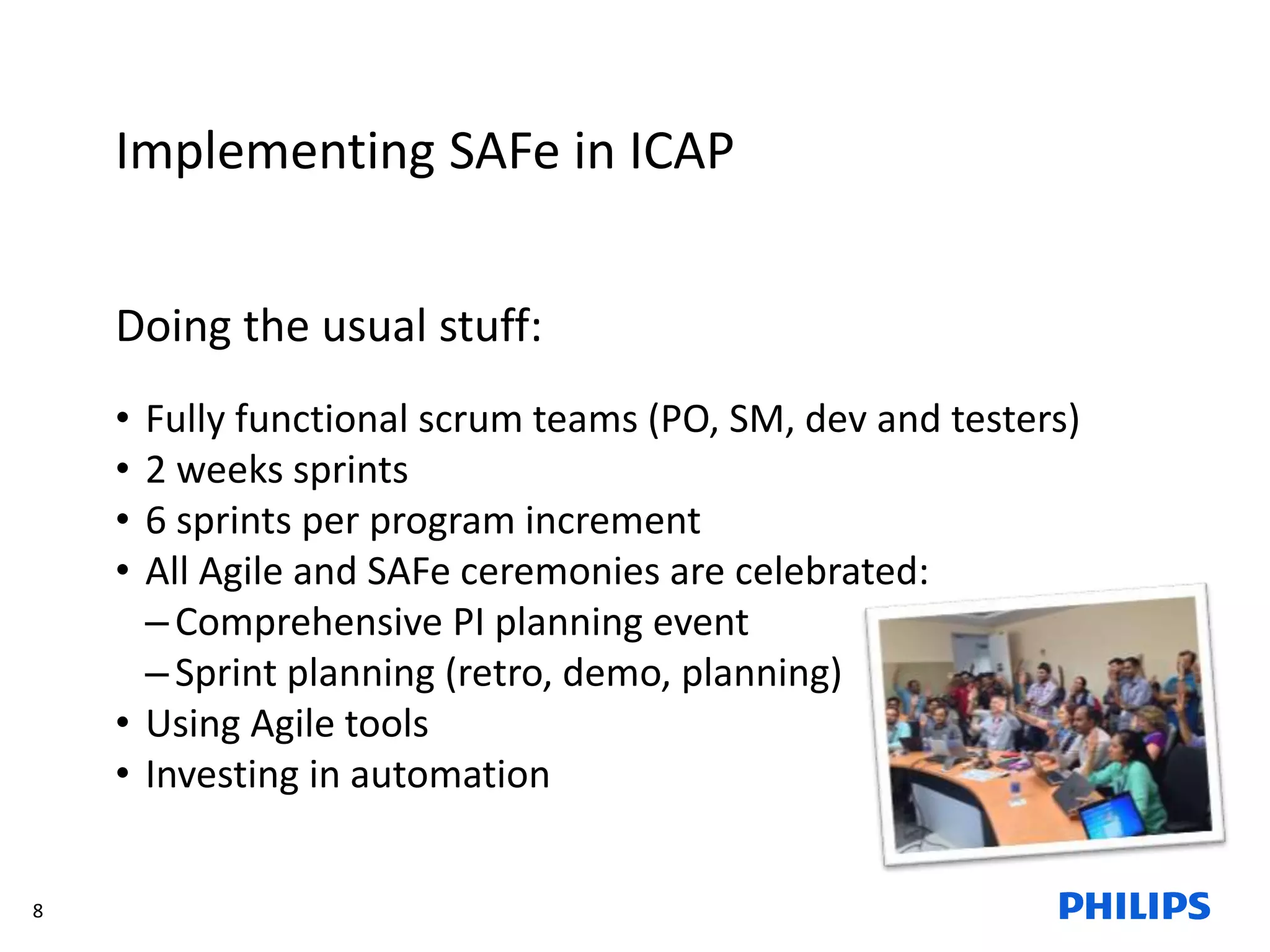
Implementing SAFe in ICAP
Doing the usual stuff:
• Fully functional scrum teams (PO, SM, dev and testers)
• 2 weeks sprints
• 6 sprints per program increment
• All Agile and SAFe ceremonies are celebrated:
–Comprehensive PI planning event
–Sprint planning (retro, demo, planning)
• Using Agile tools
• Investing in automation
9
SAFe in Philips/ICAP - Benefits
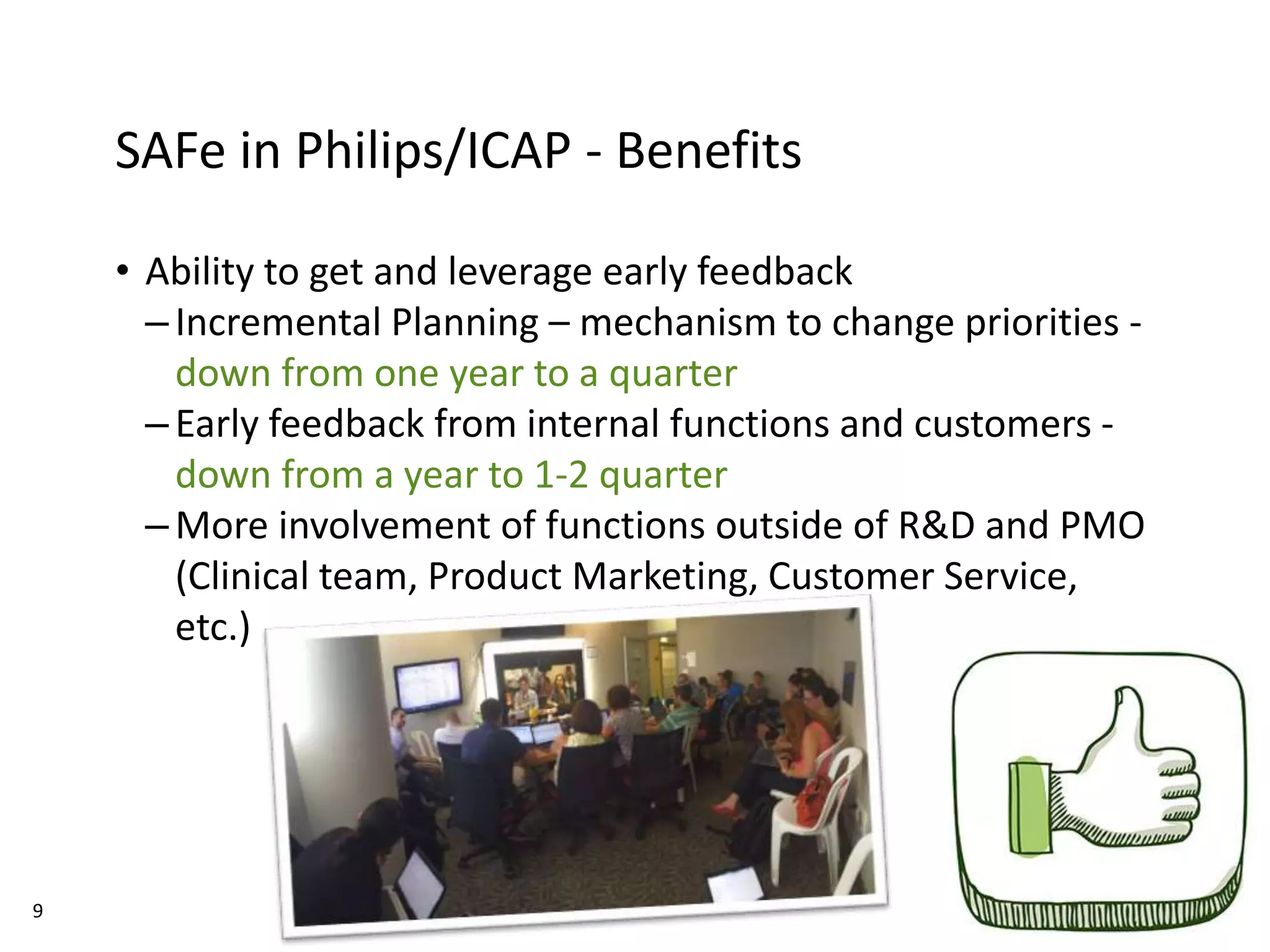
• Ability to get and leverage early feedback
–Incremental Planning – mechanism to change priorities -
down from one year to a quarter
–Early feedback from internal functions and customers -
down from a year to 1-2 quarter
–More involvement of functions outside of R&D and PMO
(Clinical team, Product Marketing, Customer Service,
etc.)
10
SAFe in Philips/ICAP - Benefits
• Quality improvements due to:
–Improved cooperation between dev and verification –
reducing formal verification time by ¼.
–Early identification of defects (through manual or
automated tests) – down from half a year to days, half
the issues during verification.
• Improved visibility and predictability – status and progress
is transparent across the entire organization
(R&D / Program Management / Product
Marketing/etc.)
But…
11
Challenges implementing SAFe
• Org Structures
–Product Owners vs. Requirements Owner
–Key stakeholders outside the organization
–Some Product owners serve multiple scrum teams
• PI Planning
–planning event is distributed over two sites (logistics,
communication, etc.)
–Planning includes multiple releases
–Planning one big train (>150 people)
12
Challenges implementing SAFe
• Demos
–Demos include deliveries of large number of scrum
teams, spread across multiple sites
• Regulations constraints (FDA,TUV, etc.) –
–Formal verification process is required for every
installation
–challenges with early evaluation, development lead
time, etc.
• Continuous integration challenges
13
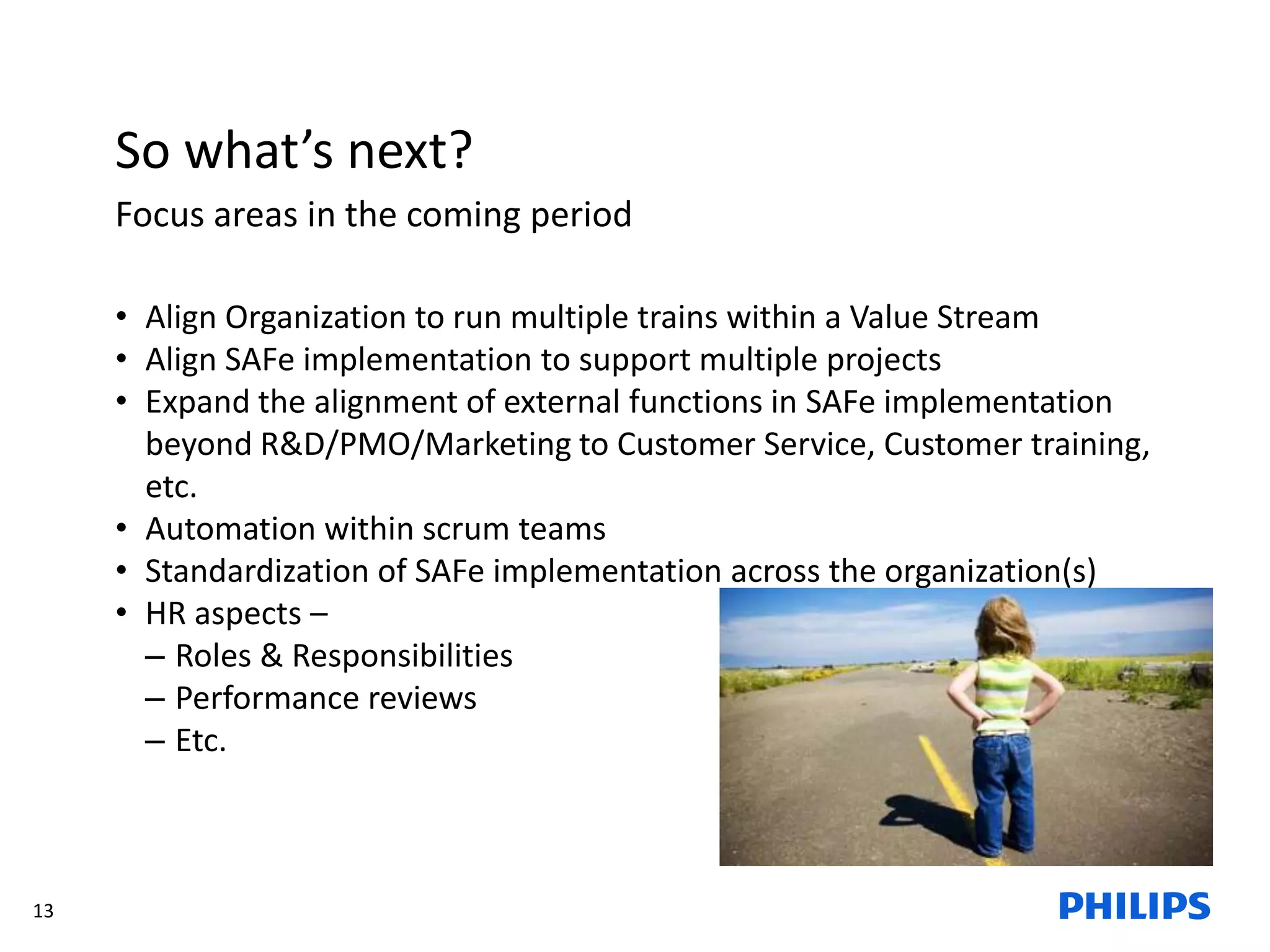
So what’s next?
Focus areas in the coming period
• Align Organization to run multiple trains within a Value Stream
• Align SAFe implementation to support multiple projects
• Expand the alignment of external functions in SAFe implementation
beyond R&D/PMO/Marketing to Customer Service, Customer training,
etc.
• Automation within scrum teams
• Standardization of SAFe implementation across the organization(s)
• HR aspects –
– Roles & Responsibilities
– Performance reviews
– Etc.
14
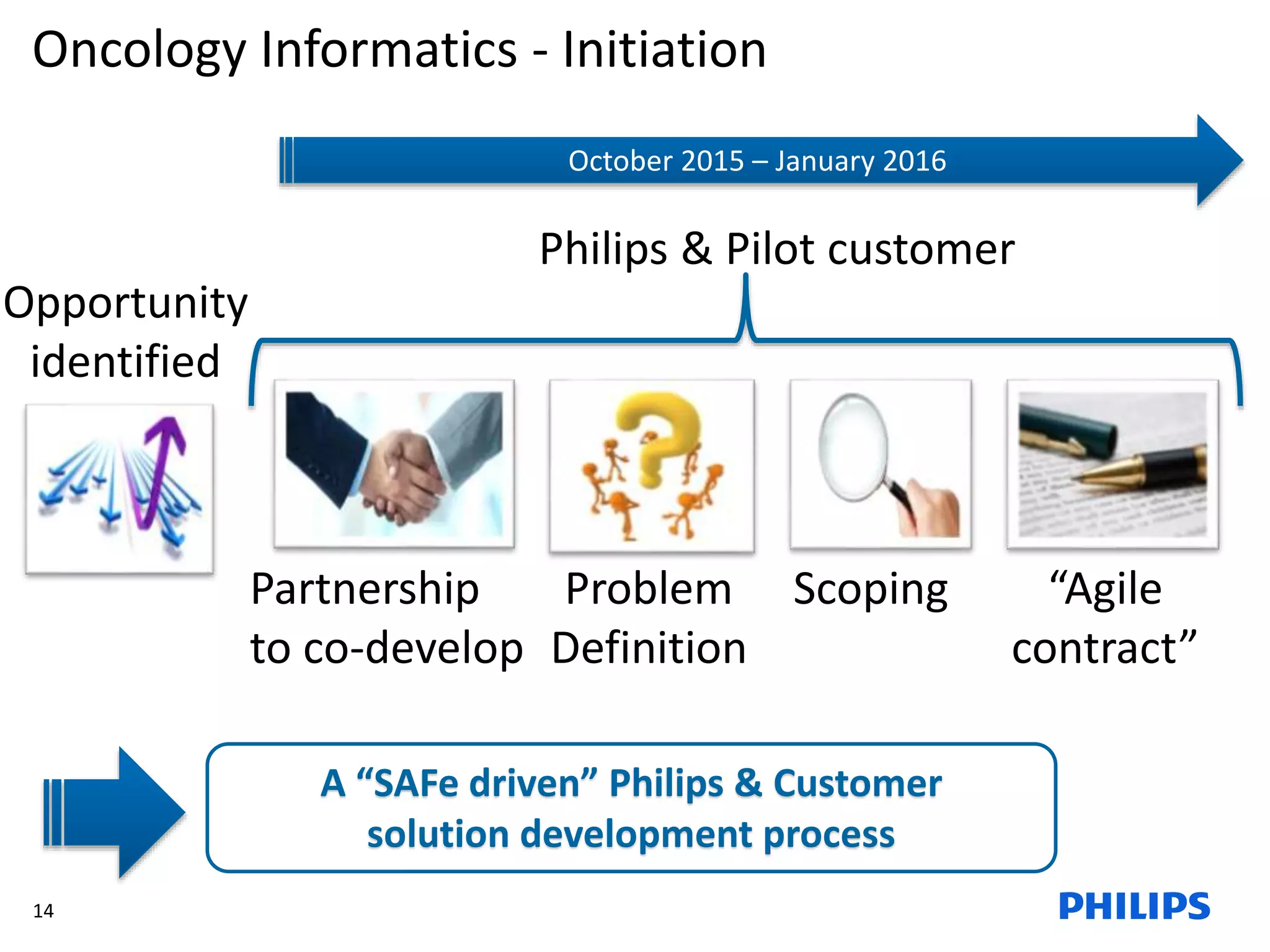
Oncology Informatics - Initiation
Problem
Definition
Scoping “Agile
contract”
October 2015 – January 2016
Philips & Pilot customer
Opportunity
identified
Partnership
to co-develop
A “SAFe driven” Philips & Customer
solution development process
15
Oncology Informatics – Process
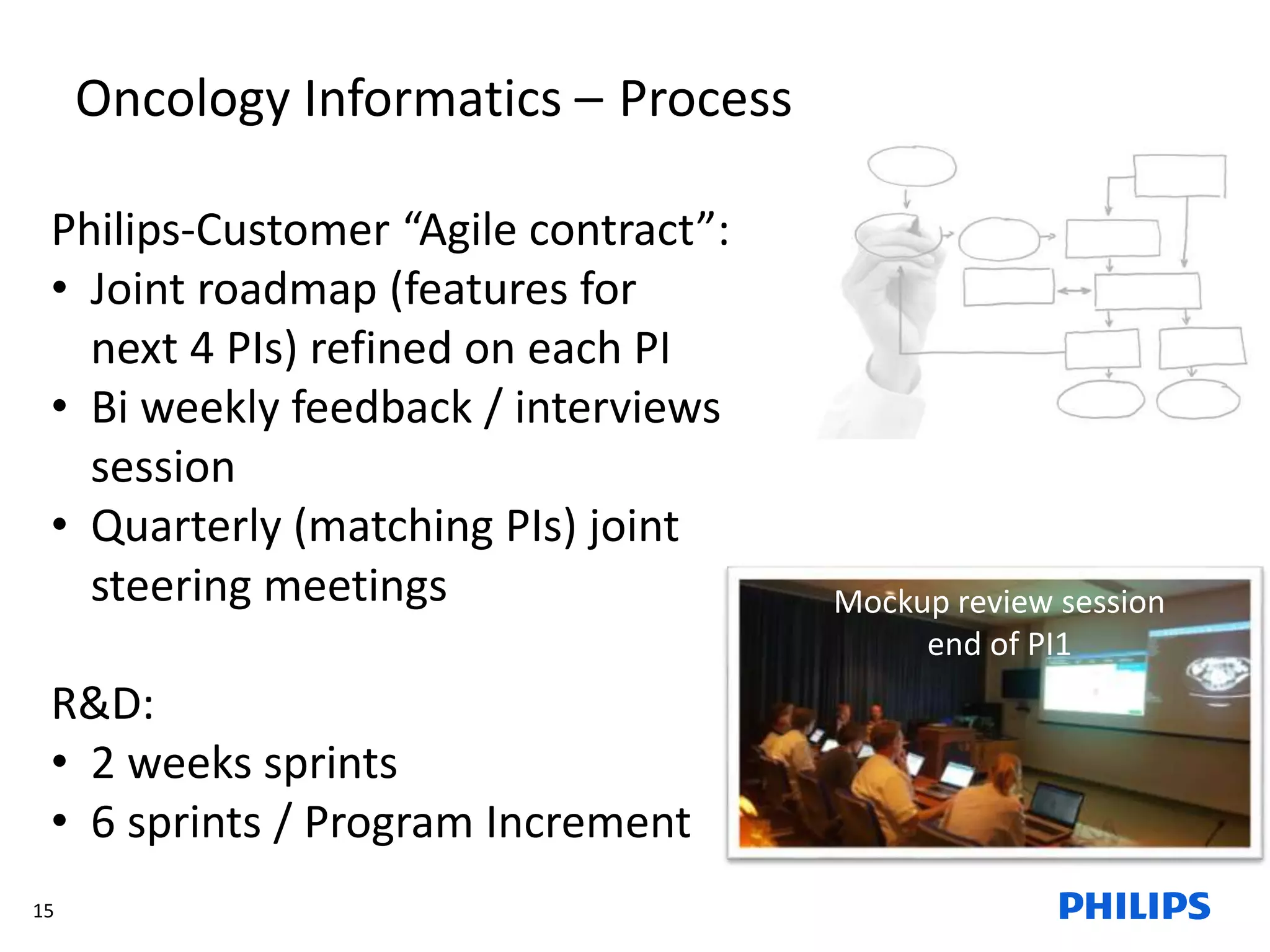
Philips-Customer “Agile contract”:
• Joint roadmap (features for
next 4 PIs) refined on each PI
• Bi weekly feedback / interviews
session
• Quarterly (matching PIs) joint
steering meetings
R&D:
• 2 weeks sprints
• 6 sprints / Program Increment
Mockup review session
end of PI1
16
Oncology Informatics – Pilot Development
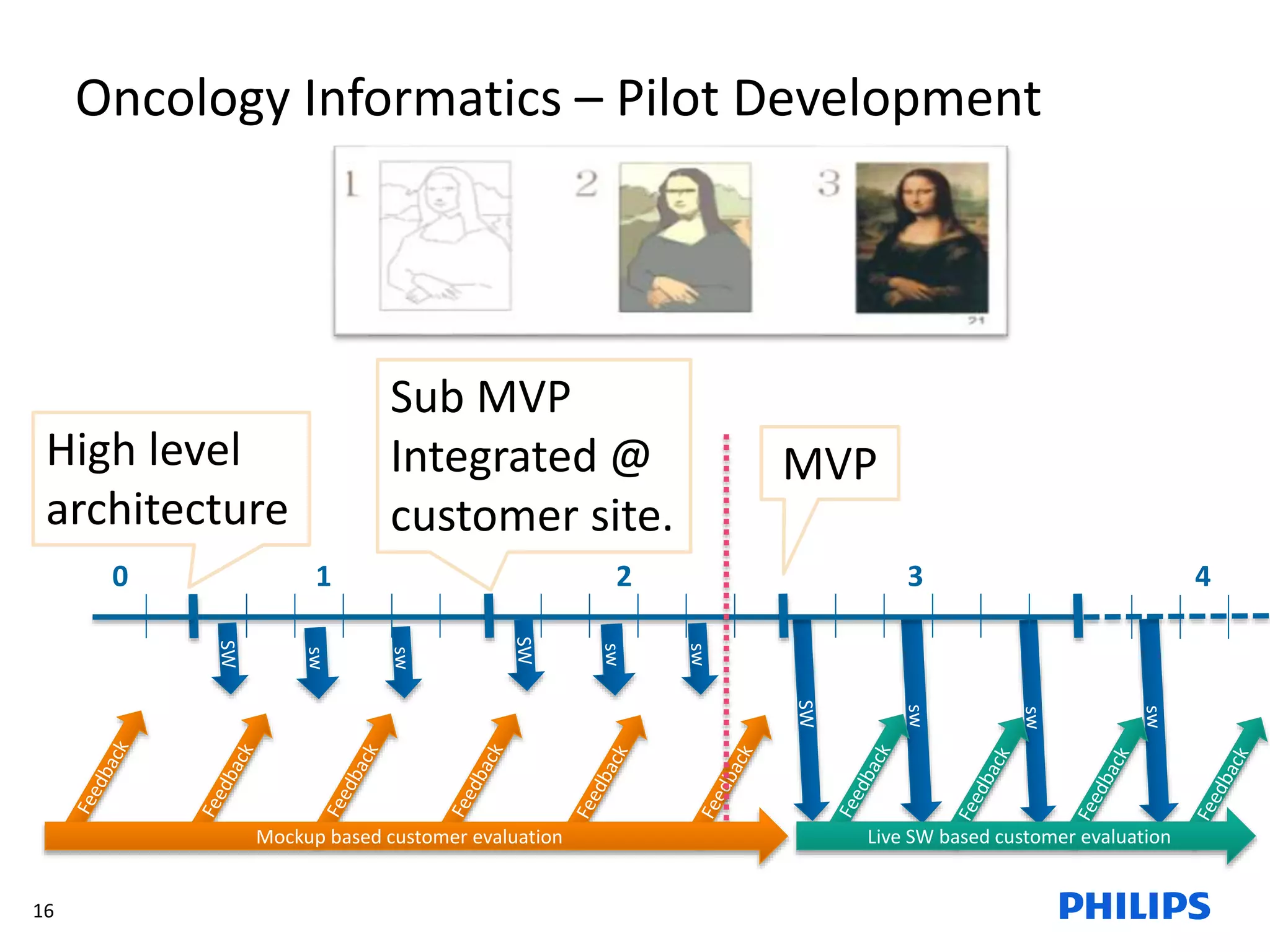
1 2 3 40
Sub MVP
Integrated @
customer site.
MVPHigh level
architecture
Mockup based customer evaluation Live SW based customer evaluation
17
Oncology Informatics – Pilot Development
1 2 3 40
Mockup based customer evaluation Live SW based customer evaluation
On time, content &
quality
On track:
Time, content &
quality
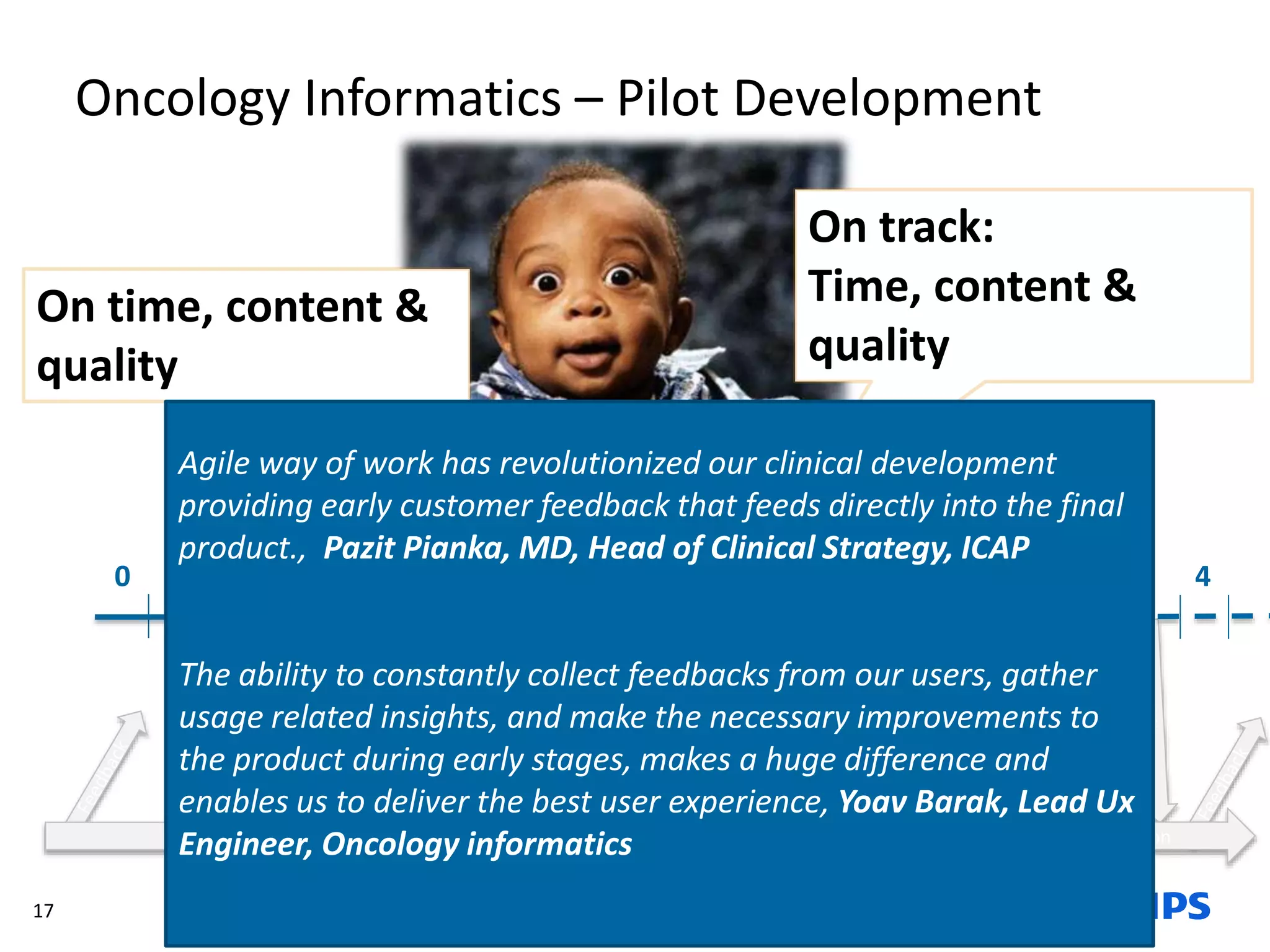
Agile way of work has revolutionized our clinical development
providing early customer feedback that feeds directly into the final
product., Pazit Pianka, MD, Head of Clinical Strategy, ICAP
The ability to constantly collect feedbacks from our users, gather
usage related insights, and make the necessary improvements to
the product during early stages, makes a huge difference and
enables us to deliver the best user experience, Yoav Barak, Lead Ux
Engineer, Oncology informatics
18
19
And this is how you prevent the
agile theater...
20

Agile Israel 2016 - Philips ICAP case study

  • 1.
    1 Philips ICAP Group SAFeCase Study Amit Caspi, Alon Borenshtein Imaging Clinical Applications (ICAP), Philips June 2016
  • 2.
  • 3.
    3 Haifa ~700 employees AMI R&D& Ops Healthcare Informatics: ICAP, I4, Oncology Netanya ~20 employees Image Guided Therapy Petah Tikva – ~30 employees Genomics Health Suite Digital Platform Raanana Sanara Ventures Philips In Israel
  • 4.
    4 ICAP – ImagingClinical Applications Main Product: Intellispace Portal Market Leading Advanced Visualization Solution HQ in Haifa, Israel ~200 SW professionals in Israel and India Expanding to other domains: Oncology Informatics
  • 5.
    5 From traditional waterfallto Agile Why Agile? • Improve Product Quality • Improve Visibility and Predictability • Get Early Feedback
  • 6.
    6 Agile in Philips–from stone age to current days 2014 2015 - today 2012-2013
  • 7.
    7 Challenges in ICAPOrganization Large Scale R&D Organization Parallel Development of Product Versions Medical Regulations Constraints Waterfall as a Baseline Multi Location Org (Israel, India) External Expertise
  • 8.
    8 Implementing SAFe inICAP Doing the usual stuff: • Fully functional scrum teams (PO, SM, dev and testers) • 2 weeks sprints • 6 sprints per program increment • All Agile and SAFe ceremonies are celebrated: –Comprehensive PI planning event –Sprint planning (retro, demo, planning) • Using Agile tools • Investing in automation
  • 9.
    9 SAFe in Philips/ICAP- Benefits • Ability to get and leverage early feedback –Incremental Planning – mechanism to change priorities - down from one year to a quarter –Early feedback from internal functions and customers - down from a year to 1-2 quarter –More involvement of functions outside of R&D and PMO (Clinical team, Product Marketing, Customer Service, etc.)
  • 10.
    10 SAFe in Philips/ICAP- Benefits • Quality improvements due to: –Improved cooperation between dev and verification – reducing formal verification time by ¼. –Early identification of defects (through manual or automated tests) – down from half a year to days, half the issues during verification. • Improved visibility and predictability – status and progress is transparent across the entire organization (R&D / Program Management / Product Marketing/etc.) But…
  • 11.
    11 Challenges implementing SAFe •Org Structures –Product Owners vs. Requirements Owner –Key stakeholders outside the organization –Some Product owners serve multiple scrum teams • PI Planning –planning event is distributed over two sites (logistics, communication, etc.) –Planning includes multiple releases –Planning one big train (>150 people)
  • 12.
    12 Challenges implementing SAFe •Demos –Demos include deliveries of large number of scrum teams, spread across multiple sites • Regulations constraints (FDA,TUV, etc.) – –Formal verification process is required for every installation –challenges with early evaluation, development lead time, etc. • Continuous integration challenges
  • 13.
    13 So what’s next? Focusareas in the coming period • Align Organization to run multiple trains within a Value Stream • Align SAFe implementation to support multiple projects • Expand the alignment of external functions in SAFe implementation beyond R&D/PMO/Marketing to Customer Service, Customer training, etc. • Automation within scrum teams • Standardization of SAFe implementation across the organization(s) • HR aspects – – Roles & Responsibilities – Performance reviews – Etc.
  • 14.
    14 Oncology Informatics -Initiation Problem Definition Scoping “Agile contract” October 2015 – January 2016 Philips & Pilot customer Opportunity identified Partnership to co-develop A “SAFe driven” Philips & Customer solution development process
  • 15.
    15 Oncology Informatics –Process Philips-Customer “Agile contract”: • Joint roadmap (features for next 4 PIs) refined on each PI • Bi weekly feedback / interviews session • Quarterly (matching PIs) joint steering meetings R&D: • 2 weeks sprints • 6 sprints / Program Increment Mockup review session end of PI1
  • 16.
    16 Oncology Informatics –Pilot Development 1 2 3 40 Sub MVP Integrated @ customer site. MVPHigh level architecture Mockup based customer evaluation Live SW based customer evaluation
  • 17.
    17 Oncology Informatics –Pilot Development 1 2 3 40 Mockup based customer evaluation Live SW based customer evaluation On time, content & quality On track: Time, content & quality Agile way of work has revolutionized our clinical development providing early customer feedback that feeds directly into the final product., Pazit Pianka, MD, Head of Clinical Strategy, ICAP The ability to constantly collect feedbacks from our users, gather usage related insights, and make the necessary improvements to the product during early stages, makes a huge difference and enables us to deliver the best user experience, Yoav Barak, Lead Ux Engineer, Oncology informatics
  • 18.
  • 19.
    19 And this ishow you prevent the agile theater...
  • 20.

Editor's Notes

  • #6 Why? Improve quality (via PSP, CI, auto regression testing) Improve project visibility and predictability (via Demo/ PSP, agile planning & monitoring ) Enable pre beta customer feedback (via PSP)
  • #8 Large scale R&D Organization Biggest R&D organization within Philips Healthcare IT (more than 200 people) Parallel development of product versions Release development lifecycle is around 2 years. R&D is developing more than one release at a time Medical Regulation constraints Adhering to a strict non-Agile process with heavy implications on development cycle Waterfall as a baseline Baseline of a waterfall process, confined within the regulated environment Multi Location Org (Israel, India) R&D is based in two locations, with multiple dependencies between them. External expertise Clinical expertise is located outside the organization in many cases.