Reptiles
By Mr. “Reptile Lover” Chapman
Reptiles
• Reptiles - living reptiles include turtles,
lizards, snakes, tuatara, and crocodilians
• All reptiles breathe through lungs, have
scale covered skin, and are cold blooded.
Classification
• Kingdom: Animalia
• Phylum: Chordata
• Class: Reptilia
• Order: 5 orders of reptiles
Reptile Orders:
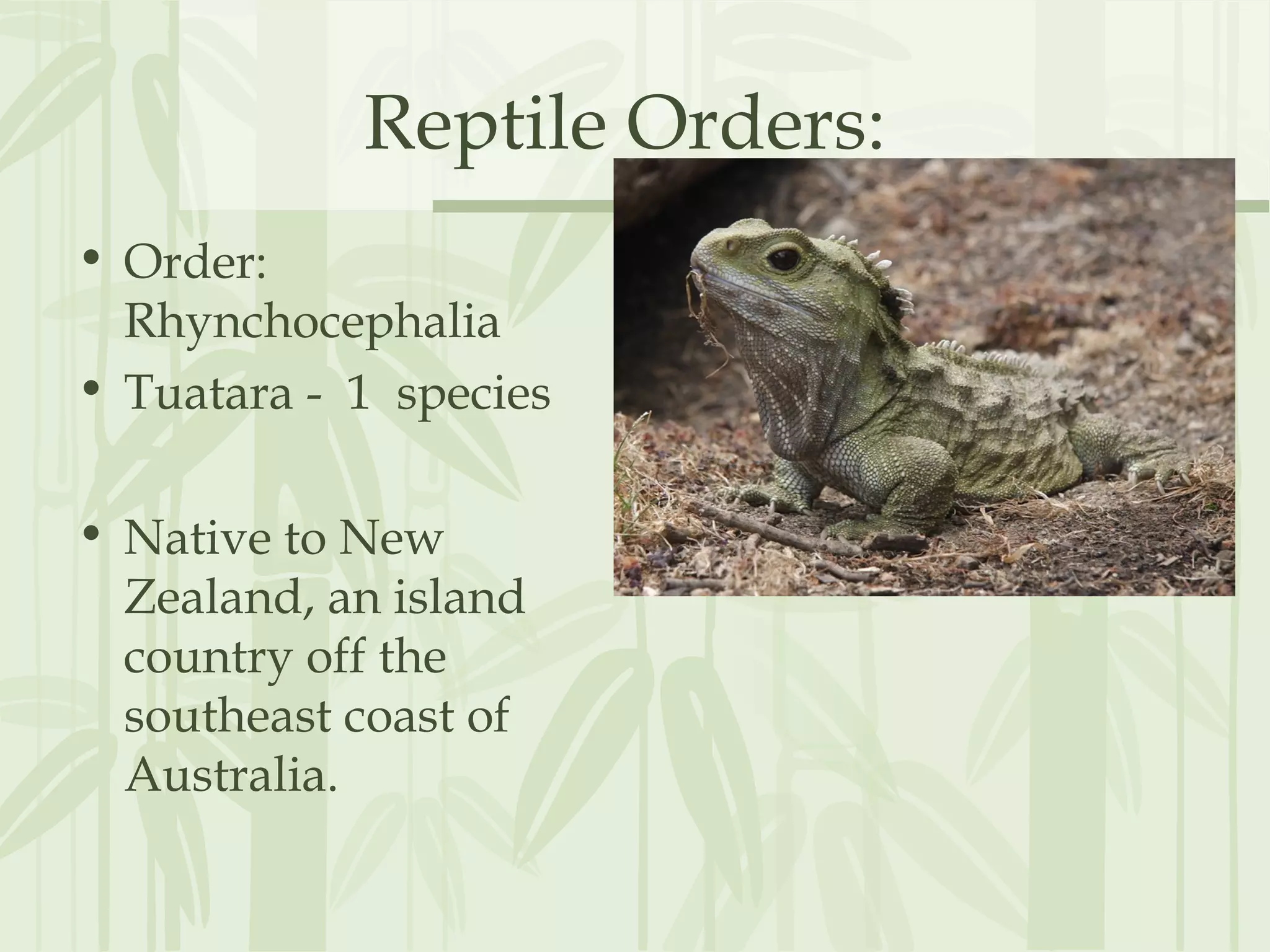
• Order:
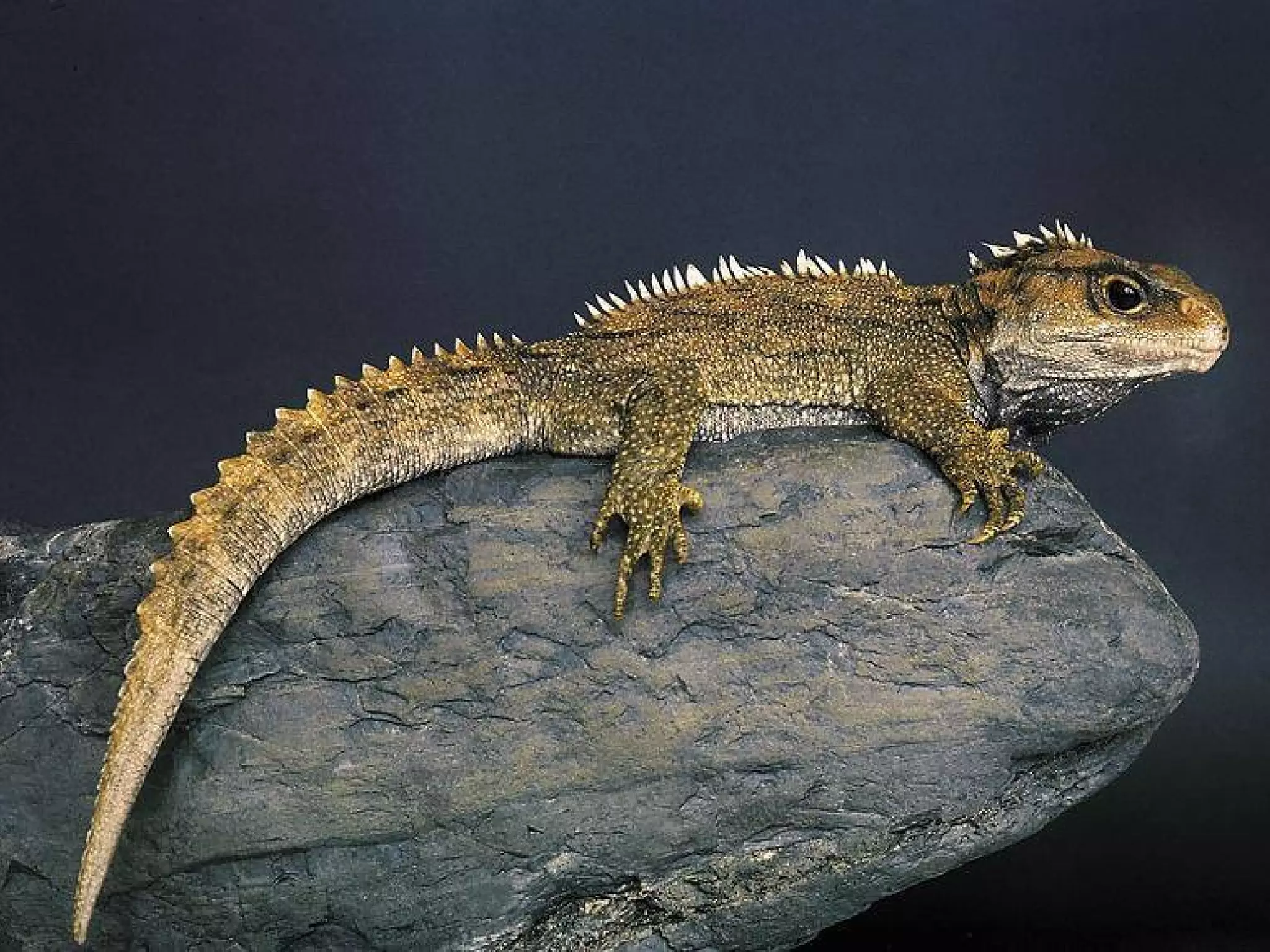
Rhynchocephalia
• Tuatara - 1 species
• Native to New
Zealand, an island
country off the
southeast coast of
Australia.
4 Orders of Reptiles
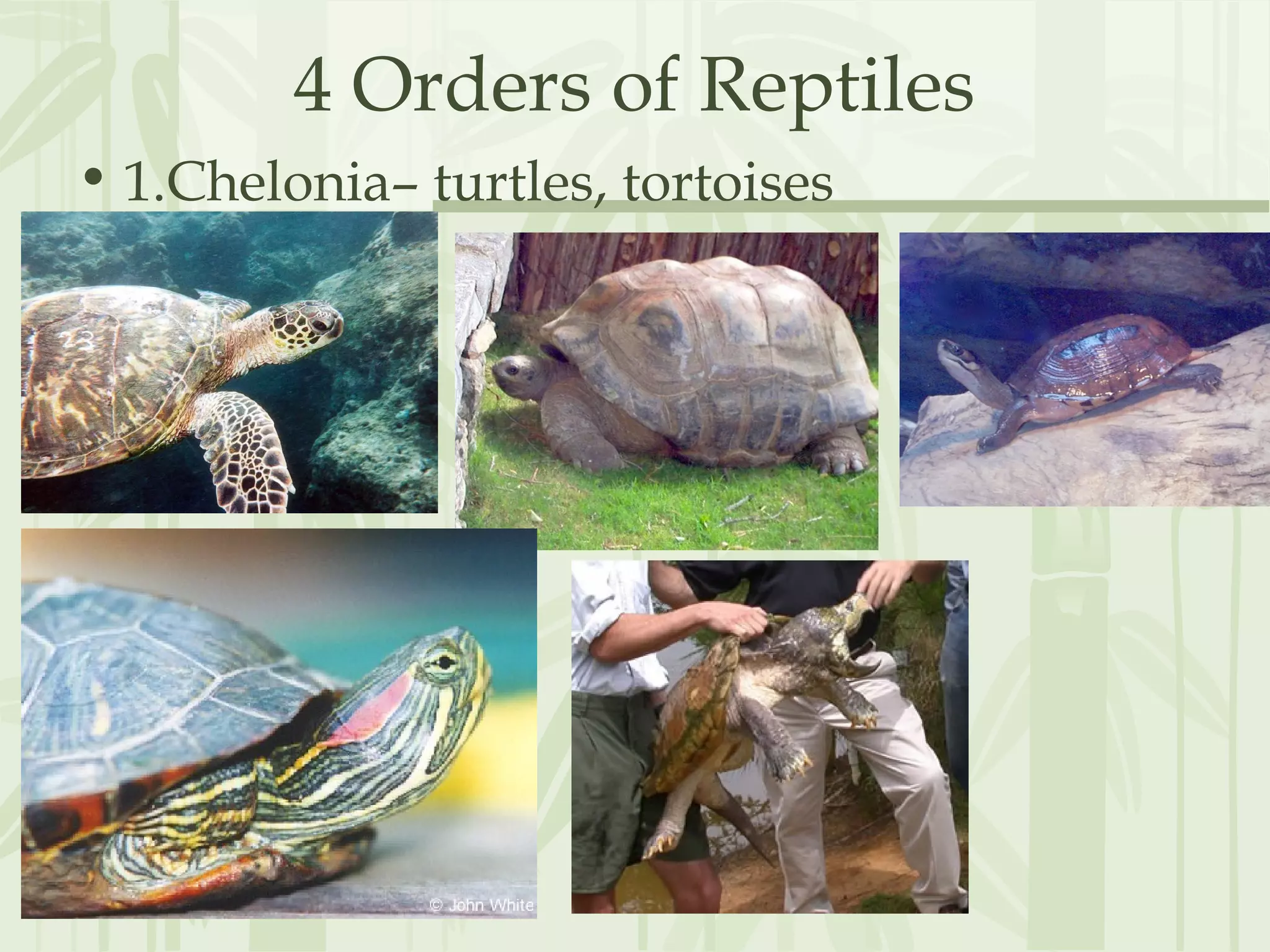
• 1.Chelonia– turtles, tortoises
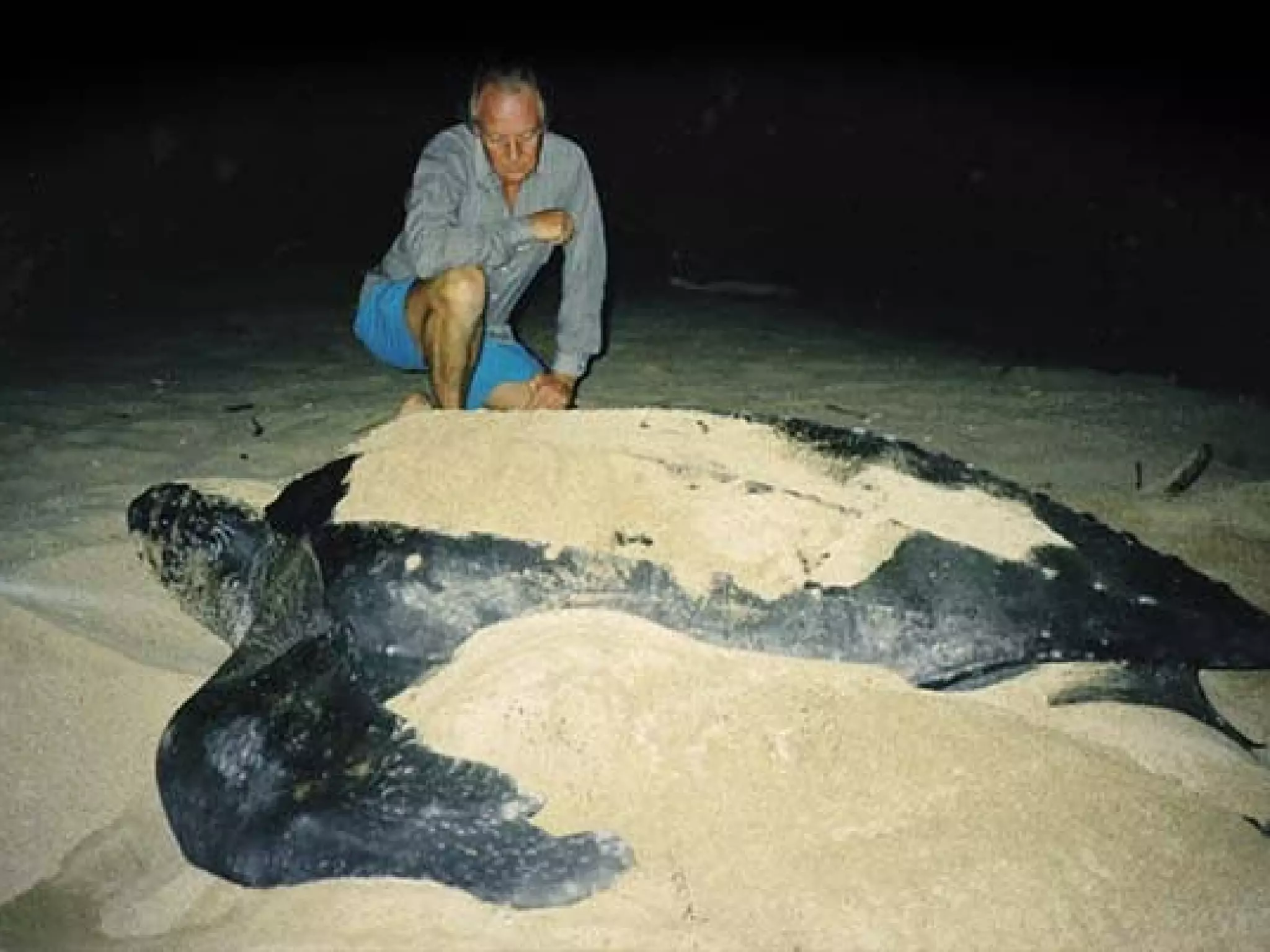
Turtles
• 250 species (all continents except Antarctica)
• Most primitive of all reptiles
• Range in size 3 inches to 6 feet
• All turtles lay eggs in nests they dig in the
ground
• No teeth, instead the edges of the jaws are hard
and sharp.
Order: Squamata
• This order includes:
• Suborder: Lacertilia (Lizards)
• Suborder: Serpentes (Snakes)
Squamata
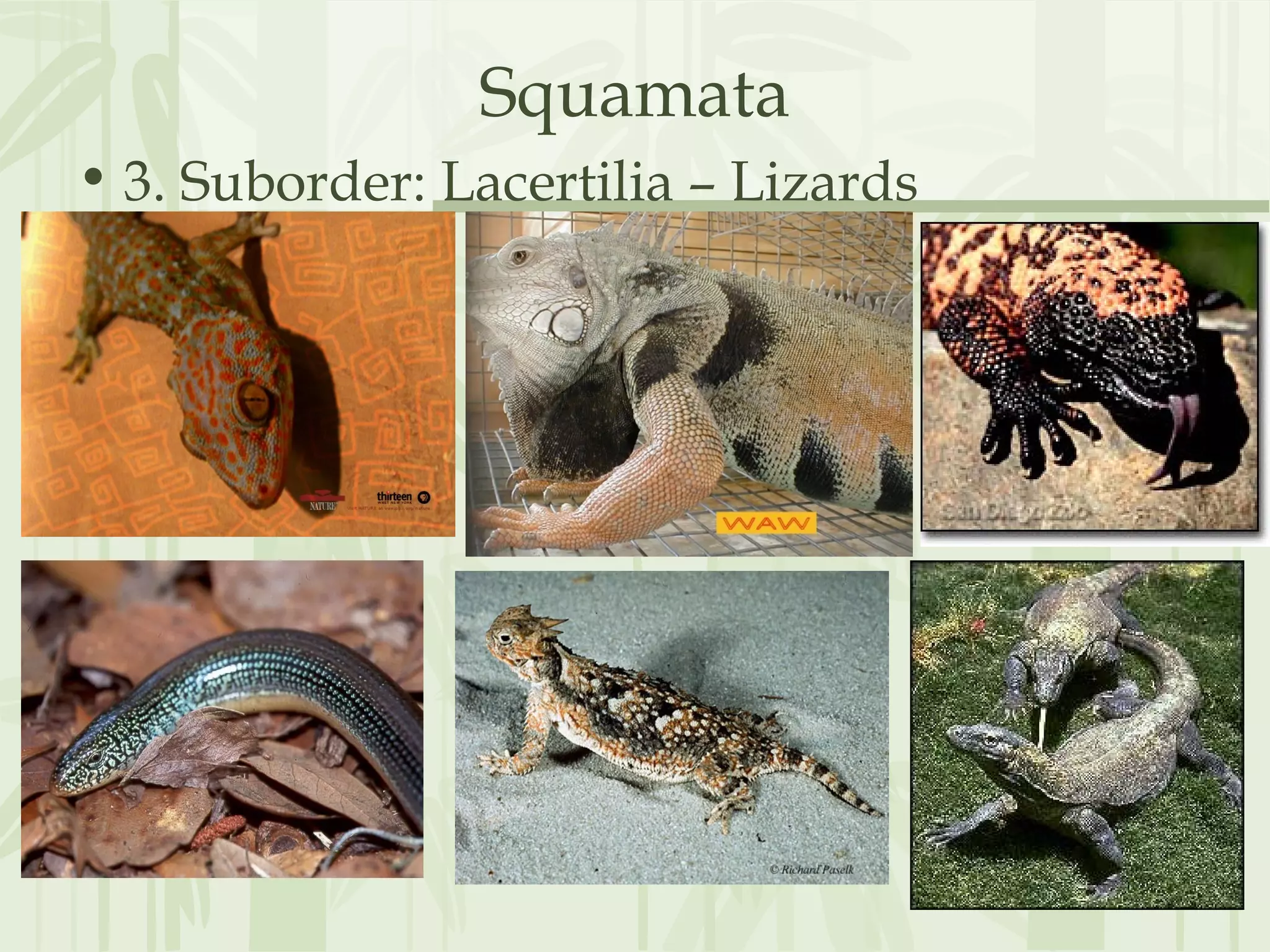
• 3. Suborder: Lacertilia – Lizards
Lizards
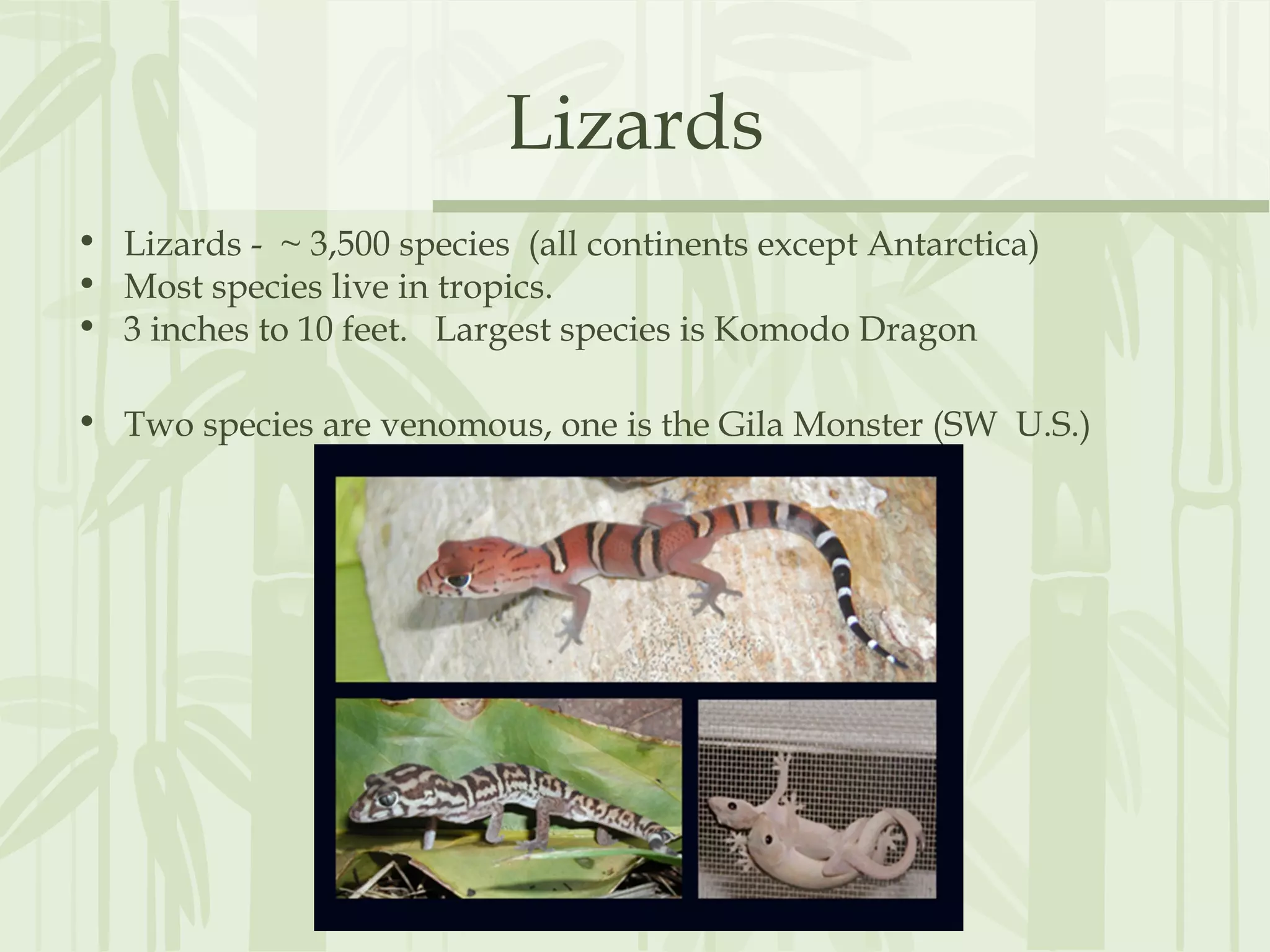
• Lizards - ~ 3,500 species (all continents except Antarctica)
• Most species live in tropics.
• 3 inches to 10 feet. Largest species is Komodo Dragon
• Two species are venomous, one is the Gila Monster (SW U.S.)
Sepentes
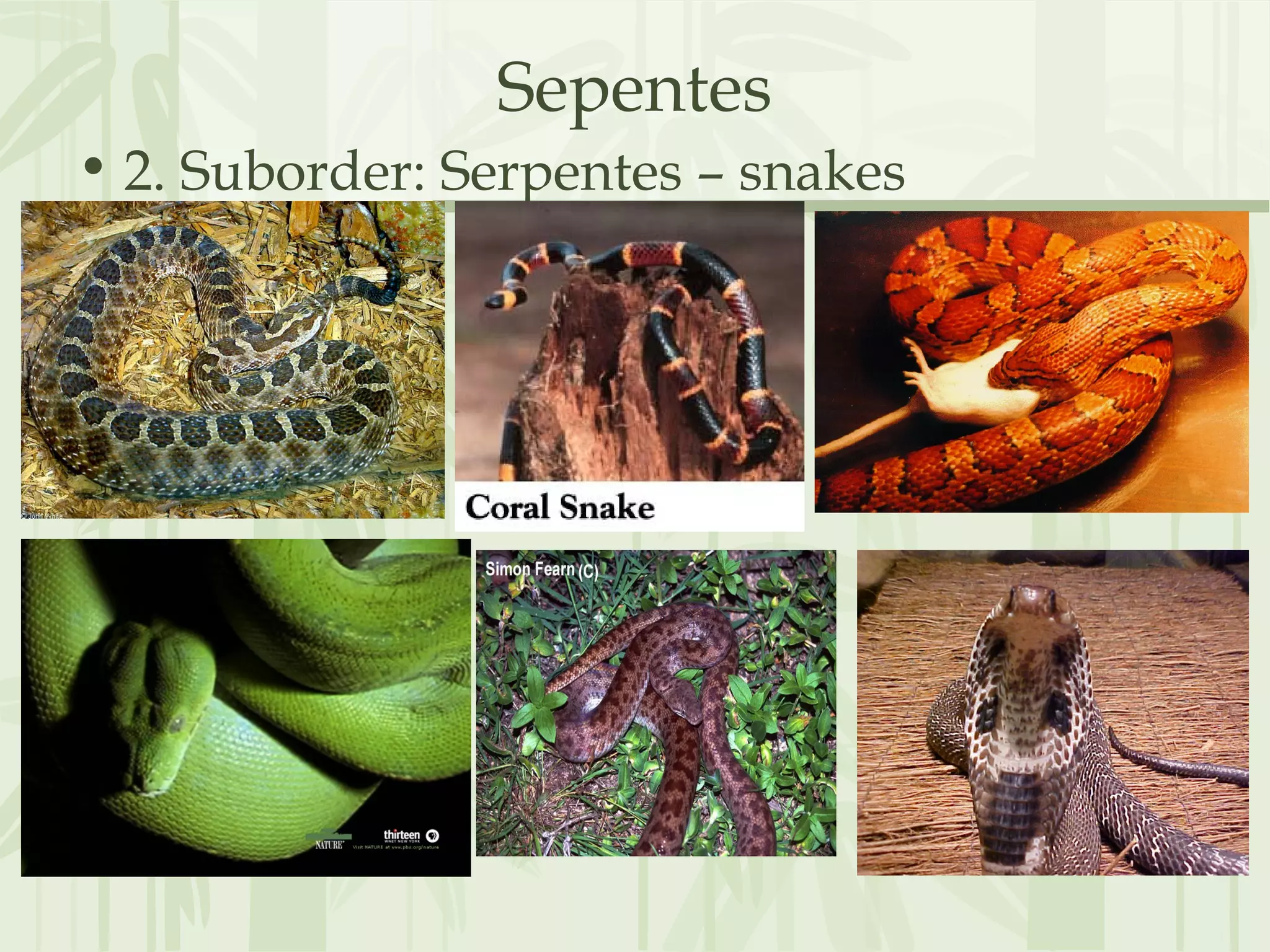
• 2. Suborder: Serpentes – snakes
Snakes
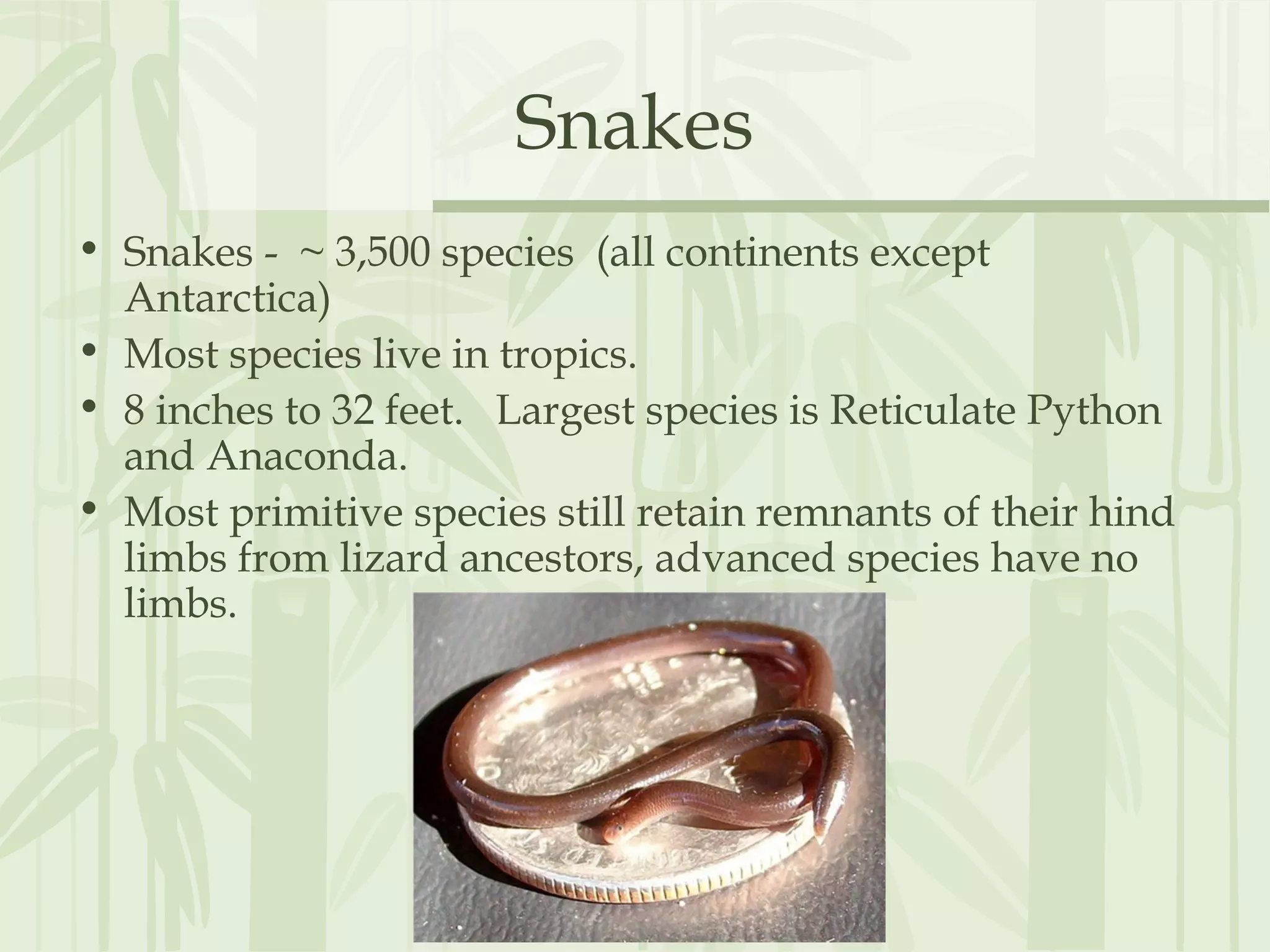
• Snakes - ~ 3,500 species (all continents except
Antarctica)
• Most species live in tropics.
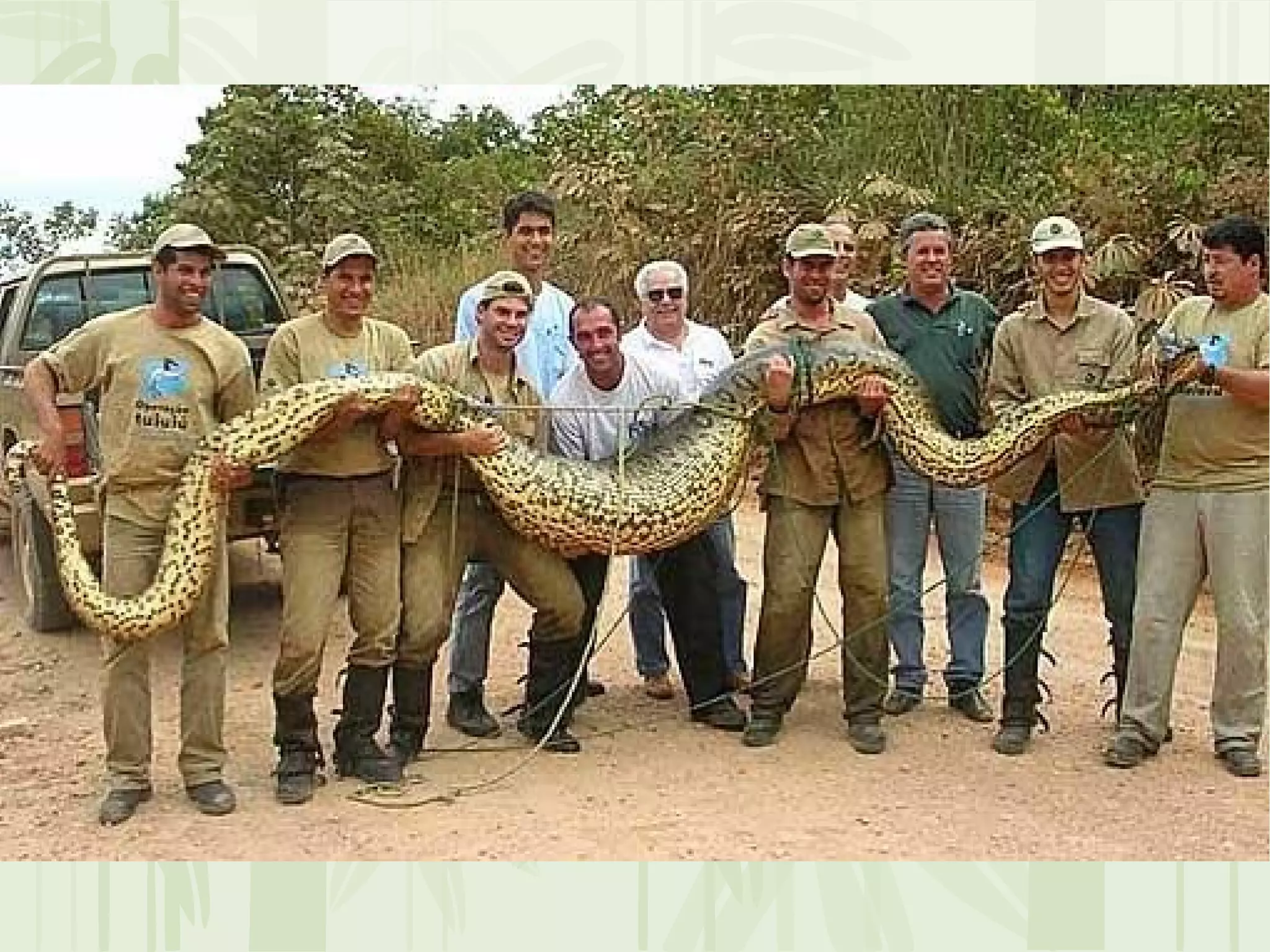
• 8 inches to 32 feet. Largest species is Reticulate Python
and Anaconda.
• Most primitive species still retain remnants of their hind
limbs from lizard ancestors, advanced species have no
limbs.
Crocodilia
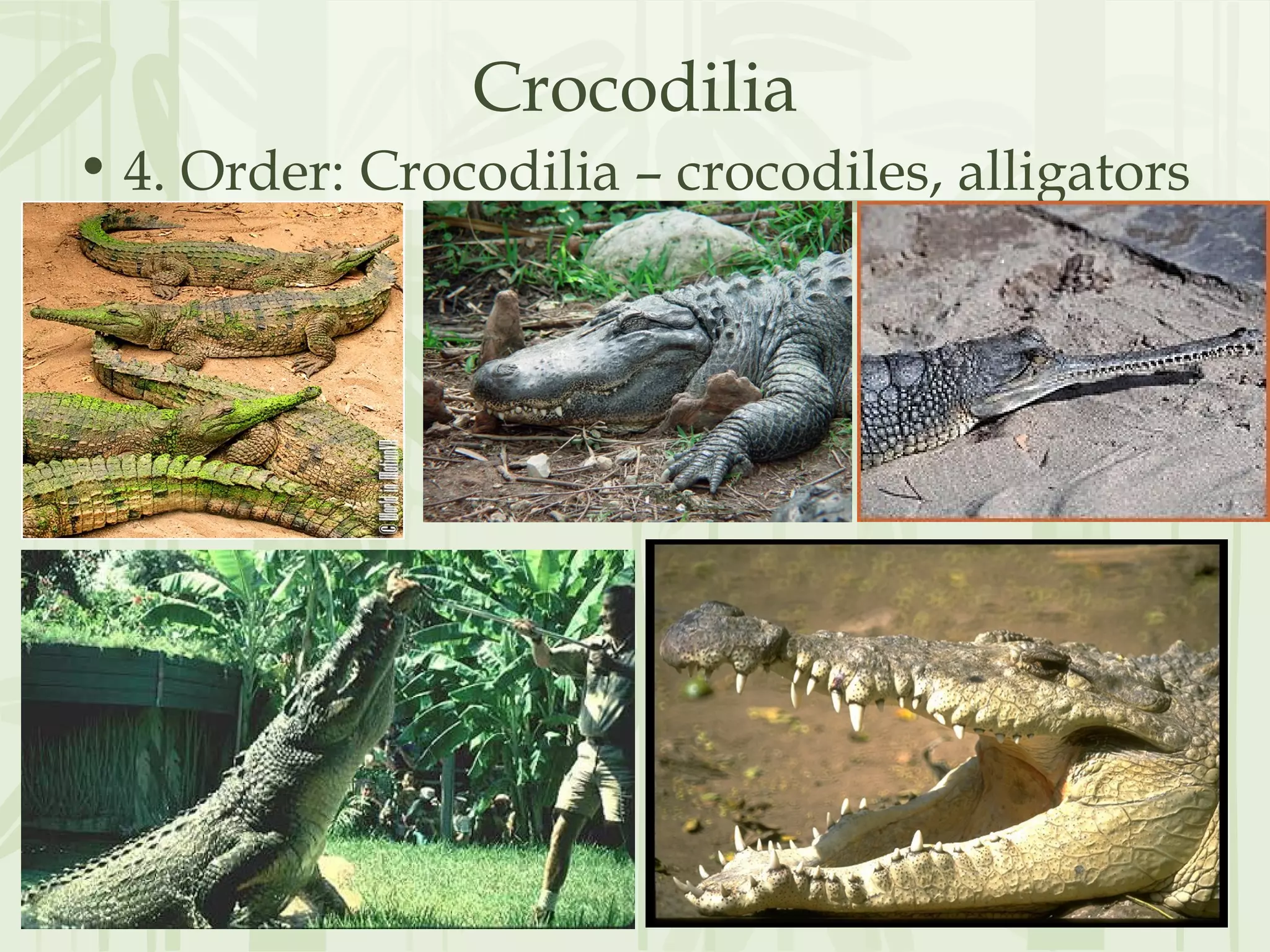
• 4. Order: Crocodilia – crocodiles, alligators
Crocodilians
• Crocodilians - 21 species (No. and So. America,
Africa, Asia, and Australia)
• Most species live in tropics.
• 5 feet to 25 feet. Largest species is Nile
Crocodile
• All are aquatic
Characteristics
• All reptiles have a three chambered heart
with a septum.
• Greatly reduced metabolic rate so not
much heat is produced within the body
• Most reptiles found in tropical areas to
bask in the sun

Intro. to Reptile Notes 2016

  • 1.
  • 2.
    Reptiles • Reptiles -living reptiles include turtles, lizards, snakes, tuatara, and crocodilians • All reptiles breathe through lungs, have scale covered skin, and are cold blooded.
  • 3.
    Classification • Kingdom: Animalia •Phylum: Chordata • Class: Reptilia • Order: 5 orders of reptiles
  • 4.
    Reptile Orders: • Order: Rhynchocephalia •Tuatara - 1 species • Native to New Zealand, an island country off the southeast coast of Australia.
  • 6.
    4 Orders ofReptiles • 1.Chelonia– turtles, tortoises
  • 7.
    Turtles • 250 species(all continents except Antarctica) • Most primitive of all reptiles • Range in size 3 inches to 6 feet • All turtles lay eggs in nests they dig in the ground • No teeth, instead the edges of the jaws are hard and sharp.
  • 8.
    Order: Squamata • Thisorder includes: • Suborder: Lacertilia (Lizards) • Suborder: Serpentes (Snakes)
  • 9.
    Squamata • 3. Suborder:Lacertilia – Lizards
  • 10.
    Lizards • Lizards -~ 3,500 species (all continents except Antarctica) • Most species live in tropics. • 3 inches to 10 feet. Largest species is Komodo Dragon • Two species are venomous, one is the Gila Monster (SW U.S.)
  • 11.
    Sepentes • 2. Suborder:Serpentes – snakes
  • 12.
    Snakes • Snakes -~ 3,500 species (all continents except Antarctica) • Most species live in tropics. • 8 inches to 32 feet. Largest species is Reticulate Python and Anaconda. • Most primitive species still retain remnants of their hind limbs from lizard ancestors, advanced species have no limbs.
  • 14.
    Crocodilia • 4. Order:Crocodilia – crocodiles, alligators
  • 15.
    Crocodilians • Crocodilians -21 species (No. and So. America, Africa, Asia, and Australia) • Most species live in tropics. • 5 feet to 25 feet. Largest species is Nile Crocodile • All are aquatic
  • 16.
    Characteristics • All reptileshave a three chambered heart with a septum. • Greatly reduced metabolic rate so not much heat is produced within the body • Most reptiles found in tropical areas to bask in the sun