BRONCHOSPASM DURING INDUCTION
WHAT SHALL I DO..?
PRAY GODTHATTHIS SITUATION DOESN’T ARISE….
IN WHICH PATIENTS IT CAN OCCUR..?
 BRONCHIAL ASTHMA
 COPD
 URI – esp IN CHILDREN
 SMOKERS
Non allergic etiology – 79%
Allergic cause - 21%
IN WHICH SITUATIONS IT CAN OCCUR…?
 UNDER PREPARED PATIENTS WITH WHEEZING
 GASTRIC ASPIRATION
 LIGHTER PLANE – PREMATURE ATTEMPT
 ANAPHYLAXIS
HOW TO DIAGNOSE….?
TIGHT BAG
FALLING OXYGEN SATURATION
FALLING EtCO2 LEVEL
NORMAL/REDUCED/NO CHEST MOVEMENT
WHEEZE / NO BREATH SOUNDS
HOW TO DIAGNOSE..?
COVER - WESTHORPE
C1 – COLOUR, CUTANEOUS MANIFESTATION FOR ALLERGY
C2 – CAPNOGRAPHY
O1 – LOW SpO2, CHECK ROTA METER,O2 SOURCE
V1 - VENTILATION BY HAND, OBSERVE COMPLIANCE AND AUSCULTATE
V2- CHECK VAPORISER FOR FLUID LEVEL, GAS LEAKS
E1 – CHECK E.T.T
E2 – EQUIPMENT RELATED CAUSES
R1 – REVIEW ALL MONITORS
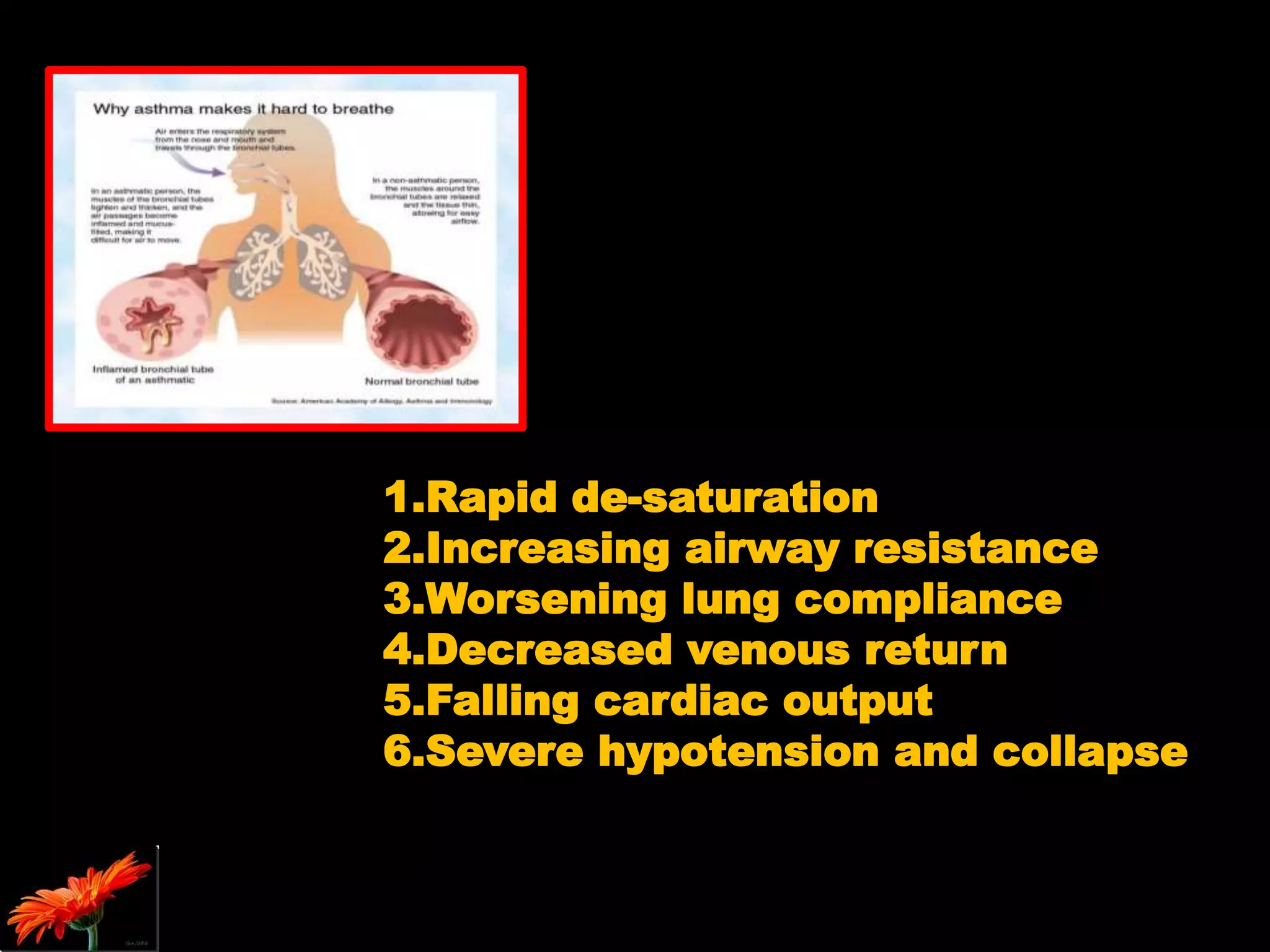
WHY BRONCHOSPASM IS FEARED..?
The narrowing of airway is so much that air entry sometimes
become impossible….
1.Rapid de-saturation
2.Increasing airway resistance
3.Worsening lung compliance
4.Decreased venous return
5.Falling cardiac output
6.Severe hypotension and collapse
WHAT SHOULD BE DONE..?
ASSESS THE SITUATION
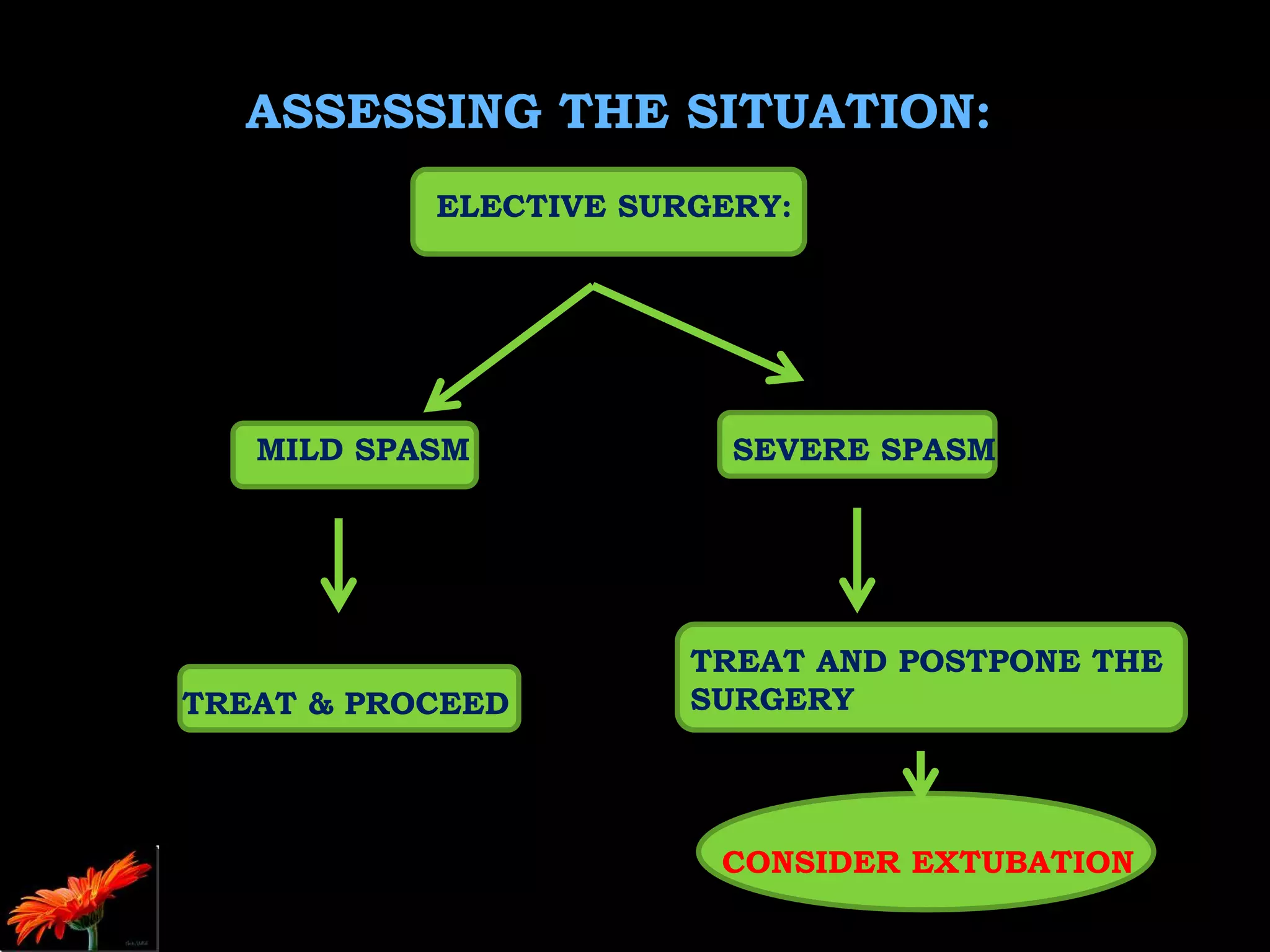
ASSESSING THE SITUATION:
ELECTIVE SURGERY:
MILD SPASM SEVERE SPASM
TREAT & PROCEED
TREAT AND POSTPONE THE
SURGERY
CONSIDER EXTUBATION
EMERGENCY SURGERY
MILD SPASM SEVERE SPASM
TREAT AND PROCEED
WITH THE SURGERY
ASSESSING THE SITUATION:
HOW TO TREAT…?
100% OXYGEN – Switch to Bain circuit
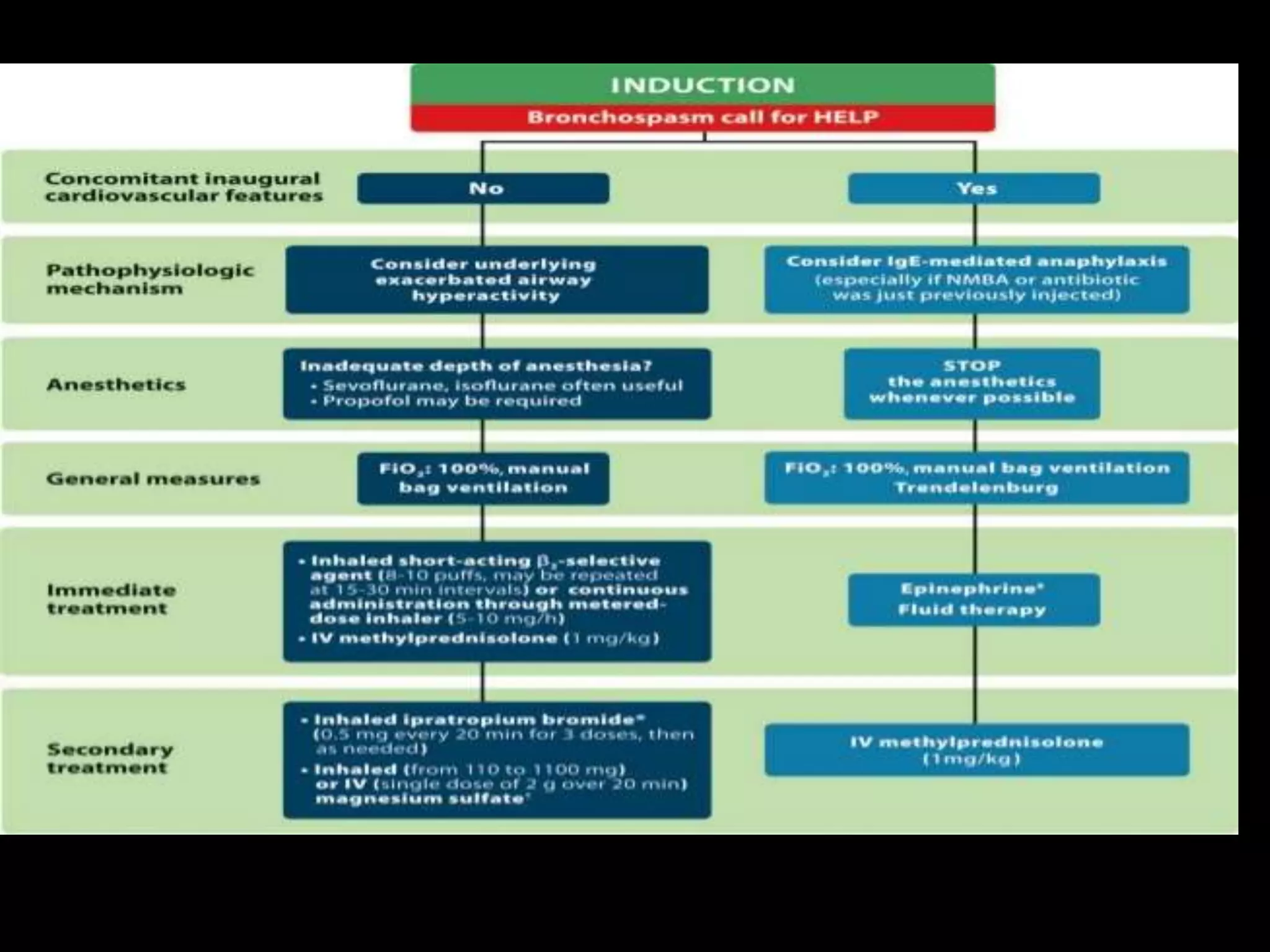
INHALED β2 AGONIST –Salbutamol
Nebulizer, metered dose inhaler
5 mg ( 5ml of 0.5%) or 8 to 10 puffs
INTRAVENOUS DRUGS – ETOPHYLLINE
?AMINOPHYLLINE
STEROIDS
Methyl prednisolone ( 1 mg / kg)
NEBULISED IPRATROPIUM
0.5 mg in 5 ml
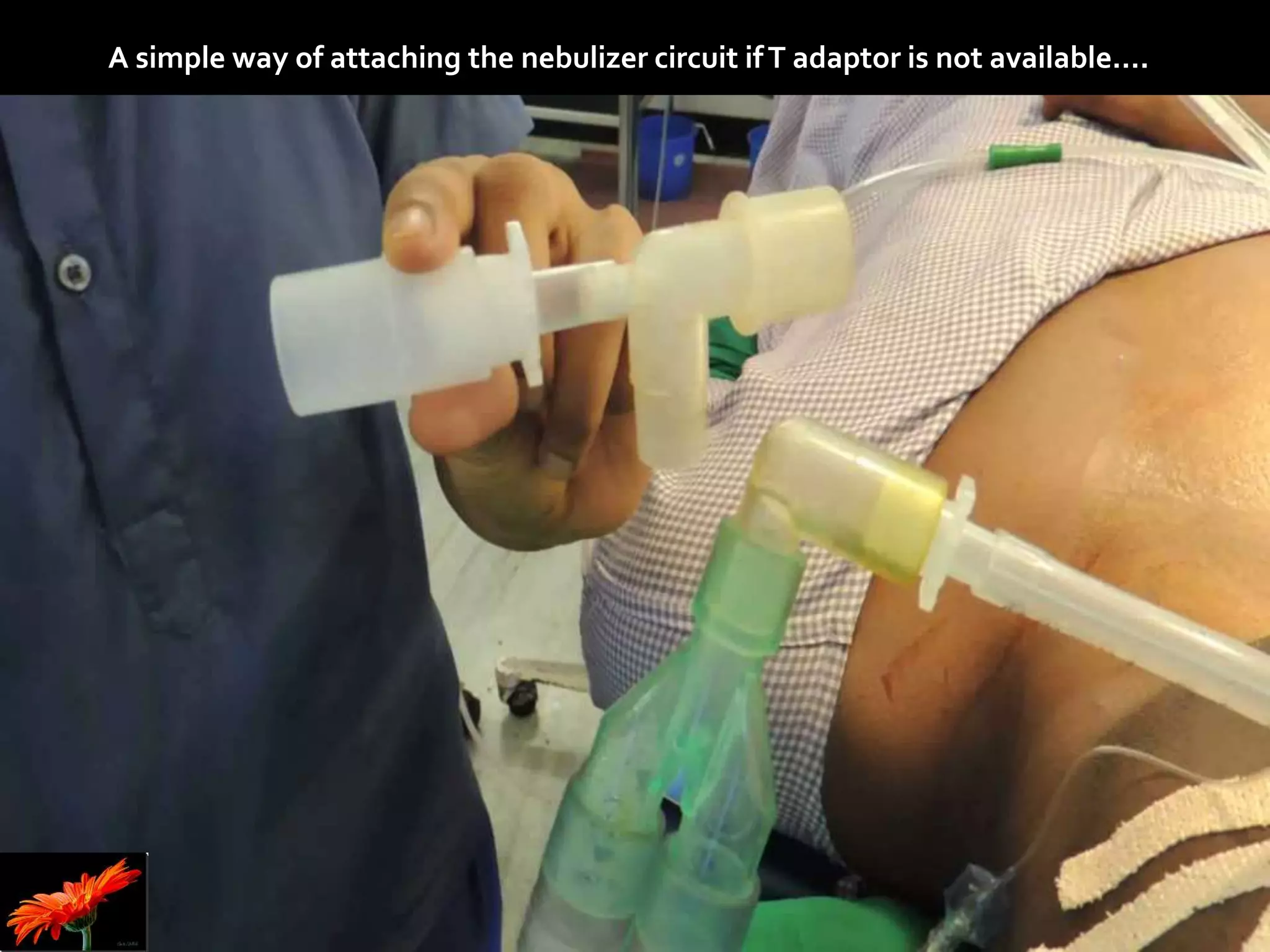
How to attach the nebuliser to the
Breathing circuit….?
A simple way of attaching the nebulizer circuit ifT adaptor is not available….
TREATMENT – contd….
Whether to deepen the anaesthesia with
inhalational agent or lighten the patient..?
STABLE HAEMODYNAMICS:
Give Halothane/isoflurane/sevoflurane
If spasm is severe- go for intravenous anaesthetics
ketamine/propofol
TREATMENT – contd…
TREATMENT – contd….
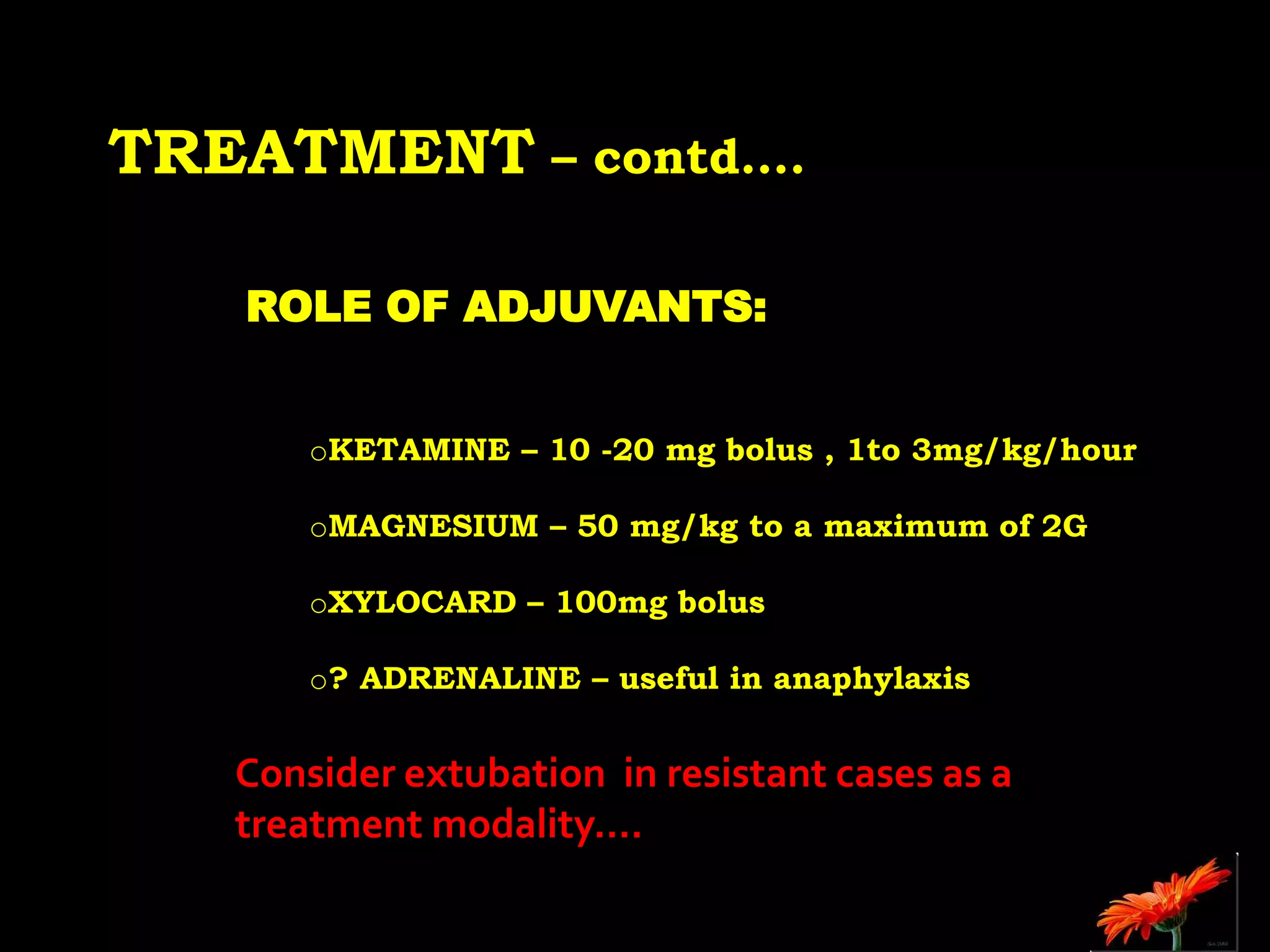
ROLE OF ADJUVANTS:
oKETAMINE – 10 -20 mg bolus , 1to 3mg/kg/hour
oMAGNESIUM – 50 mg/kg to a maximum of 2G
oXYLOCARD – 100mg bolus
o? ADRENALINE – useful in anaphylaxis
Consider extubation in resistant cases as a
treatment modality….
HOW TO PREVENT SPASM
DURING INDUCTION..?
 NO ELECTIVE SURGERY IN A PATIENT WITH WHEEZE
 ADEQUATE PREPARATION
 STOP SMOKING
 IF POSSIBLE – SELECT REGIONAL ANAESTHESIA
 ROLE OF STEROIDS
44% of bronchospasm incidence occur during intubation –Westhorpe et al
HOW TO PREVENT
SPASM DURING
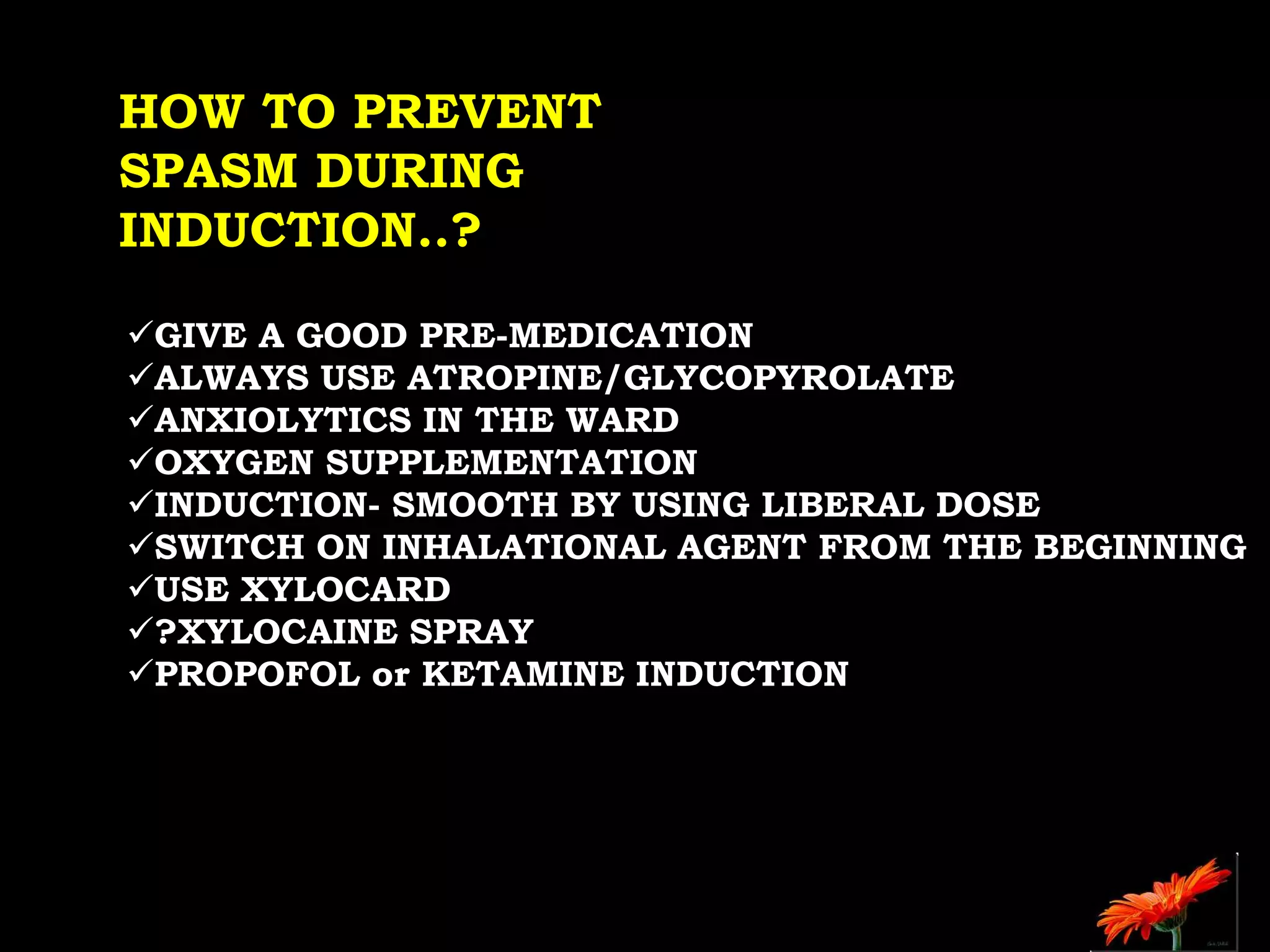
INDUCTION..?
GIVE A GOOD PRE-MEDICATION
ALWAYS USE ATROPINE/GLYCOPYROLATE
ANXIOLYTICS IN THE WARD
OXYGEN SUPPLEMENTATION
INDUCTION- SMOOTH BY USING LIBERAL DOSE
SWITCH ON INHALATIONAL AGENT FROM THE BEGINNING
USE XYLOCARD
?XYLOCAINE SPRAY
PROPOFOL or KETAMINE INDUCTION
HOW TO PREVENT SPASM
DURING MAINTENANCE…?
REGIONAL ANAESTHESIA WITH G.A
CONSIDER SIMPLE NERVE BLOCKS
WOUND INFILTRATION
ADEQUATE ANALGESIA
36% bronchospasm incidence occur during maintenance phase - Westhorpe
HOW TO PREVENT SPASM DURING
EXTUBATION..?
Tricky situation
If the type of surgery permits,
deeper plane of extubation
Xylocard, low dose ketamine
Good post-operative analgesia and
oxygenation
The rest of 20% of cases occur during this phase of anaesthesia
Summary:
Bronchospasm during induction can occur because of 2 reasons
1.Non-allergic airway hyperreactivity
2.As a part of anaphylactic syndrome
Needs urgent intervention as the vitals will deteriorate rapidly
A systematic approach helps in the early diagnosis
Inhalational β2 agonists is the mainstay of treatment
Summary..:
In resistant cases, adjuvants like ipratropium,
magnesium have a role to play
As lighter plane of anaesthesia triggers spasm,
patient has to be in deeper plane
Inhalational agents like halothane,sevoflurane
possess broncho-dilating property
Adequate preparation, good analgesia and
depth of anaesthesia help in
avoiding this situation
Concluding…..
Prevention is better than cure
dr.r.selvakumar
professor of anaesthesiology
k.a.p.viswanatham govt medical college
trichy

Intraoperative bronchospasm

  • 1.
  • 2.
    PRAY GODTHATTHIS SITUATIONDOESN’T ARISE….
  • 3.
    IN WHICH PATIENTSIT CAN OCCUR..?  BRONCHIAL ASTHMA  COPD  URI – esp IN CHILDREN  SMOKERS Non allergic etiology – 79% Allergic cause - 21%
  • 4.
    IN WHICH SITUATIONSIT CAN OCCUR…?  UNDER PREPARED PATIENTS WITH WHEEZING  GASTRIC ASPIRATION  LIGHTER PLANE – PREMATURE ATTEMPT  ANAPHYLAXIS
  • 5.
    HOW TO DIAGNOSE….? TIGHTBAG FALLING OXYGEN SATURATION FALLING EtCO2 LEVEL NORMAL/REDUCED/NO CHEST MOVEMENT WHEEZE / NO BREATH SOUNDS
  • 6.
    HOW TO DIAGNOSE..? COVER- WESTHORPE C1 – COLOUR, CUTANEOUS MANIFESTATION FOR ALLERGY C2 – CAPNOGRAPHY O1 – LOW SpO2, CHECK ROTA METER,O2 SOURCE V1 - VENTILATION BY HAND, OBSERVE COMPLIANCE AND AUSCULTATE V2- CHECK VAPORISER FOR FLUID LEVEL, GAS LEAKS E1 – CHECK E.T.T E2 – EQUIPMENT RELATED CAUSES R1 – REVIEW ALL MONITORS
  • 7.
    WHY BRONCHOSPASM ISFEARED..? The narrowing of airway is so much that air entry sometimes become impossible….
  • 8.
    1.Rapid de-saturation 2.Increasing airwayresistance 3.Worsening lung compliance 4.Decreased venous return 5.Falling cardiac output 6.Severe hypotension and collapse
  • 9.
    WHAT SHOULD BEDONE..? ASSESS THE SITUATION
  • 10.
    ASSESSING THE SITUATION: ELECTIVESURGERY: MILD SPASM SEVERE SPASM TREAT & PROCEED TREAT AND POSTPONE THE SURGERY CONSIDER EXTUBATION
  • 11.
    EMERGENCY SURGERY MILD SPASMSEVERE SPASM TREAT AND PROCEED WITH THE SURGERY ASSESSING THE SITUATION:
  • 12.
    HOW TO TREAT…? 100%OXYGEN – Switch to Bain circuit INHALED β2 AGONIST –Salbutamol Nebulizer, metered dose inhaler 5 mg ( 5ml of 0.5%) or 8 to 10 puffs INTRAVENOUS DRUGS – ETOPHYLLINE ?AMINOPHYLLINE STEROIDS Methyl prednisolone ( 1 mg / kg) NEBULISED IPRATROPIUM 0.5 mg in 5 ml
  • 13.
    How to attachthe nebuliser to the Breathing circuit….?
  • 14.
    A simple wayof attaching the nebulizer circuit ifT adaptor is not available….
  • 15.
    TREATMENT – contd…. Whetherto deepen the anaesthesia with inhalational agent or lighten the patient..?
  • 16.
    STABLE HAEMODYNAMICS: Give Halothane/isoflurane/sevoflurane Ifspasm is severe- go for intravenous anaesthetics ketamine/propofol TREATMENT – contd…
  • 17.
    TREATMENT – contd…. ROLEOF ADJUVANTS: oKETAMINE – 10 -20 mg bolus , 1to 3mg/kg/hour oMAGNESIUM – 50 mg/kg to a maximum of 2G oXYLOCARD – 100mg bolus o? ADRENALINE – useful in anaphylaxis Consider extubation in resistant cases as a treatment modality….
  • 19.
    HOW TO PREVENTSPASM DURING INDUCTION..?  NO ELECTIVE SURGERY IN A PATIENT WITH WHEEZE  ADEQUATE PREPARATION  STOP SMOKING  IF POSSIBLE – SELECT REGIONAL ANAESTHESIA  ROLE OF STEROIDS 44% of bronchospasm incidence occur during intubation –Westhorpe et al
  • 20.
    HOW TO PREVENT SPASMDURING INDUCTION..? GIVE A GOOD PRE-MEDICATION ALWAYS USE ATROPINE/GLYCOPYROLATE ANXIOLYTICS IN THE WARD OXYGEN SUPPLEMENTATION INDUCTION- SMOOTH BY USING LIBERAL DOSE SWITCH ON INHALATIONAL AGENT FROM THE BEGINNING USE XYLOCARD ?XYLOCAINE SPRAY PROPOFOL or KETAMINE INDUCTION
  • 21.
    HOW TO PREVENTSPASM DURING MAINTENANCE…? REGIONAL ANAESTHESIA WITH G.A CONSIDER SIMPLE NERVE BLOCKS WOUND INFILTRATION ADEQUATE ANALGESIA 36% bronchospasm incidence occur during maintenance phase - Westhorpe
  • 22.
    HOW TO PREVENTSPASM DURING EXTUBATION..? Tricky situation If the type of surgery permits, deeper plane of extubation Xylocard, low dose ketamine Good post-operative analgesia and oxygenation The rest of 20% of cases occur during this phase of anaesthesia
  • 23.
    Summary: Bronchospasm during inductioncan occur because of 2 reasons 1.Non-allergic airway hyperreactivity 2.As a part of anaphylactic syndrome Needs urgent intervention as the vitals will deteriorate rapidly A systematic approach helps in the early diagnosis Inhalational β2 agonists is the mainstay of treatment
  • 24.
    Summary..: In resistant cases,adjuvants like ipratropium, magnesium have a role to play As lighter plane of anaesthesia triggers spasm, patient has to be in deeper plane Inhalational agents like halothane,sevoflurane possess broncho-dilating property Adequate preparation, good analgesia and depth of anaesthesia help in avoiding this situation
  • 25.
  • 26.