Interstitial cystitis
Akshata Rao M.Pharm
Medical Services
Interstitial cystitis –background
Suprapubic pain with bladder filling associated with increased daytime
and nighttime frequency, in the absence of proven urinary infection
or other obvious pathology
Retrieved from http://emedicine.medscape.com/article/2055505-overview#a2
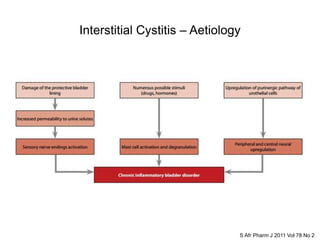
Interstitial Cystitis – Aetiology
S Afr Pharm J 2011 Vol 78 No 2
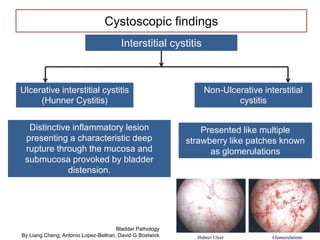
Cystoscopic findings
Interstitial cystitis
Ulcerative interstitial cystitis
(Hunner Cystitis)
Non-Ulcerative interstitial
cystitis
Distinctive inflammatory lesion
presenting a characteristic deep
rupture through the mucosa and
submucosa provoked by bladder
distension.
Presented like multiple
strawberry like patches known
as glomerulations
Bladder Pathology
By Liang Cheng, Antonio Lopez-Beltran, David G Bostwick
Symptoms
 Urgency,
 frequency,
 suprapubic/ pelvic pain,
 dyspareunia,
 flareups and remissions
S Afr Pharm J 2011 Vol 78 No 2
Therapies in Interstitial Cystitis
Am Fam Physician 2001;64:1199-206,1212-4.
Oral treatments
Pentosan polysulfate
1. Pentosan polysulfate is a highly sulfated, semisynthetic
glucosaminoglycan with chemical and structural similarities to
naturally occurring glucosaminoglycans.
2. It may take three to six months for patients to respond to pentosan
polysulfate.
3. The usual dosage is 100 mg orally three times per day. Adverse
reactions to pentosan polysulfate include diarrhea, dyspepsia,
reversible alopecia, headache, rash, dizziness, abdominal pain
and uncommon liver function abnormalities (1 to 4 percent).
Oral treatments
Tricyclic antidepressants
Am Fam Physician 2001;64:1199-206,1212-4.
1. Tricyclic antidepressants block pain arousal and are widely used in
pain clinics for their pain blocking effects.
2. No placebo-controlled studies with tricyclic antidepressants have
been performed,
3. But these medications have been found to be beneficial in several
open-label studies
Oral treatments
Antihistamines
Am Fam Physician 2001;64:1199-206,1212-4.
1. Use of hydroxyzine , an antihistamine, is based on the hypothesis
that histamine released by mast cell degranulation may be
responsible for symptoms of interstitial cystitis.
2. Hydroxyzine (in a dosage of 25 to 75 mg at bedtime) and the H2-
receptor antagonist cimetidine , in a dosage of 300 mg twice daily,
were both effective in open label studies
Oral treatments
Intravesicular pharmacotherapy
Intravesicular pharmacotherapy - Irrigation of urinary bladder Am Fam Physician 2001;64:1199-206,1212-4.
1. The most commonly used and only intravesical agent labeled by
the U.S. Food and Drug Administration for the treatment of
interstitial cystitis is dimethyl sulfoxide.
2. Although dimethyl sulfoxide is an anti-inflammatory agent, it seems
to have some analgesic and muscle relaxant properties as well.
Oral treatments
heparin
Am Fam Physician 2001;64:1199-206,1212-4.
1. In an open-label study, 56 percent of patients with interstitial
cystitis experienced relief from symptoms using heparin
intravesically, in a dosage of 10,000 U three times a week
2. Heparin instillation prolonged the response to dimethyl sulfoxide
Hyaluronic acid
1. Hyaluronic acid is a protective barrier of the urothelium
2. In a prospective randomised study a total of 30 patients were assigned to
receive four weekly intravesical instillations of 40 mg of hyaluronic acid
followed by five monthly instillations (hyaluronic acid-9 group). Another 30
patients received 12 intravesical instillations of 40 mg hyaluronic acid every
2 weeks (hyaluronic acid-12 group).
3. The Interstitial Cystitis Symptom Index, Interstitial Cystitis Problem Index
and total score, pain visual analog scale, functional bladder capacity,
maximum flow rate, and Quality of Life Index improved significantly after 6
months in both groups.
Oral treatments
International Journal of Urology Volume 20, Issue 2, pages 203–207, February 2013
Surgical therapies
1. Bladder augmentation (enlarging the bladder by attaching an
isolated segment of bowel to it),
2. Neobladder (a urinary reservoir made from a bowel or stomach
segment often used to replace the bladder after cystectomy and
urinary diversion) is rarely done
Non-pharmacological treatment
1. Supportive therapies include general measures that can alleviate
symptoms or prevent exacerbations.
2. Psychosocial support is important because it is an essential part of
any chronic pain treatment plan.
3. Support groups of persons with the same disorder may prove to be
useful.
S Afr Pharm J 2011 Vol 78 No 2

Interstitial cystitis

  • 1.
    Interstitial cystitis Akshata RaoM.Pharm Medical Services
  • 2.
    Interstitial cystitis –background Suprapubicpain with bladder filling associated with increased daytime and nighttime frequency, in the absence of proven urinary infection or other obvious pathology Retrieved from http://emedicine.medscape.com/article/2055505-overview#a2
  • 3.
    Interstitial Cystitis –Aetiology S Afr Pharm J 2011 Vol 78 No 2
  • 4.
    Cystoscopic findings Interstitial cystitis Ulcerativeinterstitial cystitis (Hunner Cystitis) Non-Ulcerative interstitial cystitis Distinctive inflammatory lesion presenting a characteristic deep rupture through the mucosa and submucosa provoked by bladder distension. Presented like multiple strawberry like patches known as glomerulations Bladder Pathology By Liang Cheng, Antonio Lopez-Beltran, David G Bostwick
  • 5.
    Symptoms  Urgency,  frequency, suprapubic/ pelvic pain,  dyspareunia,  flareups and remissions S Afr Pharm J 2011 Vol 78 No 2
  • 6.
    Therapies in InterstitialCystitis Am Fam Physician 2001;64:1199-206,1212-4.
  • 7.
    Oral treatments Pentosan polysulfate 1.Pentosan polysulfate is a highly sulfated, semisynthetic glucosaminoglycan with chemical and structural similarities to naturally occurring glucosaminoglycans. 2. It may take three to six months for patients to respond to pentosan polysulfate. 3. The usual dosage is 100 mg orally three times per day. Adverse reactions to pentosan polysulfate include diarrhea, dyspepsia, reversible alopecia, headache, rash, dizziness, abdominal pain and uncommon liver function abnormalities (1 to 4 percent).
  • 8.
    Oral treatments Tricyclic antidepressants AmFam Physician 2001;64:1199-206,1212-4. 1. Tricyclic antidepressants block pain arousal and are widely used in pain clinics for their pain blocking effects. 2. No placebo-controlled studies with tricyclic antidepressants have been performed, 3. But these medications have been found to be beneficial in several open-label studies
  • 9.
    Oral treatments Antihistamines Am FamPhysician 2001;64:1199-206,1212-4. 1. Use of hydroxyzine , an antihistamine, is based on the hypothesis that histamine released by mast cell degranulation may be responsible for symptoms of interstitial cystitis. 2. Hydroxyzine (in a dosage of 25 to 75 mg at bedtime) and the H2- receptor antagonist cimetidine , in a dosage of 300 mg twice daily, were both effective in open label studies
  • 10.
    Oral treatments Intravesicular pharmacotherapy Intravesicularpharmacotherapy - Irrigation of urinary bladder Am Fam Physician 2001;64:1199-206,1212-4. 1. The most commonly used and only intravesical agent labeled by the U.S. Food and Drug Administration for the treatment of interstitial cystitis is dimethyl sulfoxide. 2. Although dimethyl sulfoxide is an anti-inflammatory agent, it seems to have some analgesic and muscle relaxant properties as well.
  • 11.
    Oral treatments heparin Am FamPhysician 2001;64:1199-206,1212-4. 1. In an open-label study, 56 percent of patients with interstitial cystitis experienced relief from symptoms using heparin intravesically, in a dosage of 10,000 U three times a week 2. Heparin instillation prolonged the response to dimethyl sulfoxide
  • 12.
    Hyaluronic acid 1. Hyaluronicacid is a protective barrier of the urothelium 2. In a prospective randomised study a total of 30 patients were assigned to receive four weekly intravesical instillations of 40 mg of hyaluronic acid followed by five monthly instillations (hyaluronic acid-9 group). Another 30 patients received 12 intravesical instillations of 40 mg hyaluronic acid every 2 weeks (hyaluronic acid-12 group). 3. The Interstitial Cystitis Symptom Index, Interstitial Cystitis Problem Index and total score, pain visual analog scale, functional bladder capacity, maximum flow rate, and Quality of Life Index improved significantly after 6 months in both groups. Oral treatments International Journal of Urology Volume 20, Issue 2, pages 203–207, February 2013
  • 13.
    Surgical therapies 1. Bladderaugmentation (enlarging the bladder by attaching an isolated segment of bowel to it), 2. Neobladder (a urinary reservoir made from a bowel or stomach segment often used to replace the bladder after cystectomy and urinary diversion) is rarely done
  • 14.
    Non-pharmacological treatment 1. Supportivetherapies include general measures that can alleviate symptoms or prevent exacerbations. 2. Psychosocial support is important because it is an essential part of any chronic pain treatment plan. 3. Support groups of persons with the same disorder may prove to be useful. S Afr Pharm J 2011 Vol 78 No 2