Interstitial Cystitis
Dr. Saket Narnoli
www.dhanbadurologist.com
What is Interstitial Cystitis?
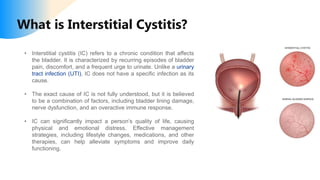
• Interstitial cystitis (IC) refers to a chronic condition that affects
the bladder. It is characterized by recurring episodes of bladder
pain, discomfort, and a frequent urge to urinate. Unlike a urinary
tract infection (UTI), IC does not have a specific infection as its
cause.
• The exact cause of IC is not fully understood, but it is believed
to be a combination of factors, including bladder lining damage,
nerve dysfunction, and an overactive immune response.
• IC can significantly impact a person’s quality of life, causing
physical and emotional distress. Effective management
strategies, including lifestyle changes, medications, and other
therapies, can help alleviate symptoms and improve daily
functioning.
Relation Between Painful Bladder
Syndrome and Interstitial Cystitis
• Painful Bladder Syndrome (PBS) is a term that is sometimes used
interchangeably with Interstitial Cystitis (IC). In fact, PBS is a broader
term that encompasses a range of bladder pain disorders, including IC.
While IC is a specific type of PBS, not all cases of PBS are diagnosed
as IC.
• Some healthcare professionals may use the term PBS when the
symptoms align with bladder pain but do not meet the specific
diagnostic criteria for IC. It’s important to note that the terms IC and PBS
are often used interchangeably, and both refer to chronic bladder pain
conditions that require similar management approaches.
What are the Interstitial Cystitis Symptoms?
• Increased frequency of urination - This involves needing to urinate more often than usual, both during the
day and at night.
• Pain or discomfort in the pelvic region - This can extend beyond the bladder area and may be
described as aching, pressure, or a sense of heaviness.
• Pain during sexual intercourse (dyspareunia) - Many individuals with IC experience pain or
discomfort during or after sexual activity.
• Pain relief after urination - Some people find temporary relief from bladder pain after urinating.
• Negative impact on quality of life - IC symptoms can significantly affect daily activities, sleep patterns,
work, social interactions, and emotional well-being.
How to Diagnose Interstitial Cystitis?
• Cystoscopy - This procedure involves inserting a thin tube with a camera (cystoscope) into the bladder to visually
examine the bladder wall for signs of inflammation or other abnormalities.
• Urine analysis - A urine sample may be tested to rule out other possible causes of bladder pain, such as urinary tract
infections or bladder stones.
• Potassium sensitivity test (PST)- A solution containing potassium is instilled into the bladder, and if it triggers
pain like the patient’s symptoms, it suggests IC.
• Bladder biopsy - In some cases, a small tissue sample may be taken from the bladder for further examination under a
microscope to confirm the diagnosis.
What are Interstitial Cystitis Treatments?
• Lifestyle modifications - Certain dietary changes, such as avoiding trigger foods (e.g., caffeine, spicy foods), maintaining a healthy
weight, and practicing stress management techniques, can help manage IC symptoms.
• Medications - Various medications may be prescribed, including oral medications such as pain relievers, antihistamines, and tricyclic
antidepressants. Bladder instillations, where medications are directly introduced into the bladder, may also be used.
• Bladder training - This involves gradually increasing the time between urination to train the bladder to hold larger volumes of urine.
• Physical therapy - Pelvic floor physical therapy can help relax and strengthen the pelvic floor muscles, relieving associated pain and
discomfort.
• Nerve stimulation- Techniques such as sacral nerve stimulation or intravesical electrical stimulation may be considered to modulate nerve
activity and alleviate symptoms.
• Bladder distention - In some cases, stretching the bladder by filling it with water or gas during a cystoscopy may provide temporary relief.
Thank You
www.dhanbadurologist.com

Interstitial Cystitis.pptx

  • 1.
    Interstitial Cystitis Dr. SaketNarnoli www.dhanbadurologist.com
  • 2.
    What is InterstitialCystitis? • Interstitial cystitis (IC) refers to a chronic condition that affects the bladder. It is characterized by recurring episodes of bladder pain, discomfort, and a frequent urge to urinate. Unlike a urinary tract infection (UTI), IC does not have a specific infection as its cause. • The exact cause of IC is not fully understood, but it is believed to be a combination of factors, including bladder lining damage, nerve dysfunction, and an overactive immune response. • IC can significantly impact a person’s quality of life, causing physical and emotional distress. Effective management strategies, including lifestyle changes, medications, and other therapies, can help alleviate symptoms and improve daily functioning.
  • 3.
    Relation Between PainfulBladder Syndrome and Interstitial Cystitis • Painful Bladder Syndrome (PBS) is a term that is sometimes used interchangeably with Interstitial Cystitis (IC). In fact, PBS is a broader term that encompasses a range of bladder pain disorders, including IC. While IC is a specific type of PBS, not all cases of PBS are diagnosed as IC. • Some healthcare professionals may use the term PBS when the symptoms align with bladder pain but do not meet the specific diagnostic criteria for IC. It’s important to note that the terms IC and PBS are often used interchangeably, and both refer to chronic bladder pain conditions that require similar management approaches.
  • 4.
    What are theInterstitial Cystitis Symptoms? • Increased frequency of urination - This involves needing to urinate more often than usual, both during the day and at night. • Pain or discomfort in the pelvic region - This can extend beyond the bladder area and may be described as aching, pressure, or a sense of heaviness. • Pain during sexual intercourse (dyspareunia) - Many individuals with IC experience pain or discomfort during or after sexual activity. • Pain relief after urination - Some people find temporary relief from bladder pain after urinating. • Negative impact on quality of life - IC symptoms can significantly affect daily activities, sleep patterns, work, social interactions, and emotional well-being.
  • 5.
    How to DiagnoseInterstitial Cystitis? • Cystoscopy - This procedure involves inserting a thin tube with a camera (cystoscope) into the bladder to visually examine the bladder wall for signs of inflammation or other abnormalities. • Urine analysis - A urine sample may be tested to rule out other possible causes of bladder pain, such as urinary tract infections or bladder stones. • Potassium sensitivity test (PST)- A solution containing potassium is instilled into the bladder, and if it triggers pain like the patient’s symptoms, it suggests IC. • Bladder biopsy - In some cases, a small tissue sample may be taken from the bladder for further examination under a microscope to confirm the diagnosis.
  • 6.
    What are InterstitialCystitis Treatments? • Lifestyle modifications - Certain dietary changes, such as avoiding trigger foods (e.g., caffeine, spicy foods), maintaining a healthy weight, and practicing stress management techniques, can help manage IC symptoms. • Medications - Various medications may be prescribed, including oral medications such as pain relievers, antihistamines, and tricyclic antidepressants. Bladder instillations, where medications are directly introduced into the bladder, may also be used. • Bladder training - This involves gradually increasing the time between urination to train the bladder to hold larger volumes of urine. • Physical therapy - Pelvic floor physical therapy can help relax and strengthen the pelvic floor muscles, relieving associated pain and discomfort. • Nerve stimulation- Techniques such as sacral nerve stimulation or intravesical electrical stimulation may be considered to modulate nerve activity and alleviate symptoms. • Bladder distention - In some cases, stretching the bladder by filling it with water or gas during a cystoscopy may provide temporary relief.
  • 7.