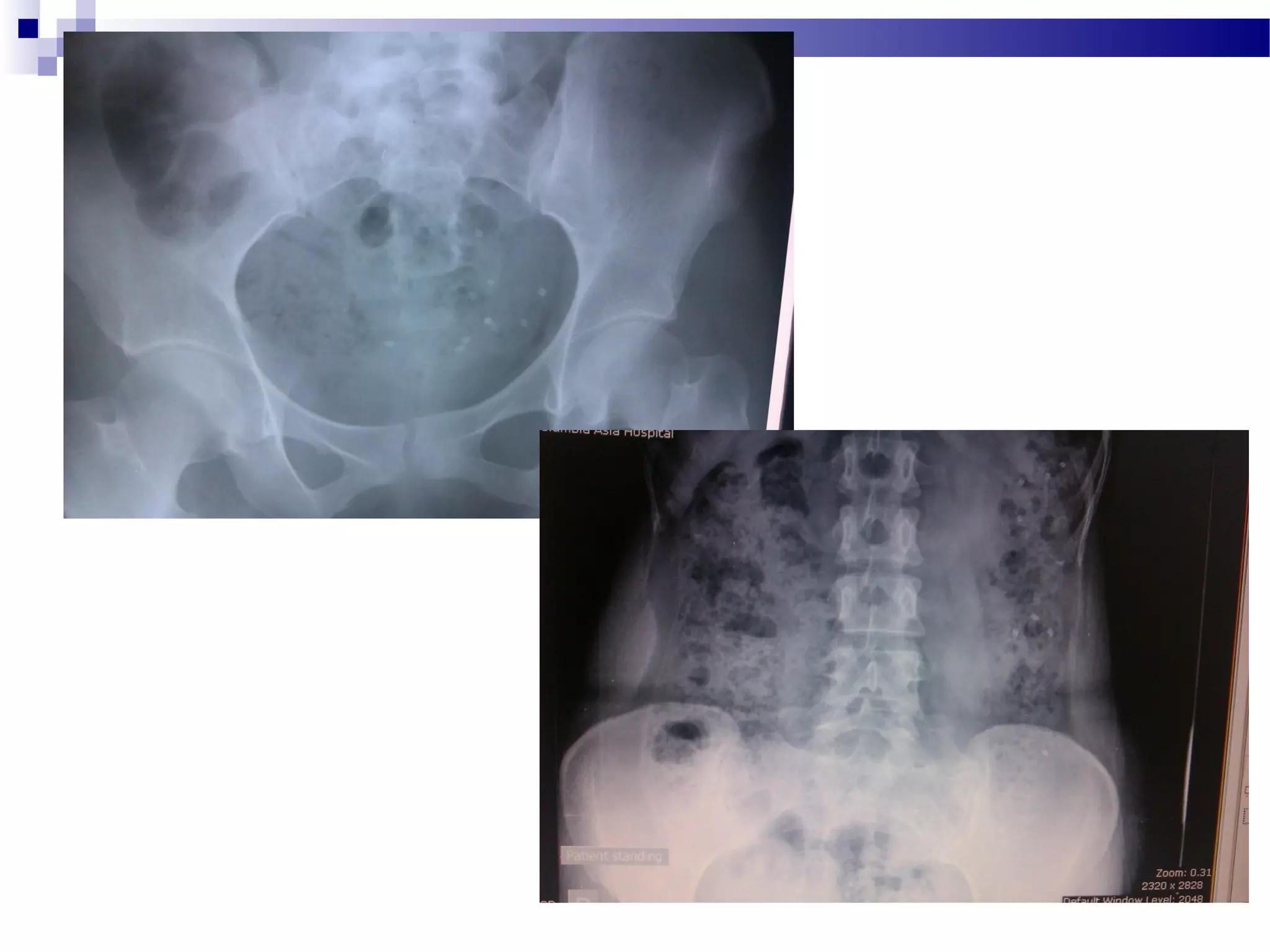
Mission im ..poo ..sible
Dr. Naresh Bhat
Bangalore
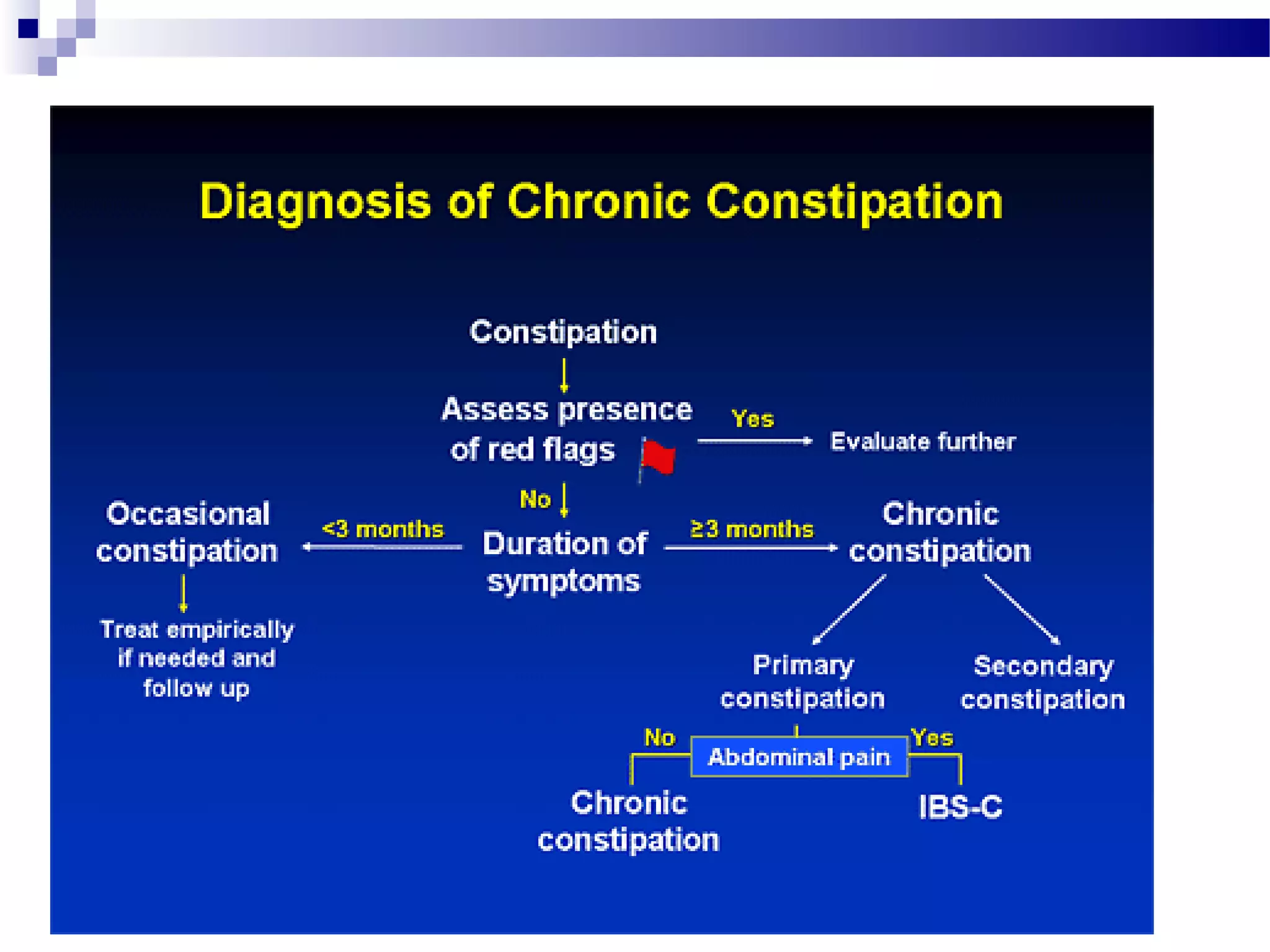
Clinical approach
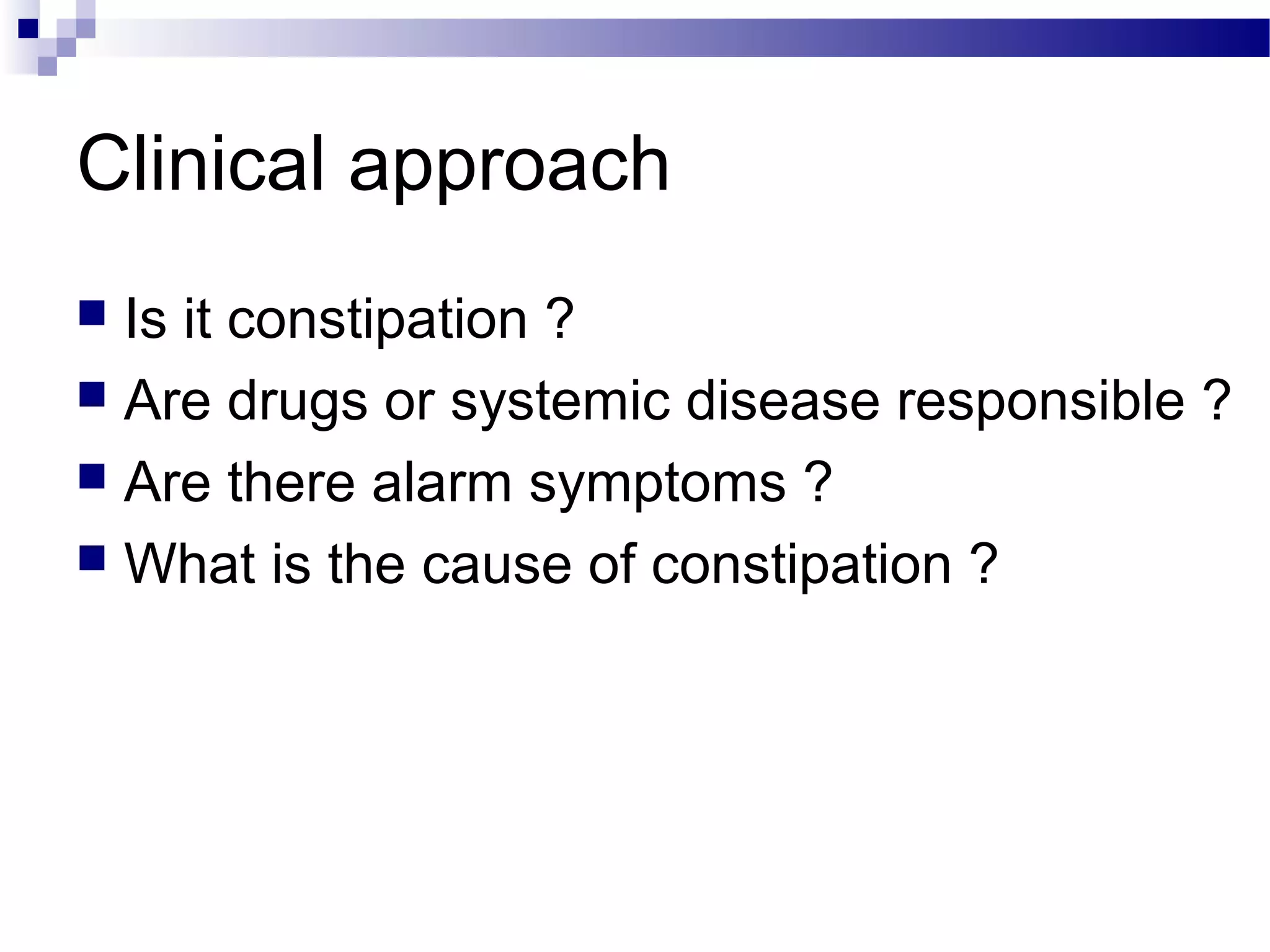
 Is it constipation ?
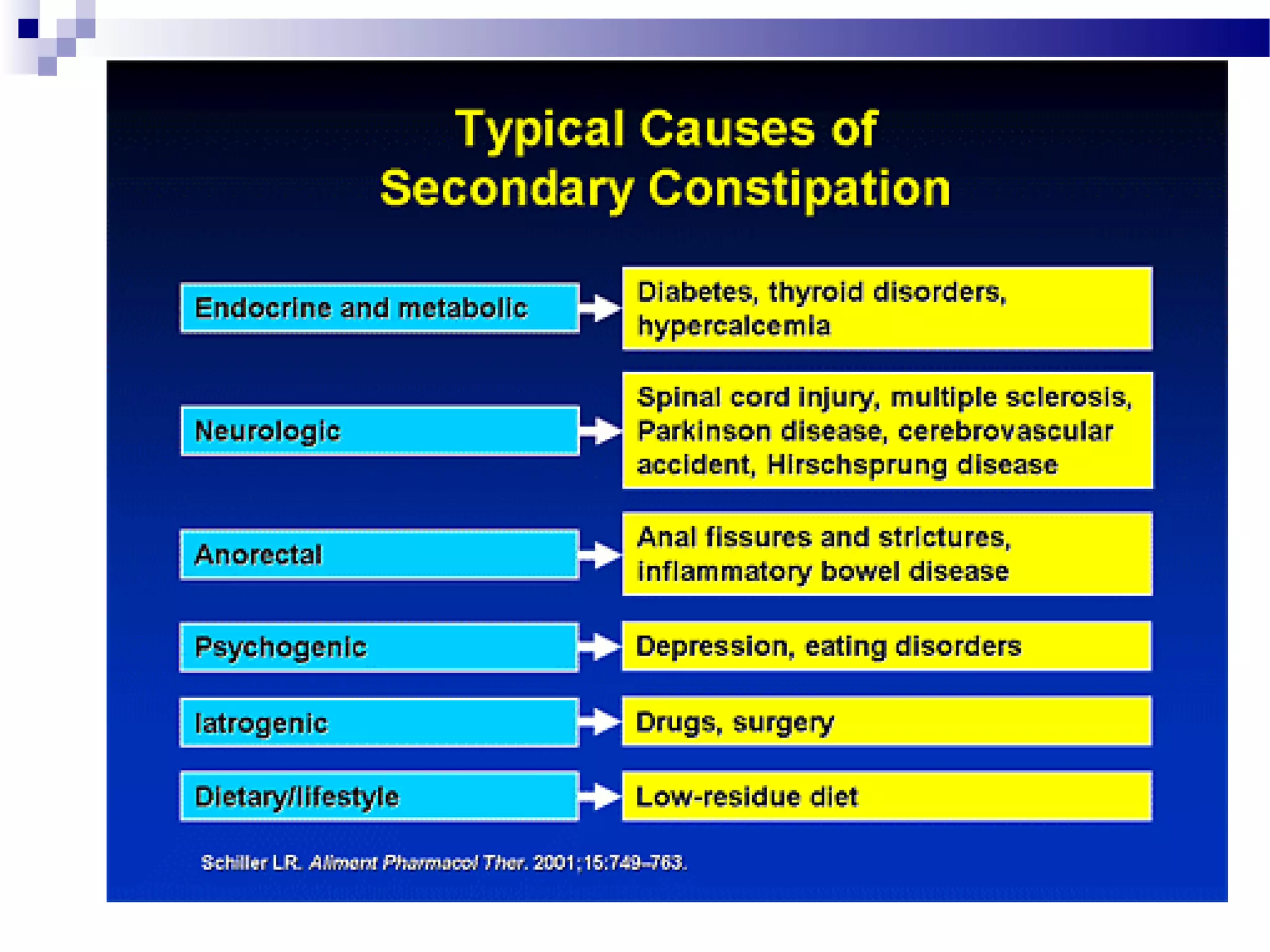
 Are drugs or systemic disease responsible ?
 Are there alarm symptoms ?
 What is the cause of constipation ?
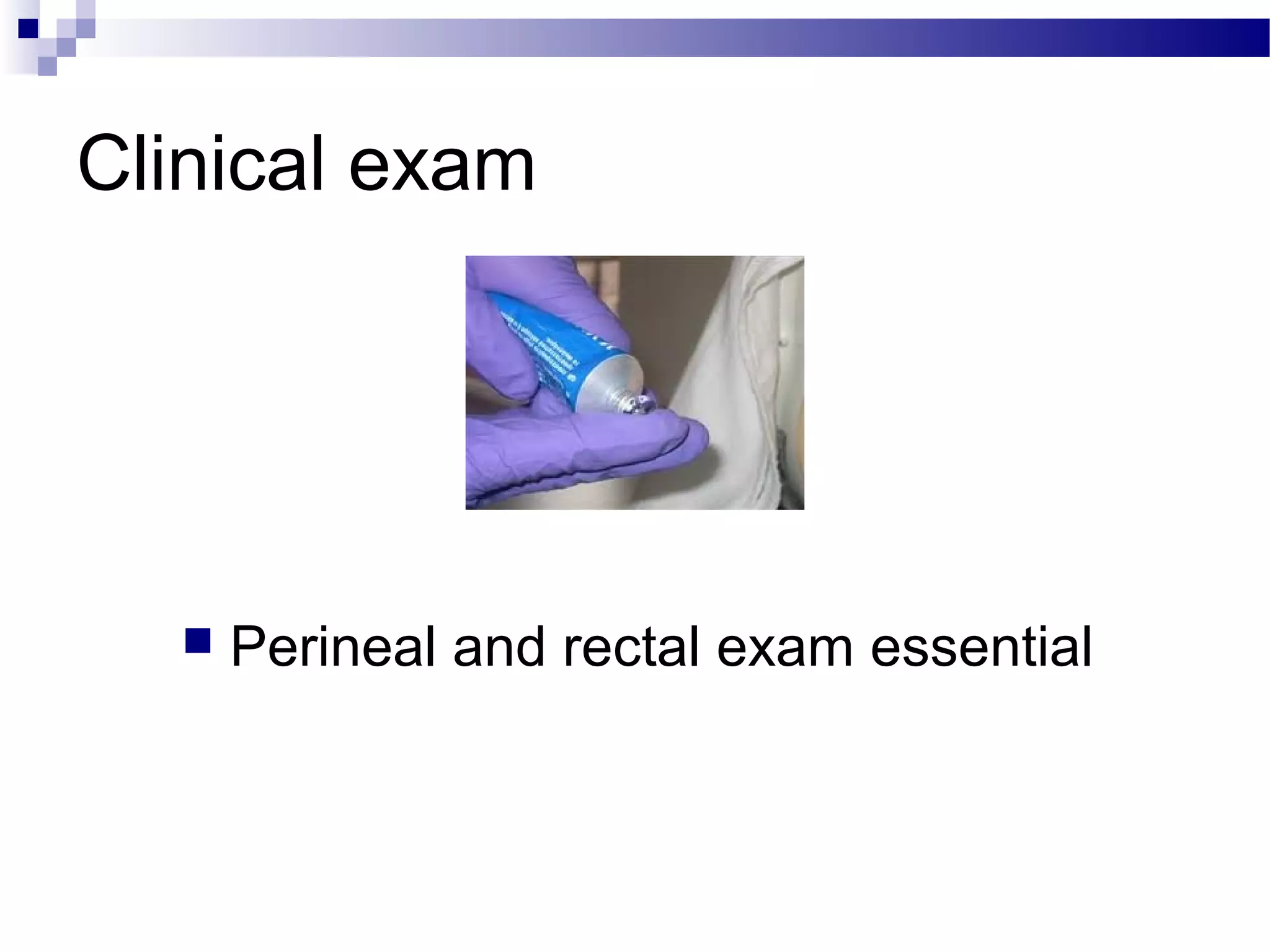
Clinical exam
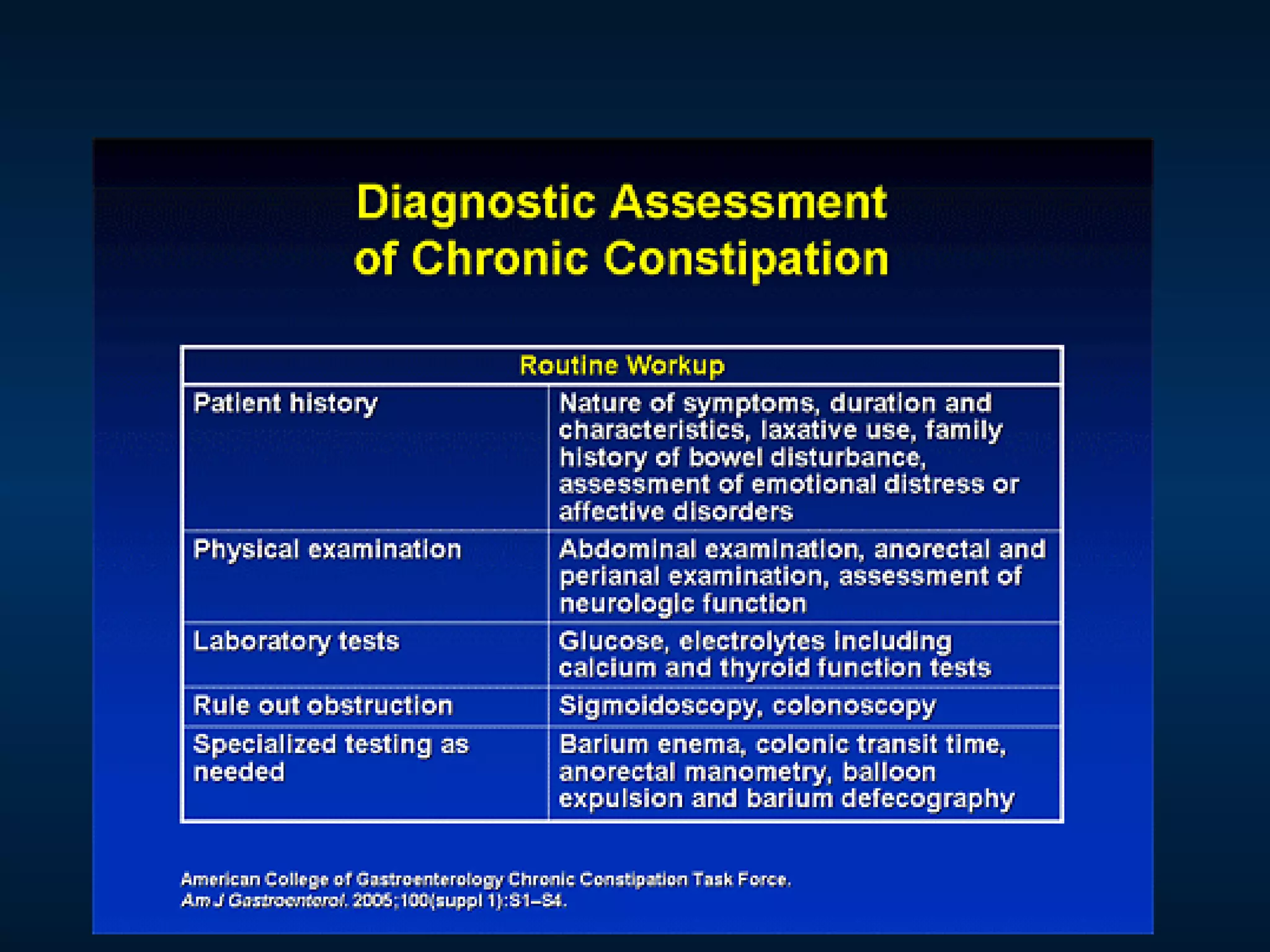
 Perineal and rectal exam essential
Labs
 TSH
 Calcium
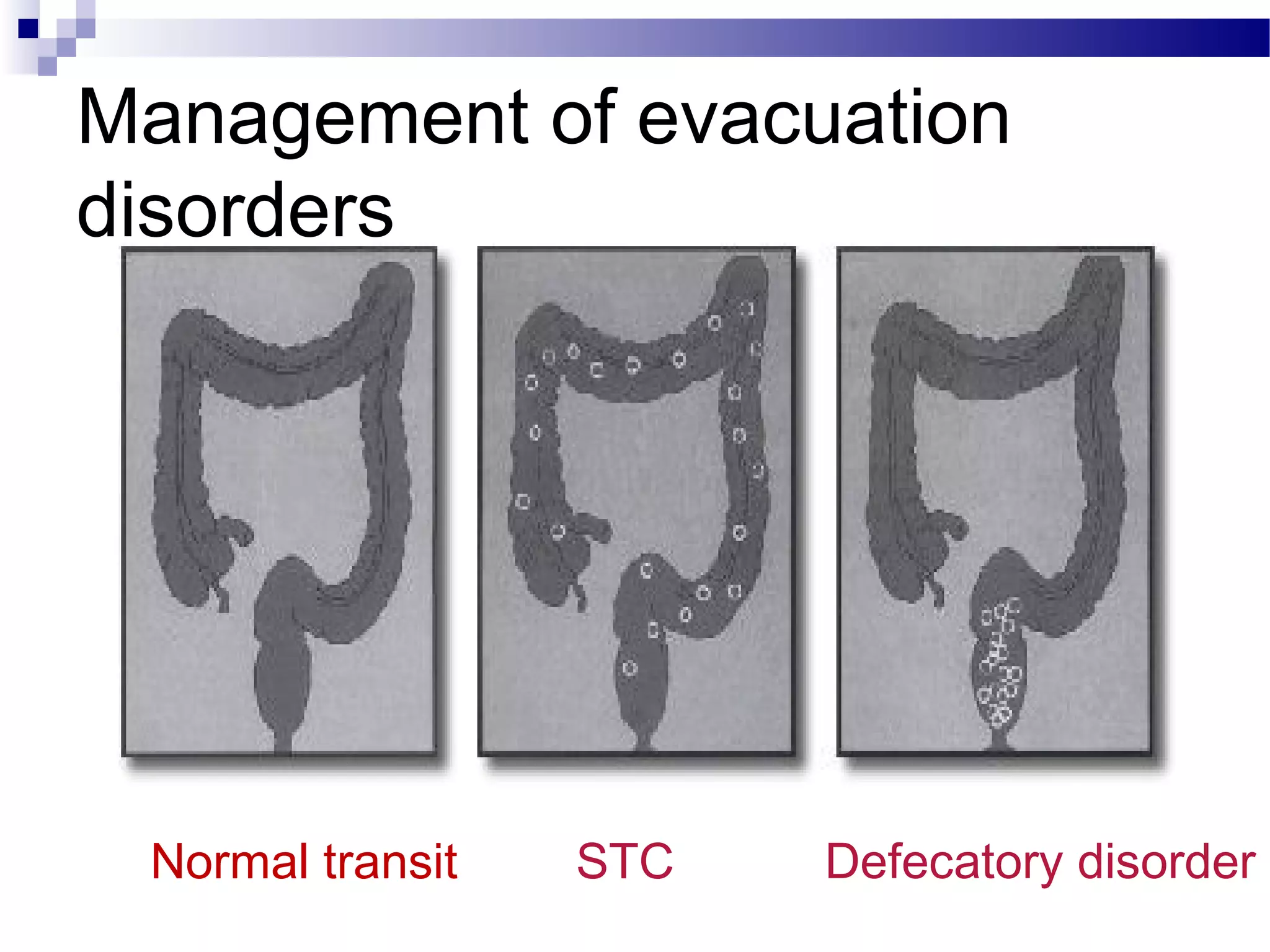
Management of evacuation
disorders
STC Defecatory disorderNormal transit
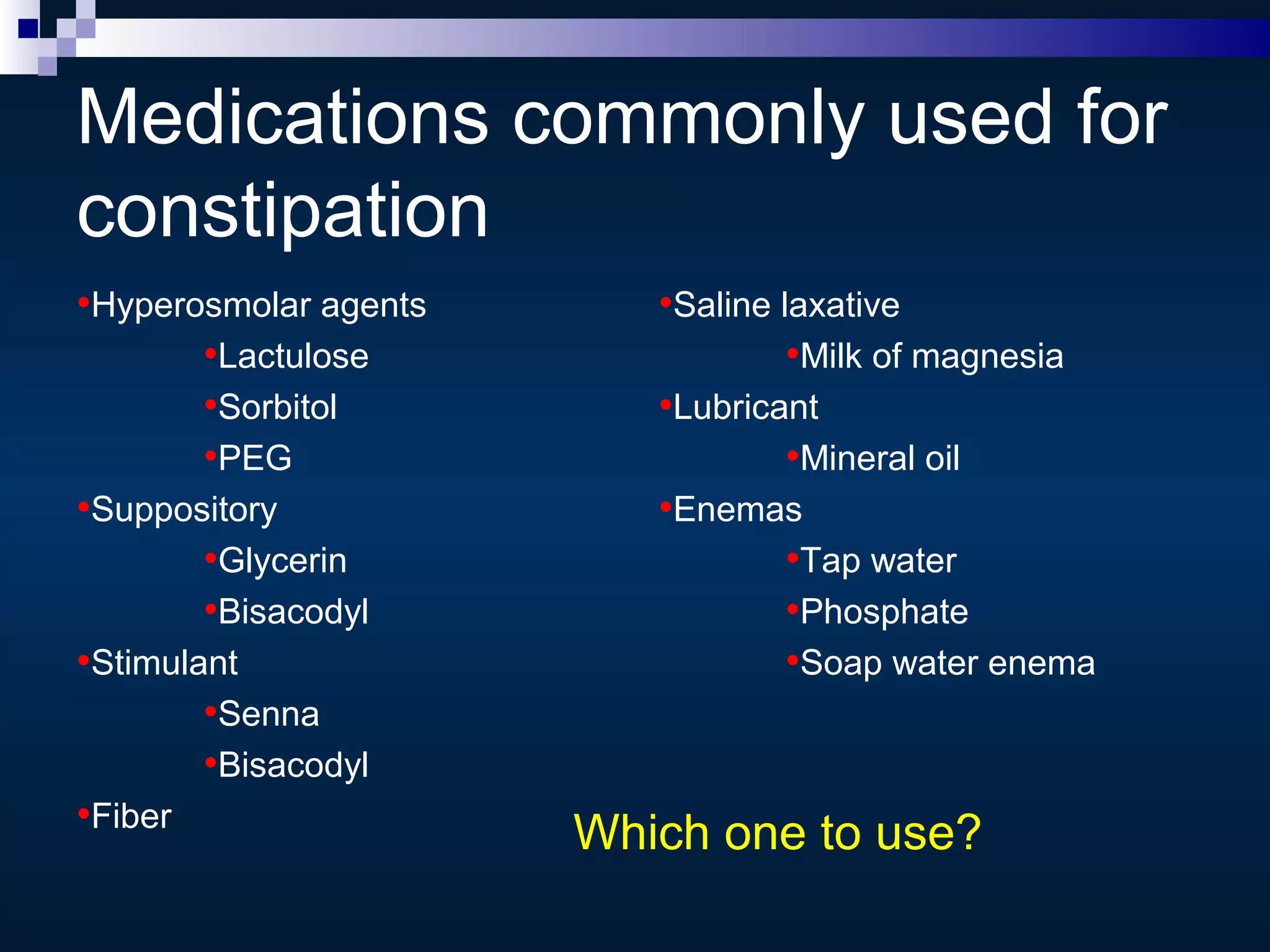
Medications commonly used for
constipation
•Hyperosmolar agents
•Lactulose
•Sorbitol
•PEG
•Suppository
•Glycerin
•Bisacodyl
•Stimulant
•Senna
•Bisacodyl
•Fiber
•Saline laxative
•Milk of magnesia
•Lubricant
•Mineral oil
•Enemas
•Tap water
•Phosphate
•Soap water enema
Which one to use?
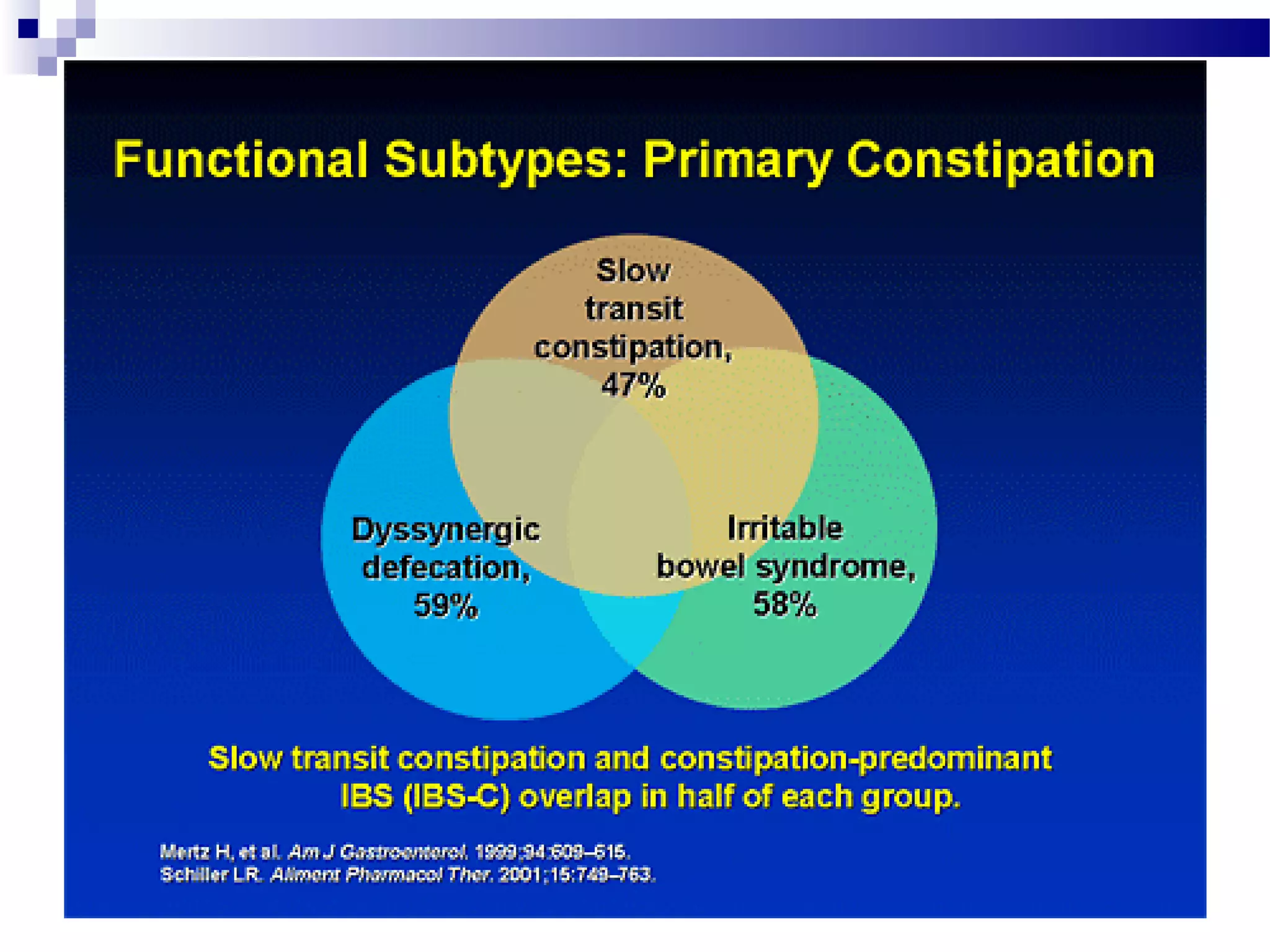
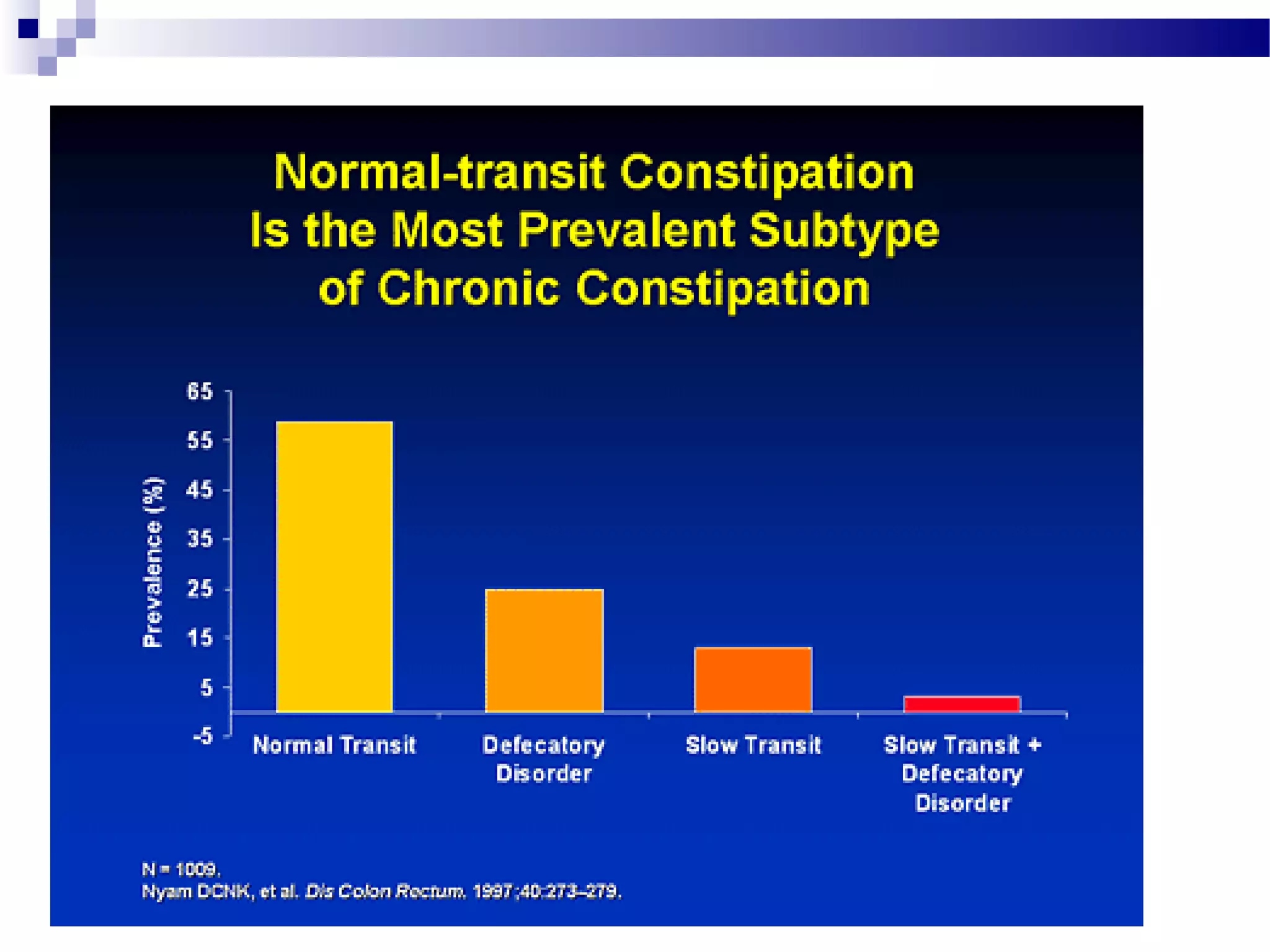
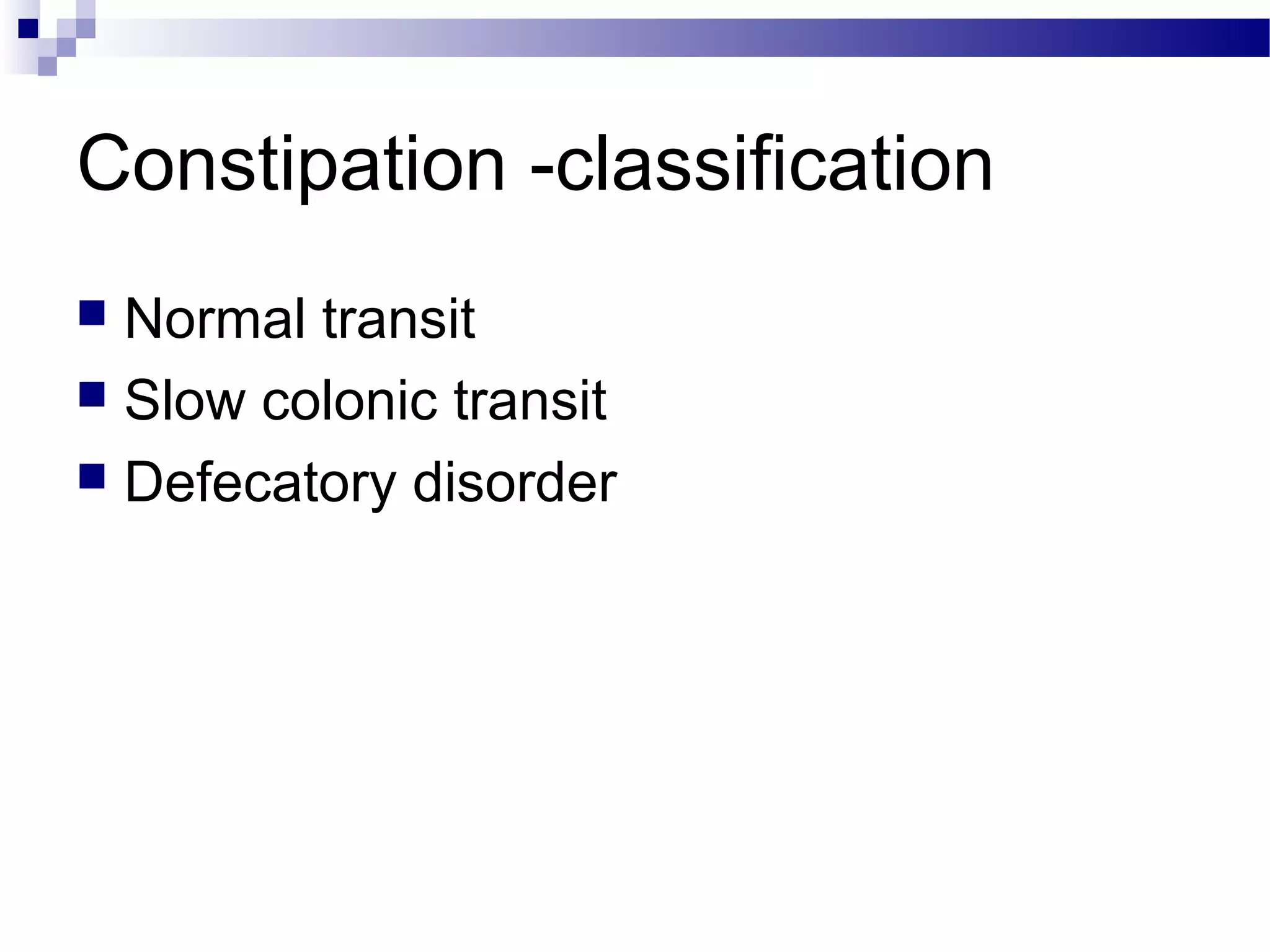
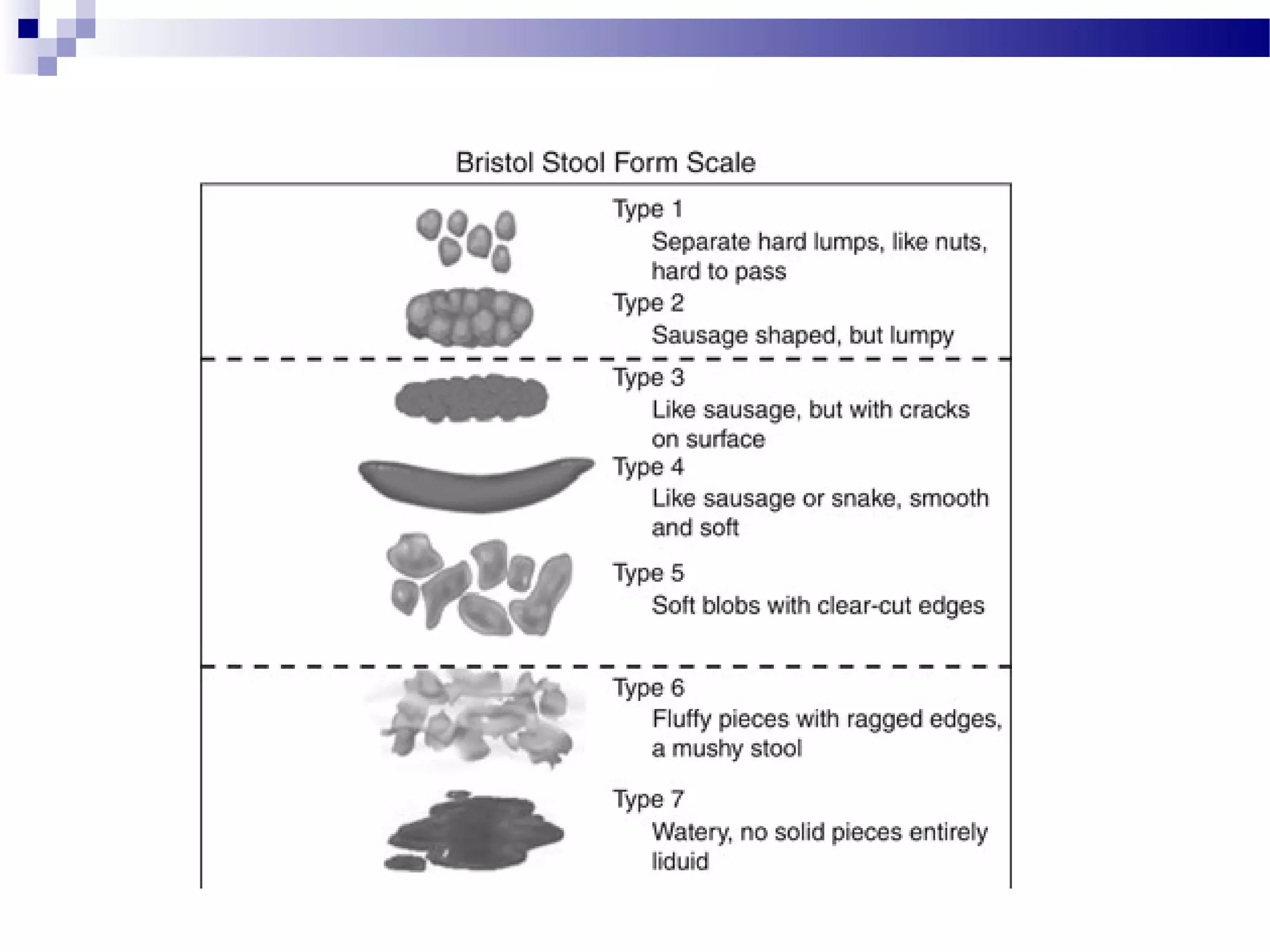
Constipation -classification
 Normal transit
 Slow colonic transit
 Defecatory disorder
Modalities to evaluate
 Transit study
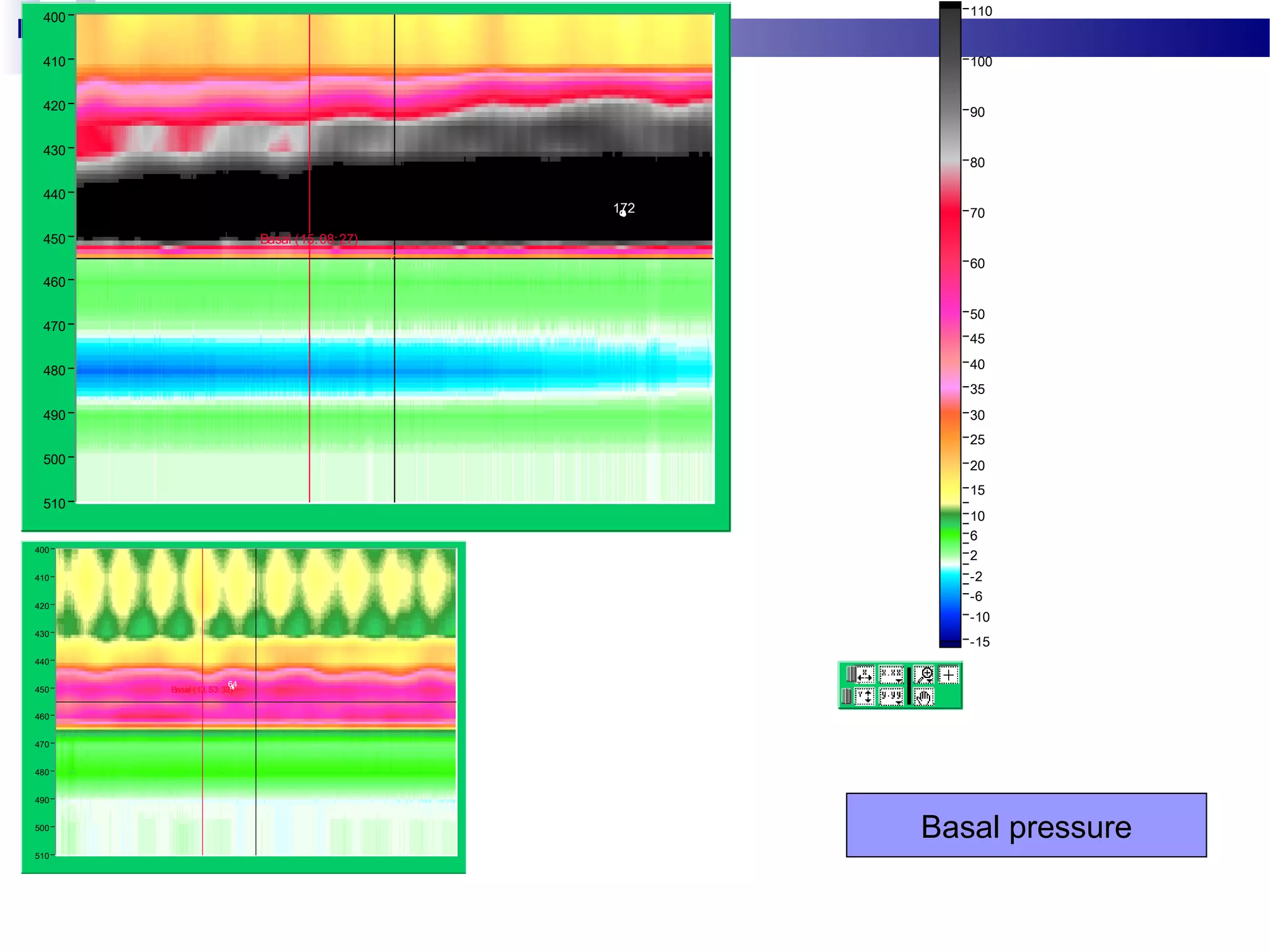
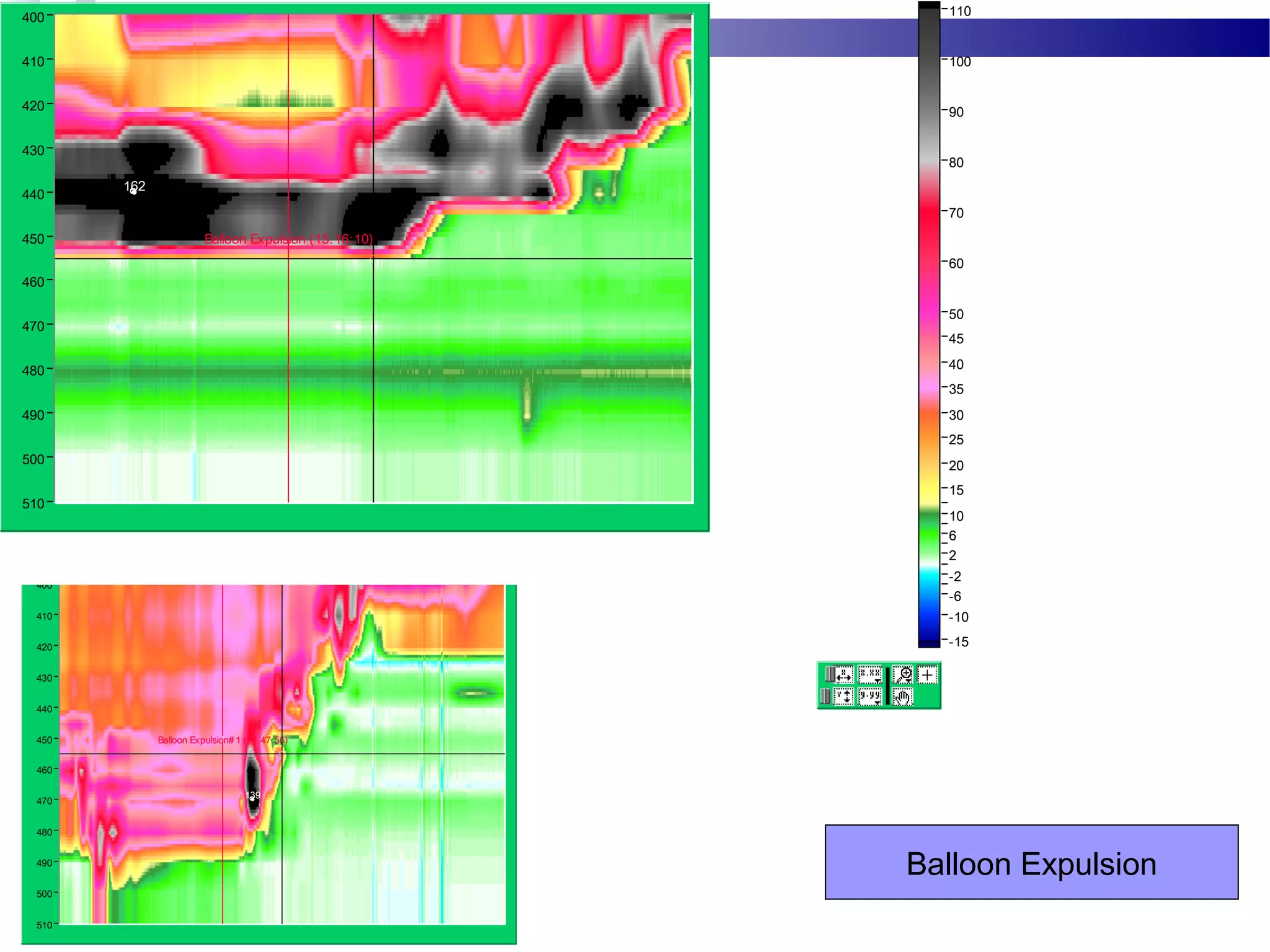
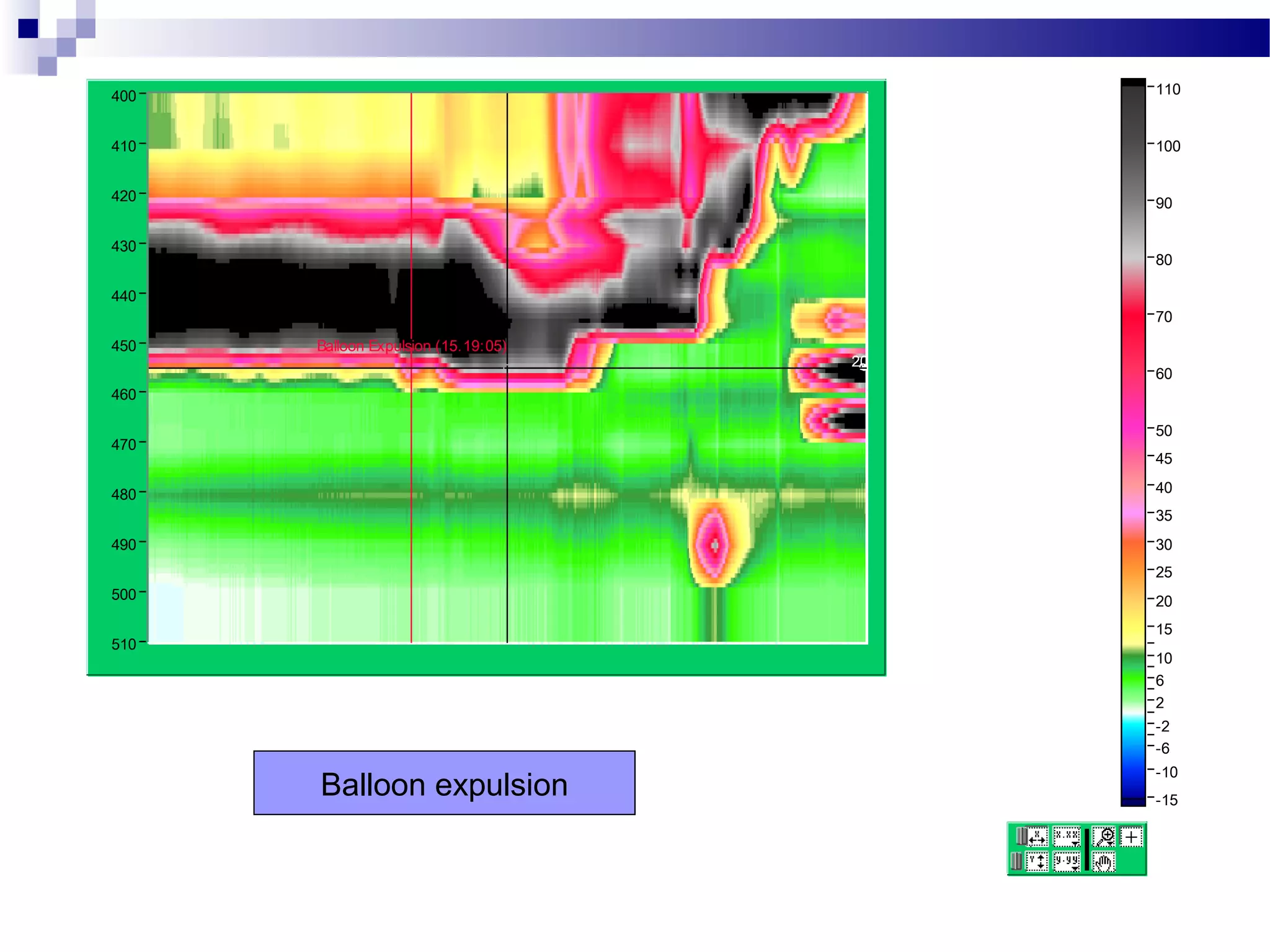
 Anorectal manometry and balloon expulsion
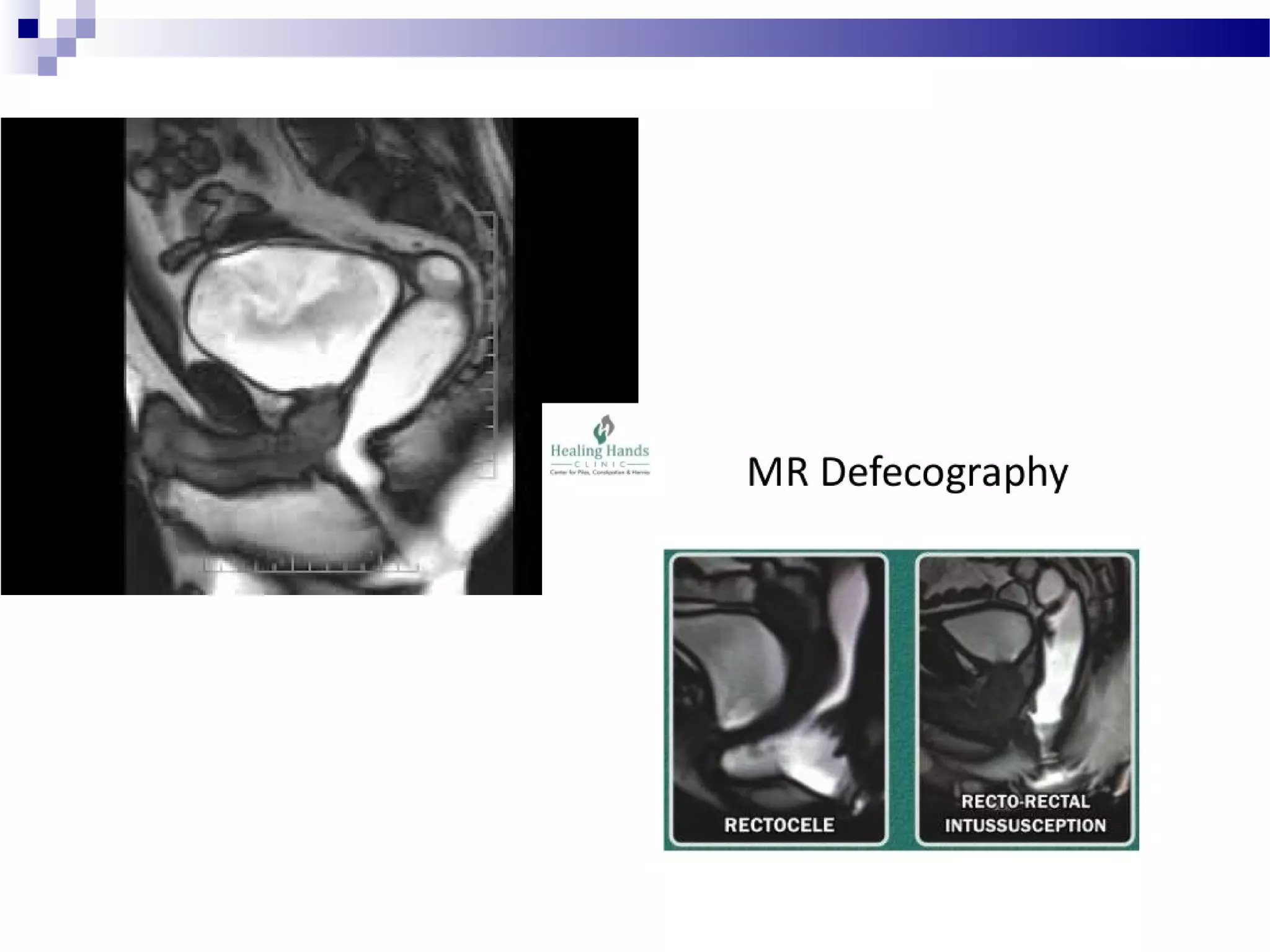
 Defecography
Defecatory disorder …clues
 Adequate urge
 Daily visits
 Prolonged ET
 Digital evac / Perineal pressure
110
-15
-10
-6
-2
2
6
10
15
20
25
30
35
40
45
50
60
70
80
90
100
510
400
410
420
430
440
450
460
470
480
490
500
172
Basal (15.08:27)
Basal pressure
110
-15
-10
-6
-2
2
6
10
15
20
25
30
35
40
45
50
60
70
80
90
100
510
400
410
420
430
440
450
460
470
480
490
500
64
Basal (13.53:32)
110
-15
-10
-6
-2
2
6
10
15
20
25
30
35
40
45
50
60
70
80
90
100
510
400
410
420
430
440
450
460
470
480
490
500
162
Balloon Expulsion (15.16:10)
Balloon Expulsion
110
6
10
15
20
25
30
35
40
45
50
60
70
80
90
100
510
400
410
420
430
440
450
460
470
480
490
500
139
Balloon Expulsion# 1 (14.47:56)
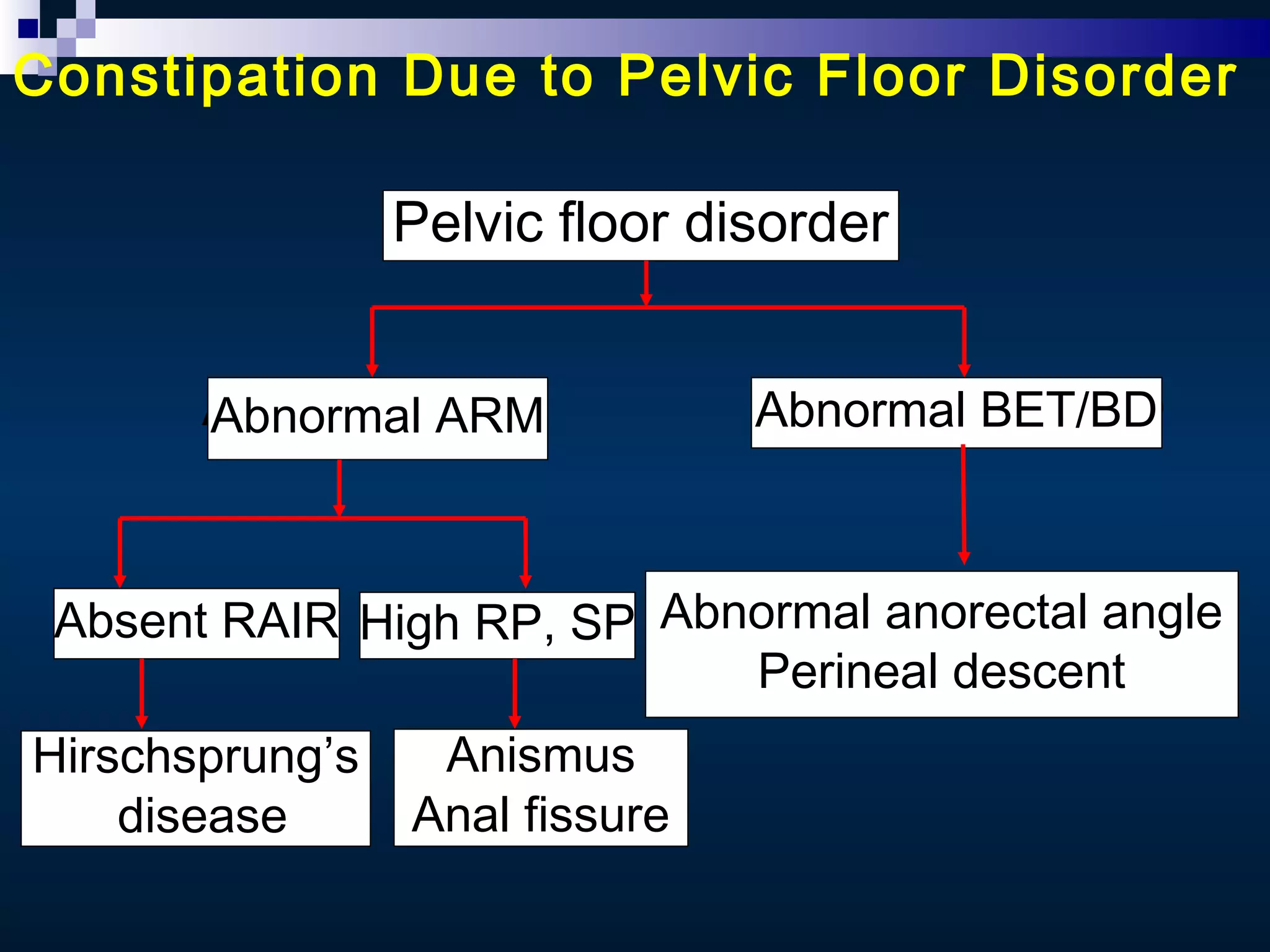
Pelvic floor disorder
Abnormal ARM Abnormal BET/BDAbnormal ARM Abnormal BET/BD
Absent RAIR High RP, SP
Hirschsprung’s
disease
Anismus
Anal fissure
Abnormal anorectal angle
Perineal descent
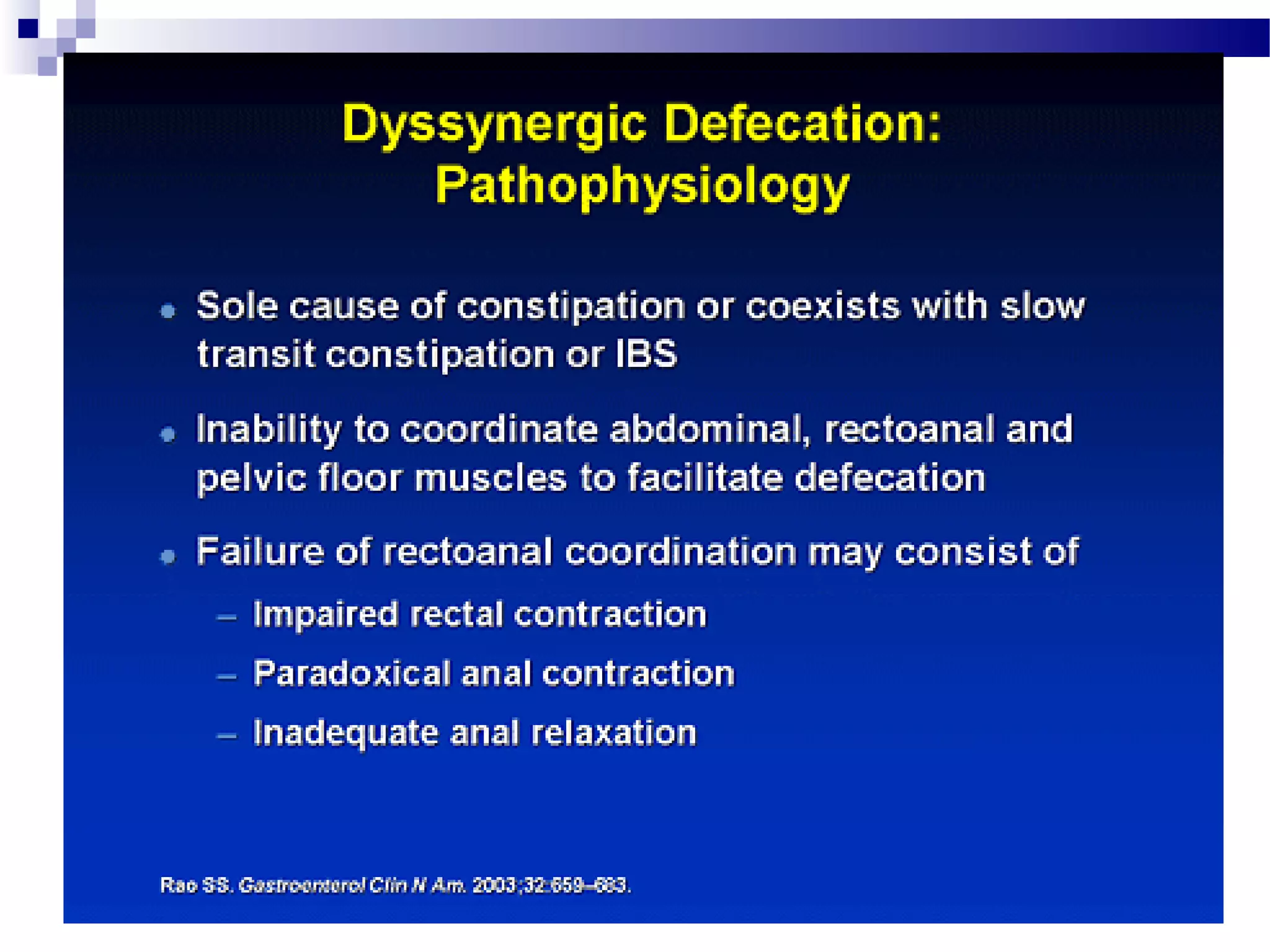
Constipation Due to Pelvic Floor Disorder
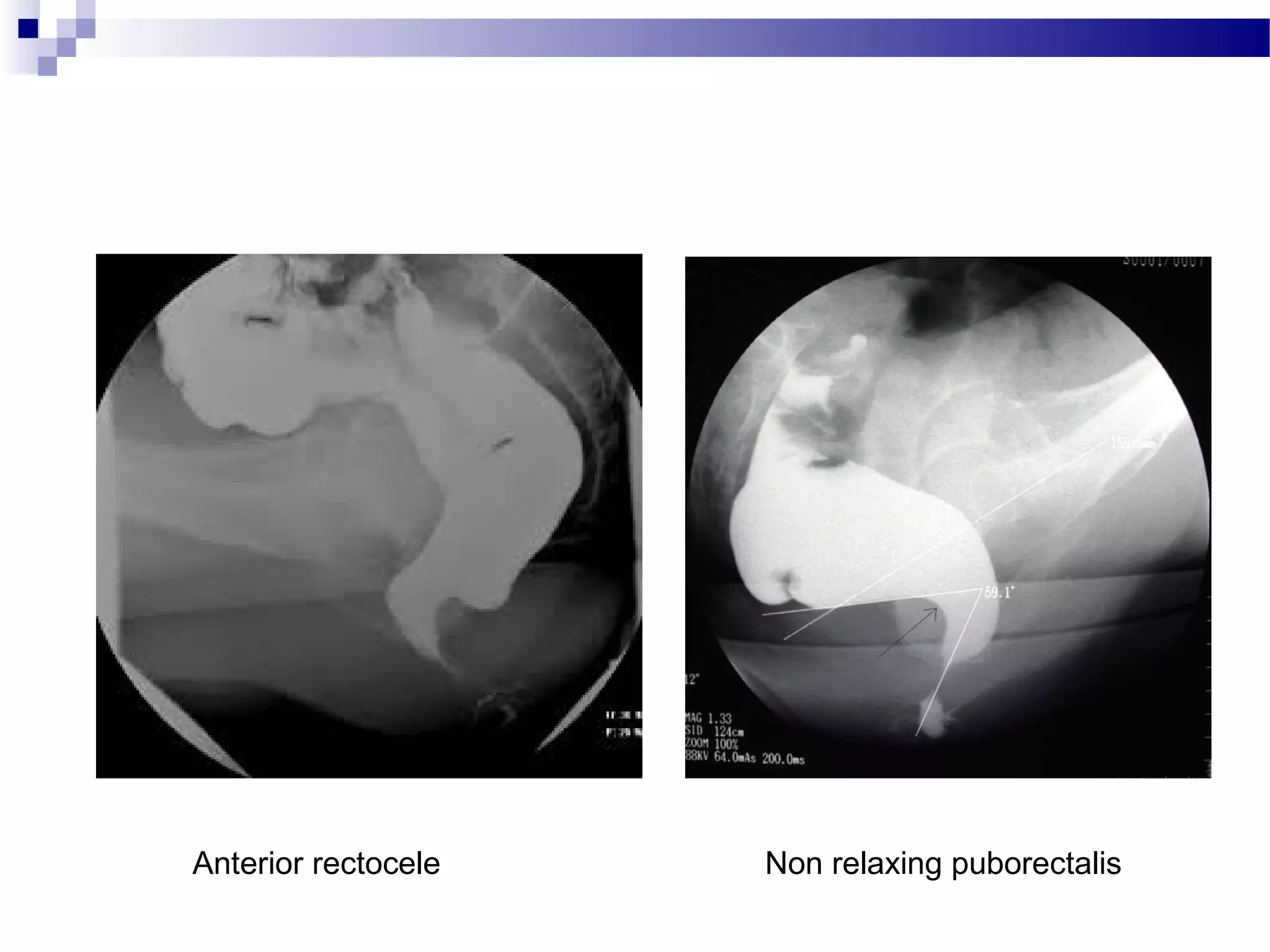
Anterior rectocele Non relaxing puborectalis
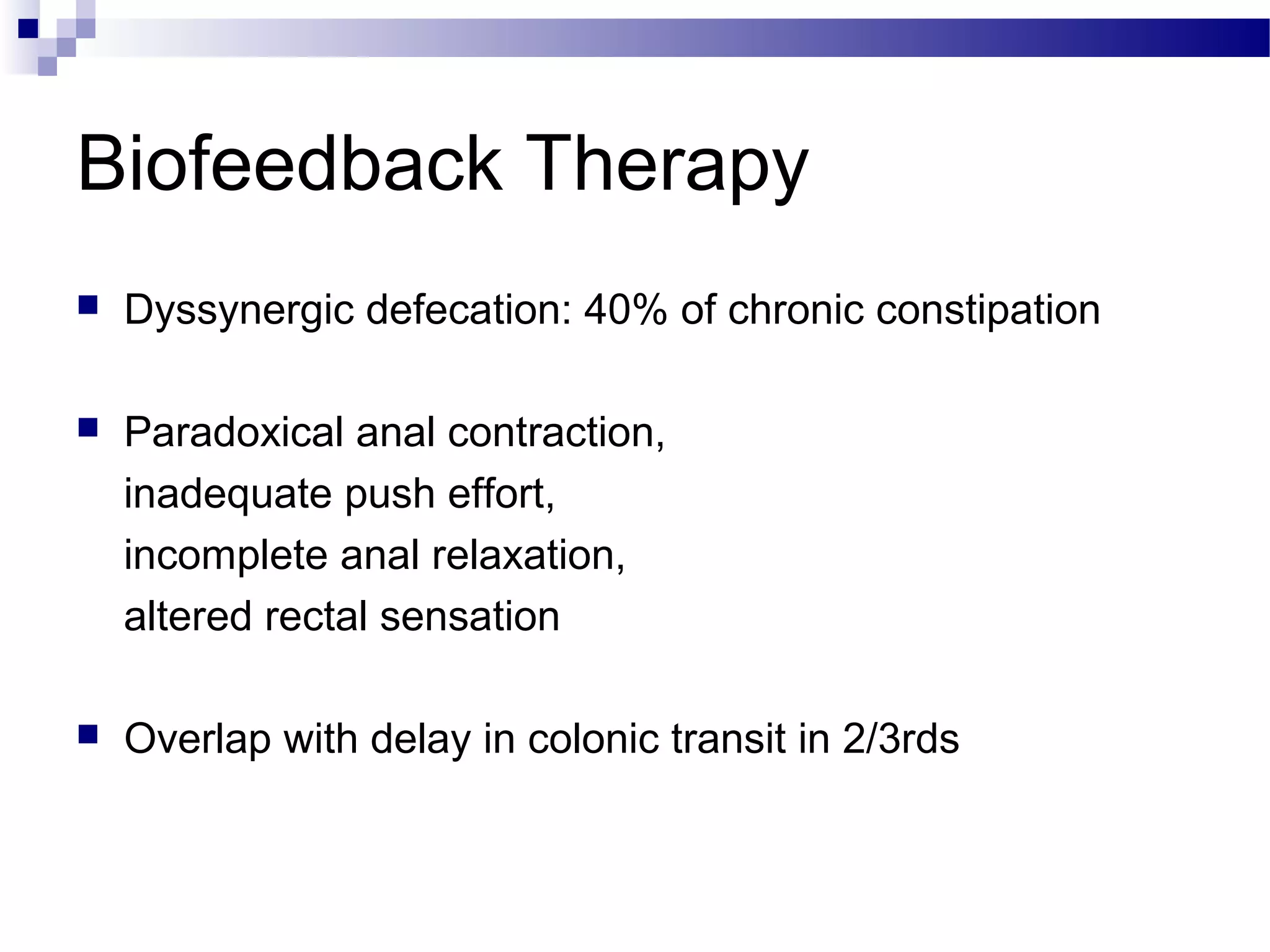
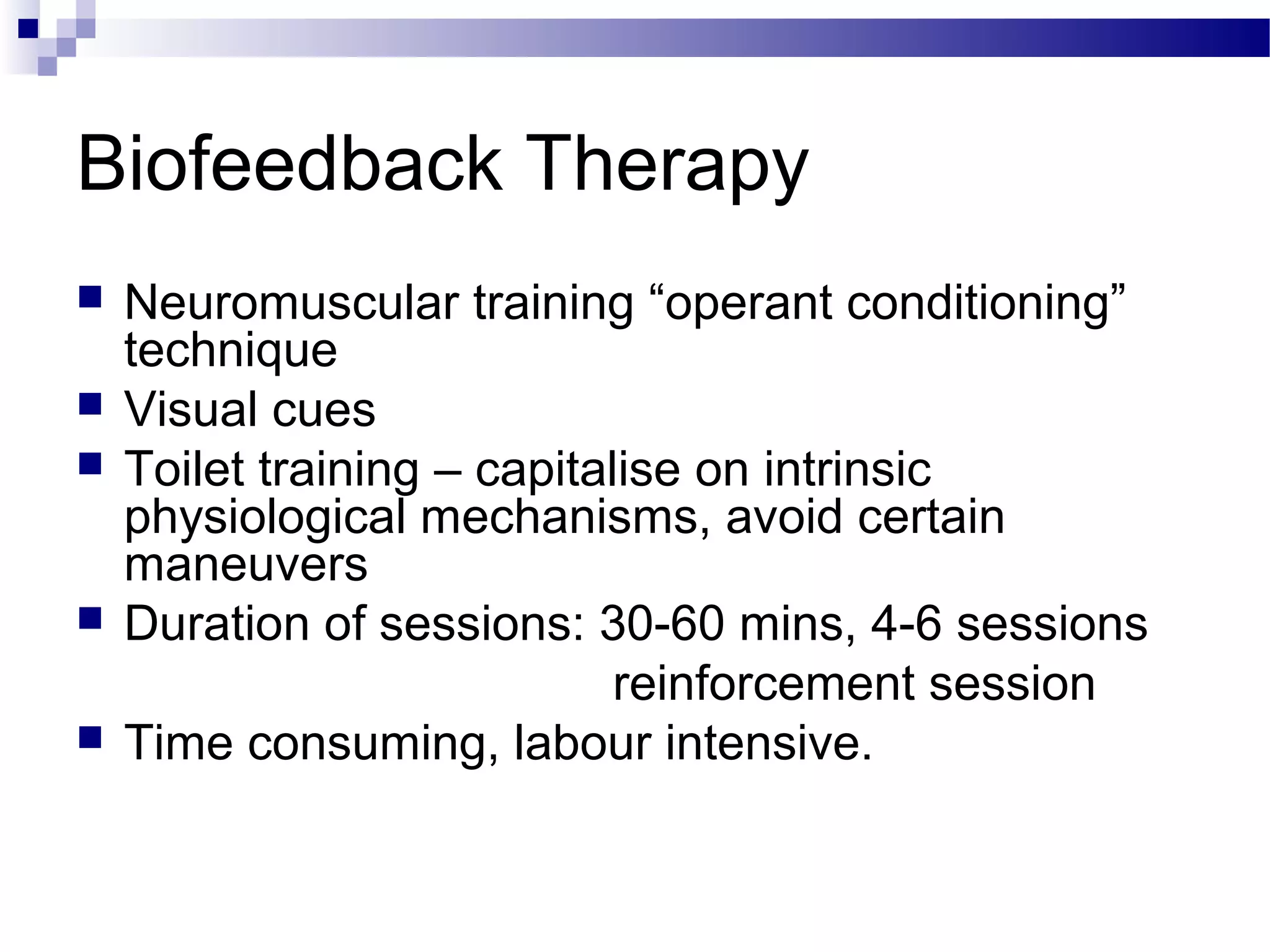
Biofeedback Therapy
 Dyssynergic defecation: 40% of chronic constipation
 Paradoxical anal contraction,
inadequate push effort,
incomplete anal relaxation,
altered rectal sensation
 Overlap with delay in colonic transit in 2/3rds
Biofeedback Therapy
 Neuromuscular training “operant conditioning”
technique
 Visual cues
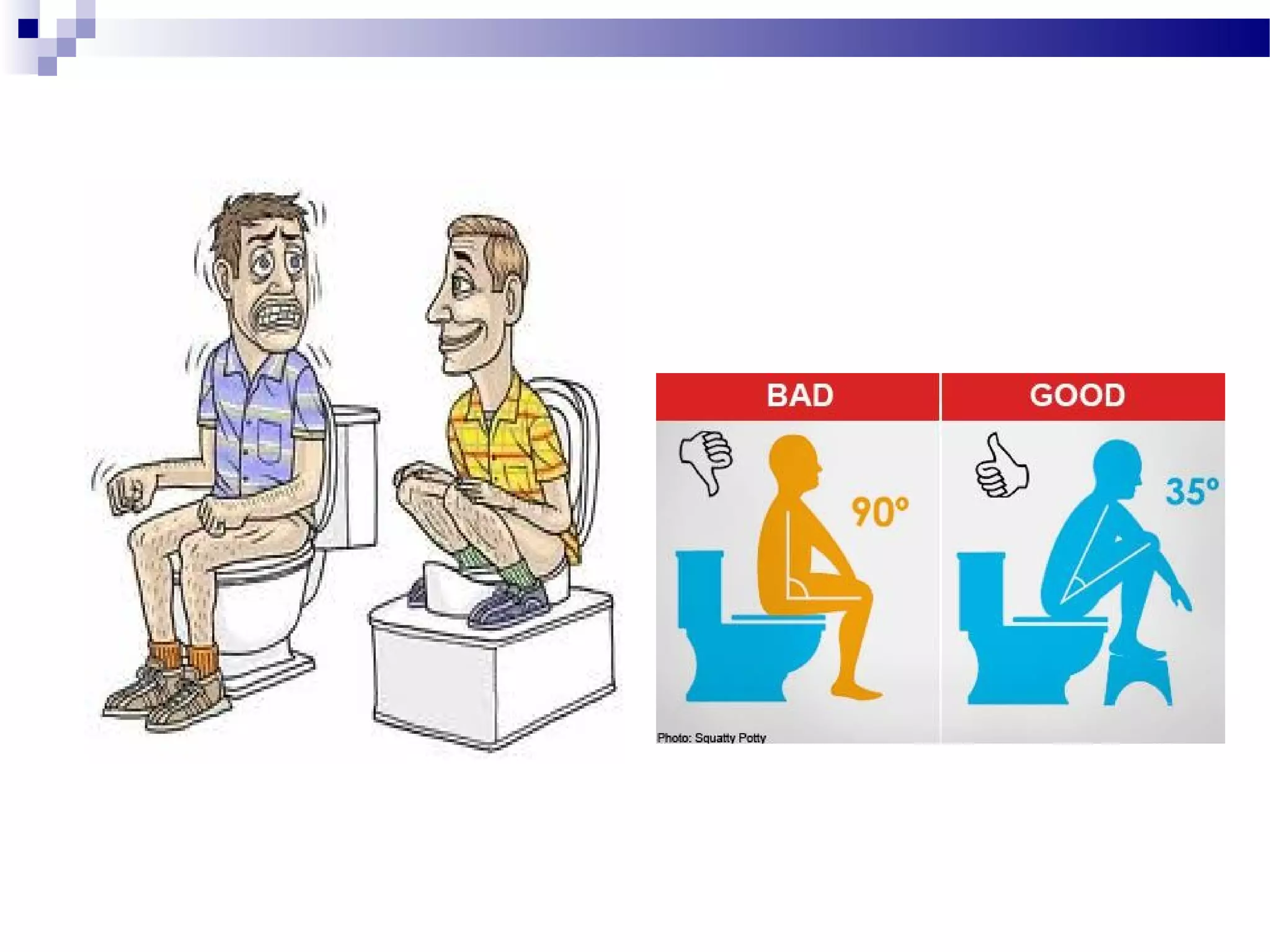
 Toilet training – capitalise on intrinsic
physiological mechanisms, avoid certain
maneuvers
 Duration of sessions: 30-60 mins, 4-6 sessions
reinforcement session
 Time consuming, labour intensive.
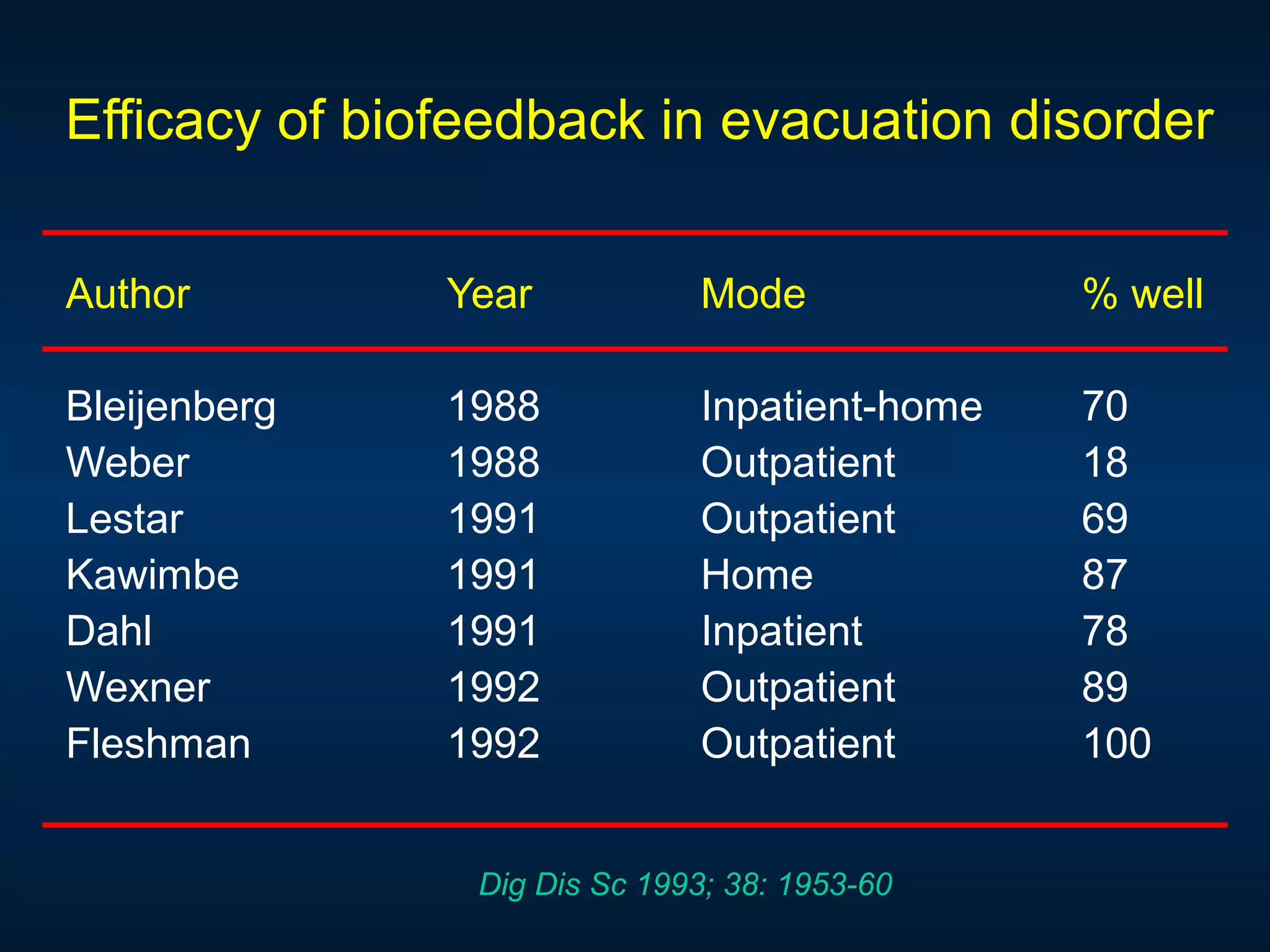
Efficacy of biofeedback in evacuation disorder
Author Year Mode % well
Bleijenberg 1988 Inpatient-home 70
Weber 1988 Outpatient 18
Lestar 1991 Outpatient 69
Kawimbe 1991 Home 87
Dahl 1991 Inpatient 78
Wexner 1992 Outpatient 89
Fleshman 1992 Outpatient 100
Dig Dis Sc 1993; 38: 1953-60
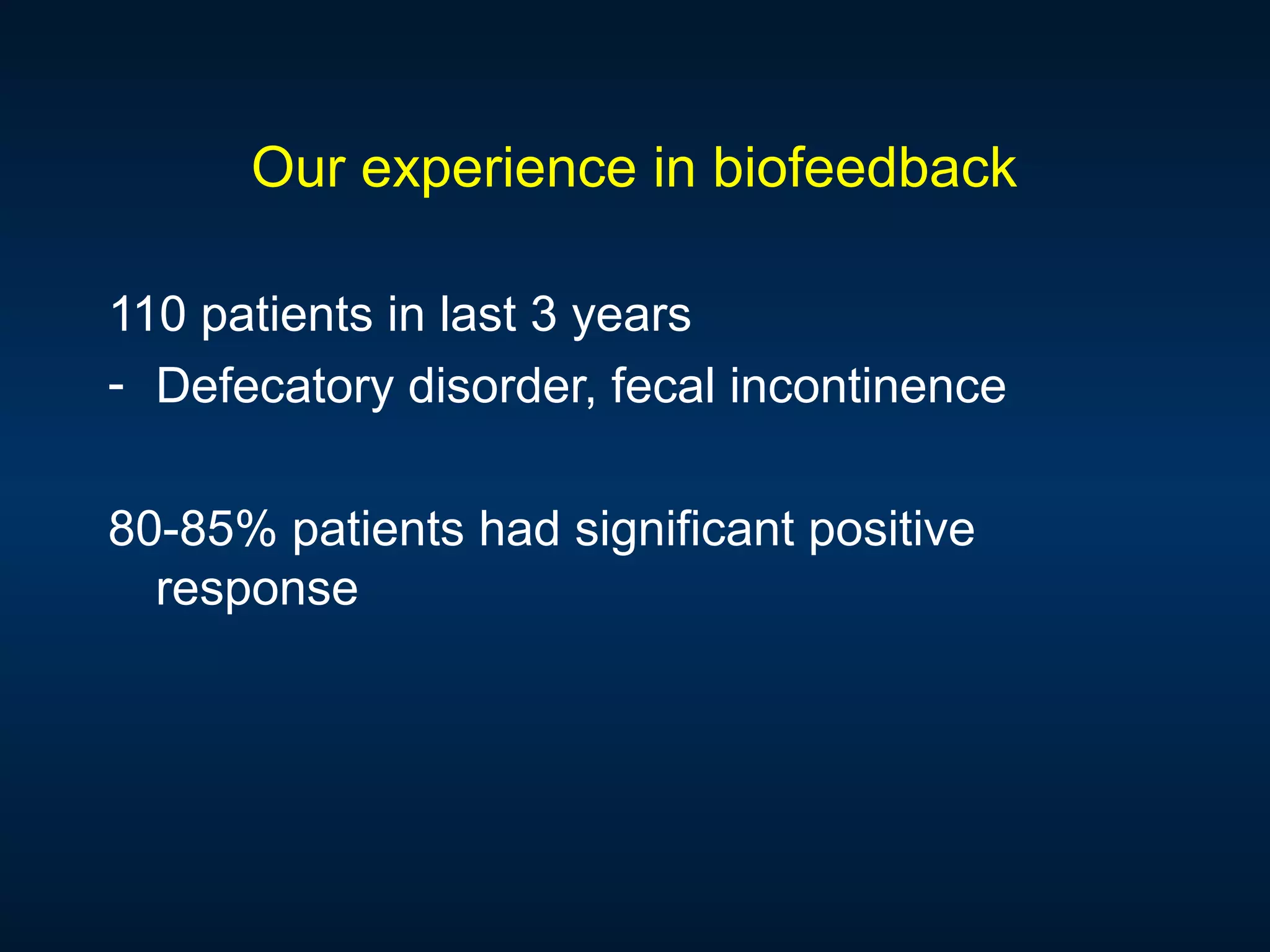
Our experience in biofeedback
110 patients in last 3 years
- Defecatory disorder, fecal incontinence
80-85% patients had significant positive
response
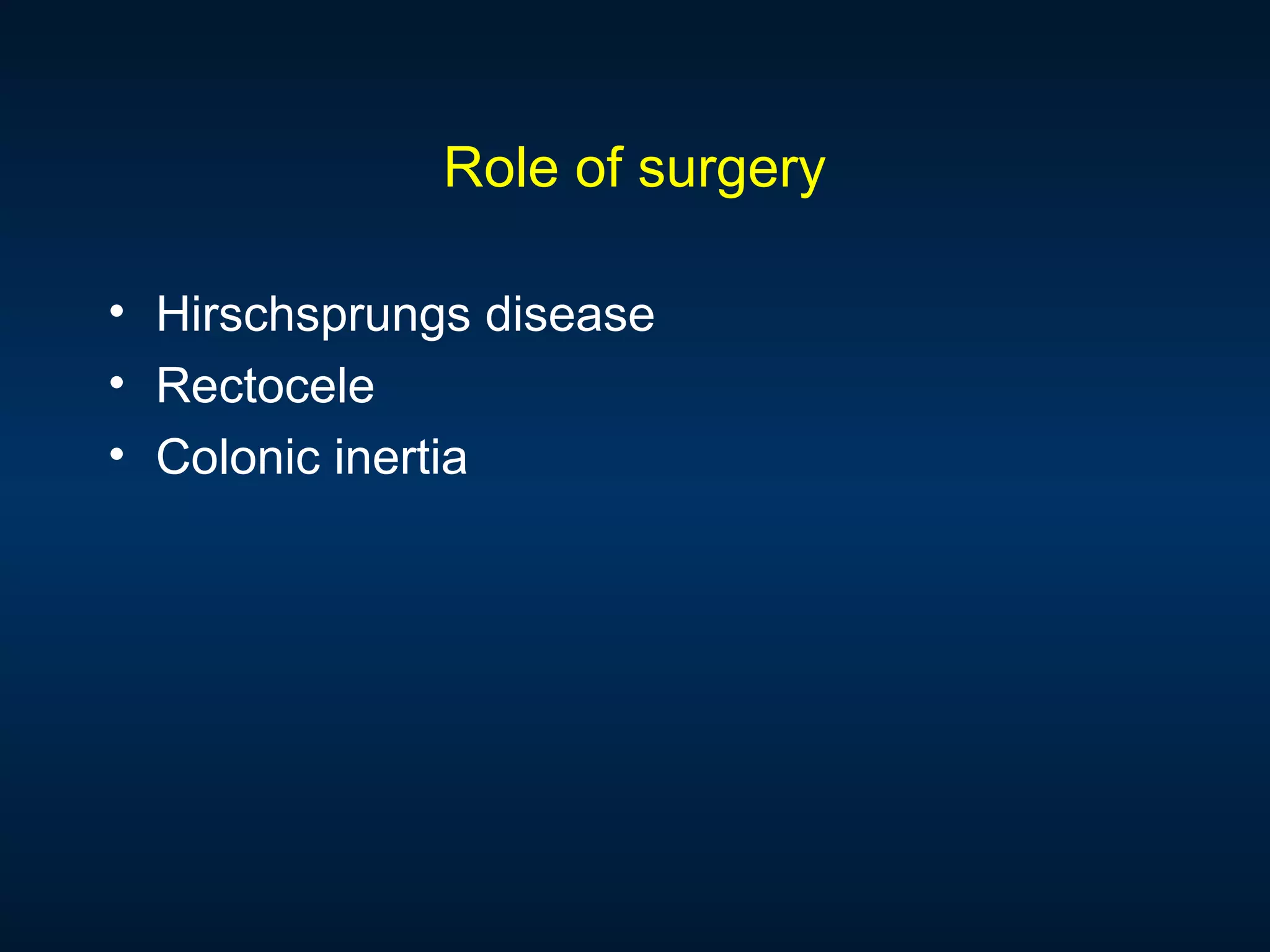
Role of surgery
• Hirschsprungs disease
• Rectocele
• Colonic inertia
Summary
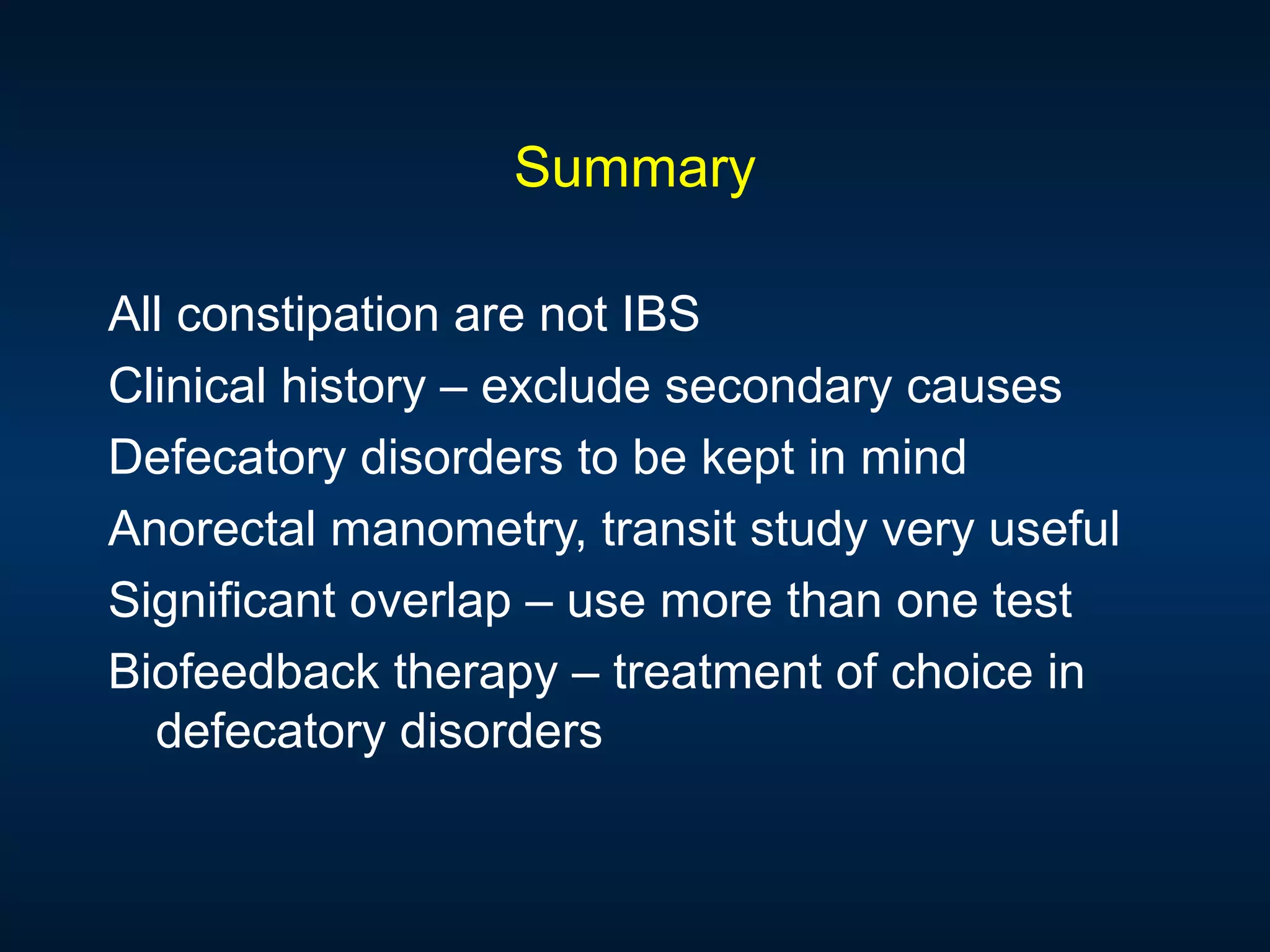
All constipation are not IBS
Clinical history – exclude secondary causes
Defecatory disorders to be kept in mind
Anorectal manometry, transit study very useful
Significant overlap – use more than one test
Biofeedback therapy – treatment of choice in
defecatory disorders
110
-15
-10
-6
-2
2
6
10
15
20
25
30
35
40
45
50
60
70
80
90
100
510
400
410
420
430
440
450
460
470
480
490
500
206
Balloon Expulsion (15.19:05)
Balloon expulsion
Check list
 Hypothyroidism
 Parkinsons
 Diabetes
 Parkinson drugs
 Antihistaminics
 Anti histaminics

Approach to Constipation

Editor's Notes

  • #31 Biofeedback therapy is a well established, efficacious, and completely safe treatment and is being done in our centre with very good results