Internal Hardware

           Gina 10A
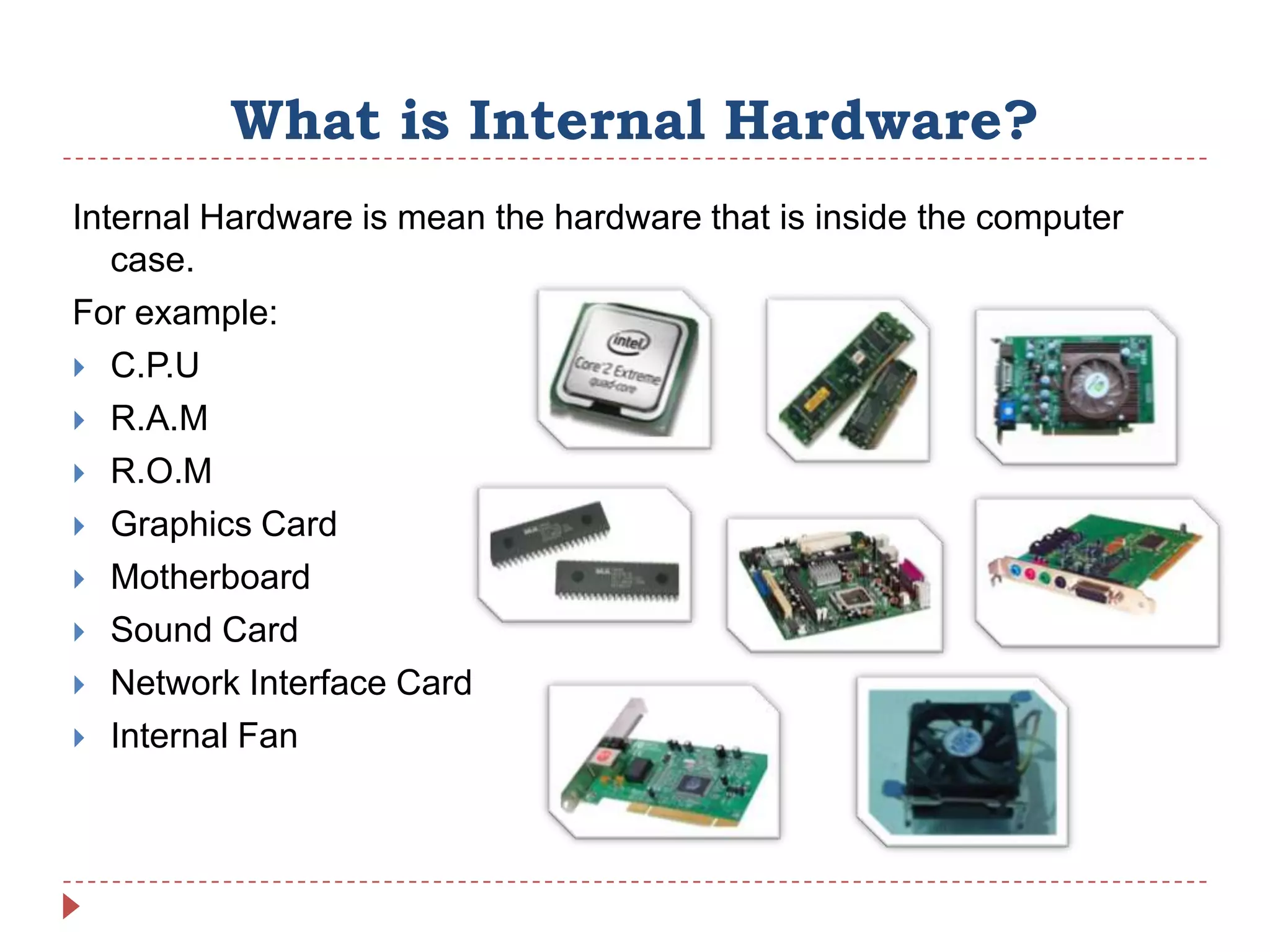
What is Internal Hardware?
Internal Hardware is mean the hardware that is inside the computer
   case.
For example:
 C.P.U
 R.A.M
 R.O.M
 Graphics Card
 Motherboard
 Sound Card
 Network Interface Card
 Internal Fan
C.P.U
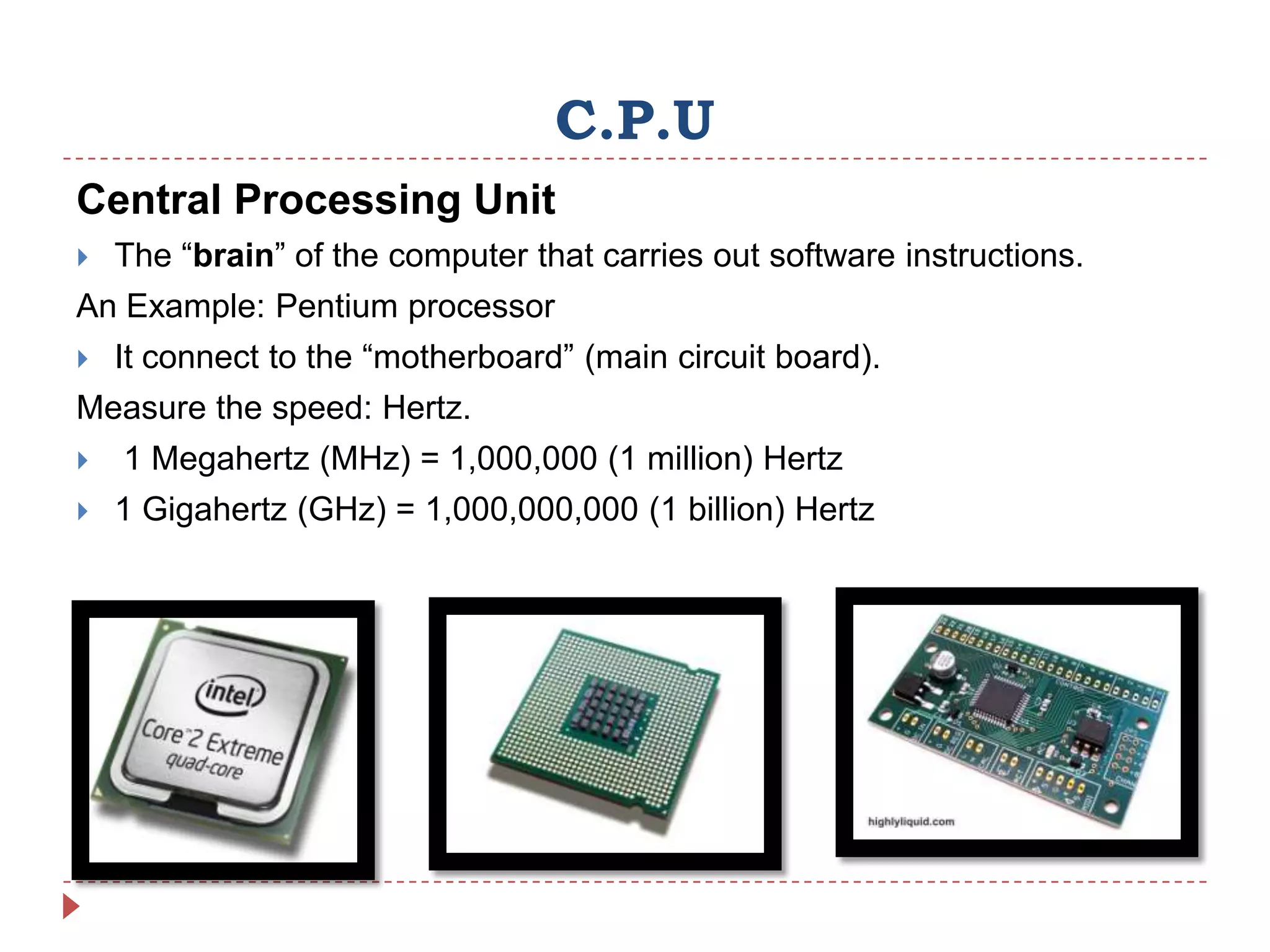
Central Processing Unit
   The “brain” of the computer that carries out software instructions.
An Example: Pentium processor
   It connect to the “motherboard” (main circuit board).
Measure the speed: Hertz.
   1 Megahertz (MHz) = 1,000,000 (1 million) Hertz
   1 Gigahertz (GHz) = 1,000,000,000 (1 billion) Hertz
R.A.M
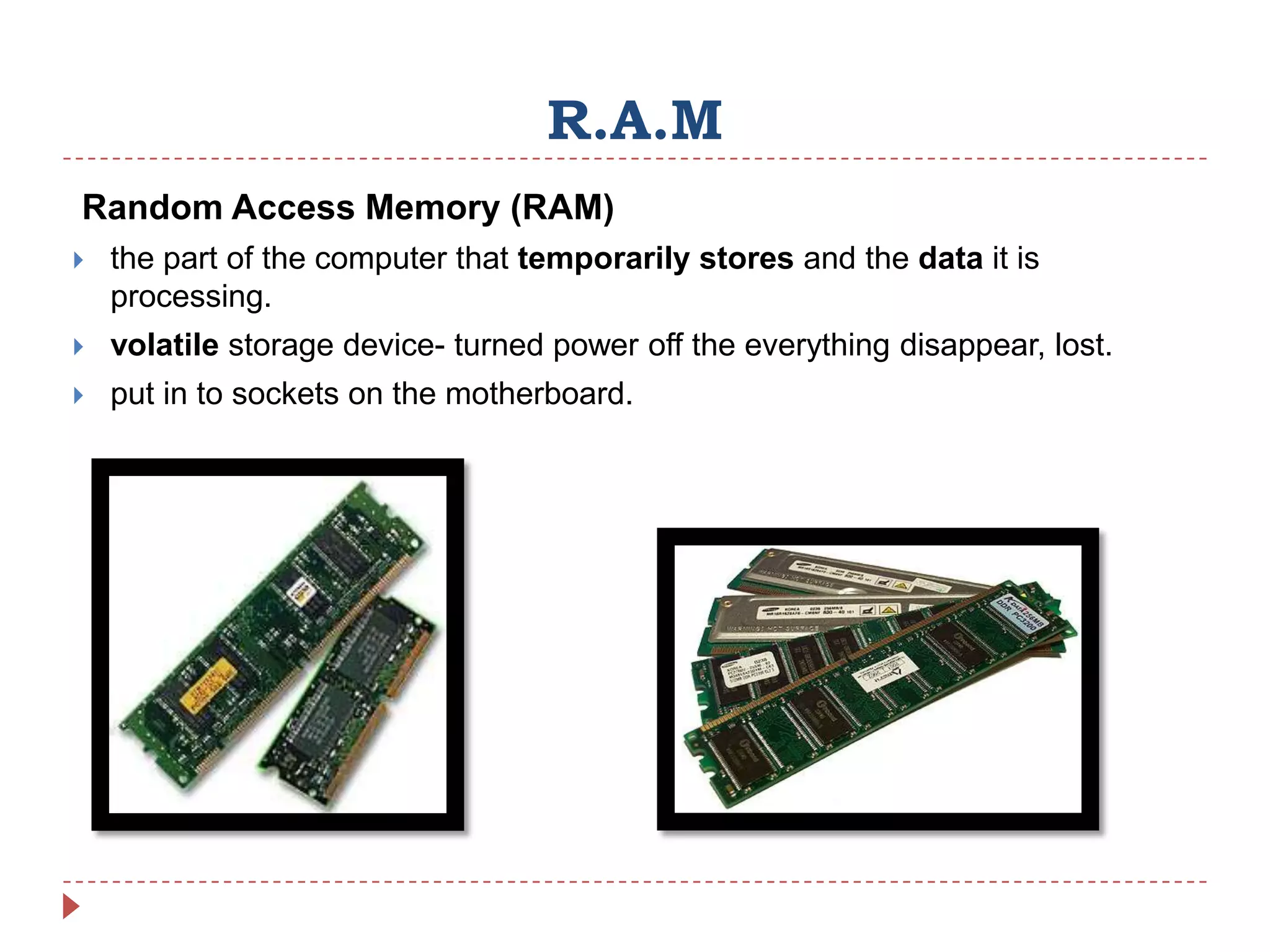
Random Access Memory (RAM)
   the part of the computer that temporarily stores and the data it is
    processing.
   volatile storage device- turned power off the everything disappear, lost.
   put in to sockets on the motherboard.
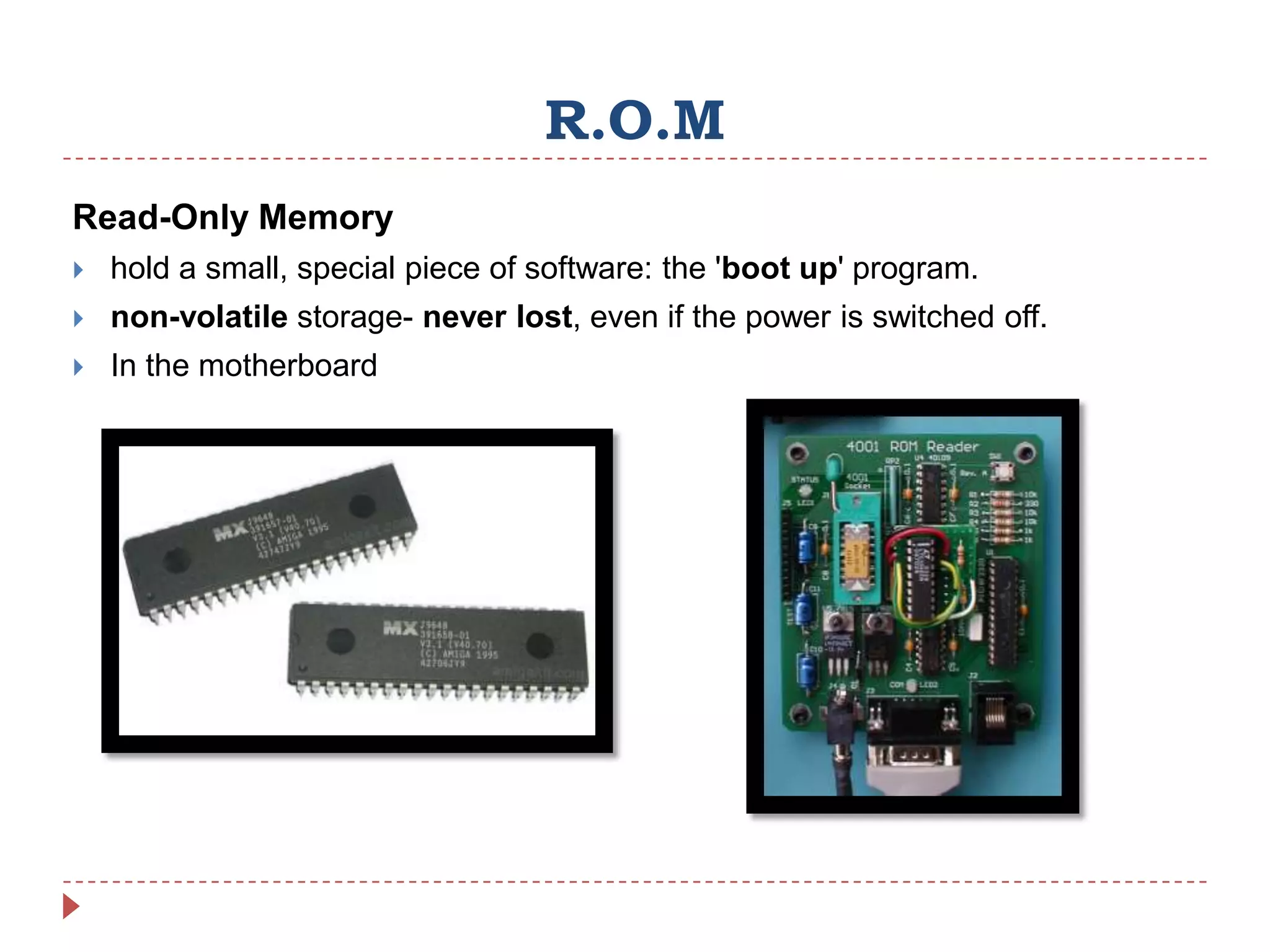
R.O.M
Read-Only Memory
   hold a small, special piece of software: the 'boot up' program.
   non-volatile storage- never lost, even if the power is switched off.
   In the motherboard
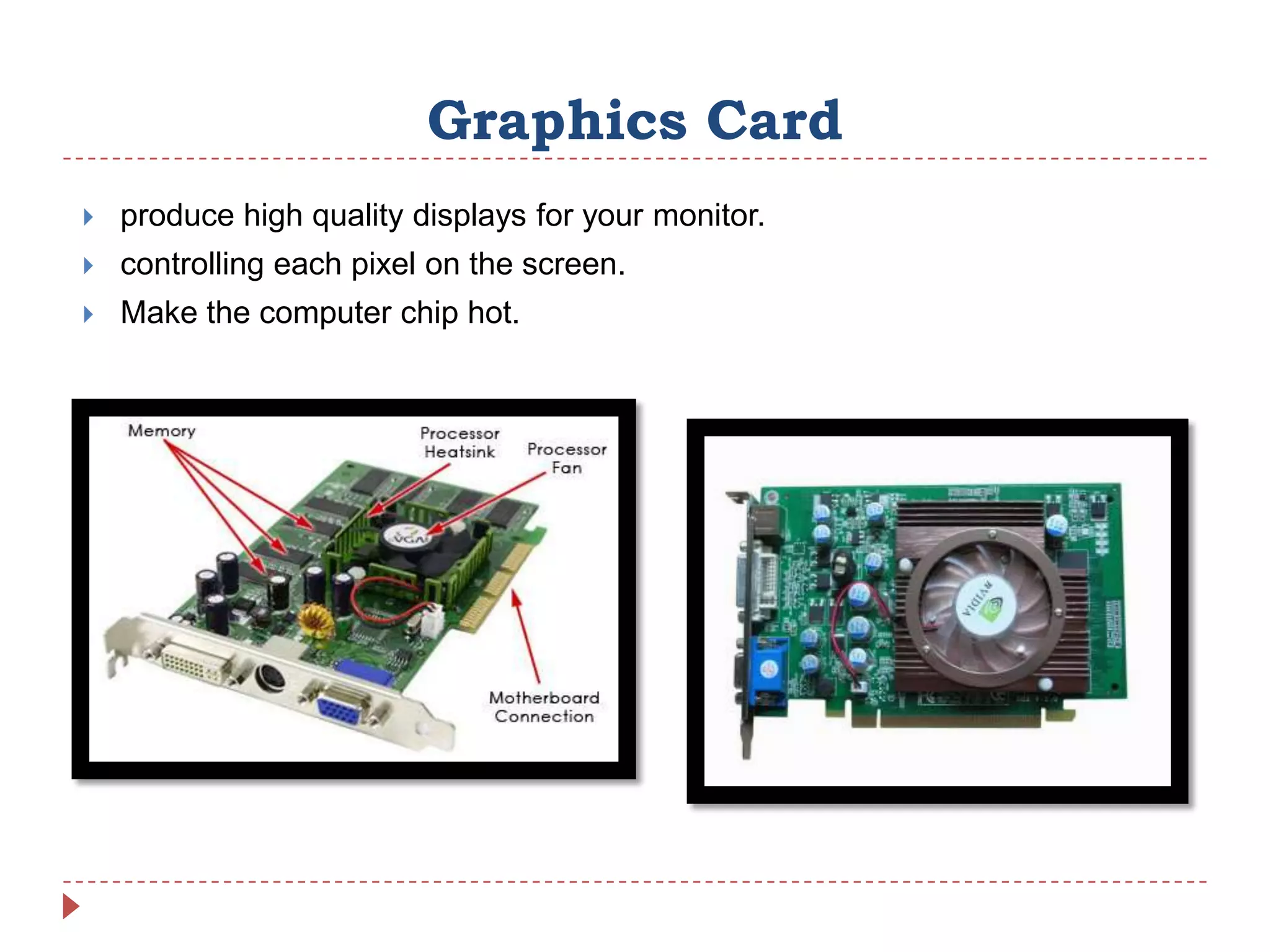
Graphics Card
   produce high quality displays for your monitor.
   controlling each pixel on the screen.
   Make the computer chip hot.
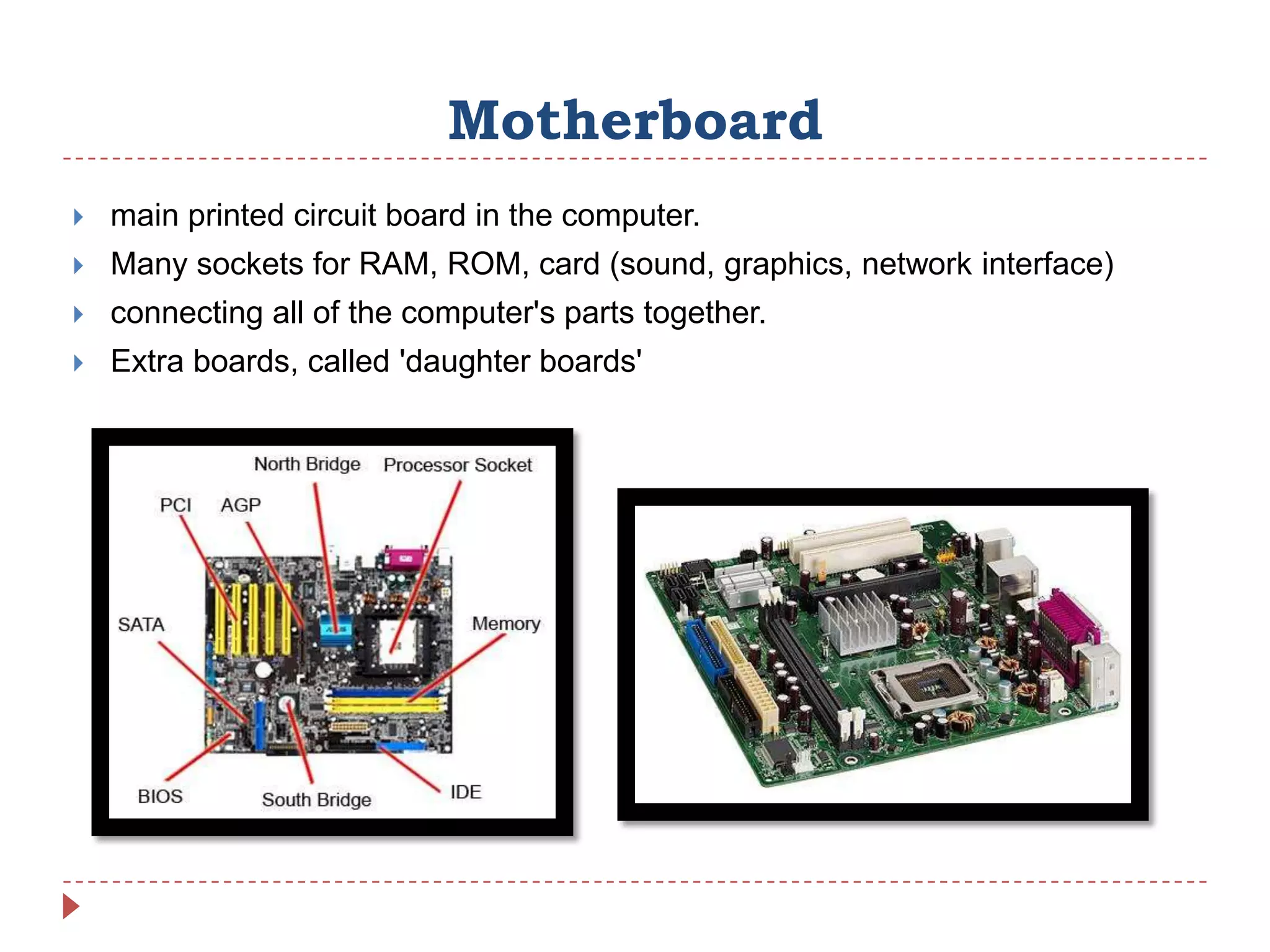
Motherboard
   main printed circuit board in the computer.
   Many sockets for RAM, ROM, card (sound, graphics, network interface)
   connecting all of the computer's parts together.
   Extra boards, called 'daughter boards'
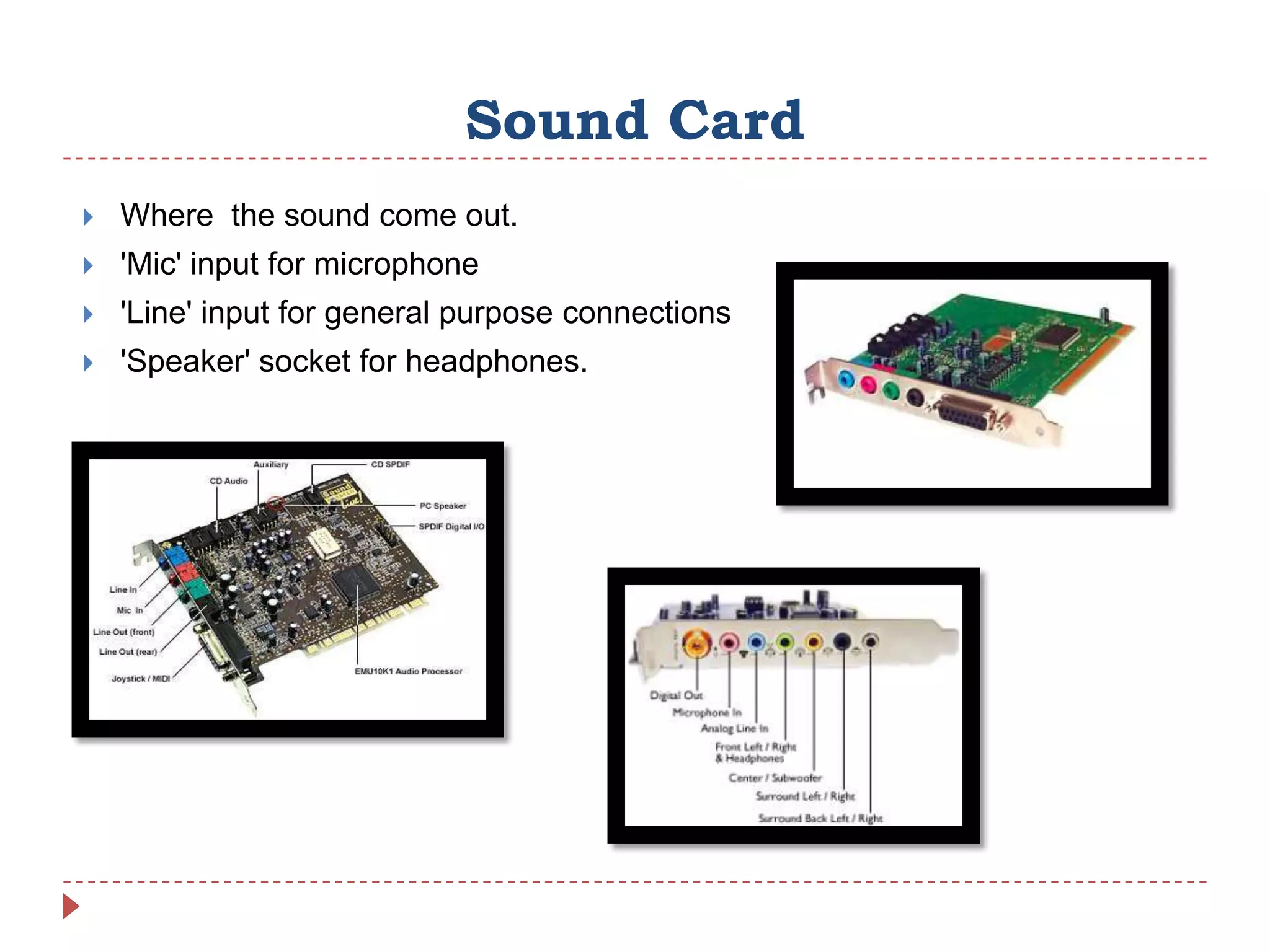
Sound Card
   Where the sound come out.
   'Mic' input for microphone
   'Line' input for general purpose connections
   'Speaker' socket for headphones.
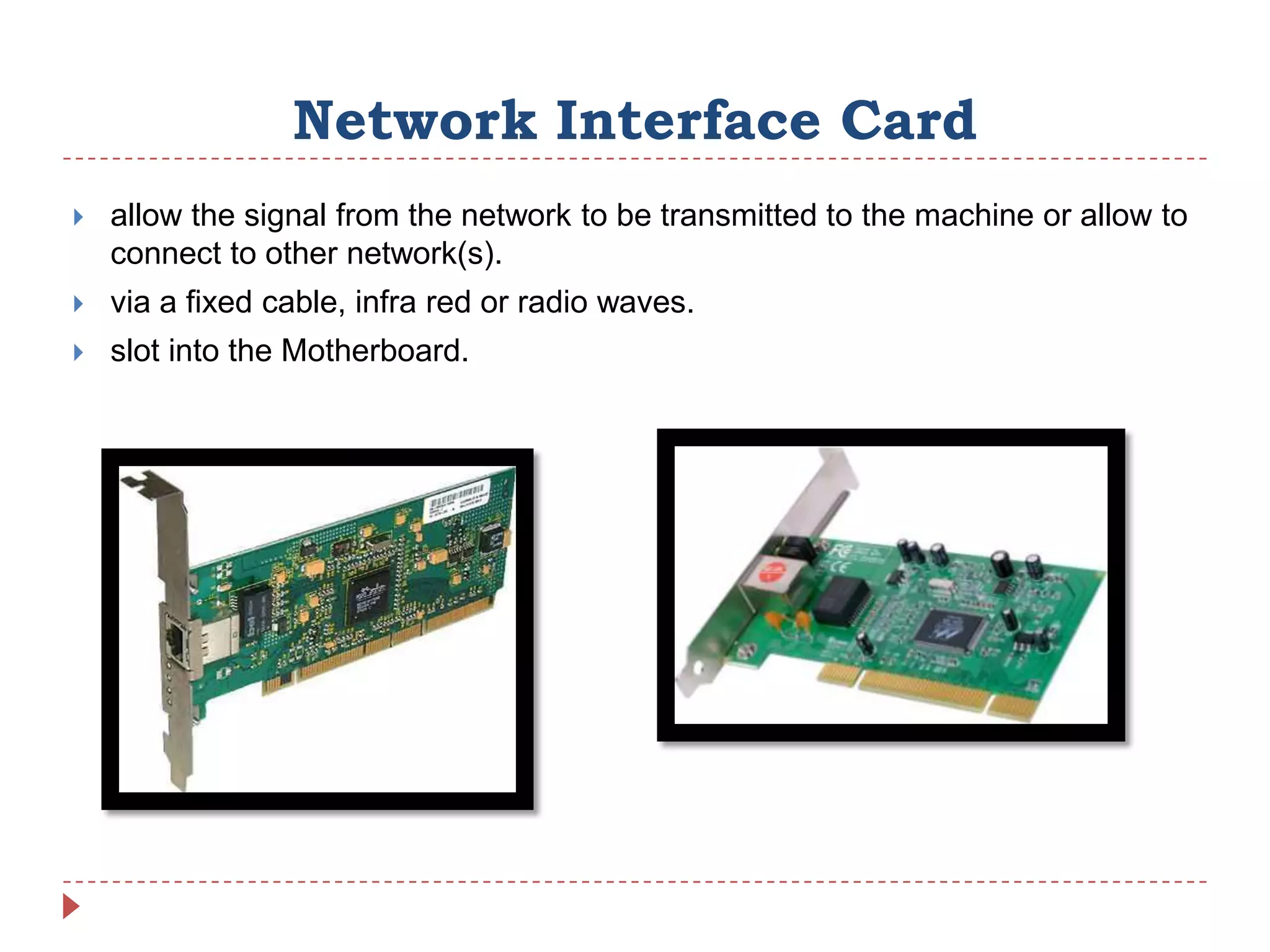
Network Interface Card
   allow the signal from the network to be transmitted to the machine or allow to
    connect to other network(s).
   via a fixed cable, infra red or radio waves.
   slot into the Motherboard.
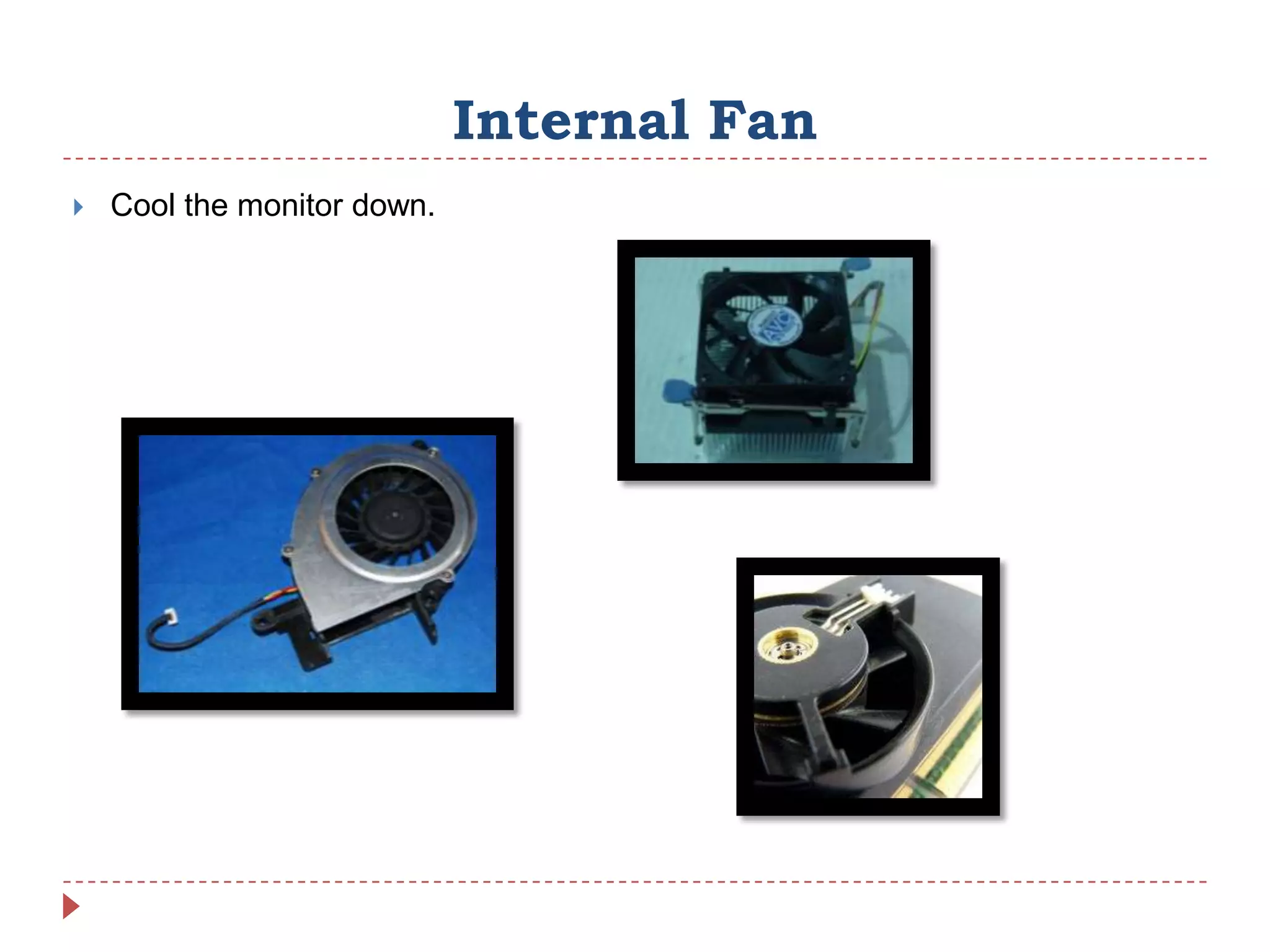
Internal Fan
   Cool the monitor down.

Internal hardware

  • 1.
  • 2.
    What is InternalHardware? Internal Hardware is mean the hardware that is inside the computer case. For example:  C.P.U  R.A.M  R.O.M  Graphics Card  Motherboard  Sound Card  Network Interface Card  Internal Fan
  • 3.
    C.P.U Central Processing Unit  The “brain” of the computer that carries out software instructions. An Example: Pentium processor  It connect to the “motherboard” (main circuit board). Measure the speed: Hertz.  1 Megahertz (MHz) = 1,000,000 (1 million) Hertz  1 Gigahertz (GHz) = 1,000,000,000 (1 billion) Hertz
  • 4.
    R.A.M Random Access Memory(RAM)  the part of the computer that temporarily stores and the data it is processing.  volatile storage device- turned power off the everything disappear, lost.  put in to sockets on the motherboard.
  • 5.
    R.O.M Read-Only Memory  hold a small, special piece of software: the 'boot up' program.  non-volatile storage- never lost, even if the power is switched off.  In the motherboard
  • 6.
    Graphics Card  produce high quality displays for your monitor.  controlling each pixel on the screen.  Make the computer chip hot.
  • 7.
    Motherboard  main printed circuit board in the computer.  Many sockets for RAM, ROM, card (sound, graphics, network interface)  connecting all of the computer's parts together.  Extra boards, called 'daughter boards'
  • 8.
    Sound Card  Where the sound come out.  'Mic' input for microphone  'Line' input for general purpose connections  'Speaker' socket for headphones.
  • 9.
    Network Interface Card  allow the signal from the network to be transmitted to the machine or allow to connect to other network(s).  via a fixed cable, infra red or radio waves.  slot into the Motherboard.
  • 10.
    Internal Fan  Cool the monitor down.