CPU
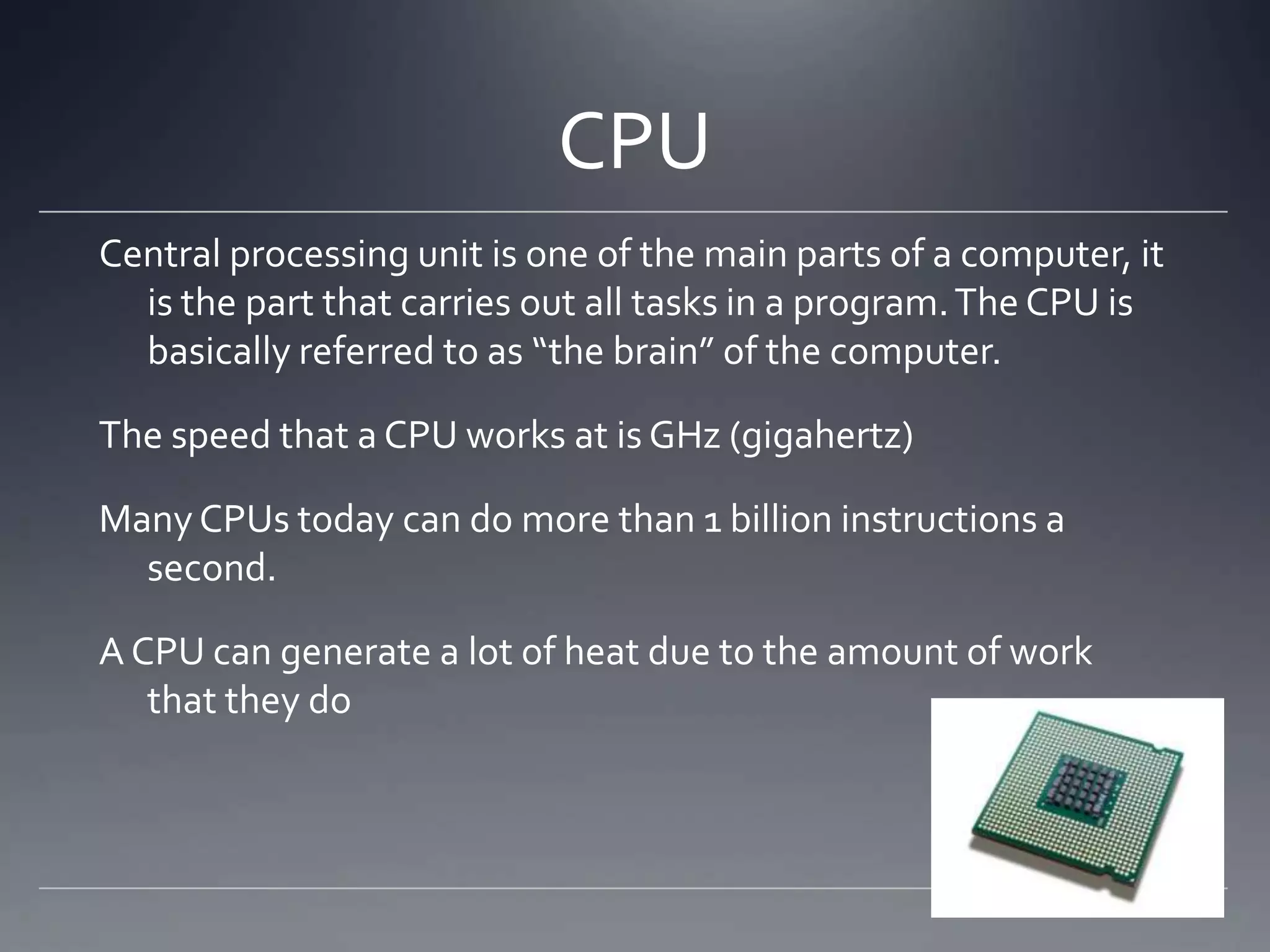
Central processing unit is one of the main parts of a computer, it
  is the part that carries out all tasks in a program. The CPU is
  basically referred to as “the brain” of the computer.

The speed that a CPU works at is GHz (gigahertz)

Many CPUs today can do more than 1 billion instructions a
  second.

A CPU can generate a lot of heat due to the amount of work
   that they do
RAM
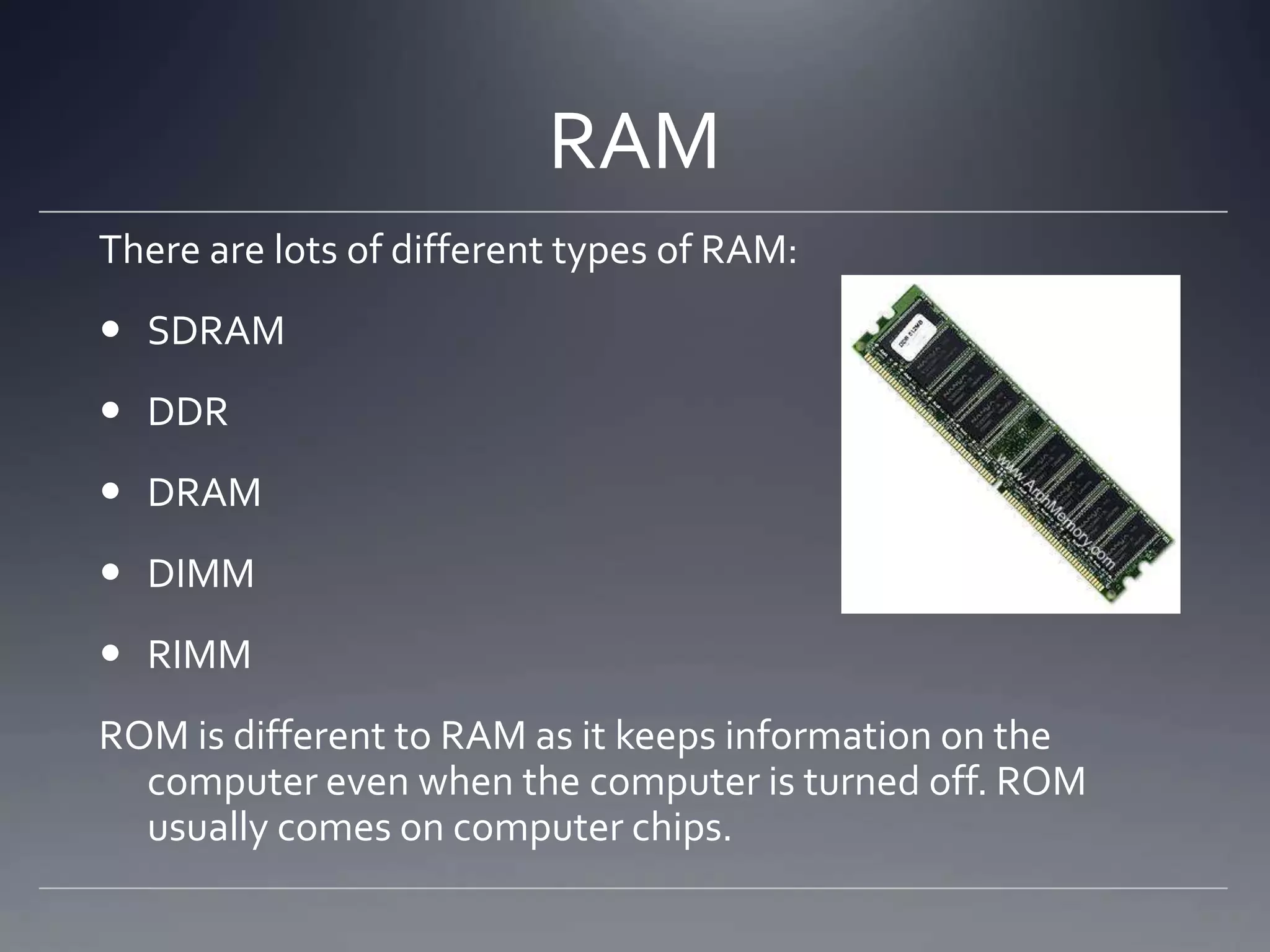
There are lots of different types of RAM:
 SDRAM
 DDR
 DRAM
 DIMM
 RIMM
ROM is different to RAM as it keeps information on the
  computer even when the computer is turned off. ROM
  usually comes on computer chips.
Hard Drive
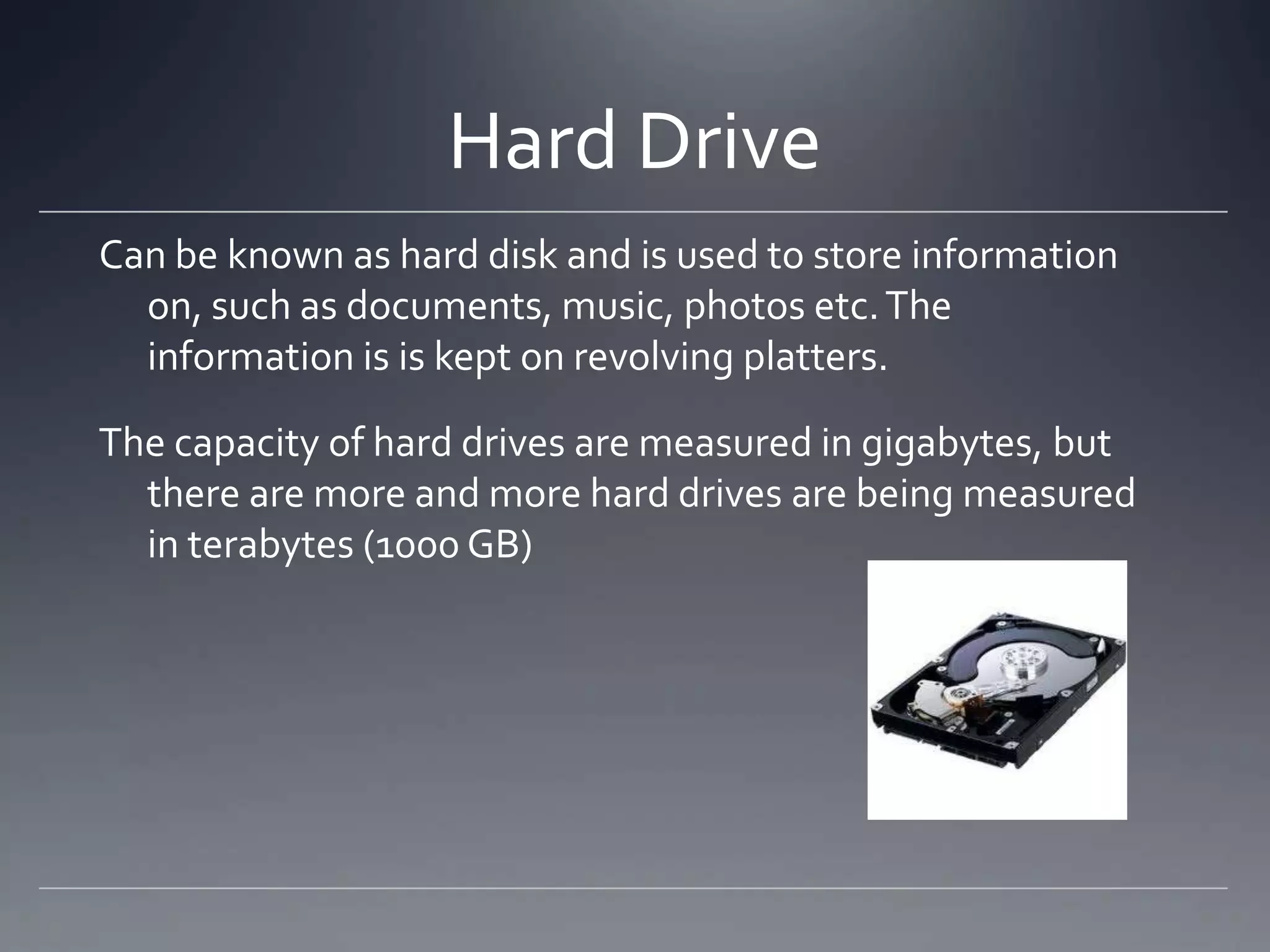
Can be known as hard disk and is used to store information
  on, such as documents, music, photos etc. The
  information is is kept on revolving platters.

The capacity of hard drives are measured in gigabytes, but
  there are more and more hard drives are being measured
  in terabytes (1000 GB)
Heat sink
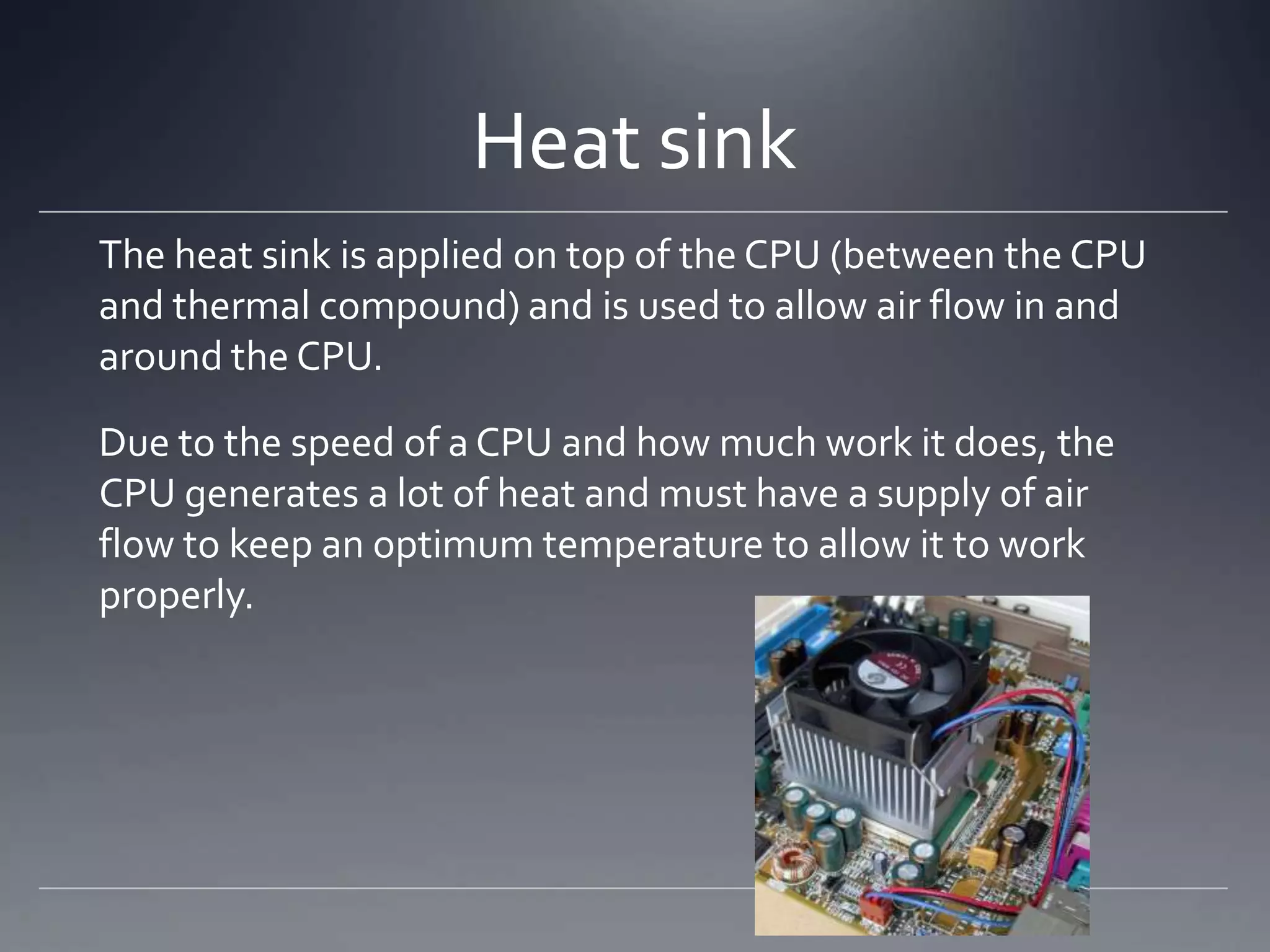
The heat sink is applied on top of the CPU (between the CPU
and thermal compound) and is used to allow air flow in and
around the CPU.

Due to the speed of a CPU and how much work it does, the
CPU generates a lot of heat and must have a supply of air
flow to keep an optimum temperature to allow it to work
properly.
Adapter cards
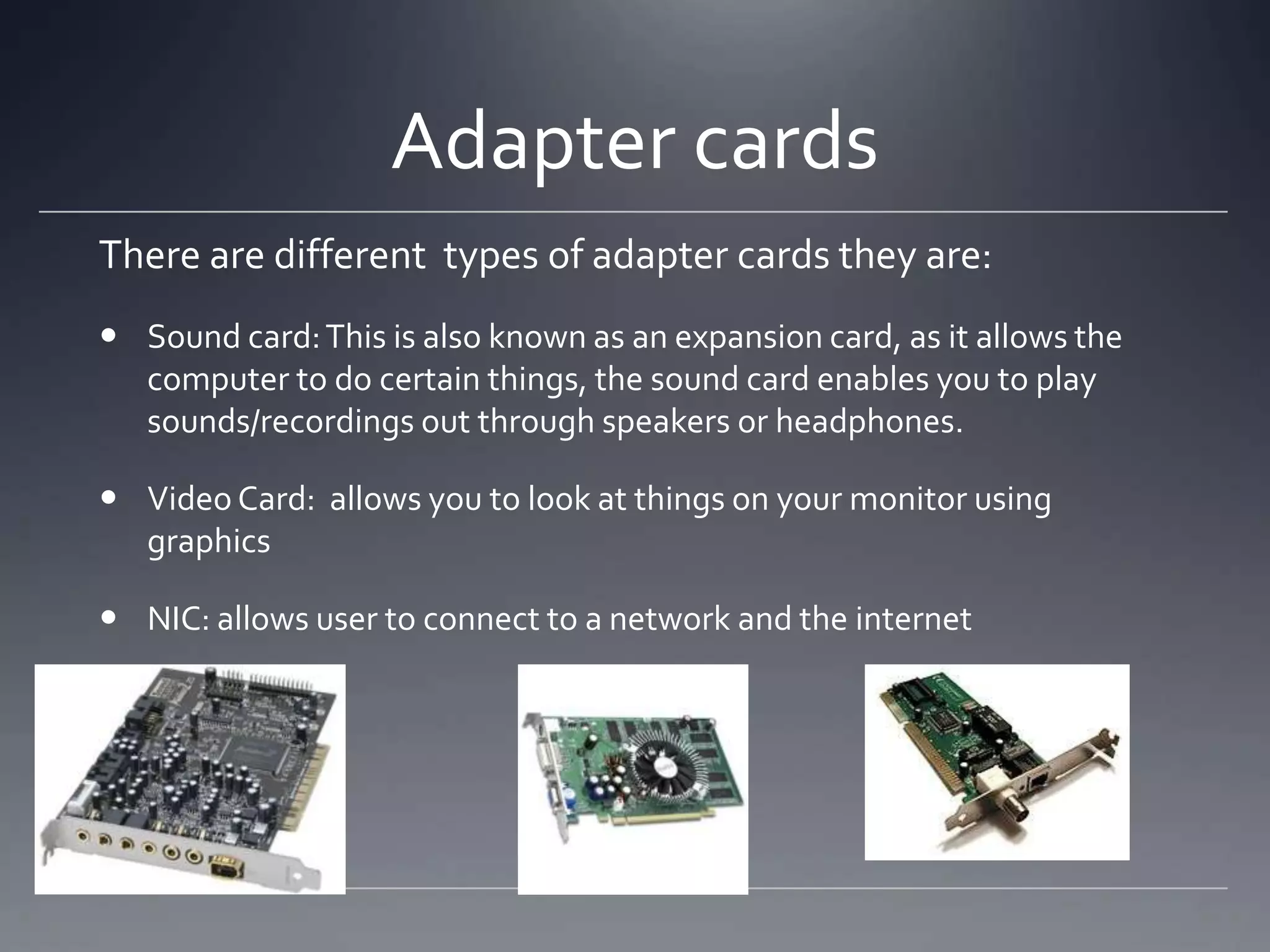
There are different types of adapter cards they are:
 Sound card: This is also known as an expansion card, as it allows the
  computer to do certain things, the sound card enables you to play
  sounds/recordings out through speakers or headphones.

 Video Card: allows you to look at things on your monitor using
  graphics

 NIC: allows user to connect to a network and the internet
Output device
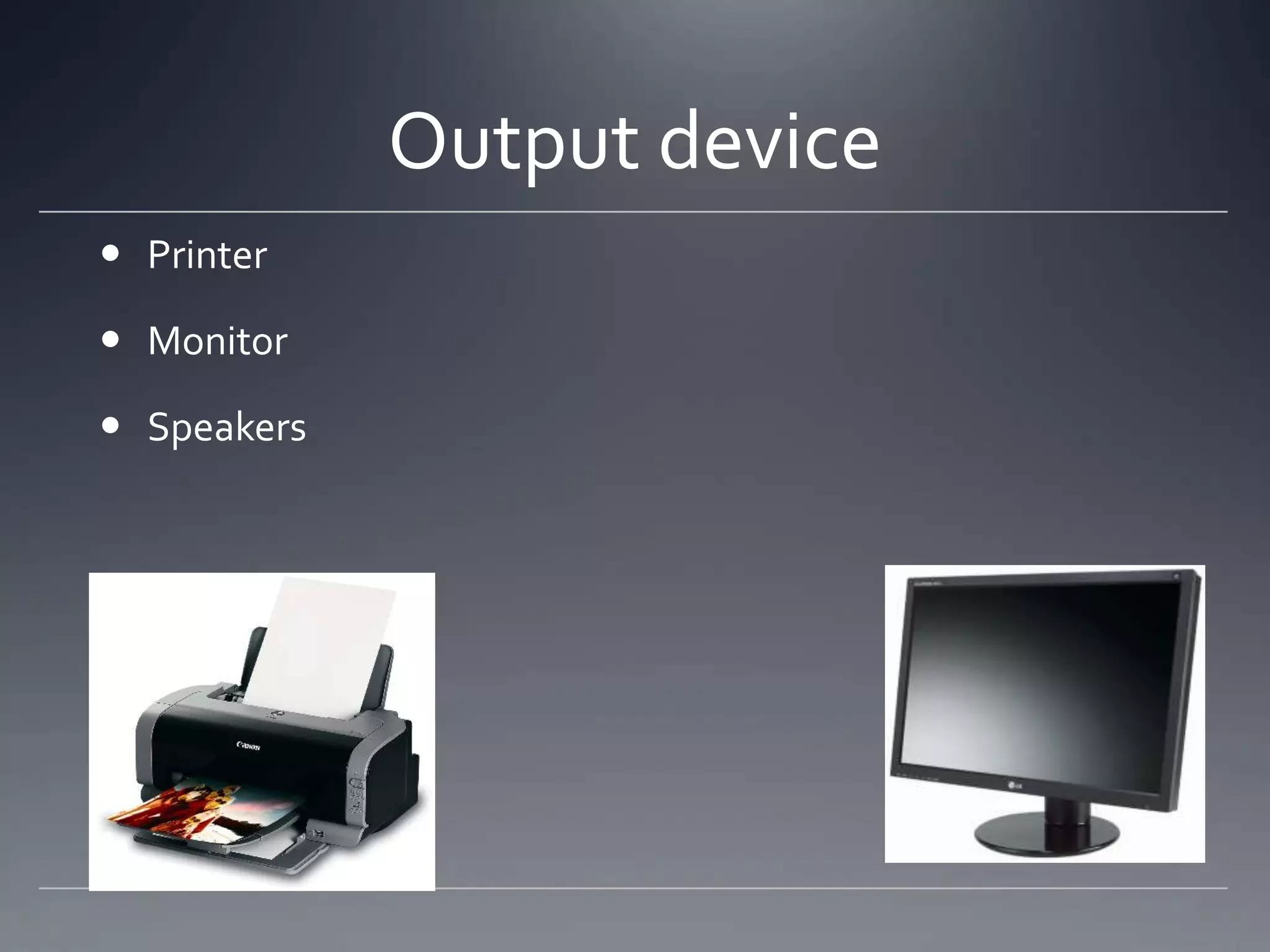
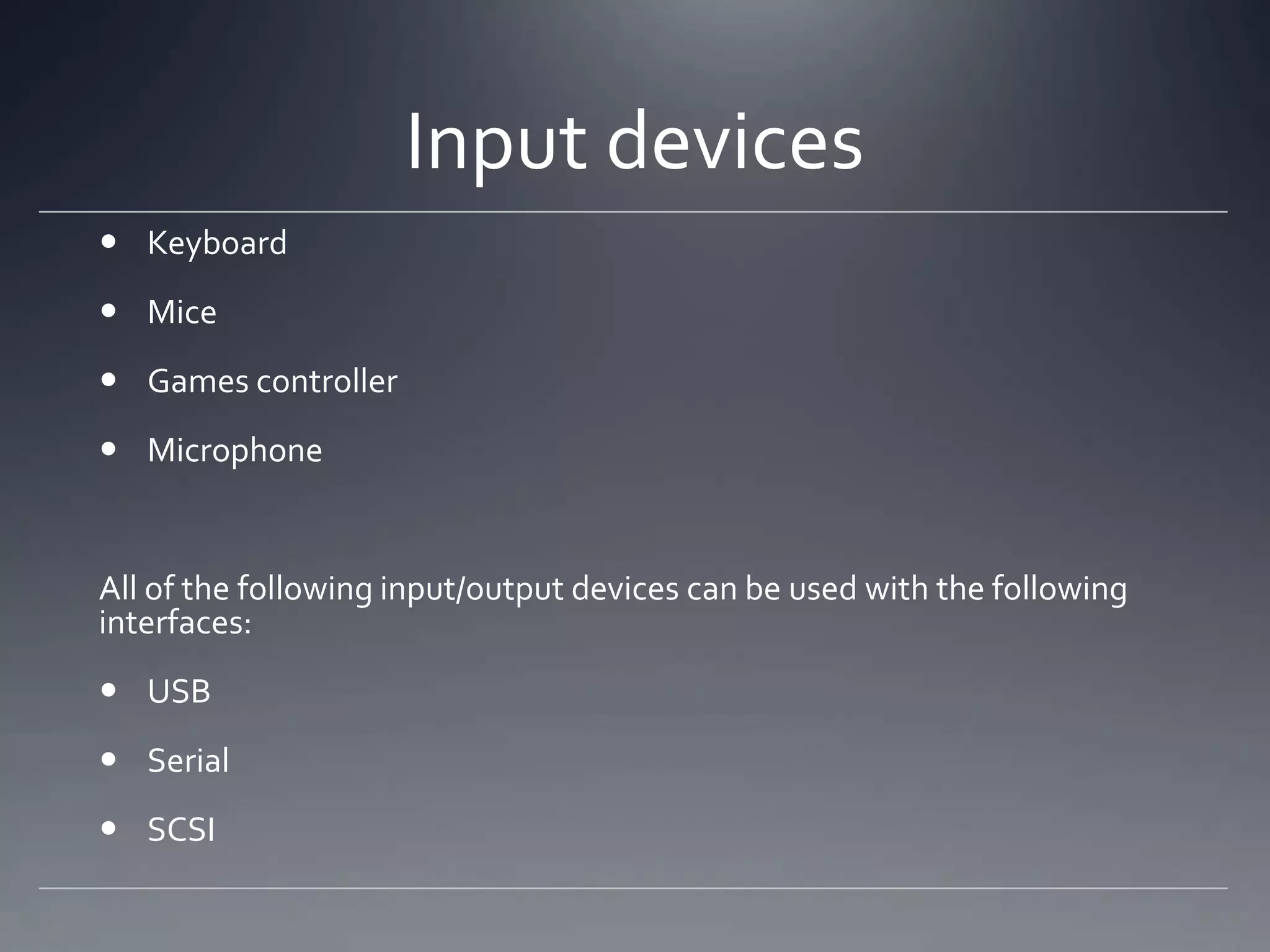
 Printer

 Monitor

 Speakers
Input devices
 Keyboard
 Mice
 Games controller
 Microphone


All of the following input/output devices can be used with the following
interfaces:
 USB
 Serial
 SCSI

Computer componernts technical liam east

  • 2.
    CPU Central processing unitis one of the main parts of a computer, it is the part that carries out all tasks in a program. The CPU is basically referred to as “the brain” of the computer. The speed that a CPU works at is GHz (gigahertz) Many CPUs today can do more than 1 billion instructions a second. A CPU can generate a lot of heat due to the amount of work that they do
  • 3.
    RAM There are lotsof different types of RAM:  SDRAM  DDR  DRAM  DIMM  RIMM ROM is different to RAM as it keeps information on the computer even when the computer is turned off. ROM usually comes on computer chips.
  • 4.
    Hard Drive Can beknown as hard disk and is used to store information on, such as documents, music, photos etc. The information is is kept on revolving platters. The capacity of hard drives are measured in gigabytes, but there are more and more hard drives are being measured in terabytes (1000 GB)
  • 5.
    Heat sink The heatsink is applied on top of the CPU (between the CPU and thermal compound) and is used to allow air flow in and around the CPU. Due to the speed of a CPU and how much work it does, the CPU generates a lot of heat and must have a supply of air flow to keep an optimum temperature to allow it to work properly.
  • 6.
    Adapter cards There aredifferent types of adapter cards they are:  Sound card: This is also known as an expansion card, as it allows the computer to do certain things, the sound card enables you to play sounds/recordings out through speakers or headphones.  Video Card: allows you to look at things on your monitor using graphics  NIC: allows user to connect to a network and the internet
  • 7.
    Output device  Printer Monitor  Speakers
  • 8.
    Input devices  Keyboard Mice  Games controller  Microphone All of the following input/output devices can be used with the following interfaces:  USB  Serial  SCSI