Receptor
1
Contents
 Definition
 Classification and description of each class.
 Description of individual receptor.
 Forces affecting the drug receptor binding.
 Binding of drug receptor affect drug action.
 Agonist and antagonist.
 Disease due to malfunctioning of receptors.
 New drug design based on structure of receptors
 Receptor as target for drug discovery.
 Drug action not mediated by receptor.
2
Receptor
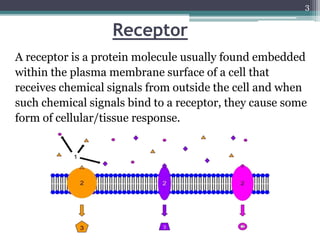
A receptor is a protein molecule usually found embedded
within the plasma membrane surface of a cell that
receives chemical signals from outside the cell and when
such chemical signals bind to a receptor, they cause some
form of cellular/tissue response.
3
Classification
There are 2 types of receptors. Those are : Internal &
Cell surface receptor.
i. Internal /Intracellular/Cytoplasmic receptors :
 found in the cytoplasm of the cell
 respond to hydrophobic ligand molecules
4
Internal receptor :
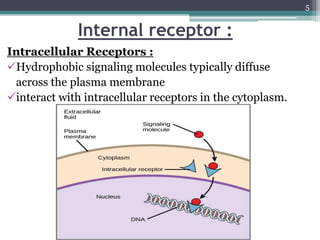
Intracellular Receptors :
Hydrophobic signaling molecules typically diffuse
across the plasma membrane
interact with intracellular receptors in the cytoplasm.
5
Cell surface receptor
ii. Cell-surface /transmembrane receptors/cell-
specific proteins
 performs signal transduction, converting an
extracellular signal into an intracellular signal.
3 main components:
i. an external ligand-binding domain (extracellular
domain),
ii. a hydrophobic membrane-spanning region,
iii. and an intracellular domain inside the cell.
6
Cell surface receptor
There are three general categories of cell-surface
receptors:
1. Ion channel-linked receptors,
2. G-protein-linked receptors,
3. Enzyme-linked receptors.
7
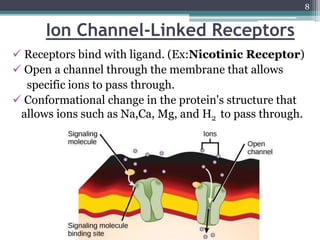
Ion Channel-Linked Receptors
 Receptors bind with ligand. (Ex:Nicotinic Receptor)
 Open a channel through the membrane that allows
specific ions to pass through.
 Conformational change in the protein's structure that
allows ions such as Na,Ca, Mg, and H2 to pass through.
8
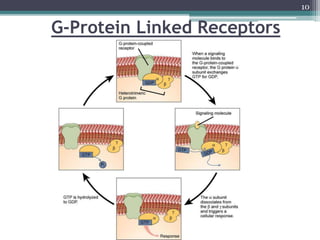
G-Protein Linked Receptors
 Binds with a ligand and activate a membrane protein
called a G-protein.
 The activated G-protein then interacts with either an ion
channel or an enzyme in the membrane.
 Each receptor has its own specific extracellular domain
and G-protein-binding site.
Example : Beta-adrenergic receptor
9
G-Protein Linked Receptors
10
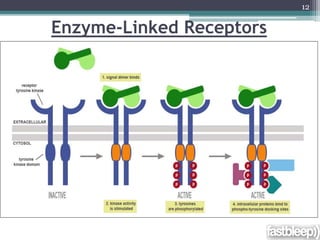
Enzyme-Linked Receptors
Cell surface receptors with intracellular domains that are
associated with an enzyme.
 Normally have large extracellular and intracellular
domains.
When a ligand binds to the extracellular domain, a signal
is transferred through the membrane and activates the
enzyme, which eventually leads to a response.
Example : Tyrosine Kinase receptor
11
Enzyme-Linked Receptors
12
Forces affecting the binding
3 major types of chemical forces/bonds. Those are :
Covalent, Electrostatic & Hydrophobic interaction.
1. Covalent bond :
• very strong
• "irreversible" under biological conditions.
• extremely stable.
Example : It is formed between the activated form of
Phenoxybenzamine and the α-adrenergic-receptor.
13
Forces affecting the binding
2. Electrostatic bond :
• Very common & weaker than covalent.
• Interaction strength is variable
Example : van-der Waals forces.
3. Hydrophobic interactions :
• Generally weak, but important.
• Significant in driving interactions.
• Lipophilic drugs and the lipid component of biological
membranes.
14
Binding affects drug action
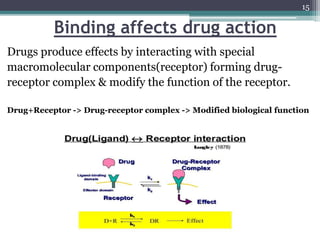
Drugs produce effects by interacting with special
macromolecular components(receptor) forming drug-
receptor complex & modify the function of the receptor.
Drug+Receptor -> Drug-receptor complex -> Modified biological function
15
Agonist and antagonist
Agonist :
Agonists are chemical that binds to a receptor of a cell and
triggers a response by that cell.
Antagonist :
Antagonists are drugs that decrease the actions of another
drug or endogenous ligand.
16
Malfunctioning of receptors
1. Autoimmune :
• Nicotinic cholinergic receptors  myasthenia gravis
• Insulin receptors  insulin-resistant diabetes mellitus
• TSH receptor  Grave’s disease (activation)
• TSH receptor  Atropic thyroiditis (blocking)
17
Malfunctioning of receptors
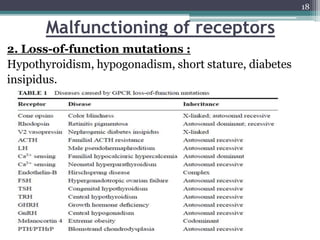
2. Loss-of-function mutations :
Hypothyroidism, hypogonadism, short stature, diabetes
insipidus.
18
Malfunctioning of receptors
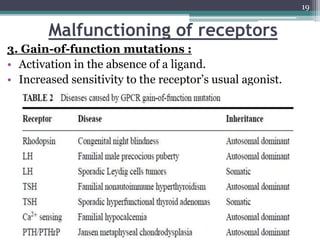
3. Gain-of-function mutations :
• Activation in the absence of a ligand.
• Increased sensitivity to the receptor’s usual agonist.
19
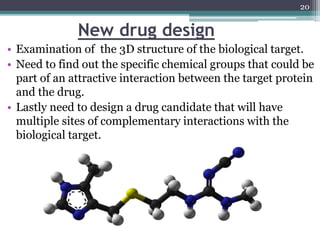
New drug design
• Examination of the 3D structure of the biological target.
• Need to find out the specific chemical groups that could be
part of an attractive interaction between the target protein
and the drug.
• Lastly need to design a drug candidate that will have
multiple sites of complementary interactions with the
biological target.
20
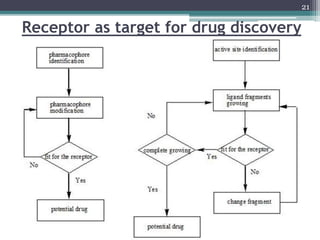
Receptor as target for drug discovery
21
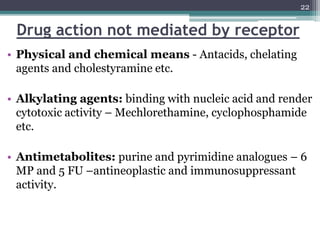
Drug action not mediated by receptor
• Physical and chemical means - Antacids, chelating
agents and cholestyramine etc.
• Alkylating agents: binding with nucleic acid and render
cytotoxic activity – Mechlorethamine, cyclophosphamide
etc.
• Antimetabolites: purine and pyrimidine analogues – 6
MP and 5 FU –antineoplastic and immunosuppressant
activity.
22
Reference
1. https://en.wikipedia.org/wiki/Receptor_(biochemistry)
2.https://www.boundless.com/biology/textbooks/boundles
s-biology-textbook/cell-communication-9/signaling-
molecules-and-cellular-receptors-83/types-of-receptors-
381-11607/
3.http://www.pharmacology2000.com/General/Introductio
n/Introobj2.htm
4. A Presentation on “Receptor regulation and receptor
related diseases” by “Dr. Plessan Joy”
5. A Presentation on “Rational drug design” by “J.Naresh”
6. A Presentation on “Structure base drug design” by
“Jayshreeupadhyay”
23
24

Receptor

  • 1.
  • 2.
    Contents  Definition  Classificationand description of each class.  Description of individual receptor.  Forces affecting the drug receptor binding.  Binding of drug receptor affect drug action.  Agonist and antagonist.  Disease due to malfunctioning of receptors.  New drug design based on structure of receptors  Receptor as target for drug discovery.  Drug action not mediated by receptor. 2
  • 3.
    Receptor A receptor isa protein molecule usually found embedded within the plasma membrane surface of a cell that receives chemical signals from outside the cell and when such chemical signals bind to a receptor, they cause some form of cellular/tissue response. 3
  • 4.
    Classification There are 2types of receptors. Those are : Internal & Cell surface receptor. i. Internal /Intracellular/Cytoplasmic receptors :  found in the cytoplasm of the cell  respond to hydrophobic ligand molecules 4
  • 5.
    Internal receptor : IntracellularReceptors : Hydrophobic signaling molecules typically diffuse across the plasma membrane interact with intracellular receptors in the cytoplasm. 5
  • 6.
    Cell surface receptor ii.Cell-surface /transmembrane receptors/cell- specific proteins  performs signal transduction, converting an extracellular signal into an intracellular signal. 3 main components: i. an external ligand-binding domain (extracellular domain), ii. a hydrophobic membrane-spanning region, iii. and an intracellular domain inside the cell. 6
  • 7.
    Cell surface receptor Thereare three general categories of cell-surface receptors: 1. Ion channel-linked receptors, 2. G-protein-linked receptors, 3. Enzyme-linked receptors. 7
  • 8.
    Ion Channel-Linked Receptors Receptors bind with ligand. (Ex:Nicotinic Receptor)  Open a channel through the membrane that allows specific ions to pass through.  Conformational change in the protein's structure that allows ions such as Na,Ca, Mg, and H2 to pass through. 8
  • 9.
    G-Protein Linked Receptors Binds with a ligand and activate a membrane protein called a G-protein.  The activated G-protein then interacts with either an ion channel or an enzyme in the membrane.  Each receptor has its own specific extracellular domain and G-protein-binding site. Example : Beta-adrenergic receptor 9
  • 10.
  • 11.
    Enzyme-Linked Receptors Cell surfacereceptors with intracellular domains that are associated with an enzyme.  Normally have large extracellular and intracellular domains. When a ligand binds to the extracellular domain, a signal is transferred through the membrane and activates the enzyme, which eventually leads to a response. Example : Tyrosine Kinase receptor 11
  • 12.
  • 13.
    Forces affecting thebinding 3 major types of chemical forces/bonds. Those are : Covalent, Electrostatic & Hydrophobic interaction. 1. Covalent bond : • very strong • "irreversible" under biological conditions. • extremely stable. Example : It is formed between the activated form of Phenoxybenzamine and the α-adrenergic-receptor. 13
  • 14.
    Forces affecting thebinding 2. Electrostatic bond : • Very common & weaker than covalent. • Interaction strength is variable Example : van-der Waals forces. 3. Hydrophobic interactions : • Generally weak, but important. • Significant in driving interactions. • Lipophilic drugs and the lipid component of biological membranes. 14
  • 15.
    Binding affects drugaction Drugs produce effects by interacting with special macromolecular components(receptor) forming drug- receptor complex & modify the function of the receptor. Drug+Receptor -> Drug-receptor complex -> Modified biological function 15
  • 16.
    Agonist and antagonist Agonist: Agonists are chemical that binds to a receptor of a cell and triggers a response by that cell. Antagonist : Antagonists are drugs that decrease the actions of another drug or endogenous ligand. 16
  • 17.
    Malfunctioning of receptors 1.Autoimmune : • Nicotinic cholinergic receptors  myasthenia gravis • Insulin receptors  insulin-resistant diabetes mellitus • TSH receptor  Grave’s disease (activation) • TSH receptor  Atropic thyroiditis (blocking) 17
  • 18.
    Malfunctioning of receptors 2.Loss-of-function mutations : Hypothyroidism, hypogonadism, short stature, diabetes insipidus. 18
  • 19.
    Malfunctioning of receptors 3.Gain-of-function mutations : • Activation in the absence of a ligand. • Increased sensitivity to the receptor’s usual agonist. 19
  • 20.
    New drug design •Examination of the 3D structure of the biological target. • Need to find out the specific chemical groups that could be part of an attractive interaction between the target protein and the drug. • Lastly need to design a drug candidate that will have multiple sites of complementary interactions with the biological target. 20
  • 21.
    Receptor as targetfor drug discovery 21
  • 22.
    Drug action notmediated by receptor • Physical and chemical means - Antacids, chelating agents and cholestyramine etc. • Alkylating agents: binding with nucleic acid and render cytotoxic activity – Mechlorethamine, cyclophosphamide etc. • Antimetabolites: purine and pyrimidine analogues – 6 MP and 5 FU –antineoplastic and immunosuppressant activity. 22
  • 23.
    Reference 1. https://en.wikipedia.org/wiki/Receptor_(biochemistry) 2.https://www.boundless.com/biology/textbooks/boundles s-biology-textbook/cell-communication-9/signaling- molecules-and-cellular-receptors-83/types-of-receptors- 381-11607/ 3.http://www.pharmacology2000.com/General/Introductio n/Introobj2.htm 4. APresentation on “Receptor regulation and receptor related diseases” by “Dr. Plessan Joy” 5. A Presentation on “Rational drug design” by “J.Naresh” 6. A Presentation on “Structure base drug design” by “Jayshreeupadhyay” 23
  • 24.