
INTERCELLULAR SIGNALLING
PATHWAYS
Presented by: Manju Jakhar
Rollno.20PPC008
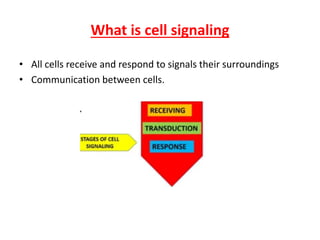
What is cell signaling
• All cells receive and respond to signals their surroundings
• Communication between cells.
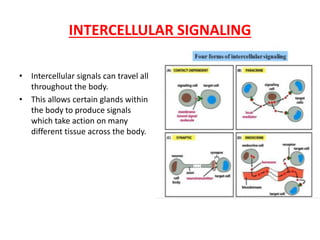
INTERCELLULAR SIGNALING
• Intercellular signals can travel all
throughout the body.
• This allows certain glands within
the body to produce signals
which take action on many
different tissue across the body.
TYPES OF INTERCELLULAR
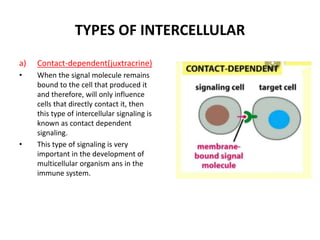
a) Contact-dependent(juxtracrine)
• When the signal molecule remains
bound to the cell that produced it
and therefore, will only influence
cells that directly contact it, then
this type of intercellular signaling is
known as contact dependent
signaling.
• This type of signaling is very
important in the development of
multicellular organism ans in the
immune system.
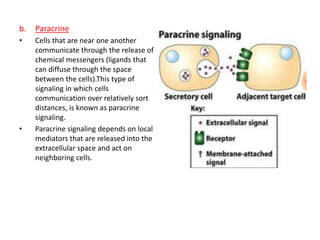
b. Paracrine
• Cells that are near one another
communicate through the release of
chemical messengers (ligands that
can diffuse through the space
between the cells).This type of
signaling in which cells
communication over relatively sort
distances, is known as paracrine
signaling.
• Paracrine signaling depends on local
mediators that are released into the
extracellular space and act on
neighboring cells.
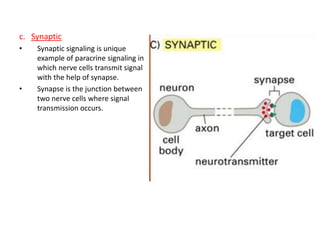
c. Synaptic
• Synaptic signaling is unique
example of paracrine signaling in
which nerve cells transmit signal
with the help of synapse.
• Synapse is the junction between
two nerve cells where signal
transmission occurs.
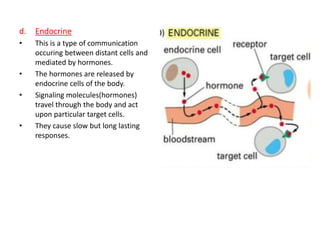
d. Endocrine
• This is a type of communication
occuring between distant cells and
mediated by hormones.
• The hormones are released by
endocrine cells of the body.
• Signaling molecules(hormones)
travel through the body and act
upon particular target cells.
• They cause slow but long lasting
responses.
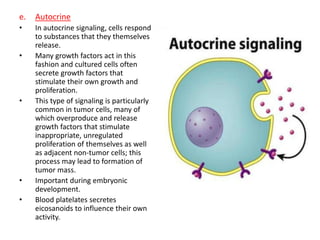
e. Autocrine
• In autocrine signaling, cells respond
to substances that they themselves
release.
• Many growth factors act in this
fashion and cultured cells often
secrete growth factors that
stimulate their own growth and
proliferation.
• This type of signaling is particularly
common in tumor cells, many of
which overproduce and release
growth factors that stimulate
inappropriate, unregulated
proliferation of themselves as well
as adjacent non-tumor cells; this
process may lead to formation of
tumor mass.
• Important during embryonic
development.
• Blood platelates secretes
eicosanoids to influence their own
activity.
Intercellular signalling pathways

Intercellular signalling pathways

  • 1.
  • 2.
    What is cellsignaling • All cells receive and respond to signals their surroundings • Communication between cells.
  • 3.
    INTERCELLULAR SIGNALING • Intercellularsignals can travel all throughout the body. • This allows certain glands within the body to produce signals which take action on many different tissue across the body.
  • 4.
    TYPES OF INTERCELLULAR a)Contact-dependent(juxtracrine) • When the signal molecule remains bound to the cell that produced it and therefore, will only influence cells that directly contact it, then this type of intercellular signaling is known as contact dependent signaling. • This type of signaling is very important in the development of multicellular organism ans in the immune system.
  • 5.
    b. Paracrine • Cellsthat are near one another communicate through the release of chemical messengers (ligands that can diffuse through the space between the cells).This type of signaling in which cells communication over relatively sort distances, is known as paracrine signaling. • Paracrine signaling depends on local mediators that are released into the extracellular space and act on neighboring cells.
  • 6.
    c. Synaptic • Synapticsignaling is unique example of paracrine signaling in which nerve cells transmit signal with the help of synapse. • Synapse is the junction between two nerve cells where signal transmission occurs.
  • 7.
    d. Endocrine • Thisis a type of communication occuring between distant cells and mediated by hormones. • The hormones are released by endocrine cells of the body. • Signaling molecules(hormones) travel through the body and act upon particular target cells. • They cause slow but long lasting responses.
  • 8.
    e. Autocrine • Inautocrine signaling, cells respond to substances that they themselves release. • Many growth factors act in this fashion and cultured cells often secrete growth factors that stimulate their own growth and proliferation. • This type of signaling is particularly common in tumor cells, many of which overproduce and release growth factors that stimulate inappropriate, unregulated proliferation of themselves as well as adjacent non-tumor cells; this process may lead to formation of tumor mass. • Important during embryonic development. • Blood platelates secretes eicosanoids to influence their own activity.