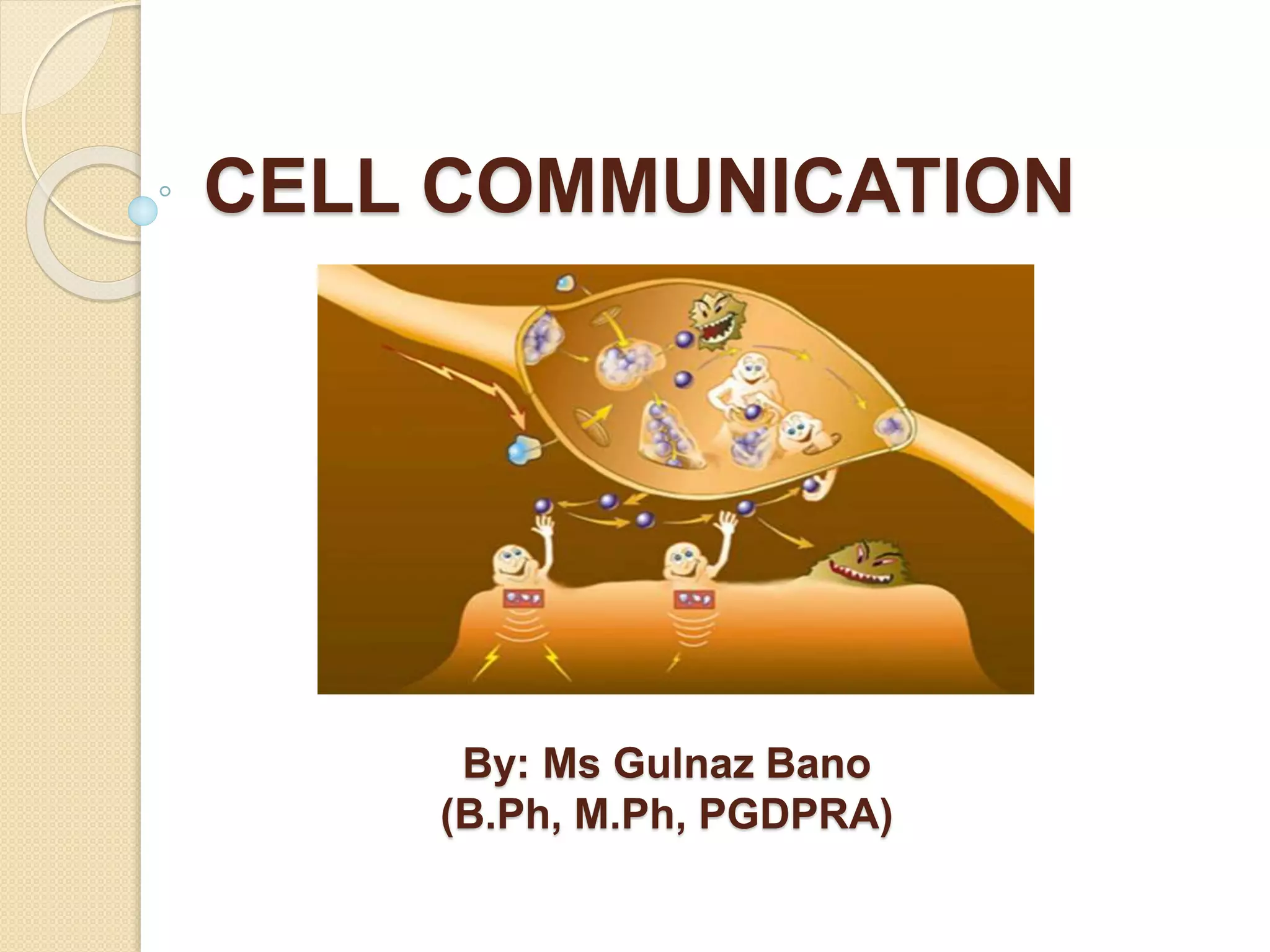
CELL COMMUNICATION
By: Ms Gulnaz Bano
(B.Ph, M.Ph, PGDPRA)
Outline
 General principles of cell
communication,
 Intracellular signaling pathway
activation by extracellular signal
molecule
 Forms of intracellular signaling:
a) Contact-dependent
b) Paracrine
c) Synaptic
d) Endocrine
Cell Communication
 Cell communication focuses on how a
cell gives and receives messages with
its environment and with itself.
 Cell needs to be able to communicate
to other cells and responds to
environment changes.
 External signals are converted into
responses within the cell.
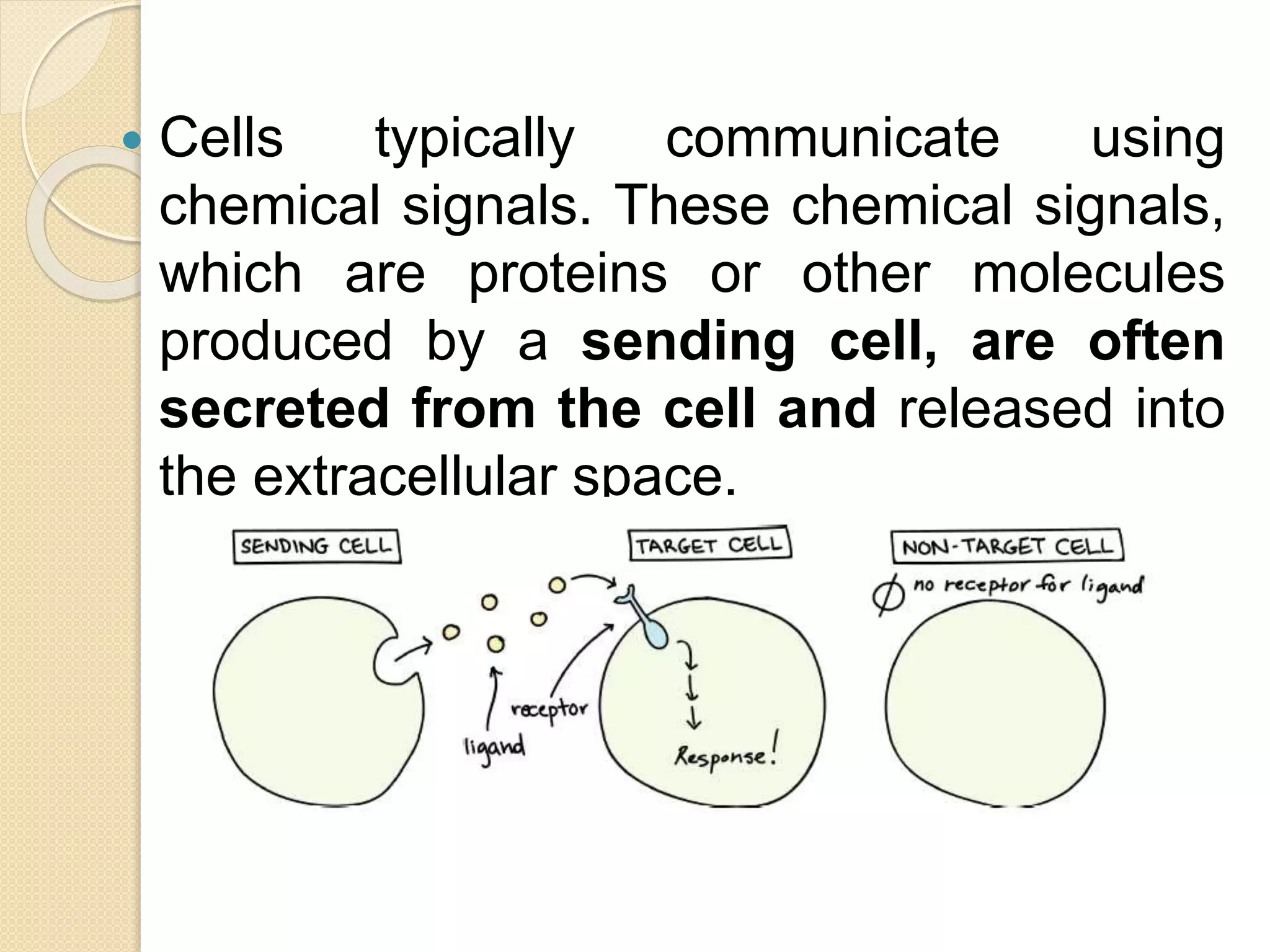
 Cells typically communicate using
chemical signals. These chemical signals,
which are proteins or other molecules
produced by a sending cell, are often
secreted from the cell and released into
the extracellular space.
Cell Signaling and Signal
Transduction
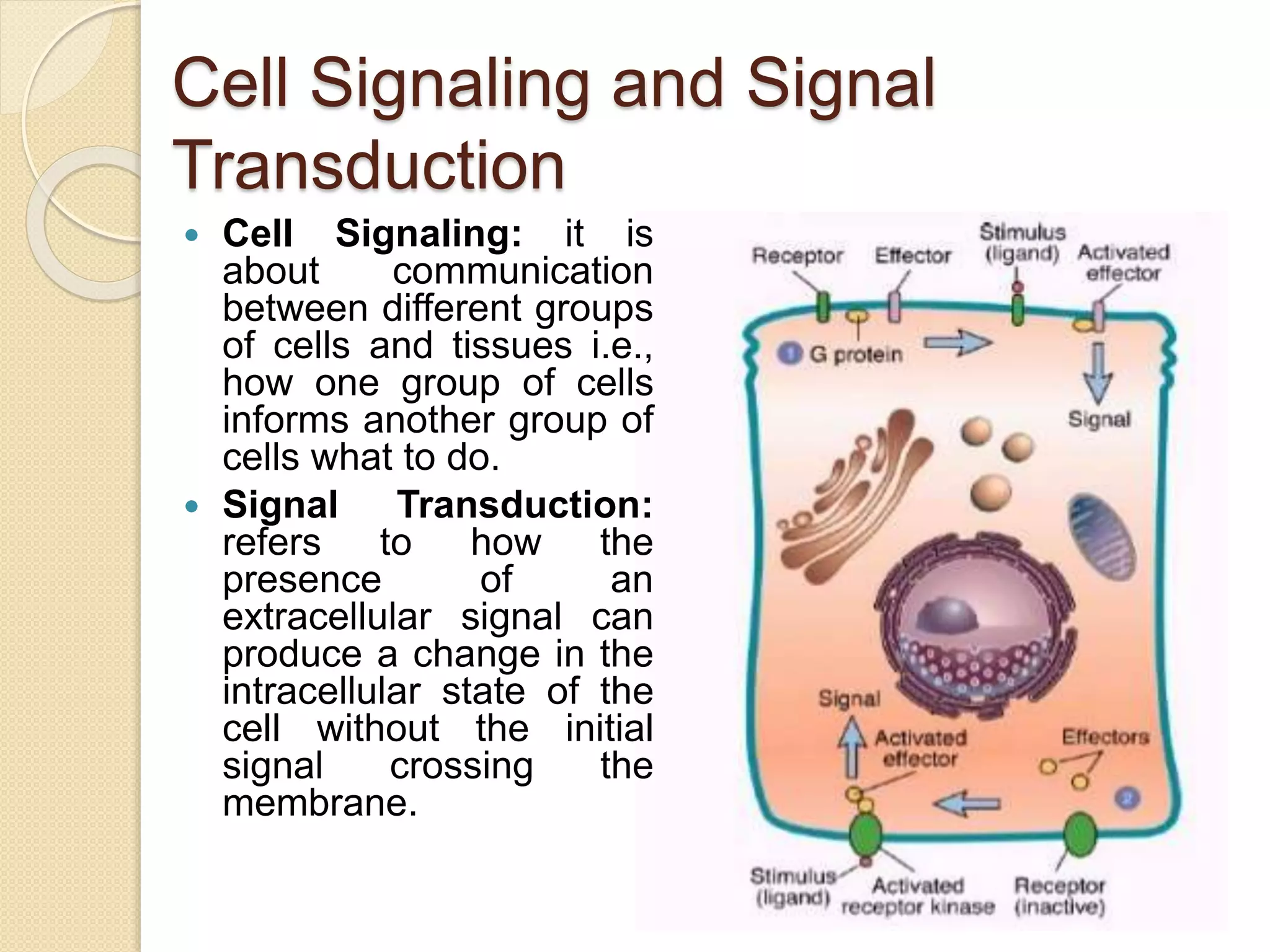
 Cell Signaling: it is
about communication
between different groups
of cells and tissues i.e.,
how one group of cells
informs another group of
cells what to do.
 Signal Transduction:
refers to how the
presence of an
extracellular signal can
produce a change in the
intracellular state of the
cell without the initial
signal crossing the
membrane.
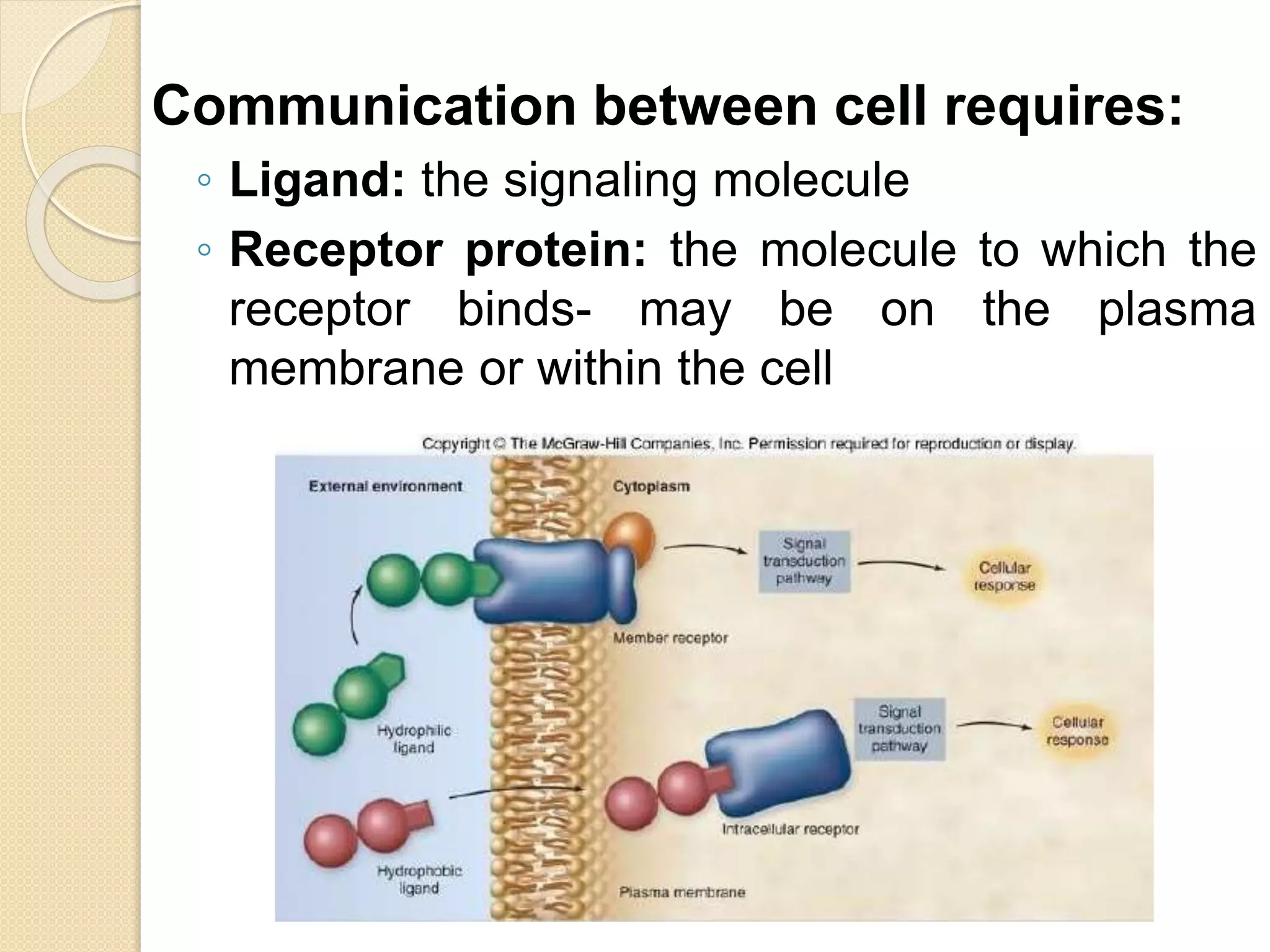
Communication between cell requires:
◦ Ligand: the signaling molecule
◦ Receptor protein: the molecule to which the
receptor binds- may be on the plasma
membrane or within the cell
 When a signaling molecule binds to
its receptor, it alters the shape or
activity of the receptor, triggering a
change inside of the cell.
 Signaling molecules are often called
ligands, a general term for molecules
that bind specifically to other
molecules (such as receptors).
 The message carried by a ligand is often
relayed through a chain of chemical
messengers inside the cell.
 Ultimately, it leads to a change in the
cell, such as alteration in the activity of a
gene or even the induction of a whole
process, such as cell division.
 Thus, the original intercellular (between-
cells) signal is converted into an
intracellular (within-cell) signal that
triggers a response.
Steps in Cell Signaling
Synthesis of signaling molecules
Release of signaling molecules
Transport of signal by specific receptors
Detection & binding of signal by specific receptor
Changes due to receptor-signal complex
Signal removal & response termination
Mechanism of Cell
Communication
 There are five basic mechanisms for
cellular communication:
a) Contact-dependent (Direct contact)
b) Paracrine
c) Autocrine
d) Synaptic
e) Endocrine
Contact-dependent
(Direct contact)
 Gap junctions in animals and
plasmodesmata in plants are tiny channels
that directly connect neighboring cells.
 These water-filled channels allow small
signaling molecules, called intracellular
mediators, to diffuse between the two
cells.
 Small molecules, such as calcium ions are
able to move between cells, but large
molecules like proteins and DNA cannot fit
through the channels without special
assistance.
 In another form of direct signaling, two
cells may bind to one another because
they carry complementary proteins on
their surfaces.
 When the proteins bind to one another,
this interaction changes the shape of one
or both proteins, transmiting a signal.
 This kind of signaling is especially
important in the immune system, where
immune cells use cell-surface markers to
recognize “self” cells (the body's own
cells) and cells infected by pathogens.
Paracrine Communication
 Often, cells that are near one another communicate
through the release of chemical messengers (ligands
that can diffuse through the space between the cells).
 This type of signaling, in which cells communicate over
relatively short distances, is known as paracrine
signaling.
 Paracrine signals target cells in the vicinity of the
emitting cell.
 E.g. Nitric oxide from endothelial cells dilates the
neighboring smooth cells of the blood vessel
causing vasodilation and hence controlling blood
pressure
Autocrine Communication
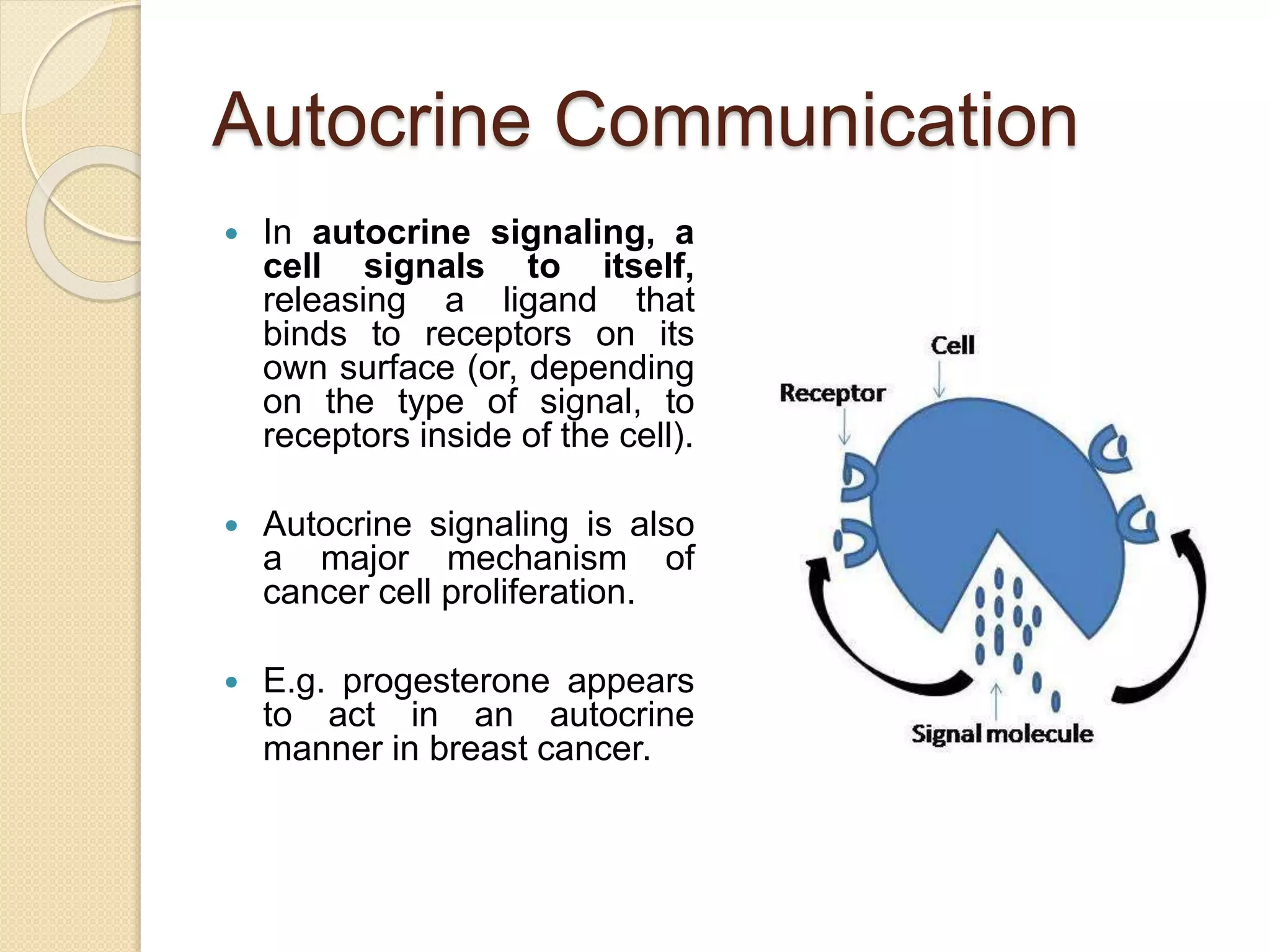
 In autocrine signaling, a
cell signals to itself,
releasing a ligand that
binds to receptors on its
own surface (or, depending
on the type of signal, to
receptors inside of the cell).
 Autocrine signaling is also
a major mechanism of
cancer cell proliferation.
 E.g. progesterone appears
to act in an autocrine
manner in breast cancer.
Synaptic Communication
 In synaptic signaling, nerve cells transmit
signals. This process is named for the
synapse, the junction between two nerve
cells where signal transmission occurs.
 When the impulse reaches the synapse, it
triggers the release of ligands called
neurotransmiters, which quickly cross the
small gap between the nerve cells.
 When the neurotransmiters arrive at the
receiving cell, they bind to receptors and
cause a chemical change inside of the cell.
Endocrine Communication
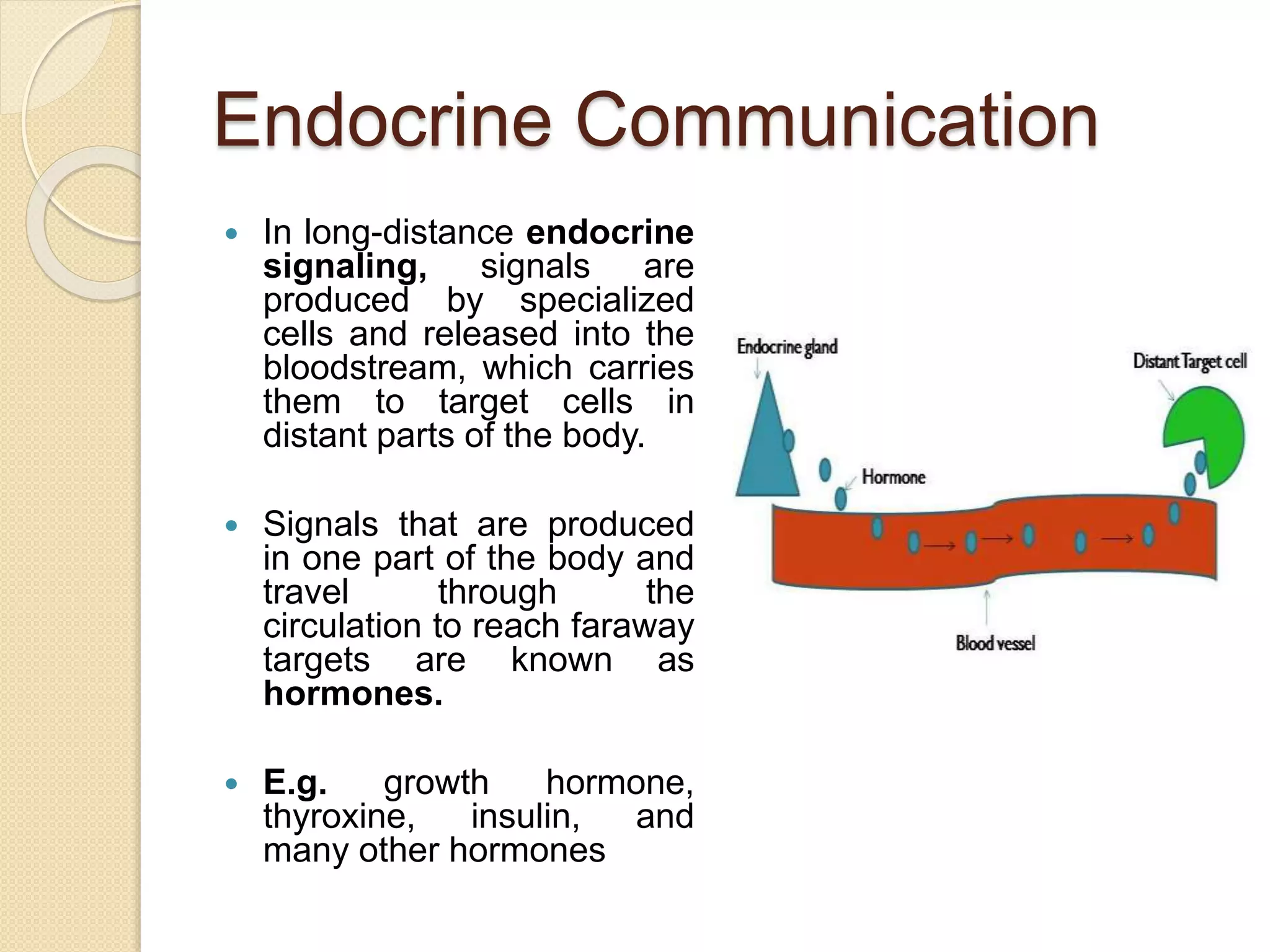
 In long-distance endocrine
signaling, signals are
produced by specialized
cells and released into the
bloodstream, which carries
them to target cells in
distant parts of the body.
 Signals that are produced
in one part of the body and
travel through the
circulation to reach faraway
targets are known as
hormones.
 E.g. growth hormone,
thyroxine, insulin, and
many other hormones
THANK YOU

Cell Communication.pptx

  • 1.
    CELL COMMUNICATION By: MsGulnaz Bano (B.Ph, M.Ph, PGDPRA)
  • 2.
    Outline  General principlesof cell communication,  Intracellular signaling pathway activation by extracellular signal molecule  Forms of intracellular signaling: a) Contact-dependent b) Paracrine c) Synaptic d) Endocrine
  • 3.
    Cell Communication  Cellcommunication focuses on how a cell gives and receives messages with its environment and with itself.  Cell needs to be able to communicate to other cells and responds to environment changes.  External signals are converted into responses within the cell.
  • 4.
     Cells typicallycommunicate using chemical signals. These chemical signals, which are proteins or other molecules produced by a sending cell, are often secreted from the cell and released into the extracellular space.
  • 5.
    Cell Signaling andSignal Transduction  Cell Signaling: it is about communication between different groups of cells and tissues i.e., how one group of cells informs another group of cells what to do.  Signal Transduction: refers to how the presence of an extracellular signal can produce a change in the intracellular state of the cell without the initial signal crossing the membrane.
  • 6.
    Communication between cellrequires: ◦ Ligand: the signaling molecule ◦ Receptor protein: the molecule to which the receptor binds- may be on the plasma membrane or within the cell
  • 7.
     When asignaling molecule binds to its receptor, it alters the shape or activity of the receptor, triggering a change inside of the cell.  Signaling molecules are often called ligands, a general term for molecules that bind specifically to other molecules (such as receptors).
  • 8.
     The messagecarried by a ligand is often relayed through a chain of chemical messengers inside the cell.  Ultimately, it leads to a change in the cell, such as alteration in the activity of a gene or even the induction of a whole process, such as cell division.  Thus, the original intercellular (between- cells) signal is converted into an intracellular (within-cell) signal that triggers a response.
  • 10.
    Steps in CellSignaling Synthesis of signaling molecules Release of signaling molecules Transport of signal by specific receptors Detection & binding of signal by specific receptor Changes due to receptor-signal complex Signal removal & response termination
  • 12.
    Mechanism of Cell Communication There are five basic mechanisms for cellular communication: a) Contact-dependent (Direct contact) b) Paracrine c) Autocrine d) Synaptic e) Endocrine
  • 15.
    Contact-dependent (Direct contact)  Gapjunctions in animals and plasmodesmata in plants are tiny channels that directly connect neighboring cells.  These water-filled channels allow small signaling molecules, called intracellular mediators, to diffuse between the two cells.  Small molecules, such as calcium ions are able to move between cells, but large molecules like proteins and DNA cannot fit through the channels without special assistance.
  • 16.
     In anotherform of direct signaling, two cells may bind to one another because they carry complementary proteins on their surfaces.  When the proteins bind to one another, this interaction changes the shape of one or both proteins, transmiting a signal.  This kind of signaling is especially important in the immune system, where immune cells use cell-surface markers to recognize “self” cells (the body's own cells) and cells infected by pathogens.
  • 17.
    Paracrine Communication  Often,cells that are near one another communicate through the release of chemical messengers (ligands that can diffuse through the space between the cells).  This type of signaling, in which cells communicate over relatively short distances, is known as paracrine signaling.  Paracrine signals target cells in the vicinity of the emitting cell.  E.g. Nitric oxide from endothelial cells dilates the neighboring smooth cells of the blood vessel causing vasodilation and hence controlling blood pressure
  • 18.
    Autocrine Communication  Inautocrine signaling, a cell signals to itself, releasing a ligand that binds to receptors on its own surface (or, depending on the type of signal, to receptors inside of the cell).  Autocrine signaling is also a major mechanism of cancer cell proliferation.  E.g. progesterone appears to act in an autocrine manner in breast cancer.
  • 19.
    Synaptic Communication  Insynaptic signaling, nerve cells transmit signals. This process is named for the synapse, the junction between two nerve cells where signal transmission occurs.  When the impulse reaches the synapse, it triggers the release of ligands called neurotransmiters, which quickly cross the small gap between the nerve cells.  When the neurotransmiters arrive at the receiving cell, they bind to receptors and cause a chemical change inside of the cell.
  • 20.
    Endocrine Communication  Inlong-distance endocrine signaling, signals are produced by specialized cells and released into the bloodstream, which carries them to target cells in distant parts of the body.  Signals that are produced in one part of the body and travel through the circulation to reach faraway targets are known as hormones.  E.g. growth hormone, thyroxine, insulin, and many other hormones
  • 21.