This document discusses several theories of second language acquisition (SLA):
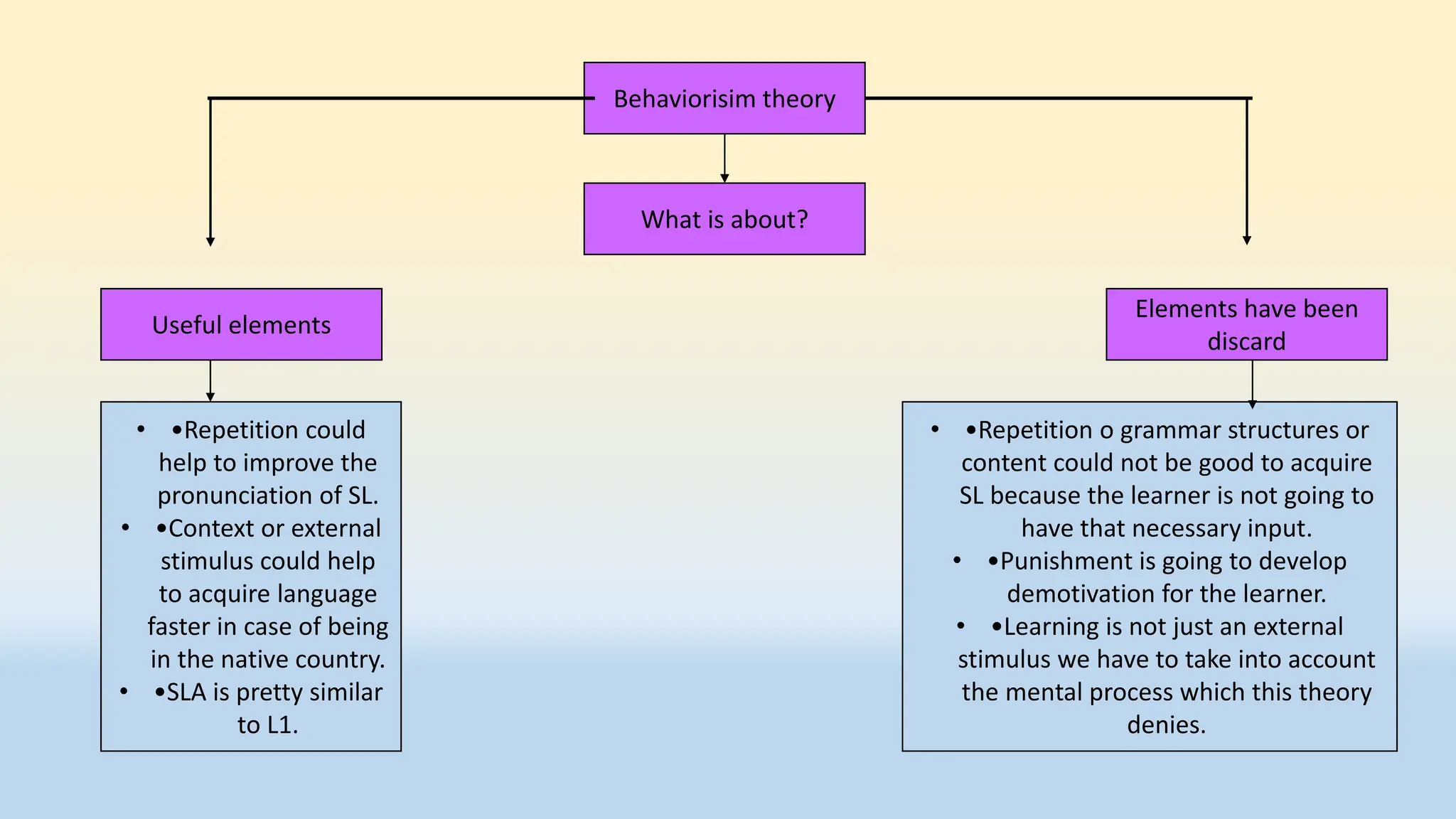
- Behaviorism theory focuses on repetition and external stimuli but ignores mental processes.
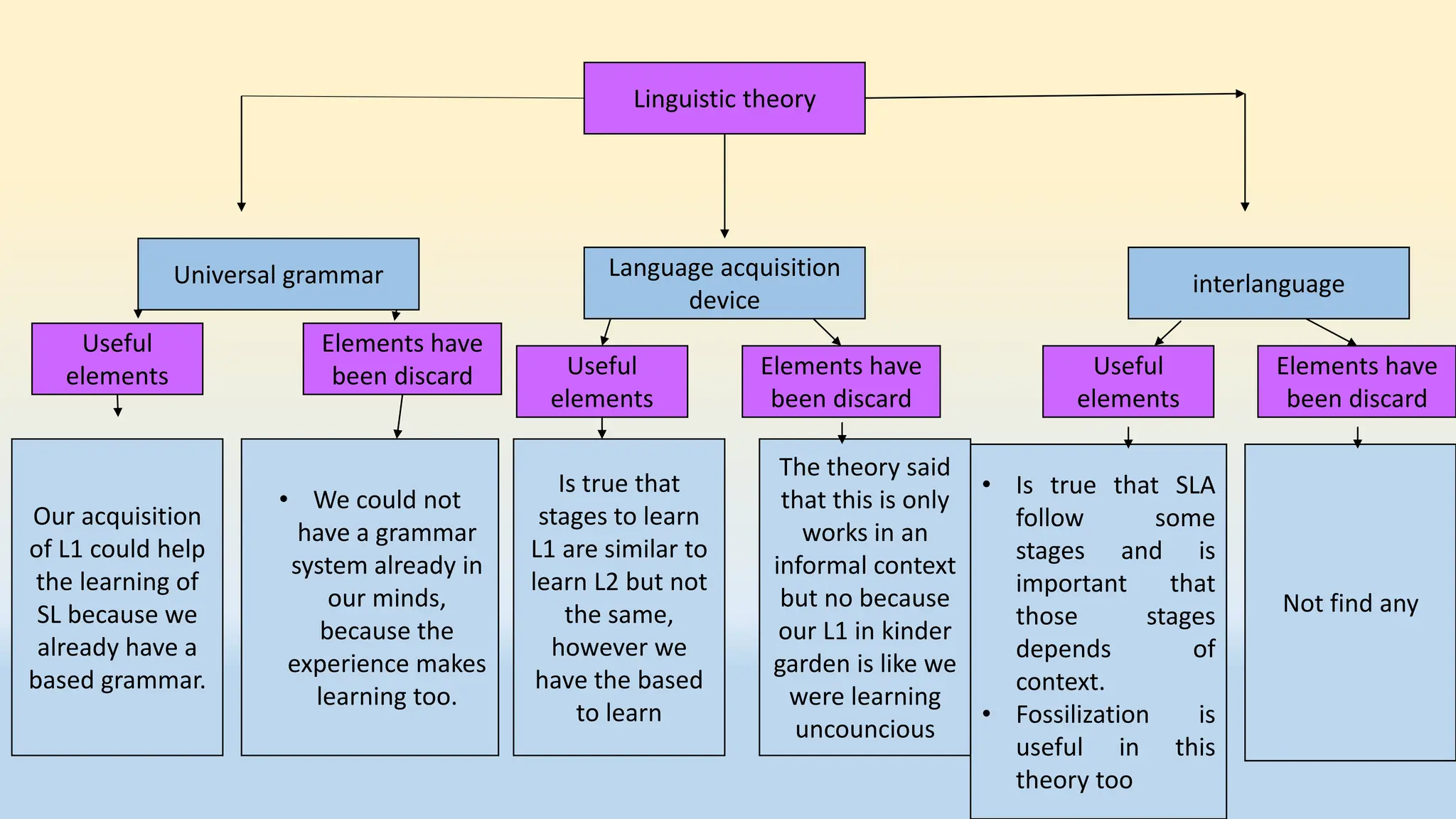
- Universal grammar and linguistic theory posit an innate language acquisition device.
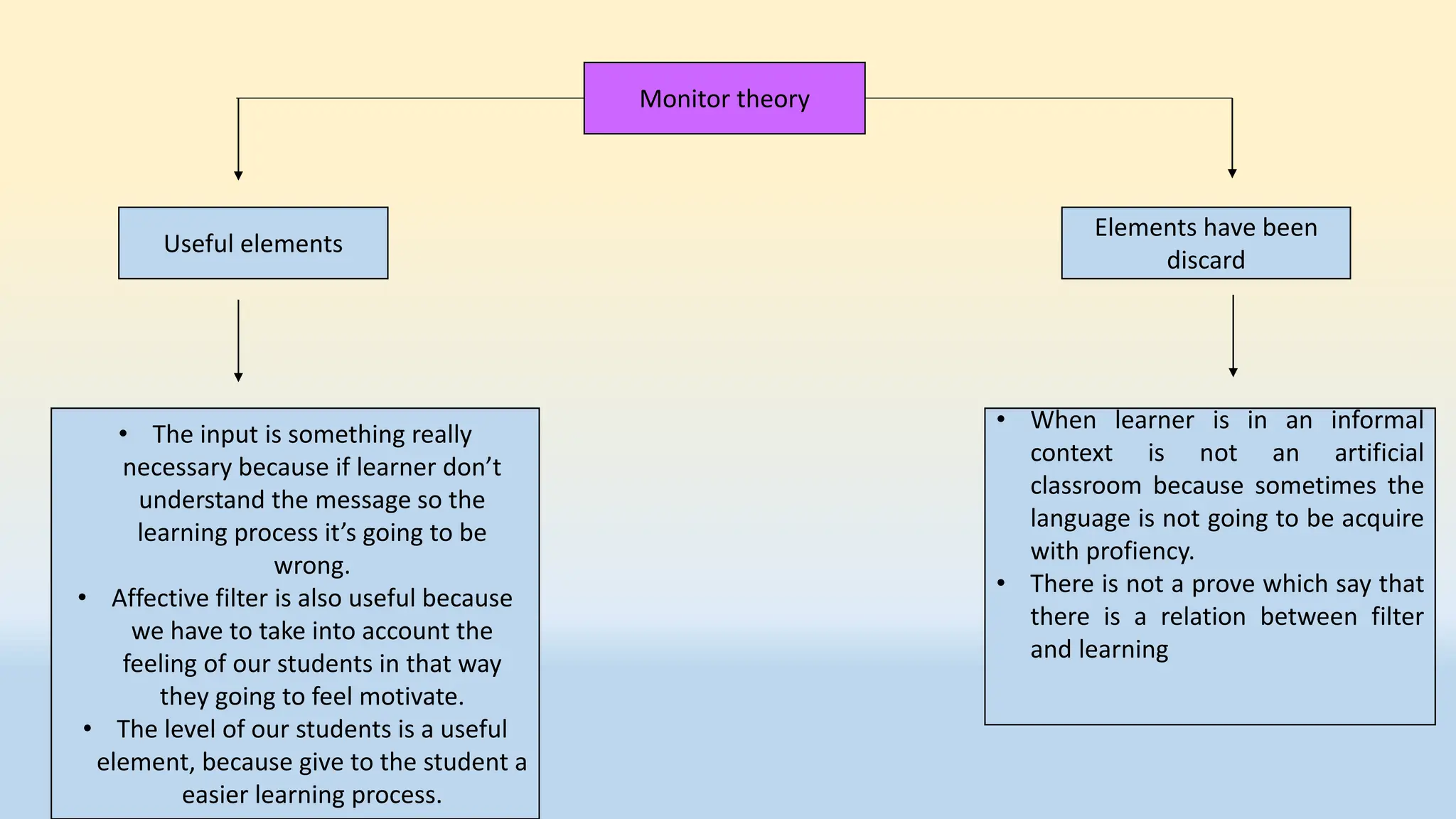
- Monitor theory emphasizes the importance of comprehensible input and affective factors like motivation.
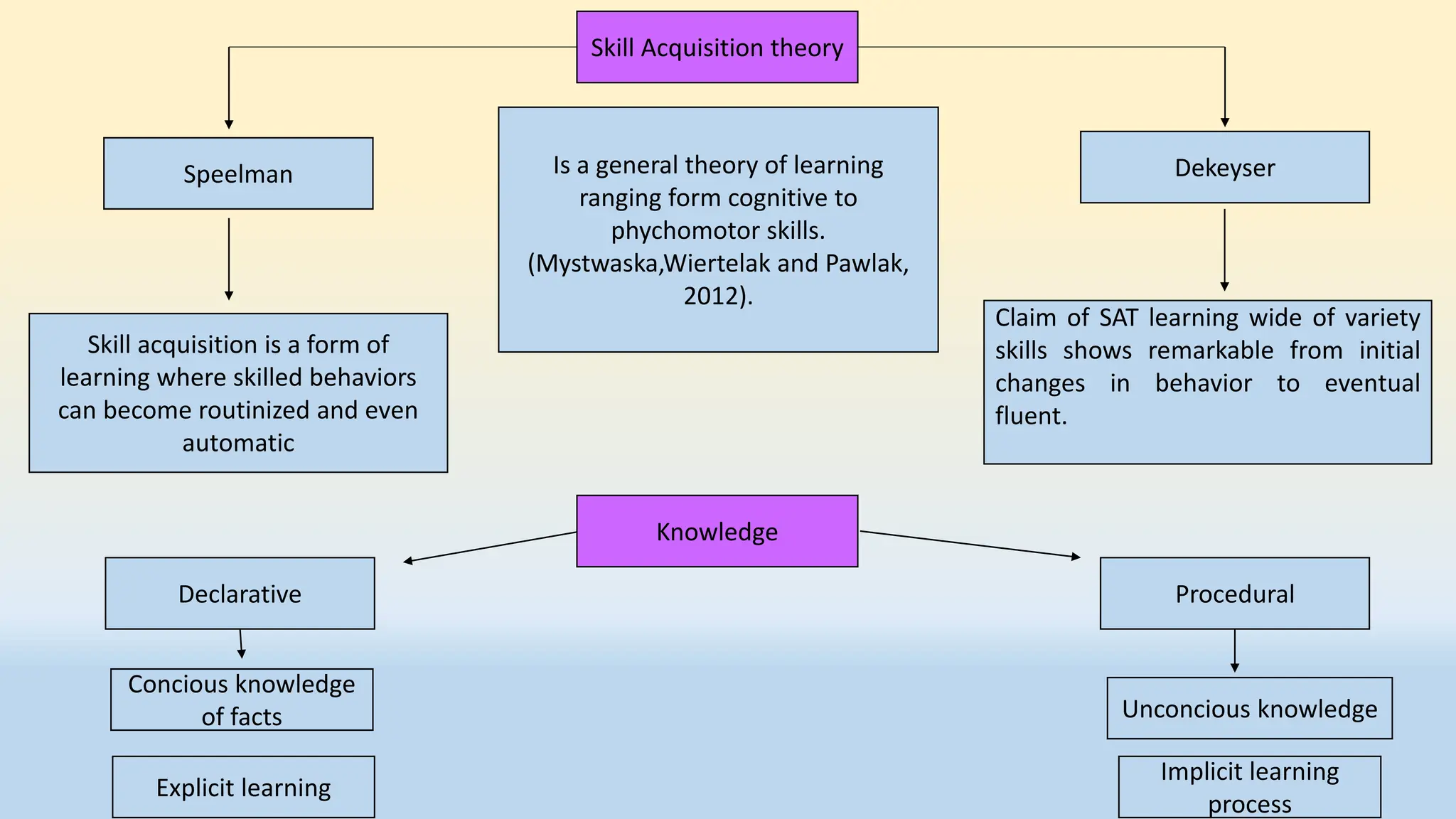
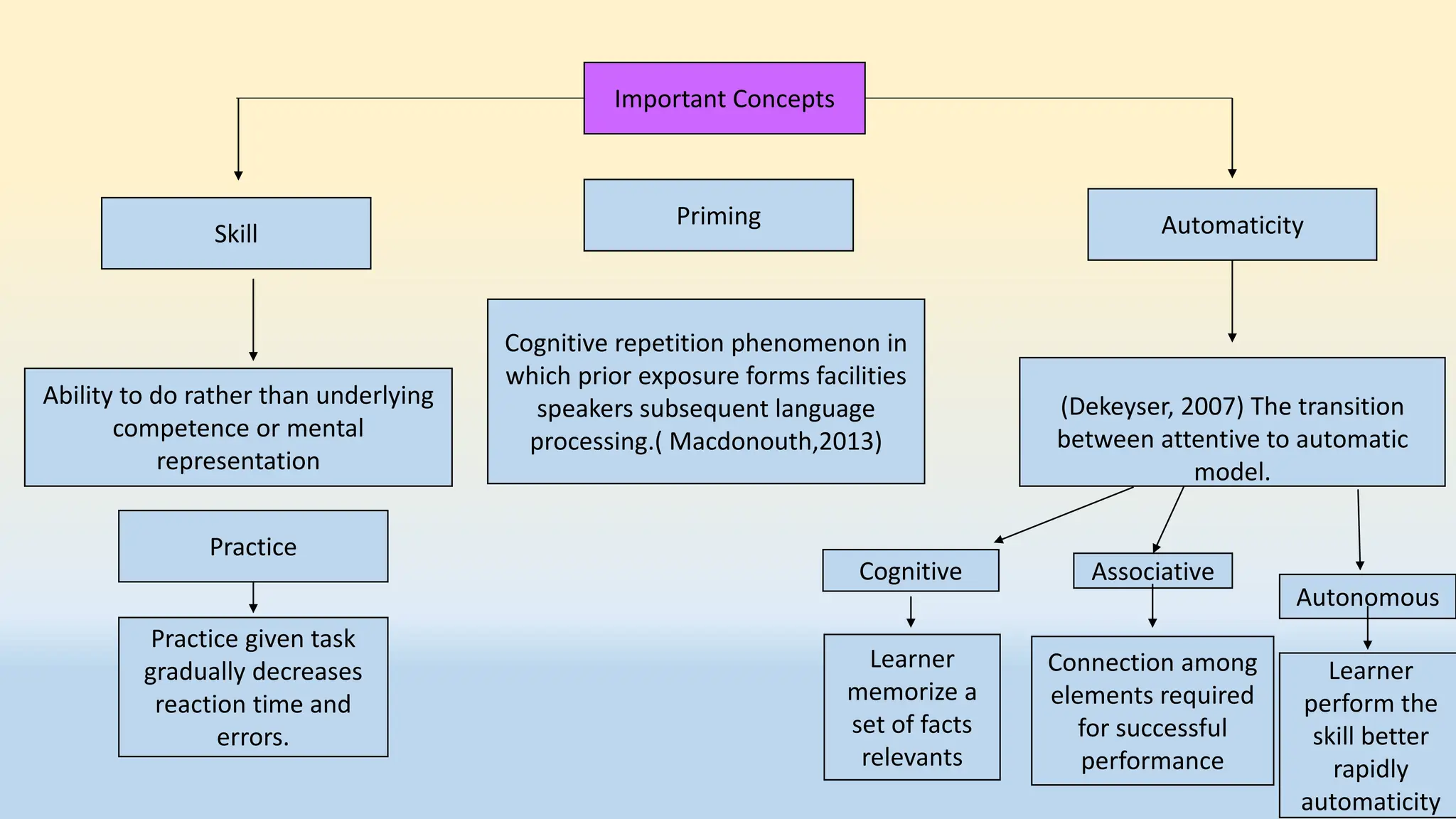
- Skill acquisition theory views SLA as developing automaticity through practice like other skills.
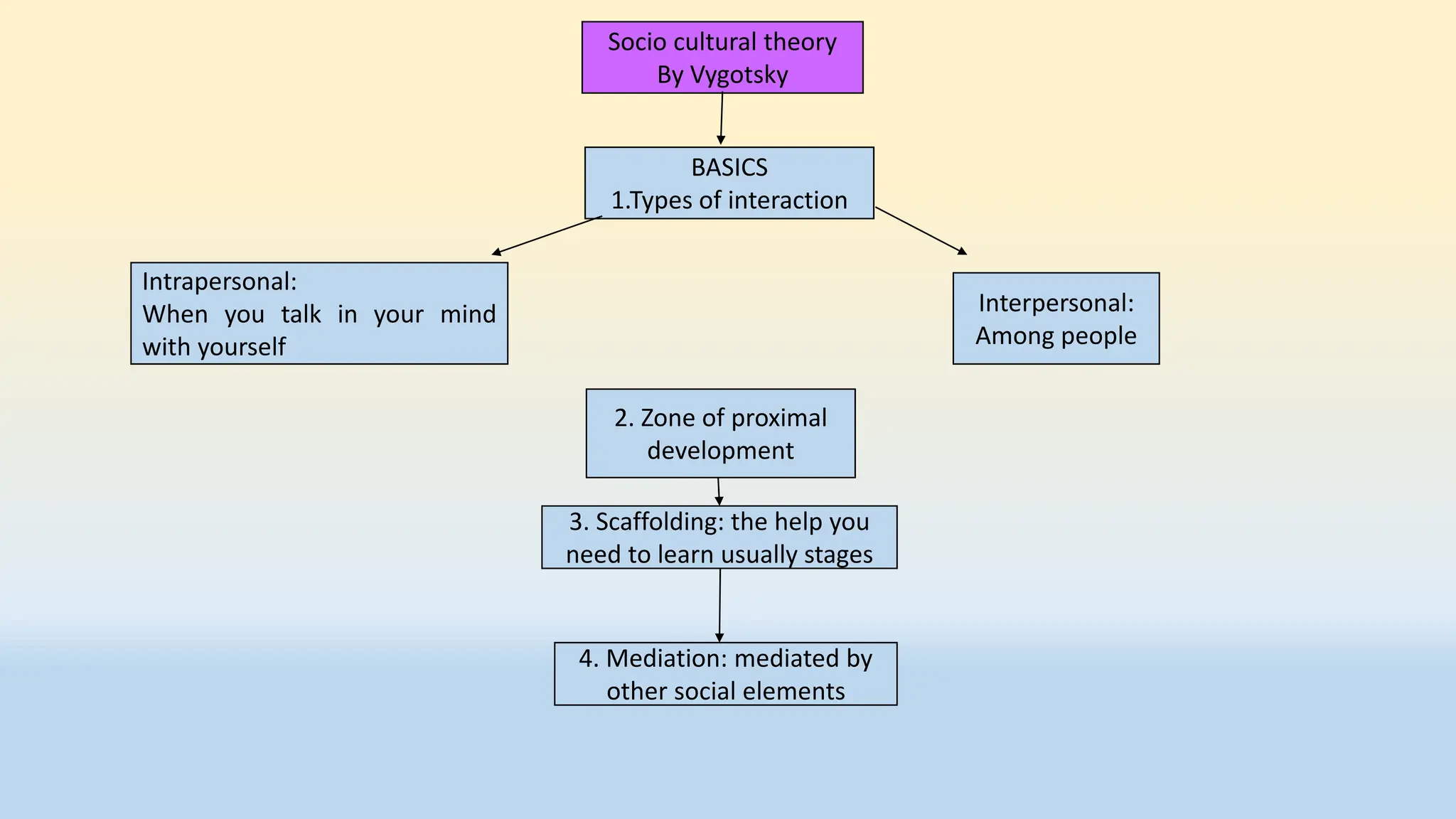
- Sociocultural theory examines SLA through social interaction and scaffolding.
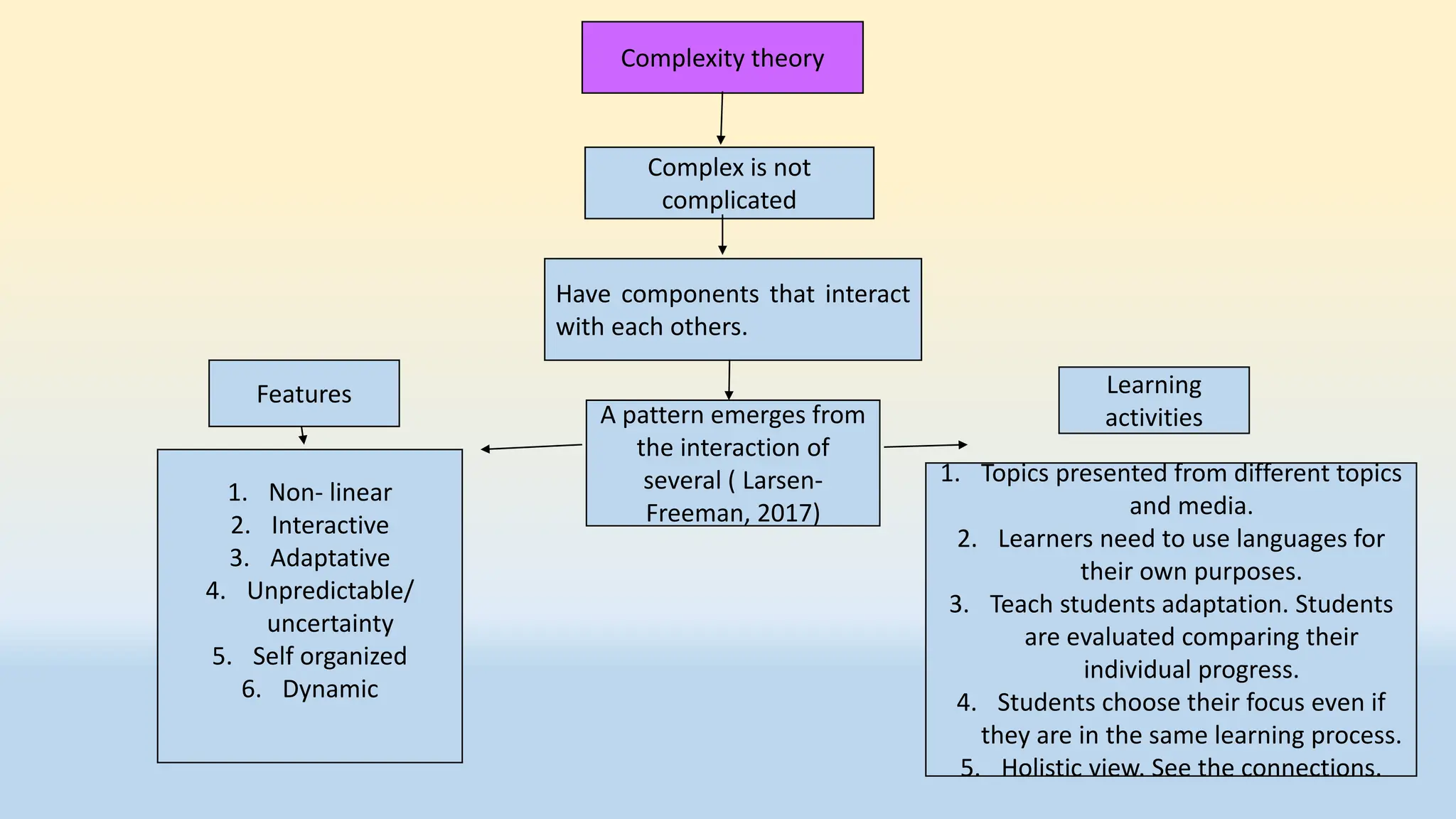
- Complexity theory sees emergent patterns from nonlinear interactions between components.
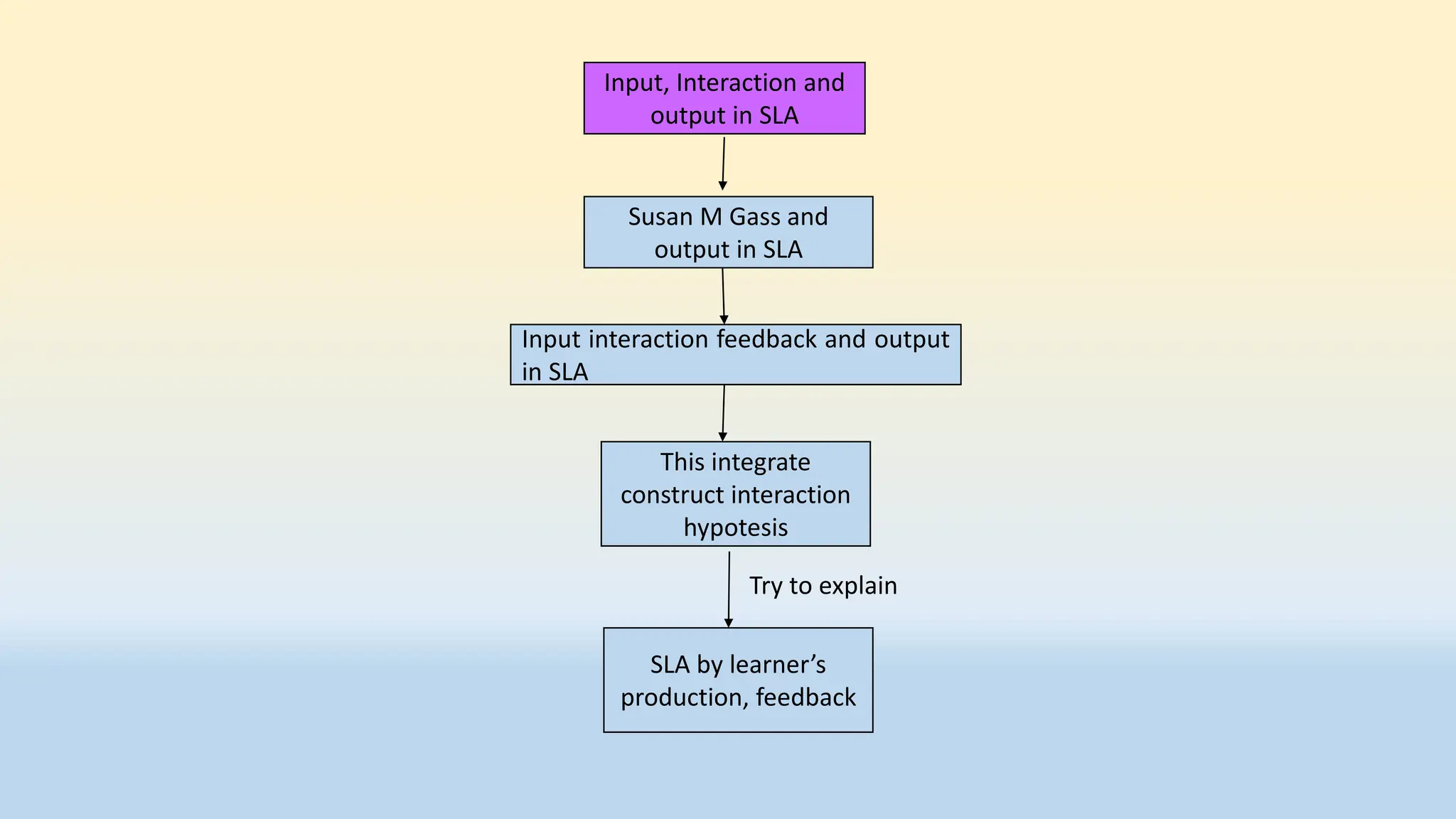
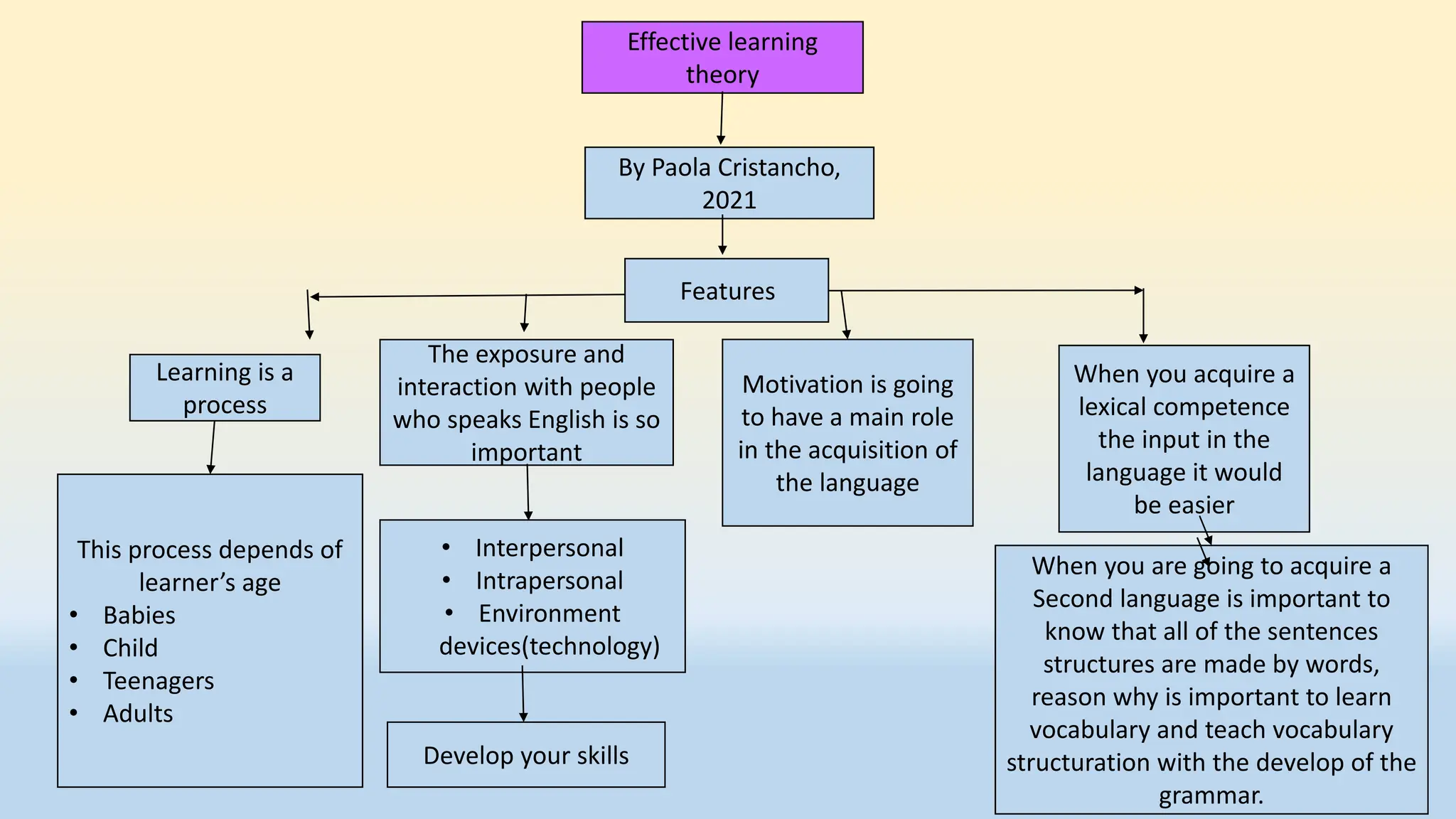
- Effective learning theory stresses the role of exposure, interaction, vocabulary, motivation, and skill development.