


POWERPOINT
PRESENTATIO
N
CALIDRO, ERICKA JANE S.
BSED ENG 2A
PRINCIPLES AND THEORIES IN LANGUAGE ACQUISITION
PROF. MR. MEDURANDA, MARCO
KRASHE
N’S
MONITO
R
MODEL
The Monitor Model is a theory of
Second Language Acquisition
3
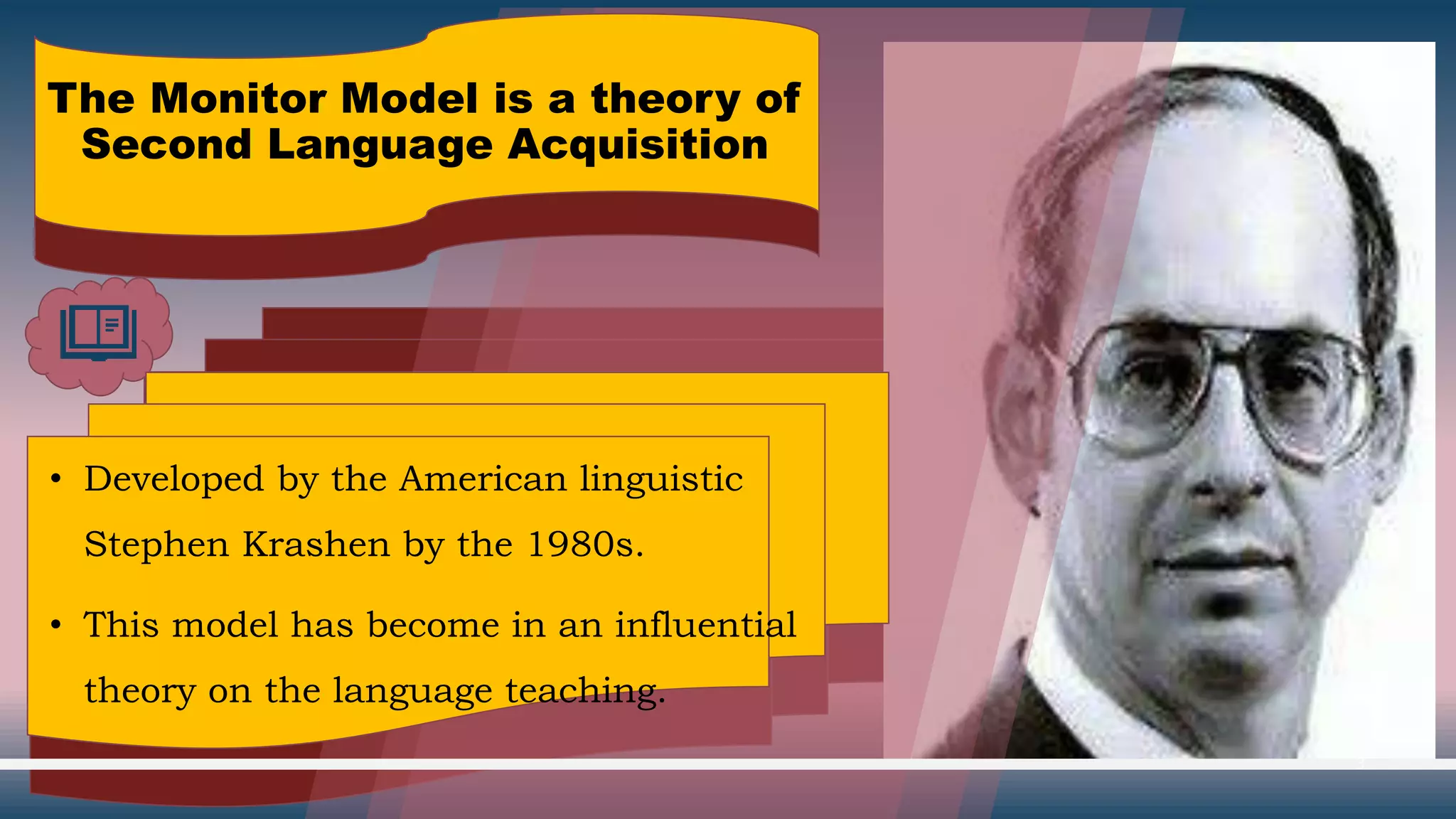
• Developed by the American linguistic
Stephen Krashen by the 1980s.
• This model has become in an influential
theory on the language teaching.
• The Acquisition-Learning
Hypothesis
• The Monitor Hypothesis
• The Natural Order Hypothesis
• The Input Hypothesis
• The Affective Filter
Hypothesis
Monitor Model involves five
principal hypotheses about how
a second/third language is
acquired/learned by adults:
What are the
differences
between
acquisition and
learning
language?
The Acquisition-Learning
Hypothesis
6
The Acquisition-Learning
Hypothesis
7
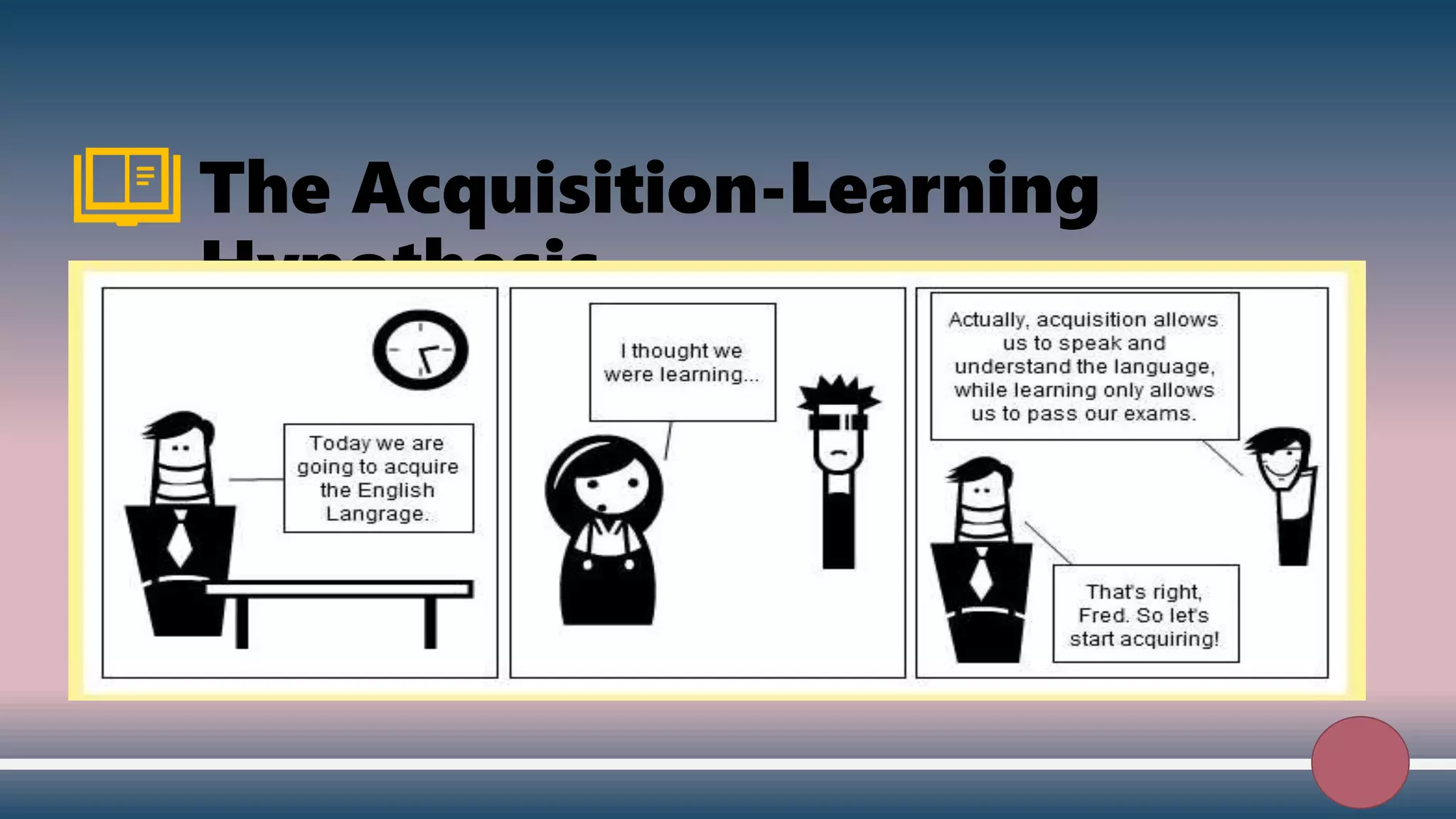
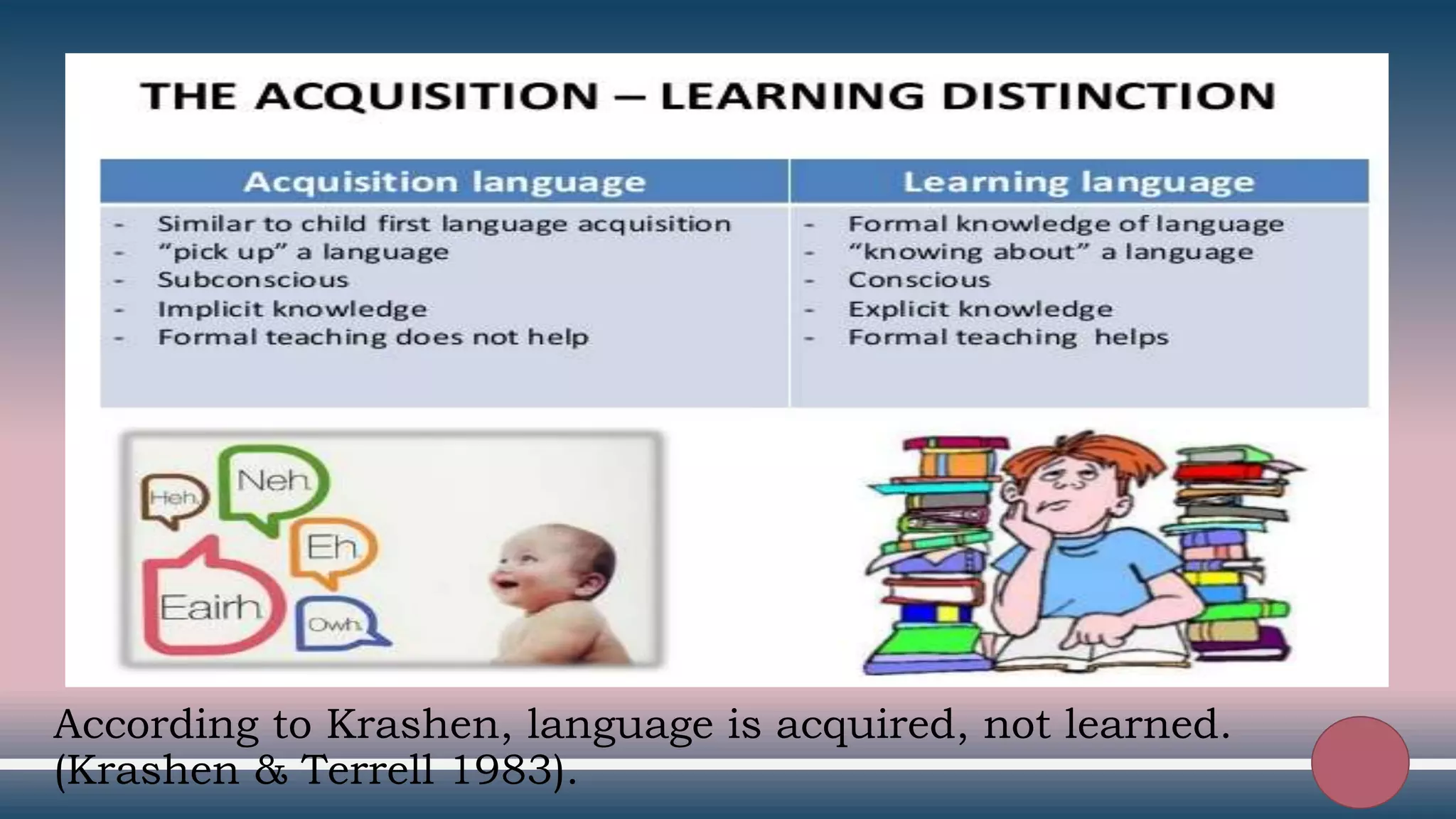
According to Krashen, language is acquired, not learned.
(Krashen & Terrell 1983).
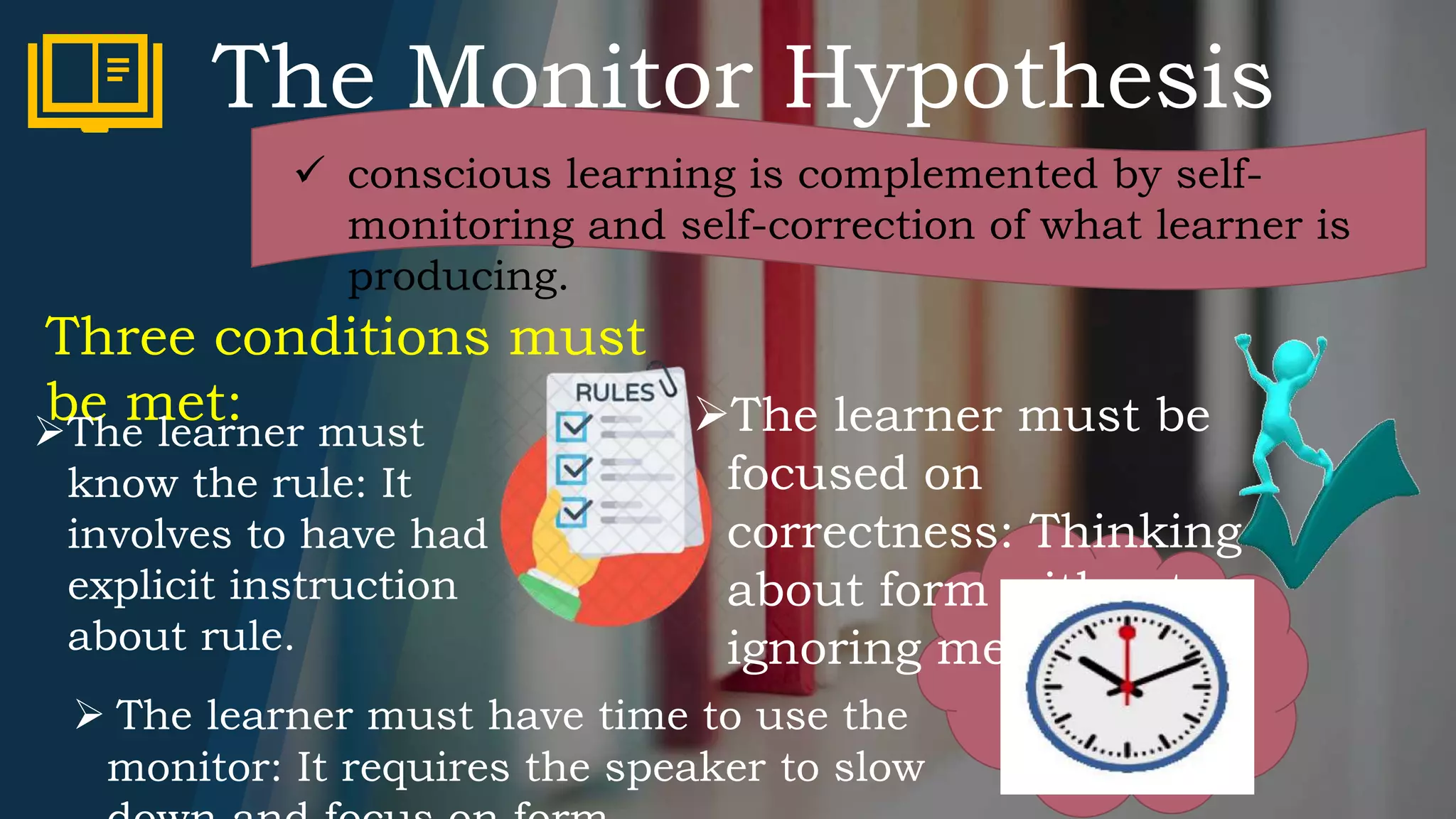
The Monitor Hypothesis
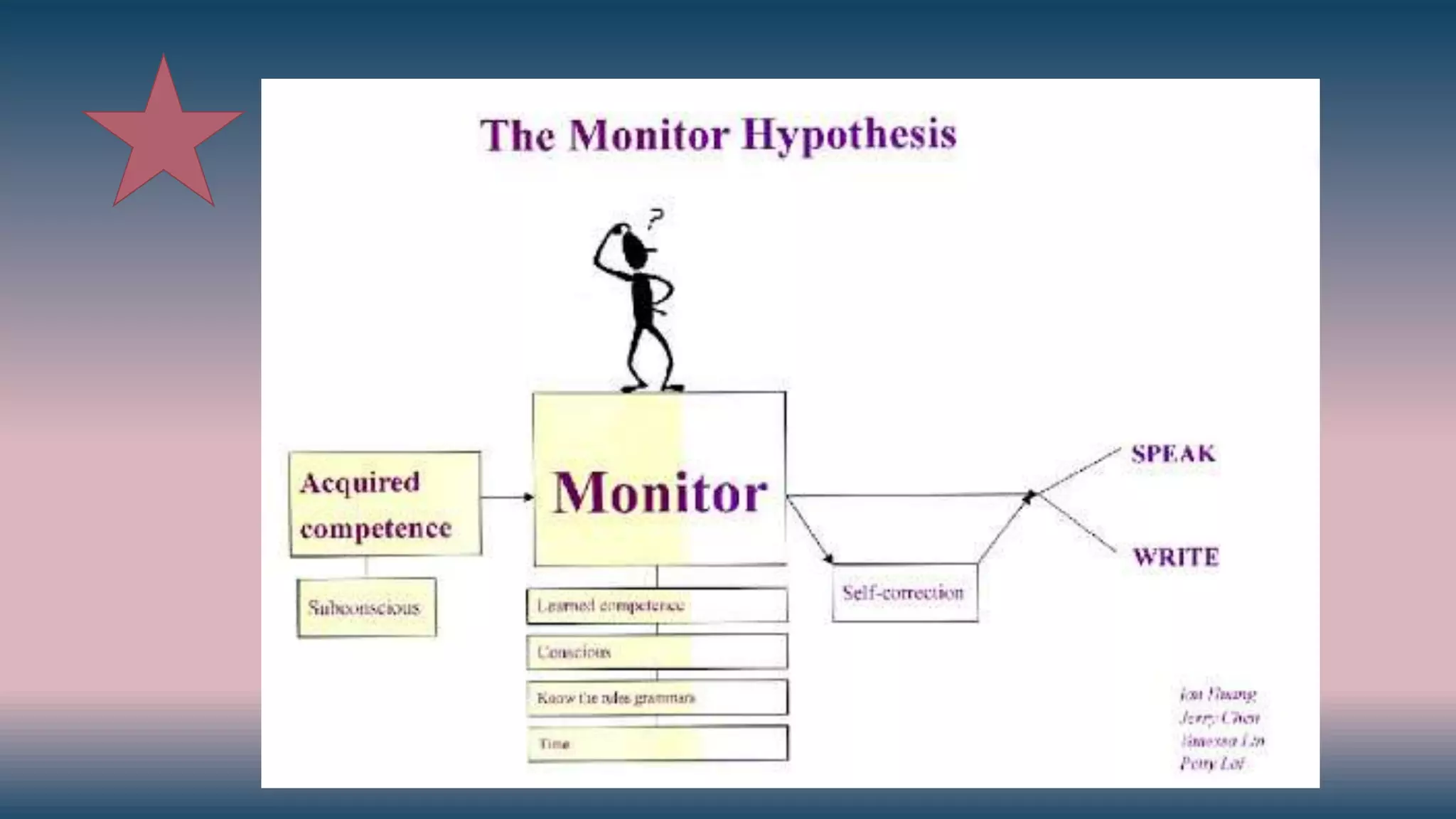
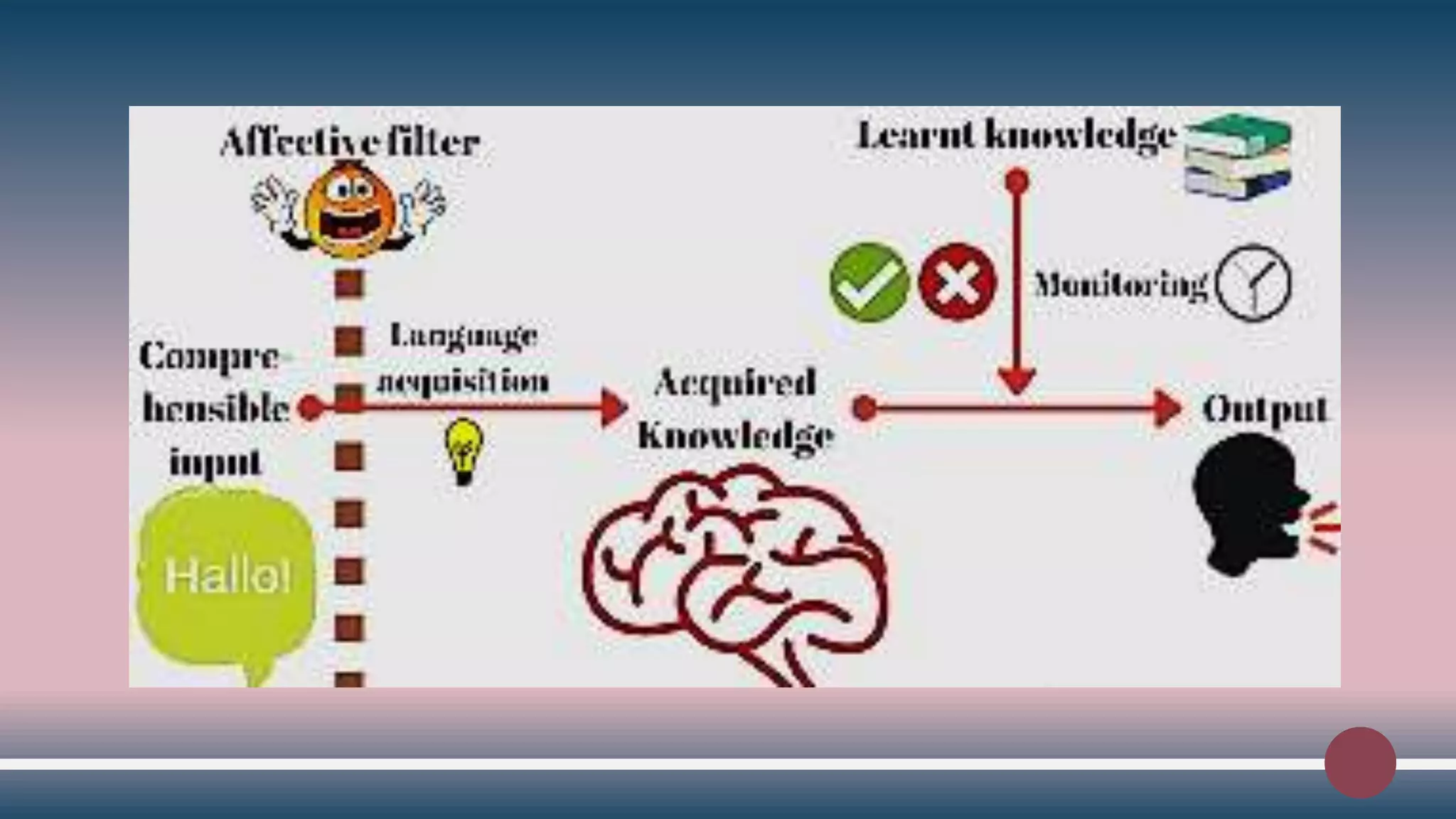
 conscious learning is complemented by self-
monitoring and self-correction of what learner is
producing.
Three conditions must
be met:The learner must
know the rule: It
involves to have had
explicit instruction
about rule.
The learner must be
focused on
correctness: Thinking
about form without
ignoring meaning.
 The learner must have time to use the
monitor: It requires the speaker to slow
The Natural Order Hypothesis
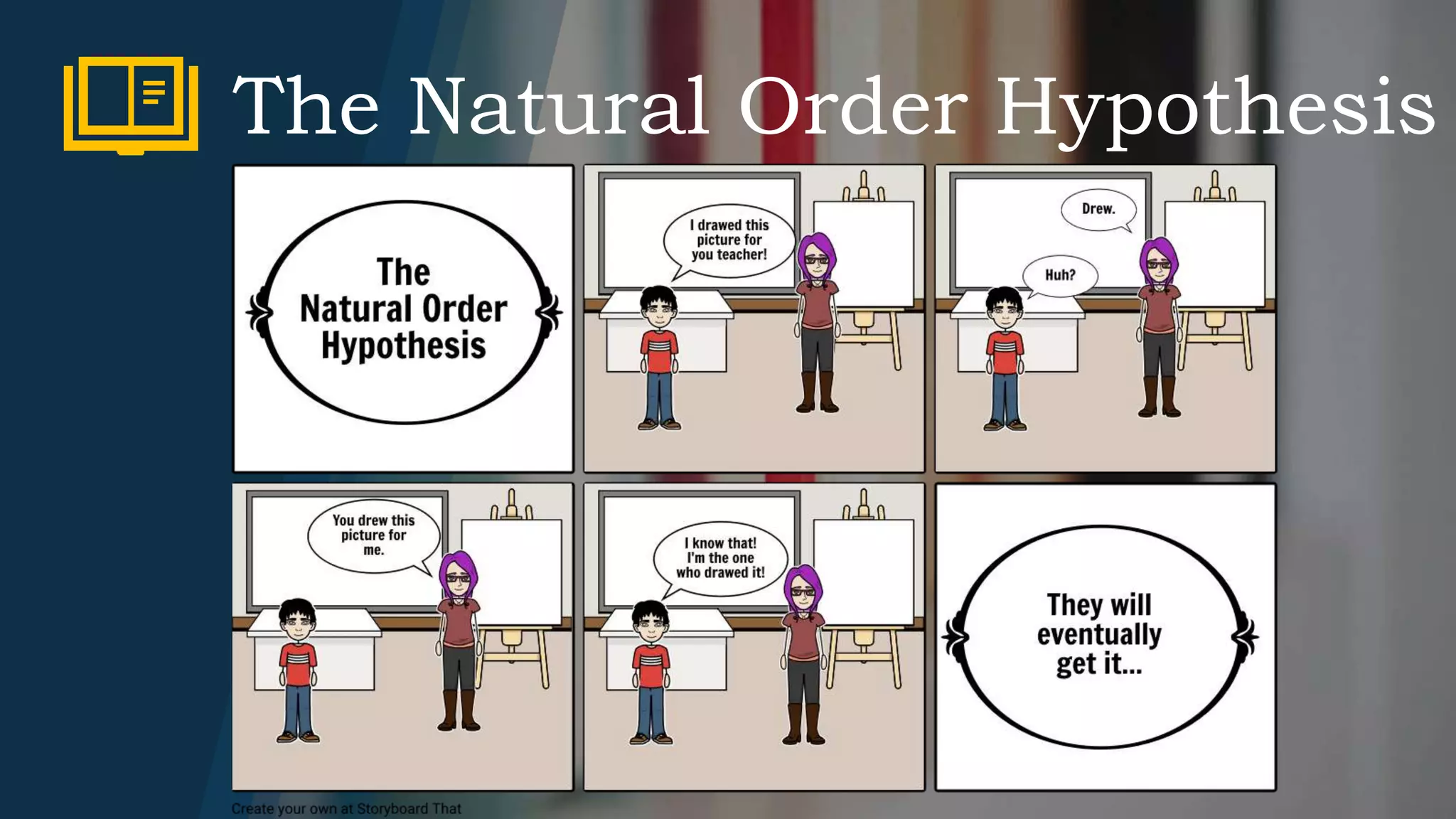
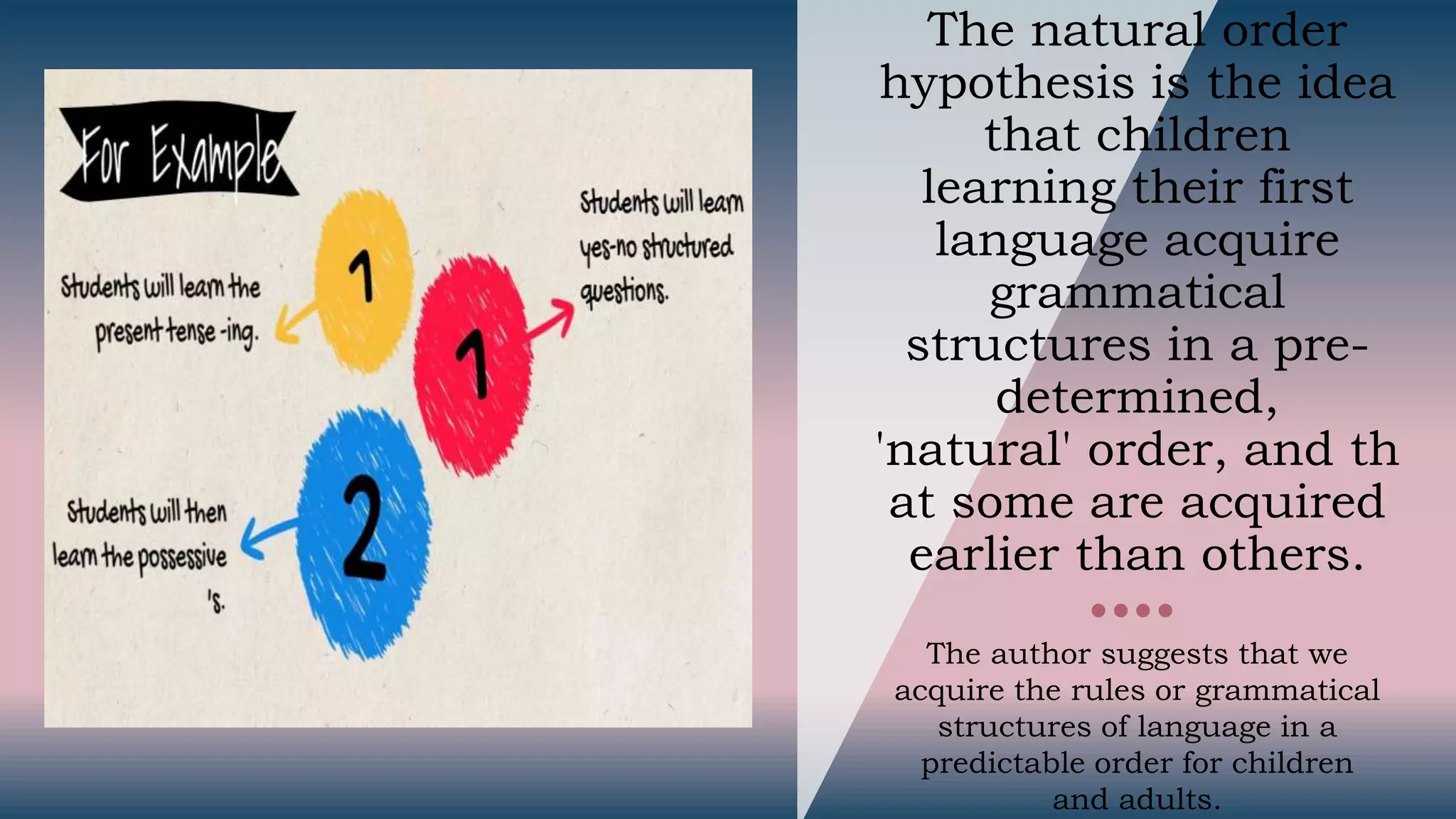
The natural order
hypothesis is the idea
that children
learning their first
language acquire
grammatical
structures in a pre-
determined,
'natural' order, and th
at some are acquired
earlier than others.
The author suggests that we
acquire the rules or grammatical
structures of language in a
predictable order for children
and adults.
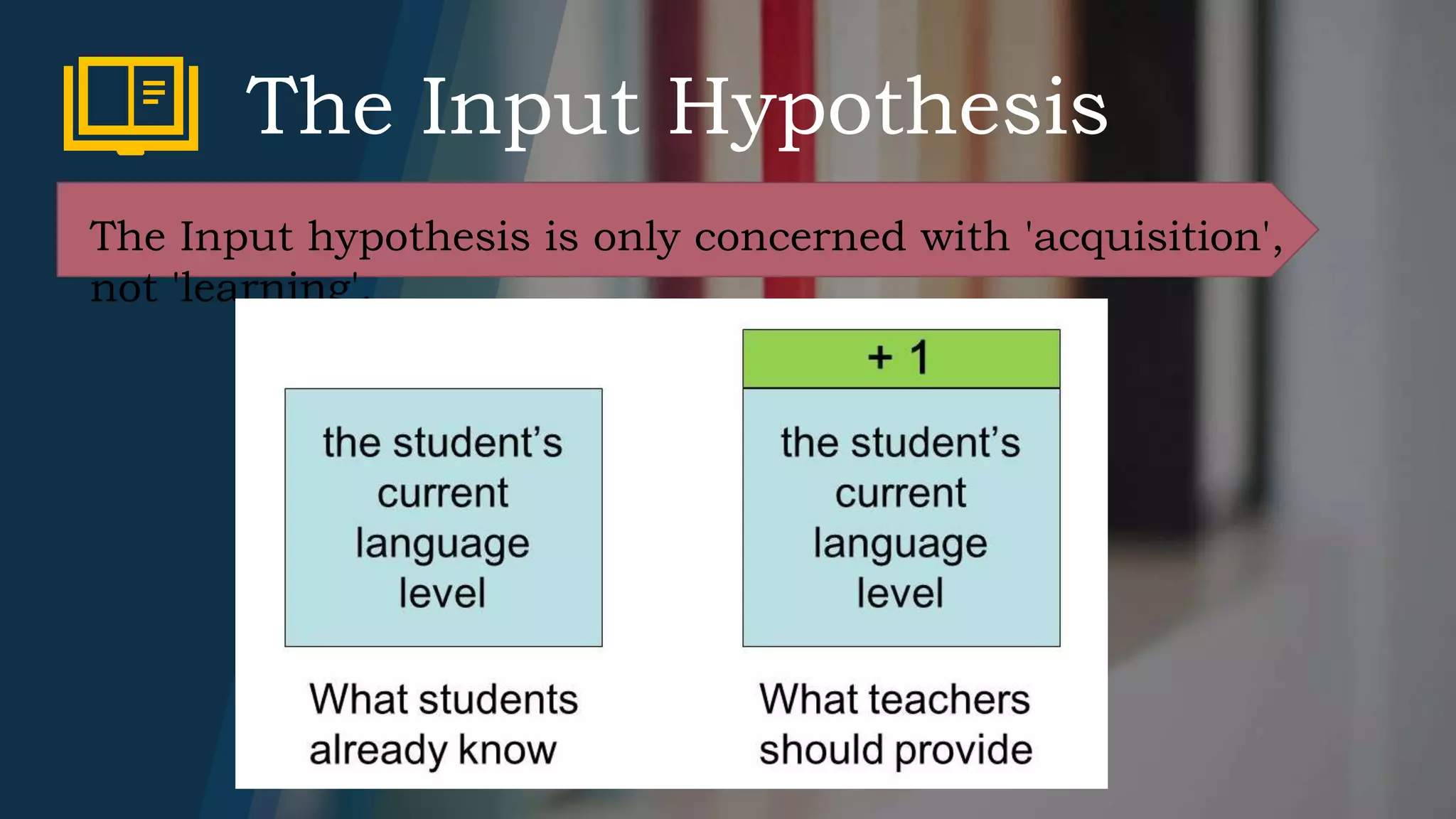
The Input Hypothesis
The Input hypothesis is only concerned with 'acquisition',
not 'learning'.
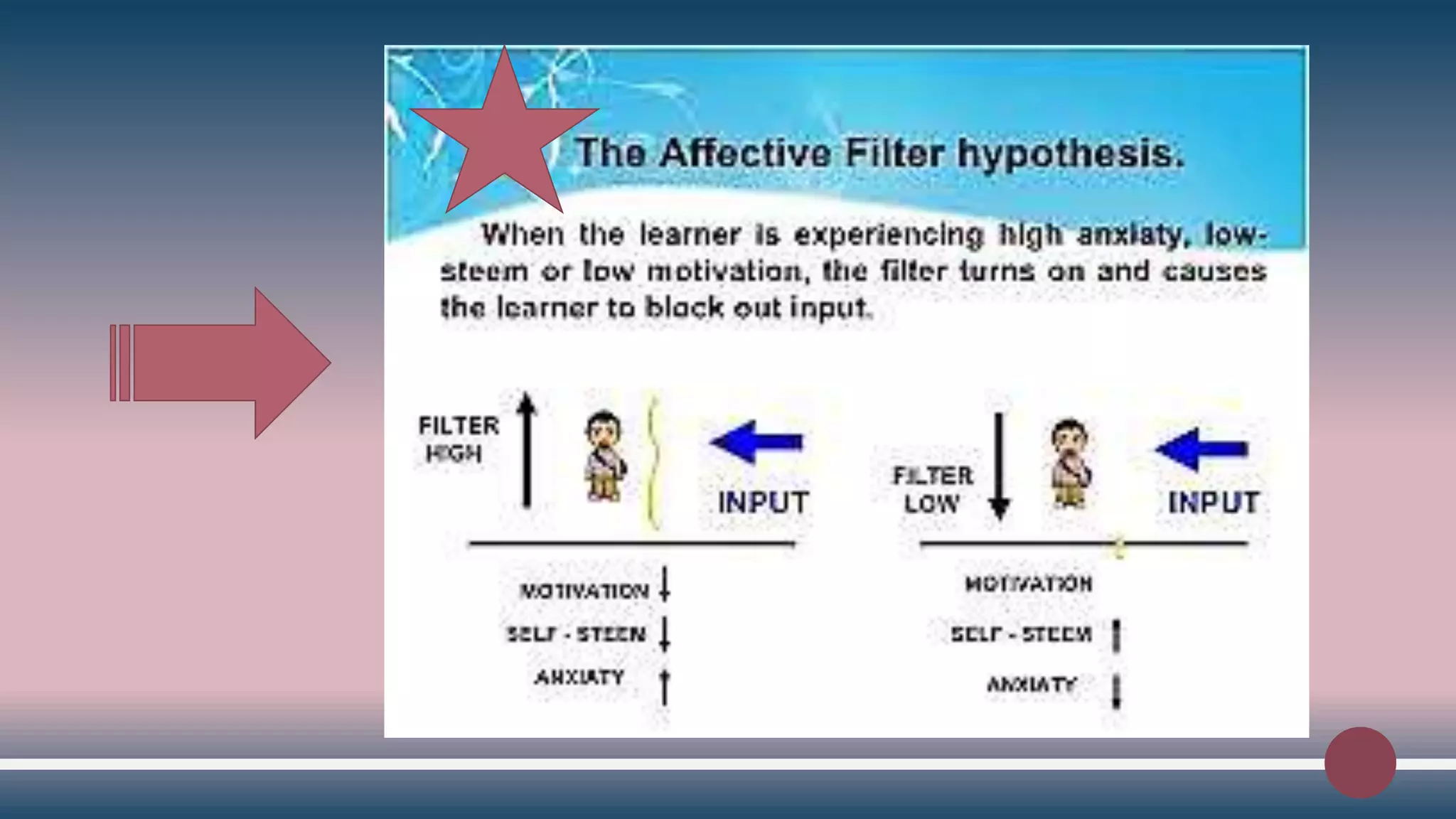
The Affective Filter Hypothesis
This filter involves affective factors such
as attitudes to language, motivation, self-
confidence and anxiety.
Krashen's Monitor Hypothesis Theory

Krashen's Monitor Hypothesis Theory

  • 1.
    POWERPOINT PRESENTATIO N CALIDRO, ERICKA JANES. BSED ENG 2A PRINCIPLES AND THEORIES IN LANGUAGE ACQUISITION PROF. MR. MEDURANDA, MARCO
  • 2.
  • 3.
    The Monitor Modelis a theory of Second Language Acquisition 3 • Developed by the American linguistic Stephen Krashen by the 1980s. • This model has become in an influential theory on the language teaching.
  • 4.
    • The Acquisition-Learning Hypothesis •The Monitor Hypothesis • The Natural Order Hypothesis • The Input Hypothesis • The Affective Filter Hypothesis Monitor Model involves five principal hypotheses about how a second/third language is acquired/learned by adults:
  • 5.
    What are the differences between acquisitionand learning language? The Acquisition-Learning Hypothesis
  • 6.
  • 7.
    7 According to Krashen,language is acquired, not learned. (Krashen & Terrell 1983).
  • 8.
    The Monitor Hypothesis conscious learning is complemented by self- monitoring and self-correction of what learner is producing. Three conditions must be met:The learner must know the rule: It involves to have had explicit instruction about rule. The learner must be focused on correctness: Thinking about form without ignoring meaning.  The learner must have time to use the monitor: It requires the speaker to slow
  • 10.
  • 11.
    The natural order hypothesisis the idea that children learning their first language acquire grammatical structures in a pre- determined, 'natural' order, and th at some are acquired earlier than others. The author suggests that we acquire the rules or grammatical structures of language in a predictable order for children and adults.
  • 12.
    The Input Hypothesis TheInput hypothesis is only concerned with 'acquisition', not 'learning'.
  • 13.
    The Affective FilterHypothesis This filter involves affective factors such as attitudes to language, motivation, self- confidence and anxiety.