
Presented By-
Nischitha R.
1st M.Sc., 2nd Semester.
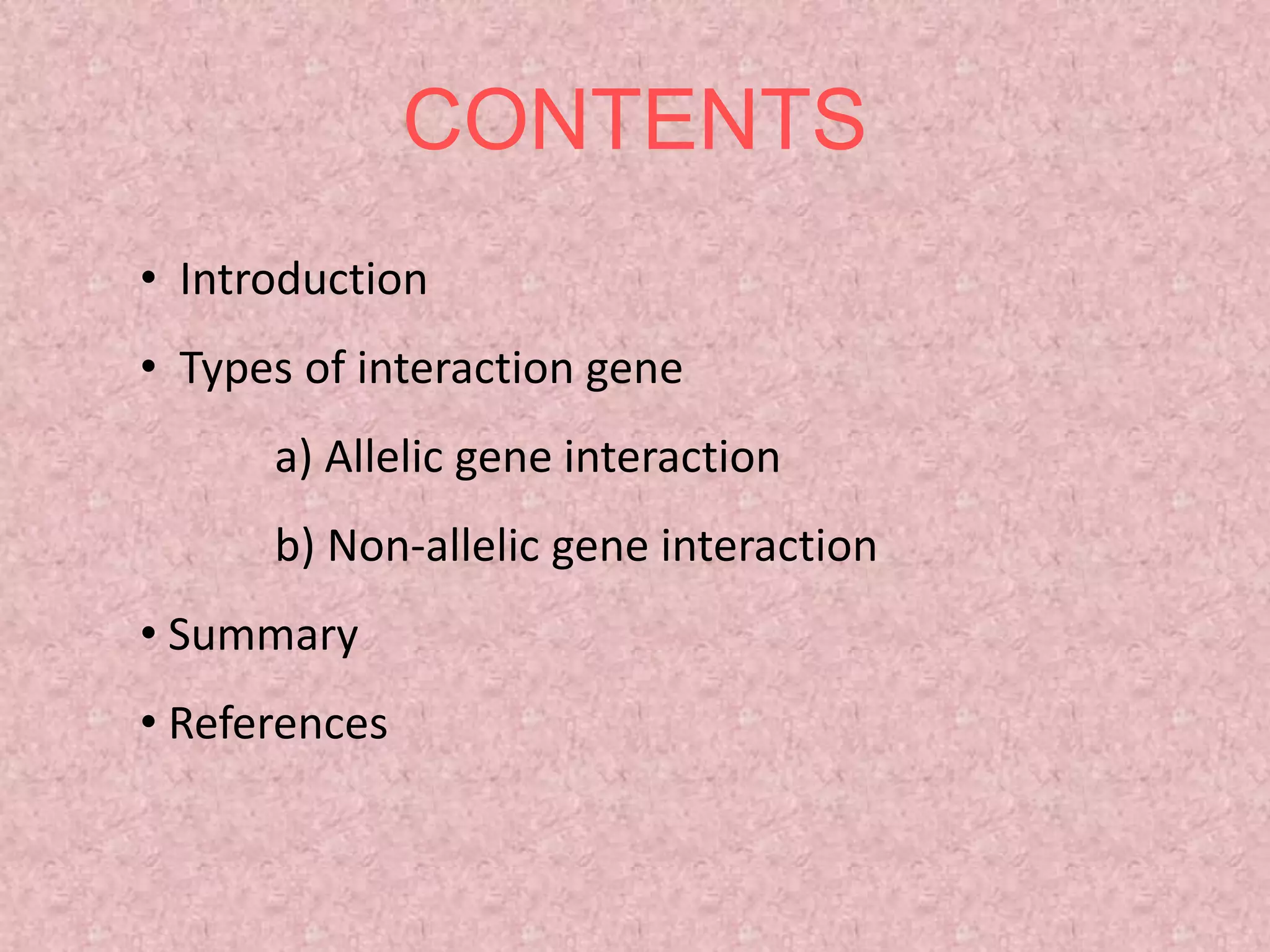
CONTENTS
• Introduction
• Types of interaction gene
a) Allelic gene interaction
b) Non-allelic gene interaction
• Summary
• References
Introduction :
• Mendel and subsequent workers assumed that a character was
governed by a single gene.
• But it was later discovered that many characters in almost all the
organisms are governed by two or more genes. Such gene affect
the development of concerned characters in various ways.
• The phenomenon of two or more gene affecting the expression
of each other in various ways in the development of a single
character of on organism is known as gene interaction.
Types of interaction gene :
Gene interaction are classified as fallows on the basis of the
manner in which the concerned gene influence the expression
gene action.
a) Allelic gene interaction / Intra allelic interaction.
a) Non-Allelic gene interaction / Inter allelic interaction.
a) Allelic gene interaction :
The alleles of the same gene interact in such a way to produce the
new character.
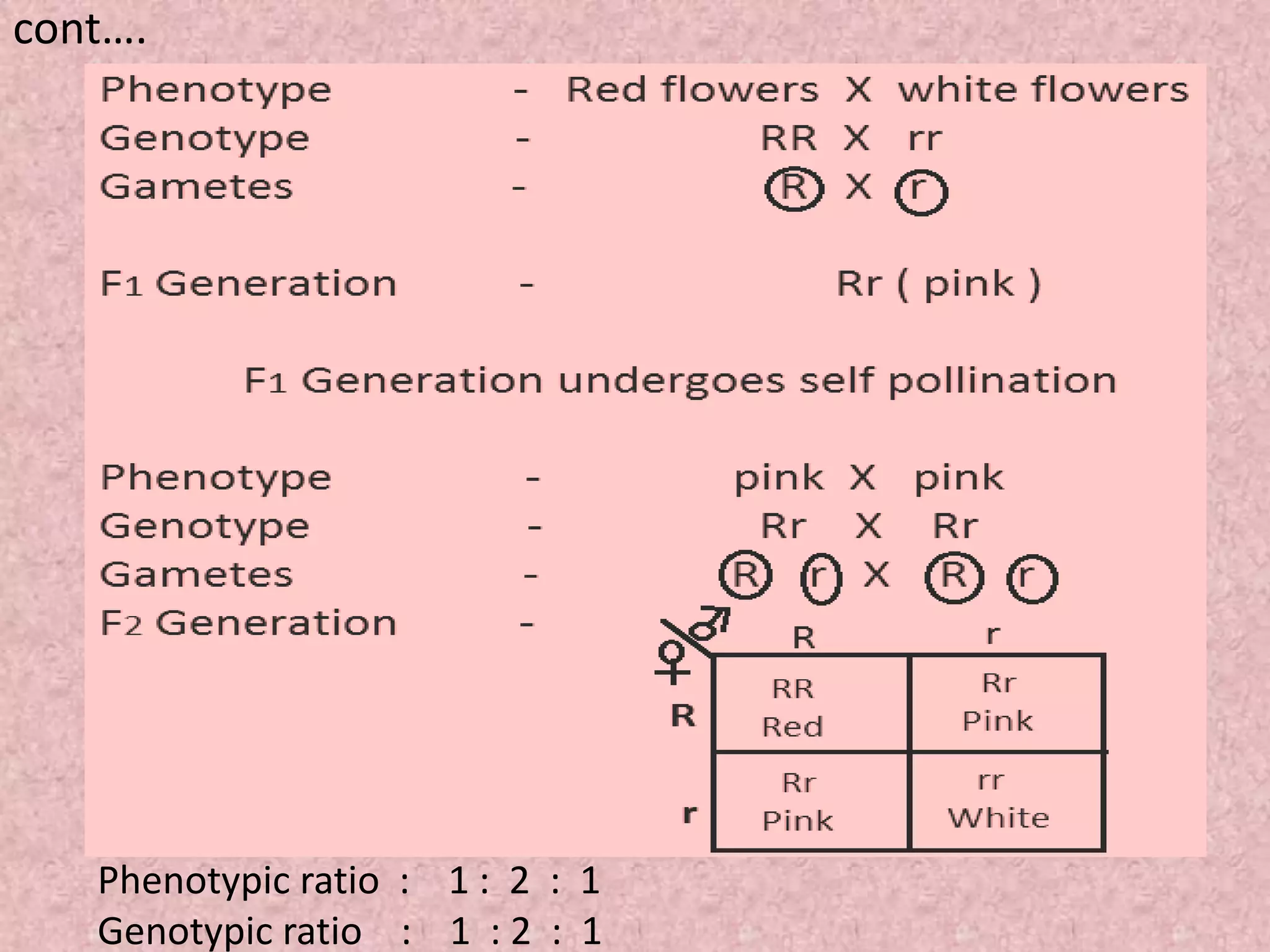
1. Ex : Incomplete dominance : In incomplete dominance,
the heterozygote shows a phenotype which is between the
homozygous recessive and homozygous dominant phenotypes.
• The best example of incomplete dominance is seen in both
Mirabilis jalapa and Snapdragon flowers.
Cont…..
cont….
Phenotypic ratio : 1 : 2 : 1
Genotypic ratio : 1 : 2 : 1
2. Ex : Codominance : Codominance is a condition in which
both alleles of a gene pair in a heterozygous condition are
expressed fully, with neither one being dominant or recessive to
the other.
• The best example of Codominance is coat colour of cattle.
b) Non - Allelic gene interaction :
• In inter allelic genetic interactions, the independent (non
homologous) genes located on the same or on different
chromosomes interact with one another for the expression of
single phenotypic trait of an organism.
• There are four types, they are as follows
1. Complementary gene action
2. Epistasis
a) Dominant epistasis
b) Recessive epistasis
3. Duplicating factor
4. Supplementary gene action
1. Complementary gene action :
• In this type, the two or more independent dominant gene
occurring in different loci on same chromosome or on different
chromosome interact with each other producing the character but
neither of them produce that characters in the absence of other.
• Bateson and punnett studied the inheritance of flower colour in
sweet pea laythyrus odoratus.
cont….
cont….
2. Epistasis :
• Normally, an allelic pair suppresses the activity of another gene
they are found in same locus of the homologous chromosomes.
This phenomenon is known as epistasis.
• The gene whose expression is inhibited is called as hypostatic
gene.
• The gene that inhibit the expression of another gene is called as
epistatic gene.
• Epistasis has two type, they are
i. Dominant epistasis
ii. Recessive epistasis
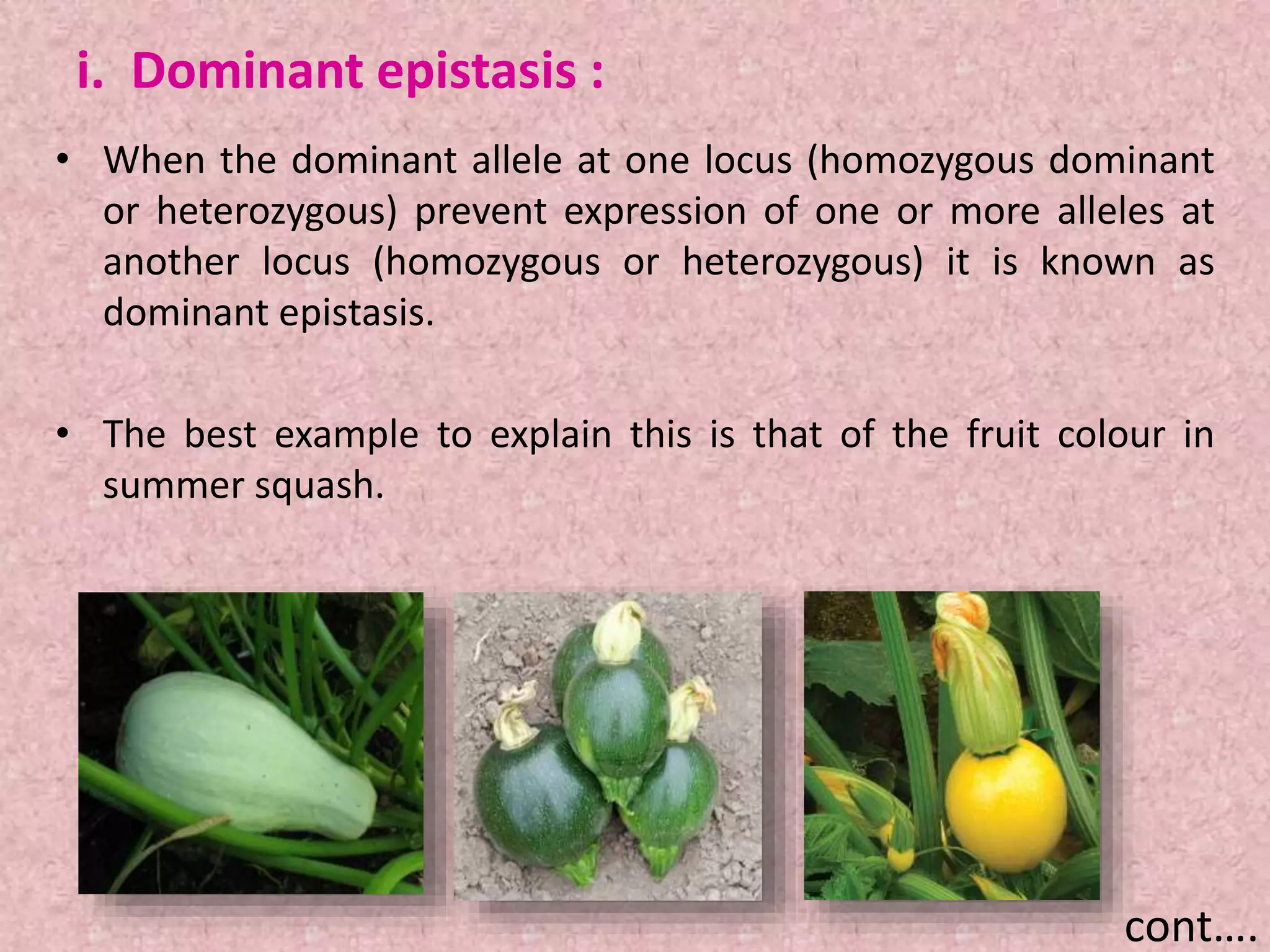
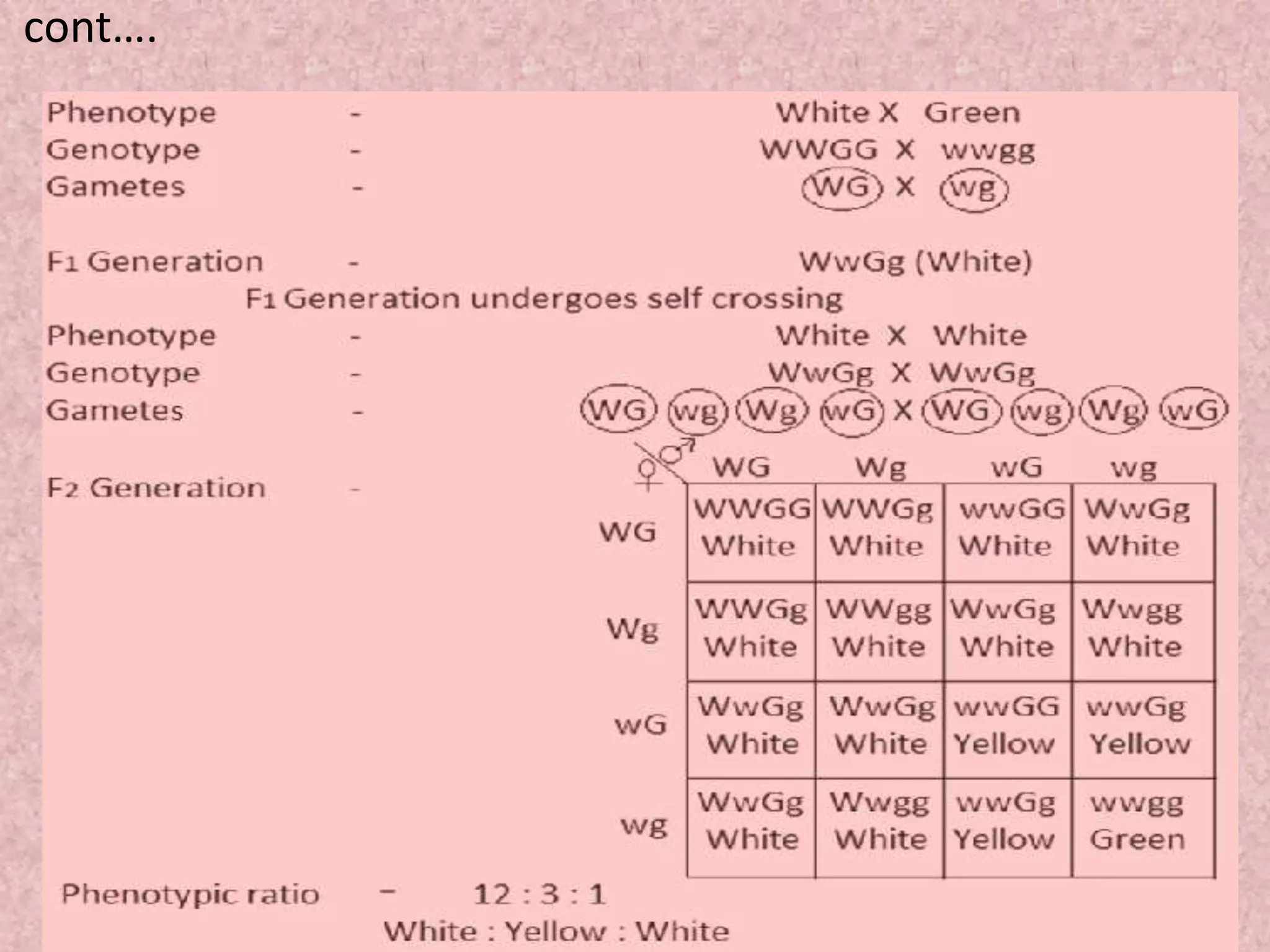
i. Dominant epistasis :
• When the dominant allele at one locus (homozygous dominant
or heterozygous) prevent expression of one or more alleles at
another locus (homozygous or heterozygous) it is known as
dominant epistasis.
• The best example to explain this is that of the fruit colour in
summer squash.
cont….
cont….
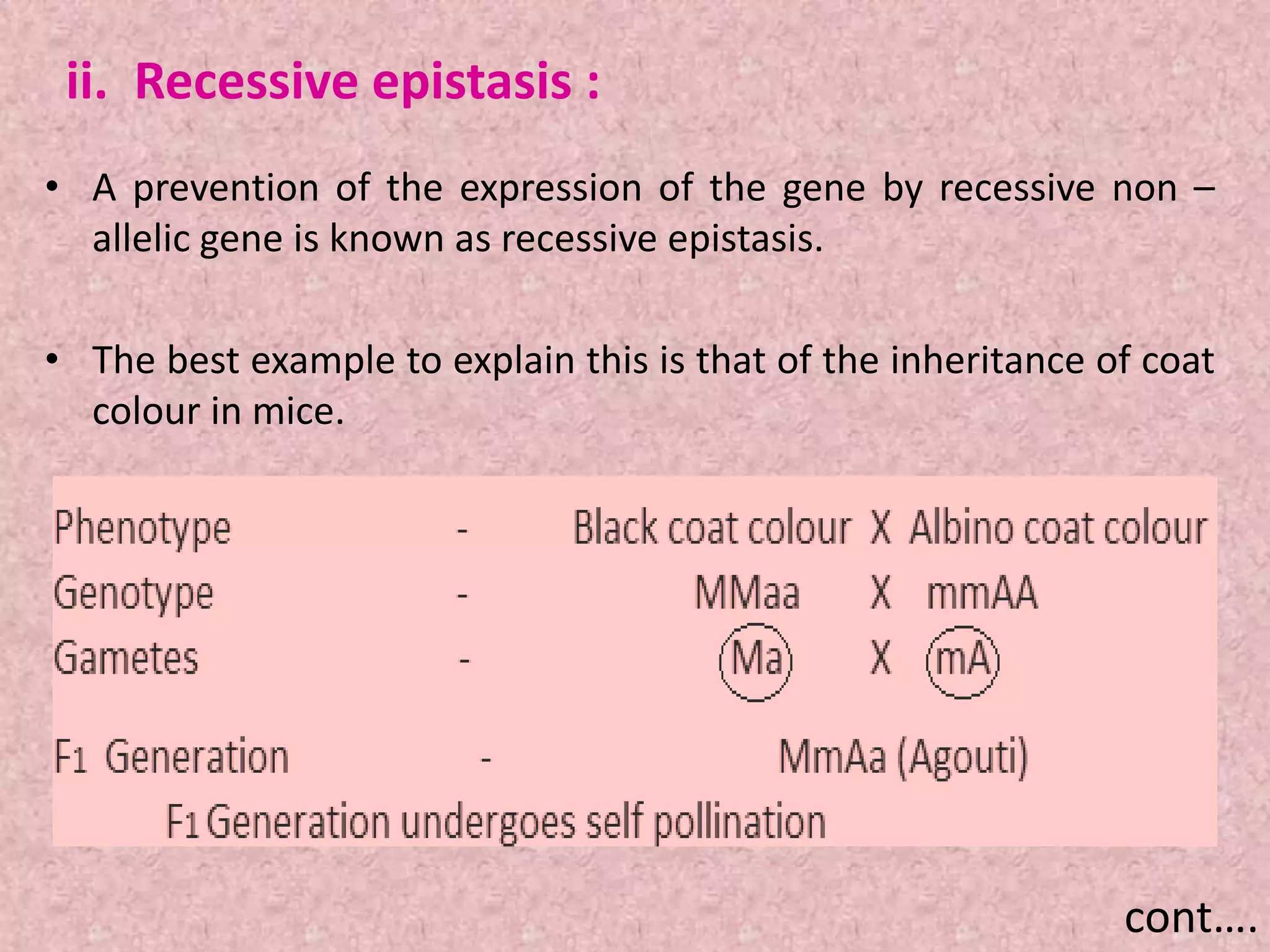
ii. Recessive epistasis :
• A prevention of the expression of the gene by recessive non –
allelic gene is known as recessive epistasis.
• The best example to explain this is that of the inheritance of coat
colour in mice.
cont….
cont….
cont….
3. Duplicating factor :
• A single character is controlled by two independent gene express
a seed character wither the other gene is present or absent.
• It was first observed in Bursa Bursa pastories (Shepherd’s purse)
cont….
cont….
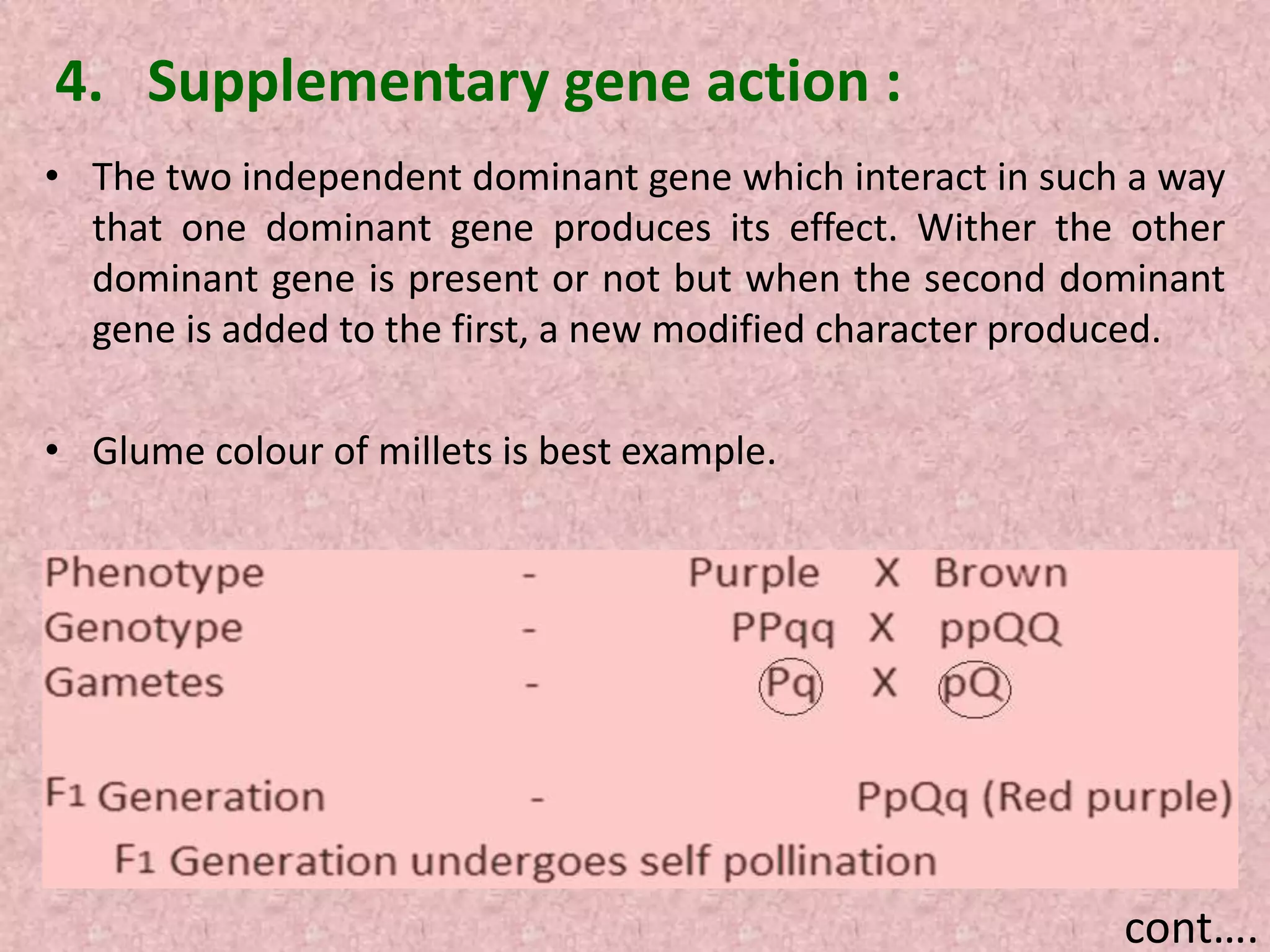
4. Supplementary gene action :
• The two independent dominant gene which interact in such a way
that one dominant gene produces its effect. Wither the other
dominant gene is present or not but when the second dominant
gene is added to the first, a new modified character produced.
• Glume colour of millets is best example.
cont….
Summary :
• According to Mendel each character was controlled by a single gene,
later it is known as gene interaction.
• This can be studied under two different types they are,
a. Allelic gene interaction
b. Non – allelic gene interaction
• Allelic gene interaction is explained under two different examples
• Non – allelic gene interaction is explained under four different types
they are,
a. Complementary gene action
b. Epistasis
c. Duplicating factor
d. Supplementary gene action
each with a suitable examples.
References :
• Verma P S and Agarwal V K, 2008, Cell biology, genetics,
Molecular Biology, Evolution and Ecology.
S chand and company pvt.ldt. Page no – 45 to 62.
• Singh B D, Genetics, 2004, Kalyani publishers, New Delhi. Page no
– 156 to 163.
• Pragya Khanna,2010, Cytogenetics, I K international publishing
house pvt.ldt. Page no -158 to 163
Interaction of genes

Interaction of genes

  • 2.
    Presented By- Nischitha R. 1stM.Sc., 2nd Semester.
  • 3.
    CONTENTS • Introduction • Typesof interaction gene a) Allelic gene interaction b) Non-allelic gene interaction • Summary • References
  • 4.
    Introduction : • Mendeland subsequent workers assumed that a character was governed by a single gene. • But it was later discovered that many characters in almost all the organisms are governed by two or more genes. Such gene affect the development of concerned characters in various ways. • The phenomenon of two or more gene affecting the expression of each other in various ways in the development of a single character of on organism is known as gene interaction.
  • 5.
    Types of interactiongene : Gene interaction are classified as fallows on the basis of the manner in which the concerned gene influence the expression gene action. a) Allelic gene interaction / Intra allelic interaction. a) Non-Allelic gene interaction / Inter allelic interaction.
  • 6.
    a) Allelic geneinteraction : The alleles of the same gene interact in such a way to produce the new character. 1. Ex : Incomplete dominance : In incomplete dominance, the heterozygote shows a phenotype which is between the homozygous recessive and homozygous dominant phenotypes. • The best example of incomplete dominance is seen in both Mirabilis jalapa and Snapdragon flowers. Cont…..
  • 7.
    cont…. Phenotypic ratio :1 : 2 : 1 Genotypic ratio : 1 : 2 : 1
  • 8.
    2. Ex :Codominance : Codominance is a condition in which both alleles of a gene pair in a heterozygous condition are expressed fully, with neither one being dominant or recessive to the other. • The best example of Codominance is coat colour of cattle.
  • 9.
    b) Non -Allelic gene interaction : • In inter allelic genetic interactions, the independent (non homologous) genes located on the same or on different chromosomes interact with one another for the expression of single phenotypic trait of an organism. • There are four types, they are as follows 1. Complementary gene action 2. Epistasis a) Dominant epistasis b) Recessive epistasis 3. Duplicating factor 4. Supplementary gene action
  • 10.
    1. Complementary geneaction : • In this type, the two or more independent dominant gene occurring in different loci on same chromosome or on different chromosome interact with each other producing the character but neither of them produce that characters in the absence of other. • Bateson and punnett studied the inheritance of flower colour in sweet pea laythyrus odoratus. cont….
  • 11.
  • 12.
    2. Epistasis : •Normally, an allelic pair suppresses the activity of another gene they are found in same locus of the homologous chromosomes. This phenomenon is known as epistasis. • The gene whose expression is inhibited is called as hypostatic gene. • The gene that inhibit the expression of another gene is called as epistatic gene. • Epistasis has two type, they are i. Dominant epistasis ii. Recessive epistasis
  • 13.
    i. Dominant epistasis: • When the dominant allele at one locus (homozygous dominant or heterozygous) prevent expression of one or more alleles at another locus (homozygous or heterozygous) it is known as dominant epistasis. • The best example to explain this is that of the fruit colour in summer squash. cont….
  • 14.
  • 15.
    ii. Recessive epistasis: • A prevention of the expression of the gene by recessive non – allelic gene is known as recessive epistasis. • The best example to explain this is that of the inheritance of coat colour in mice. cont….
  • 16.
  • 17.
    cont…. 3. Duplicating factor: • A single character is controlled by two independent gene express a seed character wither the other gene is present or absent. • It was first observed in Bursa Bursa pastories (Shepherd’s purse)
  • 18.
  • 19.
    cont…. 4. Supplementary geneaction : • The two independent dominant gene which interact in such a way that one dominant gene produces its effect. Wither the other dominant gene is present or not but when the second dominant gene is added to the first, a new modified character produced. • Glume colour of millets is best example.
  • 20.
  • 21.
    Summary : • Accordingto Mendel each character was controlled by a single gene, later it is known as gene interaction. • This can be studied under two different types they are, a. Allelic gene interaction b. Non – allelic gene interaction • Allelic gene interaction is explained under two different examples • Non – allelic gene interaction is explained under four different types they are, a. Complementary gene action b. Epistasis c. Duplicating factor d. Supplementary gene action each with a suitable examples.
  • 22.
    References : • VermaP S and Agarwal V K, 2008, Cell biology, genetics, Molecular Biology, Evolution and Ecology. S chand and company pvt.ldt. Page no – 45 to 62. • Singh B D, Genetics, 2004, Kalyani publishers, New Delhi. Page no – 156 to 163. • Pragya Khanna,2010, Cytogenetics, I K international publishing house pvt.ldt. Page no -158 to 163