Gene interaction
Shahwaiz Ali Raza
S23BIBBB1M01036
BS BIOC 3RD M1
Outline
• Introduction
• Types of gene interaction
• Epistatic and hypostatic gene
• Classification of epistatic gene interaction
a. Supplementary gene action (9:3:4)
b. Complementary gene action (9:7)
c. Inhibitory gene action (13:3)
d. Duplicate gene interaction (15:1)
e. Masking gene action (12:3:1)
f. Polymeric gene action (9:6:1)
Introduction
• Defination- The phenomenon of two or more genes affecting the
expression of each other in various ways in the development of a single
character of an organism is known as gene interaction
• Most of the characters of living organisms are controlled/ influenced/
governed by a collaboration of several different genes.
• Mendel and other workers assumed that characters are governed by single
genes but later it was discovered that many characters are governed by two
or more genes.
• Such genes affect the development of concerned characters in various
ways; this lead to the modification of the typical dihybrid ratio (9:3:3:1) or
trihybrid (27:9:9:9:3:3:3:1).
Cont…
• In gene interaction, expression of one gene depends on expression
(presence or absence) of another gene.
Types of Gene Interactions
• Gene interactions can be classified as
a) Allelic/ non epistatic gene interaction/ - This type of interaction gives
the classical ratio of 3:1 or 9:3:3:1
b) Non-allelic/ epistatic gene interaction- In this type of gene interaction
genes located on same or different chromosome interact with each other
for their expression
Discovery of non allelic gene interaction has been made after Mendel
and can be best understood by studying phenotypic trait of gene
Epistatic and Hypostatic gene
 Epistatic gene
When a gene or locus which suppress or mask the
phenotypic expression of another gene at another locus such gene
is know as epistatic gene.
Epistatic is Greek term and meaning is standing up
 Hypostatic gene
The gene or locus which was suppressed by a epistatic
gene was called hypostatic gene
Classification of epistatic gene interaction
• Epistatic gene interaction Gene is classified as follow on the
basis manner by which concerned genes influence the
expression of each other
1. Supplementary gene action (9:3:4)
2. Complementary gene action (9:7)
3. Inhibitory gene action (13:3)
4. Duplicate gene interaction (15:1)
5. Masking gene action (12:3:1)
6. Polymeric gene action (9:6:1)
1. Supplementary gene action (9:3:4)
• In supplementary gene interaction, the dominant allele of one
of two gene governing a character produces phenotypic effect
• However dominant allele of the other gene does not produce a
phenotypic effect on its own.
• But when it is present with dominant allele of the first gene it
modifies the phenotypic effect produced by that gene.
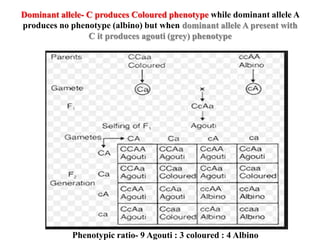
• For example development of agouty (gray) coat color in mice.
Phenotypic ratio- 9 Agouti : 3 coloured : 4 Albino
Dominant allele- C produces Coloured phenotype while dominant allele A
produces no phenotype (albino) but when dominant allele A present with
C it produces agouti (grey) phenotype
2. Complementary gene interaction
• If both gene loci have homozygous alleles and both of them
produce identical phenotypes the F2 ratio become 9:7 instead
9:3:3:1
• In such case, the genotype aaBB, aaBb, Aabb, aabb produce
one phenotype.
• Both dominant alleles when present together each other are
called complementary genes and produce a different
phenotype.
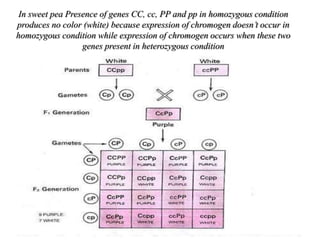
In sweet pea Presence of genes CC, cc, PP and pp in homozygous condition
produces no color (white) because expression of chromogen doesn’t occur in
homozygous condition while expression of chromogen occurs when these two
genes present in heterozygous condition
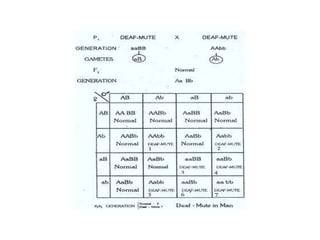
3. Inhibitory gene action
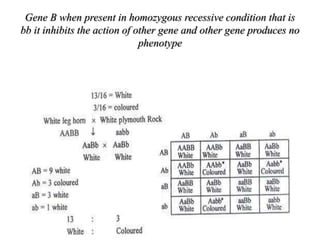
• When dominant allele of one gene locus (B) in homozygous
(BB) and heterozygous (Bb) condition produce the same
phenotype the F2 ratio becomes 13:3 instead of 9:3:3:1
• While homozygous recessive (bb) condition produces different
phenotype.
• Homozygous recessive (bb) condition inhibits phenotypic
expression of other genes so know as inhibitory gene action
Gene B when present in homozygous recessive condition that is
bb it inhibits the action of other gene and other gene produces no
phenotype
4. Duplicate gene interaction
• When dominant allele of both gene loci produce the
same phenotype without cumulative effect
• In that case the ratio becomes 15:1 instead of 9:3:3:1
• Duplicate gene interaction occurs in shepherds purse
plant.
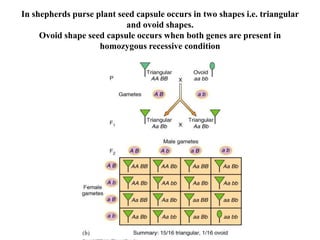
In shepherds purse plant seed capsule occurs in two shapes i.e. triangular
and ovoid shapes.
Ovoid shape seed capsule occurs when both genes are present in
homozygous recessive condition
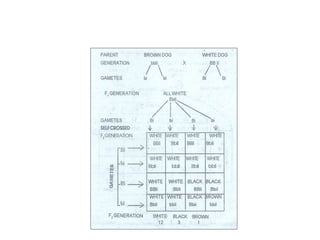
6. Masking gene action (12:3:1)
• When out of two genes, the dominant allele (e.g., A) of one
gene masked the activity of allele of another gene (e.g., B)
• Then A gene locus is said to be epistatic to the B gene locus
• Dominant allele A express itself only in the presence of either
B or b so such type of epistatic is know as dominant epistatic
• The allele of hypostatic locus express only when the allele of
epistatic locus present in homozygous recessive condition
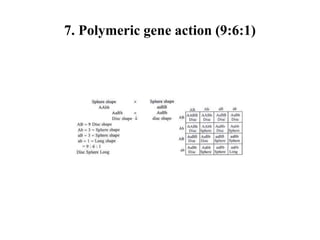
7. Polymeric gene action (9:6:1)
Gene Interaction ppt.pptx ....... incomplete dominance

Gene Interaction ppt.pptx ....... incomplete dominance

  • 1.
    Gene interaction Shahwaiz AliRaza S23BIBBB1M01036 BS BIOC 3RD M1
  • 2.
    Outline • Introduction • Typesof gene interaction • Epistatic and hypostatic gene • Classification of epistatic gene interaction a. Supplementary gene action (9:3:4) b. Complementary gene action (9:7) c. Inhibitory gene action (13:3) d. Duplicate gene interaction (15:1) e. Masking gene action (12:3:1) f. Polymeric gene action (9:6:1)
  • 3.
    Introduction • Defination- Thephenomenon of two or more genes affecting the expression of each other in various ways in the development of a single character of an organism is known as gene interaction • Most of the characters of living organisms are controlled/ influenced/ governed by a collaboration of several different genes. • Mendel and other workers assumed that characters are governed by single genes but later it was discovered that many characters are governed by two or more genes. • Such genes affect the development of concerned characters in various ways; this lead to the modification of the typical dihybrid ratio (9:3:3:1) or trihybrid (27:9:9:9:3:3:3:1).
  • 4.
    Cont… • In geneinteraction, expression of one gene depends on expression (presence or absence) of another gene.
  • 5.
    Types of GeneInteractions • Gene interactions can be classified as a) Allelic/ non epistatic gene interaction/ - This type of interaction gives the classical ratio of 3:1 or 9:3:3:1 b) Non-allelic/ epistatic gene interaction- In this type of gene interaction genes located on same or different chromosome interact with each other for their expression Discovery of non allelic gene interaction has been made after Mendel and can be best understood by studying phenotypic trait of gene
  • 6.
    Epistatic and Hypostaticgene  Epistatic gene When a gene or locus which suppress or mask the phenotypic expression of another gene at another locus such gene is know as epistatic gene. Epistatic is Greek term and meaning is standing up  Hypostatic gene The gene or locus which was suppressed by a epistatic gene was called hypostatic gene
  • 7.
    Classification of epistaticgene interaction • Epistatic gene interaction Gene is classified as follow on the basis manner by which concerned genes influence the expression of each other 1. Supplementary gene action (9:3:4) 2. Complementary gene action (9:7) 3. Inhibitory gene action (13:3) 4. Duplicate gene interaction (15:1) 5. Masking gene action (12:3:1) 6. Polymeric gene action (9:6:1)
  • 8.
    1. Supplementary geneaction (9:3:4) • In supplementary gene interaction, the dominant allele of one of two gene governing a character produces phenotypic effect • However dominant allele of the other gene does not produce a phenotypic effect on its own. • But when it is present with dominant allele of the first gene it modifies the phenotypic effect produced by that gene. • For example development of agouty (gray) coat color in mice.
  • 9.
    Phenotypic ratio- 9Agouti : 3 coloured : 4 Albino Dominant allele- C produces Coloured phenotype while dominant allele A produces no phenotype (albino) but when dominant allele A present with C it produces agouti (grey) phenotype
  • 10.
    2. Complementary geneinteraction • If both gene loci have homozygous alleles and both of them produce identical phenotypes the F2 ratio become 9:7 instead 9:3:3:1 • In such case, the genotype aaBB, aaBb, Aabb, aabb produce one phenotype. • Both dominant alleles when present together each other are called complementary genes and produce a different phenotype.
  • 11.
    In sweet peaPresence of genes CC, cc, PP and pp in homozygous condition produces no color (white) because expression of chromogen doesn’t occur in homozygous condition while expression of chromogen occurs when these two genes present in heterozygous condition
  • 12.
    3. Inhibitory geneaction • When dominant allele of one gene locus (B) in homozygous (BB) and heterozygous (Bb) condition produce the same phenotype the F2 ratio becomes 13:3 instead of 9:3:3:1 • While homozygous recessive (bb) condition produces different phenotype. • Homozygous recessive (bb) condition inhibits phenotypic expression of other genes so know as inhibitory gene action
  • 13.
    Gene B whenpresent in homozygous recessive condition that is bb it inhibits the action of other gene and other gene produces no phenotype
  • 14.
    4. Duplicate geneinteraction • When dominant allele of both gene loci produce the same phenotype without cumulative effect • In that case the ratio becomes 15:1 instead of 9:3:3:1 • Duplicate gene interaction occurs in shepherds purse plant.
  • 15.
    In shepherds purseplant seed capsule occurs in two shapes i.e. triangular and ovoid shapes. Ovoid shape seed capsule occurs when both genes are present in homozygous recessive condition
  • 16.
    6. Masking geneaction (12:3:1) • When out of two genes, the dominant allele (e.g., A) of one gene masked the activity of allele of another gene (e.g., B) • Then A gene locus is said to be epistatic to the B gene locus • Dominant allele A express itself only in the presence of either B or b so such type of epistatic is know as dominant epistatic • The allele of hypostatic locus express only when the allele of epistatic locus present in homozygous recessive condition
  • 18.
    7. Polymeric geneaction (9:6:1)