INTERACTION AMONG
THE FOOD
COMPONENTS
SUDMITTED BY,
MAMATHA RANI R
2019672804
PHD 1ST YEAR (FST)
IIFPT, THANJAVUR.
CHEMICAL INTERACTIONS OF FOOD COMPONENT
• The chemical interactions of food components under conditions of storage and
processing comprise the Millard reaction, Caramelization of sugars, other
pyrolytic changes, interactions of quinones with amines and amino acids, various
oxidation process, and reactions of proteins in alkaline conditions.
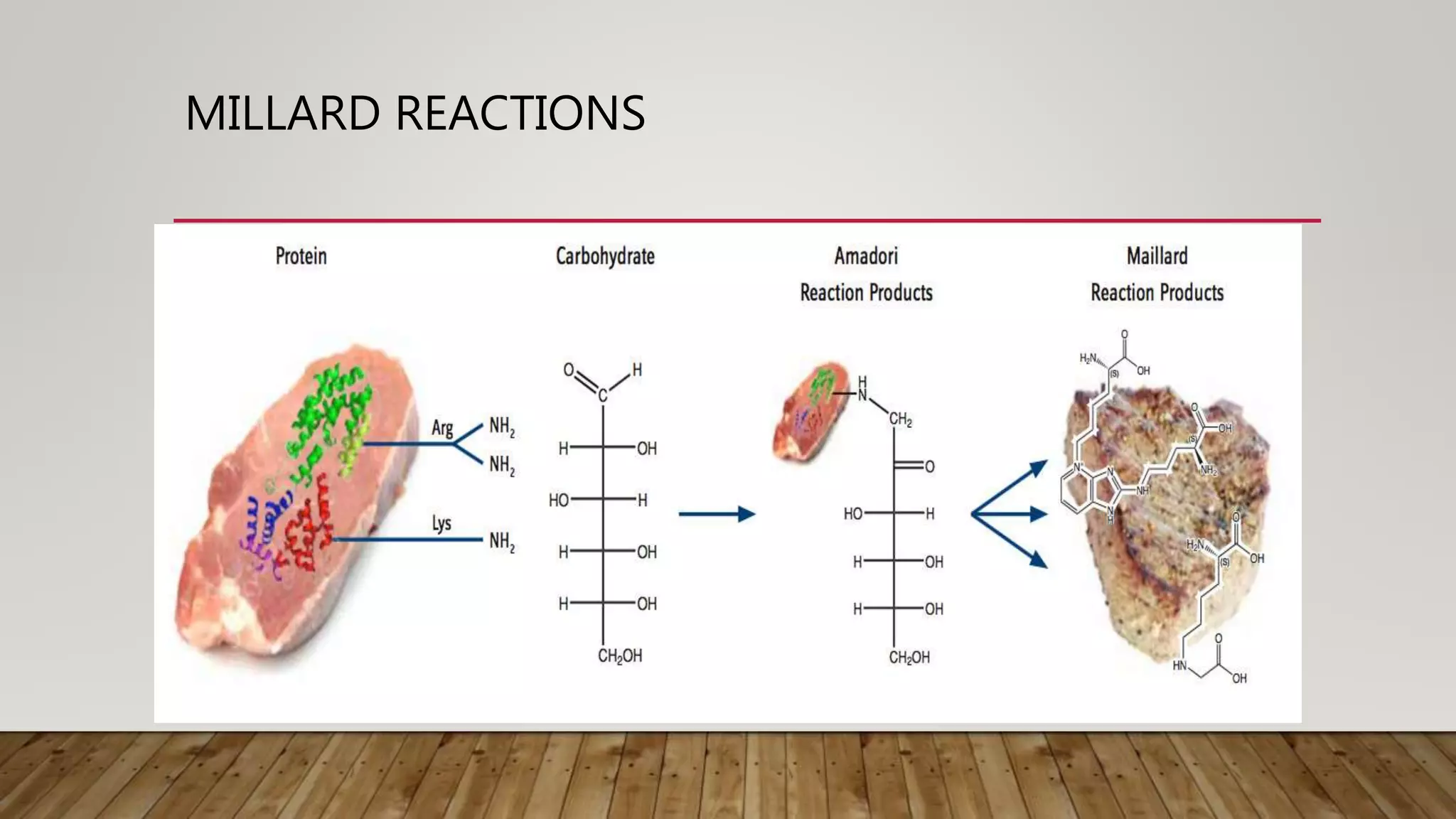
MILLARD REACTIONS
WATER-PROTEIN AND PROTEIN-PROTEIN
INTERACTIONS
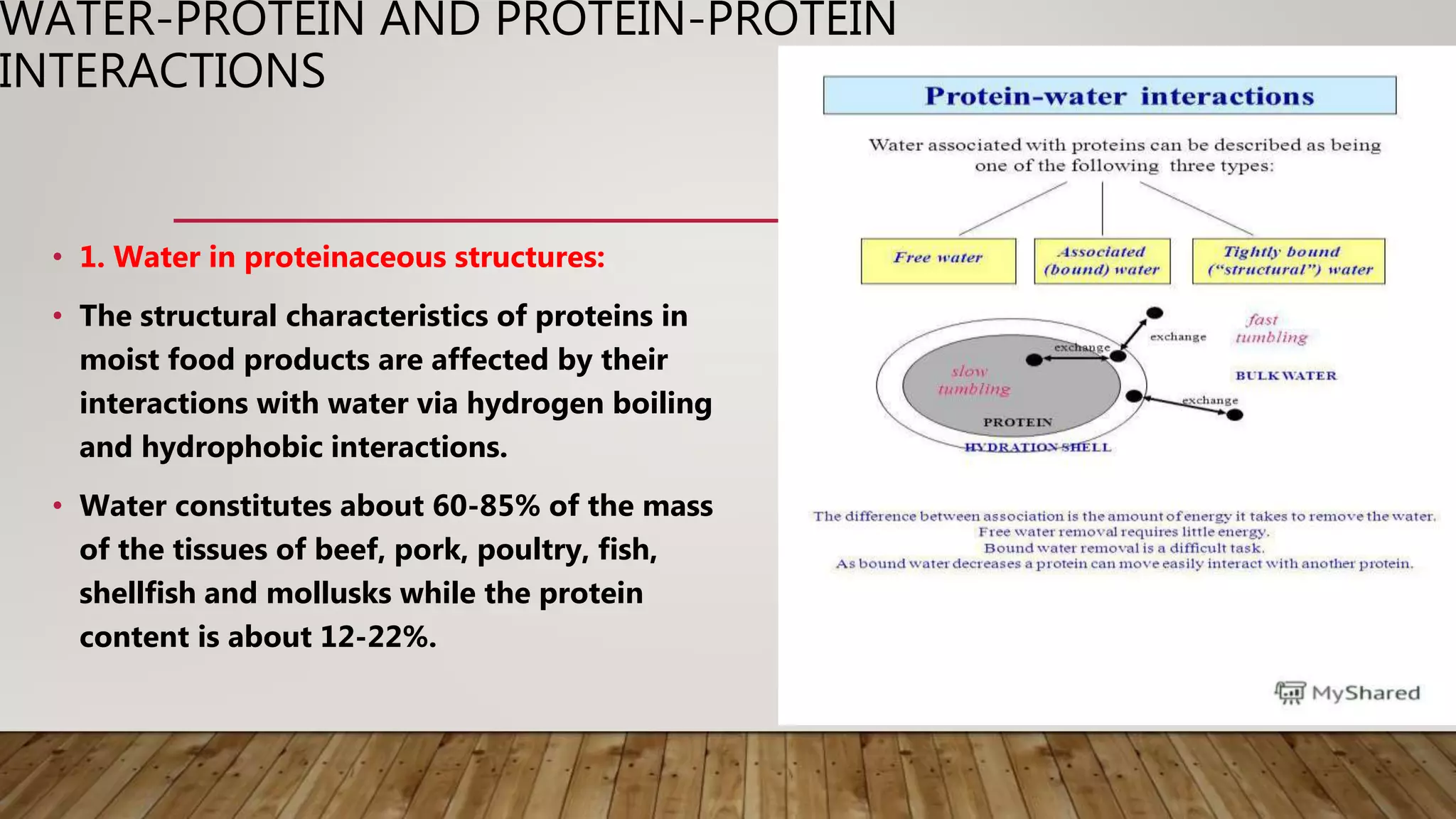
• 1. Water in proteinaceous structures:
• The structural characteristics of proteins in
moist food products are affected by their
interactions with water via hydrogen boiling
and hydrophobic interactions.
• Water constitutes about 60-85% of the mass
of the tissues of beef, pork, poultry, fish,
shellfish and mollusks while the protein
content is about 12-22%.
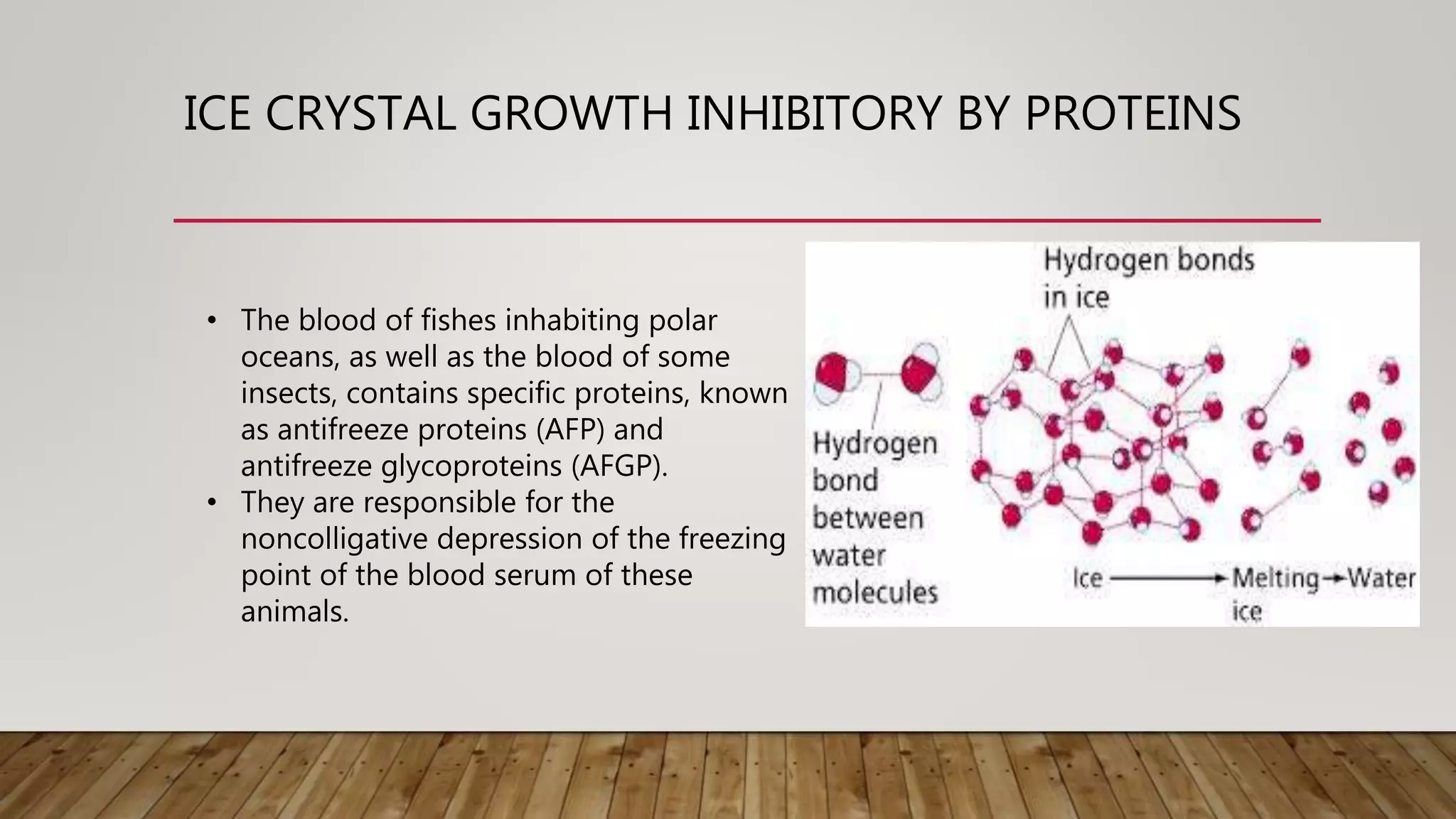
ICE CRYSTAL GROWTH INHIBITORY BY PROTEINS
• The blood of fishes inhabiting polar
oceans, as well as the blood of some
insects, contains specific proteins, known
as antifreeze proteins (AFP) and
antifreeze glycoproteins (AFGP).
• They are responsible for the
noncolligative depression of the freezing
point of the blood serum of these
animals.
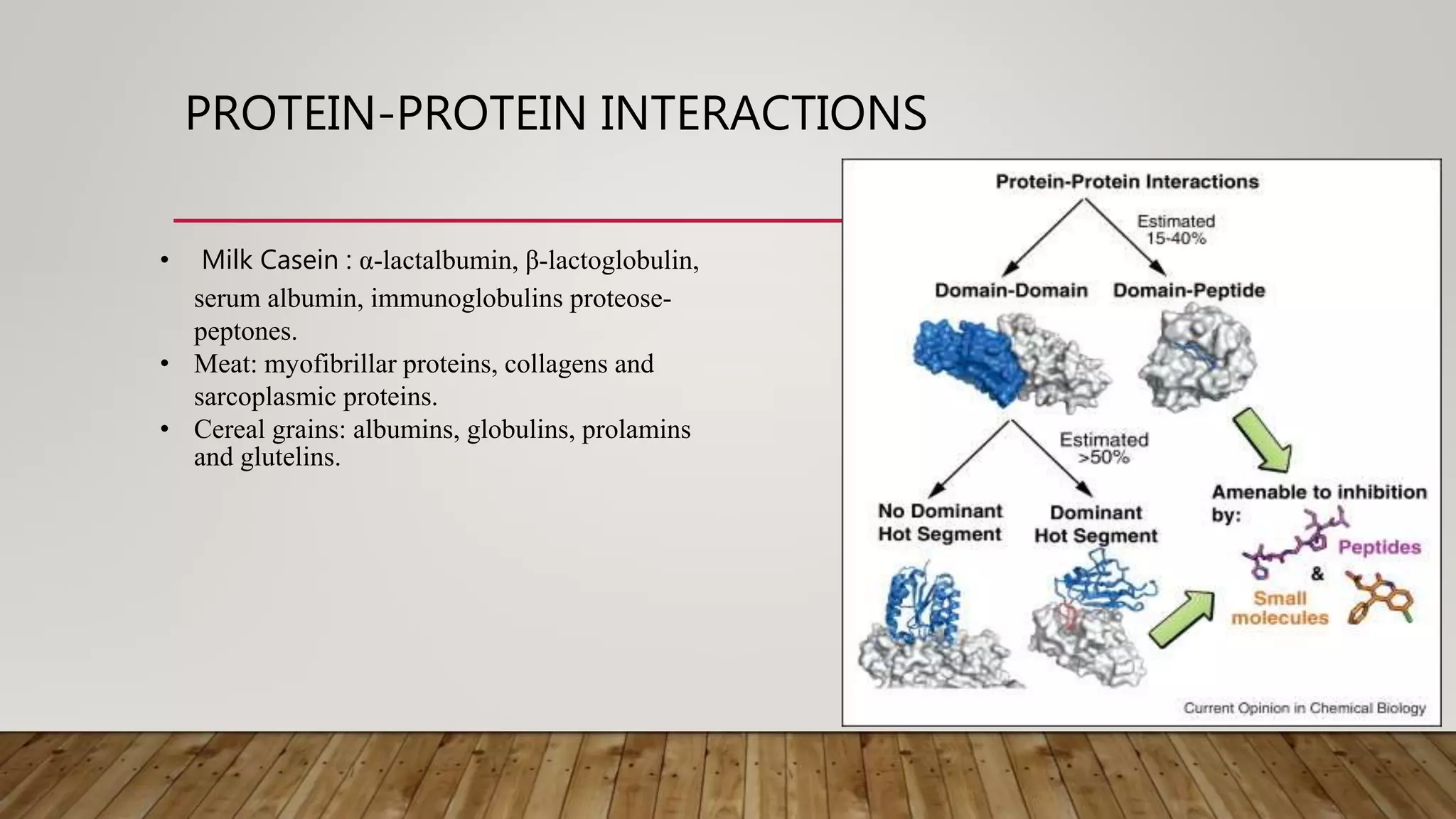
PROTEIN-PROTEIN INTERACTIONS
• Milk Casein : α-lactalbumin, β-lactoglobulin,
serum albumin, immunoglobulins proteose-
peptones.
• Meat: myofibrillar proteins, collagens and
sarcoplasmic proteins.
• Cereal grains: albumins, globulins, prolamins
and glutelins.
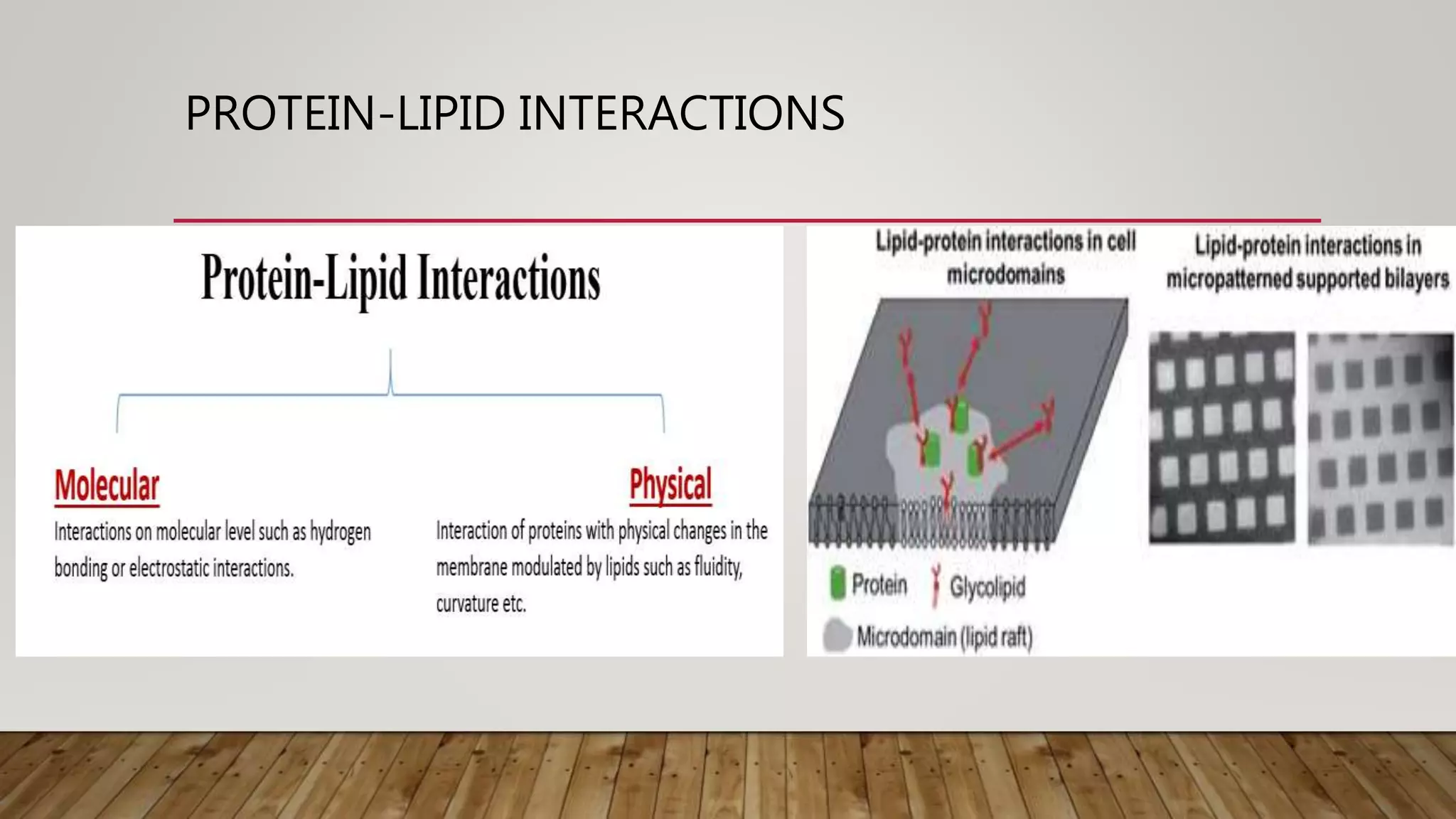
PROTEIN-LIPID INTERACTIONS
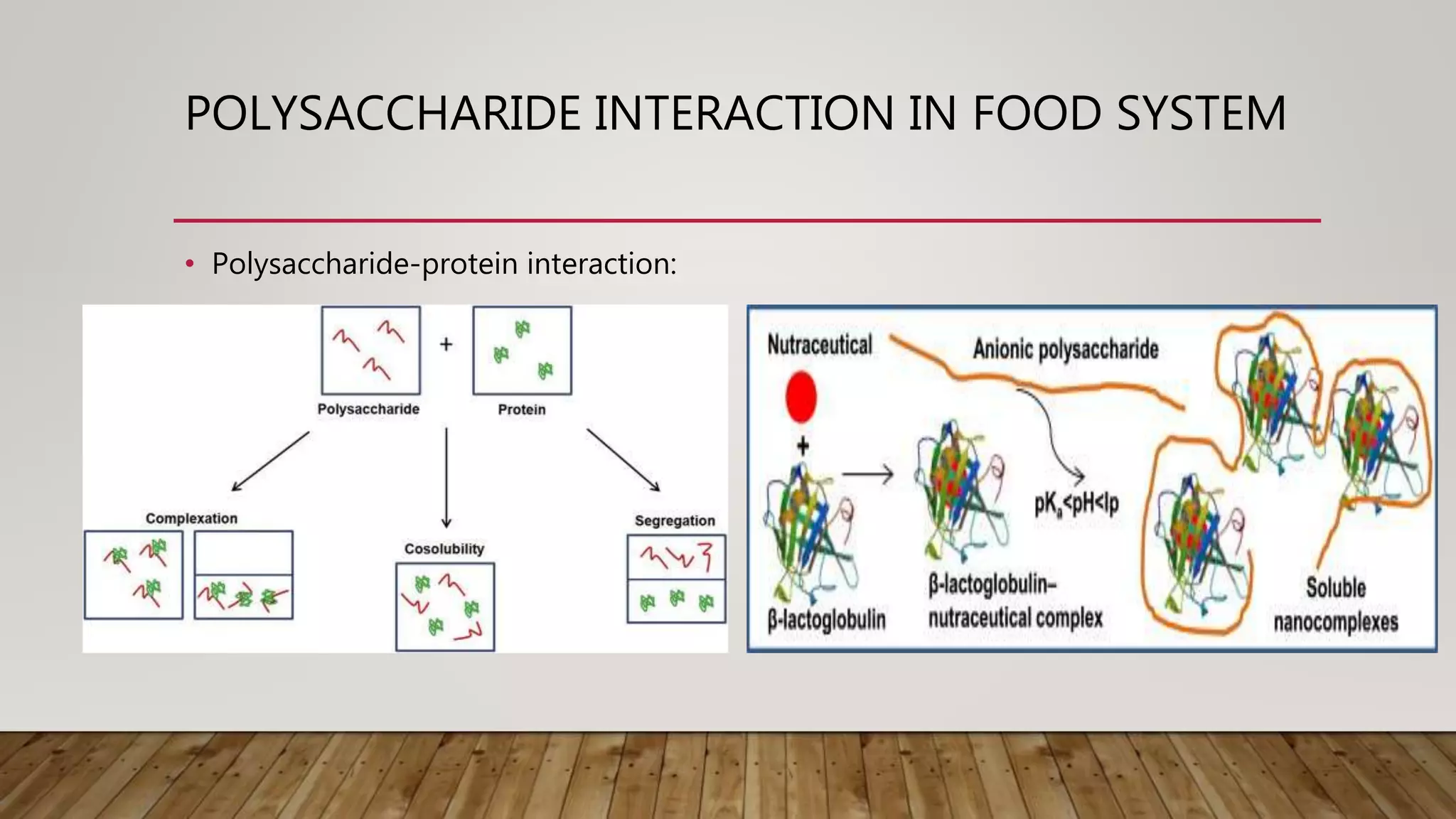
POLYSACCHARIDE INTERACTION IN FOOD SYSTEM
• Polysaccharide-protein interaction:
POLYSACCHARIDE-LIPID INTERACTIONS
• In aqueous system are due to hydrophobic effects.
• An amylose-lipid complex is formed that has a structure similar to that of the
well-known amylose iodine complex.
• The amylose-lipid complexes have ability to form gels.
• Phospholipids retards retrogradation of starch gels and soften the bread-crumb.
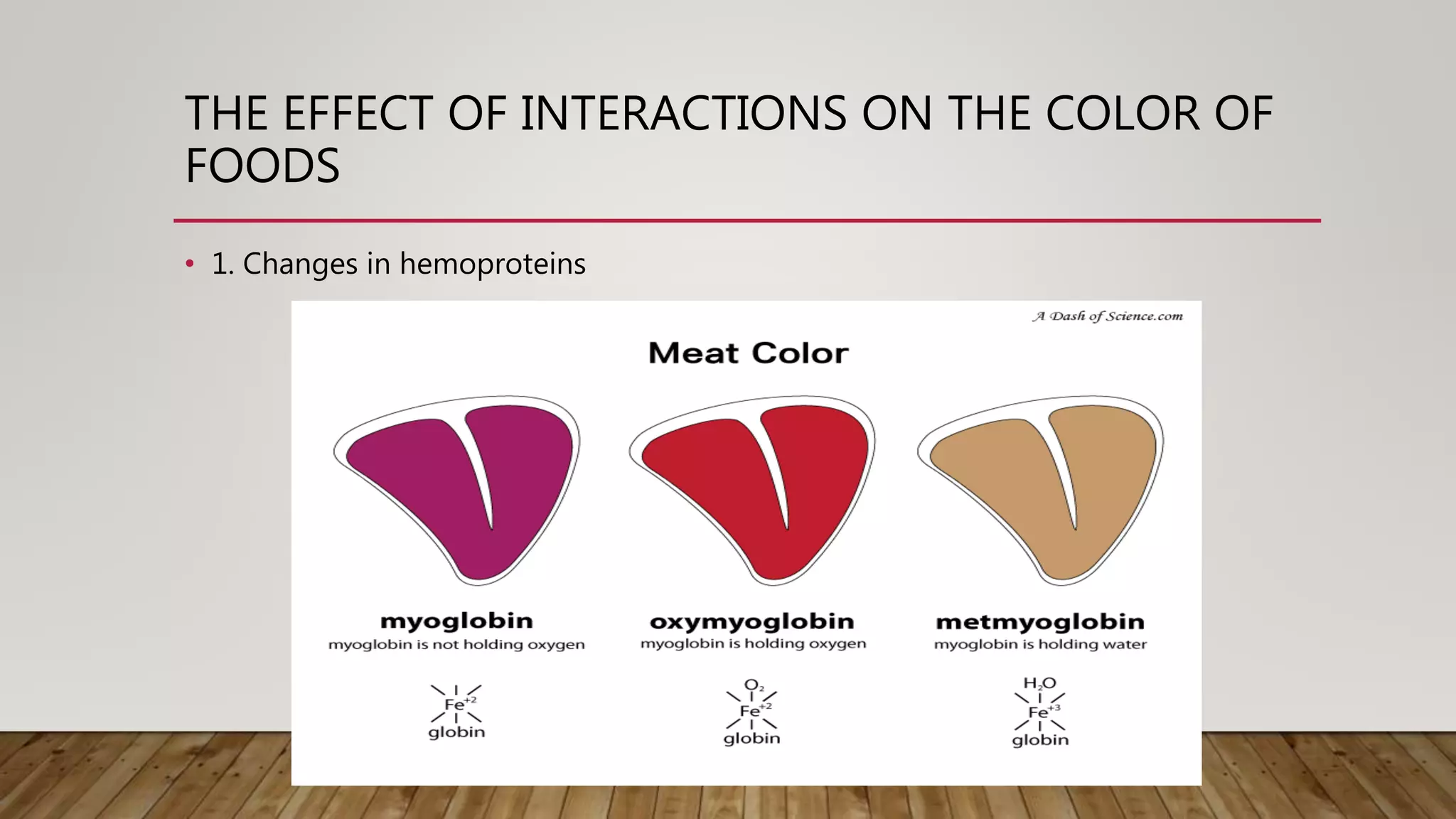
THE EFFECT OF INTERACTIONS ON THE COLOR OF
FOODS
• 1. Changes in hemoproteins
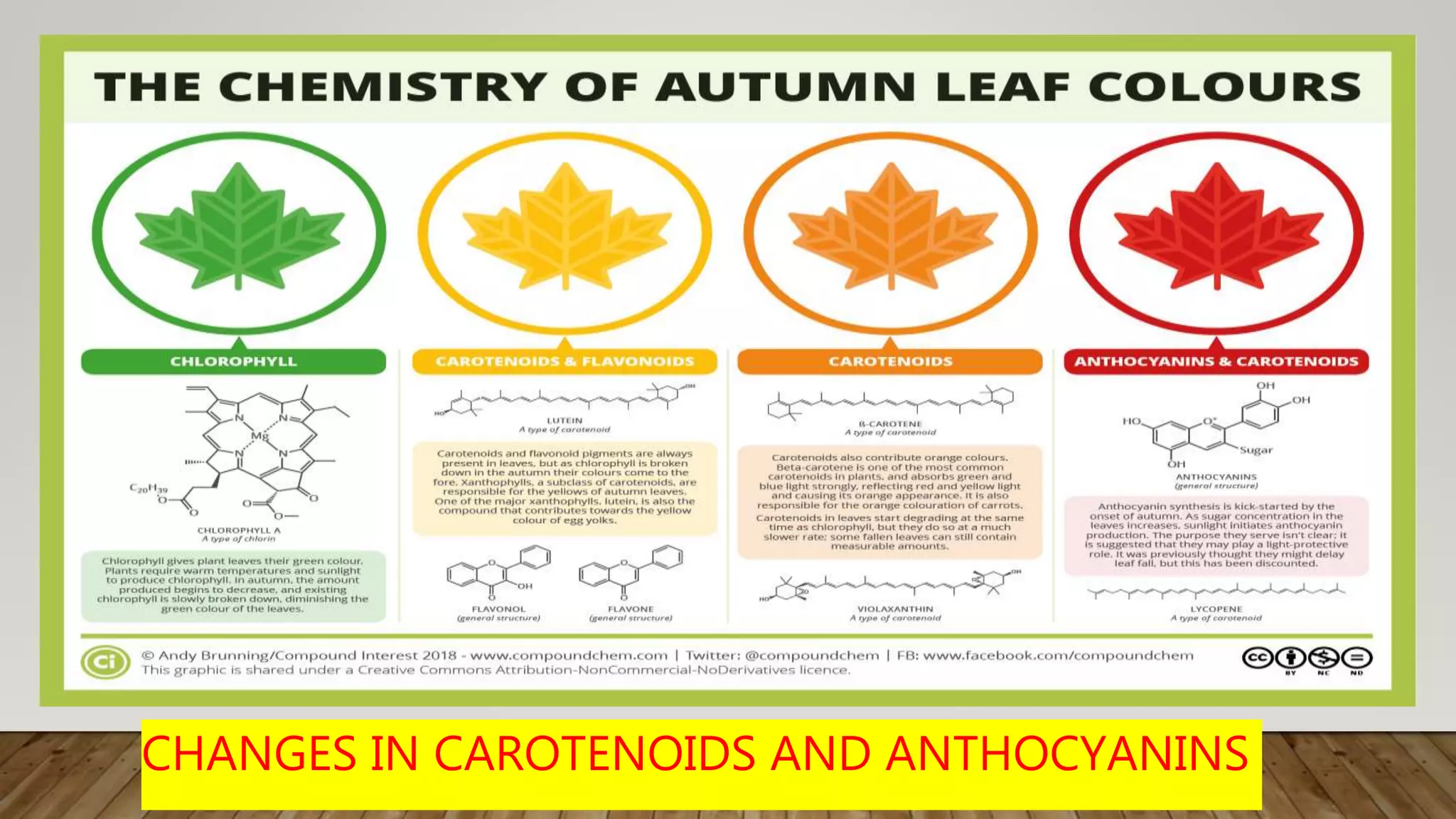
CHANGES IN CAROTENOIDS AND ANTHOCYANINS
INTERACTION AFFECTING FOOD FLAVOR
HYDROLYTIC REACTIONS
• Changes that occur in bovine meat
during aging bring about not only
tenderization, but also increase the
content of free amino acids.
• Accumulation of amino acids
enhance flavour formation in roasted
meat
OXIDATIVE REACTION
• Terpenes are present in the majority
of foods of plant origin.
• They are easily oxidized upon storage
and heating, with the formation of
several aromas
INTERACTIONS THAT AFFECT TEXTURE AND
RHEOLOGICAL PROPERTIES OF FOOD
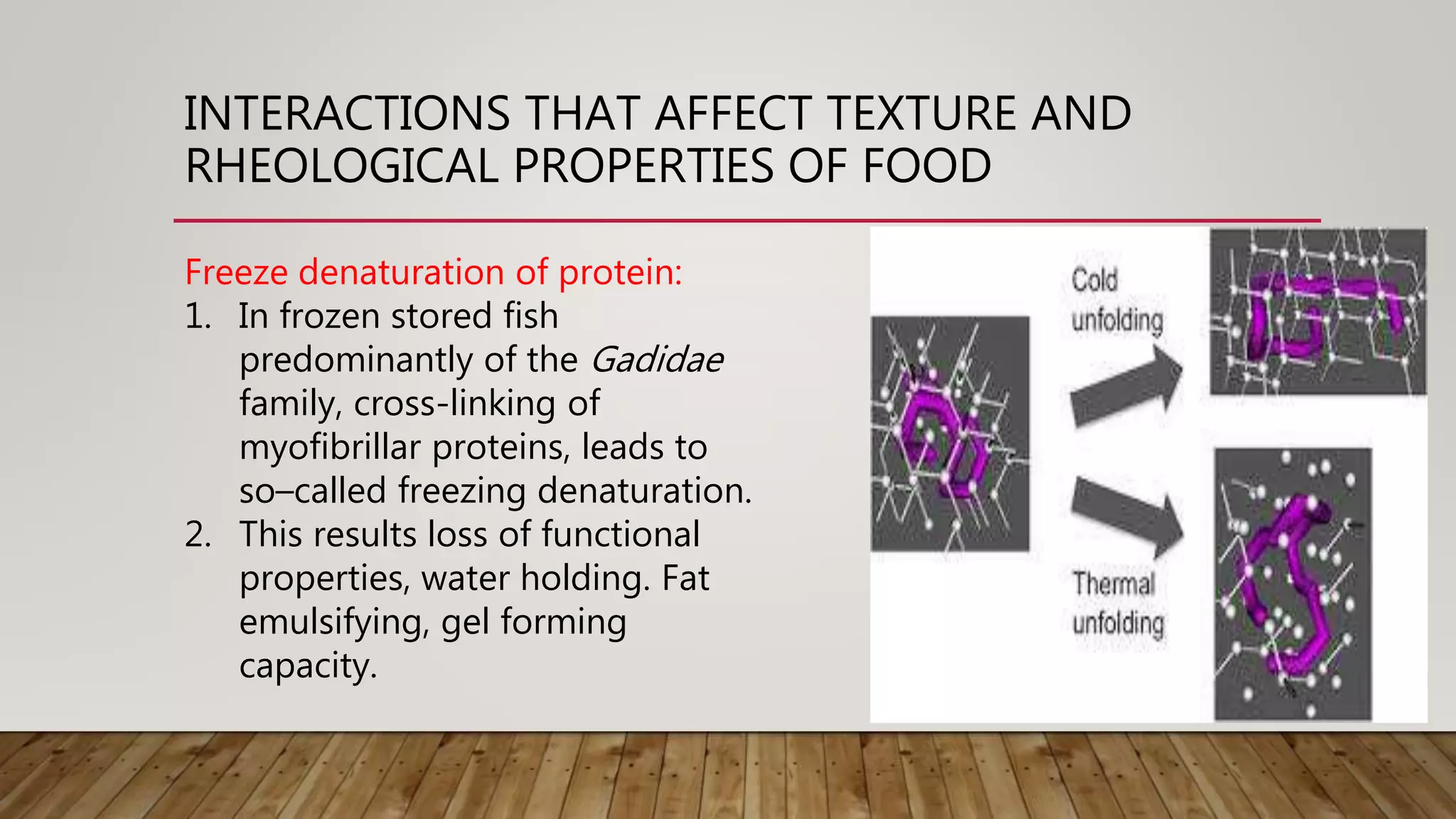
Freeze denaturation of protein:
1. In frozen stored fish
predominantly of the Gadidae
family, cross-linking of
myofibrillar proteins, leads to
so–called freezing denaturation.
2. This results loss of functional
properties, water holding. Fat
emulsifying, gel forming
capacity.
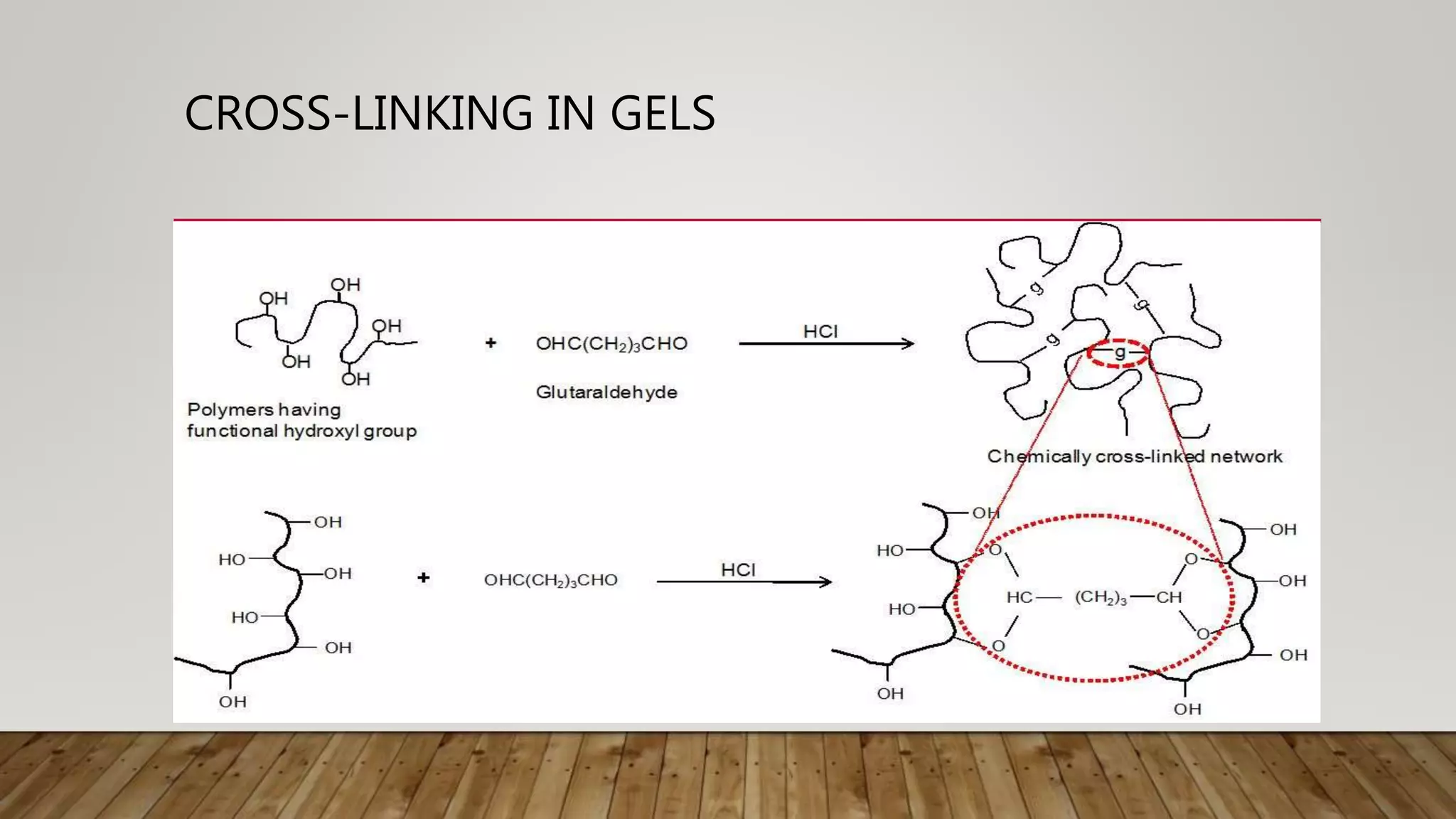
CROSS-LINKING IN GELS
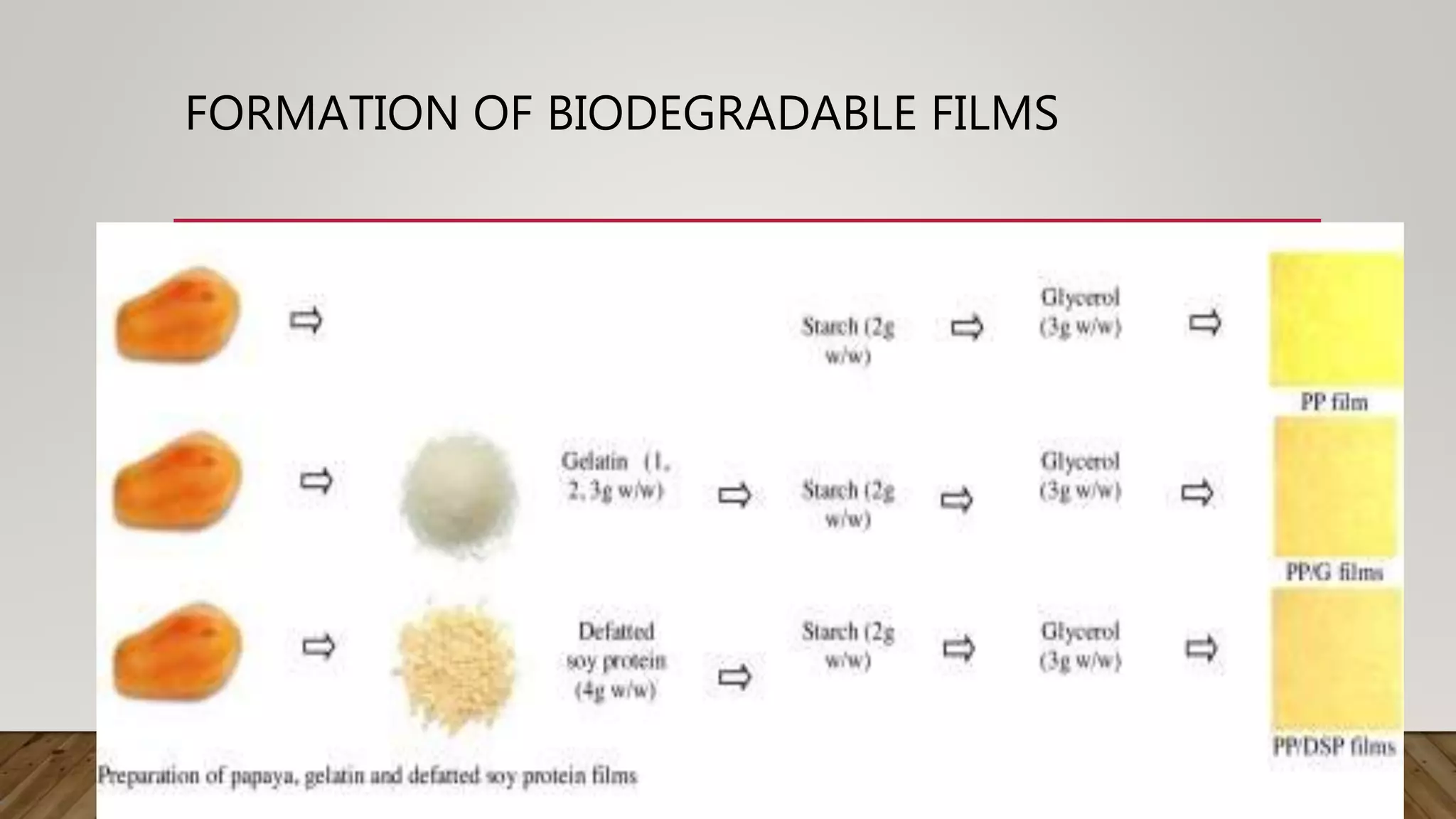
FORMATION OF BIODEGRADABLE FILMS
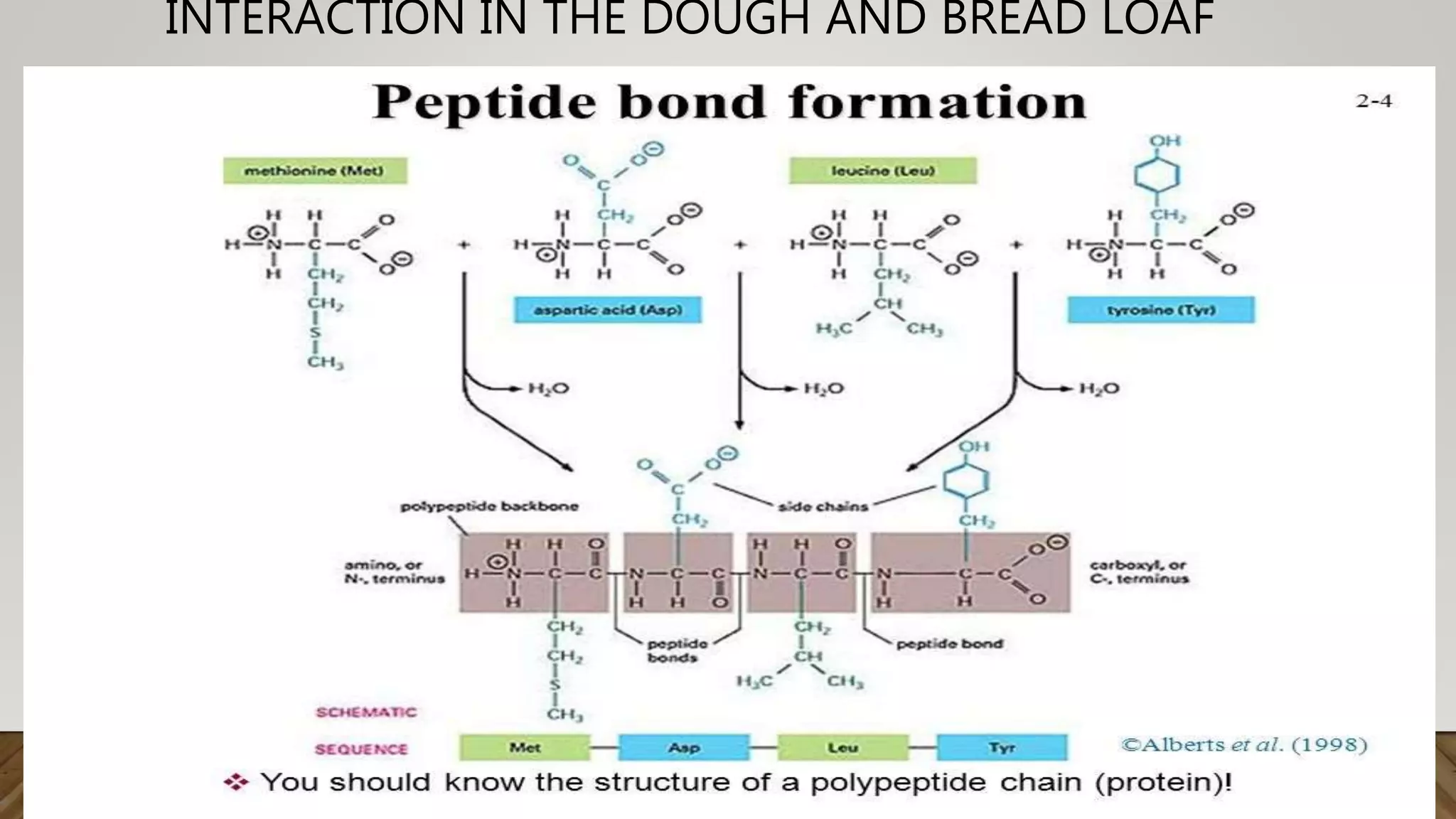
INTERACTION IN THE DOUGH AND BREAD LOAF
Interaction components in food

Interaction components in food

  • 1.
    INTERACTION AMONG THE FOOD COMPONENTS SUDMITTEDBY, MAMATHA RANI R 2019672804 PHD 1ST YEAR (FST) IIFPT, THANJAVUR.
  • 2.
    CHEMICAL INTERACTIONS OFFOOD COMPONENT • The chemical interactions of food components under conditions of storage and processing comprise the Millard reaction, Caramelization of sugars, other pyrolytic changes, interactions of quinones with amines and amino acids, various oxidation process, and reactions of proteins in alkaline conditions.
  • 3.
  • 4.
    WATER-PROTEIN AND PROTEIN-PROTEIN INTERACTIONS •1. Water in proteinaceous structures: • The structural characteristics of proteins in moist food products are affected by their interactions with water via hydrogen boiling and hydrophobic interactions. • Water constitutes about 60-85% of the mass of the tissues of beef, pork, poultry, fish, shellfish and mollusks while the protein content is about 12-22%.
  • 5.
    ICE CRYSTAL GROWTHINHIBITORY BY PROTEINS • The blood of fishes inhabiting polar oceans, as well as the blood of some insects, contains specific proteins, known as antifreeze proteins (AFP) and antifreeze glycoproteins (AFGP). • They are responsible for the noncolligative depression of the freezing point of the blood serum of these animals.
  • 6.
    PROTEIN-PROTEIN INTERACTIONS • MilkCasein : α-lactalbumin, β-lactoglobulin, serum albumin, immunoglobulins proteose- peptones. • Meat: myofibrillar proteins, collagens and sarcoplasmic proteins. • Cereal grains: albumins, globulins, prolamins and glutelins.
  • 7.
  • 8.
    POLYSACCHARIDE INTERACTION INFOOD SYSTEM • Polysaccharide-protein interaction:
  • 9.
    POLYSACCHARIDE-LIPID INTERACTIONS • Inaqueous system are due to hydrophobic effects. • An amylose-lipid complex is formed that has a structure similar to that of the well-known amylose iodine complex. • The amylose-lipid complexes have ability to form gels. • Phospholipids retards retrogradation of starch gels and soften the bread-crumb.
  • 10.
    THE EFFECT OFINTERACTIONS ON THE COLOR OF FOODS • 1. Changes in hemoproteins
  • 11.
    CHANGES IN CAROTENOIDSAND ANTHOCYANINS
  • 12.
    INTERACTION AFFECTING FOODFLAVOR HYDROLYTIC REACTIONS • Changes that occur in bovine meat during aging bring about not only tenderization, but also increase the content of free amino acids. • Accumulation of amino acids enhance flavour formation in roasted meat OXIDATIVE REACTION • Terpenes are present in the majority of foods of plant origin. • They are easily oxidized upon storage and heating, with the formation of several aromas
  • 13.
    INTERACTIONS THAT AFFECTTEXTURE AND RHEOLOGICAL PROPERTIES OF FOOD Freeze denaturation of protein: 1. In frozen stored fish predominantly of the Gadidae family, cross-linking of myofibrillar proteins, leads to so–called freezing denaturation. 2. This results loss of functional properties, water holding. Fat emulsifying, gel forming capacity.
  • 14.
  • 15.
  • 16.
    INTERACTION IN THEDOUGH AND BREAD LOAF