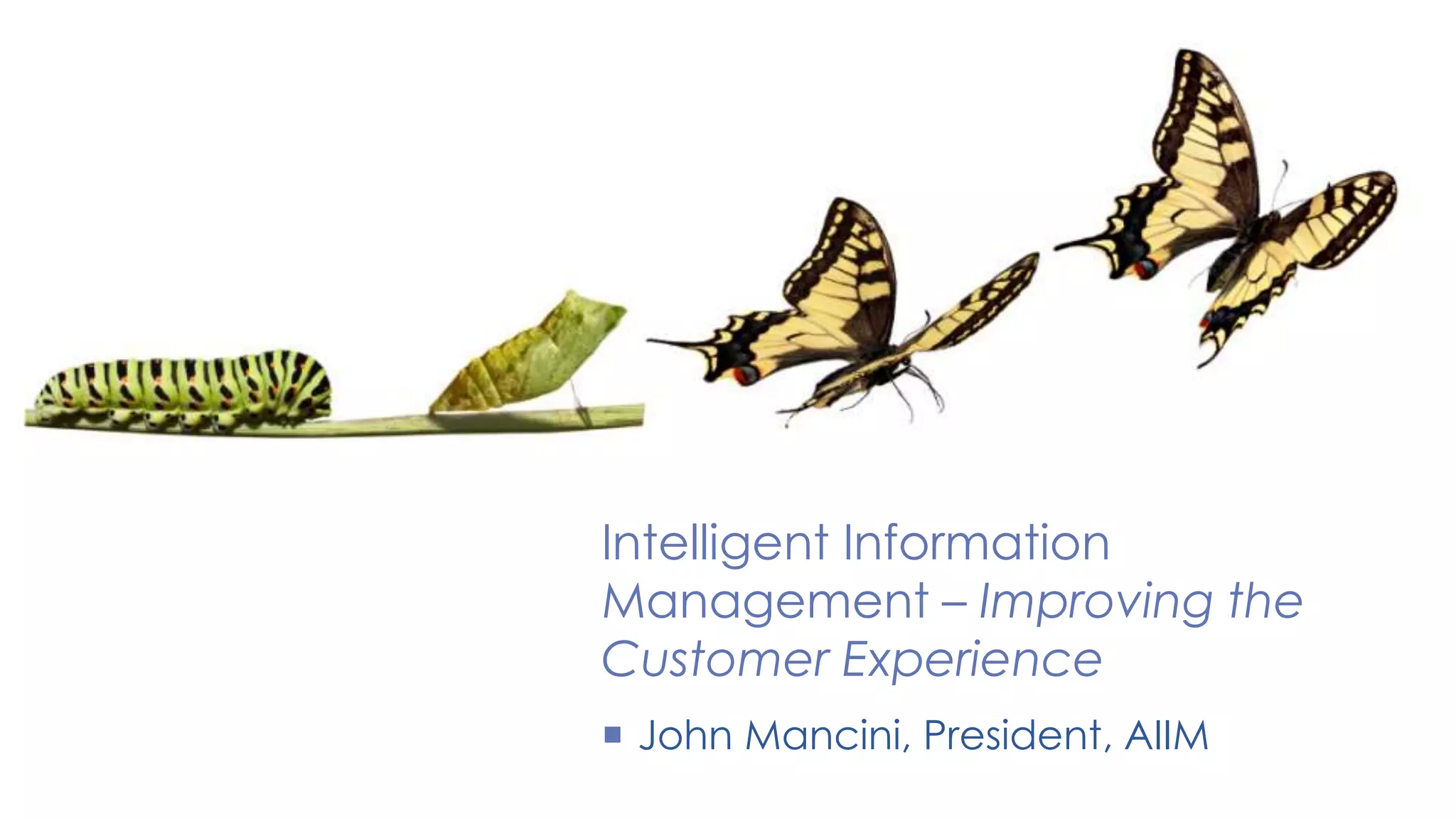
Intelligent Information
Management – Improving the
Customer Experience
 John Mancini, President, AIIM
AIIM provides public and private training = AIIM.org/training
AIIM provides research & benchmarking = AIIM.org/research
AIIM provides on-line and in-person events = AIIM.org/events
DigitalLandfill.org and @jmancini77
johnmancini@aiim.org
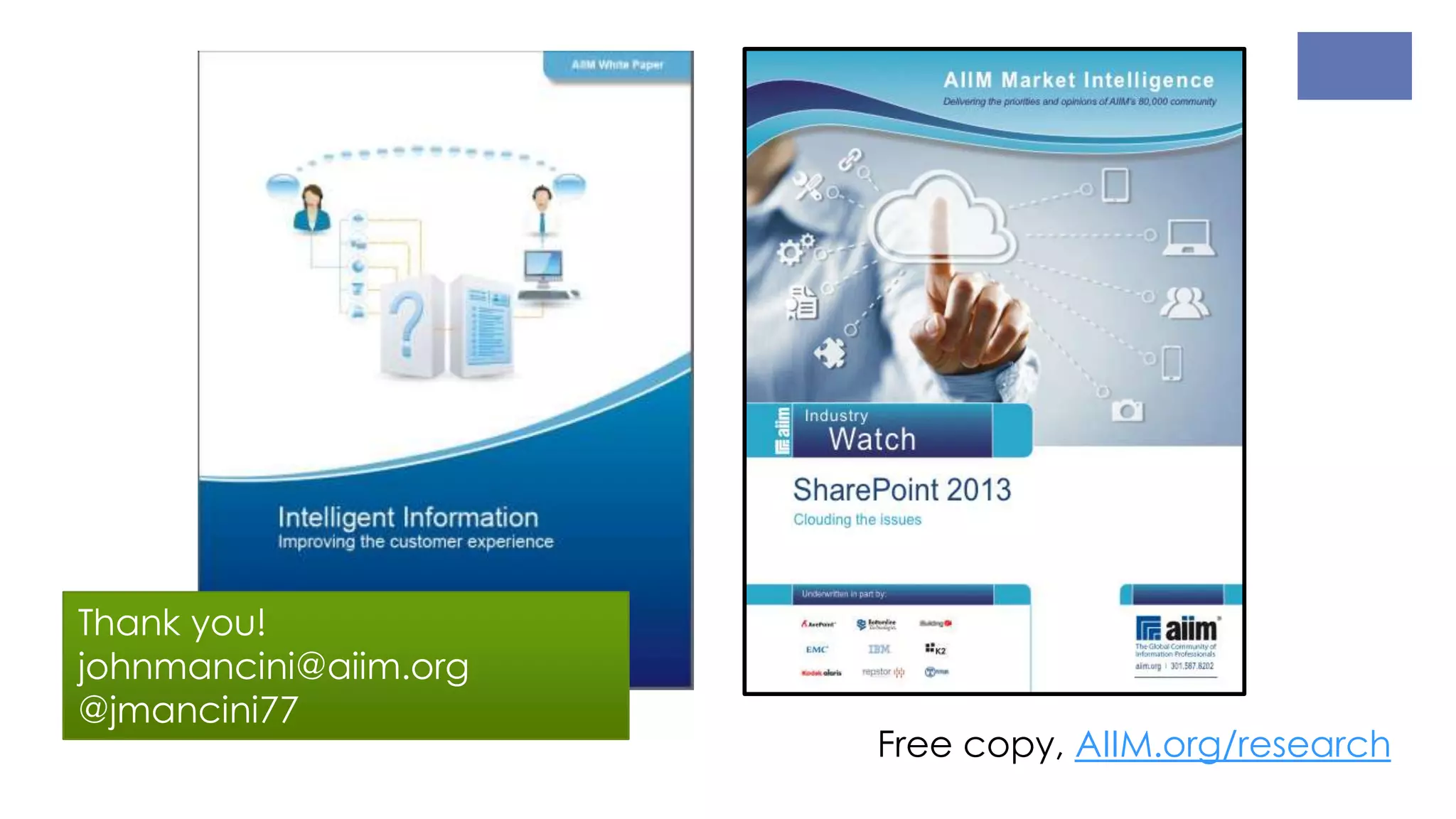
Free copy, AIIM.org/research
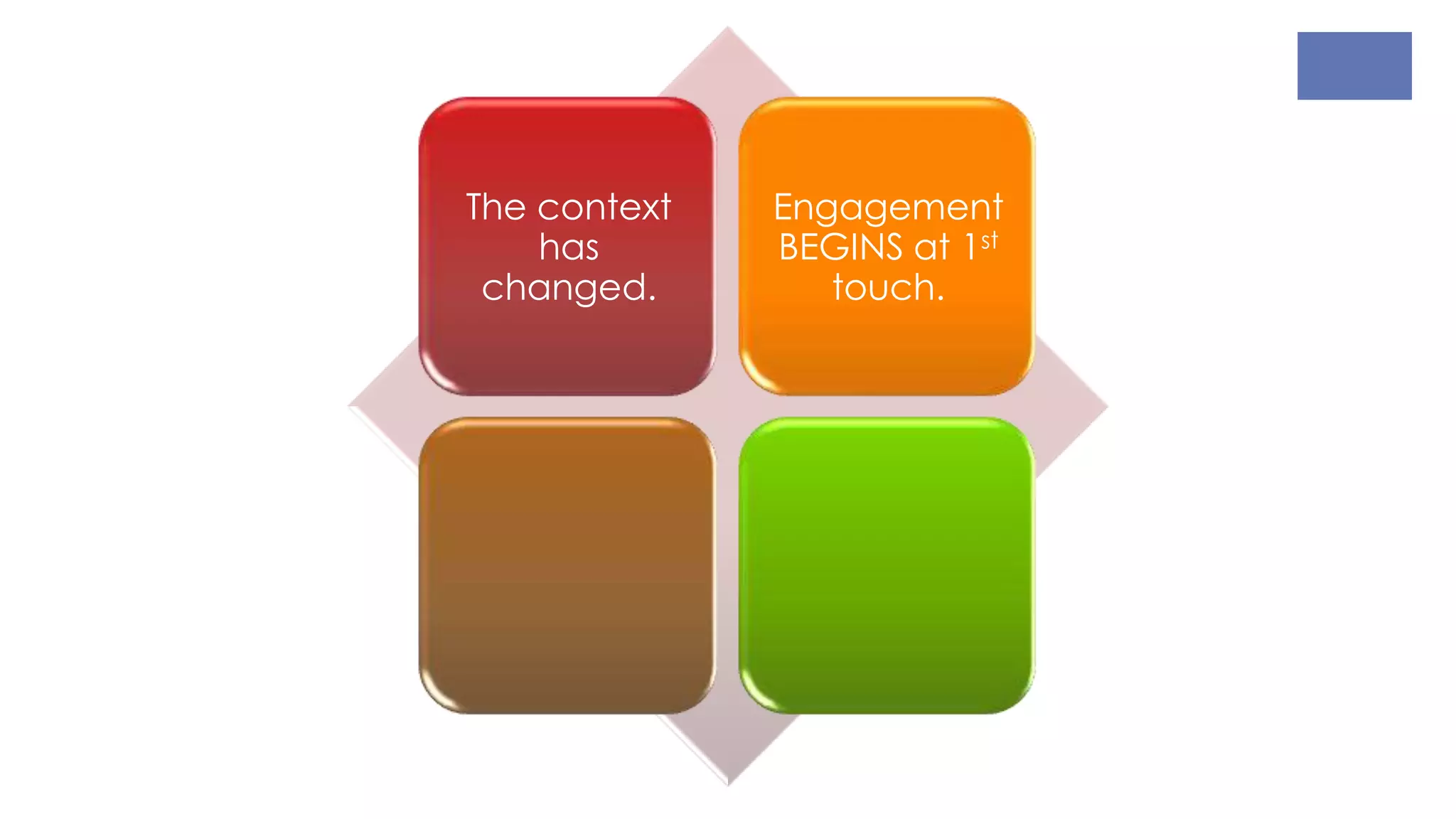
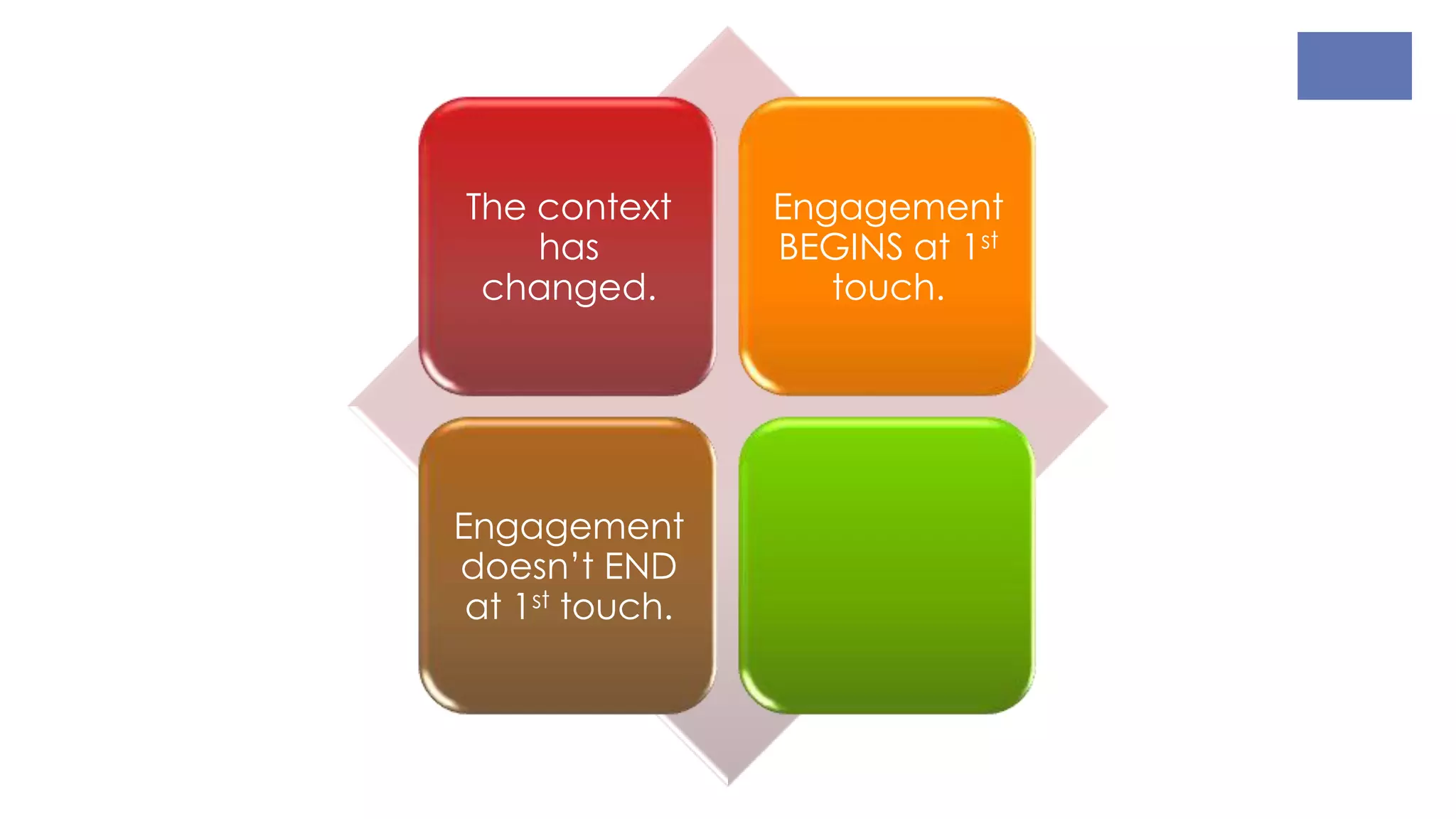
The context
has
changed.
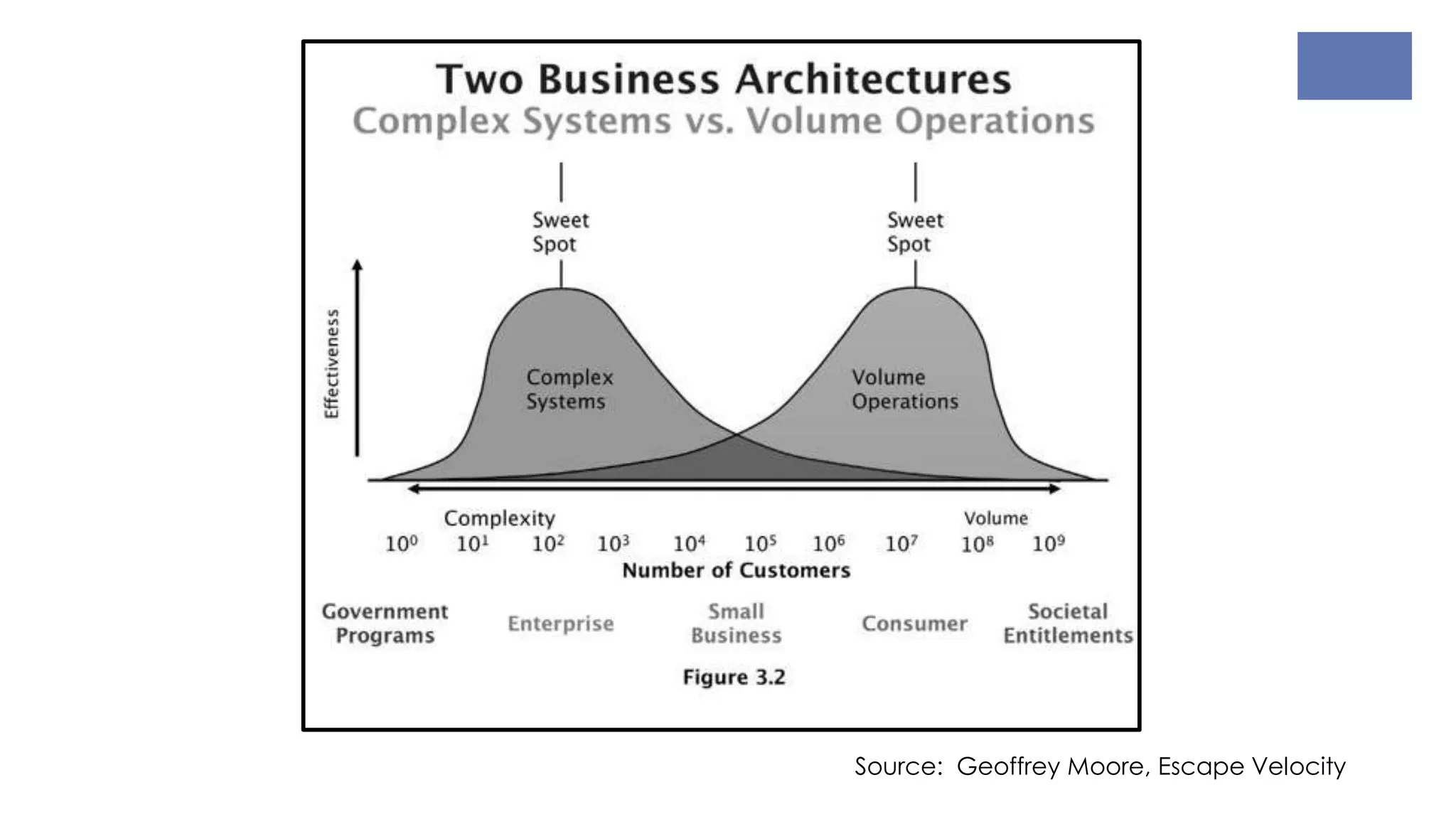
Source: Geoffrey Moore, Escape Velocity
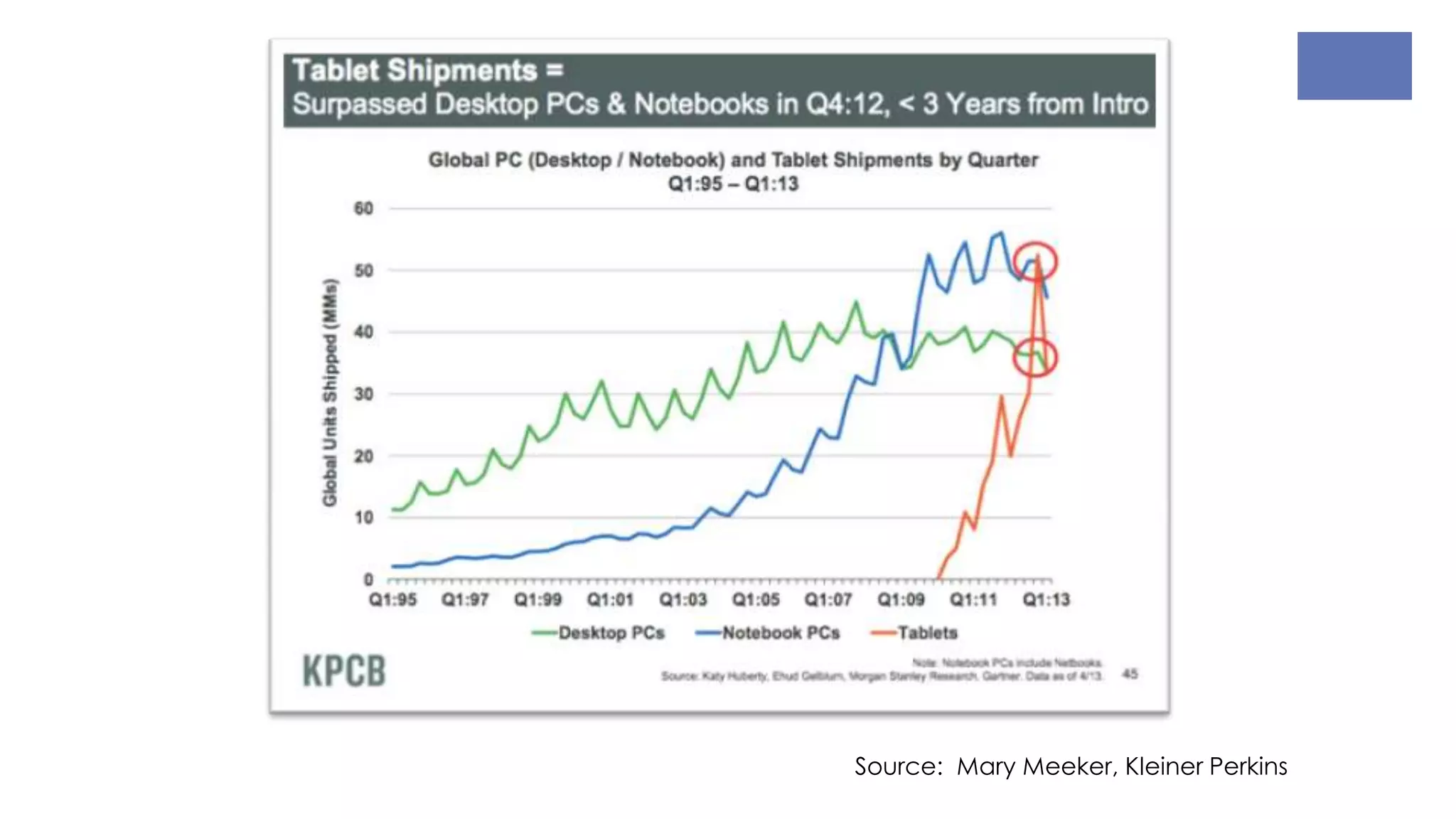
Source: Mary Meeker, Kleiner Perkins
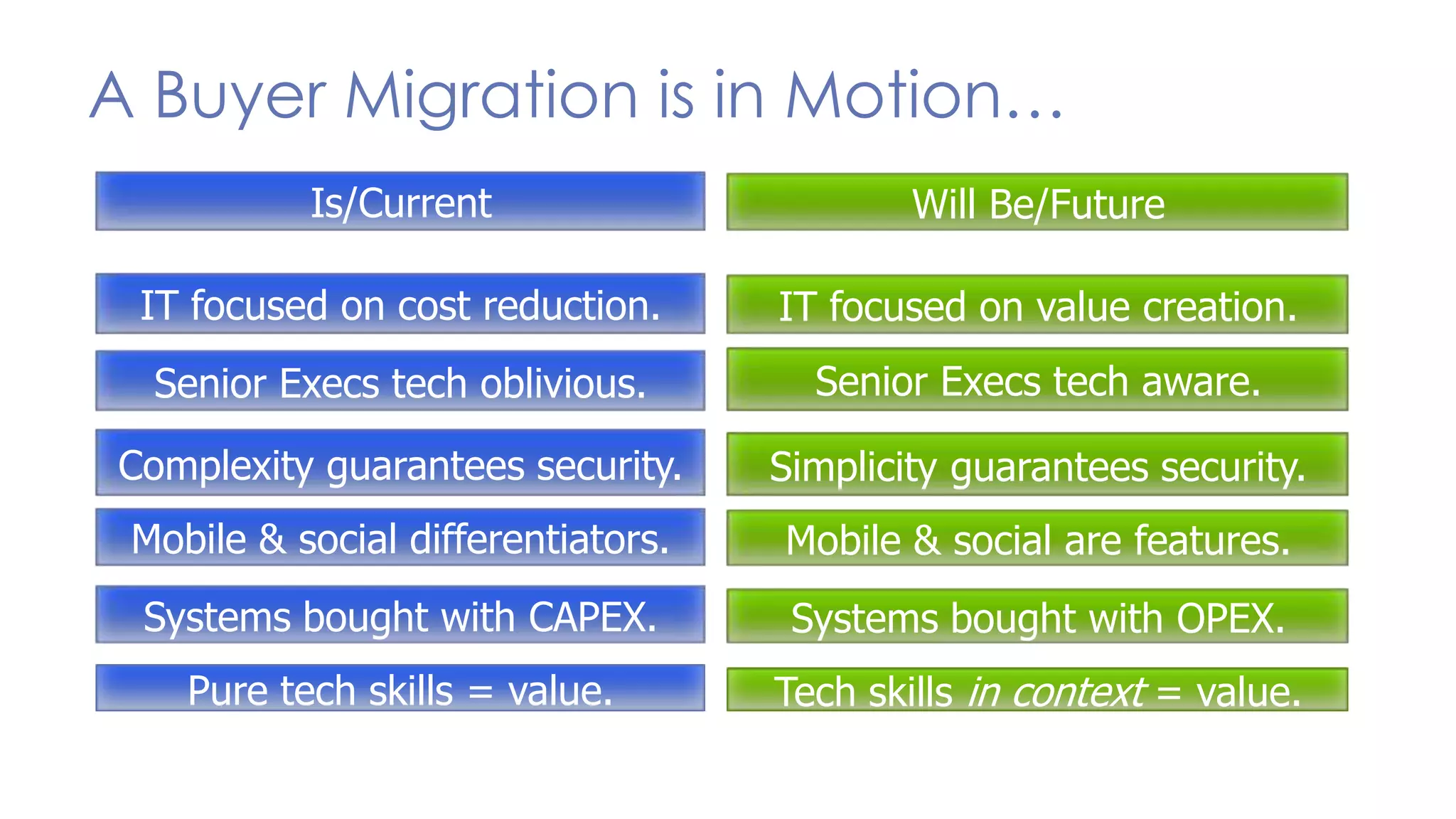
Is/Current Will Be/Future
IT focused on cost reduction. IT focused on value creation.
Senior Execs tech oblivious. Senior Execs tech aware.
Complexity guarantees security. Simplicity guarantees security.
Mobile & social differentiators. Mobile & social are features.
Systems bought with CAPEX. Systems bought with OPEX.
Pure tech skills = value. Tech skills in context = value.
A Buyer Migration is in Motion…
The context
has
changed.
Engagement
BEGINS at 1st
touch.
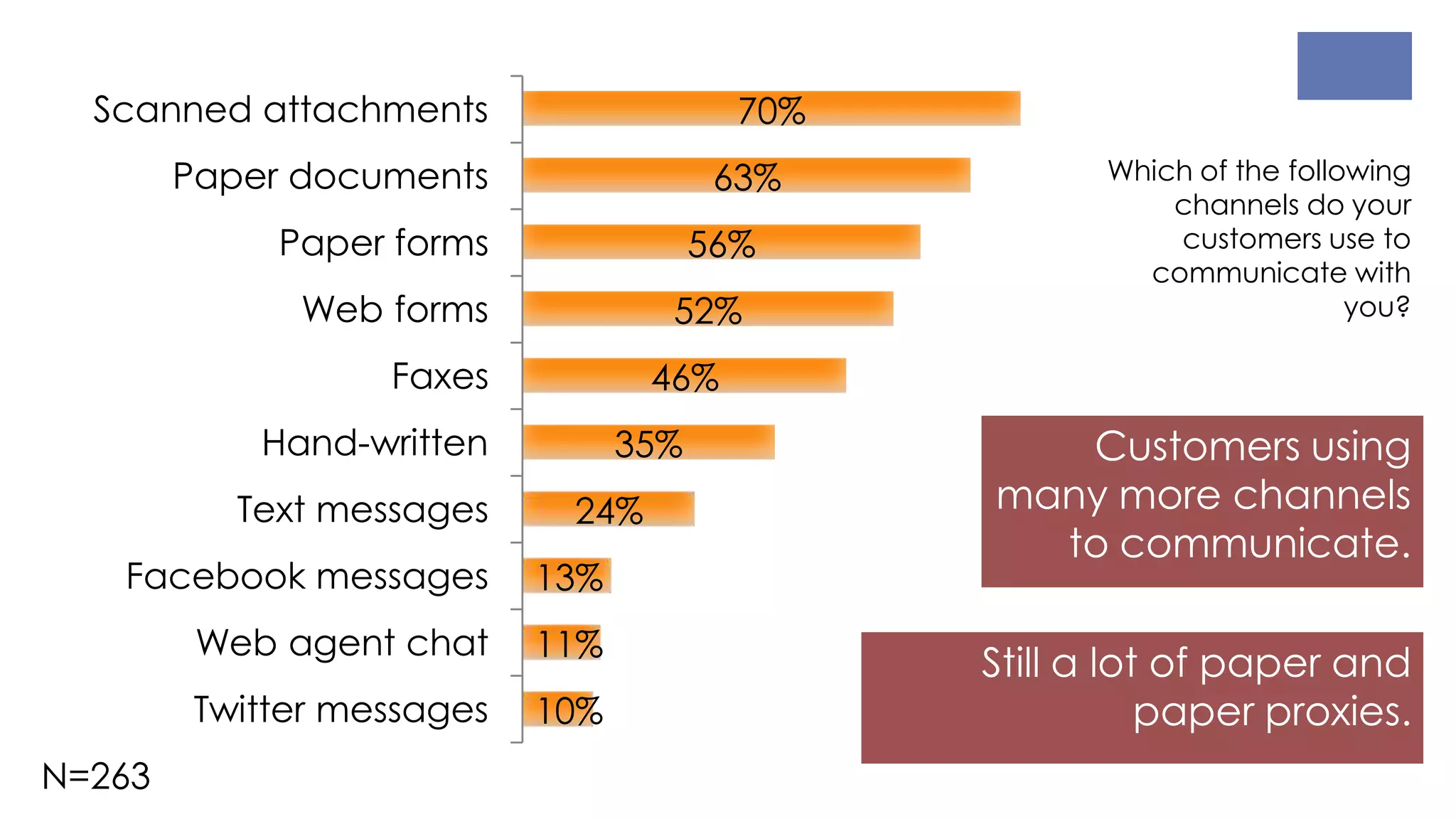
Customers using
many more channels
to communicate.
Still a lot of paper and
paper proxies.10%
11%
13%
24%
35%
46%
52%
56%
63%
70%
Twitter messages
Web agent chat
Facebook messages
Text messages
Hand-written
Faxes
Web forms
Paper forms
Paper documents
Scanned attachments
Which of the following
channels do your
customers use to
communicate with
you?
N=263
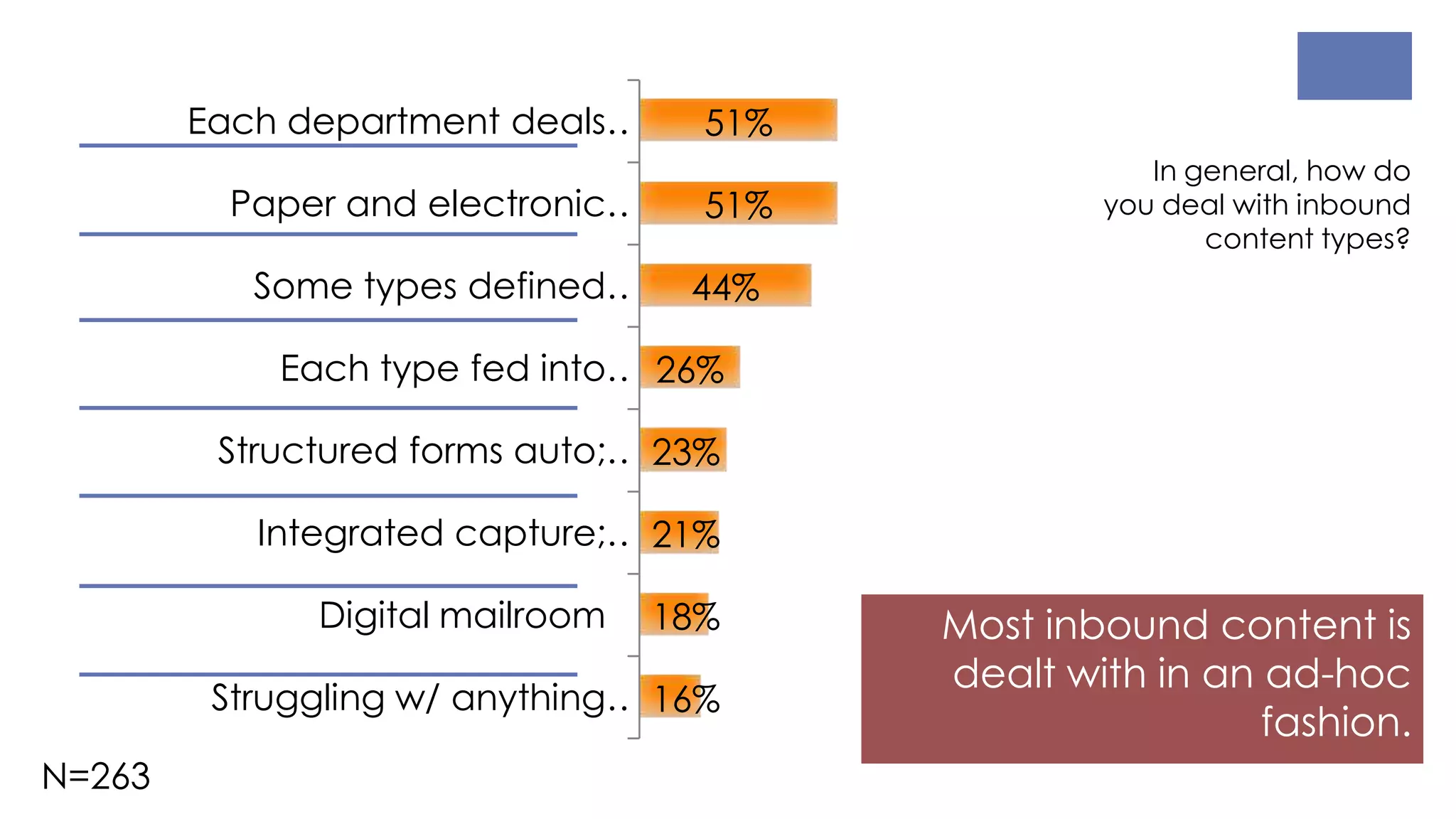
Most inbound content is
dealt with in an ad-hoc
fashion.
16%
18%
21%
23%
26%
44%
51%
51%
Struggling w/ anything…
Digital mailroom
Integrated capture;…
Structured forms auto;…
Each type fed into…
Some types defined…
Paper and electronic…
Each department deals…
In general, how do
you deal with inbound
content types?
N=263
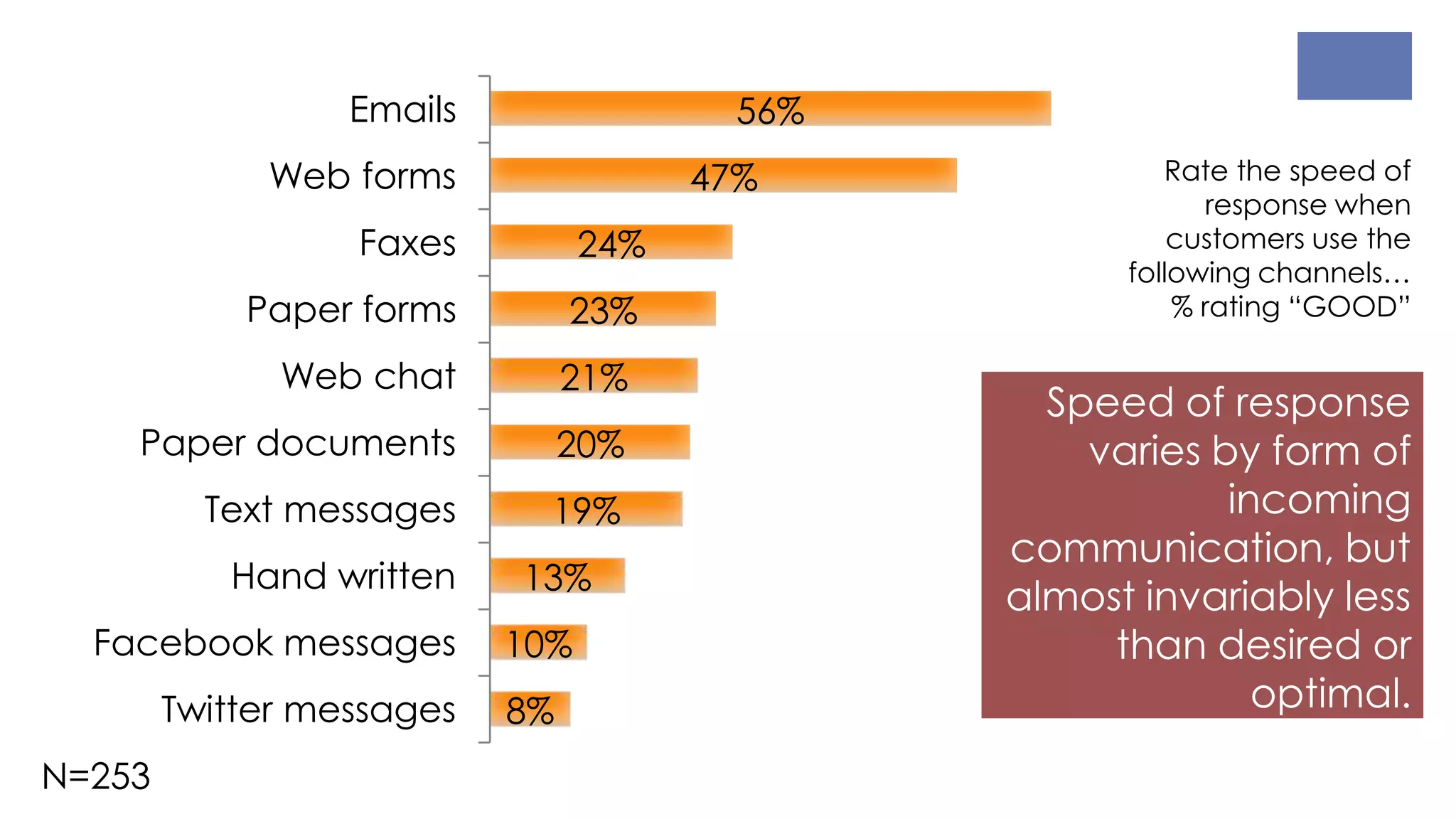
Speed of response
varies by form of
incoming
communication, but
almost invariably less
than desired or
optimal.8%
10%
13%
19%
20%
21%
23%
24%
47%
56%
Twitter messages
Facebook messages
Hand written
Text messages
Paper documents
Web chat
Paper forms
Faxes
Web forms
Emails
Rate the speed of
response when
customers use the
following channels…
% rating “GOOD”
N=253
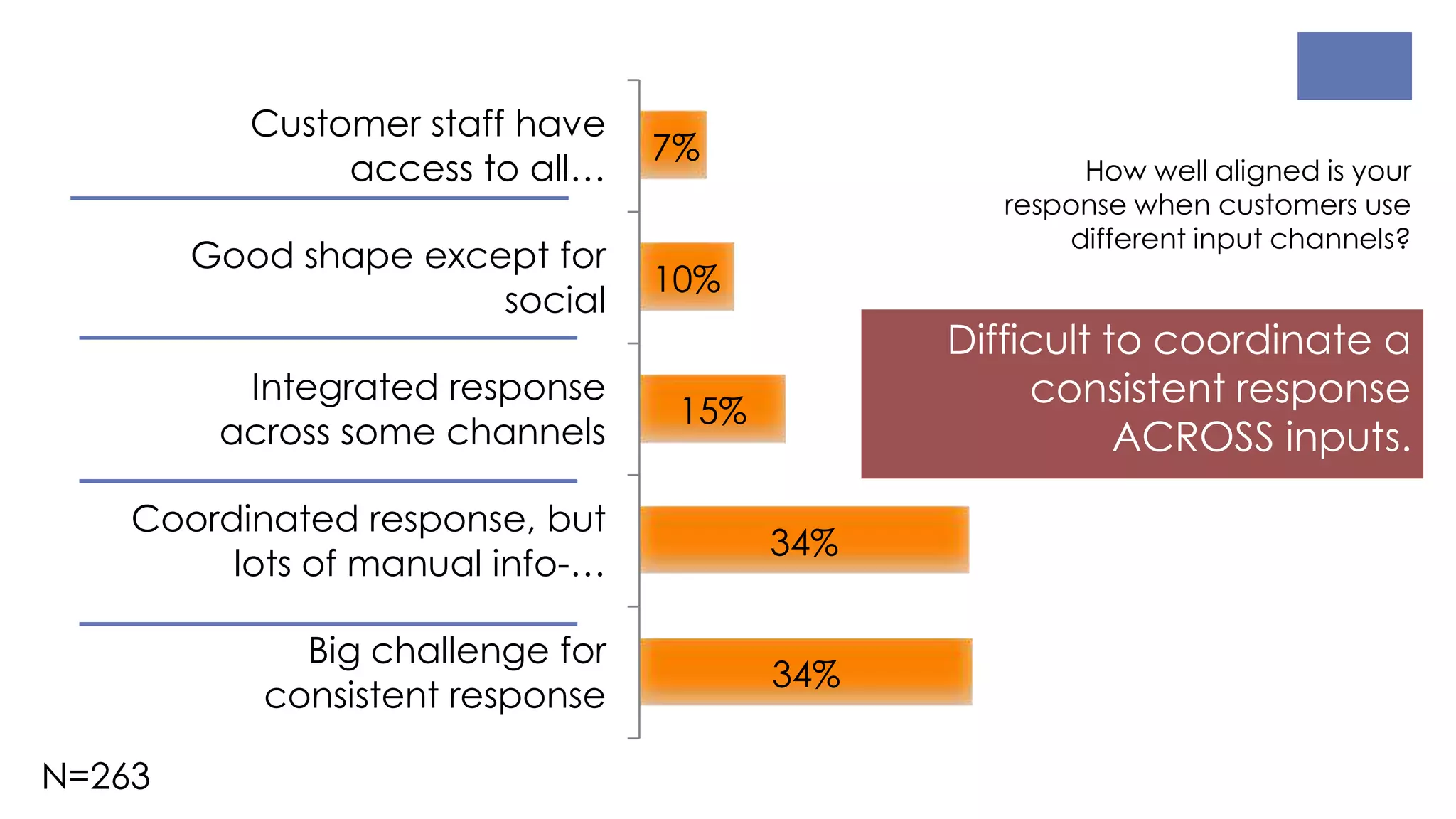
Difficult to coordinate a
consistent response
ACROSS inputs.
34%
34%
15%
10%
7%
Big challenge for
consistent response
Coordinated response, but
lots of manual info-…
Integrated response
across some channels
Good shape except for
social
Customer staff have
access to all… How well aligned is your
response when customers use
different input channels?
N=263
The context
has
changed.
Engagement
BEGINS at 1st
touch.
Engagement
doesn’t END
at 1st touch.
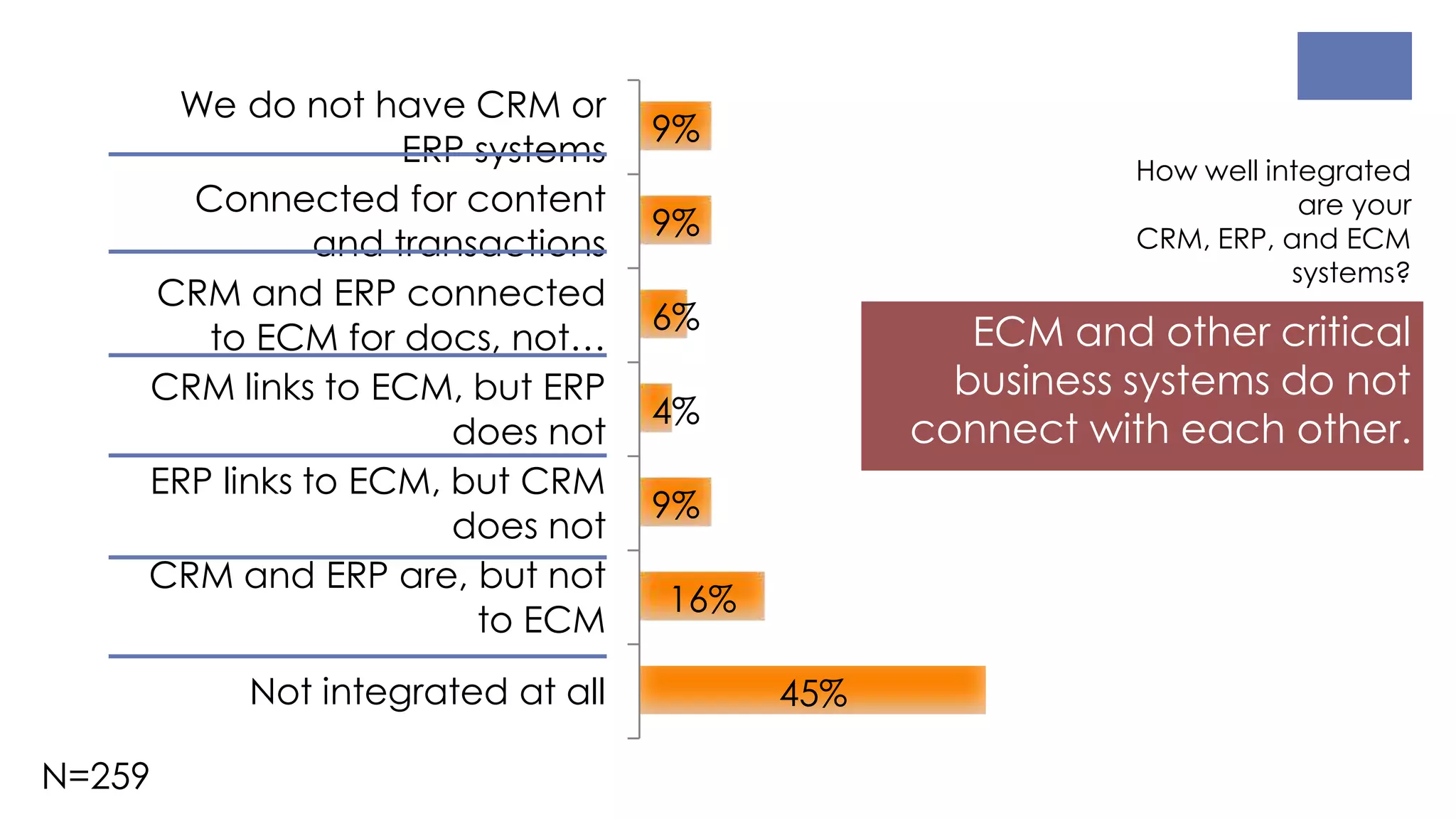
ECM and other critical
business systems do not
connect with each other.
45%
16%
9%
4%
6%
9%
9%
Not integrated at all
CRM and ERP are, but not
to ECM
ERP links to ECM, but CRM
does not
CRM links to ECM, but ERP
does not
CRM and ERP connected
to ECM for docs, not…
Connected for content
and transactions
We do not have CRM or
ERP systems
How well integrated
are your
CRM, ERP, and ECM
systems?
N=259
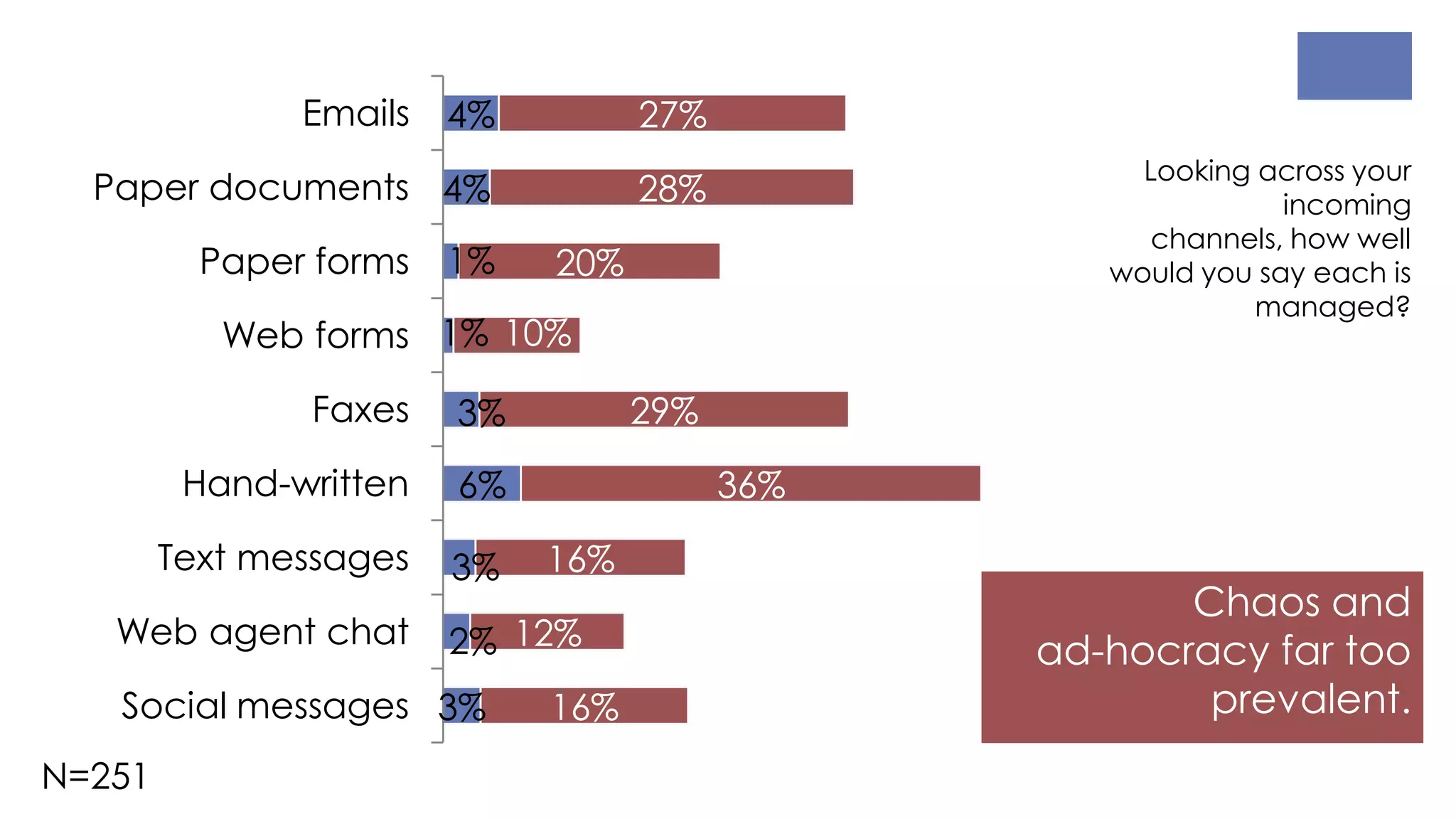
Chaos and
ad-hocracy far too
prevalent.3%
2%
3%
6%
3%
1%
1%
4%
4%
16%
12%
16%
36%
29%
10%
20%
28%
27%
Social messages
Web agent chat
Text messages
Hand-written
Faxes
Web forms
Paper forms
Paper documents
Emails
Looking across your
incoming
channels, how well
would you say each is
managed?
N=251
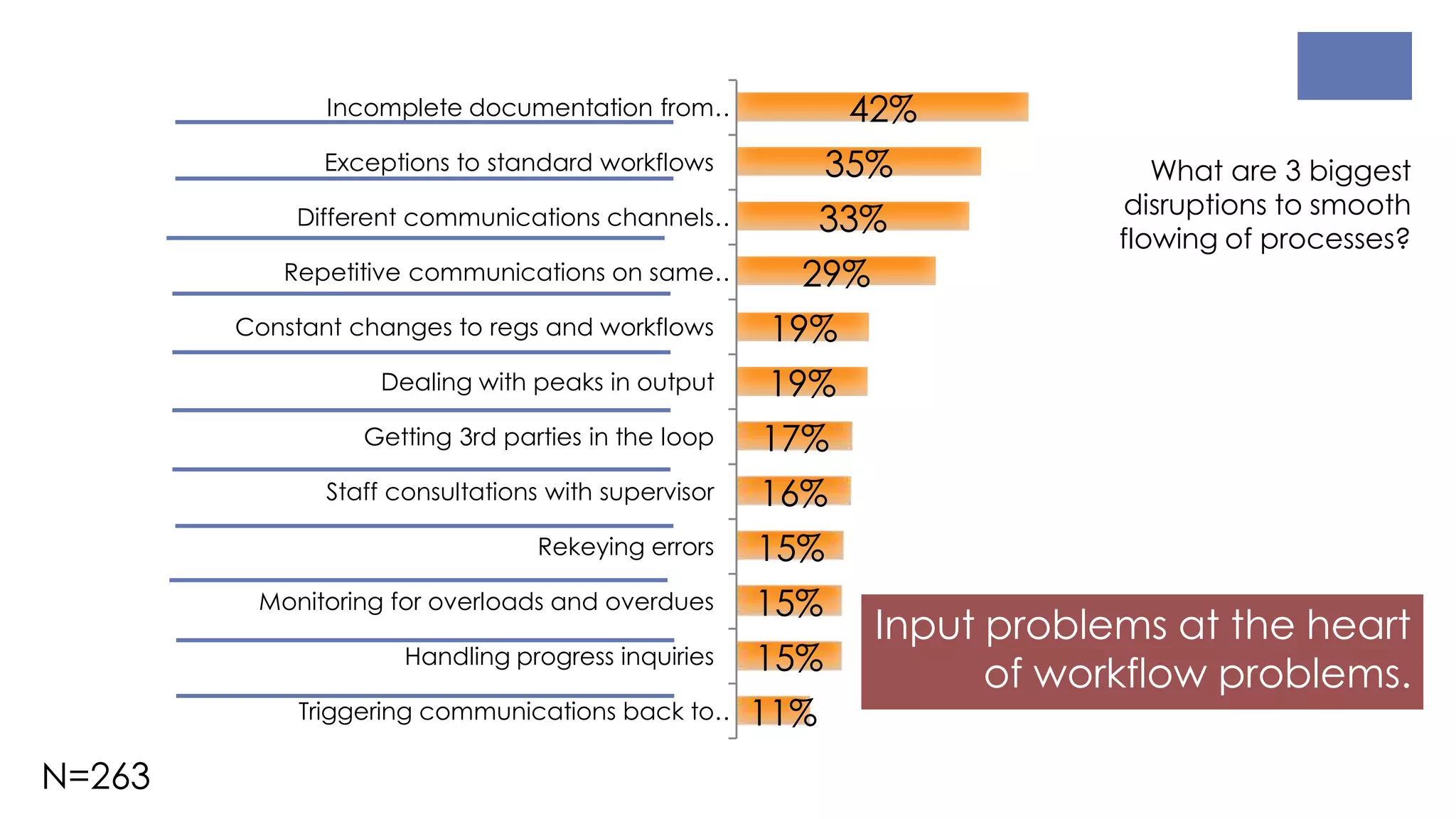
Input problems at the heart
of workflow problems.
11%
15%
15%
15%
16%
17%
19%
19%
29%
33%
35%
42%
Triggering communications back to…
Handling progress inquiries
Monitoring for overloads and overdues
Rekeying errors
Staff consultations with supervisor
Getting 3rd parties in the loop
Dealing with peaks in output
Constant changes to regs and workflows
Repetitive communications on same…
Different communications channels…
Exceptions to standard workflows
Incomplete documentation from…
What are 3 biggest
disruptions to smooth
flowing of processes?
N=263
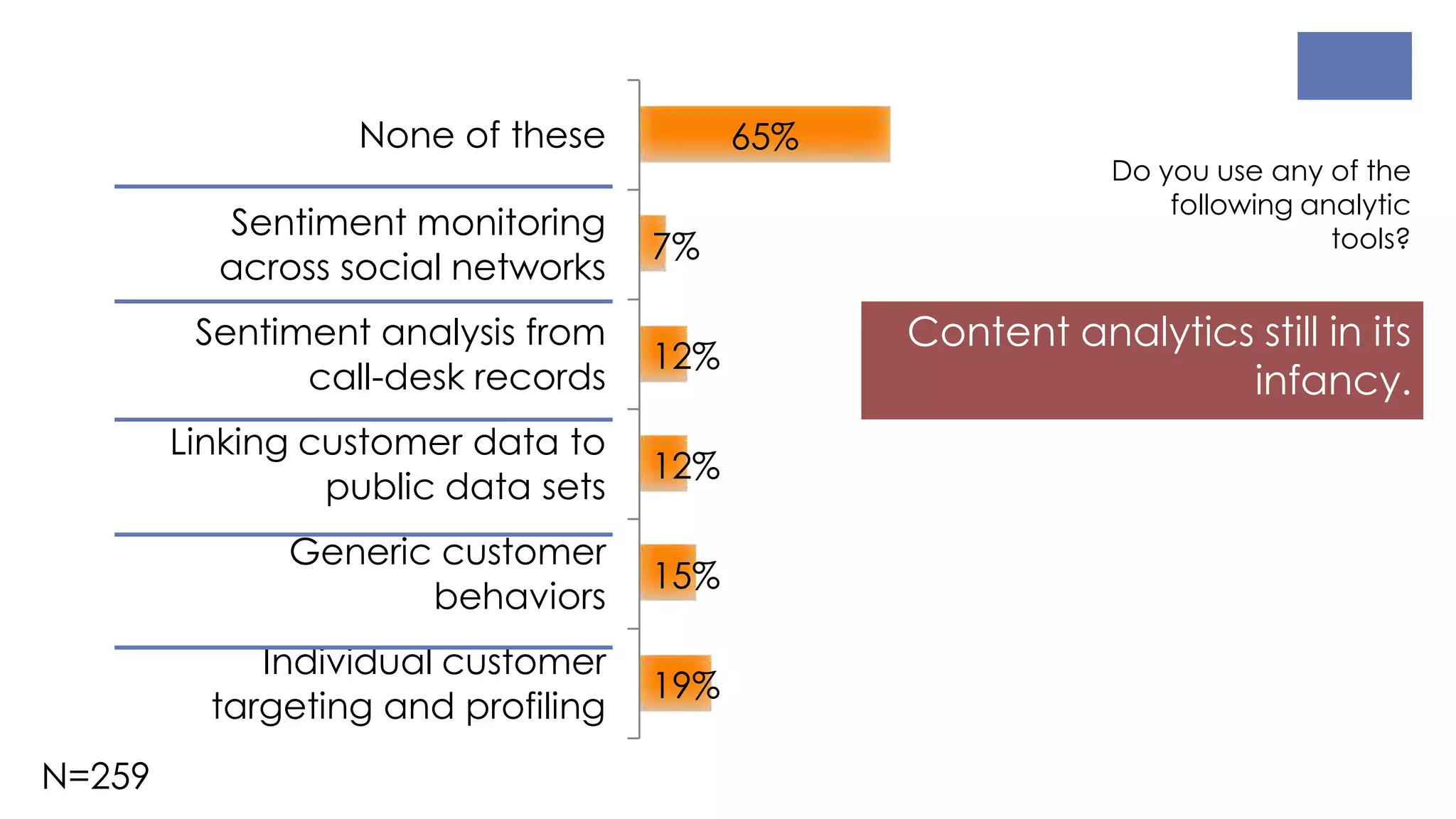
Content analytics still in its
infancy.
19%
15%
12%
12%
7%
65%
Individual customer
targeting and profiling
Generic customer
behaviors
Linking customer data to
public data sets
Sentiment analysis from
call-desk records
Sentiment monitoring
across social networks
None of these
Do you use any of the
following analytic
tools?
N=259
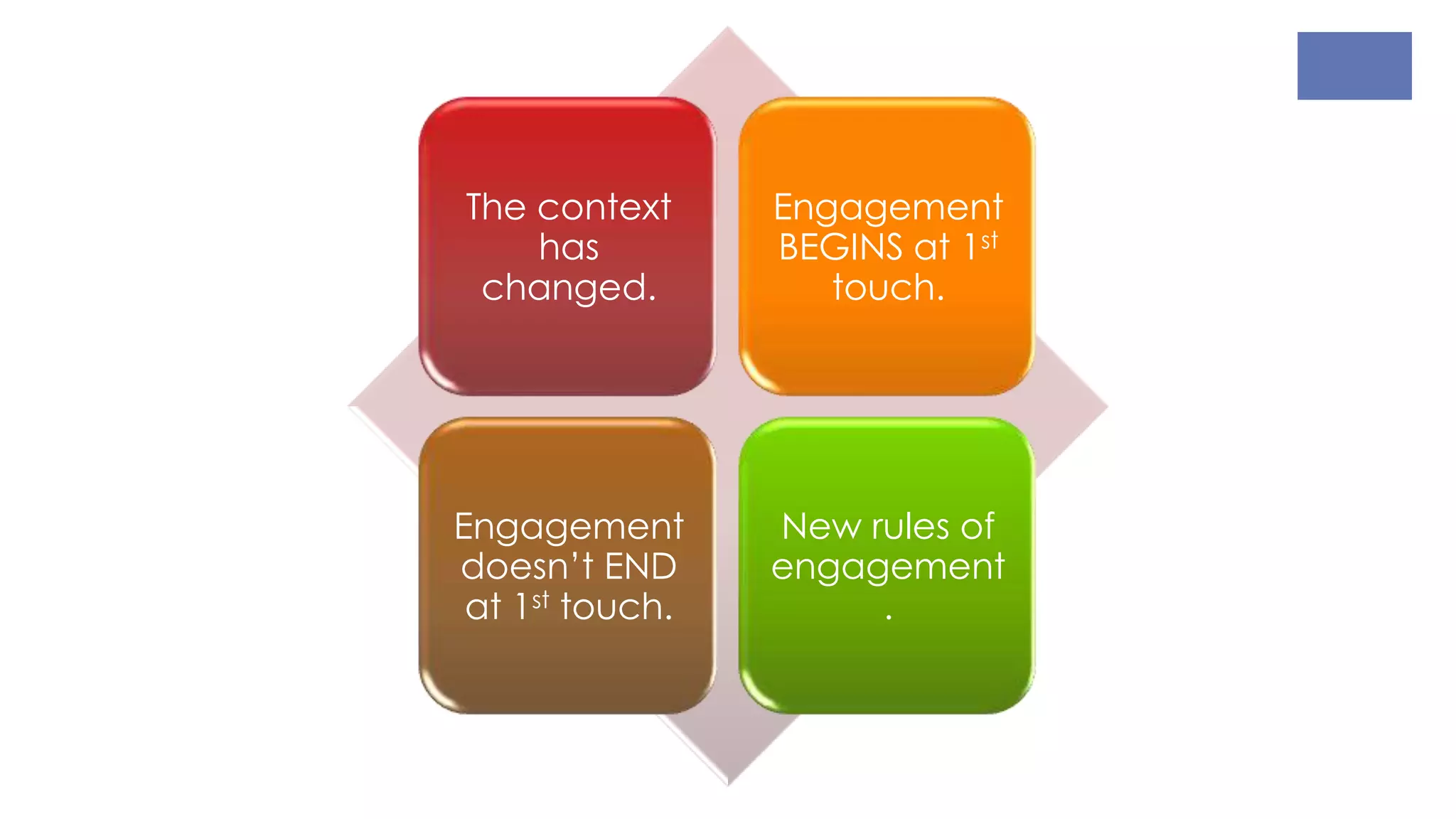
The context
has
changed.
Engagement
BEGINS at 1st
touch.
Engagement
doesn’t END
at 1st touch.
New rules of
engagement
.
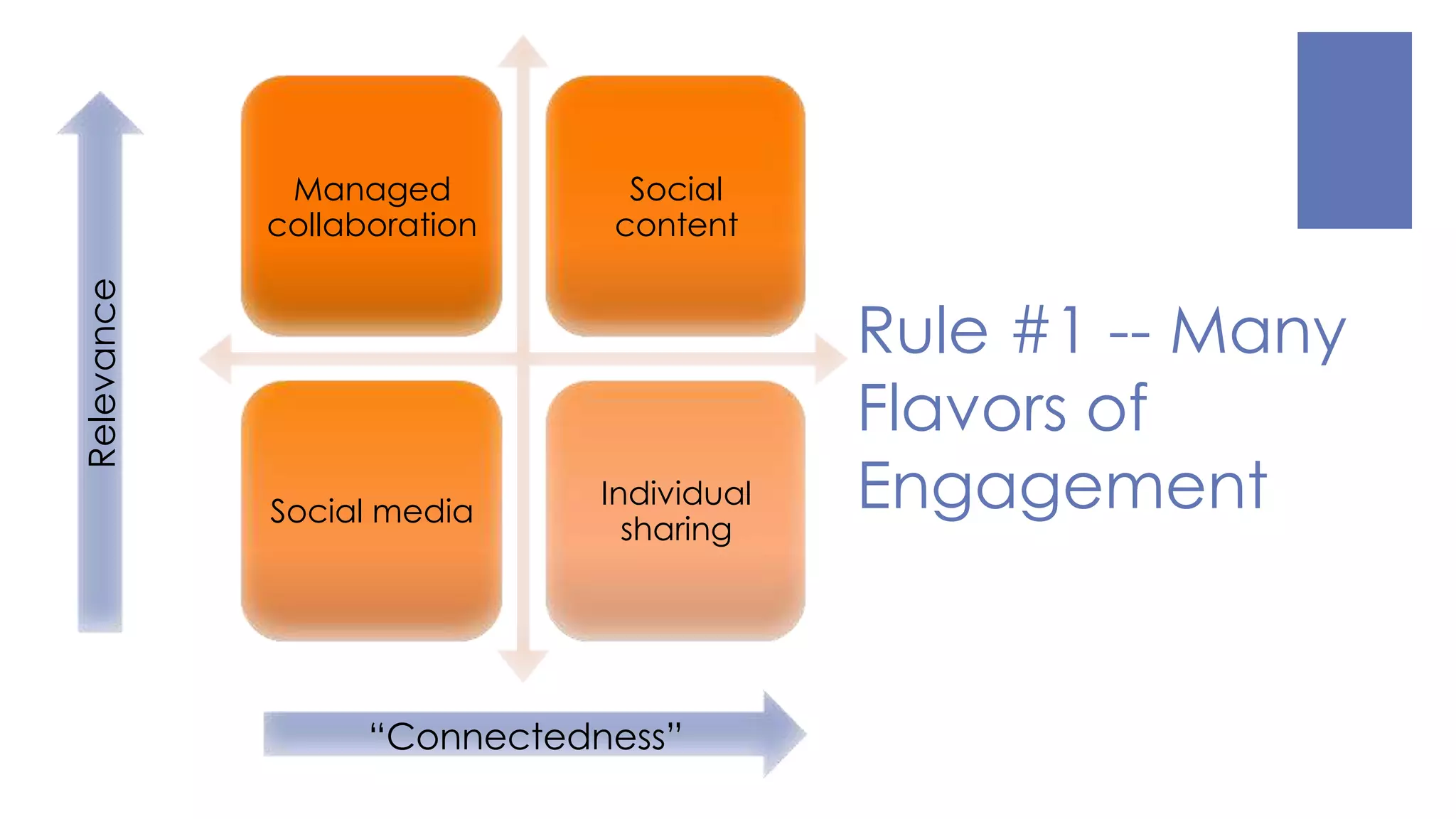
Managed
collaboration
Social
content
Social media
Individual
sharing
“Connectedness”
Relevance
Rule #1 -- Many
Flavors of
Engagement
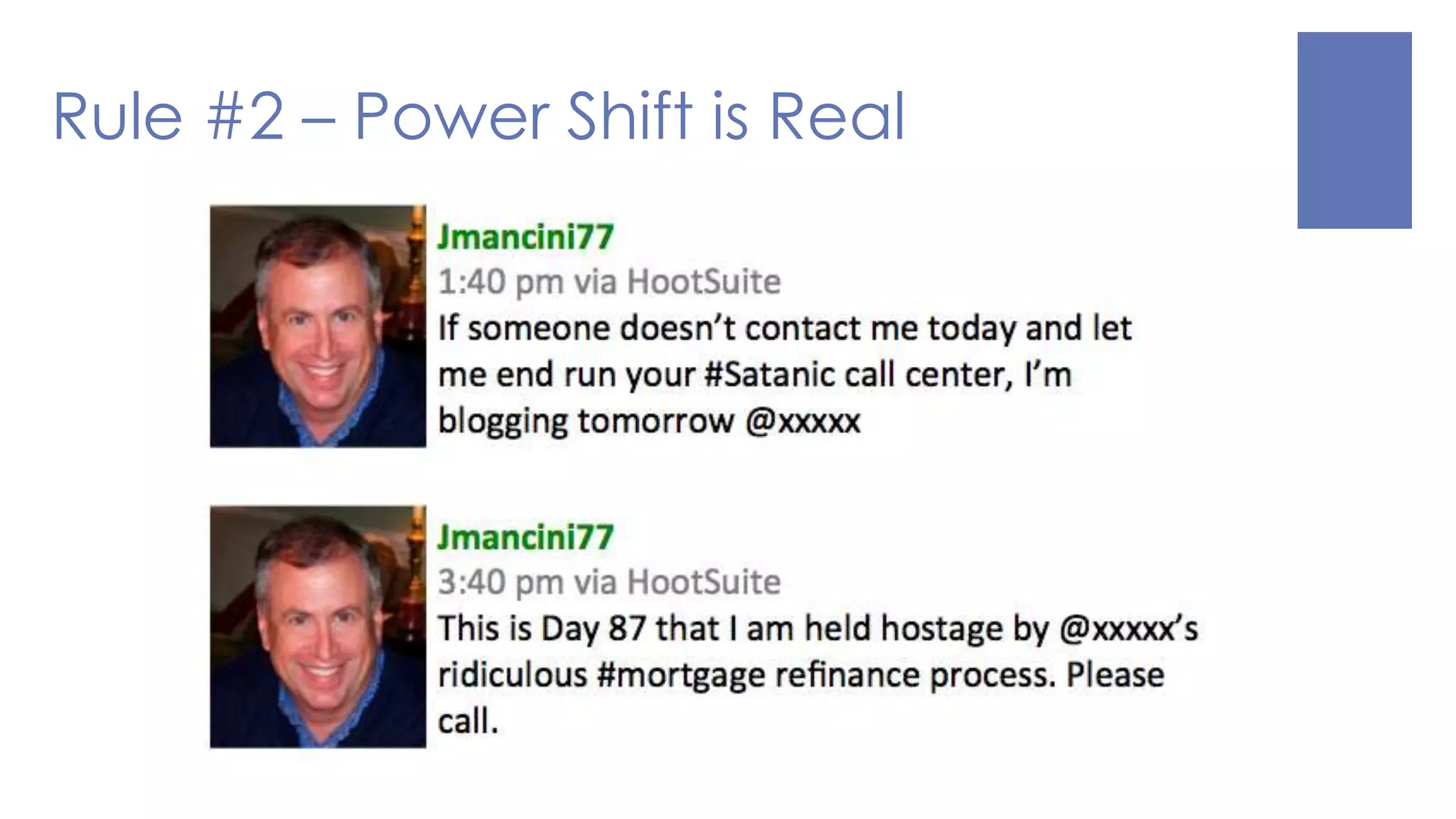
Rule #2 – Power Shift is Real
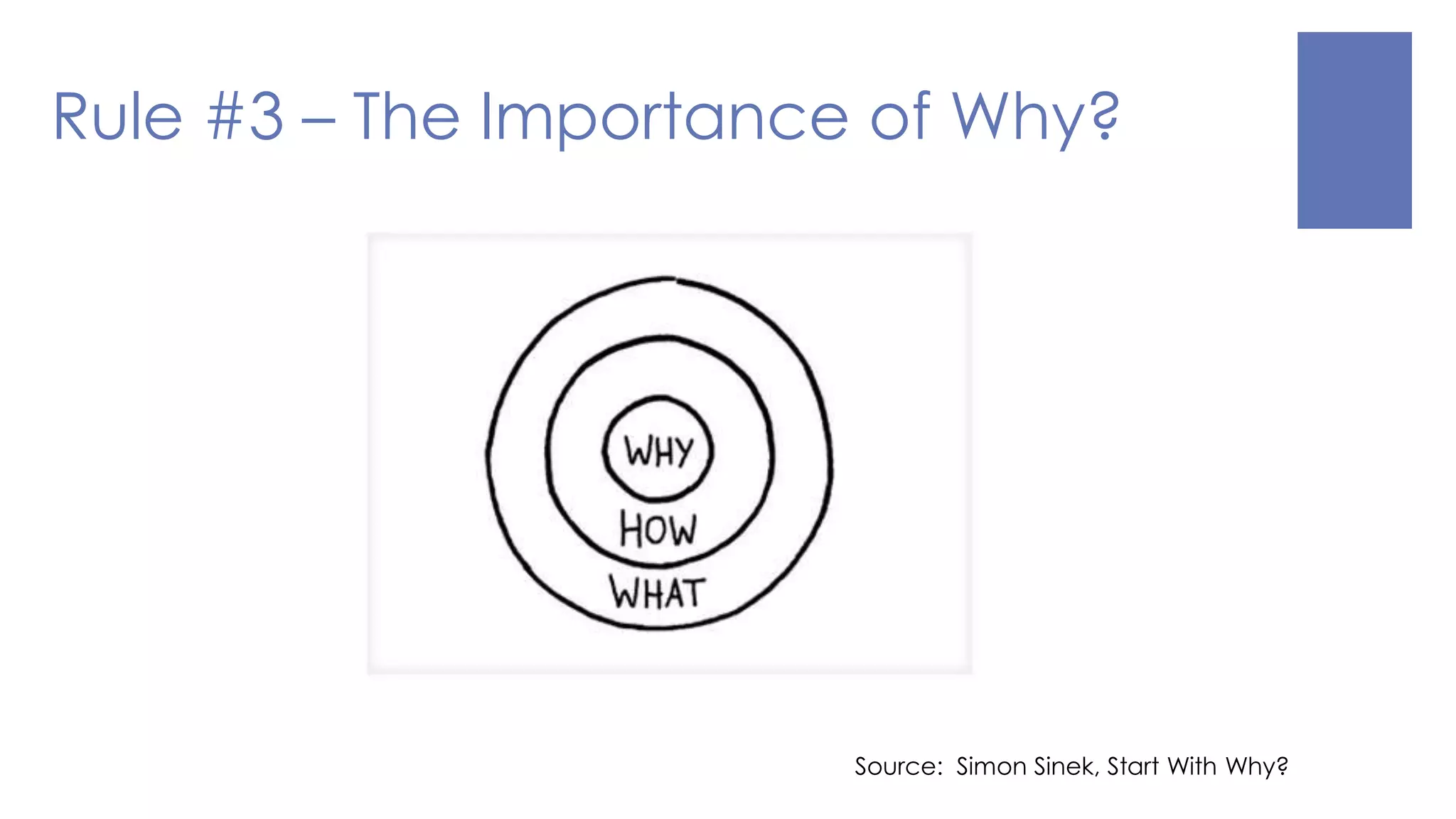
Rule #3 – The Importance of Why?
Source: Simon Sinek, Start With Why?
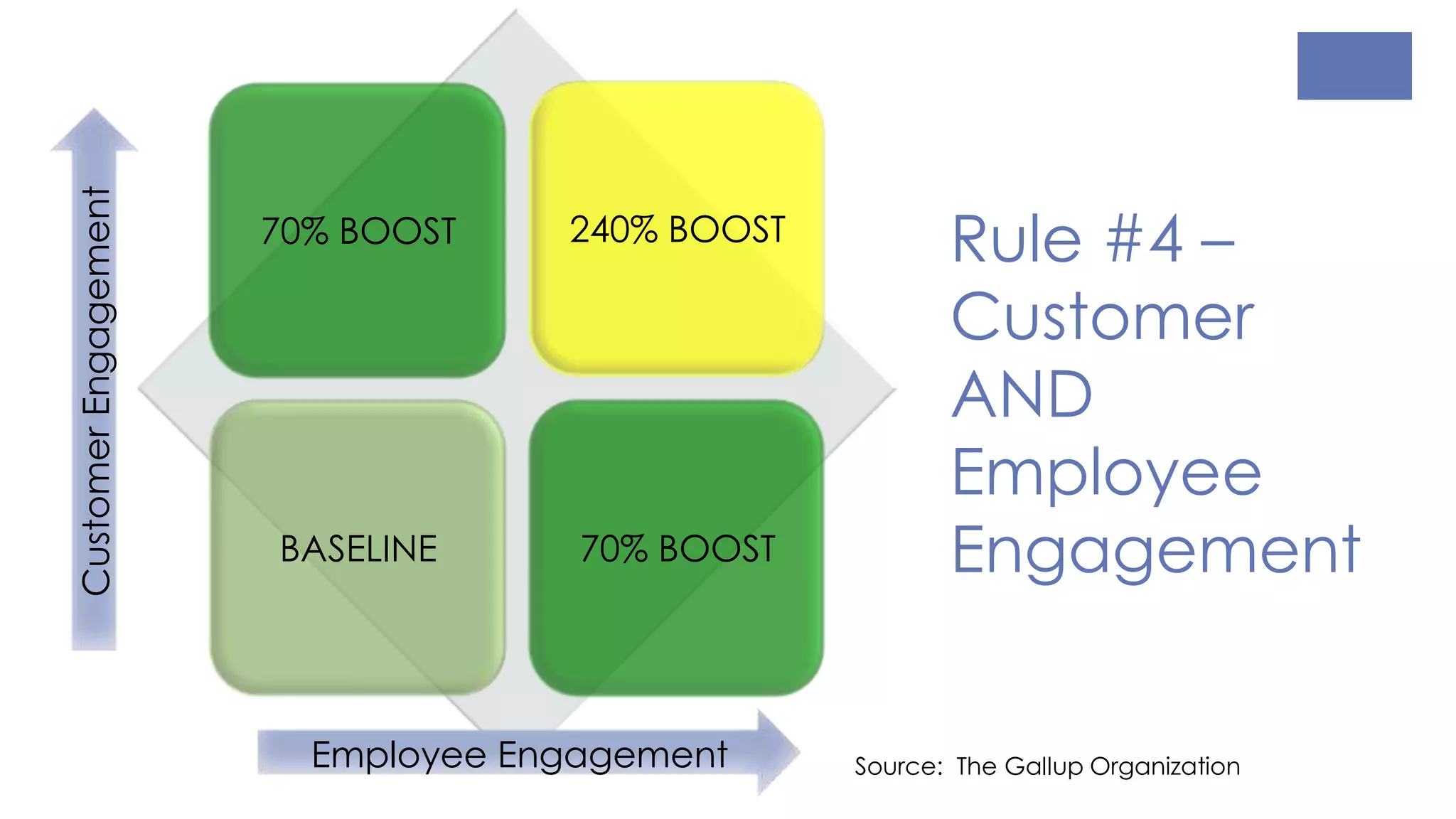
70% BOOST 240% BOOST
BASELINE 70% BOOST
Employee Engagement
CustomerEngagement
Rule #4 –
Customer
AND
Employee
Engagement
Source: The Gallup Organization
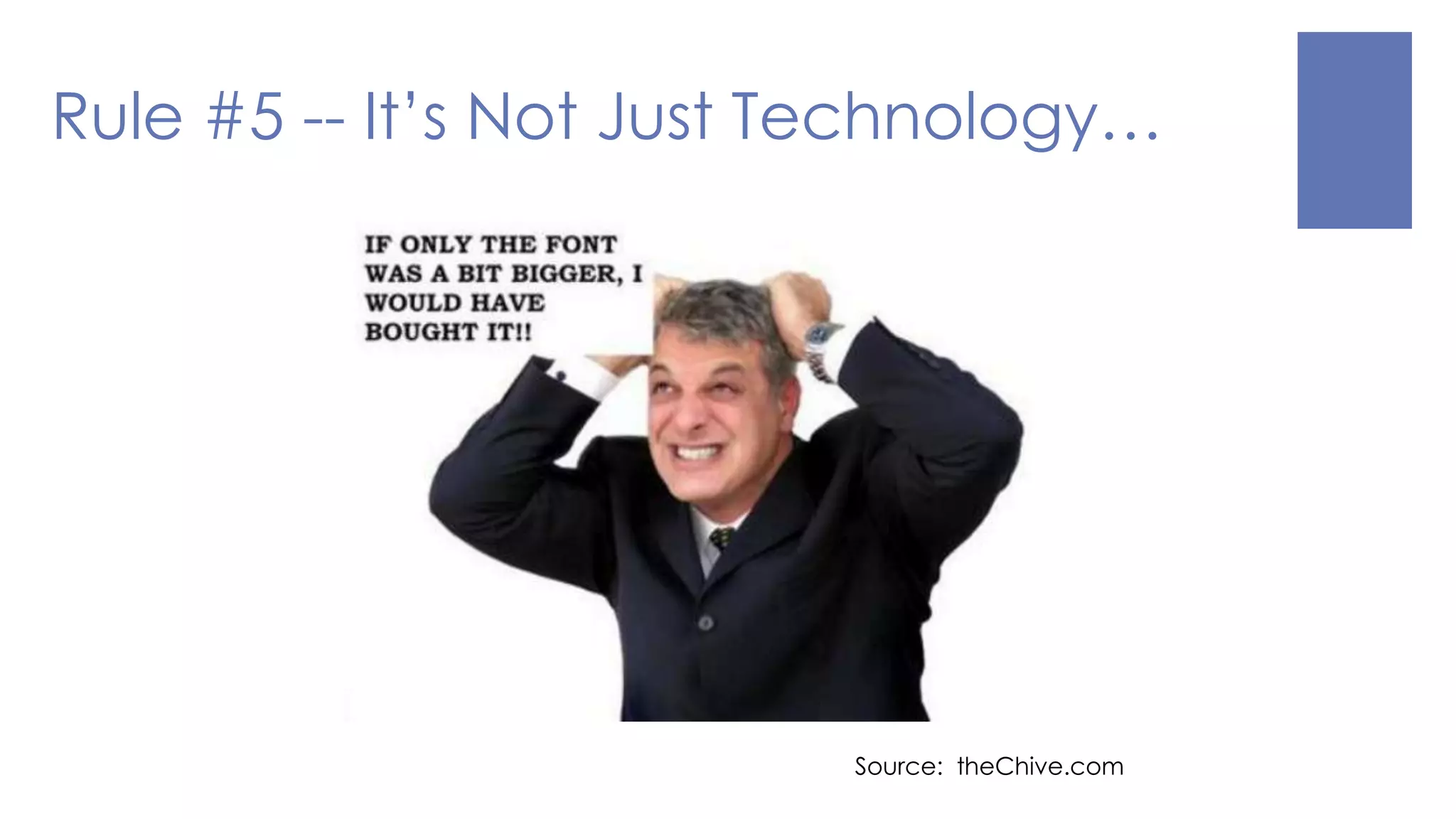
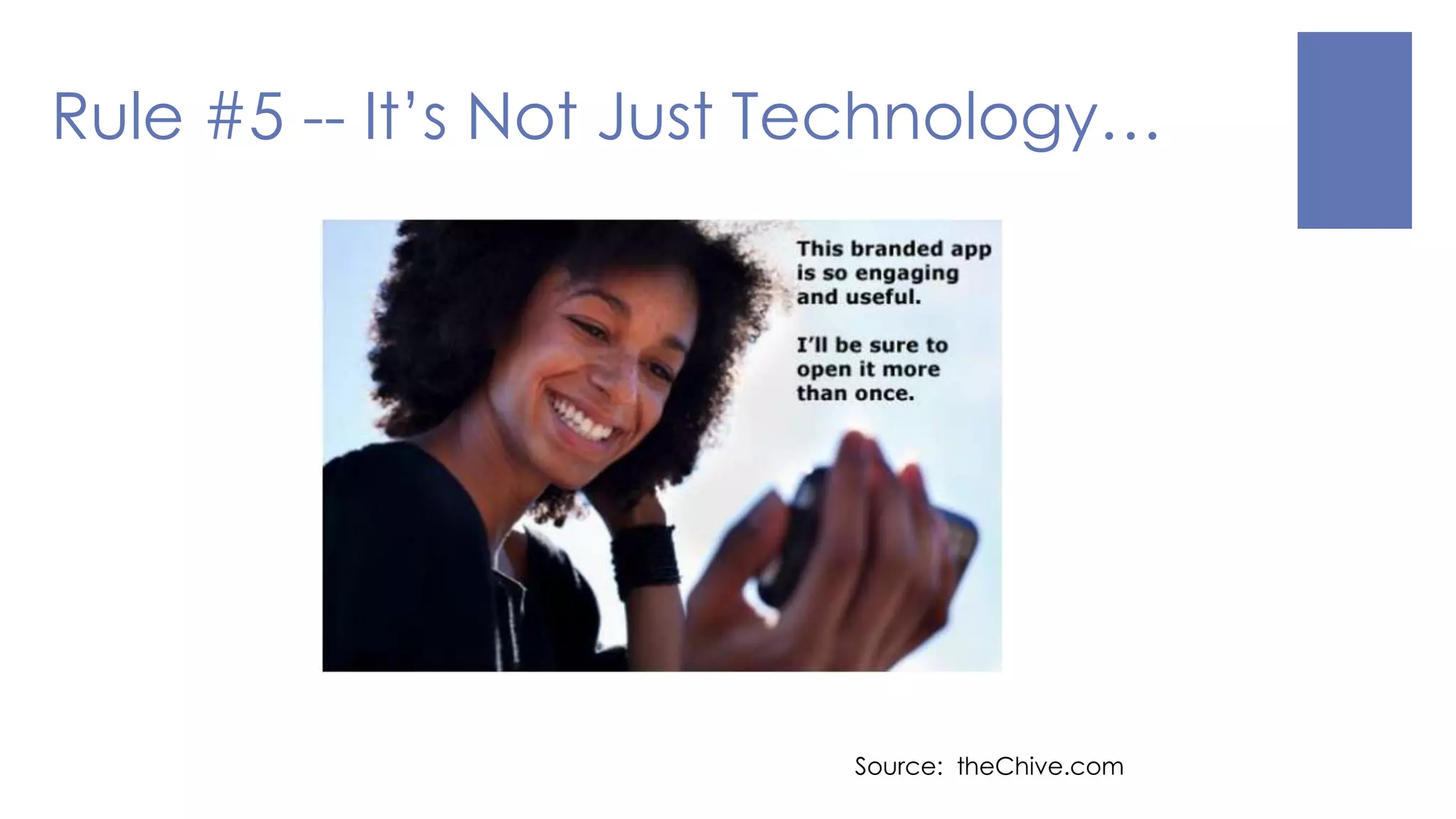
Rule #5 -- It’s Not Just Technology…
Source: theChive.com
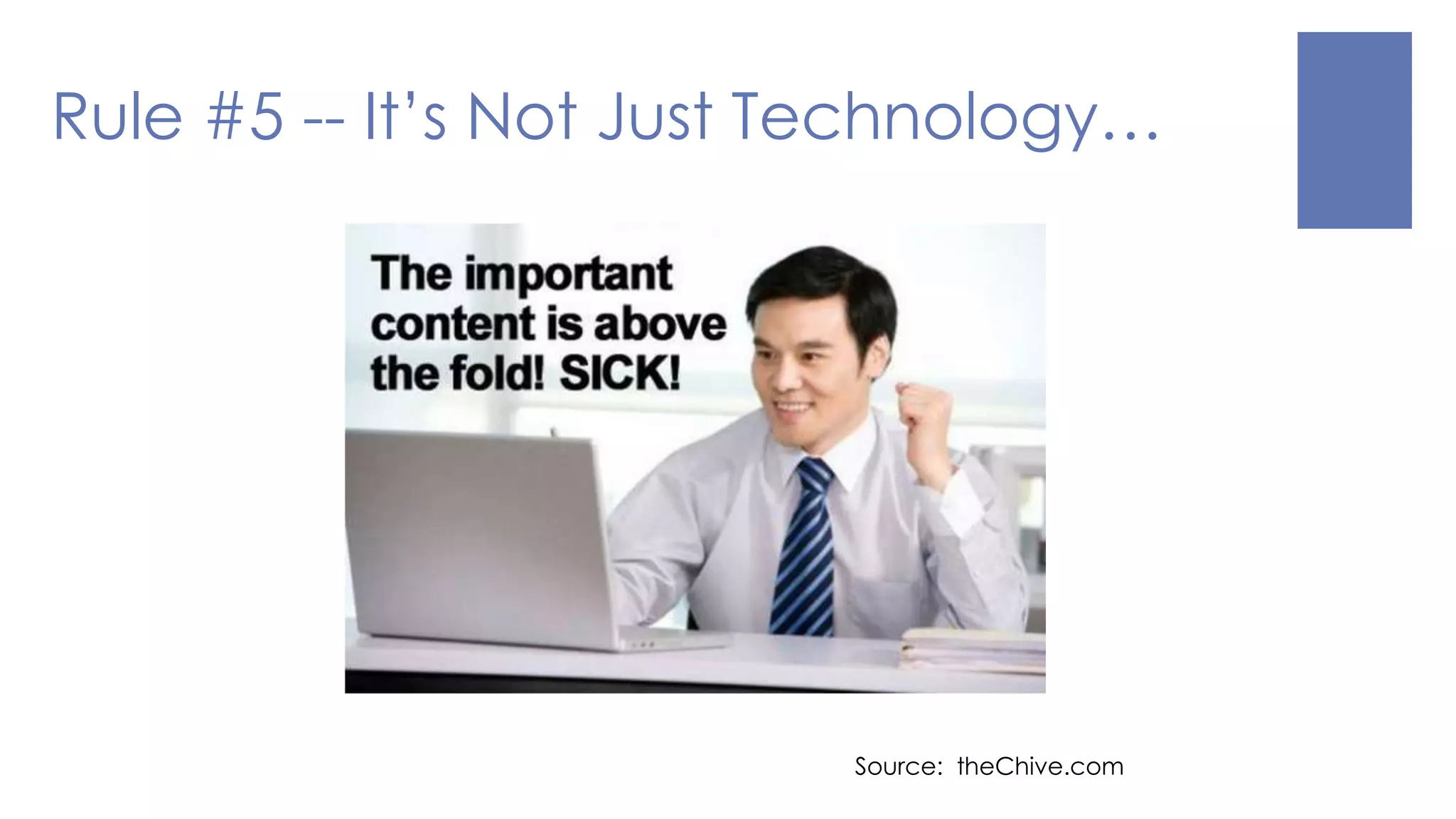
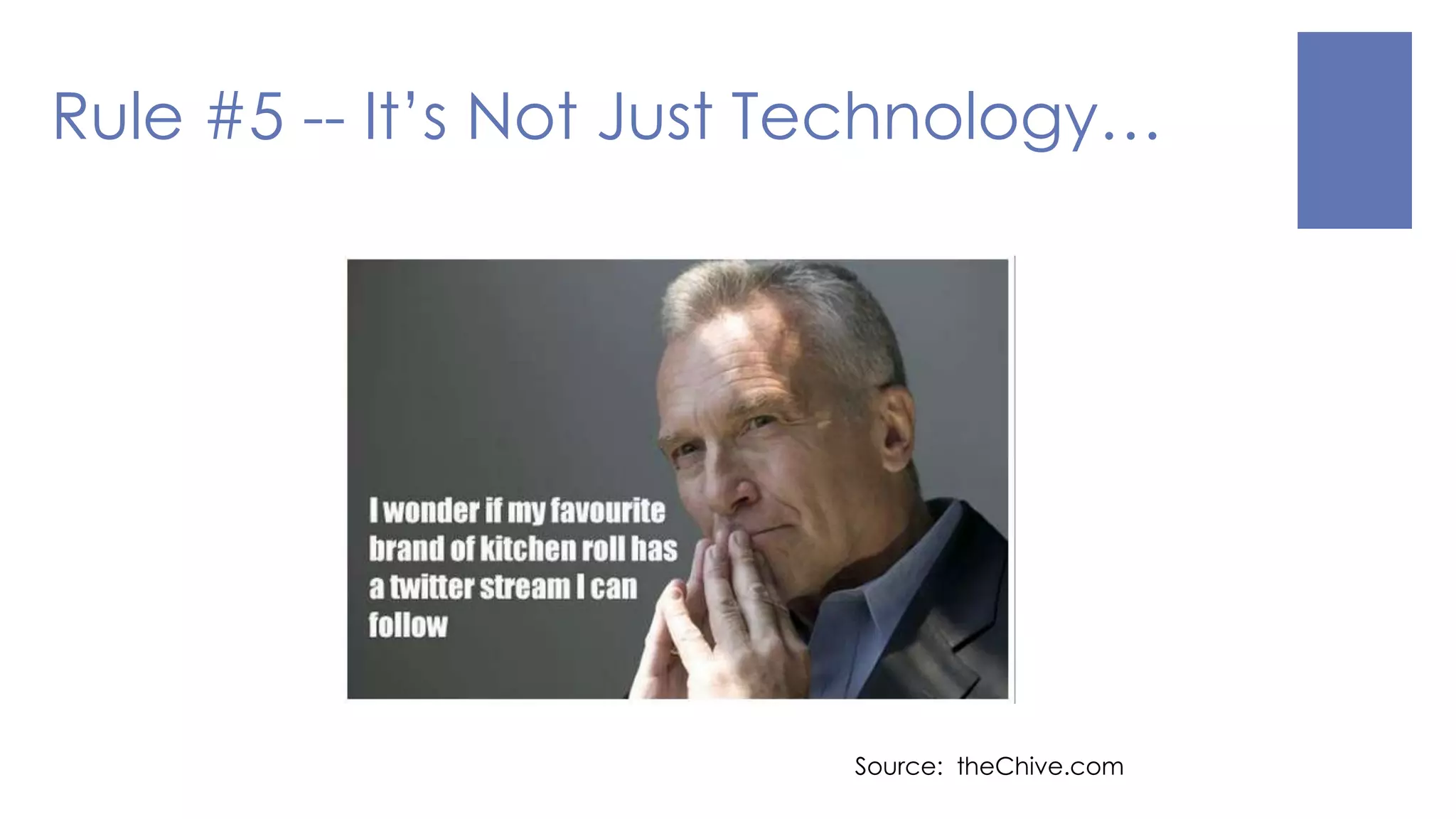
Rule #5 -- It’s Not Just Technology…
Source: theChive.com
Rule #5 -- It’s Not Just Technology…
Source: theChive.com
Rule #5 -- It’s Not Just Technology…
Free copy, AIIM.org/research
Thank you!
johnmancini@aiim.org
@jmancini77
AIIM provides public and private training = AIIM.org/training
AIIM provides research & benchmarking = AIIM.org/research
AIIM provides on-line and in-person events = AIIM.org/events
DigitalLandfill.org and @jmancini77
johnmancini@aiim.org

Intelligent information: New Rules for Managing the Customer Experience

  • 1.
    Intelligent Information Management –Improving the Customer Experience  John Mancini, President, AIIM
  • 2.
    AIIM provides publicand private training = AIIM.org/training AIIM provides research & benchmarking = AIIM.org/research AIIM provides on-line and in-person events = AIIM.org/events DigitalLandfill.org and @jmancini77 johnmancini@aiim.org
  • 3.
  • 4.
  • 5.
    Source: Geoffrey Moore,Escape Velocity
  • 6.
    Source: Mary Meeker,Kleiner Perkins
  • 7.
    Is/Current Will Be/Future ITfocused on cost reduction. IT focused on value creation. Senior Execs tech oblivious. Senior Execs tech aware. Complexity guarantees security. Simplicity guarantees security. Mobile & social differentiators. Mobile & social are features. Systems bought with CAPEX. Systems bought with OPEX. Pure tech skills = value. Tech skills in context = value. A Buyer Migration is in Motion…
  • 8.
  • 9.
    Customers using many morechannels to communicate. Still a lot of paper and paper proxies.10% 11% 13% 24% 35% 46% 52% 56% 63% 70% Twitter messages Web agent chat Facebook messages Text messages Hand-written Faxes Web forms Paper forms Paper documents Scanned attachments Which of the following channels do your customers use to communicate with you? N=263
  • 10.
    Most inbound contentis dealt with in an ad-hoc fashion. 16% 18% 21% 23% 26% 44% 51% 51% Struggling w/ anything… Digital mailroom Integrated capture;… Structured forms auto;… Each type fed into… Some types defined… Paper and electronic… Each department deals… In general, how do you deal with inbound content types? N=263
  • 11.
    Speed of response variesby form of incoming communication, but almost invariably less than desired or optimal.8% 10% 13% 19% 20% 21% 23% 24% 47% 56% Twitter messages Facebook messages Hand written Text messages Paper documents Web chat Paper forms Faxes Web forms Emails Rate the speed of response when customers use the following channels… % rating “GOOD” N=253
  • 12.
    Difficult to coordinatea consistent response ACROSS inputs. 34% 34% 15% 10% 7% Big challenge for consistent response Coordinated response, but lots of manual info-… Integrated response across some channels Good shape except for social Customer staff have access to all… How well aligned is your response when customers use different input channels? N=263
  • 13.
    The context has changed. Engagement BEGINS at1st touch. Engagement doesn’t END at 1st touch.
  • 14.
    ECM and othercritical business systems do not connect with each other. 45% 16% 9% 4% 6% 9% 9% Not integrated at all CRM and ERP are, but not to ECM ERP links to ECM, but CRM does not CRM links to ECM, but ERP does not CRM and ERP connected to ECM for docs, not… Connected for content and transactions We do not have CRM or ERP systems How well integrated are your CRM, ERP, and ECM systems? N=259
  • 15.
    Chaos and ad-hocracy fartoo prevalent.3% 2% 3% 6% 3% 1% 1% 4% 4% 16% 12% 16% 36% 29% 10% 20% 28% 27% Social messages Web agent chat Text messages Hand-written Faxes Web forms Paper forms Paper documents Emails Looking across your incoming channels, how well would you say each is managed? N=251
  • 16.
    Input problems atthe heart of workflow problems. 11% 15% 15% 15% 16% 17% 19% 19% 29% 33% 35% 42% Triggering communications back to… Handling progress inquiries Monitoring for overloads and overdues Rekeying errors Staff consultations with supervisor Getting 3rd parties in the loop Dealing with peaks in output Constant changes to regs and workflows Repetitive communications on same… Different communications channels… Exceptions to standard workflows Incomplete documentation from… What are 3 biggest disruptions to smooth flowing of processes? N=263
  • 17.
    Content analytics stillin its infancy. 19% 15% 12% 12% 7% 65% Individual customer targeting and profiling Generic customer behaviors Linking customer data to public data sets Sentiment analysis from call-desk records Sentiment monitoring across social networks None of these Do you use any of the following analytic tools? N=259
  • 18.
    The context has changed. Engagement BEGINS at1st touch. Engagement doesn’t END at 1st touch. New rules of engagement .
  • 19.
  • 20.
    Rule #2 –Power Shift is Real
  • 21.
    Rule #3 –The Importance of Why? Source: Simon Sinek, Start With Why?
  • 22.
    70% BOOST 240%BOOST BASELINE 70% BOOST Employee Engagement CustomerEngagement Rule #4 – Customer AND Employee Engagement Source: The Gallup Organization
  • 23.
    Rule #5 --It’s Not Just Technology… Source: theChive.com
  • 24.
    Source: theChive.com Rule #5-- It’s Not Just Technology…
  • 25.
    Source: theChive.com Rule #5-- It’s Not Just Technology…
  • 26.
    Source: theChive.com Rule #5-- It’s Not Just Technology…
  • 27.
    Free copy, AIIM.org/research Thankyou! johnmancini@aiim.org @jmancini77
  • 28.
    AIIM provides publicand private training = AIIM.org/training AIIM provides research & benchmarking = AIIM.org/research AIIM provides on-line and in-person events = AIIM.org/events DigitalLandfill.org and @jmancini77 johnmancini@aiim.org