SHARONTREESA ANTONY
ASSISTANT PROFESSOR
GOVT.COLLEGEOF NURSING
ALAPPUZHA
 A decentralized system of disease
surveillance for timely and effective public
health action with a focus on functional
integration of surveillance components of
various vertical programmes.
 This project aims at improving the efficiency
of disease surveillance for use in health
planning, management and evaluating
control strategies.
 To assess magnitude of problem
 To monitor implementation of health
programmes.
 To understand local epidemiology of the
problem
 To assess changes in the trend/monitor the
trend of magnitude/distribution of the problem.
 To identify specific population group at risk
 To enable predictions about patterns of diseases
occurrence
 To assess impact of the programme
interventions for control of the problem
• Decentralized Surveillance System.
•To identify risk factors for CD/NCD.
•Timely Initiation of Public Health action.
• Improvement of efficiency of Surveillance
activities
• Dissemination of relevant information to
HealthAdministration, community, other
stake holders about disease risk factors,
monitoring & evaluation.
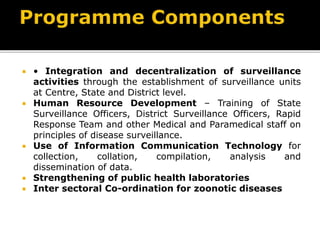
 • Integration and decentralization of surveillance
activities through the establishment of surveillance units
at Centre, State and District level.
 Human Resource Development – Training of State
Surveillance Officers, District Surveillance Officers, Rapid
Response Team and other Medical and Paramedical staff on
principles of disease surveillance.
 Use of Information Communication Technology for
collection, collation, compilation, analysis and
dissemination of data.
 Strengthening of public health laboratories
 Inter sectoral Co-ordination for zoonotic diseases
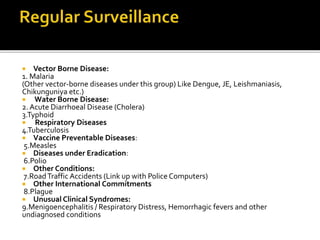
 Vector Borne Disease:
1. Malaria
(Other vector-borne diseases under this group) Like Dengue, JE, Leishmaniasis,
Chikunguniya etc.)
 Water Borne Disease:
2. Acute Diarrhoeal Disease (Cholera)
3.Typhoid
 Respiratory Diseases
4.Tuberculosis
 Vaccine Preventable Diseases:
5.Measles
 Diseases under Eradication:
6.Polio
 Other Conditions:
7.RoadTraffic Accidents (Link up with Police Computers)
 Other International Commitments
8.Plague
 Unusual Clinical Syndromes:
9.Menigoencephalitis / Respiratory Distress, Hemorrhagic fevers and other
undiagnosed conditions
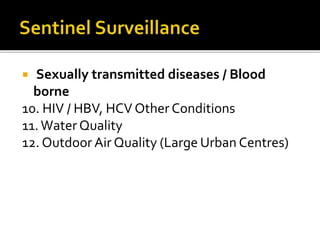
 Sexually transmitted diseases / Blood
borne
10. HIV / HBV, HCV Other Conditions
11.Water Quality
12. Outdoor Air Quality (Large Urban Centres)
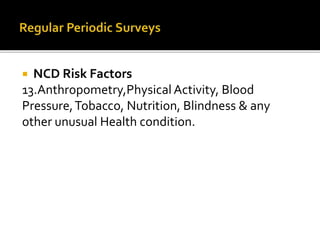
 NCD Risk Factors
13.Anthropometry,Physical Activity, Blood
Pressure,Tobacco, Nutrition, Blindness & any
other unusual Health condition.
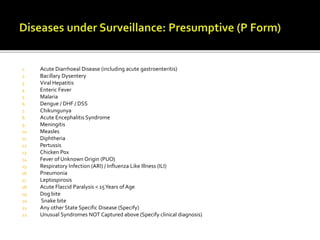
1. Acute Diarrhoeal Disease (including acute gastroenteritis)
2. Bacillary Dysentery
3. Viral Hepatitis
4. Enteric Fever
5. Malaria
6. Dengue / DHF / DSS
7. Chikungunya
8. Acute Encephalitis Syndrome
9. Meningitis
10. Measles
11. Diphtheria
12. Pertussis
13. Chicken Pox
14. Fever of Unknown Origin (PUO)
15. Respiratory Infection (ARI) / Influenza Like Illness (ILI)
16. Pneumonia
17. Leptospirosis
18. Acute Flaccid Paralysis < 15Years of Age
19. Dog bite
20. Snake bite
21. Any other State Specific Disease (Specify)
22. Unusual Syndromes NOT Captured above (Specify clinical diagnosis)
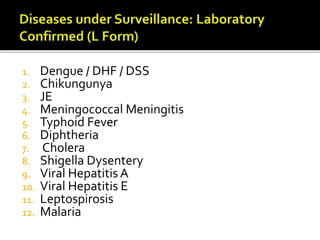
1. Dengue / DHF / DSS
2. Chikungunya
3. JE
4. Meningococcal Meningitis
5. Typhoid Fever
6. Diphtheria
7. Cholera
8. Shigella Dysentery
9. Viral Hepatitis A
10. Viral Hepatitis E
11. Leptospirosis
12. Malaria
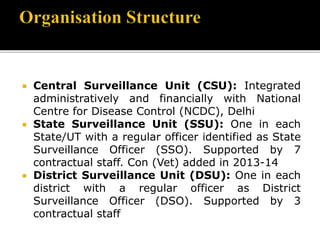
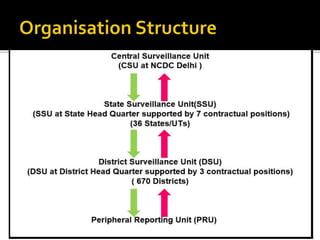
 Central Surveillance Unit (CSU): Integrated
administratively and financially with National
Centre for Disease Control (NCDC), Delhi
 State Surveillance Unit (SSU): One in each
State/UT with a regular officer identified as State
Surveillance Officer (SSO). Supported by 7
contractual staff. Con (Vet) added in 2013-14
 District Surveillance Unit (DSU): One in each
district with a regular officer as District
Surveillance Officer (DSO). Supported by 3
contractual staff
THANKYOU!!!

Integrated diseases surveillance programme

  • 1.
  • 2.
     A decentralizedsystem of disease surveillance for timely and effective public health action with a focus on functional integration of surveillance components of various vertical programmes.  This project aims at improving the efficiency of disease surveillance for use in health planning, management and evaluating control strategies.
  • 3.
     To assessmagnitude of problem  To monitor implementation of health programmes.  To understand local epidemiology of the problem  To assess changes in the trend/monitor the trend of magnitude/distribution of the problem.  To identify specific population group at risk  To enable predictions about patterns of diseases occurrence  To assess impact of the programme interventions for control of the problem
  • 4.
    • Decentralized SurveillanceSystem. •To identify risk factors for CD/NCD. •Timely Initiation of Public Health action. • Improvement of efficiency of Surveillance activities • Dissemination of relevant information to HealthAdministration, community, other stake holders about disease risk factors, monitoring & evaluation.
  • 5.
     • Integrationand decentralization of surveillance activities through the establishment of surveillance units at Centre, State and District level.  Human Resource Development – Training of State Surveillance Officers, District Surveillance Officers, Rapid Response Team and other Medical and Paramedical staff on principles of disease surveillance.  Use of Information Communication Technology for collection, collation, compilation, analysis and dissemination of data.  Strengthening of public health laboratories  Inter sectoral Co-ordination for zoonotic diseases
  • 6.
     Vector BorneDisease: 1. Malaria (Other vector-borne diseases under this group) Like Dengue, JE, Leishmaniasis, Chikunguniya etc.)  Water Borne Disease: 2. Acute Diarrhoeal Disease (Cholera) 3.Typhoid  Respiratory Diseases 4.Tuberculosis  Vaccine Preventable Diseases: 5.Measles  Diseases under Eradication: 6.Polio  Other Conditions: 7.RoadTraffic Accidents (Link up with Police Computers)  Other International Commitments 8.Plague  Unusual Clinical Syndromes: 9.Menigoencephalitis / Respiratory Distress, Hemorrhagic fevers and other undiagnosed conditions
  • 7.
     Sexually transmitteddiseases / Blood borne 10. HIV / HBV, HCV Other Conditions 11.Water Quality 12. Outdoor Air Quality (Large Urban Centres)
  • 8.
     NCD RiskFactors 13.Anthropometry,Physical Activity, Blood Pressure,Tobacco, Nutrition, Blindness & any other unusual Health condition.
  • 9.
    1. Acute DiarrhoealDisease (including acute gastroenteritis) 2. Bacillary Dysentery 3. Viral Hepatitis 4. Enteric Fever 5. Malaria 6. Dengue / DHF / DSS 7. Chikungunya 8. Acute Encephalitis Syndrome 9. Meningitis 10. Measles 11. Diphtheria 12. Pertussis 13. Chicken Pox 14. Fever of Unknown Origin (PUO) 15. Respiratory Infection (ARI) / Influenza Like Illness (ILI) 16. Pneumonia 17. Leptospirosis 18. Acute Flaccid Paralysis < 15Years of Age 19. Dog bite 20. Snake bite 21. Any other State Specific Disease (Specify) 22. Unusual Syndromes NOT Captured above (Specify clinical diagnosis)
  • 10.
    1. Dengue /DHF / DSS 2. Chikungunya 3. JE 4. Meningococcal Meningitis 5. Typhoid Fever 6. Diphtheria 7. Cholera 8. Shigella Dysentery 9. Viral Hepatitis A 10. Viral Hepatitis E 11. Leptospirosis 12. Malaria
  • 11.
     Central SurveillanceUnit (CSU): Integrated administratively and financially with National Centre for Disease Control (NCDC), Delhi  State Surveillance Unit (SSU): One in each State/UT with a regular officer identified as State Surveillance Officer (SSO). Supported by 7 contractual staff. Con (Vet) added in 2013-14  District Surveillance Unit (DSU): One in each district with a regular officer as District Surveillance Officer (DSO). Supported by 3 contractual staff
  • 13.