BASIC LIFE SUPPORT
Sharon Treesa Antony
Junior Lecturer
Govt.College of Nursing, Kottayam
BLS
 Sequences of procedures performed to
restore the circulation of oxygenated blood
after a sudden pulmonary and/or cardiac
arrest.
OBJECTIVES
 Supports the ventilation of a victim of
respiratory arrest with rescue breathing
 Support the ventilation and circulation of a
victim of cardiac arrest with cardiopulmonary
resuscitation (CPR).
INDICATIONS
 Respiratory arrest
 Cardiac arrest
SEQUENCE
 C : Circulation
 A : Airway
 B : Breathing
 D : Defibrillation
STEPS
 Ensure safety
 Check response: tap at the shoulders and
shout ‘Are you OK?’
 If responsive, leave in position and get
assistance. Reassess regularly
IF UNRESPONSIVE
 Shout for help and activate Emergency
medical service ( automated external
defibrillator/ Advanced cardiac life support
ambulance.)
 Check pulse and breathing at the same
time
(Carotid pulse and rise and fall of chest )
 Take at least 5-10seconds and never >10
seconds
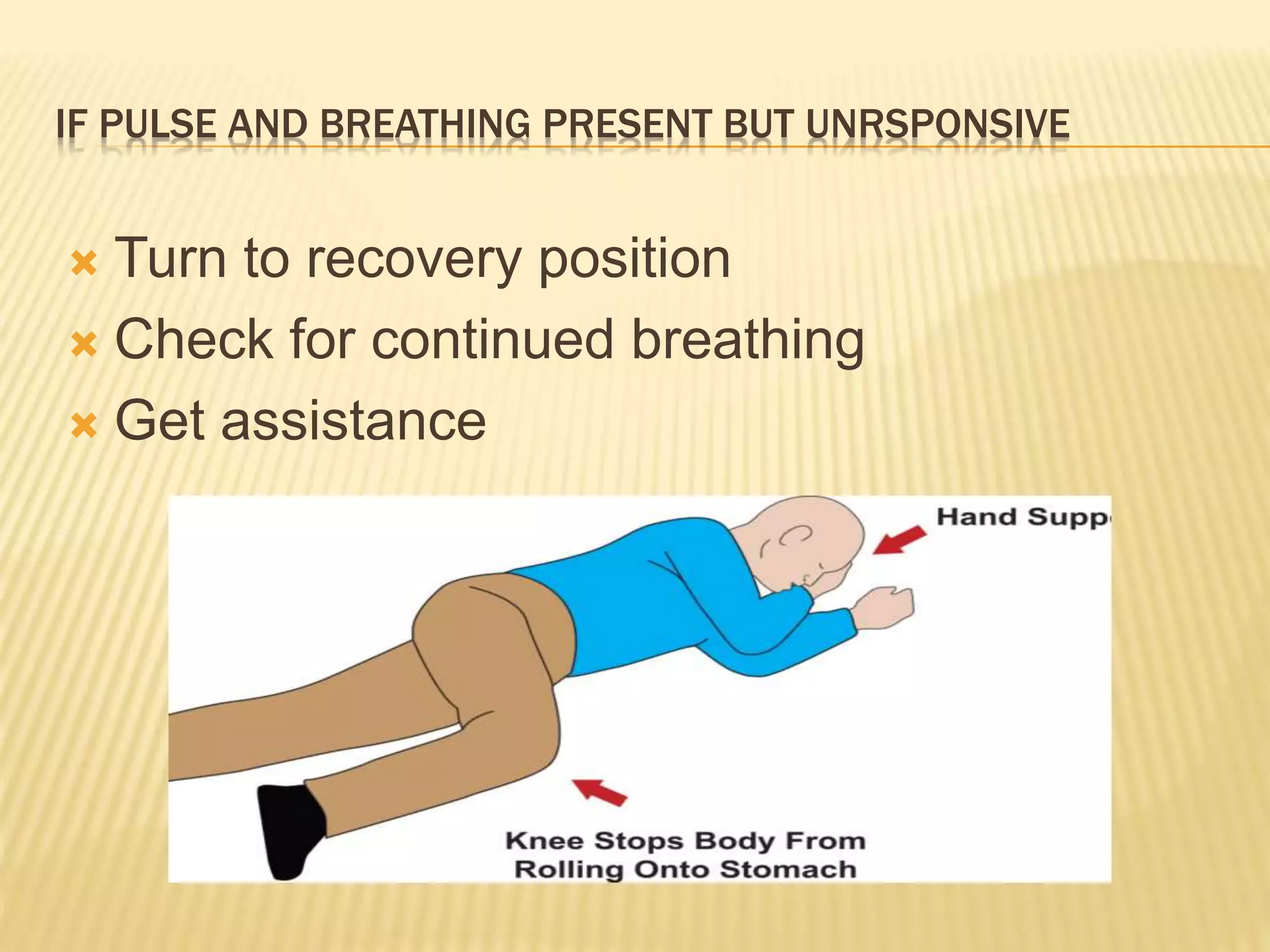
IF PULSE AND BREATHING PRESENT BUT UNRSPONSIVE
 Turn to recovery position
 Check for continued breathing
 Get assistance
IF PULSE IS PRESENT BUT NO NORMAL BREATHING
 Provide rescue breathing after clearing
airway
 Head tilt -chin lift maneuver
HEAD TILT-CHIN LIFT MANEUVER
 Place your palm on the patient’s forehead
and apply pressure to tilt the head backward.
 Place the fingers of your other hand under
the mental protuberance of the chin and pull
the chin forward
 Jaw thrust maneuver: in suspected spinal
injury
JAW THRUST MANEUVER
 Place your fingers on the lower rami of the
jaw.
 Provide anterior pressure to advance the jaw
forward.
MOUTH TO MOUTH BREATHING
 Pinch nose
 Seal the victim’ s mouth with your mouth (use
a barrier device)
 Check for rise and fall of chest with each
breath
 Can use AMBU bag ( Artificial Mandatory
Breathing Unit) in hospital setting
 EC
 technique
PROVIDING RESCUE BREATHS
 1 breath every 5-6 seconds OR 10-12
breaths/ min
 Check pulse every 2 minutes
 Allow time for the air to expel from the
patient.
IF NO BREATHING AND PULSE
 Start cardio pulmonary resuscitation
1. Chest compressions
2. Rescue breaths
CHEST COMPRESSIONS
 Place your palms on the midline, of chest,on the
nipple line
 Lock your arms.
 Use heel of the hand
 Using two arms press to a depth of 2 to 2.4
inches (5-6cm) or more on the patient’s
chest.
 Provide 100 to 120 compressions per
minute.
 Press hard and fast.
 Allow for full chest recoil with each
compression.
 1 cycle of adult CPR is 30 chest
compressions to 2 rescue breaths ( 30:2)
IF 2 RESCUERS
 Switch rolls between compressor and rescue
breather every 5 cycles.
DEFIBRILLATION
 Arrival of the AED (Automated External Defibrillator)
 Power:
Turn AED On
 Follow verbal AED prompts.
 Attachment:
Firmly place appropriate pads (adult/pediatric) to
patient’s skin to the indicated locations (pad image).
 Analyze:
A short pause in CPR is required to allow the AED to
analyze the rhythm.
 If the rhythm is not shockable:
 Initiate 5 cycles of CPR.
 Recheck the rhythm at the end of the 5 cycles of CPR.
 If the shock is indicated:
 Assure no one is touching the patient by yelling “Clear, I’m Clear,
you’re Clear!” prior to delivering a shock.
 Press the shock button when the providers are clear of the
patient.
 Resume 5 cycles of CPR.
SCHAFFER’S METHOD
 Used when casualty is lying with the face
down.
 Place him with forehead resting on the
overlapped hands
 Turn the face to one side
 Kneel at his side just below his hip joint
 Place your hands on his loins one on either
side of the vertebrae with both wrists almost
touching each other
CONT..
 With the thumbs apart close fingers together at
the side of loins with fingers pointing towards
the ground.
 Now slowly lean forward without bending the
elbow with the shoulder coming vertically above
the hands
 Apply pressure of your body weight on his loin
for 2 seconds. This leads to compression of
abdominal organs against the ground and up
against the diaphragm to force air out of the
lungs
 Release pressure. It causes abdominal
organs and diaphragm to fall back and allow
for inspiration.
 Complete these two phases in 5 seconds(
12/ min
SYLVESTER METHOD
 Used when the casualty is trapped on his
back
 Keep him in a tilted position by placing a
folded clothing/ pad between the shoulders.
 Kneel at the head end of the casualty.
 Grasp the wrists of casualty and cross them
over the lower chest
 Rock your body with the back straight
CONT..
 Press down firmly with hands over the
casualty’s wrists which are kept over the
lower chest for 2 second and release
 Draw the casualty’s arms upwards and
outwards as far as possible for 3 seconds
and bring back to the previous position
 Rate:12/ minute
 Check for heart beat after 4 sequences and
continue till natural breathing is restored
THANK YOU

Basic life support

  • 1.
    BASIC LIFE SUPPORT SharonTreesa Antony Junior Lecturer Govt.College of Nursing, Kottayam
  • 2.
    BLS  Sequences ofprocedures performed to restore the circulation of oxygenated blood after a sudden pulmonary and/or cardiac arrest.
  • 3.
    OBJECTIVES  Supports theventilation of a victim of respiratory arrest with rescue breathing  Support the ventilation and circulation of a victim of cardiac arrest with cardiopulmonary resuscitation (CPR).
  • 4.
  • 5.
    SEQUENCE  C :Circulation  A : Airway  B : Breathing  D : Defibrillation
  • 6.
    STEPS  Ensure safety Check response: tap at the shoulders and shout ‘Are you OK?’  If responsive, leave in position and get assistance. Reassess regularly
  • 7.
    IF UNRESPONSIVE  Shoutfor help and activate Emergency medical service ( automated external defibrillator/ Advanced cardiac life support ambulance.)  Check pulse and breathing at the same time (Carotid pulse and rise and fall of chest )  Take at least 5-10seconds and never >10 seconds
  • 9.
    IF PULSE ANDBREATHING PRESENT BUT UNRSPONSIVE  Turn to recovery position  Check for continued breathing  Get assistance
  • 10.
    IF PULSE ISPRESENT BUT NO NORMAL BREATHING  Provide rescue breathing after clearing airway  Head tilt -chin lift maneuver
  • 11.
    HEAD TILT-CHIN LIFTMANEUVER  Place your palm on the patient’s forehead and apply pressure to tilt the head backward.  Place the fingers of your other hand under the mental protuberance of the chin and pull the chin forward
  • 12.
     Jaw thrustmaneuver: in suspected spinal injury
  • 13.
    JAW THRUST MANEUVER Place your fingers on the lower rami of the jaw.  Provide anterior pressure to advance the jaw forward.
  • 14.
    MOUTH TO MOUTHBREATHING  Pinch nose  Seal the victim’ s mouth with your mouth (use a barrier device)
  • 15.
     Check forrise and fall of chest with each breath  Can use AMBU bag ( Artificial Mandatory Breathing Unit) in hospital setting  EC  technique
  • 16.
    PROVIDING RESCUE BREATHS 1 breath every 5-6 seconds OR 10-12 breaths/ min  Check pulse every 2 minutes  Allow time for the air to expel from the patient.
  • 17.
    IF NO BREATHINGAND PULSE  Start cardio pulmonary resuscitation 1. Chest compressions 2. Rescue breaths
  • 18.
    CHEST COMPRESSIONS  Placeyour palms on the midline, of chest,on the nipple line  Lock your arms.  Use heel of the hand
  • 19.
     Using twoarms press to a depth of 2 to 2.4 inches (5-6cm) or more on the patient’s chest.  Provide 100 to 120 compressions per minute.  Press hard and fast.  Allow for full chest recoil with each compression.  1 cycle of adult CPR is 30 chest compressions to 2 rescue breaths ( 30:2)
  • 20.
    IF 2 RESCUERS Switch rolls between compressor and rescue breather every 5 cycles.
  • 21.
    DEFIBRILLATION  Arrival ofthe AED (Automated External Defibrillator)  Power: Turn AED On  Follow verbal AED prompts.  Attachment: Firmly place appropriate pads (adult/pediatric) to patient’s skin to the indicated locations (pad image).  Analyze: A short pause in CPR is required to allow the AED to analyze the rhythm.
  • 23.
     If therhythm is not shockable:  Initiate 5 cycles of CPR.  Recheck the rhythm at the end of the 5 cycles of CPR.  If the shock is indicated:  Assure no one is touching the patient by yelling “Clear, I’m Clear, you’re Clear!” prior to delivering a shock.  Press the shock button when the providers are clear of the patient.  Resume 5 cycles of CPR.
  • 24.
    SCHAFFER’S METHOD  Usedwhen casualty is lying with the face down.  Place him with forehead resting on the overlapped hands  Turn the face to one side  Kneel at his side just below his hip joint  Place your hands on his loins one on either side of the vertebrae with both wrists almost touching each other
  • 25.
    CONT..  With thethumbs apart close fingers together at the side of loins with fingers pointing towards the ground.  Now slowly lean forward without bending the elbow with the shoulder coming vertically above the hands  Apply pressure of your body weight on his loin for 2 seconds. This leads to compression of abdominal organs against the ground and up against the diaphragm to force air out of the lungs
  • 26.
     Release pressure.It causes abdominal organs and diaphragm to fall back and allow for inspiration.  Complete these two phases in 5 seconds( 12/ min
  • 27.
    SYLVESTER METHOD  Usedwhen the casualty is trapped on his back  Keep him in a tilted position by placing a folded clothing/ pad between the shoulders.  Kneel at the head end of the casualty.  Grasp the wrists of casualty and cross them over the lower chest  Rock your body with the back straight
  • 28.
    CONT..  Press downfirmly with hands over the casualty’s wrists which are kept over the lower chest for 2 second and release  Draw the casualty’s arms upwards and outwards as far as possible for 3 seconds and bring back to the previous position  Rate:12/ minute  Check for heart beat after 4 sequences and continue till natural breathing is restored
  • 29.