Tools of the trade
Institutional pressures on business
Institutional view
This tool seeks to understand the forces which act
upon an organisation which establish acceptable
behaviours
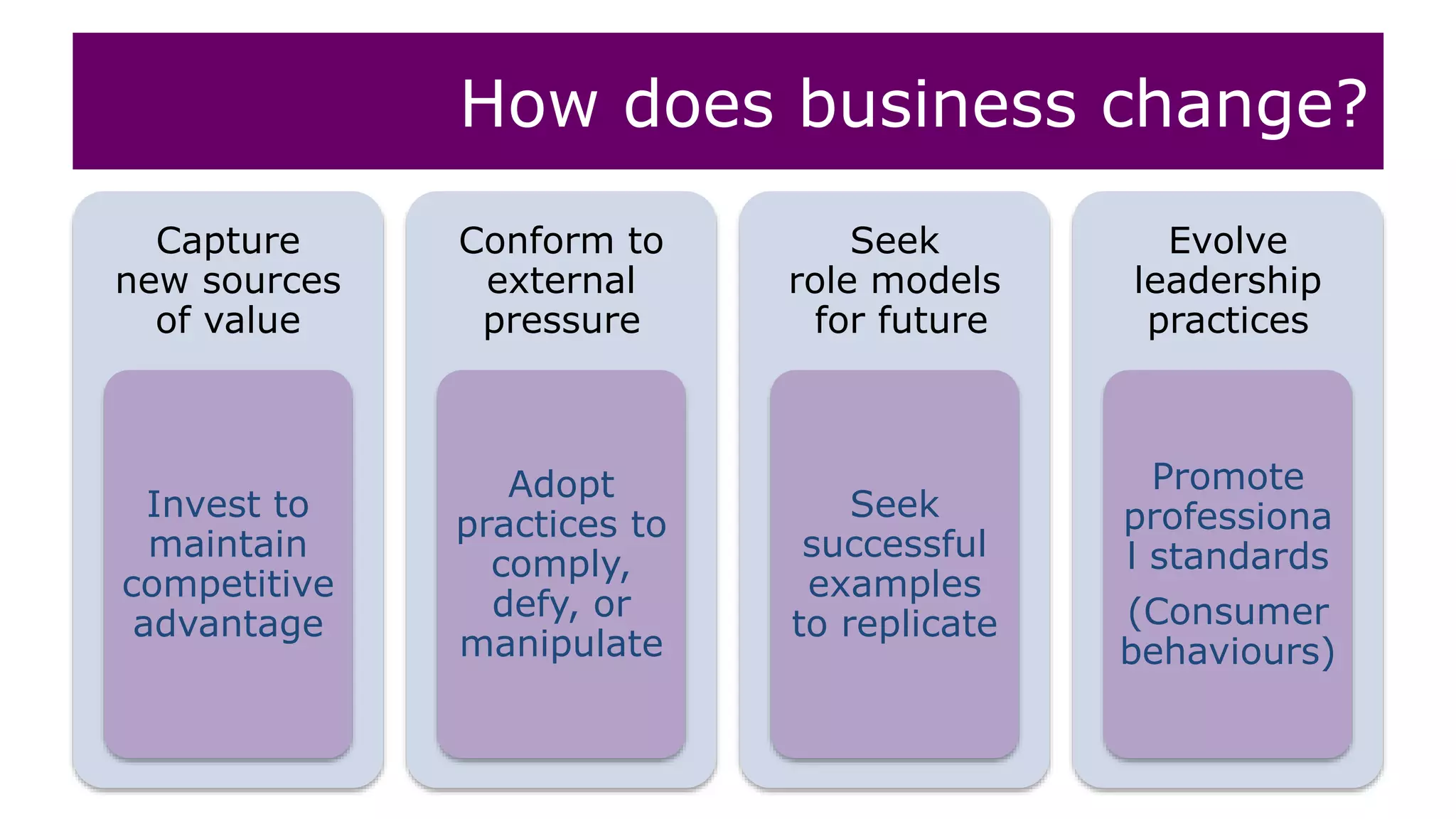
How does business change?
Capture
new sources
of value
Invest to
maintain
competitive
advantage
Conform to
external
pressure
Adopt
practices to
comply,
defy, or
manipulate
Seek
role models
for future
Seek
successful
examples
to replicate
Evolve
leadership
practices
Promote
professiona
l standards
(Consumer
behaviours)
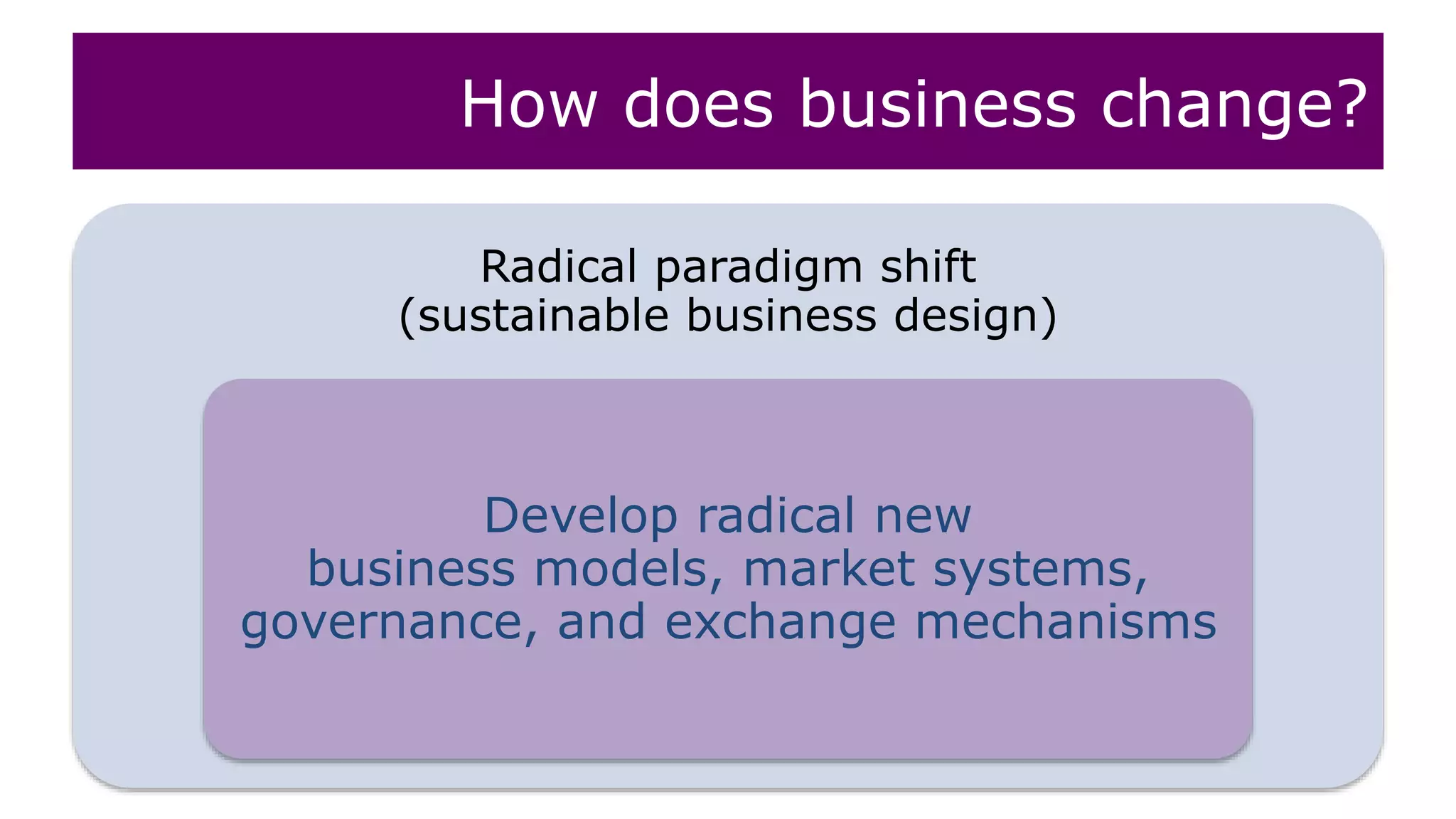
Radical paradigm shift
(sustainable business design)
Develop radical new
business models, market systems,
governance, and exchange mechanisms
How does business change?
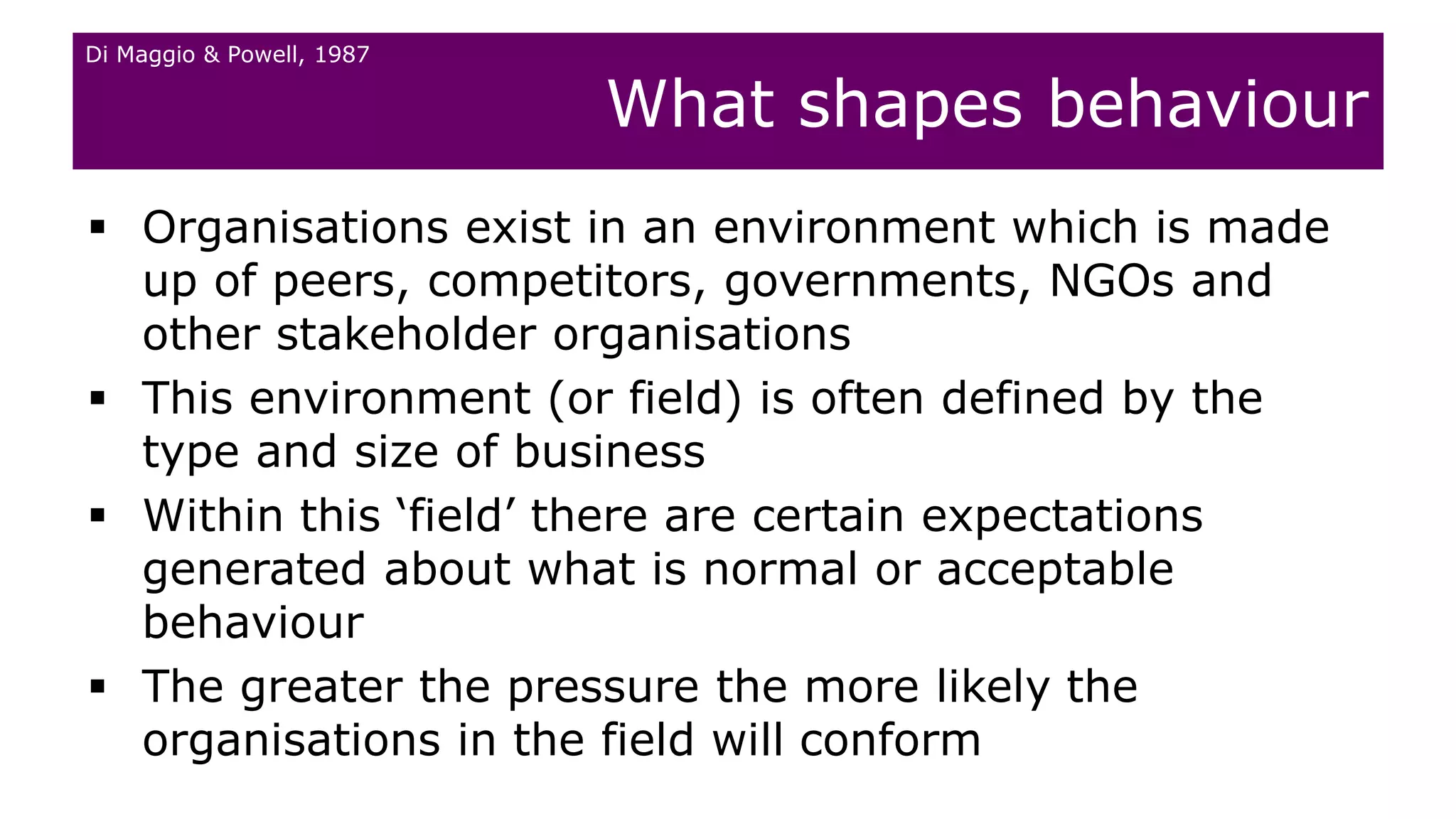
 Organisations exist in an environment which is made
up of peers, competitors, governments, NGOs and
other stakeholder organisations
 This environment (or field) is often defined by the
type and size of business
 Within this ‘field’ there are certain expectations
generated about what is normal or acceptable
behaviour
 The greater the pressure the more likely the
organisations in the field will conform
What shapes behaviour
Di Maggio & Powell, 1987
What forces shape behaviour?
Institutions in society such as Peers, NGOs, and
Governments SHAPE business behaviours towards a
legitimate norm
 Businesses pursue legitimacy as an
organisational goal or endorsement which achieve
political power…and social fitness
Di Maggio & Powell, 1987
What forces shape behaviour?
Where Legitimacy is the generalised perception or
assumption that the actions of an organisation are
desirable, proper or appropriate within some social
constructed system of norms, values, beliefs, and
definitions
Suchman, 1995
Explicit coercive pressure on an organisation is that is
considered to stem from political influence and the
problems of legitimacy and arises from direct
dependence on other organisations most importantly
those with governments and other rule makers
Regulatory or governmental pressures
8
Di Maggio & Powell, 1987
Implicit coercive processes are assumed to derive
from public opinion as represented in the mass media
and from the monitoring and advocate activities of Non-
Government Organisations (NGOs)
Reputational pressures to conform
9
Di Maggio & Powell, 1987
Uncertainty is a powerful force that encourages imitation
are is an important driver for behavioural change
Mimetic processes are used when organisations are
uncertain of an appropriate strategy
Then model the behaviour of others who are seen as
successful, legitimate, or to have adopted a viable
solution to a managerial problem
Uncertainty and pressure to follow role models
Di Maggio & Powell, 1987
 Normative or professionalism processes are seen
to be largely associated with professionalised
networks between individuals or organisations as
members of an occupation or through the acquisition
of expected norms in the formal education or training
of employees
Pressure to conform to professional standards
Which actors exhibit pressure?
Waddock 2008
Profession
Normative
MimeticExplicit coercive Implicit coercive
Institutional pressures in CR&S
 Organisations experience institutional pressure which drives
similar and increasing levels of corporate responsibility
 Certain factors give rise to higher levels of responsibility
such as media observation, greater prevalence of CSR
standards, pressure from supra-national bodies like the UN
 Other factors limit the ability of organisations to respond to
institutional pressures or reduce organisations’ dependence
on institutional support – absence of financial resources,
limited competition etc
Summary
 This perspective on responsible & sustainable
business suggests that businesses are under
pressure to conform to expectations
 Here external actors (stakeholders) combine
to shape those expectations

Institutional Perspectives

  • 1.
    Tools of thetrade Institutional pressures on business
  • 2.
    Institutional view This toolseeks to understand the forces which act upon an organisation which establish acceptable behaviours
  • 3.
    How does businesschange? Capture new sources of value Invest to maintain competitive advantage Conform to external pressure Adopt practices to comply, defy, or manipulate Seek role models for future Seek successful examples to replicate Evolve leadership practices Promote professiona l standards (Consumer behaviours)
  • 4.
    Radical paradigm shift (sustainablebusiness design) Develop radical new business models, market systems, governance, and exchange mechanisms How does business change?
  • 5.
     Organisations existin an environment which is made up of peers, competitors, governments, NGOs and other stakeholder organisations  This environment (or field) is often defined by the type and size of business  Within this ‘field’ there are certain expectations generated about what is normal or acceptable behaviour  The greater the pressure the more likely the organisations in the field will conform What shapes behaviour Di Maggio & Powell, 1987
  • 6.
    What forces shapebehaviour? Institutions in society such as Peers, NGOs, and Governments SHAPE business behaviours towards a legitimate norm  Businesses pursue legitimacy as an organisational goal or endorsement which achieve political power…and social fitness Di Maggio & Powell, 1987
  • 7.
    What forces shapebehaviour? Where Legitimacy is the generalised perception or assumption that the actions of an organisation are desirable, proper or appropriate within some social constructed system of norms, values, beliefs, and definitions Suchman, 1995
  • 8.
    Explicit coercive pressureon an organisation is that is considered to stem from political influence and the problems of legitimacy and arises from direct dependence on other organisations most importantly those with governments and other rule makers Regulatory or governmental pressures 8 Di Maggio & Powell, 1987
  • 9.
    Implicit coercive processesare assumed to derive from public opinion as represented in the mass media and from the monitoring and advocate activities of Non- Government Organisations (NGOs) Reputational pressures to conform 9 Di Maggio & Powell, 1987
  • 10.
    Uncertainty is apowerful force that encourages imitation are is an important driver for behavioural change Mimetic processes are used when organisations are uncertain of an appropriate strategy Then model the behaviour of others who are seen as successful, legitimate, or to have adopted a viable solution to a managerial problem Uncertainty and pressure to follow role models Di Maggio & Powell, 1987
  • 11.
     Normative orprofessionalism processes are seen to be largely associated with professionalised networks between individuals or organisations as members of an occupation or through the acquisition of expected norms in the formal education or training of employees Pressure to conform to professional standards
  • 12.
    Which actors exhibitpressure? Waddock 2008 Profession Normative MimeticExplicit coercive Implicit coercive
  • 13.
    Institutional pressures inCR&S  Organisations experience institutional pressure which drives similar and increasing levels of corporate responsibility  Certain factors give rise to higher levels of responsibility such as media observation, greater prevalence of CSR standards, pressure from supra-national bodies like the UN  Other factors limit the ability of organisations to respond to institutional pressures or reduce organisations’ dependence on institutional support – absence of financial resources, limited competition etc
  • 14.
    Summary  This perspectiveon responsible & sustainable business suggests that businesses are under pressure to conform to expectations  Here external actors (stakeholders) combine to shape those expectations