Community
Engagement,
Solidarity and
Citizenship (
CESC)
Mr. Ryan Panganiban
If you didn’t do your assignment, just admit it
If you didn’t understand something, ask for help.
If you didn’t study for the test, accept the grade and resolve to
do it better next time.
If you refuse to follow my rules, accept the consequences.
This is not a Democracy.
This is MY period:
And I’m here for some reasons
TO TEACH YOU
TO INSPIRE YOU
TO HELP YOU GROW
And bring Change to the WORLD.
I’ll do my part. The rest is up to you
Friendly Reminder
REMINDERS:
1. Respect
2. Discipline
3. Cooperation
4. Communication
5. Sympathy and
Empathy
Subject Description:
This course focuses on the application of ideas and methods of
the Social Sciences to understand, investigate, and examine challenges
of contemporary community life. It focuses on community-action
initiatives such as community-engagement, solidarity, and citizenship
as guided by the core values of human rights, social justice,
empowerment, and advocacy, gender equality, and participatory
development. It aims at enhancing student’s’ sense of shared identity
and willingness to contribute to the pursuit of the common good of
the community. It enables students to integrate applied Social
Sciences into community- action initiatives.
Grading system
20% written
60%
Performance
task
20% exam
Requirements of this
course
1. Portfolio
2. project
3. research
4. exams
5. Social Scientist of the
day
6. news report
7. Community
Course Outline
Chapter I: Concept of Community
1. What is community
a. Definition
b. Elements and Approaches
c. Importance
2. Different Perspective on community
3. Types of Communities
4. Dimensions of a Community
5. Typologies Of Community
a. function of a community
Chapter 2: Community Engagement
1.Definition of Community Engagement
2. Community actions and community development
a. Community action in the Social Science
3. Issues and Problems of Communities
4. The role of the Youth in community action
Chapter 3: Core Values and Principles of Community Engagement
a. Human rights, Social Justice, & Gender Equality
Chapter 4 : Methodologies and Approaches of Community actions and
involvement across disciplines
Chapter 5: Field Practicum
a. Ethnography
Activity # 1 “El Galleria”
Topic: “ The Concept of Community
Objective: To defined and determine your concept about community
Task: to make a collage of images abut the definition of community
Instructions:
1. Group your self into 5 , Then give each of them assign number.
2. Each member will be given an assign numbers, which correspond to their
specific task; for nos. 1-3-5 ( They are assign to cut or print pictures that they
think related to the concept of community.) For no. 4 ( they are the secretary
of the group who prepare the list of members, and also the one who write and
synthesize the descriptions given by the each members of the group. And for
no. 2 ( They are the representative of the group who explain your work.)
3. Post or Place your work on the board.
Activity # 2 “Nagmasid, nanood, nagsuri”
Topic: “ The Concept of Community
Objective: To observe and analyse a community
Task: Watch three different short films/ documentary about community life
and then do the following activities.
Instructions:
A. Masid at nood- “observe & watch”
1. Watch a short films/documentary about community life.
2. Take down notes on the important activities, people, objects and events
that can you observed in the documentary films.
3. Make a comparative analysis using a “task-sheet” given to you by your
teacher
The concept of
Community
“ Every person is defined by the
community ( he or ) she belongs to”
-Orson Scott Car
from the word “
communitas” means “ Fellowship.
- “ communis “ common”
- Com- “ with or together”
- munire- “ to strengthen to fortify
or to defend”
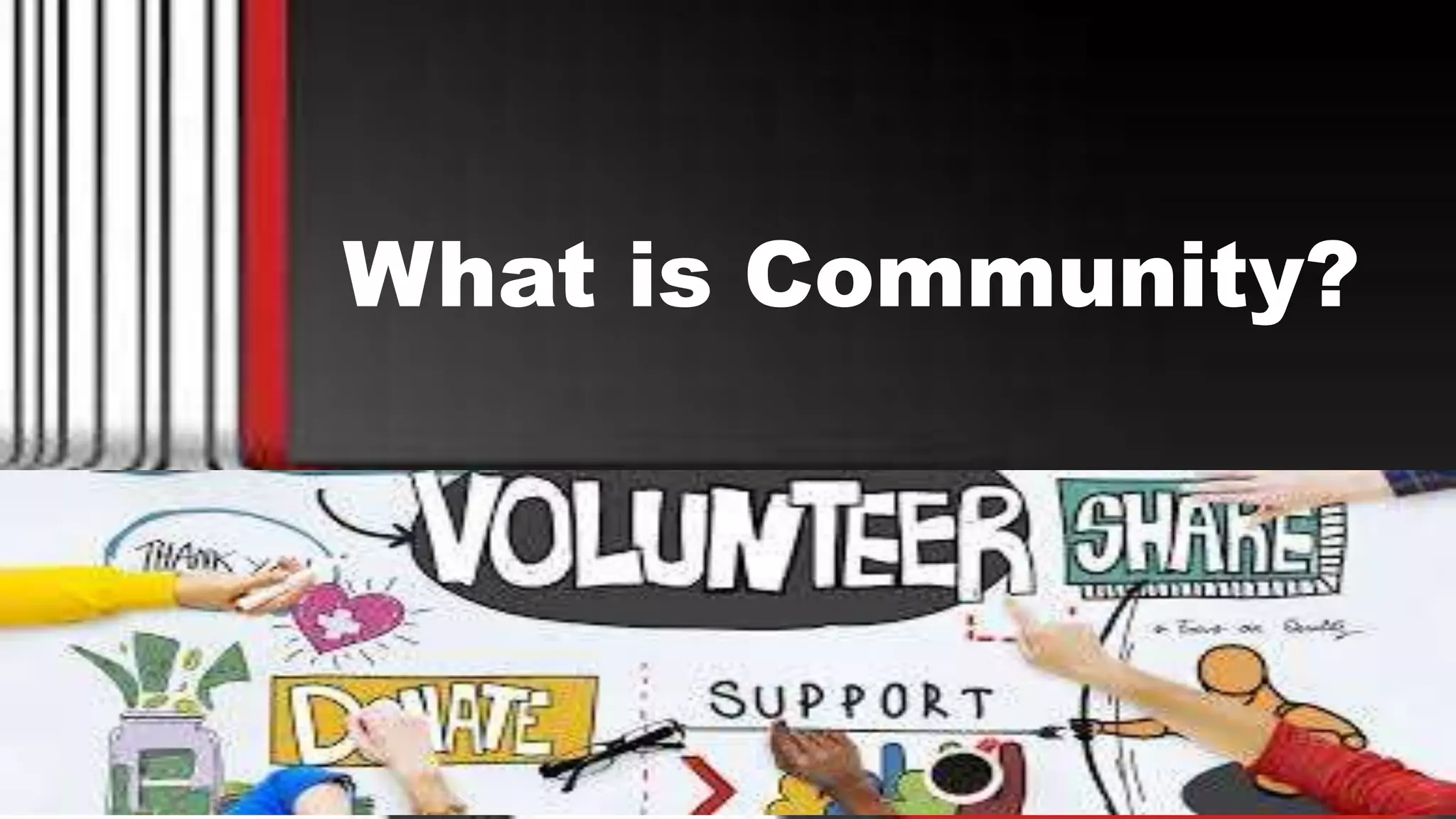
What is Community?
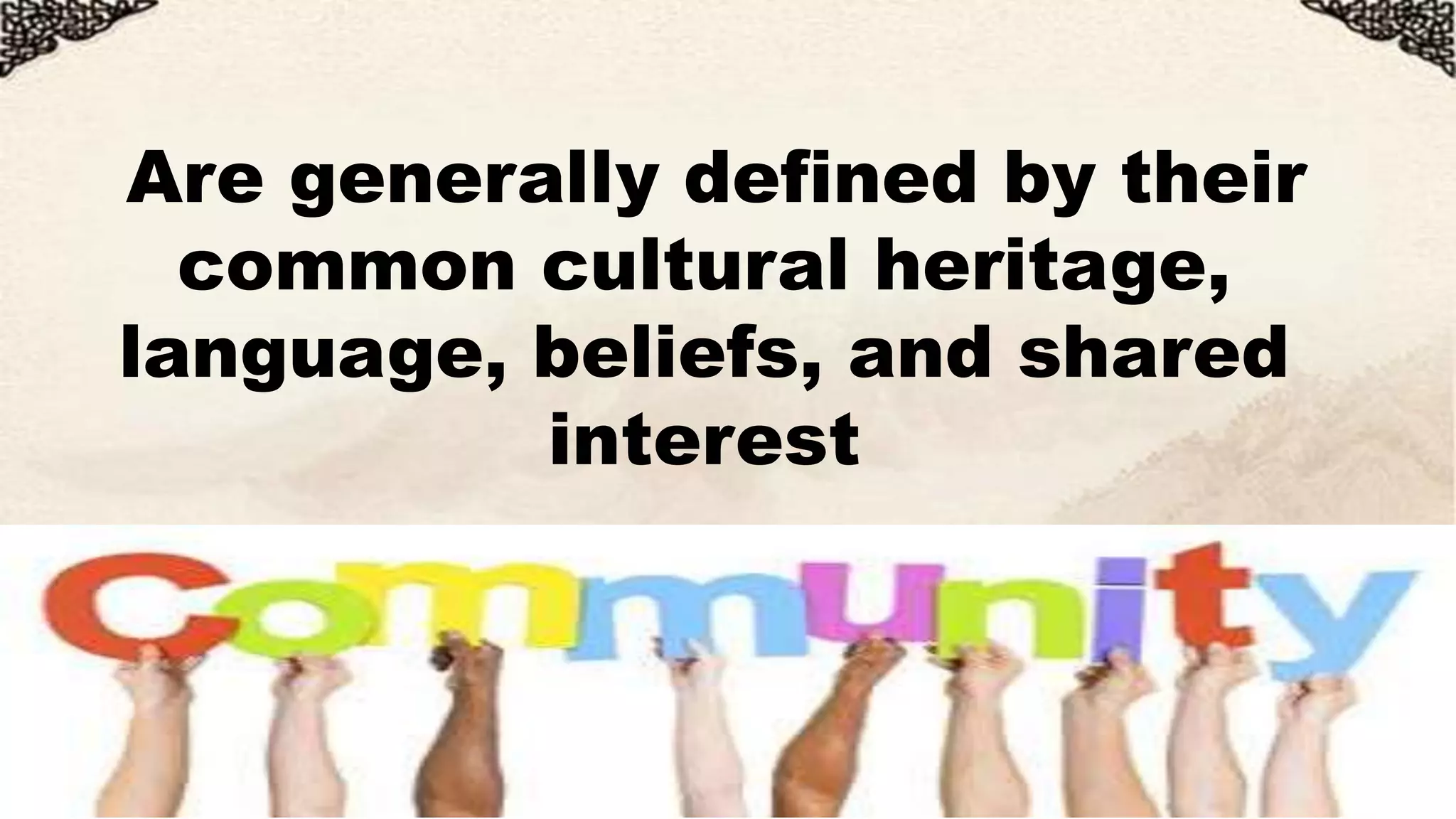
Are generally defined by their
common cultural heritage,
language, beliefs, and shared
interest
According to Murphy and Cunningham
(2003)
- Community can be classified into
a. Small- Small place-based community
of a barangay or coastal village
b. Large- region, state, or nation
Small communities have defined territories and
are given life by three interacting people
processes;
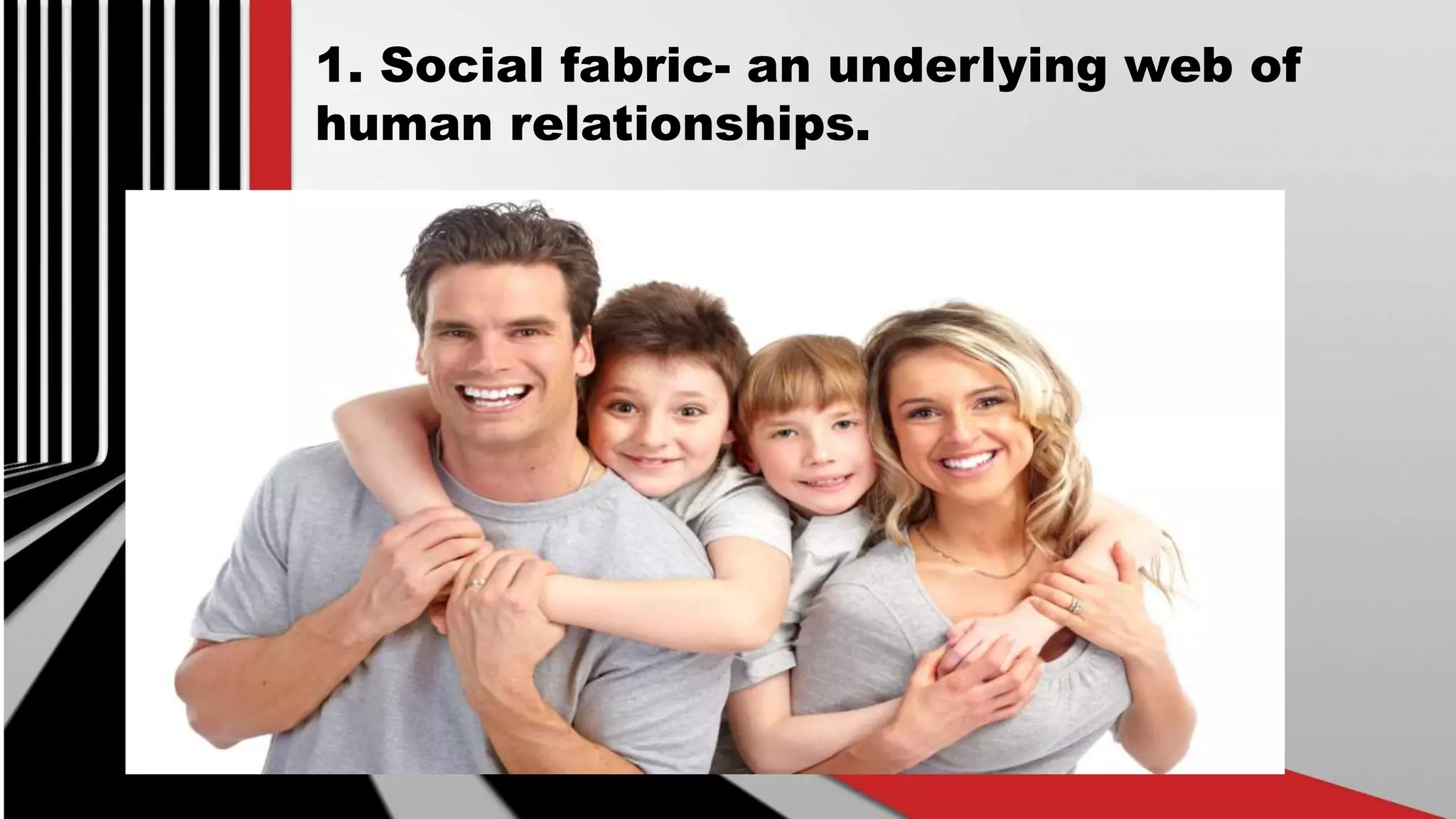
a. Social fabric- an underlying web of human
relationship
1. Social fabric- an underlying web of
human relationships.
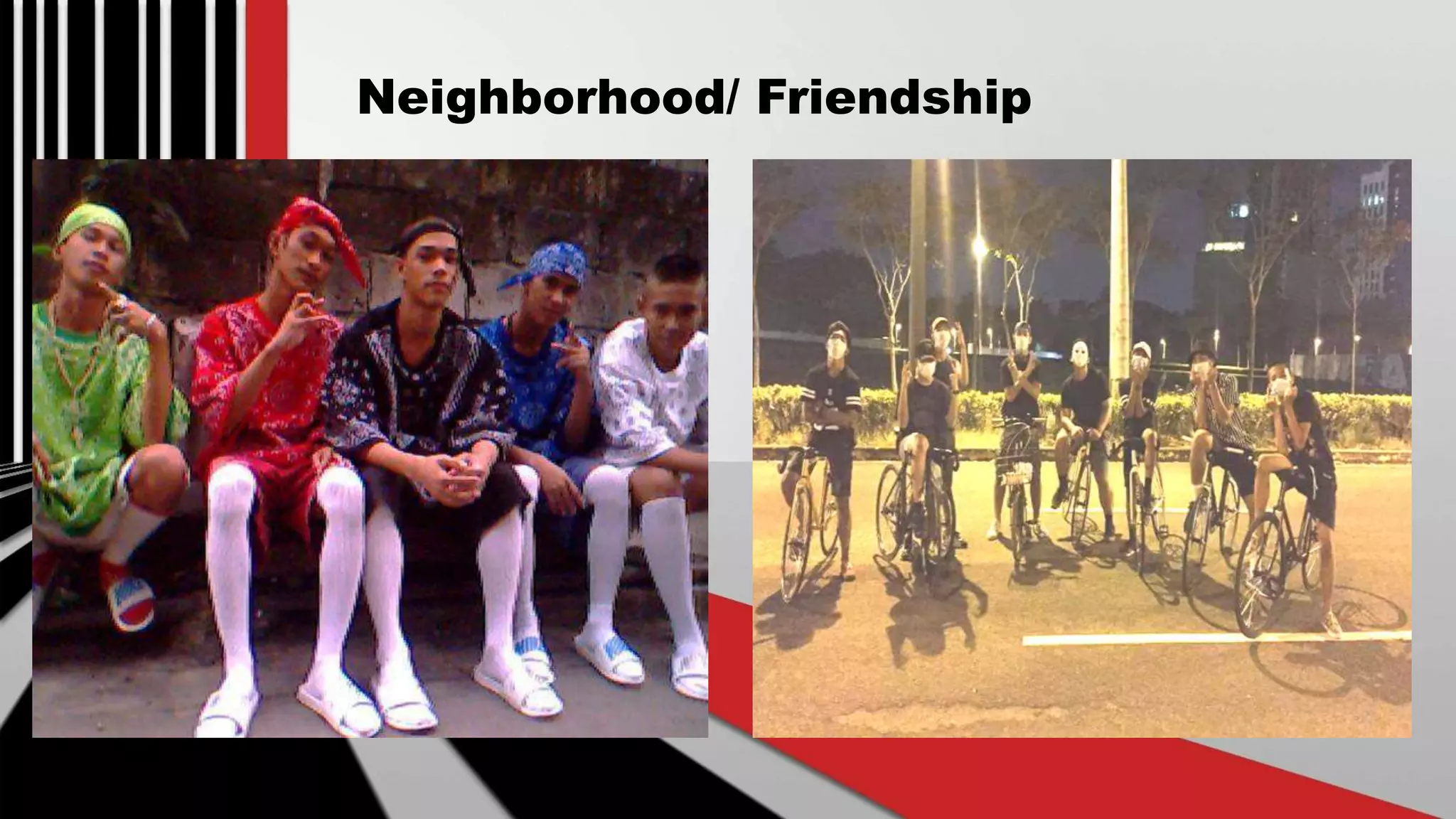
Neighborhood/ Friendship
It is the building block of a
society, as it is through these
that norms are produced from
consistent exchanges of
individuals and groups.
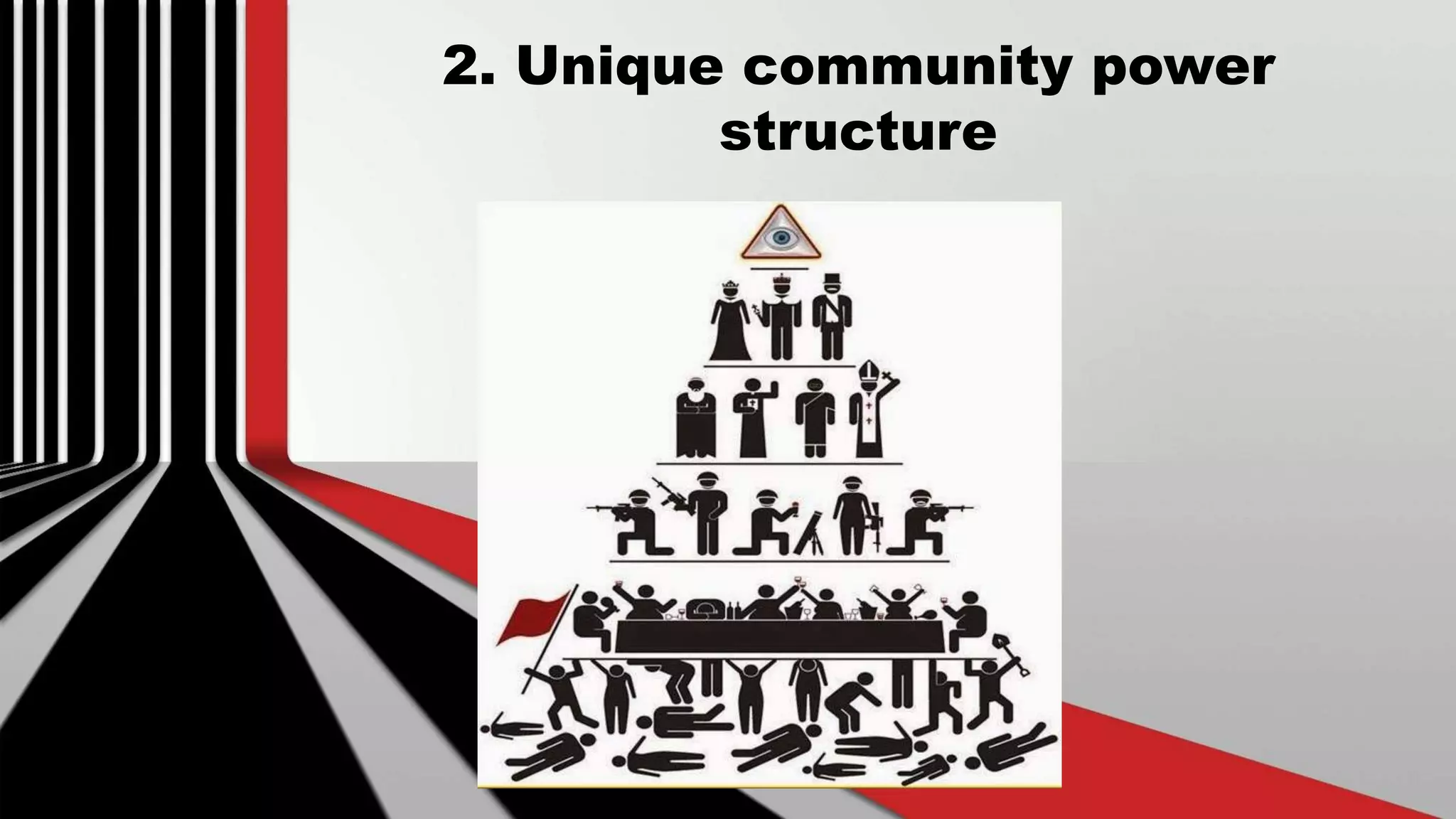
2. Unique community power
structure
3. Set of resource flows that
constitute a local economy
- The dynamics of a community is
determined by its nature and structure and
how it reacts with External or internal
forces.
- It is thus important to recognize the
characteristics and features of a community
to understand. Why it acts and reacts in a
certain way.
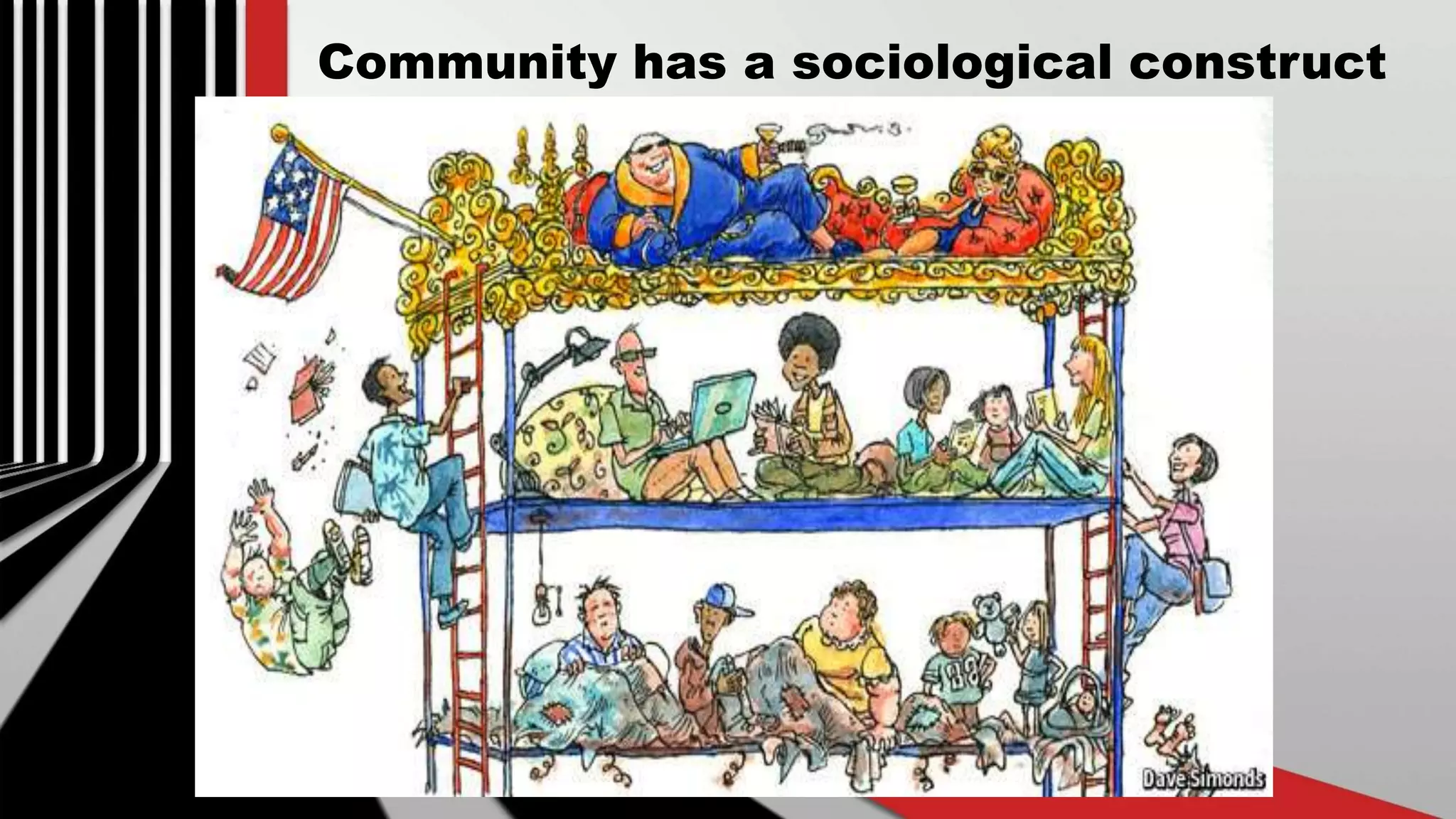
Community has a sociological construct
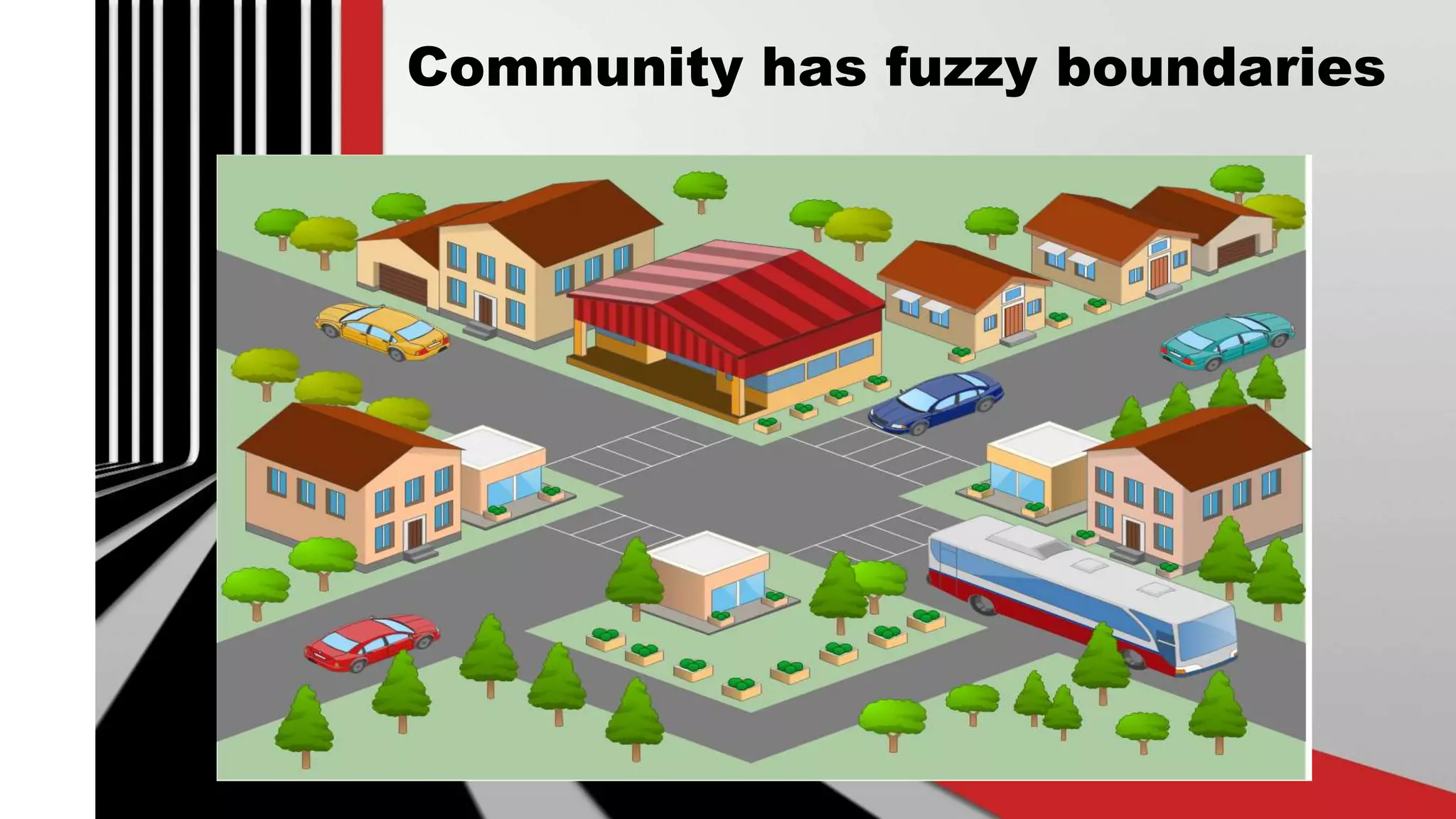
Community has fuzzy boundaries
A community can exist within a larger
community
A community may move
Dimensions of
Community
A community is a complex system with different
dimensions. These dimensions may be present in all
communities but they may vary in size, degree and
complexity. This characteristics of a community may be
attributed to the combination of the communities’ human
resources, natural resource, culture, structure and the
other factors.
1. Technological Dimensions
- the community Capitals, its tools, skills and the ways of
people dealing with the physical environment .
- It is the interface between humanity and nature.
-It is not the physical tools themselves which make up the
technological dimension of culture, but it is the learned ideas and
behaviour which allow humans to invent, use, and teach others
about tools.
Economic Dimensions
- refers to the various ways and means of production and
allocation of scarce and useful goods and services through barter, market
trade and state allocation.
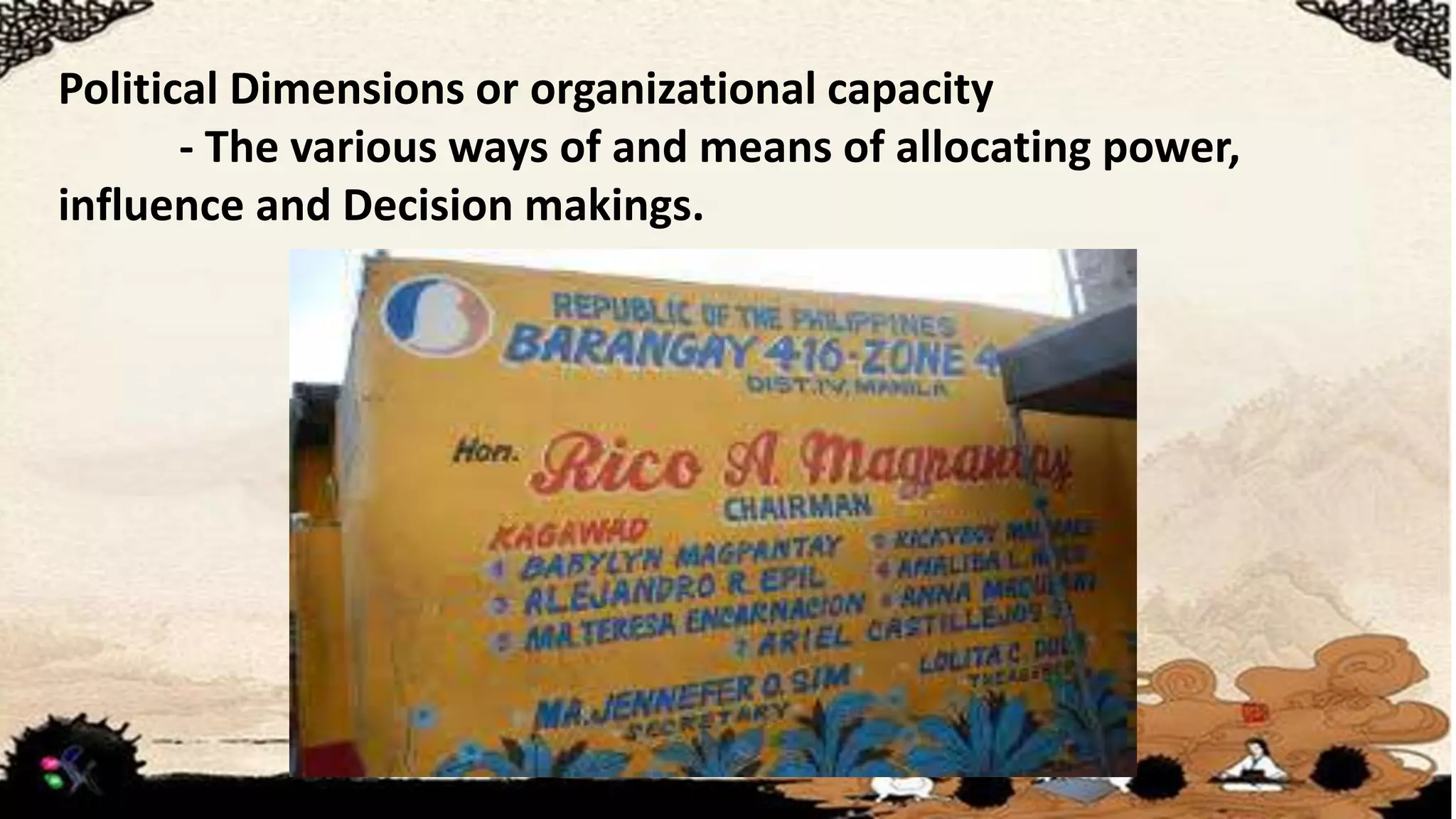
Political Dimensions or organizational capacity
- The various ways of and means of allocating power,
influence and Decision makings.
Institutional Dimensions
- Are the ways people act, react, and interact with each other, as well
As the ways they expect each other to act and interact.
- pattern of relationships
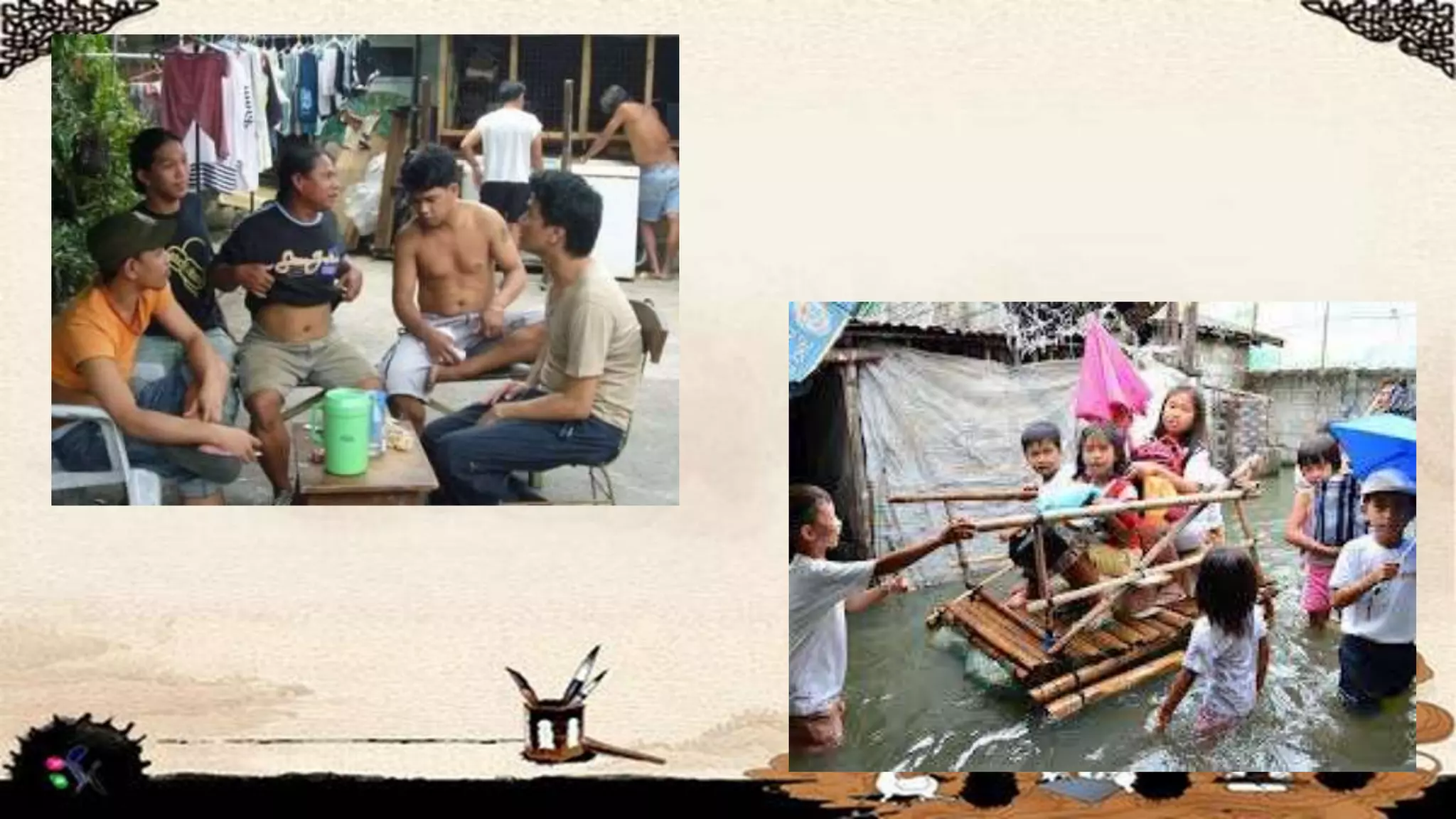
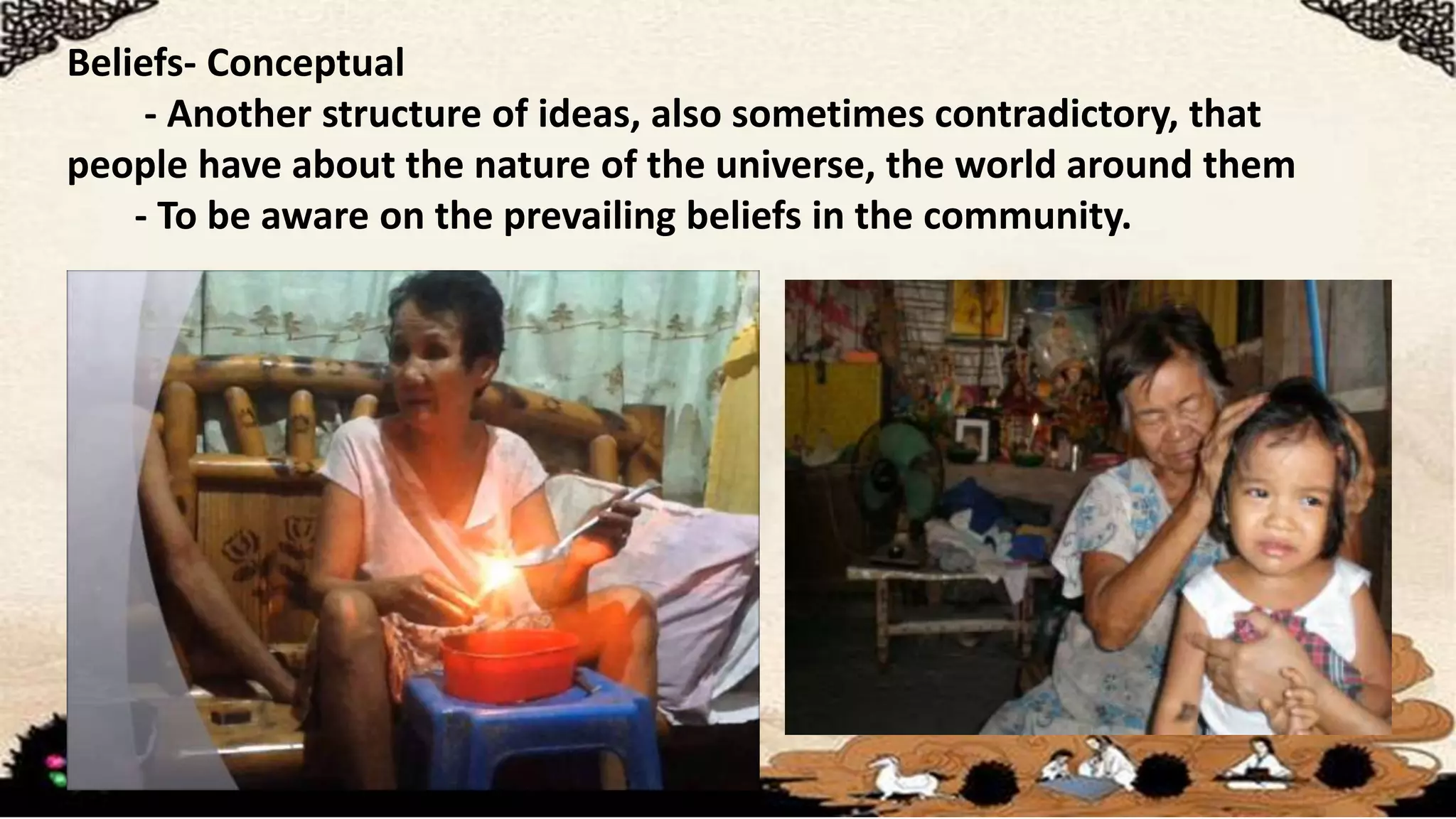
Aesthetic- Values
The structure of ides- sometimes inconsistent, or contradictory- that
people have about what is good and bad, beautiful and ugly, and right and
wrong. The way that they use to justify their actions.
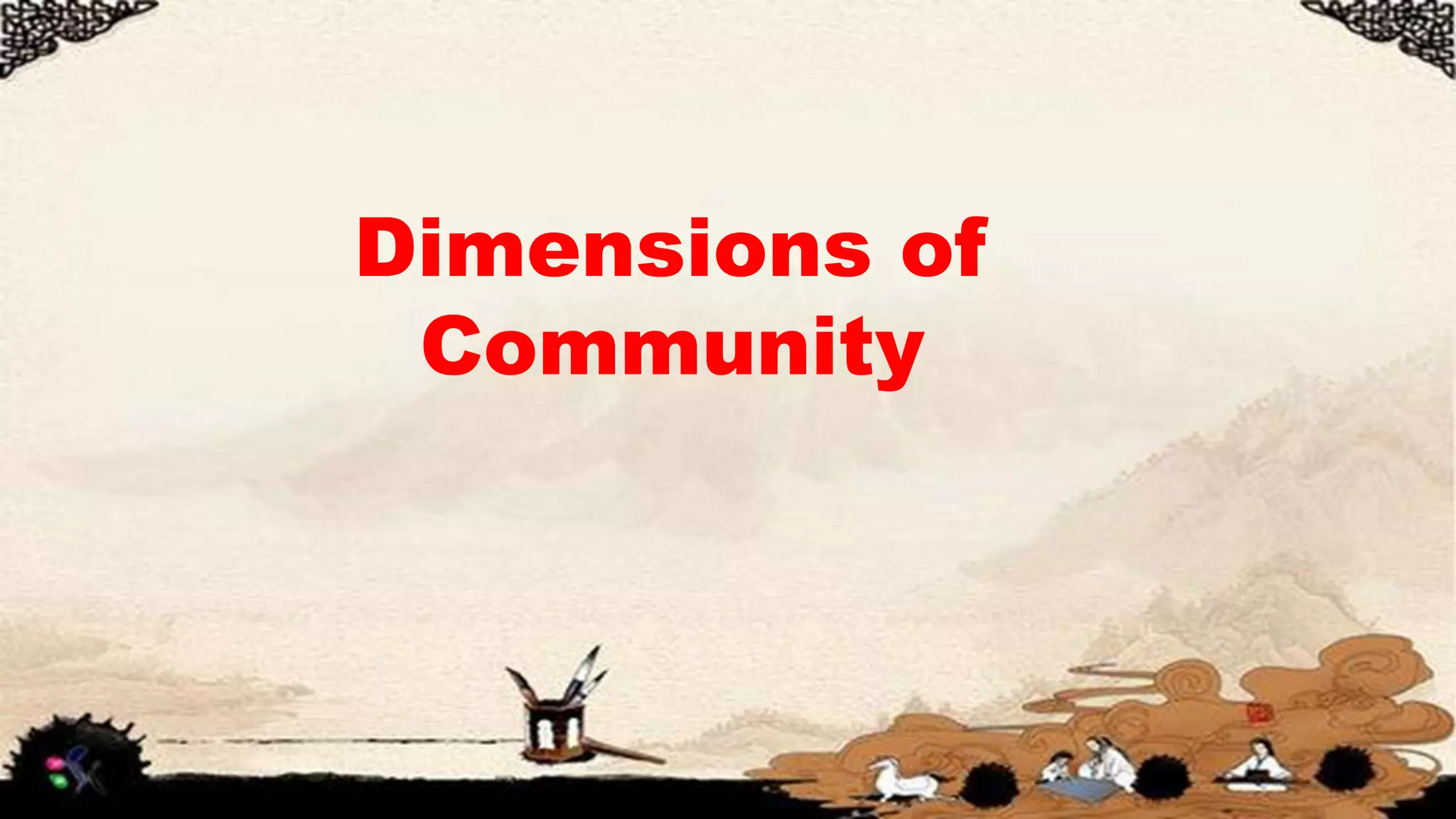
Beliefs- Conceptual
- Another structure of ideas, also sometimes contradictory, that
people have about the nature of the universe, the world around them
- To be aware on the prevailing beliefs in the community.
Community Lesson #1.pptx

Community Lesson #1.pptx

  • 1.
  • 2.
    If you didn’tdo your assignment, just admit it If you didn’t understand something, ask for help. If you didn’t study for the test, accept the grade and resolve to do it better next time. If you refuse to follow my rules, accept the consequences. This is not a Democracy. This is MY period: And I’m here for some reasons TO TEACH YOU TO INSPIRE YOU TO HELP YOU GROW And bring Change to the WORLD. I’ll do my part. The rest is up to you Friendly Reminder
  • 3.
    REMINDERS: 1. Respect 2. Discipline 3.Cooperation 4. Communication 5. Sympathy and Empathy
  • 5.
    Subject Description: This coursefocuses on the application of ideas and methods of the Social Sciences to understand, investigate, and examine challenges of contemporary community life. It focuses on community-action initiatives such as community-engagement, solidarity, and citizenship as guided by the core values of human rights, social justice, empowerment, and advocacy, gender equality, and participatory development. It aims at enhancing student’s’ sense of shared identity and willingness to contribute to the pursuit of the common good of the community. It enables students to integrate applied Social Sciences into community- action initiatives.
  • 6.
    Grading system 20% written 60% Performance task 20%exam Requirements of this course 1. Portfolio 2. project 3. research 4. exams 5. Social Scientist of the day 6. news report 7. Community
  • 7.
    Course Outline Chapter I:Concept of Community 1. What is community a. Definition b. Elements and Approaches c. Importance 2. Different Perspective on community 3. Types of Communities 4. Dimensions of a Community 5. Typologies Of Community a. function of a community
  • 8.
    Chapter 2: CommunityEngagement 1.Definition of Community Engagement 2. Community actions and community development a. Community action in the Social Science 3. Issues and Problems of Communities 4. The role of the Youth in community action Chapter 3: Core Values and Principles of Community Engagement a. Human rights, Social Justice, & Gender Equality Chapter 4 : Methodologies and Approaches of Community actions and involvement across disciplines Chapter 5: Field Practicum a. Ethnography
  • 9.
    Activity # 1“El Galleria” Topic: “ The Concept of Community Objective: To defined and determine your concept about community Task: to make a collage of images abut the definition of community Instructions: 1. Group your self into 5 , Then give each of them assign number. 2. Each member will be given an assign numbers, which correspond to their specific task; for nos. 1-3-5 ( They are assign to cut or print pictures that they think related to the concept of community.) For no. 4 ( they are the secretary of the group who prepare the list of members, and also the one who write and synthesize the descriptions given by the each members of the group. And for no. 2 ( They are the representative of the group who explain your work.) 3. Post or Place your work on the board.
  • 10.
    Activity # 2“Nagmasid, nanood, nagsuri” Topic: “ The Concept of Community Objective: To observe and analyse a community Task: Watch three different short films/ documentary about community life and then do the following activities. Instructions: A. Masid at nood- “observe & watch” 1. Watch a short films/documentary about community life. 2. Take down notes on the important activities, people, objects and events that can you observed in the documentary films. 3. Make a comparative analysis using a “task-sheet” given to you by your teacher
  • 11.
  • 12.
    “ Every personis defined by the community ( he or ) she belongs to” -Orson Scott Car
  • 13.
    from the word“ communitas” means “ Fellowship. - “ communis “ common” - Com- “ with or together” - munire- “ to strengthen to fortify or to defend”
  • 14.
  • 15.
    Are generally definedby their common cultural heritage, language, beliefs, and shared interest
  • 16.
    According to Murphyand Cunningham (2003) - Community can be classified into a. Small- Small place-based community of a barangay or coastal village b. Large- region, state, or nation
  • 17.
    Small communities havedefined territories and are given life by three interacting people processes; a. Social fabric- an underlying web of human relationship
  • 18.
    1. Social fabric-an underlying web of human relationships.
  • 19.
  • 21.
    It is thebuilding block of a society, as it is through these that norms are produced from consistent exchanges of individuals and groups.
  • 22.
    2. Unique communitypower structure
  • 23.
    3. Set ofresource flows that constitute a local economy
  • 24.
    - The dynamicsof a community is determined by its nature and structure and how it reacts with External or internal forces. - It is thus important to recognize the characteristics and features of a community to understand. Why it acts and reacts in a certain way.
  • 26.
    Community has asociological construct
  • 27.
  • 28.
    A community canexist within a larger community
  • 29.
  • 30.
  • 31.
    A community isa complex system with different dimensions. These dimensions may be present in all communities but they may vary in size, degree and complexity. This characteristics of a community may be attributed to the combination of the communities’ human resources, natural resource, culture, structure and the other factors.

  • 32.
    1. Technological Dimensions -the community Capitals, its tools, skills and the ways of people dealing with the physical environment . - It is the interface between humanity and nature. -It is not the physical tools themselves which make up the technological dimension of culture, but it is the learned ideas and behaviour which allow humans to invent, use, and teach others about tools.
  • 33.
    Economic Dimensions - refersto the various ways and means of production and allocation of scarce and useful goods and services through barter, market trade and state allocation.
  • 34.
    Political Dimensions ororganizational capacity - The various ways of and means of allocating power, influence and Decision makings.
  • 36.
    Institutional Dimensions - Arethe ways people act, react, and interact with each other, as well As the ways they expect each other to act and interact. - pattern of relationships
  • 40.
    Aesthetic- Values The structureof ides- sometimes inconsistent, or contradictory- that people have about what is good and bad, beautiful and ugly, and right and wrong. The way that they use to justify their actions.
  • 42.
    Beliefs- Conceptual - Anotherstructure of ideas, also sometimes contradictory, that people have about the nature of the universe, the world around them - To be aware on the prevailing beliefs in the community.