This document introduces the concepts of culture, society, politics and identity. It defines identity as the characteristics that define individuals within social groups. It describes the fields of social sciences including anthropology, sociology, and political science. Anthropology studies human biology, culture and society. Sociology examines human social life and groups. Political science focuses on values of equality, freedom and justice in governance. The document discusses how social backgrounds and identities shape views and can drive social, cultural and political change.
Introduction to culture,society and politics
The events that have defined your lives up to the present are a product of the
processes and interactions within our society. Social, cultural, and political
issues go beyond the news and classroom discussions.
• Define the concept of identity and relate it to society and culture;
• Define the social sciences and describe its various fields of study;
• Discuss how each field of the social sciences contributes to understanding society, culture,
and politics;
• Describe how social backgrounds shape views about society and the world;
• Analyze social, political and cultural change, and give examples of each;
• Relate their observations on social differences, social change, and identities, and discuss
their interrelatedness; and
• Demonstrate an interest and willingness to explore the origins and dynamics of culture,
society and politics
3.
Let’s have somedrill!
Have you ever wondered why some people are different from you and from one
another? How will you describe your social background and identities? Try to
introduce yourself by telling at least five (5) of your identities. Think of the first five
things that come to mind when describing yourself. You can start by thinking of
your identity within your family (as a daughter, son, grandson, etc.) and within
organizations or clubs that you belong to ( as secretary of the student council,
member of the drama club, etc. )
4.
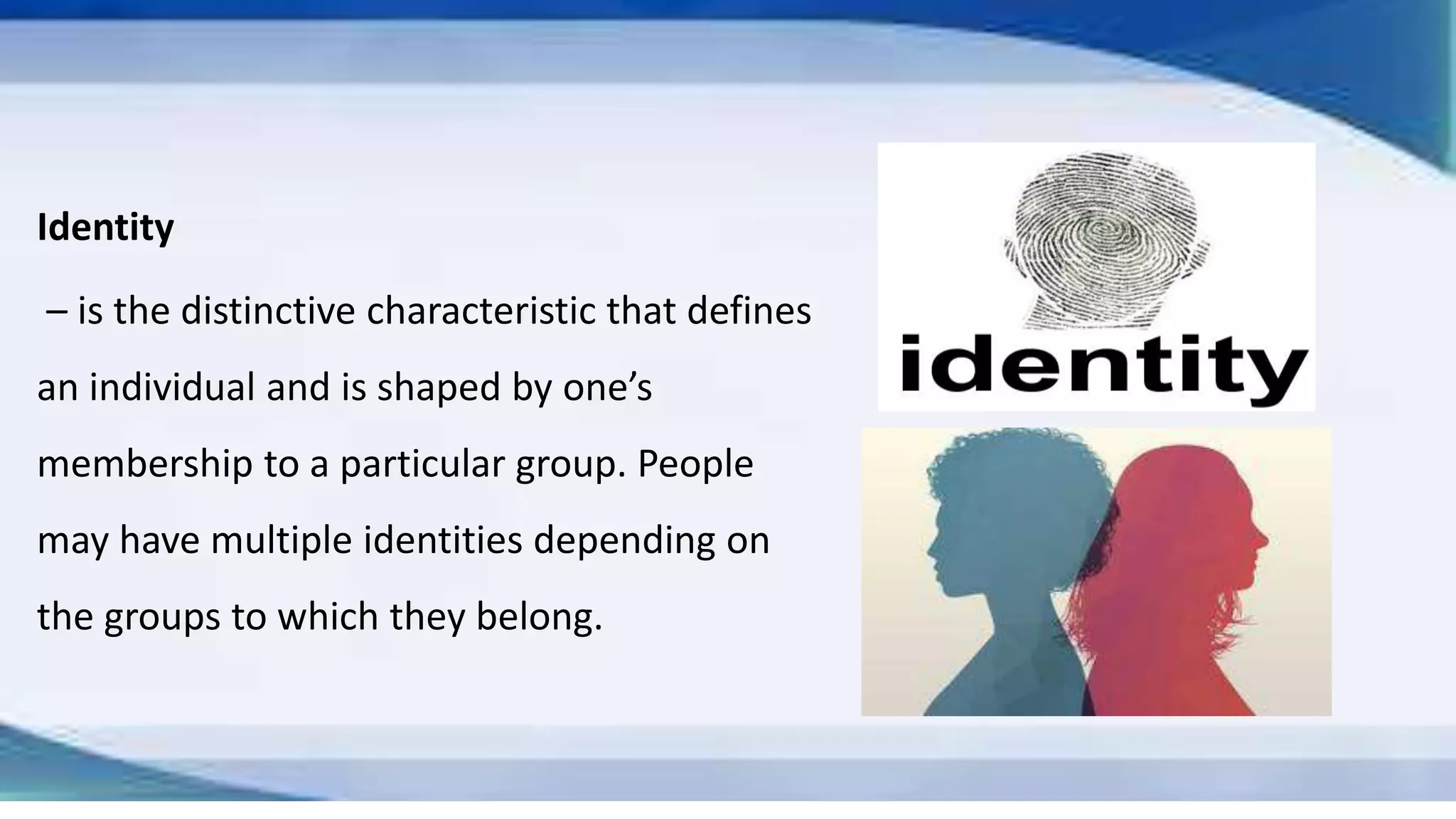
Identity
– is thedistinctive characteristic that defines
an individual and is shaped by one’s
membership to a particular group. People
may have multiple identities depending on
the groups to which they belong.
5.
Social, Cultural, andPolitical Change
The concept of identity is related to social, cultural, and political
change. People’s individual and collective identities have oftentimes
transformed social order and paved way for lasting change.
Example: Elections in the 1990’s that only male can vote and
participate in politics.
6.
Social, Cultural, andPolitical Change
• Rapidly-advancing technology also has profound implications for
socio-cultural and political change.
• The phenomenon of international migration has also changed Filipino
identities and beliefs. It is said that 10 percent of the Philippine
population is now abroad as temporary, permanent, and
undocumented immigrants.
• Immigrants - Emigrant
7.
Anthropology, Sociology andPolitical Science
• Anthropology
– is the systematic study of the biological, cultural,
and social aspects of man. It derived from the two
Greek words, Anthropos, which means “man” and
logos, which means, “study” or “inquiry”. It is a
significant branch of knowledge because it
integrates elements from the biological sciences
and humanities to fully comprehend the complex
human species, including their past practices and
social patterns, across diverse cultures.
9.
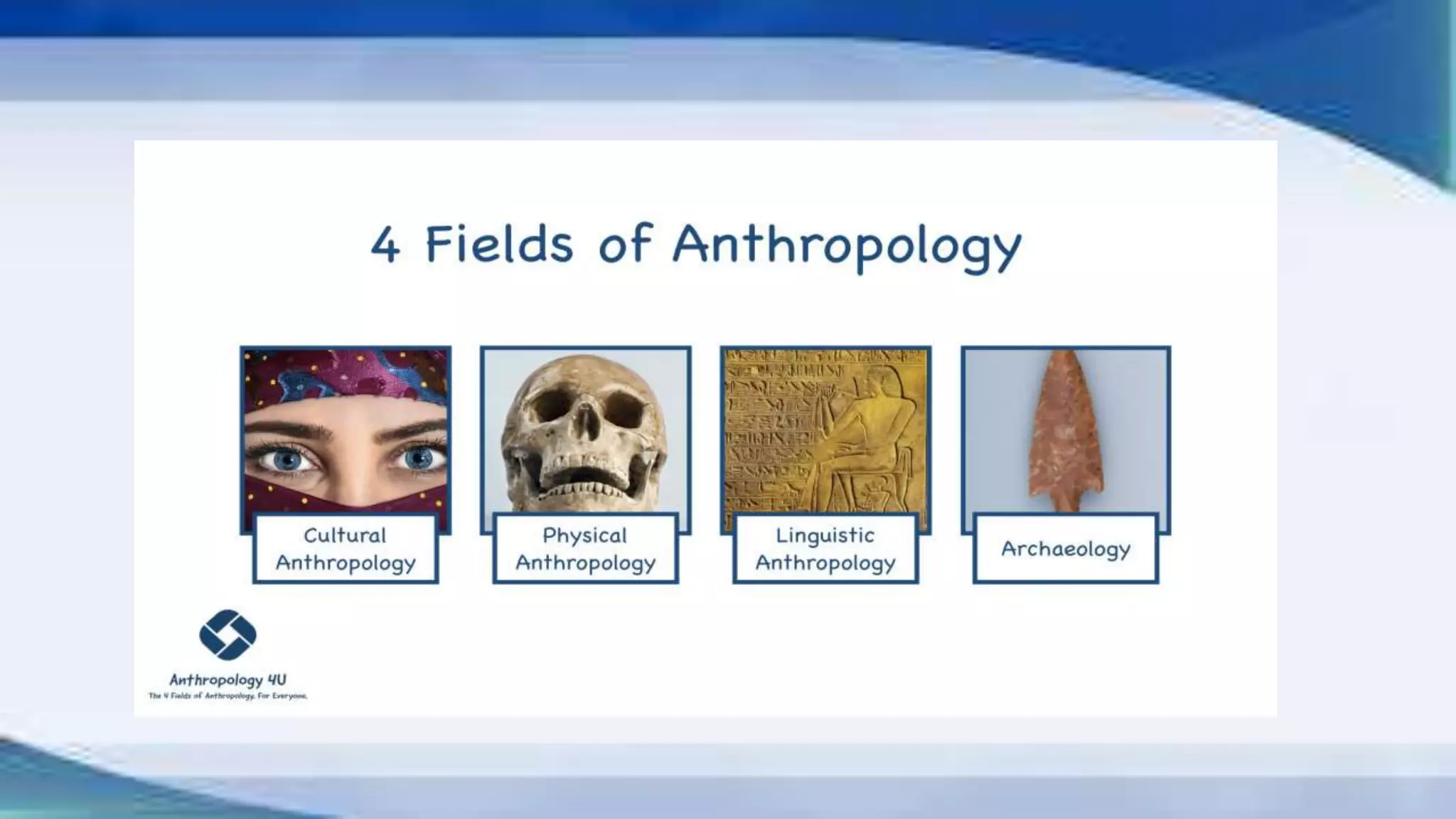
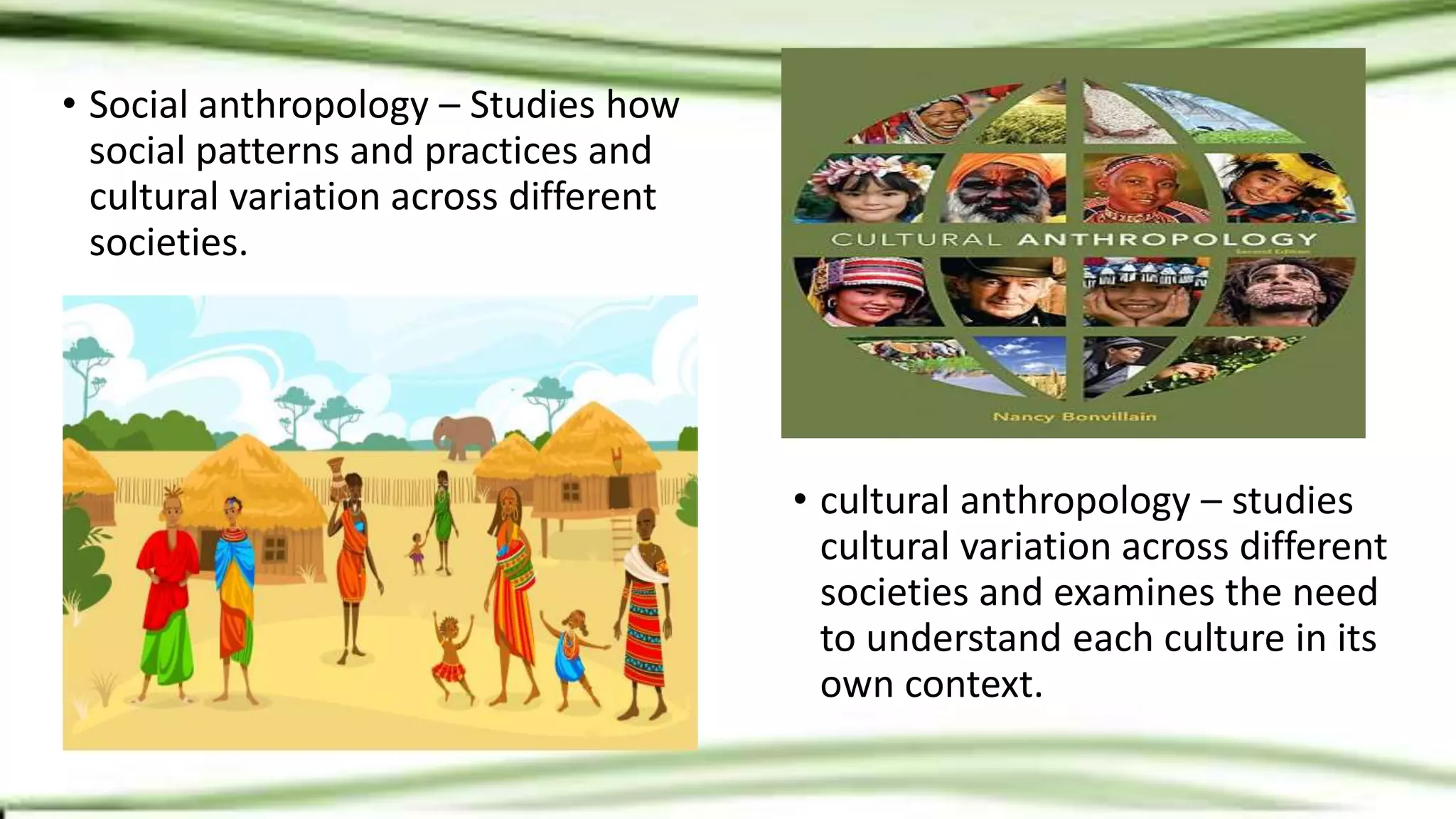
• Social anthropology– Studies how
social patterns and practices and
cultural variation across different
societies.
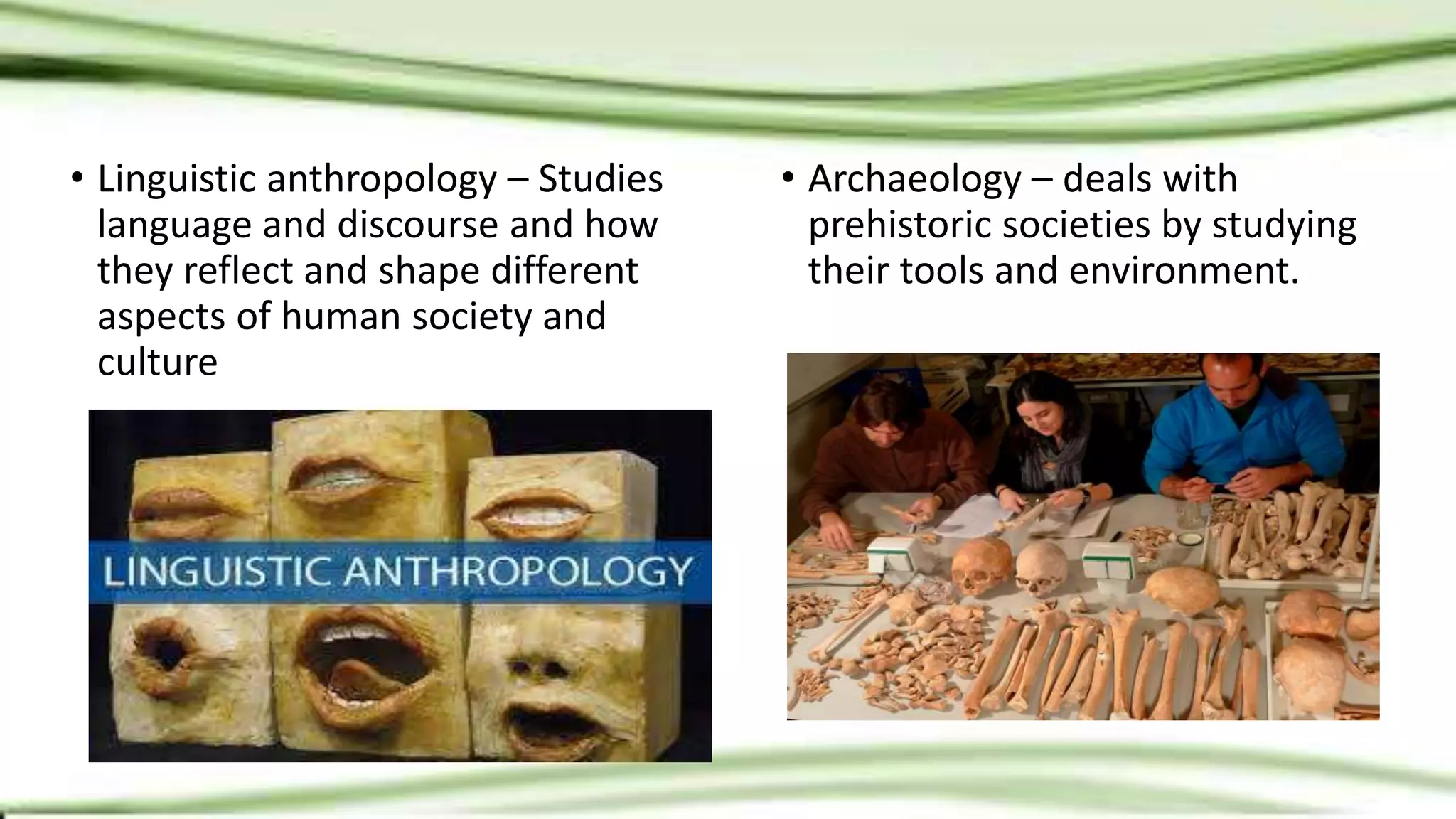
• cultural anthropology – studies
cultural variation across different
societies and examines the need
to understand each culture in its
own context.
10.
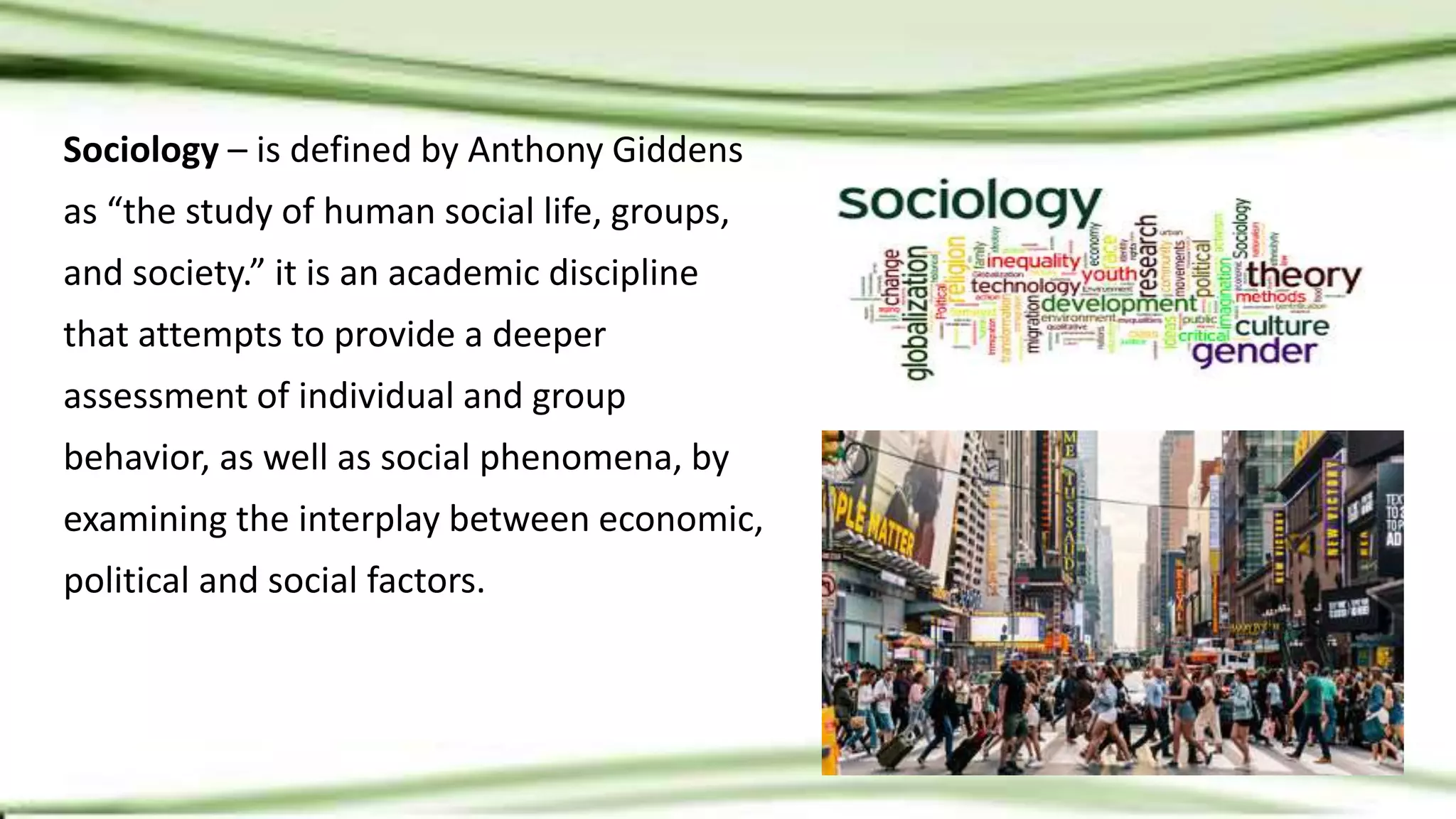
• Linguistic anthropology– Studies
language and discourse and how
they reflect and shape different
aspects of human society and
culture
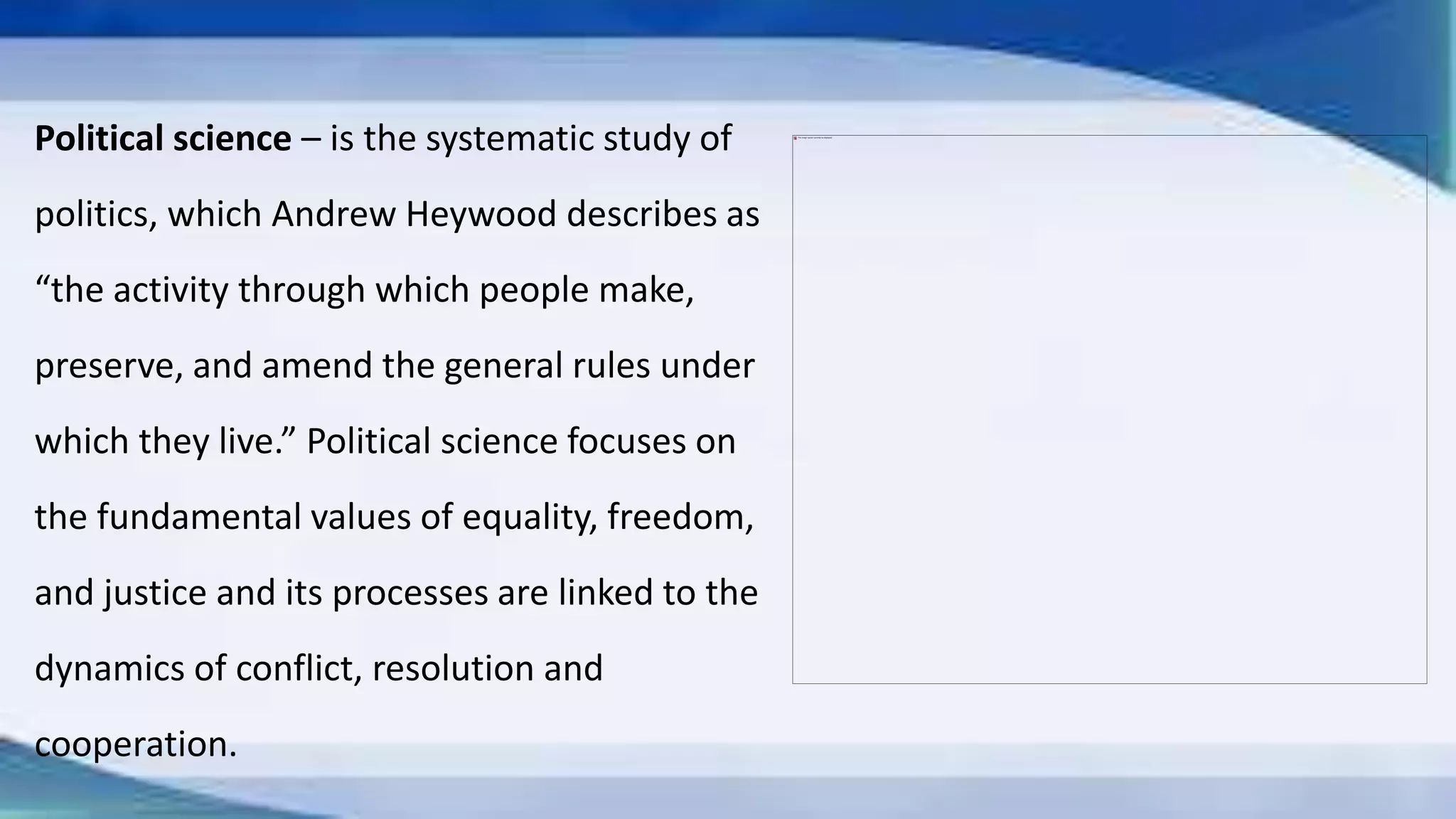
• Archaeology – deals with
prehistoric societies by studying
their tools and environment.
11.
Sociology – isdefined by Anthony Giddens
as “the study of human social life, groups,
and society.” it is an academic discipline
that attempts to provide a deeper
assessment of individual and group
behavior, as well as social phenomena, by
examining the interplay between economic,
political and social factors.
12.
Political science –is the systematic study of
politics, which Andrew Heywood describes as
“the activity through which people make,
preserve, and amend the general rules under
which they live.” Political science focuses on
the fundamental values of equality, freedom,
and justice and its processes are linked to the
dynamics of conflict, resolution and
cooperation.
13.
Some political scienceis further divided into various areas of interest.
• Public administration – which examines how the government functions
and how decisions and policies are made.
• Political economy – which evaluates the interplay between economics,
politics, and law and its implications to the various institutions within
society.
• Comparative politics - which compares domestic politics and governance
systems across different sovereign states.



![Chapter 1 ucsp [autosaved]](https://cdn.slidesharecdn.com/ss_thumbnails/chapter1ucspautosaved-191102041335-thumbnail.jpg?width=640&height=640&fit=bounds)


