




Innovation in:
K12 Online and Blended Learning
Verena Roberts @verenanz
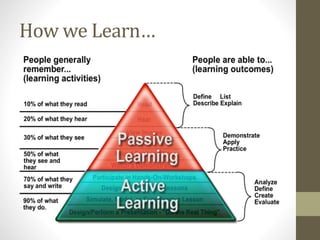
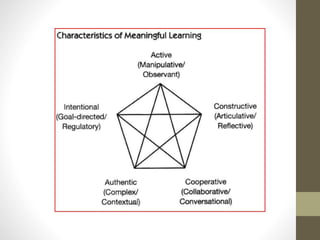
How we Learn…
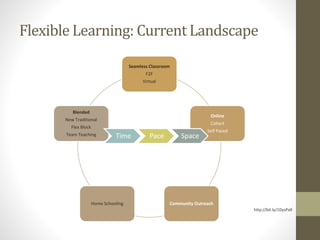
Flexible Learning: Current Landscape
Seamless Classroom
F2F
Virtual
Online
Cohort
Self Paced
Community OutreachHome Schooling
Blended
New Traditional
Flex Block
Team Teaching
http://bit.ly/1DysPa9
Time Pace Space
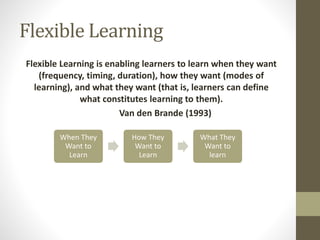
Flexible Learning
Flexible Learning is enabling learners to learn when they want
(frequency, timing, duration), how they want (modes of
learning), and what they want (that is, learners can define
what constitutes learning to them).
Van den Brande (1993)
When They
Want to
Learn
How They
Want to
Learn
What They
Want to
learn
What does
Flexible Learning
Look like?
“Learning is Learning”
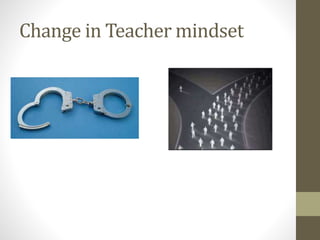
Change in Teacher mindset
Rethinking: How We Teach
What would these teams look
like?
Team Teaching
Cross – Curricular Teams
Specialized Teams
Content Specialist
Master and Mentorship Teams
Team Innovation
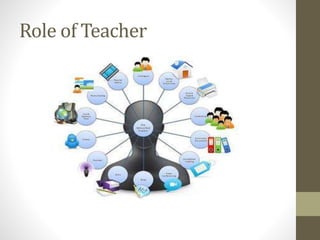
Role of Teacher
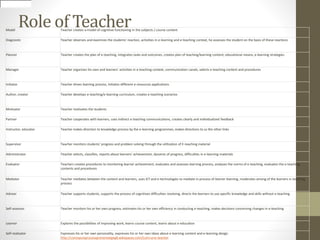
Role of TeacherModel Teacher creates a model of cognitive functioning in the subjects / course content
Diagnostic Teacher observes and examines the students' reaction, activities in e-learning and e-teaching context, he assesses the student on the basis of these reactions
Planner Teacher creates the plan of e-teaching, integrates tasks and outcomes, creates plan of teaching/learning content, educational means, e-learning strategies.
Manager Teacher organizes his own and learners' activities in e-teaching context, communication canals, selects e-teaching content and procedures
Initiator Teacher drives learning process, initiates different e-resources applications
Author, creator Teacher develops e-teaching/e-learning curriculum, creates e-teaching scenarios
Motivator Teacher motivates the students
Partner Teacher cooperates with learners, uses indirect e-teaching communications, creates clearly and individualized feedback
Instructor, educator Teacher makes direction to knowledge process by the e-learning programmes, makes directions to us the other links
Supervisor Teacher monitors students' progress and problem solving through the utiltzation of E-teaching material
Administrator Teacher selects, classifies, reports about learners' achievement, dynamic of progress, difficulties in e-learning materials
Evaluator Teachers creates procedures to monitoring learner achievement, evaluates and assesses learning process, analyzes the norms of e-teaching, evaluates the e-teaching
contents and procedures
Mediator Teacher mediates between the content and learners, uses ICT and e-technologies to mediate in process of learner learning, moderates among of the learners in teaching
process
Adviser Teacher supports students, supports the process of cognitives difficulties resolving, directs the learners to use specific knowledge and skills without e-teaching
Self-assessor Teacher monitors his or her own progress, estimates his or her own efficiency in conducting e-teaching, makes decisions concerning changes in e-teaching
Learner Explores the possibilities of improving work, learns course content, learns about e-education
Self-realisator Expresses his or her own personality, expresses his or her own ideas about e-learning content and e-learning design
http://concepcioprocesaprenentatgeg8.wikispaces.com/Com+a+e-teacher
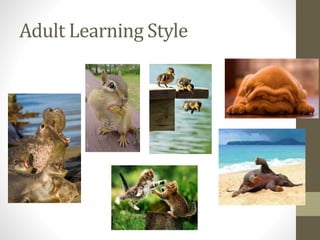
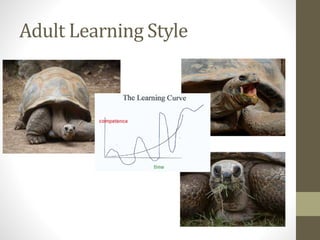
Adult Learning Style
Learning Pathways
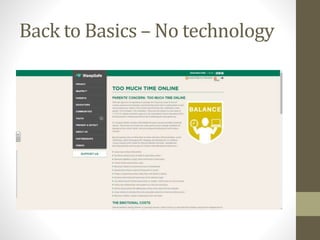
Back to Basics – No technology
Do you need Digital Tools in
Flexible Learning?
Does Technology benefit a
program?
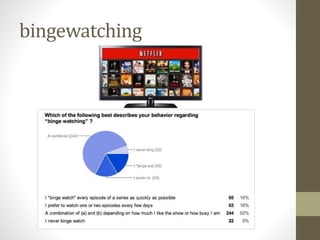
bingewatching
Where is the research to support an
asynchronous anyplace anytime online
model?
Are we doing students a disservice by
offering an option that does not meet
the needs of the majority of students?
Is anyplace, anytime learning actually
possible, feasible or sustainable?
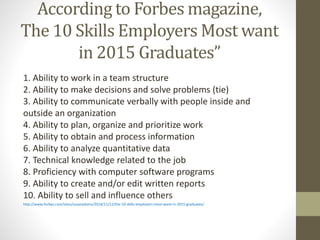
According to Forbes magazine,
The 10 Skills Employers Most want
in 2015 Graduates”
1. Ability to work in a team structure
2. Ability to make decisions and solve problems (tie)
3. Ability to communicate verbally with people inside and
outside an organization
4. Ability to plan, organize and prioritize work
5. Ability to obtain and process information
6. Ability to analyze quantitative data
7. Technical knowledge related to the job
8. Proficiency with computer software programs
9. Ability to create and/or edit written reports
10. Ability to sell and influence others
http://www.forbes.com/sites/susanadams/2014/11/12/the-10-skills-employers-most-want-in-2015-graduates/
The rise of the Introverts ?
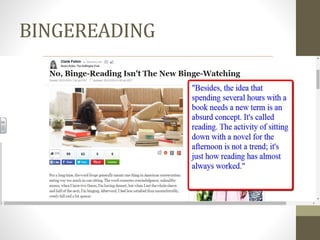
BINGEREADING
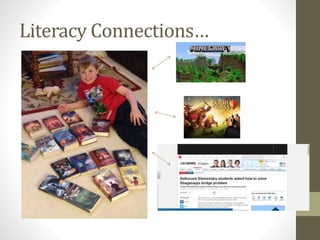
Literacy Connections…
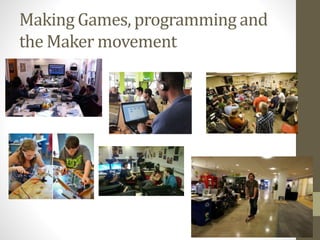
Making Games, programming and
the Maker movement
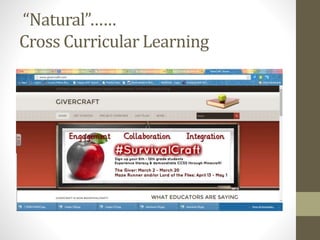
“Natural”……
Cross Curricular Learning
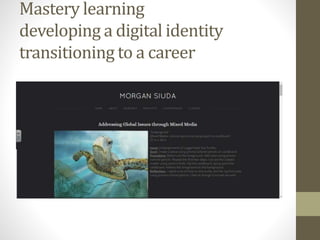
Mastery learning
developing a digital identity
transitioning to a career
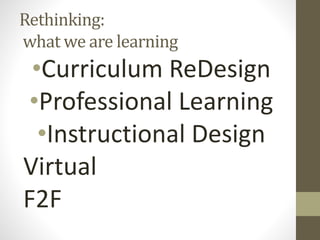
Rethinking:
what we are learning
•Curriculum ReDesign
•Professional Learning
•Instructional Design
Virtual
F2F
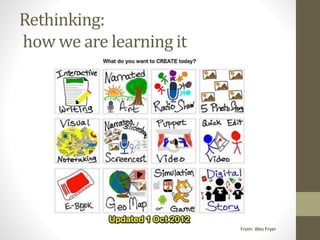
Rethinking:
how we are learning it
From: Wes Fryer
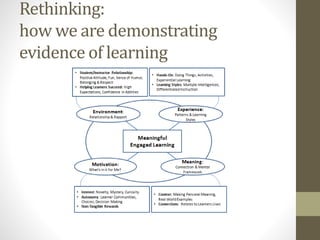
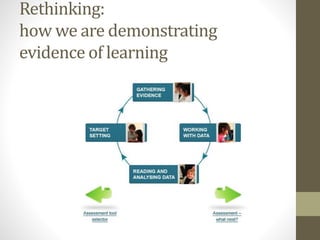
Rethinking:
how we are demonstrating
evidence of learning
Rethinking:
how we are demonstrating
evidence of learning
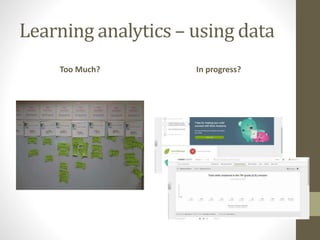
Learning analytics – using data
Too Much? In progress?
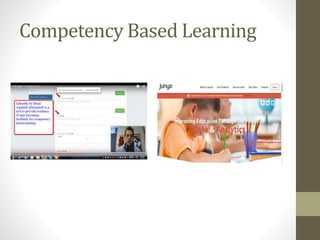
Competency Based Learning
VerenaRoberts
verenanz@gmail.com
Twitter: @verenanz

Innovation in k12 Education

  • 1.
    Innovation in: K12 Onlineand Blended Learning Verena Roberts @verenanz
  • 3.
  • 4.
    Flexible Learning: CurrentLandscape Seamless Classroom F2F Virtual Online Cohort Self Paced Community OutreachHome Schooling Blended New Traditional Flex Block Team Teaching http://bit.ly/1DysPa9 Time Pace Space
  • 5.
    Flexible Learning Flexible Learningis enabling learners to learn when they want (frequency, timing, duration), how they want (modes of learning), and what they want (that is, learners can define what constitutes learning to them). Van den Brande (1993) When They Want to Learn How They Want to Learn What They Want to learn
  • 6.
    What does Flexible Learning Looklike? “Learning is Learning”
  • 7.
  • 8.
    Rethinking: How WeTeach What would these teams look like? Team Teaching Cross – Curricular Teams Specialized Teams Content Specialist Master and Mentorship Teams Team Innovation
  • 9.
  • 10.
    Role of TeacherModelTeacher creates a model of cognitive functioning in the subjects / course content Diagnostic Teacher observes and examines the students' reaction, activities in e-learning and e-teaching context, he assesses the student on the basis of these reactions Planner Teacher creates the plan of e-teaching, integrates tasks and outcomes, creates plan of teaching/learning content, educational means, e-learning strategies. Manager Teacher organizes his own and learners' activities in e-teaching context, communication canals, selects e-teaching content and procedures Initiator Teacher drives learning process, initiates different e-resources applications Author, creator Teacher develops e-teaching/e-learning curriculum, creates e-teaching scenarios Motivator Teacher motivates the students Partner Teacher cooperates with learners, uses indirect e-teaching communications, creates clearly and individualized feedback Instructor, educator Teacher makes direction to knowledge process by the e-learning programmes, makes directions to us the other links Supervisor Teacher monitors students' progress and problem solving through the utiltzation of E-teaching material Administrator Teacher selects, classifies, reports about learners' achievement, dynamic of progress, difficulties in e-learning materials Evaluator Teachers creates procedures to monitoring learner achievement, evaluates and assesses learning process, analyzes the norms of e-teaching, evaluates the e-teaching contents and procedures Mediator Teacher mediates between the content and learners, uses ICT and e-technologies to mediate in process of learner learning, moderates among of the learners in teaching process Adviser Teacher supports students, supports the process of cognitives difficulties resolving, directs the learners to use specific knowledge and skills without e-teaching Self-assessor Teacher monitors his or her own progress, estimates his or her own efficiency in conducting e-teaching, makes decisions concerning changes in e-teaching Learner Explores the possibilities of improving work, learns course content, learns about e-education Self-realisator Expresses his or her own personality, expresses his or her own ideas about e-learning content and e-learning design http://concepcioprocesaprenentatgeg8.wikispaces.com/Com+a+e-teacher
  • 11.
  • 12.
  • 15.
  • 16.
    Back to Basics– No technology
  • 17.
    Do you needDigital Tools in Flexible Learning? Does Technology benefit a program?
  • 18.
  • 19.
    Where is theresearch to support an asynchronous anyplace anytime online model? Are we doing students a disservice by offering an option that does not meet the needs of the majority of students? Is anyplace, anytime learning actually possible, feasible or sustainable?
  • 20.
    According to Forbesmagazine, The 10 Skills Employers Most want in 2015 Graduates” 1. Ability to work in a team structure 2. Ability to make decisions and solve problems (tie) 3. Ability to communicate verbally with people inside and outside an organization 4. Ability to plan, organize and prioritize work 5. Ability to obtain and process information 6. Ability to analyze quantitative data 7. Technical knowledge related to the job 8. Proficiency with computer software programs 9. Ability to create and/or edit written reports 10. Ability to sell and influence others http://www.forbes.com/sites/susanadams/2014/11/12/the-10-skills-employers-most-want-in-2015-graduates/
  • 21.
    The rise ofthe Introverts ?
  • 22.
  • 23.
  • 24.
    Making Games, programmingand the Maker movement
  • 25.
  • 26.
    Mastery learning developing adigital identity transitioning to a career
  • 28.
    Rethinking: what we arelearning •Curriculum ReDesign •Professional Learning •Instructional Design Virtual F2F
  • 29.
    Rethinking: how we arelearning it From: Wes Fryer
  • 30.
    Rethinking: how we aredemonstrating evidence of learning
  • 31.
    Rethinking: how we aredemonstrating evidence of learning
  • 32.
    Learning analytics –using data Too Much? In progress?
  • 33.
  • 36.