Blended Learning
ICT Class – GROUP:
Aderina Febriana
Choirun Nisa
Eka Prasetia Bakti
Lusiana Dumbi
What is Blended
Learning?
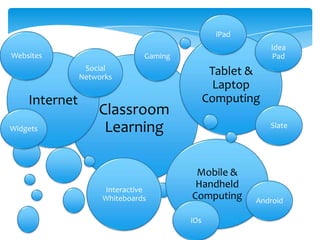
iPad
Websites

Idea
Pad

Gaming
Social
Networks

Internet
Widgets

Tablet &
Laptop
Computing

Classroom
Learning

Interactive
Whiteboards

Slate

Mobile &
Handheld
Computing
iOs

Android
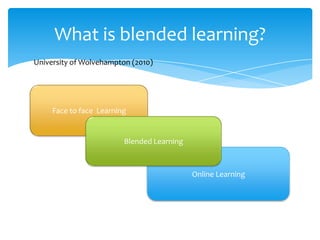
What is blended learning?
University of Wolvehampton (2010)

Face to face Learning

Blended Learning

Online Learning
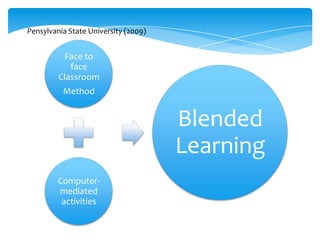
Pensylvania State University (2009)

Face to
face
Classroom
Method

Blended
Learning
Computermediated
activities
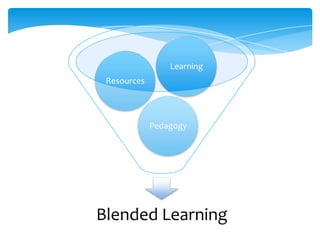
Learning

Resources

Pedagogy

Blended Learning
Whitelock and Jeffs (2003)
Combining or mixing web-based technology to
accomplish an educational goal
Combining pedagogical approaches to produce an
optimal learning outcome with or without instructional
technology;
Combining any form of instructional technology with
face-to-face instructor-led training; and
Combining instructional technology with actual job tasks
Valiathan (2002)
Skill Driven Learning
•Combines self-paced learning with instructor or facilitator
support to develop specific knowledge and skills

Attitude Driven Learning
•Mixes various events and delivery media to develop
specific behaviour

Competency Driven Learning
•Blends the performance support tools with knowledge
management resources and mentoring to develop
workplace competencies
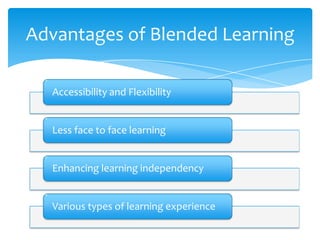
Advantages of Blended Learning
Accessibility and Flexibility

Less face to face learning

Enhancing learning independency

Various types of learning experience
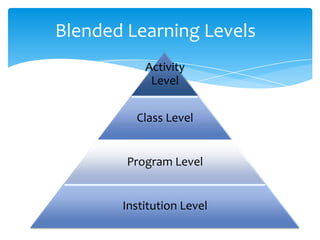
Blended Learning Levels
Activity
Level
Class Level

Program Level

Institution Level
Why Blended
Learning?
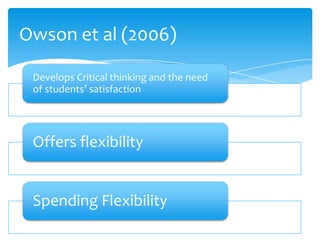
Owson et al (2006)
Develops Critical thinking and the need
of students’ satisfaction

Offers flexibility

Spending Flexibility
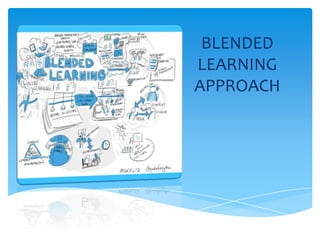
BLENDED
LEARNING
APPROACH
Types of blends useful in providing a complete
learning environment for students:
Full provision of module related documents in
electronic format
Regular formative assessment with feedback
Opportunities to learn from each other
collaboratively
Electronic personal development planning
The opportunity to submit all appropriate
summative assessment electronically
Face to face learning is interactive
Learner in Blended learning are able to:
Have 24/7 access to all learning content, and ensure the equality of
access
Gauge their progress against the learning outcomes, to receive
supporting feedback on this progress, and for staff to have
information on student’s progress
Participate, and engage with interactive learning opportunities in
her or his face-to-face learning sessions.
Use asynchronous collaborative learning which extends the faceto-face learning, creating supportive learning networks, managed
by learners at a time and place best suited to their needs.
Understand students’ process, act on feedback so as become more
effective and successful, as well as collecting evidence on
achievement to enhance our learners employability.
Save time and money
Blended Learning Application in
Language Learning
a. Blended e-learning (Bel)
b. Cooperative learning (CL)
c. Blended e-learning cooperative
approach (BeLCA)
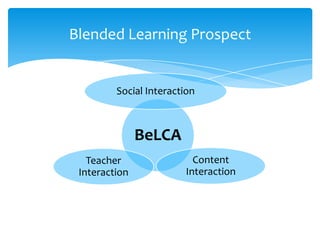
Blended Learning Prospect

Social Interaction

BeLCA
Teacher
Interaction

Content
Interaction
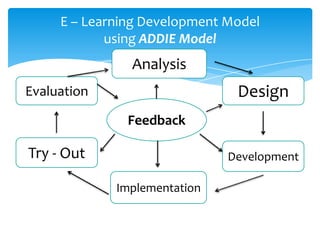
E – Learning Development Model
using ADDIE Model

Analysis

Design

Evaluation
Feedback

Try - Out

Development
Implementation
Factors that Promote Successful
Blended Learning
Institutional success factors
Regarding teachers
Regarding students
CONCLUSION

Blended learning can be applied as an alternative
approach in learning and also can be integrated with
cooperative learning and colaborative e-learning.

Blended learning-3

  • 1.
    Blended Learning ICT Class– GROUP: Aderina Febriana Choirun Nisa Eka Prasetia Bakti Lusiana Dumbi
  • 2.
  • 3.
  • 4.
    What is blendedlearning? University of Wolvehampton (2010) Face to face Learning Blended Learning Online Learning
  • 5.
    Pensylvania State University(2009) Face to face Classroom Method Blended Learning Computermediated activities
  • 6.
  • 7.
    Whitelock and Jeffs(2003) Combining or mixing web-based technology to accomplish an educational goal Combining pedagogical approaches to produce an optimal learning outcome with or without instructional technology; Combining any form of instructional technology with face-to-face instructor-led training; and Combining instructional technology with actual job tasks
  • 8.
    Valiathan (2002) Skill DrivenLearning •Combines self-paced learning with instructor or facilitator support to develop specific knowledge and skills Attitude Driven Learning •Mixes various events and delivery media to develop specific behaviour Competency Driven Learning •Blends the performance support tools with knowledge management resources and mentoring to develop workplace competencies
  • 9.
    Advantages of BlendedLearning Accessibility and Flexibility Less face to face learning Enhancing learning independency Various types of learning experience
  • 10.
    Blended Learning Levels Activity Level ClassLevel Program Level Institution Level
  • 11.
  • 12.
    Owson et al(2006) Develops Critical thinking and the need of students’ satisfaction Offers flexibility Spending Flexibility
  • 13.
  • 14.
    Types of blendsuseful in providing a complete learning environment for students: Full provision of module related documents in electronic format Regular formative assessment with feedback Opportunities to learn from each other collaboratively Electronic personal development planning The opportunity to submit all appropriate summative assessment electronically Face to face learning is interactive
  • 15.
    Learner in Blendedlearning are able to: Have 24/7 access to all learning content, and ensure the equality of access Gauge their progress against the learning outcomes, to receive supporting feedback on this progress, and for staff to have information on student’s progress Participate, and engage with interactive learning opportunities in her or his face-to-face learning sessions. Use asynchronous collaborative learning which extends the faceto-face learning, creating supportive learning networks, managed by learners at a time and place best suited to their needs. Understand students’ process, act on feedback so as become more effective and successful, as well as collecting evidence on achievement to enhance our learners employability. Save time and money
  • 16.
    Blended Learning Applicationin Language Learning a. Blended e-learning (Bel) b. Cooperative learning (CL) c. Blended e-learning cooperative approach (BeLCA)
  • 17.
    Blended Learning Prospect SocialInteraction BeLCA Teacher Interaction Content Interaction
  • 18.
    E – LearningDevelopment Model using ADDIE Model Analysis Design Evaluation Feedback Try - Out Development Implementation
  • 19.
    Factors that PromoteSuccessful Blended Learning Institutional success factors Regarding teachers Regarding students
  • 20.
    CONCLUSION Blended learning canbe applied as an alternative approach in learning and also can be integrated with cooperative learning and colaborative e-learning.