 Nanotechnology is the nexus of sciences.
 It includes anything smaller than 100 nanometers with
novel properties.
 The advent of solar energy just about solved all the
problems.
 The conventional solar cells that are used to harness solar
energy are less efficient and cannot function properly on a
cloudy day.
 The use of nanotechnology in the solar cells created an
opportunity to overcome this problem , thereby increasing
the efficiency.
 This paper deals with an offshoot in the advancement of
nanotechnology and its advantage over commercial solar
cell.
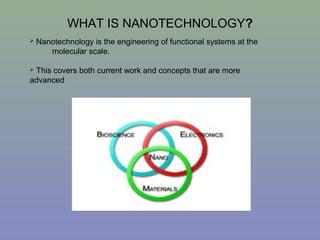
WHAT IS NANOTECHNOLOGY?
 Nanotechnology is the engineering of functional systems at the
molecular scale.
 This covers both current work and concepts that are more
advanced
 Nanotechnology is often referred to as general purpose
technology.
 It offers better built,longer lasting,claner,safer and smarter
products for the home, for medicine and for industries for
ages.
 These properties of nanotechnology have been made use
of in solar cells.
 Nanotechnology comprises a wide variety of disciplines:
chemistry, physics ,materials science, molecular biology
and computer science.
Scientists have invented a plastic solar cell that can
turn the suns power into electric energy even on a
cloudy day
The plastic material uses nanotechnology and contains
the 1st
generation solar cells that can harness the sun’s
invisible infrared rays.
This breakthrough made us to believe that plastic solar
cells could one day become more efficient than the
current solar cell.
 The researchers combined specially designed nano
particles called quantum dots with a polymer to make
the plastic that can detect energy in the infrared.
The solar cell created is actually a hybrid, comprised of
tiny nanorods dispersed in an organic polymer or plastic.
A layer only 200 nanometers thick is sandwiched between
electrodes and can produce at present about .7 volts.

The electrode layers and nanorods /polymer layers
could be applied in separate coats, making production fairly easy.
The technology takes advantage of recent advances in
nanotechnology specifically the production of nanocrystals and
nanorods.
The length of the nanorods may be approximately
60nanometers.Then the nanorods are mixed with a plastic
semiconductor called p3ht-poly-(3-hexylthiophene) a transparent
electrode is coated with the mixture.
The nanorods act like wires. When they absorb light of a
specific wavelength, they generate an electron plus an electron
hole-a vacancy in the crystal that moves around just like an
electron.
The electron travels the length of the rod until it is collected
by aluminum electrode.
The hole is transferred to the plastic, which is known as a
hole-carrier, and conveyed to the electrode, creating a current.
They are considered to be 30% more
efficient when compared to conventional solar cells.
They are more efficient and more practical in
application.
Traditional solar cells are bulky panels. This is very
compact.
Flexible, roller processed solar cells have the
potential to turn the sun’s power into a clean,
green, consistent source of energy.
Plastic solar cells help in exploiting the infrared radiation
from the suns rays.
They are more effective when compared to the conventional
solar cell.
The major advantage they enjoy is that they can even work
on cloudy days, which is not possible in the former. They are
more compact and less bulkier.
 Though at present, cost is a major draw back, it is bound
be solved in the near future as scientists are working in that
direction.
Thank you
2
all

Infrared plastic solar cell -- tamil youngsters.com

  • 2.
     Nanotechnology isthe nexus of sciences.  It includes anything smaller than 100 nanometers with novel properties.  The advent of solar energy just about solved all the problems.  The conventional solar cells that are used to harness solar energy are less efficient and cannot function properly on a cloudy day.  The use of nanotechnology in the solar cells created an opportunity to overcome this problem , thereby increasing the efficiency.  This paper deals with an offshoot in the advancement of nanotechnology and its advantage over commercial solar cell.
  • 3.
    WHAT IS NANOTECHNOLOGY? Nanotechnology is the engineering of functional systems at the molecular scale.  This covers both current work and concepts that are more advanced
  • 4.
     Nanotechnology isoften referred to as general purpose technology.  It offers better built,longer lasting,claner,safer and smarter products for the home, for medicine and for industries for ages.  These properties of nanotechnology have been made use of in solar cells.  Nanotechnology comprises a wide variety of disciplines: chemistry, physics ,materials science, molecular biology and computer science.
  • 5.
    Scientists have inventeda plastic solar cell that can turn the suns power into electric energy even on a cloudy day The plastic material uses nanotechnology and contains the 1st generation solar cells that can harness the sun’s invisible infrared rays. This breakthrough made us to believe that plastic solar cells could one day become more efficient than the current solar cell.  The researchers combined specially designed nano particles called quantum dots with a polymer to make the plastic that can detect energy in the infrared.
  • 6.
    The solar cellcreated is actually a hybrid, comprised of tiny nanorods dispersed in an organic polymer or plastic. A layer only 200 nanometers thick is sandwiched between electrodes and can produce at present about .7 volts.  The electrode layers and nanorods /polymer layers could be applied in separate coats, making production fairly easy. The technology takes advantage of recent advances in nanotechnology specifically the production of nanocrystals and nanorods. The length of the nanorods may be approximately 60nanometers.Then the nanorods are mixed with a plastic semiconductor called p3ht-poly-(3-hexylthiophene) a transparent electrode is coated with the mixture.
  • 7.
    The nanorods actlike wires. When they absorb light of a specific wavelength, they generate an electron plus an electron hole-a vacancy in the crystal that moves around just like an electron. The electron travels the length of the rod until it is collected by aluminum electrode. The hole is transferred to the plastic, which is known as a hole-carrier, and conveyed to the electrode, creating a current.
  • 8.
    They are consideredto be 30% more efficient when compared to conventional solar cells. They are more efficient and more practical in application. Traditional solar cells are bulky panels. This is very compact. Flexible, roller processed solar cells have the potential to turn the sun’s power into a clean, green, consistent source of energy.
  • 9.
    Plastic solar cellshelp in exploiting the infrared radiation from the suns rays. They are more effective when compared to the conventional solar cell. The major advantage they enjoy is that they can even work on cloudy days, which is not possible in the former. They are more compact and less bulkier.  Though at present, cost is a major draw back, it is bound be solved in the near future as scientists are working in that direction.
  • 10.