Formal and
Informal
Groups
 Formal Group – Established by the organization and
have a public identity and a goal to achieve
 Informal Group – Common interests/ Friendship/
Proximity/ Camaraderie
Introduction
Formal Groups
• A More Natural and enduring work group. Formed where people
perform tasks together as part of their job assignments and referred
to as a team. Describe the prescribed lines of communication and
authority
Informal Groups
• The focus in the formal organization is a network of personal and
social relations not established or required by the formal
organization but exists spontaneously as people associate with each
other
Difference between Formal and Informal
Organizations (John Newstorm and Keith Davis)
Potential Advantage and
Disadvantages of Informal
Organizations
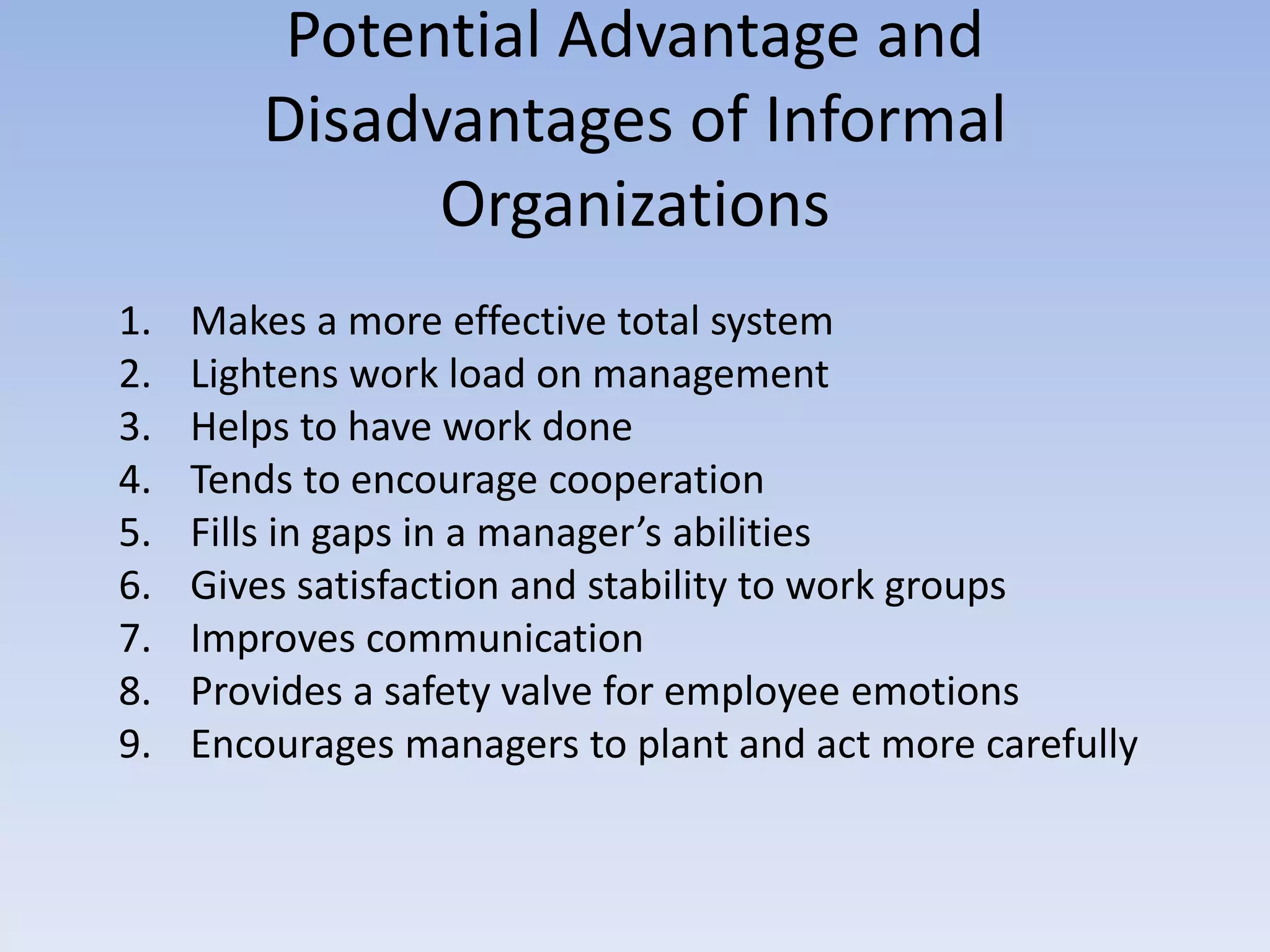
1. Makes a more effective total system
2. Lightens work load on management
3. Helps to have work done
4. Tends to encourage cooperation
5. Fills in gaps in a manager’s abilities
6. Gives satisfaction and stability to work groups
7. Improves communication
8. Provides a safety valve for employee emotions
9. Encourages managers to plant and act more carefully
Potential Advantage and
Disadvantages of Informal
Organizations
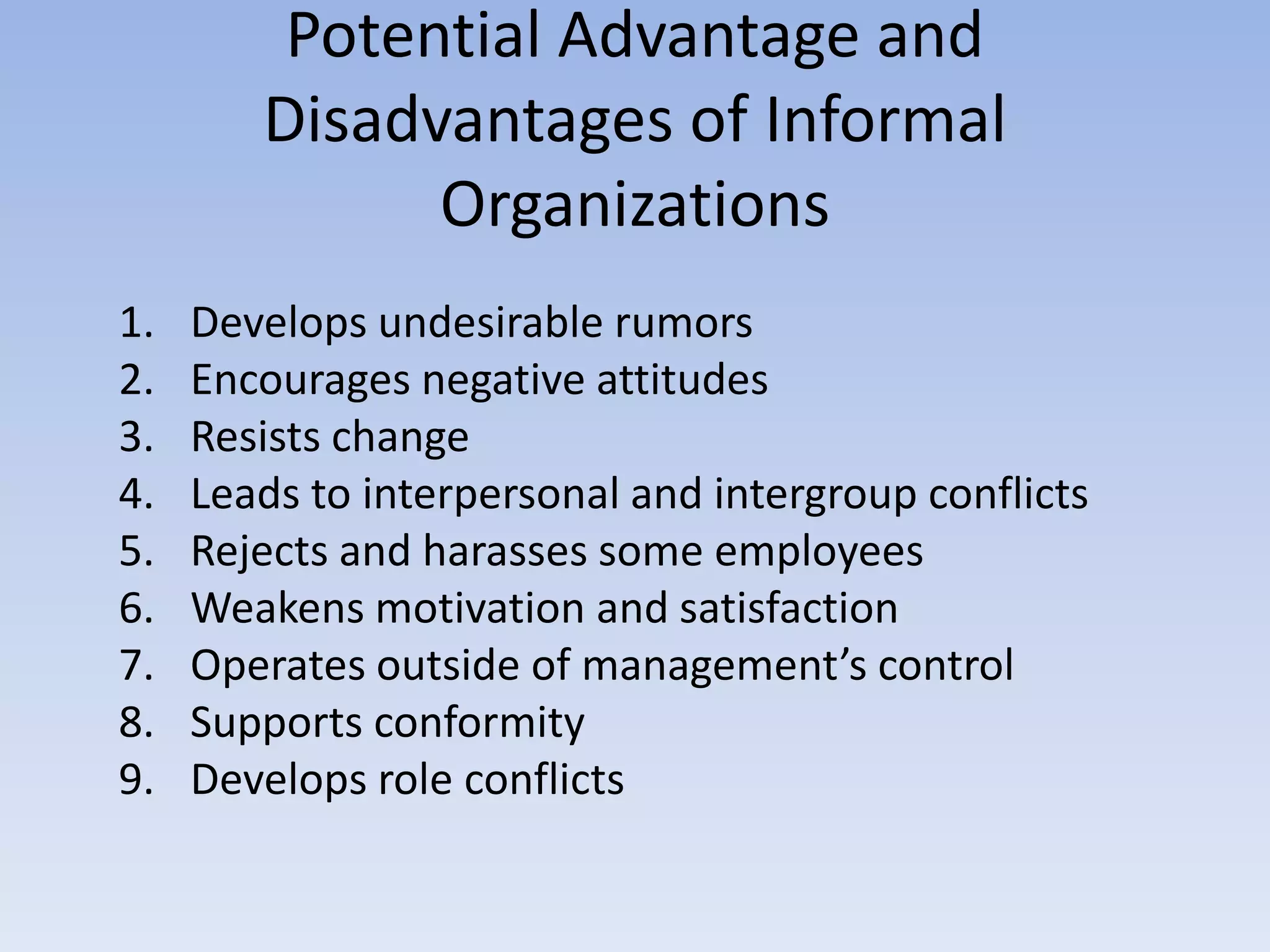
1. Develops undesirable rumors
2. Encourages negative attitudes
3. Resists change
4. Leads to interpersonal and intergroup conflicts
5. Rejects and harasses some employees
6. Weakens motivation and satisfaction
7. Operates outside of management’s control
8. Supports conformity
9. Develops role conflicts
Certain Guidelines that management
may need to apply as approach to
Informal Groups
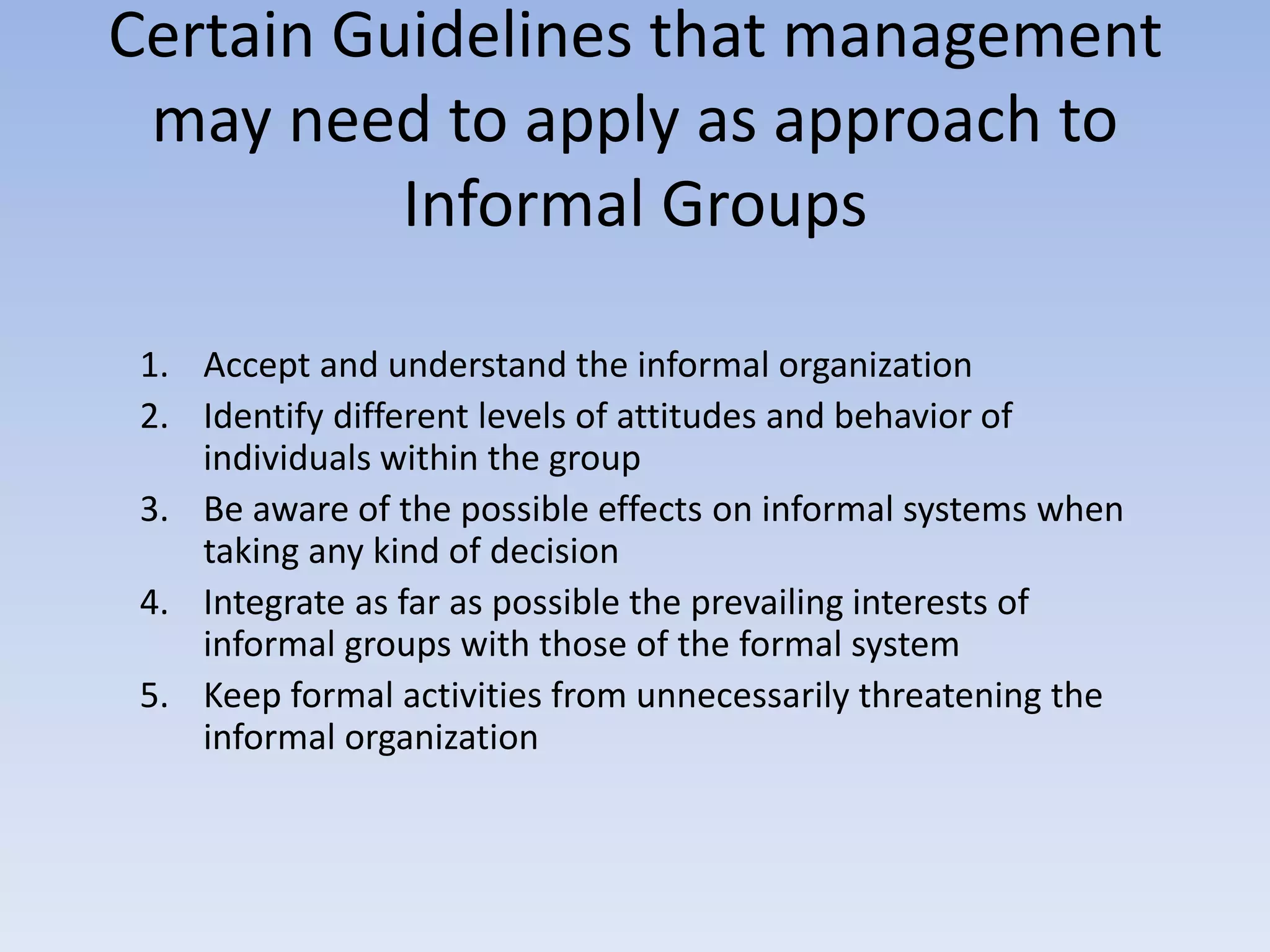
1. Accept and understand the informal organization
2. Identify different levels of attitudes and behavior of
individuals within the group
3. Be aware of the possible effects on informal systems when
taking any kind of decision
4. Integrate as far as possible the prevailing interests of
informal groups with those of the formal system
5. Keep formal activities from unnecessarily threatening the
informal organization
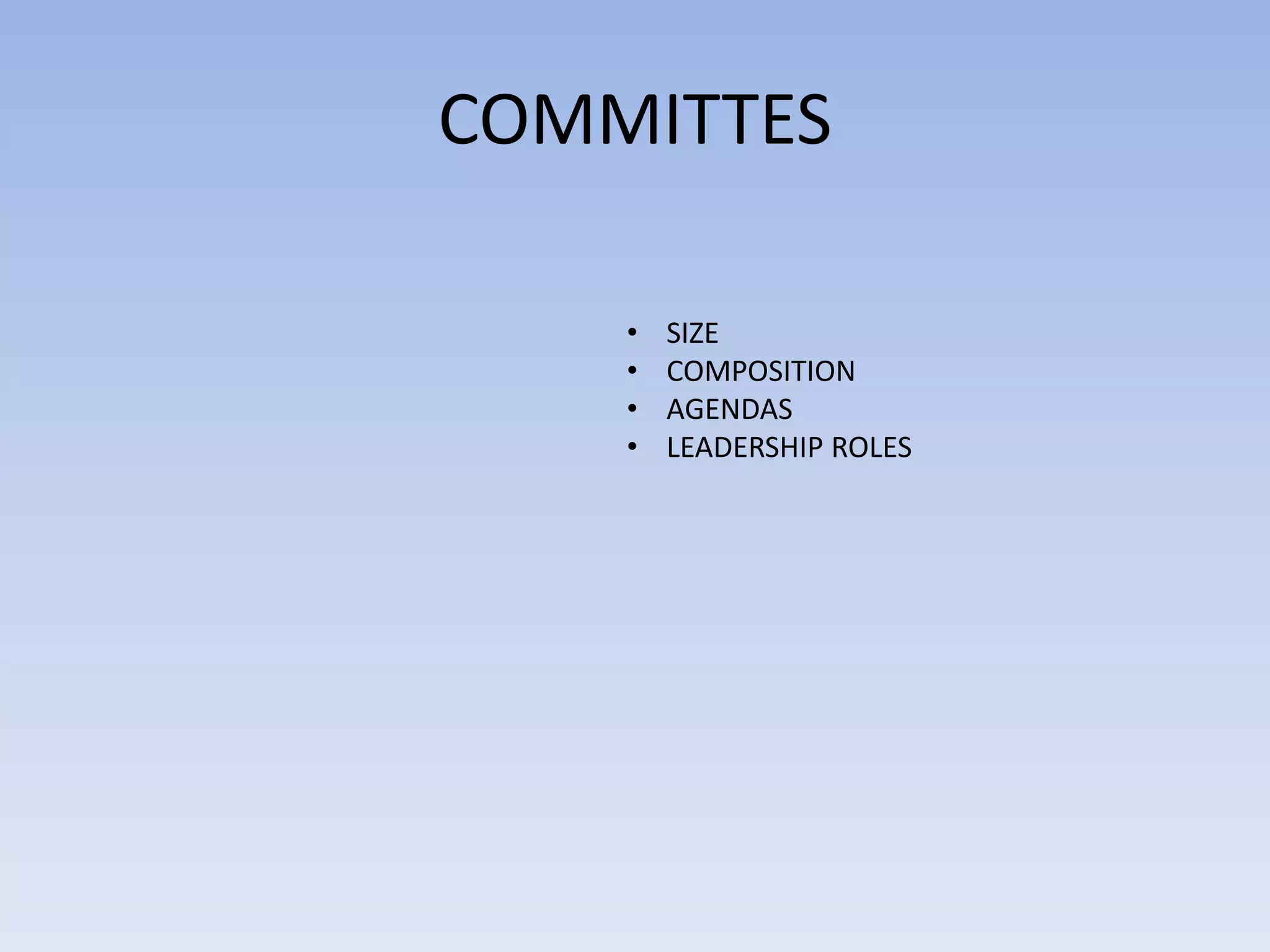
COMMITTES
COMMITTES
• SIZE
• COMPOSITION
• AGENDAS
• LEADERSHIP ROLES
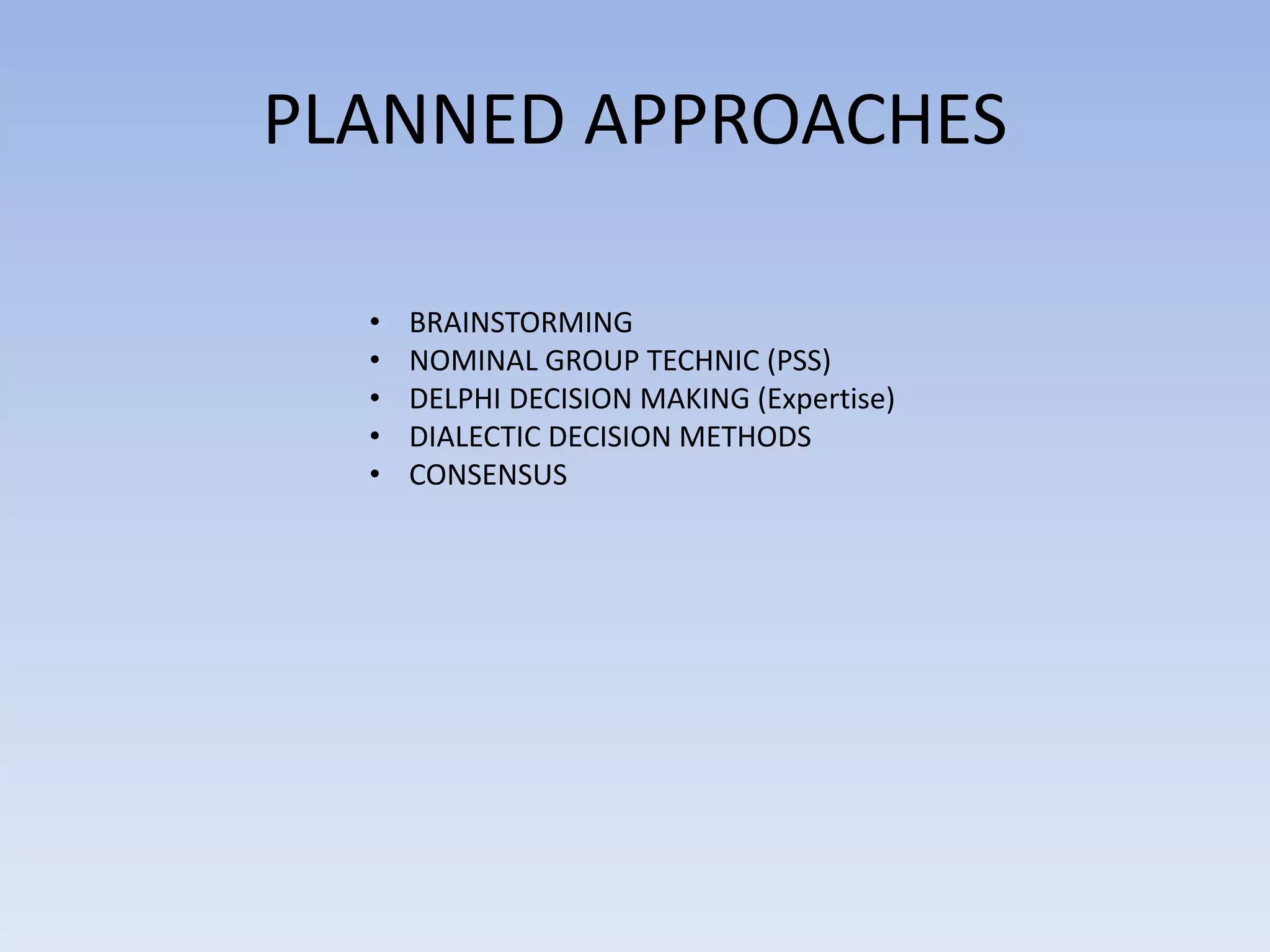
PLANNED APPROACHES
• BRAINSTORMING
• NOMINAL GROUP TECHNIC (PSS)
• DELPHI DECISION MAKING (Expertise)
• DIALECTIC DECISION METHODS
• CONSENSUS
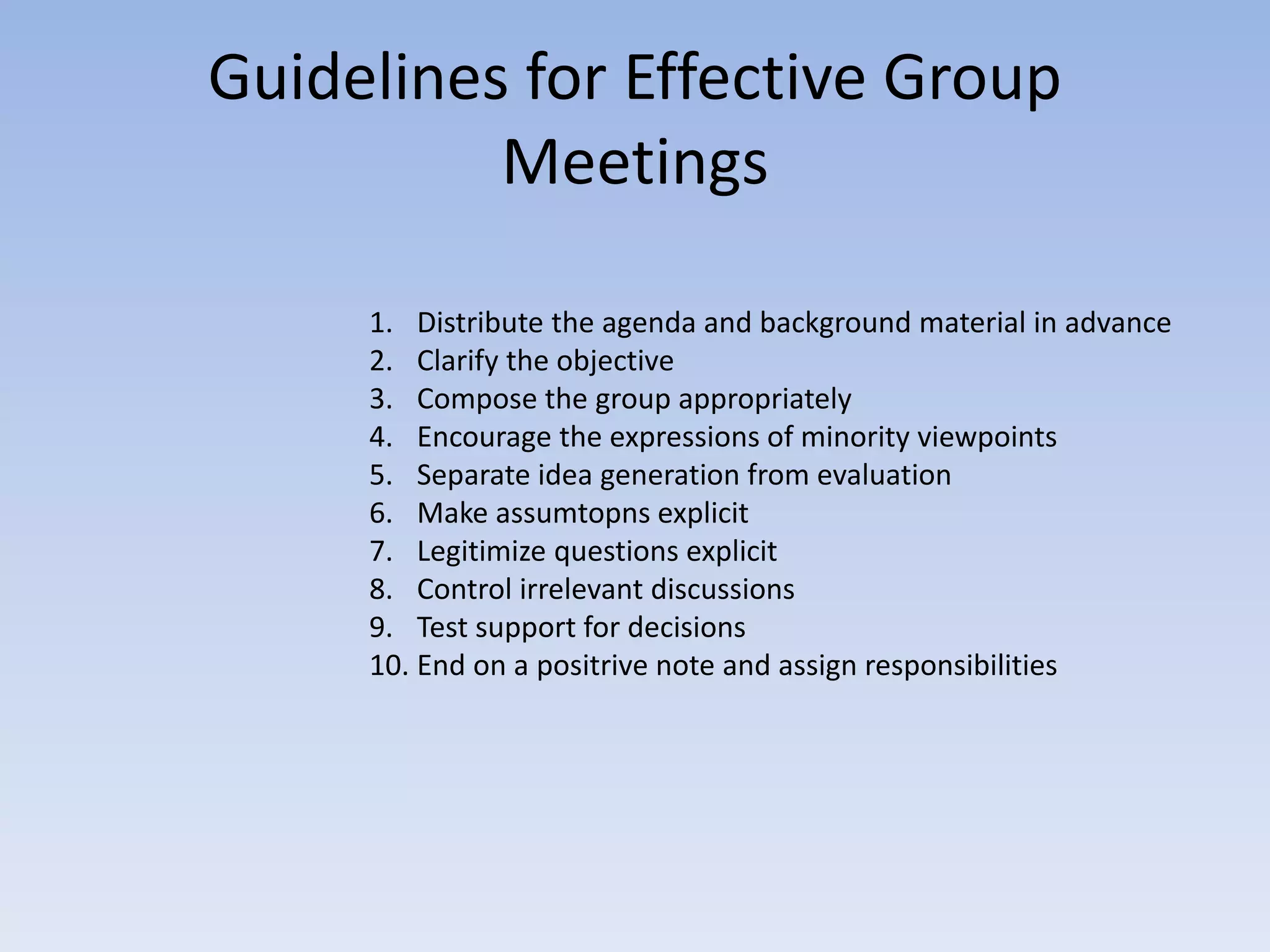
Guidelines for Effective Group
Meetings
1. Distribute the agenda and background material in advance
2. Clarify the objective
3. Compose the group appropriately
4. Encourage the expressions of minority viewpoints
5. Separate idea generation from evaluation
6. Make assumtopns explicit
7. Legitimize questions explicit
8. Control irrelevant discussions
9. Test support for decisions
10. End on a positrive note and assign responsibilities

Formal and informal groups

  • 1.
  • 2.
     Formal Group– Established by the organization and have a public identity and a goal to achieve  Informal Group – Common interests/ Friendship/ Proximity/ Camaraderie Introduction
  • 3.
    Formal Groups • AMore Natural and enduring work group. Formed where people perform tasks together as part of their job assignments and referred to as a team. Describe the prescribed lines of communication and authority
  • 4.
    Informal Groups • Thefocus in the formal organization is a network of personal and social relations not established or required by the formal organization but exists spontaneously as people associate with each other
  • 5.
    Difference between Formaland Informal Organizations (John Newstorm and Keith Davis)
  • 6.
    Potential Advantage and Disadvantagesof Informal Organizations 1. Makes a more effective total system 2. Lightens work load on management 3. Helps to have work done 4. Tends to encourage cooperation 5. Fills in gaps in a manager’s abilities 6. Gives satisfaction and stability to work groups 7. Improves communication 8. Provides a safety valve for employee emotions 9. Encourages managers to plant and act more carefully
  • 7.
    Potential Advantage and Disadvantagesof Informal Organizations 1. Develops undesirable rumors 2. Encourages negative attitudes 3. Resists change 4. Leads to interpersonal and intergroup conflicts 5. Rejects and harasses some employees 6. Weakens motivation and satisfaction 7. Operates outside of management’s control 8. Supports conformity 9. Develops role conflicts
  • 8.
    Certain Guidelines thatmanagement may need to apply as approach to Informal Groups 1. Accept and understand the informal organization 2. Identify different levels of attitudes and behavior of individuals within the group 3. Be aware of the possible effects on informal systems when taking any kind of decision 4. Integrate as far as possible the prevailing interests of informal groups with those of the formal system 5. Keep formal activities from unnecessarily threatening the informal organization
  • 9.
  • 10.
    COMMITTES • SIZE • COMPOSITION •AGENDAS • LEADERSHIP ROLES
  • 11.
    PLANNED APPROACHES • BRAINSTORMING •NOMINAL GROUP TECHNIC (PSS) • DELPHI DECISION MAKING (Expertise) • DIALECTIC DECISION METHODS • CONSENSUS
  • 12.
    Guidelines for EffectiveGroup Meetings 1. Distribute the agenda and background material in advance 2. Clarify the objective 3. Compose the group appropriately 4. Encourage the expressions of minority viewpoints 5. Separate idea generation from evaluation 6. Make assumtopns explicit 7. Legitimize questions explicit 8. Control irrelevant discussions 9. Test support for decisions 10. End on a positrive note and assign responsibilities