Infective
Endocarditis
By-
Shashi Prakash
I Yr. M.Sc. (N)
ILBS
• Endocarditis is an inflammation of the inner layer of the
heart, the endocardium. It usually involves the heart
valves (native or prosthetic valves). Other structures
which may be involved include the interventricular
septum, the chordae tendinae, the mural endocardium,
or even on intracardiac devices.
INFECTIVE ENDOCARDITIS
• Infectious endocarditis involves the heart valves.
• Sources of the infection may be transient bacteremia,
which is common during dental, upper respiratory,
urologic, and lower gastrointestinal diagnostic and
surgical procedures.
• The infection can cause growths on the heart valves,
the lining of the heart, or the lining of the blood
vessels. These growths may be dislodged and send
clots to the brain, lungs, kidneys, or spleen.
Pathophysiology
• Is occur typically at sites of prexisting endocardial
damage. However ,infection in previously normal heart
occur by S. aureus.
• Infection tend to occur at site of endothelial damage
because these area attract deposit of platelets and
fibrin, which are vulnerable to colonisation by blood
born organisms.
• Adjacent tissue are destroyed and abscess may form,
valve regurgitation may develop or increased.
• If the affected valve is damage by tissue
distortion.
•Extra cardiac manifestations e.g. vacuities,
infarcts of skin, spleen ,kidney and brain due to
emboli or immune complex deposits.
CLASSIFICATION
• Sub-acute bacterial endocarditis
• Acute bacterial endocarditis
• Post operative endocarditis
Subacute bacterial endocarditis (SBE)
• Although aggressive, usually develops insidiously and
progresses slowly (i.e, over weeks to months).
• Often, no source of infection or portal of entry is evident.
• SBE is caused most commonly by streptococci (especially
viridans, microaerophilic, anaerobic, and nonenterococcal
group D streptococci and enterococci) and less commonly by
S. aureus, Staphylococcus epidermidis
• SBE often develops on abnormal valves after
asymptomatic bacteremia due to periodontal, GI, or GU
infections.
Acute bacterial endocarditis (ABE)
•Usually develops abruptly and progresses rapidly
(i.e., over days).
•A source of infection or portal of entry is often
evident. When bacteria are virulent or bacterial
exposure is massive, ABE can affect normal valves.
•It is usually caused by S. aureus, group A
hemolytic streptococci, pneumococci, or gonococci.
Post operative or PVE endocarditis:
•Develops in 2 to 3% of patients within 1 yr after
valve replacement and in 0.5%/yr thereafter.
•It is more common after aortic than after mitral
valve replacement and affects mechanical and
bioprosthetic valves equally.
Causes
•Fungus e.g. candida, aspagellus
•Gram negative organisms e.g. pseudomonas
•Bacteria's e.g. staphylococci
•Acute rheumatic fever which cause enlarged and
tender lymph nodes, damages the valves
•Congenital heart disease
Risk Factors
•Previous heart damage
•Dental procedures which lead into the introduction
of Bacterias
•Heart surgery
•Intubations Procedures involving gastrol intestinal
and genitourinaly tracts e.g. barium, enemas,
sigmoidoscopy, catheterisation and Cytoscopy
• Reproductive conditions like delivery of new
babies, abortions and pelvic inflammatory disease
The aortic valve with a large,
irregular, reddish tan vegetation
Here, infective endocarditis on the
mitral valve has spread into the septum
all the way to the tricuspid valve,
producing a fistula.
Microscopically, the valve in infective endocarditis demonstrates friable
vegetations of fibrin and platelets (pink) mixed with inflammatory cells and
bacterial colonies (blue). The friability explains how portions of the vegetation
can break off and embolize.
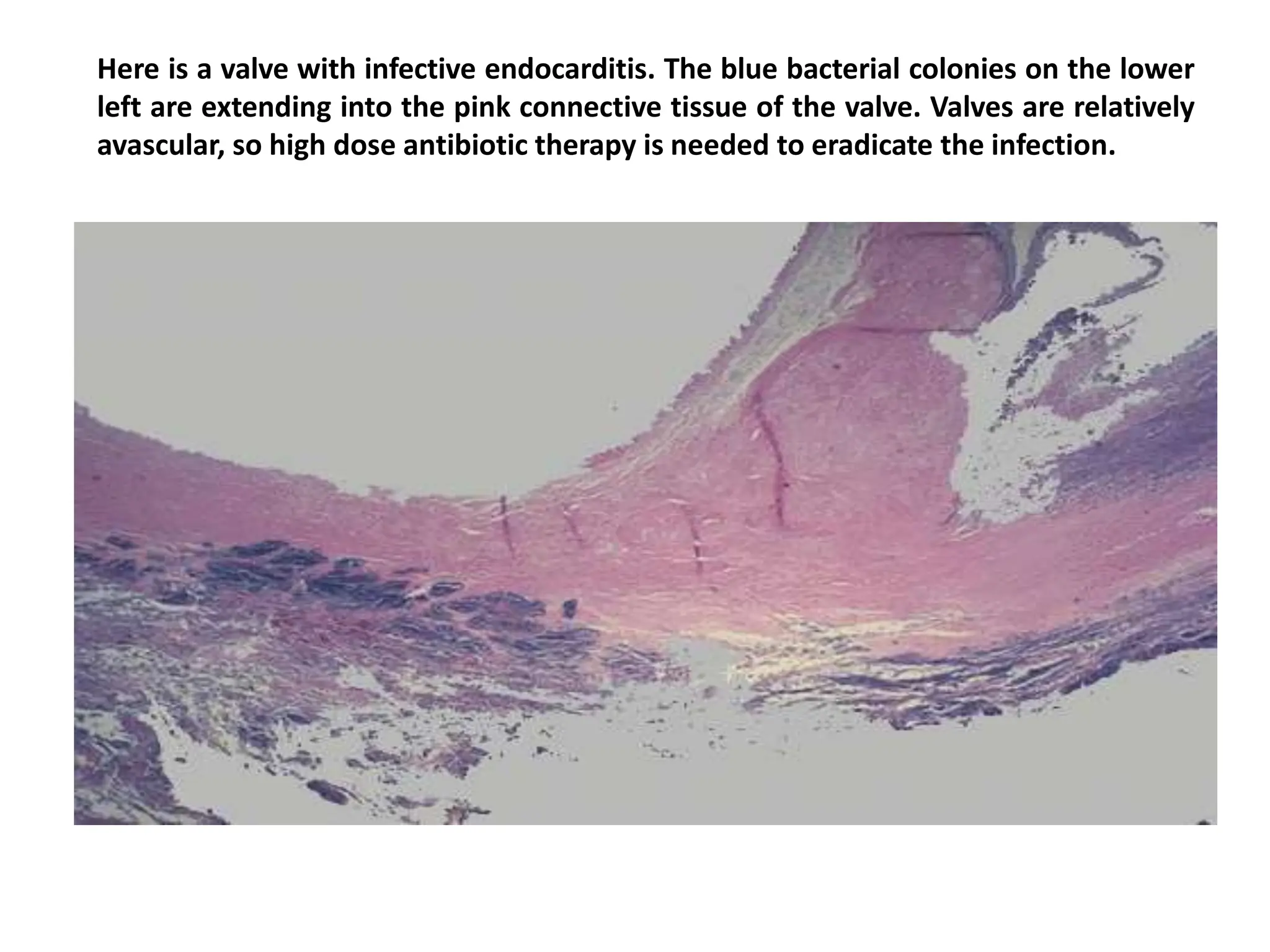
Here is a valve with infective endocarditis. The blue bacterial colonies on the lower
left are extending into the pink connective tissue of the valve. Valves are relatively
avascular, so high dose antibiotic therapy is needed to eradicate the infection.
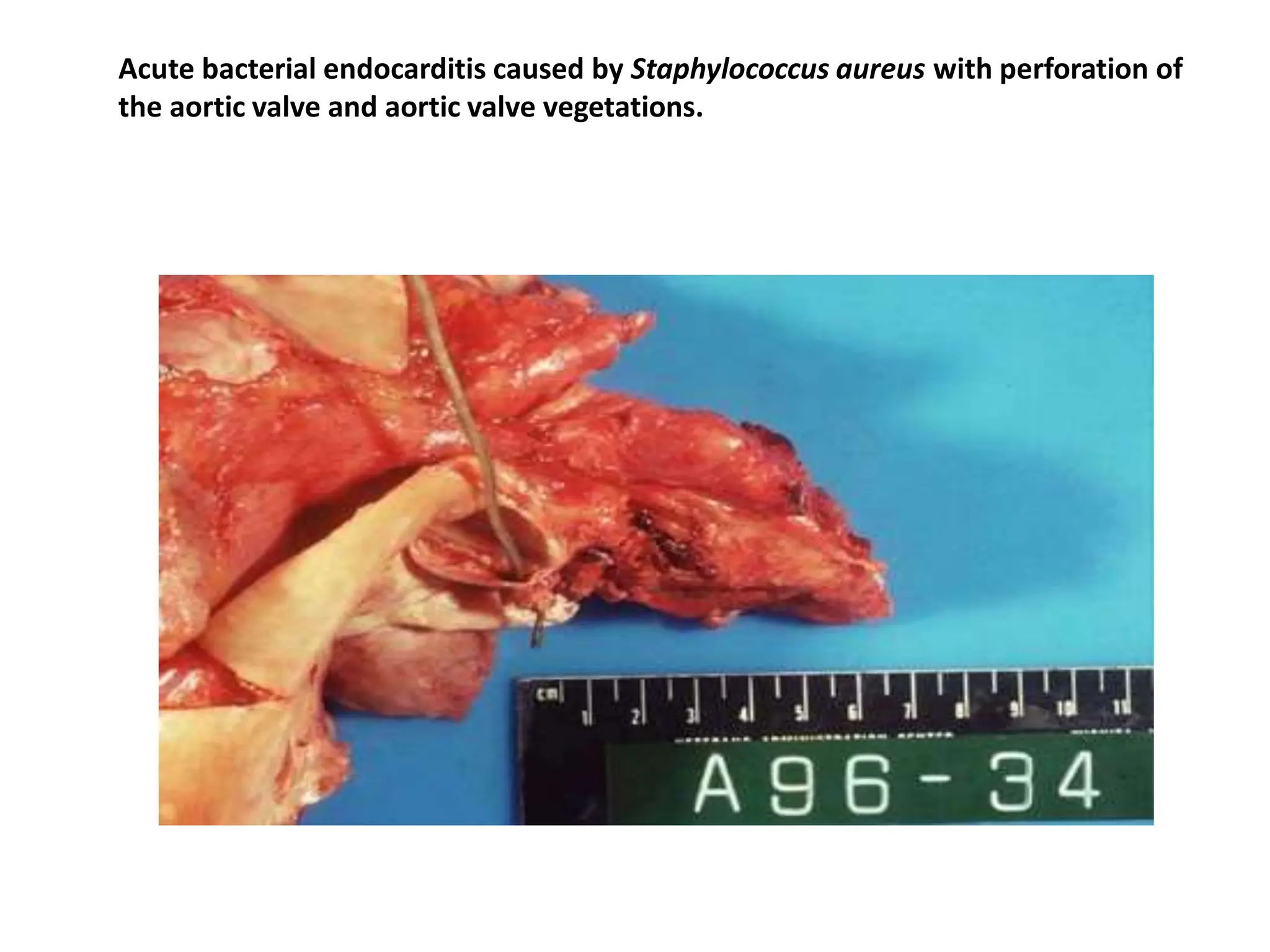
Acute bacterial endocarditis caused by Staphylococcus aureus with perforation of
the aortic valve and aortic valve vegetations.
Acute bacterial endocarditis caused by Staphylococcus aureus with
aortic valve ring abscess extending into myocardium.
The small pink
vegetation on the
rightmost cusp
margin represents
the typical finding
with non-bacterial
thrombotic
endocarditis (or so-
called "marantic
endocarditis"). This
is non-infective. It
tends to occur in
persons with a
hypercoagulable
state (Trousseau's
syndrome, a
paraneoplastic
syndrome
associated with
malignancies) and in
very ill persons
Bartonella henselae bacilli in cardiac valve of a patient with blood culture-
negative endocarditis The bacilli appear as black granulations.
Clinical
Manifestations
Petechial rash. He was diagnosed with right-
sided staphylococcal endocarditis. Osler nodes
Osler's nodes on a finger and foot.
Janeway lesions are Flat, painless,
erythematous lesions seen on the palm
of this patient's hand. Frequently
associated with bacterial endocarditis.
Roth spots: red center with pale periphery; top
and left (The one on right is the optic disc, as it
has pale center and red periphery)
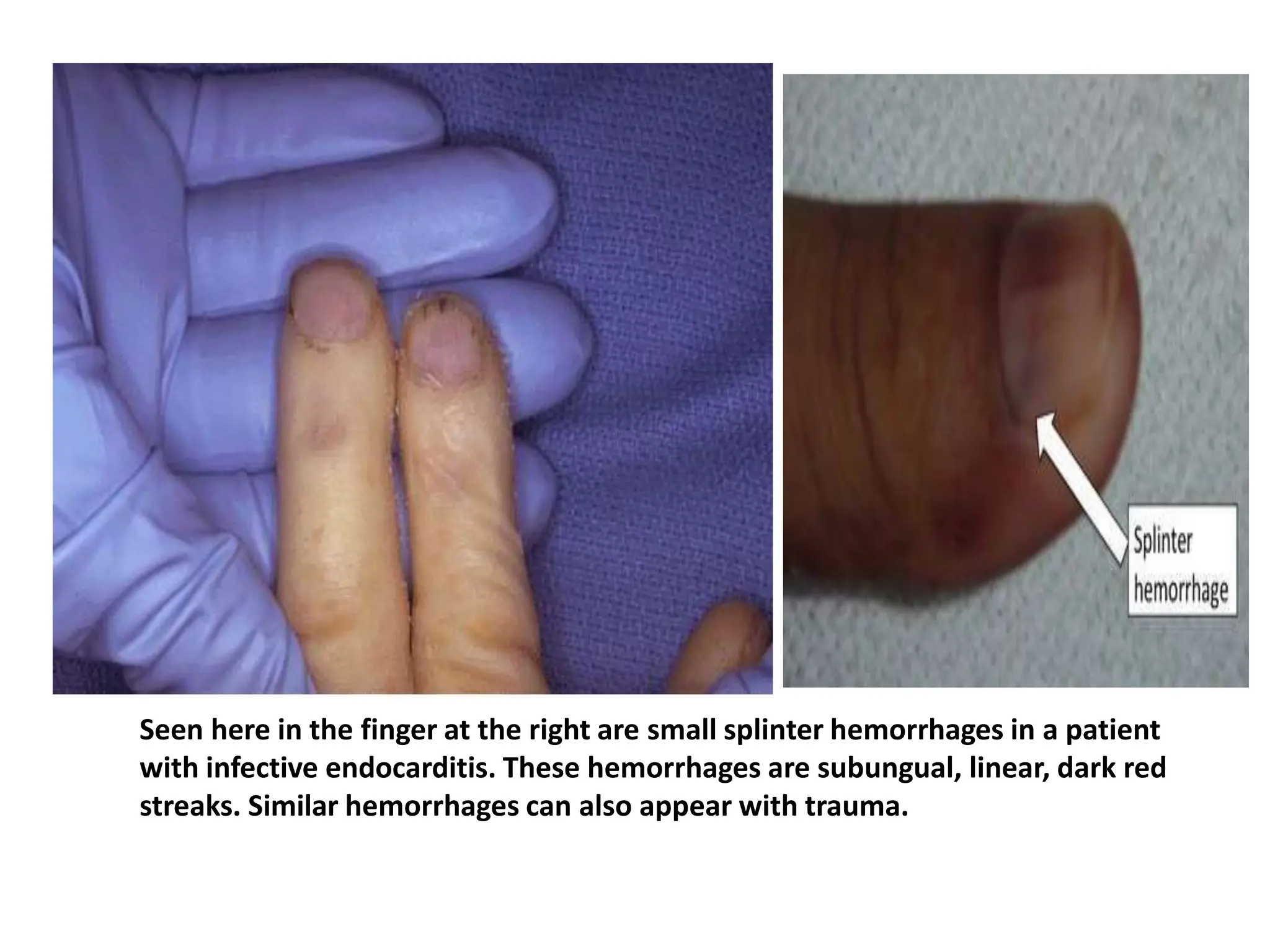
Seen here in the finger at the right are small splinter hemorrhages in a patient
with infective endocarditis. These hemorrhages are subungual, linear, dark red
streaks. Similar hemorrhages can also appear with trauma.
Libman-sacks
endocarditis.
Here are flat, pale
tan, spreading
vegetations over
the mitral valve
surface and even
on the chordae
tendineae.
INVESTIGATIONS
 Blood Examination.
 Blood culture
 ECG
Echocardiography: esp transesophageal
echocardiography.
 Immunoglobulins and compliment.
Urine exam: protein urea and microscopic hemeturia
is common
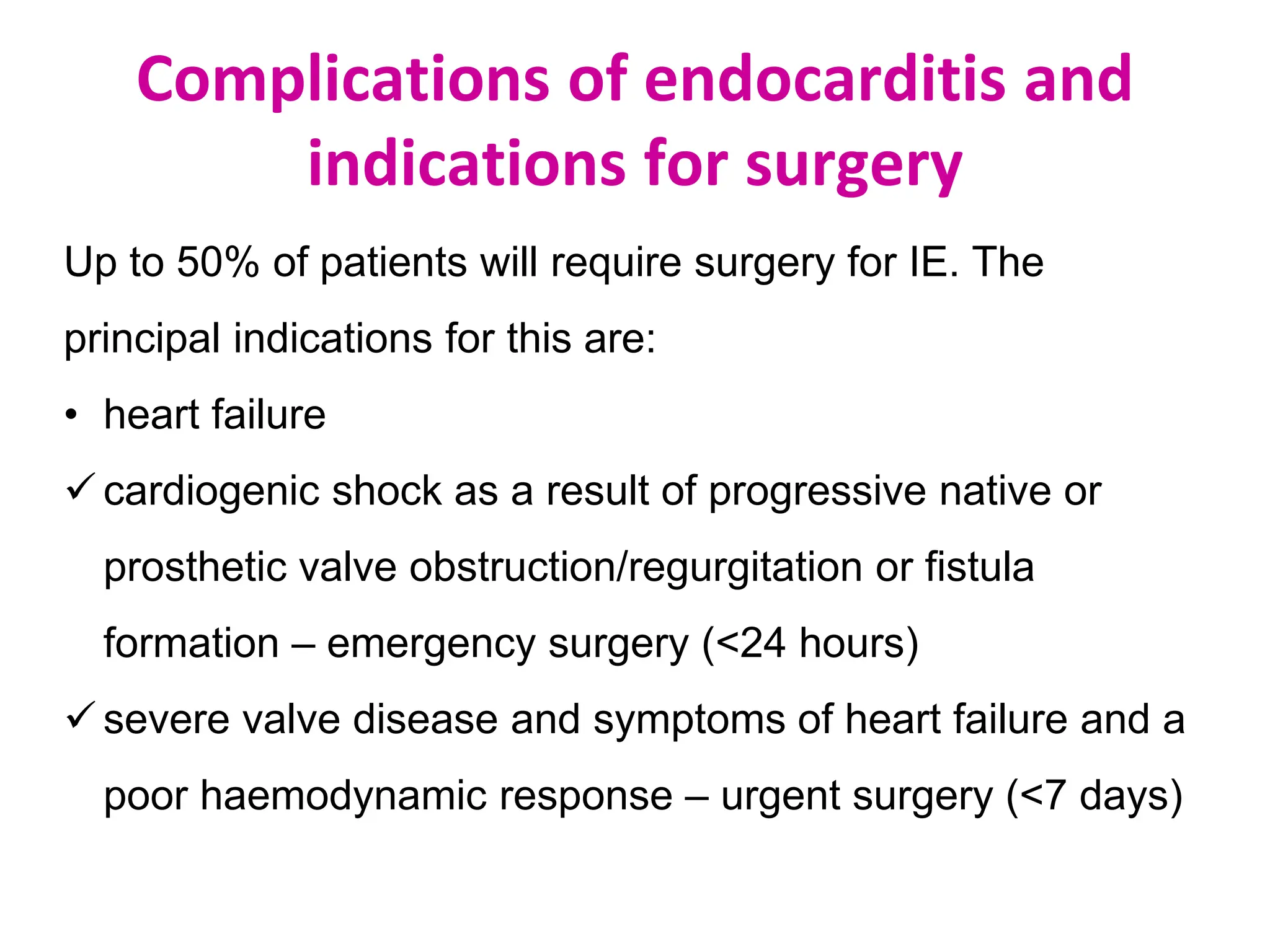
Complications of endocarditis and
indications for surgery
Up to 50% of patients will require surgery for IE. The
principal indications for this are:
• heart failure
 cardiogenic shock as a result of progressive native or
prosthetic valve obstruction/regurgitation or fistula
formation – emergency surgery (<24 hours)
 severe valve disease and symptoms of heart failure and a
poor haemodynamic response – urgent surgery (<7 days)
Cont.
• failure to control infection – urgent surgery
 local ongoing infection: aortic root abscess, aneurysm or
fistula formation, expanding vegetation size
 infection with a difficult to treat organism (fungi or
multiresistant organism, staphylococci or non-HACEK
Gram-negative bacilli on a prosthetic valve)
 persistence of positive blood cultures despite appropriate
antibiotics or inadequate control of metastatic septic foci
Cont.
• prevention of septic emboli – urgent surgery
vegetation >10 mm with an embolic event while
on appropriate antibiotic therapy
vegetation >30 mm
vegetation >10 mm and severe native or
prosthetic valve disease and patient is at a low
operative risk.
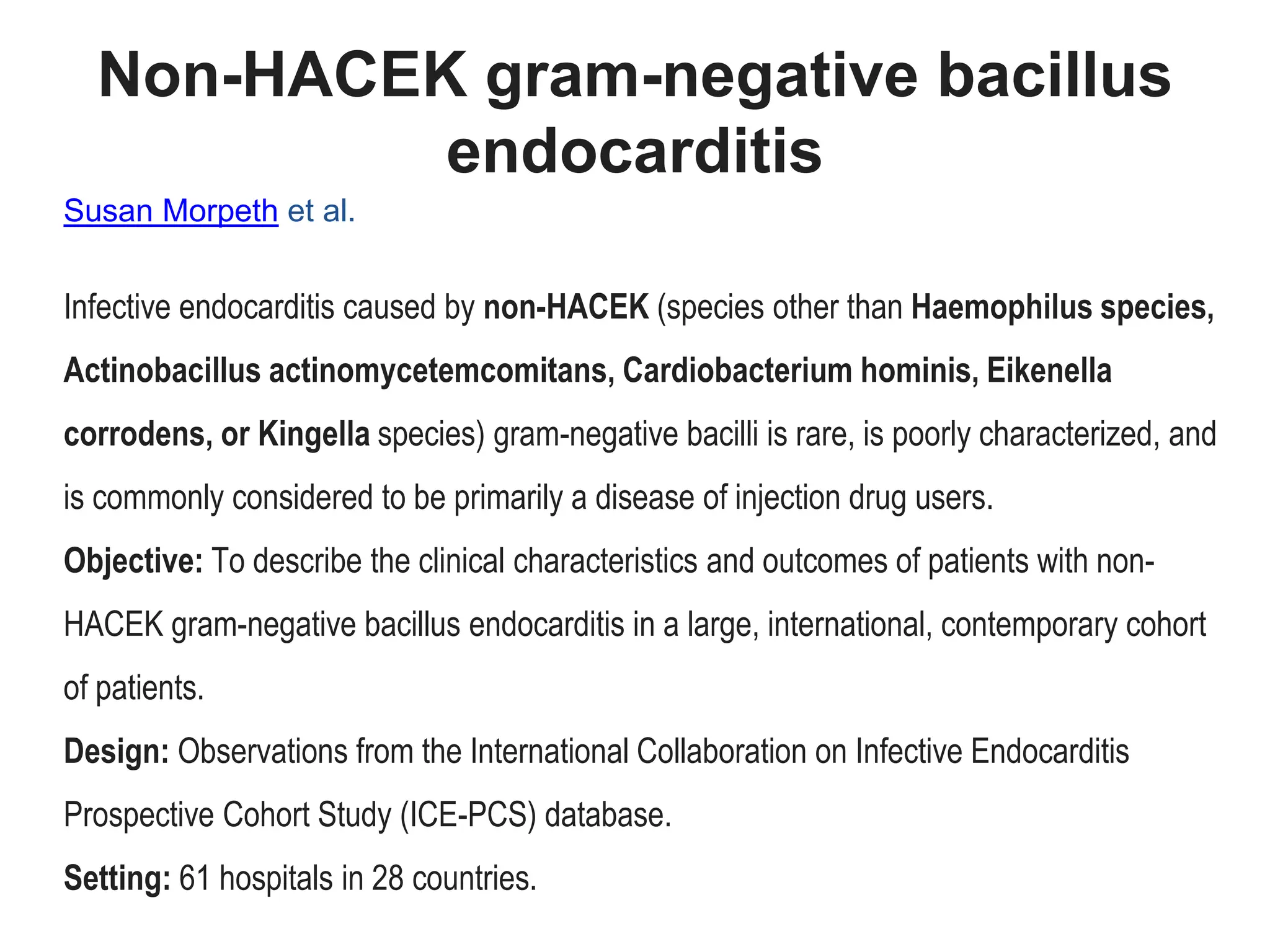
Non-HACEK gram-negative bacillus
endocarditis
Susan Morpeth et al.
Infective endocarditis caused by non-HACEK (species other than Haemophilus species,
Actinobacillus actinomycetemcomitans, Cardiobacterium hominis, Eikenella
corrodens, or Kingella species) gram-negative bacilli is rare, is poorly characterized, and
is commonly considered to be primarily a disease of injection drug users.
Objective: To describe the clinical characteristics and outcomes of patients with non-
HACEK gram-negative bacillus endocarditis in a large, international, contemporary cohort
of patients.
Design: Observations from the International Collaboration on Infective Endocarditis
Prospective Cohort Study (ICE-PCS) database.
Setting: 61 hospitals in 28 countries.
Cont.
Results: Among the 2761 case-patients with definite endocarditis enrolled in ICE-PCS,
49 (1.8%) had endocarditis (20 native valve, 29 prosthetic valve or device) due to non-
HACEK, gram-negative bacilli. Escherichia coli (14 patients [29%]) and Pseudomonas
aeruginosa (11 patients [22%]) were the most common pathogens. Most patients (57%)
with non-HACEK gram-negative bacillus endocarditis had health care-associated
infection, whereas injection drug use was rare (4%). Implanted endovascular devices
were frequently associated with non-HACEK gram-negative bacillus endocarditis
compared with other causes of endocarditis (29% vs. 11%; P < 0.001). The in-hospital
mortality rate of patients with endocarditis due to non-HACEK gram-negative bacilli was
high (24%) despite high rates of cardiac surgery (51%).
Nursing Diagnosis
• Acute pain related to systemic effects of infection.
• Risk for decreased cardiac output related to
disorders of the heart valves and the endothelium.
• Impaired body temperature related to the infection
process.
• Risk for Ineffective tissue perfusion related to
embolization.
THANK
YOU

Infective Endocarditis (IE) Lecture pptx

  • 1.
  • 3.
    • Endocarditis isan inflammation of the inner layer of the heart, the endocardium. It usually involves the heart valves (native or prosthetic valves). Other structures which may be involved include the interventricular septum, the chordae tendinae, the mural endocardium, or even on intracardiac devices.
  • 4.
  • 5.
    • Infectious endocarditisinvolves the heart valves. • Sources of the infection may be transient bacteremia, which is common during dental, upper respiratory, urologic, and lower gastrointestinal diagnostic and surgical procedures. • The infection can cause growths on the heart valves, the lining of the heart, or the lining of the blood vessels. These growths may be dislodged and send clots to the brain, lungs, kidneys, or spleen.
  • 6.
    Pathophysiology • Is occurtypically at sites of prexisting endocardial damage. However ,infection in previously normal heart occur by S. aureus. • Infection tend to occur at site of endothelial damage because these area attract deposit of platelets and fibrin, which are vulnerable to colonisation by blood born organisms. • Adjacent tissue are destroyed and abscess may form, valve regurgitation may develop or increased.
  • 7.
    • If theaffected valve is damage by tissue distortion. •Extra cardiac manifestations e.g. vacuities, infarcts of skin, spleen ,kidney and brain due to emboli or immune complex deposits.
  • 8.
    CLASSIFICATION • Sub-acute bacterialendocarditis • Acute bacterial endocarditis • Post operative endocarditis
  • 9.
    Subacute bacterial endocarditis(SBE) • Although aggressive, usually develops insidiously and progresses slowly (i.e, over weeks to months). • Often, no source of infection or portal of entry is evident. • SBE is caused most commonly by streptococci (especially viridans, microaerophilic, anaerobic, and nonenterococcal group D streptococci and enterococci) and less commonly by S. aureus, Staphylococcus epidermidis • SBE often develops on abnormal valves after asymptomatic bacteremia due to periodontal, GI, or GU infections.
  • 10.
    Acute bacterial endocarditis(ABE) •Usually develops abruptly and progresses rapidly (i.e., over days). •A source of infection or portal of entry is often evident. When bacteria are virulent or bacterial exposure is massive, ABE can affect normal valves. •It is usually caused by S. aureus, group A hemolytic streptococci, pneumococci, or gonococci.
  • 11.
    Post operative orPVE endocarditis: •Develops in 2 to 3% of patients within 1 yr after valve replacement and in 0.5%/yr thereafter. •It is more common after aortic than after mitral valve replacement and affects mechanical and bioprosthetic valves equally.
  • 12.
    Causes •Fungus e.g. candida,aspagellus •Gram negative organisms e.g. pseudomonas •Bacteria's e.g. staphylococci •Acute rheumatic fever which cause enlarged and tender lymph nodes, damages the valves •Congenital heart disease
  • 13.
    Risk Factors •Previous heartdamage •Dental procedures which lead into the introduction of Bacterias •Heart surgery •Intubations Procedures involving gastrol intestinal and genitourinaly tracts e.g. barium, enemas, sigmoidoscopy, catheterisation and Cytoscopy • Reproductive conditions like delivery of new babies, abortions and pelvic inflammatory disease
  • 14.
    The aortic valvewith a large, irregular, reddish tan vegetation Here, infective endocarditis on the mitral valve has spread into the septum all the way to the tricuspid valve, producing a fistula.
  • 15.
    Microscopically, the valvein infective endocarditis demonstrates friable vegetations of fibrin and platelets (pink) mixed with inflammatory cells and bacterial colonies (blue). The friability explains how portions of the vegetation can break off and embolize.
  • 16.
    Here is avalve with infective endocarditis. The blue bacterial colonies on the lower left are extending into the pink connective tissue of the valve. Valves are relatively avascular, so high dose antibiotic therapy is needed to eradicate the infection.
  • 17.
    Acute bacterial endocarditiscaused by Staphylococcus aureus with perforation of the aortic valve and aortic valve vegetations.
  • 18.
    Acute bacterial endocarditiscaused by Staphylococcus aureus with aortic valve ring abscess extending into myocardium.
  • 20.
    The small pink vegetationon the rightmost cusp margin represents the typical finding with non-bacterial thrombotic endocarditis (or so- called "marantic endocarditis"). This is non-infective. It tends to occur in persons with a hypercoagulable state (Trousseau's syndrome, a paraneoplastic syndrome associated with malignancies) and in very ill persons
  • 21.
    Bartonella henselae bacilliin cardiac valve of a patient with blood culture- negative endocarditis The bacilli appear as black granulations.
  • 22.
  • 24.
    Petechial rash. Hewas diagnosed with right- sided staphylococcal endocarditis. Osler nodes
  • 25.
    Osler's nodes ona finger and foot. Janeway lesions are Flat, painless, erythematous lesions seen on the palm of this patient's hand. Frequently associated with bacterial endocarditis.
  • 26.
    Roth spots: redcenter with pale periphery; top and left (The one on right is the optic disc, as it has pale center and red periphery)
  • 27.
    Seen here inthe finger at the right are small splinter hemorrhages in a patient with infective endocarditis. These hemorrhages are subungual, linear, dark red streaks. Similar hemorrhages can also appear with trauma.
  • 28.
    Libman-sacks endocarditis. Here are flat,pale tan, spreading vegetations over the mitral valve surface and even on the chordae tendineae.
  • 30.
    INVESTIGATIONS  Blood Examination. Blood culture  ECG Echocardiography: esp transesophageal echocardiography.  Immunoglobulins and compliment. Urine exam: protein urea and microscopic hemeturia is common
  • 33.
    Complications of endocarditisand indications for surgery Up to 50% of patients will require surgery for IE. The principal indications for this are: • heart failure  cardiogenic shock as a result of progressive native or prosthetic valve obstruction/regurgitation or fistula formation – emergency surgery (<24 hours)  severe valve disease and symptoms of heart failure and a poor haemodynamic response – urgent surgery (<7 days)
  • 34.
    Cont. • failure tocontrol infection – urgent surgery  local ongoing infection: aortic root abscess, aneurysm or fistula formation, expanding vegetation size  infection with a difficult to treat organism (fungi or multiresistant organism, staphylococci or non-HACEK Gram-negative bacilli on a prosthetic valve)  persistence of positive blood cultures despite appropriate antibiotics or inadequate control of metastatic septic foci
  • 35.
    Cont. • prevention ofseptic emboli – urgent surgery vegetation >10 mm with an embolic event while on appropriate antibiotic therapy vegetation >30 mm vegetation >10 mm and severe native or prosthetic valve disease and patient is at a low operative risk.
  • 36.
    Non-HACEK gram-negative bacillus endocarditis SusanMorpeth et al. Infective endocarditis caused by non-HACEK (species other than Haemophilus species, Actinobacillus actinomycetemcomitans, Cardiobacterium hominis, Eikenella corrodens, or Kingella species) gram-negative bacilli is rare, is poorly characterized, and is commonly considered to be primarily a disease of injection drug users. Objective: To describe the clinical characteristics and outcomes of patients with non- HACEK gram-negative bacillus endocarditis in a large, international, contemporary cohort of patients. Design: Observations from the International Collaboration on Infective Endocarditis Prospective Cohort Study (ICE-PCS) database. Setting: 61 hospitals in 28 countries.
  • 37.
    Cont. Results: Among the2761 case-patients with definite endocarditis enrolled in ICE-PCS, 49 (1.8%) had endocarditis (20 native valve, 29 prosthetic valve or device) due to non- HACEK, gram-negative bacilli. Escherichia coli (14 patients [29%]) and Pseudomonas aeruginosa (11 patients [22%]) were the most common pathogens. Most patients (57%) with non-HACEK gram-negative bacillus endocarditis had health care-associated infection, whereas injection drug use was rare (4%). Implanted endovascular devices were frequently associated with non-HACEK gram-negative bacillus endocarditis compared with other causes of endocarditis (29% vs. 11%; P < 0.001). The in-hospital mortality rate of patients with endocarditis due to non-HACEK gram-negative bacilli was high (24%) despite high rates of cardiac surgery (51%).
  • 38.
    Nursing Diagnosis • Acutepain related to systemic effects of infection. • Risk for decreased cardiac output related to disorders of the heart valves and the endothelium. • Impaired body temperature related to the infection process. • Risk for Ineffective tissue perfusion related to embolization.
  • 39.